
CDL Schedule Explained: Booking Tests, Wait Times, & Renewal Dates
❓ CDL schedule guide: book your written/skills test, CLP-to-CDL wait, renewal cycles, medical recert & ELDT timing. Plan every step.
The CDL Schedule, Demystified
Getting your commercial driver's license isn't a single afternoon at the DMV. It's a sequence — appointments, waits, recerts, renewal windows — and missing one date can knock weeks off your trucking career. This guide lays out the full cdl schedule: when to book each test, how long you'll wait between steps, and which dates you must mark on the calendar after you're licensed.
The pace varies by state. Florida might license you in three weeks; California can stretch it past two months because of road-test backlogs. The federal pieces — ELDT certification, the 14-day CLP holding rule, and DOT medical card cycles — apply everywhere, but the appointment side is local.
What This Schedule Covers
You'll see timing for: the knowledge (written) exam at your state DMV, the skills test (pre-trip, basic controls, road), third-party testing site windows, the federally mandated 14-day wait between your CLP and CDL skills test, your 5- or 8-year renewal cycle, the 24-month medical card recertification, mandatory ELDT before you sit for the knowledge test, and what happens if you fail and need to reschedule.
Scheduling the Written Knowledge Exam
The CDL written knowledge exam is the first appointment most candidates book. In most states you can reserve it online through the DMV portal — Texas DPS, California DMV, NY DMV, Florida HSMV — usually 7 to 30 days out depending on the office. A few rural states still operate walk-in only, where you arrive when the office opens and queue.
You'll need to bring proof of identity (driver's license, Social Security card or W-2), proof of residency, your DOT medical card if you've already taken your DOT physical, and your ELDT theory completion certificate for the Class A or Class B endorsement you're pursuing. Without the ELDT certificate uploaded to the Training Provider Registry, the DMV cannot administer the knowledge exam — this has been federal law since February 2022.
Most DMVs let you take the General Knowledge, Air Brakes, and Combination Vehicles exams in a single sitting if you're going for Class A. If you fail one, most states require a 1- to 14-day waiting period before retesting, and many cap retakes at three before requiring a new application fee.
CDL Schedule at a Glance
Scheduling the CDL Skills/Road Test
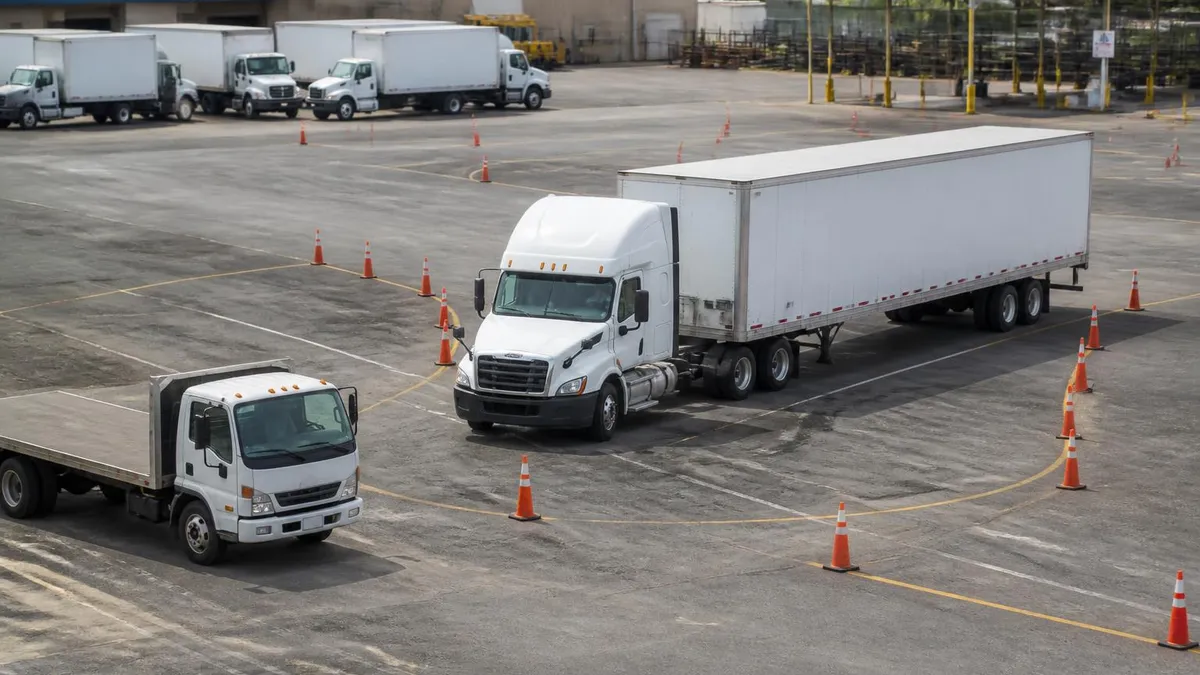
Once you hold your Commercial Learner's Permit (CLP), the next major date is your skills test. This is the three-part exam: vehicle inspection (pre-trip), basic vehicle control (offset backing, alley dock, straight-line backing), and the on-road driving test.
Two big rules govern when you can sit for it. First, the 14-day federal holding period — you cannot take the skills test until you've held your CLP for at least 14 calendar days. Second, you need to complete ELDT behind-the-wheel training (Class A or Class B as applicable) with a registered school, and the school must report your completion to the Training Provider Registry before you book the test.
State DMV Skills Tests vs Third-Party
You have two routes for the skills test. The first is your state DMV's own testing facility, which is typically cheaper ($25 to $75) but books out 4 to 8 weeks in advance in busy metros. The second is a third-party testing site — usually your CDL training school or a private testing company. These cost more ($150 to $400) but can often slot you in within a week or two.
Third-party examiners are state-licensed and their results are valid for DMV licensing. Schools like Sage, CR England, Roehl, and most community college CDL programs offer in-house testing. If you went through company-sponsored training (Werner, Schneider, Stevens, etc.), testing is typically scheduled the week your program ends.
Some states — California in particular — have severe DMV road-test backlogs. CA appointments routinely run 6 to 10 weeks out, pushing many candidates to third-party providers. Texas, Florida, Georgia, and Ohio also lean heavily on third-party testing volume.
Don't Book Your Skills Test on Day 14
The 14-day rule is a minimum, not a target. Book your skills test for day 16 or later so a postponement, missing paperwork, or weather closure doesn't invalidate your appointment. Some examiners will refuse to test you if the math is off by even one day. Always double-check the issue date stamped on your CLP card.
Booking Through Third-Party Testing Sites
Third-party CDL skills testing has become the backbone of the licensing pipeline. After ELDT went into effect, most candidates train at a registered school and test through the same school — it simplifies the schedule. You don't get a state-issued license on the spot; the third-party examiner submits results to your DMV, which mails the CDL within 7 to 14 business days (or invites you in to pick up a temporary paper credential).
How Third-Party Booking Works
You contact the testing site directly — not the DMV — and pick from their available slots. Most sites publish a weekly schedule and require payment up front to lock in the date. Cancellations usually need 48 to 72 hours' notice for a refund. Expect to be assigned a specific truck (and trailer if you're going for Class A) that you'll inspect and drive during the test.
What You Bring to a Third-Party Test
- Valid CLP (held at least 14 days)
- Government-issued photo ID
- DOT medical card
- ELDT behind-the-wheel completion certificate
- Proof of skills training hours (from your school)
- Test fee — cash, certified check, or card depending on the site
The test order is fixed: pre-trip inspection first, then basic controls in the yard, then the on-road driving portion. If you fail any segment, most third-party sites will let you reschedule the failed portion within 7 to 14 days at a reduced re-test fee. State DMVs sometimes require you to retake the entire test.
The Four CDL Testing Routes
Book knowledge and skills tests through your state's official DMV portal or office.
- ▸Online booking common
- ▸Walk-in in some states
- ▸Same-day pass/fail notice
- Typical Cost: $25-$75
- Wait Time: 4-8 weeks
- Where: State DMV office
Train and test at the same registered ELDT school — simplified and scheduled together.
- ▸Test on familiar truck
- ▸School handles paperwork
- ▸Re-test discounts
- Typical Cost: $150-$400
- Wait Time: 1-2 weeks
- Where: Training facility
Carriers like Werner, Stevens, and CR England pay for training and schedule tests during your program.
- ▸Tuition reimbursed
- ▸Job offer attached
- ▸1-year commitment typical
- Typical Cost: $0 (with contract)
- Wait Time: 3-4 weeks total
- Where: Company terminal
Semester-based CDL programs at public colleges, often with state grant funding available.
- ▸Pell-eligible some
- ▸Evening options
- ▸Job placement help
- Typical Cost: $1,500-$5,000
- Wait Time: 6-16 weeks
- Where: Public college
The 14-Day CLP-to-CDL Wait Rule
One date matters more than all the others combined: the day your CLP was issued. Federal regulation 49 CFR § 383.25 says you must hold a valid CLP for a minimum of 14 days before you can take the CDL skills test. There are no exceptions — not for prior driving experience, not for paid training, not for veterans with military truck experience. Fourteen days, period.
That 14-day clock starts the moment your CLP is issued (the date stamped on the card), not the day you applied or paid your fee. If your CLP was issued on the 1st of the month, the earliest day you can sit for the skills test is the 15th.
Why the 14-Day Rule Exists
The Federal Motor Carrier Safety Administration (FMCSA) built the holding period into the 2011 Commercial Learner's Permit rule to make sure trainees get a meaningful chunk of supervised, on-road experience before being trusted alone with an 80,000-pound vehicle. Schools use those two weeks for behind-the-wheel hours — yard work, road drives with an instructor, and skills polishing.
Average Wait Times by State
Beyond the federal 14-day floor, total wait time from "start the process" to "license in hand" depends on your state's DMV throughput:
- Florida, Texas, Georgia: 3 to 5 weeks total (high third-party testing capacity)
- Ohio, Pennsylvania, Indiana: 4 to 6 weeks total
- California, New York: 6 to 10 weeks total (DMV road-test backlog)
- New Jersey, Massachusetts, Hawaii: 8 to 12 weeks total (limited testing sites)
- Most other states: 4 to 7 weeks total
If you're in a backlog state, scheduling through a third-party tester is usually the fastest way around it. The CLP itself remains valid for 6 months in most states (180 days), and can be renewed once for another 180 days without retaking the knowledge exam.
CDL Schedule by Phase
What to schedule: Enrollment with a Training Provider Registry-listed school. Theory is delivered online or in-person.
Time required: 8 to 30 hours, self-paced or scheduled.
Output: ELDT theory certificate uploaded to the federal TPR. Without this, the DMV cannot issue your CLP.
Tip: Many CDL schools bundle theory + behind-the-wheel into one package — schedule them together.
CDL Renewal: 5-Year vs 8-Year States
Once you've earned your CDL, the schedule shifts from "getting licensed" to "staying licensed." The biggest recurring date is your license renewal. States choose between two renewal cycles, and your home state determines which one applies.
Five-Year Renewal States
Most states use a five-year cycle: California, New York, Florida, Texas, Pennsylvania, Illinois, Ohio, Georgia, North Carolina, and roughly two-thirds of the country. Your renewal date is generally tied to your birthday — your license expires on or near your birthday in the fifth year after issuance.
Eight-Year Renewal States
A smaller group uses an eight-year cycle for CDL drivers under age 65 or so, dropping to four or five years after that. Arizona, Michigan, and a handful of others fall into this category, but the specifics shift — always check your state's most current DMV site rather than relying on summaries.
What Renewal Actually Requires
Renewal isn't usually another road test. In most states you'll need to:
- Submit a renewal application 30 to 60 days before expiration
- Pass a vision screening (in person at the DMV)
- Pay the renewal fee ($25 to $90)
- Provide a current DOT medical card on file
- Pass a background check (CDLIS national query)
- Re-take the knowledge test if your CDL has lapsed or you've moved states
If you let your CDL expire more than 60 days, several states will require you to retake the entire CDL process from scratch — including ELDT and the skills test. Don't let it lapse.
Endorsement Renewals Are Separate
HazMat (H) endorsements have their own clock. The TSA requires fingerprinting and a security threat assessment every 5 years, separate from your license renewal. You'll need to schedule a TSA appointment 90 days before your HazMat endorsement expires. The 5-year HazMat cycle does not always align with your license renewal — track it independently.
The DOT medical card is the most commonly missed CDL date. It expires every 24 months maximum — and many examiners issue 1-year cards if you have any health flags (high blood pressure, diabetes, sleep apnea). If your medical card lapses, your CDL is automatically downgraded to a regular license until you submit a new one. Schedule your DOT physical 30 days before expiration and submit it to your state DMV the same day you pass.
DOT Medical Card Recertification Schedule
Every commercial driver needs a current DOT medical examiner's certificate (the medical card) on file with their state DMV. This is non-negotiable under FMCSA rules. The card is issued by a certified medical examiner — listed on the National Registry — after a physical exam covering vision, hearing, blood pressure, cardiovascular health, neurological function, and a urinalysis screening for diabetes and protein.
How Often You Get Recertified
The maximum validity is 24 months. But the examiner can issue shorter cards based on your health:
- 24 months: Fully healthy, no flagged conditions
- 12 months: Controlled high blood pressure, monitored diabetes, mild sleep apnea
- 3 to 6 months: Conditions requiring close monitoring
- Single trip / disqualified: Conditions that fail FMCSA standards
Scheduling the DOT Physical
Most truck stops, urgent care clinics, and dedicated DOT clinics offer same-week appointments. The exam costs $75 to $150 cash. You don't need to fast or prepare beyond bringing a list of current medications and any prescription correctional eyewear. The whole appointment takes 30 to 60 minutes.
You'll walk out with a paper certificate. Submit a copy to your state DMV within 15 days — most states accept fax, email, online upload, or mail. Some states auto-pull your status from the National Registry, but you should never assume that — keep a paper trail.
Scheduling ELDT (Entry-Level Driver Training)
Since February 7, 2022, federal law requires all new CDL applicants to complete Entry-Level Driver Training before sitting for the knowledge or skills test. ELDT comes in two parts: theory (classroom or online) and behind-the-wheel (BTW). Both must be completed at a school listed on the federal Training Provider Registry.
ELDT Theory
The theory curriculum covers 30+ topics required by FMCSA — vehicle systems, hours of service, hazardous materials handling, driver wellness, post-crash procedures. You can complete it online at your own pace or in a classroom. Most programs run 1 to 4 weeks part-time.
ELDT Behind-the-Wheel
BTW must be done in-person, in a real commercial vehicle, with a registered instructor. There's no federal minimum hour count — you train until you demonstrate proficiency in all required skills. Most schools schedule 40 to 160 hours over 2 to 6 weeks, depending on full-time vs part-time enrollment.
You can do theory before you have your CLP, but BTW typically requires you to hold the CLP first. Plan your schedule around that: theory first (anytime), CLP exam, then BTW during the 14-day waiting period.
Your Complete CDL Schedule Checklist
- ✓Choose a school on the federal Training Provider Registry (TPR) — verify their listing
- ✓Schedule and complete ELDT theory training (online or classroom)
- ✓Book your DOT physical at a National Registry examiner — get your medical card
- ✓Schedule your knowledge exam at the state DMV — bring all paperwork
- ✓Pass the knowledge exam and receive your CLP — note the issue date
- ✓Schedule behind-the-wheel ELDT training to overlap with the 14-day CLP wait
- ✓Verify your skills test eligibility — confirm BTW completion is in the TPR
- ✓Book the skills test for day 16+ after CLP issuance (state DMV or third-party)
- ✓Pass the three-part skills test — pre-trip, basic controls, road
- ✓Receive your CDL — usually mailed within 7 to 14 business days
- ✓Mark your medical card expiration on the calendar (24 months max)
- ✓Mark your license renewal date (5- or 8-year cycle, state-dependent)
- ✓If HazMat endorsed, mark your TSA recertification date (5-year cycle)
What to Do If You Fail and Need to Reschedule
About 35 to 40 percent of CDL skills test candidates fail at least one segment on the first attempt — pre-trip inspection is the most common stumble. Failing isn't disqualifying. It just resets a small portion of your schedule.
If You Fail the Knowledge Exam
Most states allow a retake after a 1- to 14-day waiting period (varies by state — Texas is 1 day, California is 7 days, NY is 14 days). You typically get 3 attempts within 12 months before being required to re-apply, re-pay, and re-submit ELDT theory.
If You Fail the Skills Test
Different segments have different retake rules:
- Pre-trip inspection: Retake the pre-trip only, usually within 7 to 14 days. Most third-party sites offer a discounted re-test fee ($50 to $150).
- Basic vehicle controls: Same as pre-trip — re-test the failed segment within 1 to 2 weeks.
- Road test: Many states require you to retake the entire skills test (all three segments). Some allow road-only retests. Check before assuming.
If you fail three times within a defined window (often 12 months), several states require you to retake the knowledge exam and complete additional BTW hours before testing again. Save yourself the headache: take a practice pre-trip walk-through with your instructor the day before your test.
Scheduling Your Retest
Third-party testing sites can usually slot you in within a week. State DMVs often push retests 4 to 6 weeks out. If you're going through a school, ask about their re-test policy before you book — the better schools include one or two free re-tests in the tuition.
Don't Let Your CLP Expire While Retesting
Your CLP is valid for 180 days. If you fail and rebook several times, you can run out of permit time. Renewing the CLP once — without retaking the knowledge exam — is allowed in most states. After that, you start over. Schedule retests aggressively if your CLP clock is running low.
DMV vs Third-Party Testing — Schedule Tradeoffs
Both routes get you the same license. Pick based on what you value most.
- +Lowest cost — $25 to $75 typical
- +Test at the same place you got your CLP
- +No middleman — license issued direct
- +Examiners see thousands of candidates — predictable scoring
- +No need to coordinate with a separate school
- −Much faster scheduling — 1 to 2 weeks vs 4 to 8
- −Test on the same truck you trained on
- −Re-test discounts often included
- −Bundle with training — one stop, one payment
- −Often more flexible appointment times — evenings, Saturdays
Pros and Cons at a Glance
| Pros | Cons |
|---|---|
| Test at the same place you got your CLP | Test on the same truck you trained on |
| No middleman — license issued direct | Re-test discounts often included |
| Examiners see thousands of candidates — predictable scoring | Bundle with training — one stop, one payment |
| No need to coordinate with a separate school | Often more flexible appointment times — evenings, Saturdays |
How State Schedules Differ
The federal pieces — ELDT, 14-day CLP wait, medical card cycle, HazMat recert — are uniform. Everything else varies. Here's how some high-volume states differ:
California (CA DMV)
Known for the longest road-test waits — 6 to 10 weeks at most DMV offices. Almost all candidates use third-party testing through schools. Medical card submission is electronic. CDL renewal is on a 5-year cycle.
Texas (TX DPS)
Operates one of the most efficient CDL pipelines. DMV skills test waits are 2 to 4 weeks in most counties. Third-party testing is widely available. Renewal is every 5 years. Knowledge exam can be retaken the next day.
Florida (FL HSMV)
Skills test must be done at an FHSMV-approved third-party site if you're not using a state DMV slot. Tests bundle pre-trip + skills + road into one appointment. Renewal every 5 years.
New York (NY DMV)
14-day retake waiting period after a knowledge exam failure (one of the longest). Heavy use of third-party testing through CDL schools. Renewal at 5 years, vision test required in person at every renewal.
Pennsylvania (PA DMV / PennDOT)
5-year renewal, road tests booked through PennDOT exam centers or approved third-party providers. Medical certification handled electronically through MyPennDOT.
Final Thoughts on the CDL Schedule
The CDL schedule rewards planning. Candidates who map every date — ELDT enrollment, knowledge test booking, CLP issuance, day 15 for skills testing, medical card expiration, license renewal — finish faster and avoid the most expensive setback: a lapsed CLP or expired medical card that forces a full restart. Pick a registered school, confirm your state's third-party network, and put every date on your phone calendar with 30-day alerts. A CDL is a license to earn a six-figure income; treating its cdl schedule like a job-critical project is exactly the right mindset.
If you're early in the process, the highest-use step is choosing the right ELDT school. The good ones bundle theory, BTW, and third-party skills testing into a 4- to 8-week sprint — fast, predictable, and structured. The slow path is piecing it together: theory at one provider, BTW at another, knowledge test at your DMV, skills test scheduled 6 weeks out. Same license, three times the wait.
Quick Answers to Common CDL Scheduling Questions
Below are the questions candidates ask most often once they start mapping their cdl schedule — timing, retakes, what to bring, and how to handle renewals. Bookmark this section and revisit it when each phase comes due.
CDL Questions and Answers
About the Author
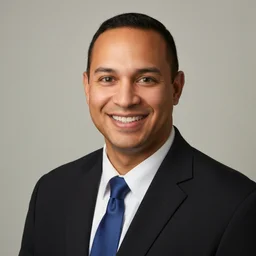
Licensed Driving Instructor & DMV Test Specialist
Penn State UniversityRobert J. Williams graduated from Penn State University with a degree in Transportation Management and has spent 20 years as a certified driving instructor and DMV examiner consultant. He has personally coached thousands of applicants through written knowledge tests, skills assessments, and commercial driver licensing programs across more than 30 states.
Join the Discussion
Connect with other students preparing for this exam. Share tips, ask questions, and get advice from people who have been there.
View discussion (7 replies)