
Amazon CDL Driver: Routes, Pay, & Career Path Complete Guide 2026 September
Amazon CDL driver guide: AmazonFreight linehaul vs AMZL last-mile, pay $60-$95k, sign-on bonuses, Amazon Relay, equipment, and routes. 📝
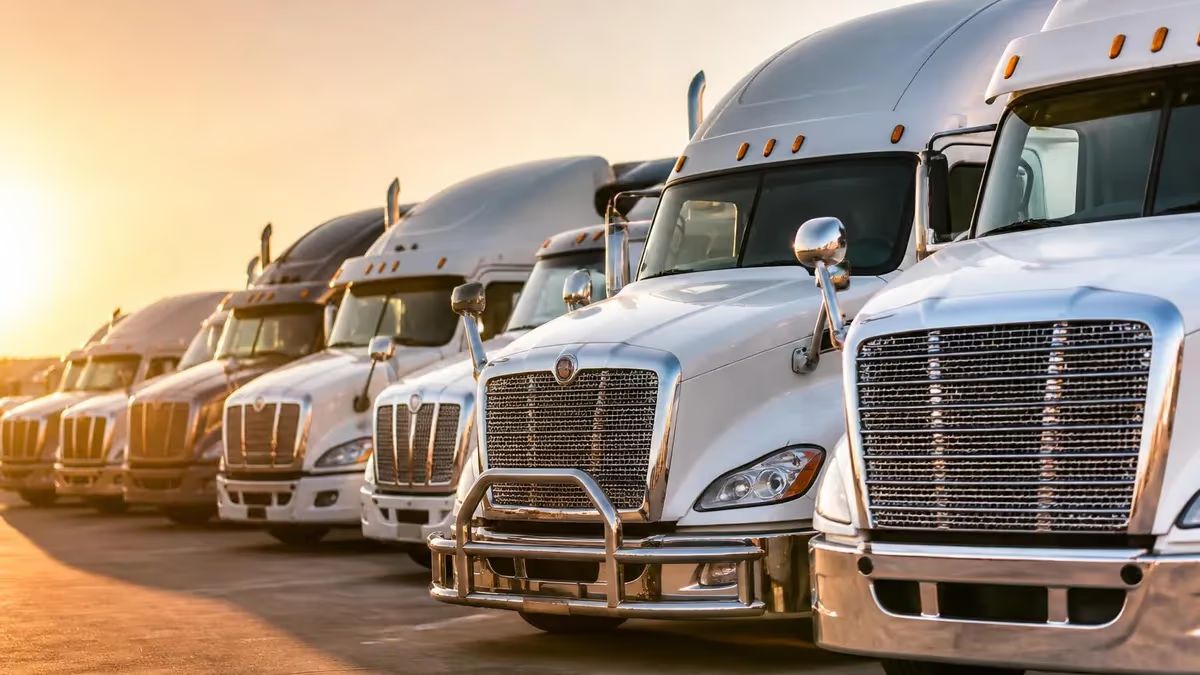
Amazon doesn't just sell stuff online — it runs one of the largest private logistics networks on the planet, and that network can't move a single pallet without Class A CDL drivers. If you're chasing a steady freight career, an Amazon CDL driver role sits in a sweet spot most carriers can't match: regular dispatch, modern trucks, predictable lanes between fulfillment centers, and pay that competes with the big union fleets.
This guide breaks down how Amazon's trucking ecosystem actually works, what each job pays in 2026, and why so many drivers are jumping ship from over-the-road carriers to run Amazon dedicated.
Three separate worlds operate under the Amazon umbrella, and confusing them is the fastest way to apply for the wrong job. Amazon Freight runs linehaul between distribution centers using sleeper cabs and day cabs. AMZL — Amazon Logistics — handles last-mile delivery in branded vans (those Prime sprinters you see in your neighborhood). Amazon Relay is a marketplace platform that connects independent carriers and owner-operators to Amazon loads. Each one needs different licenses, different equipment, and pays on a different scale, so picking the right lane matters before you ever sit in an orientation chair.
The demand is real. Amazon moves roughly 1.5 billion packages a year in the United States alone, and the company has been quietly building one of the country's largest captive trucking fleets to keep that volume off the spot market. For a Class A holder with a clean MVR and 12 months of recent experience, getting an Amazon offer is usually a matter of weeks, not months. The hard part isn't getting in — it's understanding which Amazon job actually fits your life.
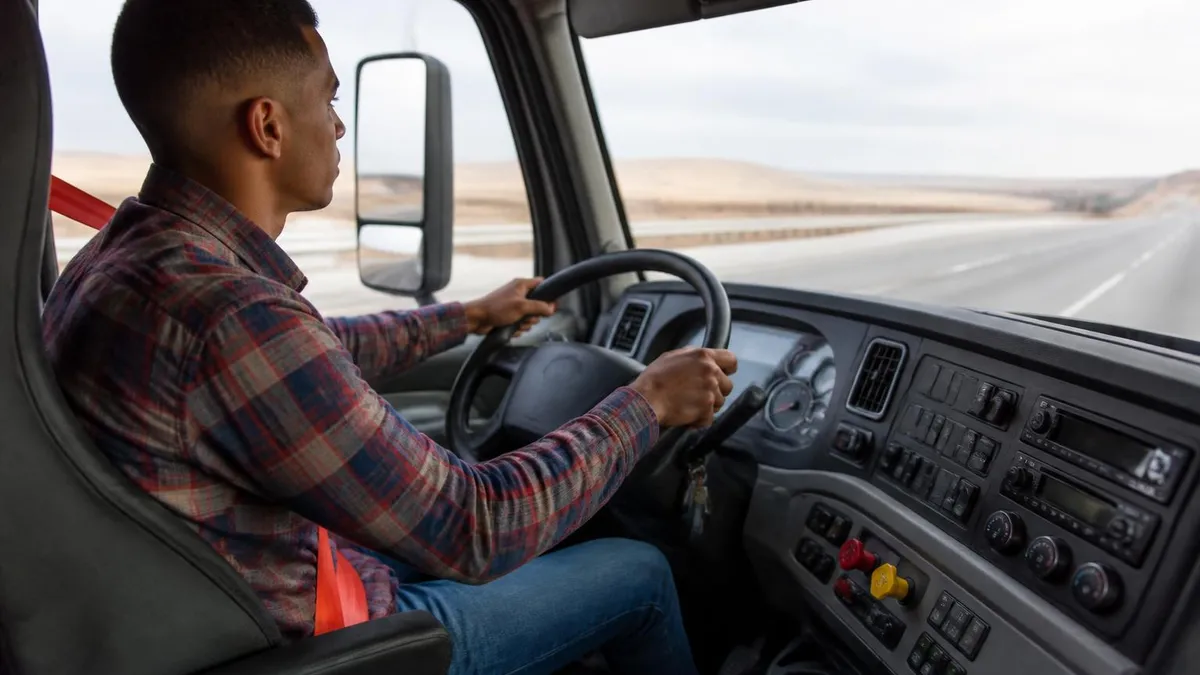
Amazon CDL Driver Pay & Network at a Glance
Most newcomers don't realize Amazon hires three completely different types of CDL professionals. The pay, schedule, equipment, and lifestyle of each is so different that a friend's "great Amazon gig" might be the worst possible fit for you. Read the breakdown below before you start filling out applications — and pay close attention to the equipment column, because that's where the real day-to-day difference lives. A linehaul driver on a sleeper rig has nothing in common with an AMZL delivery associate beyond the company logo on their paystub.
Equipment ownership is the other dividing line. Amazon Freight company drivers operate Amazon-owned tractors and trailers — usually 2022 or newer Freightliner Cascadias and Volvo VNL64Ts with auto transmissions. Amazon Relay carriers run their own equipment and book loads on the Relay app. Last-mile DSP (Delivery Service Partner) drivers run leased step vans owned by the small business that contracts with Amazon. Knowing who owns the wheels you're spinning tells you everything about your responsibility for repairs, fuel, tolls, and insurance.
The hiring funnel is also different for each path. Amazon Freight company driver applications go through Amazon's direct careers portal. AMZL last-mile drivers usually apply through a third-party DSP — Amazon doesn't employ those drivers directly, even though they wear Amazon-branded uniforms. Amazon Relay is a self-onboarding platform: your motor carrier authority (MC number) and DOT compliance get vetted, then you book your own freight. Cross-applying between paths is rare; once you're in, your career typically tracks that lane for a while.
Money is the first question every driver asks, and the honest answer about Amazon CDL driver pay is that the range spans nearly $40,000 depending on which path you take. AmazonFreight Class A linehaul drivers — the ones running between fulfillment centers in sleeper cabs — sit at the top of the W-2 pile, with most regional positions paying $75,000 to $85,000 in the first year and experienced drivers crossing $95,000.
AMZL delivery driver associates working for a DSP typically earn $19 to $24 per hour, which annualizes to $40,000–$50,000 depending on overtime. Amazon Relay owner-operators report gross revenues of $180,000–$250,000 per truck, but after fuel, insurance, maintenance, and tractor payments, take-home varies wildly.
Sign-on bonuses have become standard at most AmazonFreight terminals. As of late 2025, recruiters are advertising $5,000–$10,000 sign-on for experienced Class A drivers, paid out across the first 90 to 180 days. Some high-demand lanes — Phoenix, Stockton, and the Northeast corridor — have pushed bonuses to $15,000 for drivers who'll commit to a 12-month term. These aren't golden tickets; they come with clawback clauses if you leave early. Read the offer letter carefully before you celebrate.
Benefits at AmazonFreight match what you'd expect from a Fortune 5 employer. Health, dental, and vision kick in day one for full-time drivers. Amazon contributes to a 401(k) with a 50% match up to 4% of pay. Career Choice — Amazon's tuition program — pays up to 100% of associate's degree or certificate programs, which CDL drivers have used to upgrade to logistics manager roles. Stock grants (RSUs) aren't standard for hourly drivers but show up for some salaried fleet manager positions.
Amazon CDL Driver Pay Tiers Compared
W-2 employee, Amazon-owned tractor, regional dedicated lanes between FCs.
- ▸First-year pay: $75,000-$85,000
- ▸Experienced: $85,000-$95,000+
- ▸Sign-on bonus: $5,000-$15,000 (90-180 day vest)
- ▸Day 1 health, dental, vision
- ▸401(k) 50% match up to 4%
Independent carrier booking loads through the Relay app. Run your own MC and equipment.
- ▸Rates: $2.10-$2.65 all-in per mile
- ▸Gross revenue per truck: $180k-$250k/yr
- ▸7-day pay (vs. 30+ industry standard)
- ▸Loads posted 7 days ahead
- ▸Requires own MC, 6+ months in business
Hired by a Delivery Service Partner, not Amazon directly. No CDL required.
- ▸$19-$24 per hour typical
- ▸150-300 stops per 10-hour shift
- ▸Annualized: $40,000-$50,000
- ▸Mercedes Sprinter, Ford Transit, Rivian EV
- ▸DSP employer, Amazon-branded uniform
Independent contractor delivering in your personal car. Not a trucking job — listed for clarity only.
- ▸$18-$25 per hour per block
- ▸3-6 hour blocks
- ▸1099 contractor, not employee
- ▸Personal vehicle (sedan/SUV)
- ▸No CDL, no Class A path
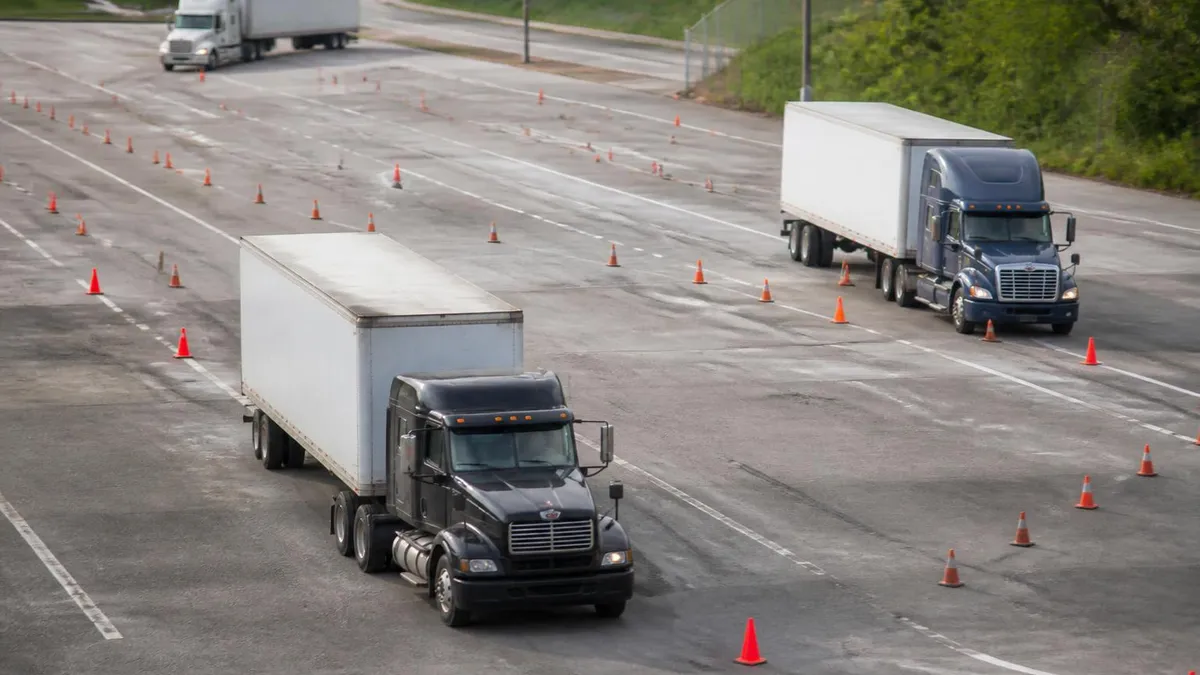
Amazon Relay is the wildcard in the Amazon trucking ecosystem, and most CDL drivers have never heard of it. Relay is a load-matching platform that lets independent motor carriers — anyone from a one-truck owner-operator to a 500-truck fleet — book Amazon freight directly without a broker in the middle. The app shows available loads, posted rates, pickup and drop times, and lets carriers self-dispatch. Think Uber for full truckloads, but only for Amazon freight. For an owner-operator with their own authority, Relay can be a stable source of base loads to fill in around higher-paying spot work.
Rates on Relay sit slightly below the spot market average but well above broker contract rates. Drivers report $2.10–$2.65 per mile all-in on Relay loads, depending on lane and trailer type. The big advantage isn't the rate — it's the volume and predictability. Amazon posts loads 7 days in advance, pays within 7 days of delivery (vs. the industry standard of 30+ days), and offers consistent lanes that let you build a steady week. Detention pay is also standardized, which is rare in trucking.
Onboarding to Relay requires a valid MC number, a CDL Class A, FMCSA SafeStat data showing no chronic problems, and proof of insurance ($1M auto liability plus $100K cargo). Setup takes about two weeks once your paperwork is in. There's no minimum fleet size, but if you only have one truck, expect to dedicate it to Amazon's network — running spot loads in between will make scheduling consistent Relay weeks tough. Drivers who go all-in on Amazon Relay typically gross $5,500–$8,500 weekly on a single truck, before expenses.
Inside the Three Amazon CDL Programs
The flagship CDL program. Amazon hires Class A drivers directly to run linehaul between fulfillment centers, sort centers, and air hubs. Tractors are Amazon-owned 2022+ Freightliner Cascadias and Volvo VNL64Ts, all auto-transmission, all governed at 65 mph. Dispatch comes through an in-cab tablet — no phone calls, no paper. Most regional positions are home daily; sleeper positions run out-and-back two-day triangles. Apply directly at amazon.jobs.
Best for: drivers with 12+ months of Class A experience who want a stable W-2 with elite benefits and modern equipment. The 401(k) match, day-one health insurance, and Career Choice tuition program rival anything in the industry.
The last-mile side of the business — AMZL, formally Amazon Logistics — looks nothing like traditional trucking. AMZL drivers run Mercedes Sprinters, Ford Transits, or the newer Rivian electric delivery vans. They don't need a CDL. They do follow tightly choreographed routes generated by Amazon's Rabbit dispatch system, with 150–300 stops per shift and a 10-hour clock.
It's high-volume, high-pressure work, and the pay reflects entry-level expectations: $19–$24/hr in most metros, sometimes higher in expensive markets like Seattle and the Bay Area. If you're a Class A CDL holder reading this, AMZL probably isn't your target — it's a delivery associate job, not a trucking job. But it pays the bills for drivers between gigs or those who don't want long hours away from home.
Amazon Flex is even further from CDL work — it's the gig version, where individuals deliver packages in their own cars or SUVs through the Flex app. No commercial license is needed. Blocks are 3–6 hours and pay $18–$25/hr in most cities. We mention it only because confused applicants sometimes apply for Flex thinking it's a trucking job. It's not. If you have a Class A and you're searching for an Amazon CDL driver position, you want Amazon Freight (linehaul) or Amazon Relay (owner-operator) — not Flex and not AMZL.
The reason Amazon goes through this trouble — splitting last-mile from linehaul from gig — is operational. Each piece of the supply chain has different economics, different equipment, and different labor pools. Class A drivers are scarce and expensive; they're best deployed on revenue-dense linehaul lanes between fulfillment centers. Sprinter drivers are easier to train and hire; they belong on residential streets. Flex drivers absorb peak demand without adding fleet capacity. It's smart logistics, and once you see the structure, the pay differences make sense.
A typical AmazonFreight Class A linehaul day starts with a yard pre-trip on an Amazon-owned tractor, usually a 2022+ Freightliner Cascadia or Volvo VNL with auto transmission. The truck is pre-loaded by yard hostlers — you don't usually drop and hook your own trailer.
Bills are in the in-cab tablet, dispatch is on the same screen, and your route is fixed before you turn the key. Most lanes are 350–550 miles one way between fulfillment centers (FCs), sort centers (SCs), or air hubs, with live unload and reload at destination. Sleeper drivers run out-and-back or two-day triangles. Day-cab regional drivers are home daily.
The fulfillment center network is dense in the United States — over 110 active FCs plus another 300+ sortation and delivery stations. That density means short hauls between sites are constant, and Amazon Freight runs huge volumes of 200–400 mile relay-style loads. For drivers who hate the 11-hour overnight grind on long stretches of I-80, this is paradise: you're moving freight all day, but rarely sitting at one wheel for more than 5 hours straight. Loads are pre-planned, ELD compliant, and dispatch usually has your next move queued before you finish drop.
One thing that surprises new Amazon drivers is the level of yard tech. Every FC and SC uses appointment-based gate scheduling, license-plate recognition cameras, and tablet-driven yard moves. There's almost no paperwork. The downside is the speed — you can be cycled through a yard in 35 minutes from gate-in to gate-out, which is great for productivity but doesn't leave much room for a real meal break. Amazon drivers learn to grab lunch on the road, not at the dock.
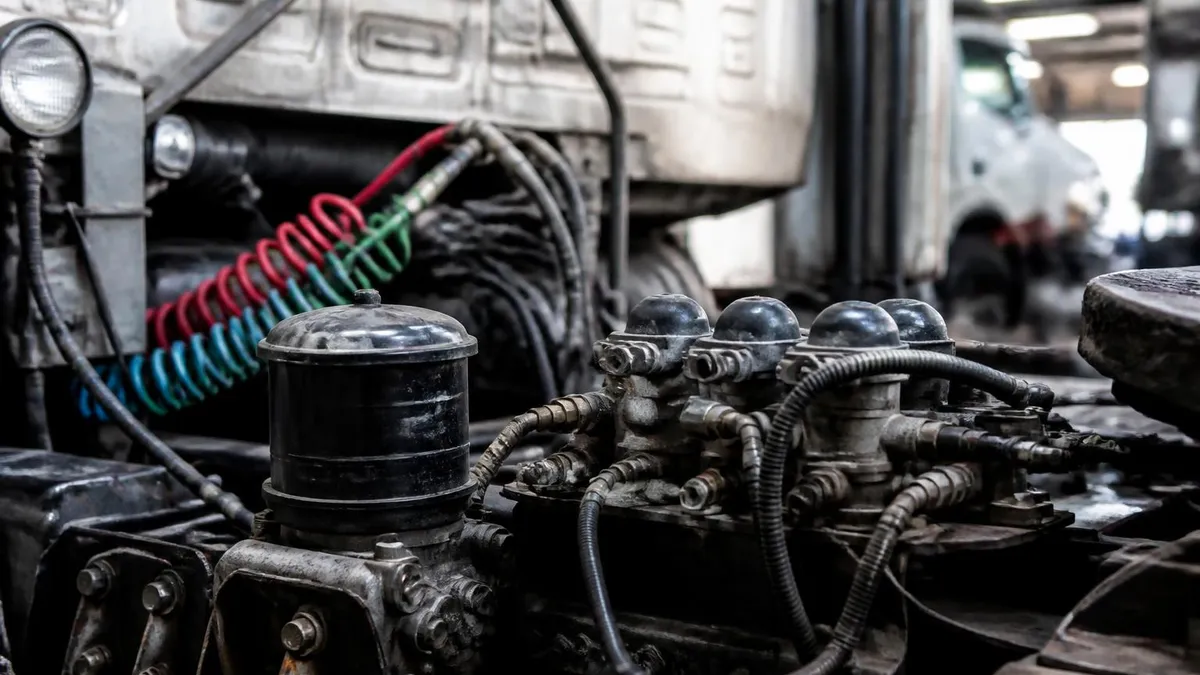
AmazonFreight Class A Hiring Requirements
- ✓Current Class A CDL with no current suspensions or restrictions
- ✓12+ months verifiable tractor-trailer experience in the last 3 years
- ✓Clean MVR: no more than 2 minor moving violations in 3 years
- ✓No DUI/DWI conviction in the past 7 years
- ✓No preventable DOT-recordable accidents in the past 3 years
- ✓Pass DOT physical and pre-employment drug screen (urine + hair on some terminals)
- ✓Pass 7-year background check (recent felonies typically disqualifying)
- ✓Pass yard road test on a company-provided Class A tractor
- ✓Complete 3-4 day paid orientation at home terminal
- ✓Valid US work authorization (no sponsorship)
Comparing Amazon to Walmart Private Fleet is the inevitable conversation for any Class A driver thinking about going dedicated. Walmart still pays the highest base in the industry — $100,000 first-year is standard, with experienced drivers pushing $120,000. Amazon Freight pays roughly 10–15% less in first-year base, but the gap narrows after year three with raises and performance bonuses. Walmart requires 30 months of recent CDL Class A experience; Amazon Freight requires only 12 months. Amazon is the easier door to open, especially for drivers with 1–3 years' experience who aren't quite at Walmart-eligible levels.
Equipment is roughly comparable. Both run modern auto-transmission tractors with full safety packages — collision mitigation, lane assist, and adaptive cruise. Walmart's fleet is slightly older on average, and they run more sleeper cabs because their lanes are longer. Amazon leans hard on day-cab regional, especially in dense corridors like the Northeast and California. If you want true OTR (over-the-road) with sleeper-cab life, Walmart fits better. If you want regional with frequent home time, Amazon Freight has the edge.
Home time is the other axis worth measuring. Amazon Freight regional drivers are typically home daily or every other day — the FC network is dense enough that runs stay within a 300-mile radius of the home terminal. Walmart drivers are often home weekly. For drivers with families, that daily-home schedule is a major reason to pick Amazon even with the smaller paycheck. Neither company will hold your hand if performance drops, though — both run tight metrics and will move on from underperformers within months.
Amazon CDL Driver Pros and Cons
- +Modern auto-transmission tractors with full safety packages (collision mitigation, lane assist, adaptive cruise)
- +Day-one health, dental, and vision insurance — no 90-day wait
- +Regional lanes with daily or every-other-day home time typical
- +Sign-on bonuses of $5,000-$15,000 common at most terminals
- +Career Choice pays up to 100% of degrees and certificates while you drive
- +7-day pay on Amazon Relay vs. 30+ days at most carriers
- +Predictable pre-planned dispatch with no spot-market chaos
- +Strong promotion path to dispatcher, trainer, or fleet manager
- −Non-union — no Teamsters contract protections or seniority systems
- −Tight metrics and constant gate-camera oversight at every yard
- −First-year base pay 10-15% below Walmart Private Fleet for similar work
- −No training fleet for new CDL school grads — requires 12 months prior experience
- −Sign-on bonus clawback if you leave inside the 90-180 day vest period
- −Tech-heavy workflow (tablets, ELDs, route apps) can feel intrusive to old-school drivers
- −AMZL last-mile pace is brutal — 150-300 stops in 10 hours wears drivers down
- −Owner-operator Relay rates run slightly below spot market for the same lane
Pros and Cons at a Glance
| Pros | Cons |
|---|---|
| Modern auto-transmission tractors with full safety packages (collision mitigation, lane assist, adaptive cruise) | Non-union — no Teamsters contract protections or seniority systems |
| Regional lanes with daily or every-other-day home time typical | Tight metrics and constant gate-camera oversight at every yard |
| Predictable pre-planned dispatch with no spot-market chaos | Tech-heavy workflow (tablets, ELDs, route apps) can feel intrusive to old-school drivers |
| Strong promotion path to dispatcher, trainer, or fleet manager | Owner-operator Relay rates run slightly below spot market for the same lane |
Hiring requirements at AmazonFreight are stricter than the industry average but not extreme. You need a current Class A CDL, 12 months of verifiable tractor-trailer experience in the last 3 years, a clean MVR (no more than 2 minor moving violations in 3 years, no DUI in 7 years, no preventable accidents in 3 years), and the ability to pass a DOT physical and pre-employment drug screen. SAP returns are reviewed case by case but face long odds. Amazon also runs a 7-year background check; recent felonies on a criminal record will close the door.
The interview process is fast — phone screen, then a yard visit and road test on a company truck, usually wrapped up in 5–10 business days. Orientation runs 3–4 days and is paid. Amazon doesn't have a training fleet for new CDL graduates the way Schneider or Swift do; if you're a recent CDL school graduate, you'll need to put in a year somewhere else first before Amazon will consider you. This is the single biggest knock from new drivers — Amazon's entry bar is harder than a starter carrier's, but the post-hire experience is much better.
For owner-operators looking at Amazon Relay, the bar shifts to business credentials. You need an active MC number with at least 6 months in business, FMCSA SafeStat compliance, $1M auto liability + $100K cargo insurance with Amazon listed as certificate holder, and a 2014 or newer day-cab or sleeper tractor (no day-cabs older than 2012 on most lanes). Tractors must have working ELDs and pass a yard inspection at first dispatch. Reefer carriers can run loads too, but most Amazon freight is dry van.
The career path beyond driving is where Amazon's Fortune 5 status starts to matter. A Class A driver who stays with AmazonFreight for 2–3 years typically becomes eligible for trainer, dispatcher, or yard supervisor roles paying $65,000–$85,000 base — often with the option to transition to salary and step off the truck. Career Choice tuition funding lets drivers pursue logistics, supply chain, or business degrees while still on the truck, with Amazon paying tuition directly. A meaningful number of fleet managers at Amazon today started as company drivers, which is something you don't see at most carriers.
For owner-operators on Amazon Relay, the growth path is fleet expansion. Drivers who consistently book full weeks on Relay sometimes scale to 3–5 trucks within 3 years, hiring drivers to run their authority. Amazon doesn't directly help with this, but the consistent volume on Relay makes the math work better than spot freight does — you can underwrite truck payments on dependable revenue. Some Relay carriers grow to 20+ trucks and become formal Amazon dedicated carriers with negotiated rates.
What you don't get at Amazon is union representation. AmazonFreight is non-union, and the company has aggressively pushed back against organizing attempts at AMZL last-mile sites. For drivers coming from a Teamsters-shop UPS or Yellow Freight background, this is a culture shift. The compensation makes up for the lack of contract protection for most drivers, but it's worth knowing if you value seniority systems and grievance procedures.
Picking the right Amazon path comes down to three honest questions: how much experience do you have, do you want to be home daily or weekly, and are you ready to run your own business or do you want a W-2? If you have under a year of Class A experience, Amazon's door is closed for now — go run with a starter carrier and re-apply at 12 months.
If you have 1–3 years and want a regular paycheck with great benefits and daily home time, AmazonFreight is the move. If you have your own truck, an MC number, and you want consistent freight without dealing with brokers, Amazon Relay is the play.
Don't make the mistake of treating Amazon like a typical trucking job. The dispatch is tighter, the metrics are public, the gate cameras don't blink, and the tech stack is everywhere. Drivers who thrive at Amazon are the ones who treat it as a logistics operation that happens to involve trucks — not a trucking operation that happens to involve technology. If you push back against that mindset, the job will grind on you. If you embrace it, Amazon can be the most predictable, well-compensated, lowest-stress big-fleet job a Class A holder can find in 2026.
Use the practice tests below to keep your CDL knowledge sharp — especially Combination Vehicles, Air Brakes, and General Knowledge, which come up repeatedly in Amazon's pre-hire road test and on annual refresher reviews. Whether you're applying for AmazonFreight, joining a DSP, or signing up for Amazon Relay, a current Class A holder with strong fundamentals will move through the hiring funnel faster than someone scrambling to refresh their basics at the last minute.
CDL Questions and Answers
About the Author

Licensed Driving Instructor & DMV Test Specialist
Penn State UniversityRobert J. Williams graduated from Penn State University with a degree in Transportation Management and has spent 20 years as a certified driving instructor and DMV examiner consultant. He has personally coached thousands of applicants through written knowledge tests, skills assessments, and commercial driver licensing programs across more than 30 states.
Join the Discussion
Connect with other students preparing for this exam. Share tips, ask questions, and get advice from people who have been there.
View discussion (7 replies)