
CDL DMV: Complete Guide to State Office Procedures & Testing 2026 September
CDL DMV guide. State office roles, CLP application, knowledge and road test booking, documents to bring, expedited testing, and DMV vs third-party. 💡
The phrase CDL DMV covers a lot of ground — far more than most candidates realize before they show up at a counter clutching a folder of paperwork. The state Department of Motor Vehicles is the office that prints your Commercial Driver's License, but the rules it enforces flow down from the federal Motor Carrier Safety Administration in Washington. That two-layer system is why the CDL process feels confusing: federal regulations dictate medical standards, age minimums, holding periods, and disqualifying offenses, while each state DMV decides booking systems, fees, document acceptance, and Skills Test logistics.
This guide pulls those threads together. We walk through everything the DMV actually does in the CDL process, what documents you must bring, how appointment systems differ from state to state, when to use third-party testing instead, and the specific paperwork mistakes that get applications rejected at the window. Pair this page with our CDL permit overview if you have not started the application yet, and keep the CDL practice test open in another tab so the Knowledge Test does not become the bottleneck.
One quick framing note. The DMV operates 50 different versions of the same job. New York, California, Texas, and Florida run high-volume appointment portals where you might wait three to six weeks for a slot. Wyoming, North Dakota, and South Dakota run walk-in offices where you can finish a Knowledge Test the morning you decide to apply. Both extremes are normal. The advice in this guide assumes you have already chosen which state will issue your CDL — usually the state where you live and pay taxes, with limited exceptions covered in the non-domiciled CDL rules.

CDL DMV at a glance
Before we dig into procedures, here is what the numbers actually look like for CDL candidates working through DMV offices in 2026. These figures come from FMCSA Annual Reports, state DMV operating data, and aggregated candidate logs across our reader base.
So why does the DMV exist in the CDL chain at all if Washington writes the rules? Because the federal government has no driver-licensing infrastructure of its own. The FMCSA sets minimum medical, training, and testing standards under 49 CFR Part 383, then leaves issuance to state agencies.
Your state DMV is the administrative arm — it verifies your identity, checks your interstate driving history, confirms your ELDT training certificate, accepts your DOT medical card, prints the plastic, and uploads your record to the federal Commercial Driver License Information System (CDLIS) database so that no other state can issue you a second CDL.
That CDLIS check is where most multi-state applicants run into trouble. The DMV will not issue a CDL if you have an active license, suspension, or open case in any other state, and the federal database catches it within seconds of the clerk querying your record. Clear the prior state before applying — it always takes longer than you think to resolve, especially if old fines went to collections. The CDL exam eligibility page covers the disqualification categories in more detail.
The DMV doesn't write CDL rules — it administers them
FMCSA sets every medical standard, holding period, age minimum, and disqualifying offense at the federal level. Your state DMV is the office that verifies your paperwork, runs the Knowledge Test, schedules the Skills Test, prints the card, and uploads your record to the federal CDLIS database. Knowing where federal rules end and state procedure begins is the fastest way to navigate the system.
Every state DMV runs the same four core functions for CDL applicants, just under different brand names and portal designs. Understanding these functions in order is the fastest way to avoid wasted trips. Show up with the right paperwork for the right step, and the office moves you through in 30 to 90 minutes. Show up without it, and you'll be making a second appointment two weeks later.
Four core DMV functions in the CDL chain
DMV accepts your CDL application form, verifies your ID and residency documents, processes the application fee, and issues the Commercial Learner's Permit after Knowledge Test pass.
Run on DMV computer terminals at every office. General Knowledge plus endorsements are administered in a single sitting, with results posted to your state record immediately.
DMV books Skills Tests at designated commercial vehicle test centers, coordinates state examiners, and approves third-party testers where state law permits.
Final CLP-to-CDL conversion. Clerk verifies Skills Test pass record, collects fee, takes photo, issues paper temporary, and mails plastic credential within 7 to 14 days.

Booking is where state systems diverge sharply. California's DMV Now portal, New York's MyDMV, Texas's Texas.gov Online License Renewal, and Florida's GoRenew look completely different and treat appointment availability in ways that surprise out-of-state applicants. New York added Commercial Learner's Permit appointments to MyDMV in 2024, but Skills Tests still book through a separate portal called the CDL Reservation System with its own login.
California requires DMV Now for all initial CDL appointments but routes Skills Tests through county-specific commercial vehicle test centers. Texas accepts walk-ins for knowledge tests at most offices but routes Skills Tests to approved third-party examiners listed on the DPS website.
That fragmentation matters because it determines your timeline. If your closest DMV office is fully booked four weeks out, you have three options: drive to a less busy office in your state (most states allow you to test anywhere within state lines), use a third-party tester for Skills Tests where state law permits, or book the next slot that opens at midnight cancellations.
State portals release cancelled slots in real time. Setting an alarm and checking at 6 AM and 9 PM catches the most no-show releases. Several DMVs in California and Florida even offer SMS waitlist alerts if you sign up at the office in person.
Some candidates skip the local DMV entirely by enrolling at a CDL school near me that bundles Skills Test scheduling into tuition. Full-service schools handle examiner coordination, test vehicle prep, and ELDT certificate uploads through their state DMV liaison. The trade-off is cost — full programs run $4,000 to $10,000 — and a fixed timeline tied to school calendars. Independent applicants pay $200 to $800 in DMV fees but coordinate everything themselves.
Documents to bring to your DMV appointment
Bring your unexpired US passport, certified birth certificate, or REAL ID-compliant driver's license. Permanent residents present the green card; foreign workers bring visa documentation, I-94 records, and Employment Authorization. The DMV runs a CDLIS check and an interstate license history query, so any open suspensions, unpaid tickets, or unresolved cases in another state must be cleared before your application can move forward.
Documents are where applications most often die. The federal REAL ID standards and FMCSA medical rules require very specific paperwork, and DMV clerks have no flexibility to accept substitutes. Walk into the office with the correct folder and you'll be sitting at the desk inside 20 minutes. Walk in missing one document and you'll be rescheduling. Use the breakdown below to assemble your packet 48 hours before your appointment, and verify with a quick phone call to your local office if any document is borderline. Office-to-office discretion is rare for CDL applications.
49 CFR 383.25(a)(3) requires you to hold the Commercial Learner's Permit for 14 calendar days before you are eligible for the Skills Test. The DMV booking system may let you select day 12 or 13, but the clerk checks the date at your appointment and refuses you on the spot. You forfeit the slot and rebook — often four weeks out in busy states. Always count to 14 from your CLP issuance date, not your Knowledge Test pass date.
Need a Knowledge Test booking before you finalize your DMV paperwork? Practice on a real CDL question bank first — the test centers run live computer terminals and most states give you only two retake attempts before requiring a 30-day waiting period.
Expedited road testing is a feature most candidates do not know exists, but every busy state DMV has some version of it. The general rule: if you can demonstrate commercial need (a job offer letter, scheduled employer training, or military orders), the DMV may slot you ahead of the standard waitlist for a Skills Test appointment. California formalizes this through its DL 933 Commercial Need form.
New York routes expedite requests through the DMV CDL Customer Service line. Texas leans on third-party examiners with shorter wait times rather than DMV expedite. Florida uses a priority code system tied to your employer's USDOT number. Always call your state DMV's commercial vehicle unit (not the general info line) for expedite eligibility — frontline clerks rarely know it exists.
Even without an official expedite, you can shave weeks off your timeline by being flexible on location and time slot. A candidate who insists on a 9 AM Saturday appointment at the closest office waits the longest. A candidate who accepts a Tuesday 7 AM slot 45 minutes away tests next week. Skills Test examiners are scarce resources; the DMV staffs them based on demand patterns from prior months, which means high-demand offices stay backed up while neighboring offices have open slots.
One important rule before your appointment day: the DMV will not let you take the Skills Test if you have not held your Commercial Learner's Permit (CLP) for at least 14 calendar days. This is a federal rule under 49 CFR 383.25(a)(3), not a state quirk. Even if the booking portal lets you select day 12, the clerk will refuse you at the counter and you forfeit the appointment.
DMV appointment day checklist
- ✓Confirm your DMV appointment time and office address the night before — some states reassign appointments to nearby offices when examiner staffing changes, and the portal does not always send notifications.
- ✓Pack your document folder in this order: ID on top, two residency proofs, Social Security verification, DOT medical card, ELDT certificate, and CLP if upgrading. Clerks check in this sequence.
- ✓Print a paper copy of your appointment confirmation as backup — DMV WiFi is unreliable and you cannot enter the testing area without proof of appointment in most offices.
- ✓Verify your DOT medical examiner uploaded results to the FMCSA National Registry portal at least 48 hours before. Call the examiner directly; do not trust the portal status indicator.
- ✓Arrive 30 minutes early for Knowledge Tests and 45 minutes early for Skills Tests. Check-in queues at busy offices run 20 minutes, and arriving five minutes late forfeits the appointment.
- ✓Bring a backup form of payment for the CDL issuance fee — not every DMV office accepts credit cards or out-of-state checks. Cash and money orders work everywhere.
Test day at the DMV is where preparation pays off. Beyond your documents and ID, you need the right mindset and a checklist that catches the common derailments. Use the list below the morning of your appointment, and treat it as non-negotiable. Skipping even one item is how candidates lose Skills Test slots that took six weeks to book.
The single biggest test day mistake is arriving without verifying that your DOT medical certificate was uploaded to the FMCSA National Registry. Examiners pull up the federal record at check-in. If the upload is missing, you cannot test that day even with the original paper card in hand. Verify with your medical examiner's office by phone 48 hours before — portal status indicators lag the actual upload by 24 to 36 hours and have caused thousands of cancelled appointments in 2024 and 2025 alone.
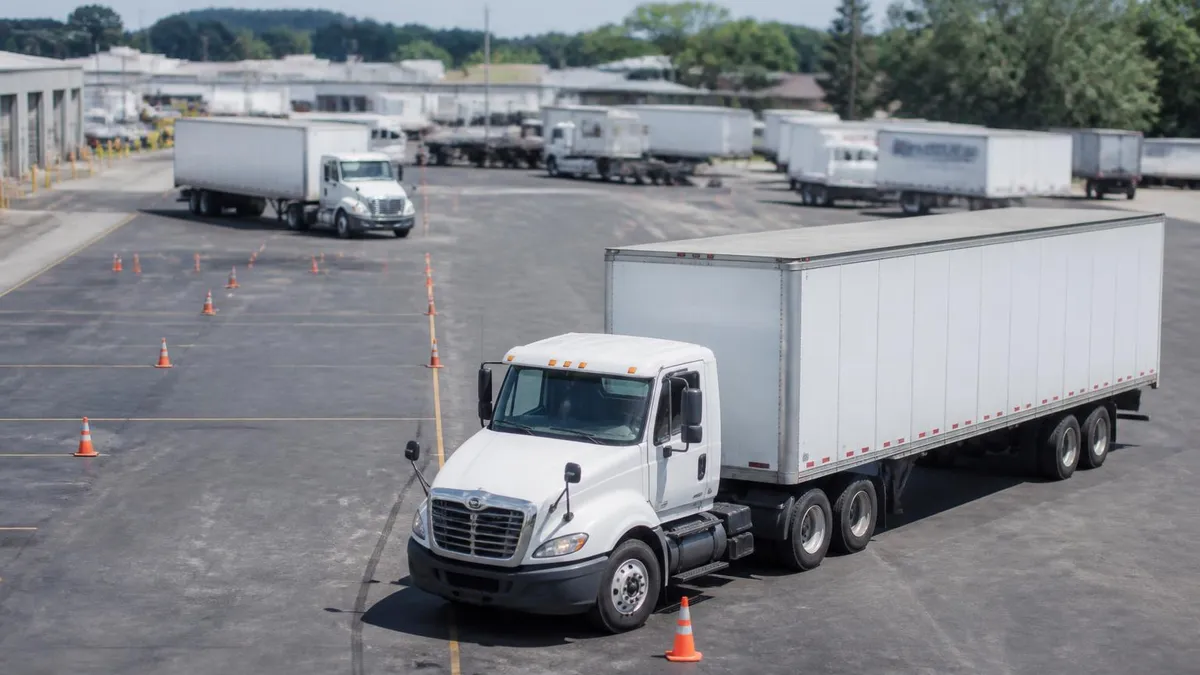
If your appointment is for the Knowledge Test rather than the Skills Test, the checklist is shorter — bring your CDL medical card, your two residency proofs, and government ID. You take the test on a computer terminal inside the DMV, usually 50 to 80 questions across General Knowledge plus any endorsements you are testing for simultaneously. Skills Test day is more demanding because you need a roadworthy commercial vehicle, plate registration, current inspection, and proof of insurance — typically supplied by your CDL school or test sponsor.
Knowledge Test passing scores vary slightly by state but most require 80 percent correct across each section, with individual section scoring. Fail one section and you usually only retake that section on your next visit, although a small number of states require a full retake.
Skills Tests grade on a points-deducted basis, with a single major error (rolling stop at a stop sign, striking a cone during the off-set backing maneuver, or accelerating without signaling) typically ending the test on the spot. Examiners will tell you why they failed you, but they will not coach you through the same maneuver again — schedule a retest and keep practicing in your training vehicle.
A small but important detail: most DMV offices will not let you re-enter the testing area after you exit, even if you forgot a phone or wallet at the desk. Leave personal items in your vehicle or in a small bag the clerk can hold. Anything that could connect to the internet is banned during Knowledge Tests, and watches with computing capability are usually flagged. Wear a regular wristwatch or simply check the wall clock to manage your pace.
DMV examiner vs third-party testing site
- +Lower Skills Test fee, typically $25 to $75 versus $150 to $400 at third-party sites
- +Examiner uses official state scoring sheets with no incentive to fail or pass anyone for business reasons
- +Test results post to your state CDL record immediately, often before you leave the office
- +DMV examiners handle higher volumes and tend to be predictable in their grading patterns
- +Free retest scheduling through the same DMV portal if you fail, with no additional booking fees
- +Strong consumer protection if you dispute a result — appeals go through the state DMV directly
- −Wait times for DMV Skills Test appointments run 4 to 8 weeks in busy states versus 1 to 2 weeks at third-party sites
- −Test vehicle is not provided — you bring your own commercial truck with current plates, inspection, and insurance
- −Limited appointment hours, usually weekdays only with occasional Saturday slots at large metropolitan offices
- −Cancellation policies are strict; missing an appointment can cost $20 to $40 in rescheduling fees
- −Examiner pool turnover means your scheduled examiner may be reassigned the morning of your test
- −Walk-in testing is rarely available, even for retests after a recent failure
Pros and Cons at a Glance
| Pros | Cons |
|---|---|
| Examiner uses official state scoring sheets with no incentive to fail or pass anyone for business reasons | Test vehicle is not provided — you bring your own commercial truck with current plates, inspection, and insurance |
| Test results post to your state CDL record immediately, often before you leave the office | Limited appointment hours, usually weekdays only with occasional Saturday slots at large metropolitan offices |
| DMV examiners handle higher volumes and tend to be predictable in their grading patterns | Examiner pool turnover means your scheduled examiner may be reassigned the morning of your test |
| Free retest scheduling through the same DMV portal if you fail, with no additional booking fees | Walk-in testing is rarely available, even for retests after a recent failure |
One of the biggest decisions in the CDL process is whether to take your Skills Test at the state DMV or through a third-party examiner. Both are federally approved under 49 CFR Part 384, but the experience differs meaningfully. The DMV runs Skills Tests at designated commercial vehicle test centers with state employees as examiners. Third-party testers are private individuals or companies certified by the state to administer the same federal Skills Test using the same scoring sheet. About 30 states permit third-party testing for the basic Skills Test; the rest reserve all Skills Tests for state DMV examiners.
If your state allows third-party testing, the math usually favors it for working candidates. Faster scheduling and the ability to test in the same vehicle you trained on are real advantages. The DMV path makes sense if you cannot find a nearby third-party tester or want the lower fee structure. A working driver who shaves four weeks off the calendar by paying $200 more pockets a month of commercial wages — which dwarfs the fee difference.
Now the bad news. Most CDL applications fail not because the candidate cannot drive a truck, but because the paperwork was wrong, the signature went in the wrong field, or the medical certificate was issued under the wrong driver category. DMV clerks are bound by procedure — they cannot accept defective forms even if the error is minor. Below are the most common mistakes our reader logs and state DMV audit reports have surfaced over the last three years. Knowing them in advance saves at least one wasted trip.
Most of these mistakes share a common root: filling out the application in a hurry and not double-checking the medical category selection. The vast majority of CDL applicants are interstate non-excepted — but the DMV will not pre-fill it for you. For a deeper walkthrough of the application form itself, see the Get My CDL step-by-step.
Ready to test your Knowledge Test prep before booking? Run through a high-frequency question bank one more time. You only get a limited number of retries before the DMV makes you wait 30 days.
The CLP-to-CDL upgrade at the DMV is the final step. After you pass the Skills Test, the examiner uploads your pass score to the state CDL system within 24 to 72 hours. You then return to the DMV either in person or through the online upgrade portal — California, Texas, and Florida allow online upgrades — and complete the CLP-to-CDL conversion. The clerk verifies your record, collects the CDL issuance fee, takes a fresh photo, and prints a paper temporary credential. The plastic arrives by mail in 7 to 14 business days.
Endorsements are added in the same upgrade transaction if you completed the matching tests during your CLP period. Hazmat is the exception — TSA fingerprinting and security threat assessment take 30 to 60 days for approval. If you finished the Hazmat Knowledge Test during your CLP but TSA is still processing, the DMV issues the CDL without H and you return later to add it.
Once issued, keep your CDL valid by updating your DOT medical certificate before it expires. A lapsed medical card downgrades your CDL to a regular driver's license automatically. For trade-offs between classes, the CDL Class A guide covers the differences.
The DMV is procedural, not adversarial. Bring the right paperwork, book the right appointments in the right order, and respect the 14-day CLP rule. Do those three things and the office turns from a multi-week obstacle into a one-morning errand. If you hit a wall, pause, fix the underlying issue, and rebook.
DMV staff at commercial vehicle units handle hundreds of CDL applications a month. Treat them as collaborators, not gatekeepers. Ask questions when something on the form is unclear. The applicants who walk out with a CDL on the first attempt are almost always the ones who slowed down at the counter, double-checked their forms, and asked a follow-up question before signing anything.
Use the FAQ below to confirm the small details that get applicants stuck. The answers reflect 2026 state DMV procedures and current FMCSA federal rules.
CDL Questions and Answers
About the Author
Licensed Driving Instructor & DMV Test Specialist
Penn State UniversityRobert J. Williams graduated from Penn State University with a degree in Transportation Management and has spent 20 years as a certified driving instructor and DMV examiner consultant. He has personally coached thousands of applicants through written knowledge tests, skills assessments, and commercial driver licensing programs across more than 30 states.
Join the Discussion
Connect with other students preparing for this exam. Share tips, ask questions, and get advice from people who have been there.
View discussion (7 replies)