
Border Patrol Agent Requirements Guide 2026 October
Free Border Patrol Agent Requirements Guide practice test with questions and answer explanations. Prepare for the 2026 October exam with instant scoring. 🧠
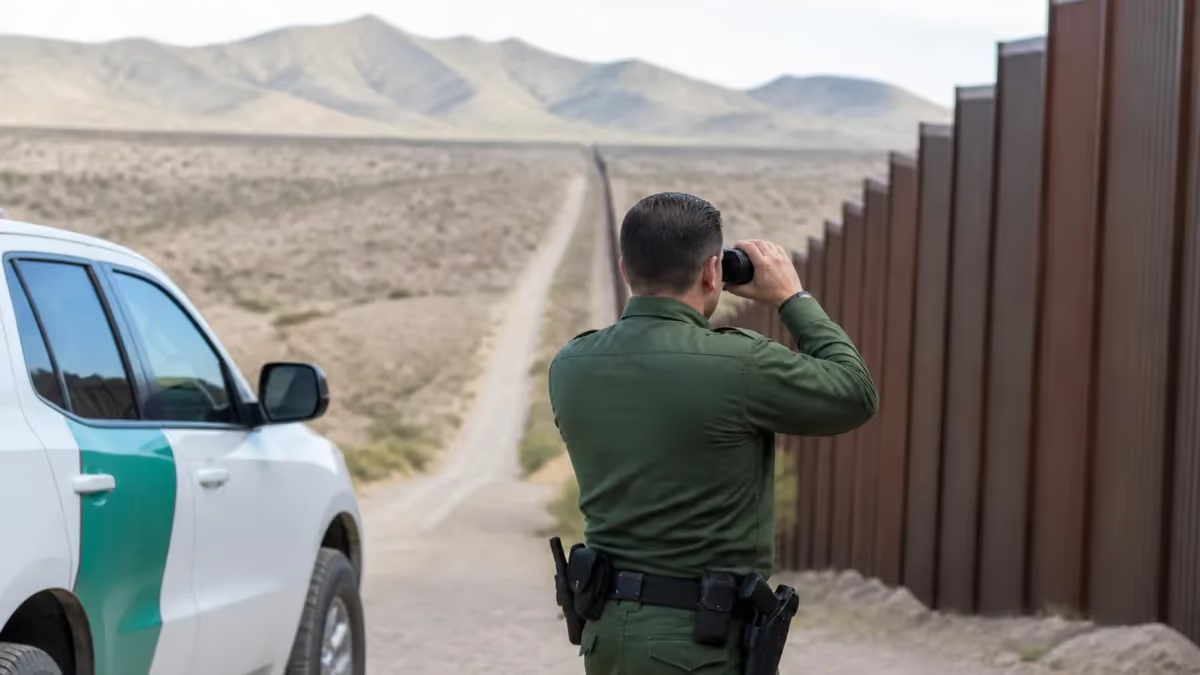
US Customs and Border Protection (CBP) Border Patrol Agents are federal law enforcement officers responsible for securing the US border between ports of entry. The role involves patrolling the border on foot, in vehicles, and via air and marine assets; detecting and apprehending individuals entering the country illegally; preventing drug smuggling and trafficking; and enforcing immigration laws. It is a demanding federal career with competitive pay, strong benefits, and significant physical and background requirements.
Most Border Patrol Agent duty stations are located along the US-Mexico border in states like Texas, Arizona, New Mexico, and California, and along the northern border with Canada. Remote postings in areas with limited amenities are common. Agents should be prepared for rural or semi-rural assignments, shift work including nights and weekends, and physically demanding field conditions in extreme weather. The work environment is substantially different from office-based federal positions.
The CBP is one of the largest law enforcement agencies in the United States and Border Patrol Agents are among its most widely recruited positions. The hiring process is rigorous and lengthy—plan for 6 to 18 months from application to final appointment. Understanding the full requirements before you apply helps you evaluate your eligibility, identify any gaps to address, and prepare for each stage of the process without surprises.
All selected candidates must complete the Border Patrol Academy, a 17 to 20 week residential training program located in Artesia, New Mexico or Charleston, South Carolina. The academy covers immigration and customs law, firearms qualification, physical tactics, driving, and Spanish language training. You are paid your full salary while in training, and housing and meals are provided. Academy training is demanding—candidates who enter already in excellent physical condition and with some Spanish language background perform significantly better than those who arrive unprepared.
After graduating from the academy, new agents are assigned to a sector—typically along the southern or northern border. The assignment process considers your preference list, but the needs of CBP determine the actual posting. Agents generally spend their first two years at their initial duty station before becoming eligible for reassignment requests. Career mobility improves over time, with opportunities for positions in interior enforcement, canine units, marine operations, and supervisory tracks becoming accessible with seniority and performance.
A border patrol agent career offers federal law enforcement benefits including the Federal Employees Health Benefits (FEHB) program, FERS retirement, Thrift Savings Plan (TSP), generous leave accrual, and Law Enforcement Retirement at age 50 with 20 years of service or at 57 with 25 years of service. These benefits make Border Patrol Agent positions among the most sought-after entry-level federal law enforcement roles, creating high competition and making the thorough upfront preparation this guide covers all the more important.
CBP actively recruits candidates with military backgrounds, law enforcement experience, and bilingual Spanish ability. Prior military service is viewed favorably and can also count as specialized experience for grade-level determination, meaning veterans may be eligible to enter at a higher GS level than their formal education alone would support. Veterans’ preference applies to the competitive hiring process and can influence ranking on job announcements, giving veterans a procedural advantage beyond the substantive experience they bring.
This guide covers every requirement for the Border Patrol Agent position: citizenship and age, education and experience pathways, the physical fitness test requirements, background investigation components, medical and vision standards, and the salary range you can expect at different grade levels. If you’re seriously considering this career, knowing exactly what CBP looks for at each step gives you the best possible chance of completing the process successfully.
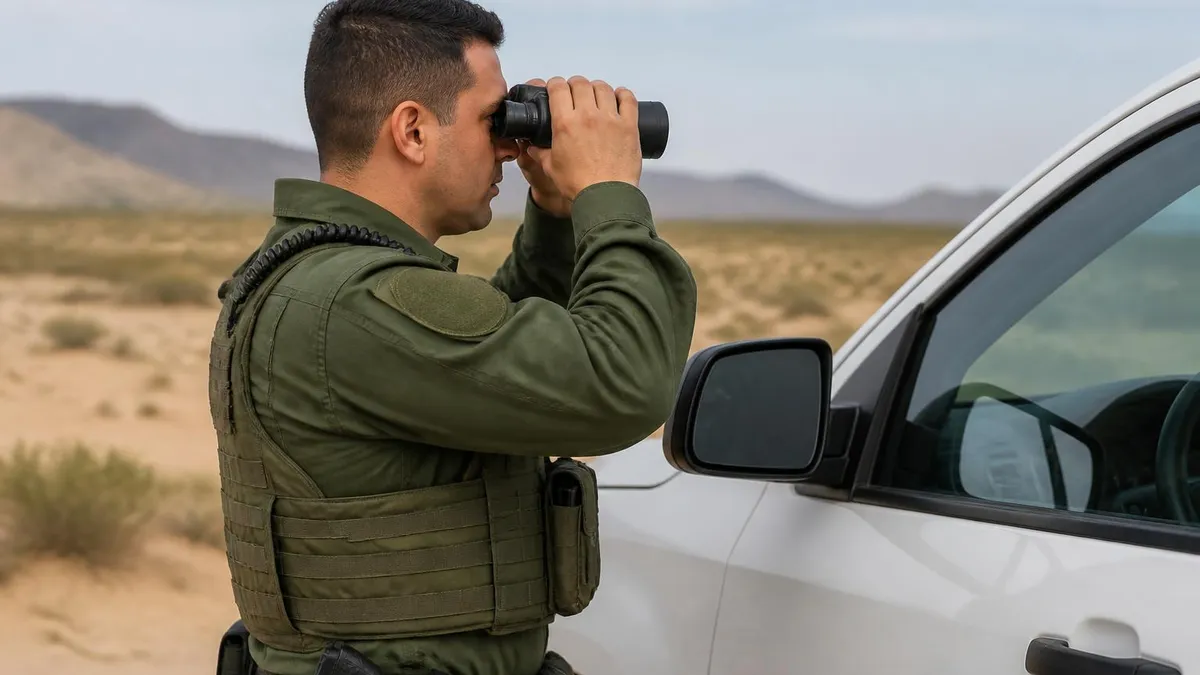
The basic eligibility requirements for Border Patrol Agent are non-negotiable. These are hard disqualifiers—if you don’t meet them, CBP will not proceed with your application regardless of your other qualifications. Unlike some federal positions where a waiver process exists, most of these requirements have no exceptions.
US citizenship is required. Permanent residents (Green Card holders) are not eligible. You must be a US citizen at the time of application. Dual citizens are eligible as long as they are also US citizens, but CBP may scrutinize foreign citizenship ties closely during the background investigation. DACA recipients are not eligible for Border Patrol Agent positions regardless of other qualifications.
Age: You must be appointed to the position before your 40th birthday. There are no exceptions to this rule for most applicants, though military veterans who have worked in law enforcement may have some age limit adjustments under specific federal provisions. The age limit exists because Border Patrol Agents are covered under special law enforcement retirement provisions that require 20 or 25 years of service before mandatory retirement at age 57, and the math only works if you enter before 40.
Driver’s license: A valid, unrestricted driver’s license is required. This is checked during the application process. Major traffic violations, suspended licenses, or DUI history are red flags in the background investigation even if your current license is valid.
Criminal history: No felony convictions. No misdemeanor convictions for domestic violence (under the Lautenberg Amendment, this is an absolute disqualifier for any law enforcement position involving firearms). No drug use within recent years—CBP takes marijuana use seriously even in states where it is legal, as federal law governs the position. Recent hard drug use is typically disqualifying. Distant minor drug use may not be, but you must be truthful about it on your background forms.
Spanish language requirement: Border Patrol Agents must demonstrate Spanish language proficiency. CBP does not require you to be fluent at application, but you will need to achieve proficiency through the training program. If you already speak Spanish at a conversational level, this gives you a meaningful advantage during the Border Patrol Academy, where Spanish instruction is a core component and final evaluation. Non-Spanish speakers who enter the academy have successfully completed language training, but the learning curve is steep alongside all other academy demands.
Financial standards: CBP reviews your credit history as part of the background investigation. Significant unresolved debt, bankruptcy, or a pattern of financial irresponsibility can raise suitability concerns. This doesn’t mean minor debt or student loans disqualify you, but candidates with delinquent accounts, wage garnishments, or recent bankruptcy should address financial issues before applying where possible. Demonstrating a good-faith plan to resolve debt can sometimes mitigate concerns raised during the background phase.
Tattoo and appearance standards: CBP has policies on visible tattoos and body modifications. Tattoos on the face, neck, or hands may be disqualifying or subject to review. Tattoos with extremist, racist, indecent, or anti-government content are disqualifying regardless of location. Applicants with visible tattoos should review the current CBP policy before applying, as standards are subject to update.
Military selective service: Male applicants born after December 31, 1959 must be registered with the Selective Service System. Failure to register is disqualifying unless you can establish that the failure was not knowing or willful.
Border Patrol Agent Requirements by Category
| Section | Questions | Time |
|---|---|---|
| Citizenship and Legal Status | — | — |
| Age Requirements | — | — |
| Education / Experience | — | — |
| Physical and Medical Standards | — | — |
| Background and Character | — | — |
The Border Patrol Agent Physical Fitness Test (PFT) consists of three events: push-ups, sit-ups, and a 1.5-mile run (or in some administrations, a 5-mile run). The exact standards vary by age and sex and are periodically updated by CBP. The PFT is taken early in the hiring process, and failure results in disqualification from that hiring cycle. You can reapply and retake it in a subsequent hiring cycle, but it delays your entry by at least several months.
Typical minimum standards for the run event are completing 1.5 miles in under 13 minutes for younger male candidates, with age-adjusted standards for older applicants and different standards for female candidates. Push-up and sit-up minimums are similarly age and sex adjusted. These are minimum standards—candidates who barely meet the minimums may still struggle during the Border Patrol Academy, where physical training is significantly more demanding than the entrance PFT. Preparing to exceed PFT minimums by a comfortable margin is strongly recommended.
CBP does not provide significant lead time between invitation to take the PFT and the actual test date. Start physical conditioning well before you apply, not after you receive a testing invitation. A structured conditioning program of at least 3 months before your PFT date gives you the best chance of performing confidently rather than barely scraping by.
Running 3–4 times per week, supplemented by bodyweight strength training (push-ups, sit-ups, planks, squats), mirrors the event categories directly. Don’t wait until you receive the PFT invitation to start training—by then it may already be too late to reach the conditioning level needed.
The medical exam administered alongside the PFT also checks vision, hearing, and general physical health. Vision must be 20/100 or better in each eye uncorrected and correctable to 20/20 with glasses or contacts. Color vision must be functional for job duties. Hearing loss that significantly impairs radio communication or verbal commands may be disqualifying, though CBP evaluates hearing on a case-by-case basis rather than applying a strict audiometric cutoff in all cases. Any medical condition that could impair the ability to perform law enforcement duties in the field is reviewed by CBP medical officers during suitability determination.
The background investigation is one of the most extensive steps in the CBP hiring process. Investigators verify every piece of employment and educational history you provide, interview personal and professional references, review criminal records at local, state, and federal levels, check financial history, and examine foreign contacts and travel.
The polygraph examination conducted by CBP examiners is separate from the standard background investigation and specifically evaluates whether you have been fully truthful on all application materials. Omissions and inconsistencies are treated as seriously as outright false statements—CBP investigators are highly experienced at finding discrepancies between what applicants disclose and what records show.
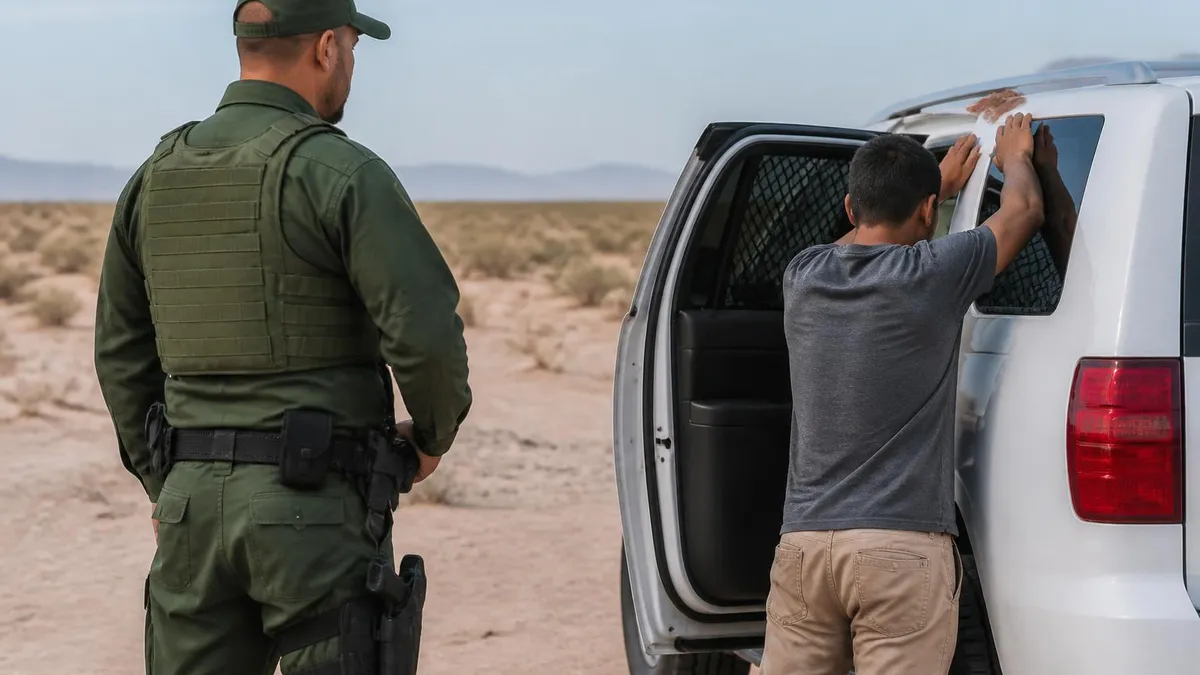
Entry Grade Levels: GS-5 vs GS-7 vs GS-9
Requirements: High school diploma plus 3 years of general experience, OR any bachelor’s degree (regardless of GPA or field of study).
Starting salary: GS-5 with Law Enforcement Availability Pay (LEAP) typically starts around $52,000–$60,000 depending on locality pay area. Agents in high cost-of-living areas (Southwest border states, California) receive higher locality adjustments.
Who qualifies: Applicants with a bachelor’s degree in any field, or applicants with extensive work experience but without a degree. The GS-5 level is the most accessible entry point and appropriate for most new graduates.
Border Patrol Agent Application Preparation Checklist
- ✓Verify citizenship status and age eligibility (must be appointed before age 40)
- ✓Begin physical conditioning immediately — don't wait for a PFT invitation before training
- ✓Gather education records: transcripts, diplomas, professional certifications
- ✓Document all employment history with dates, supervisors, and contact information
- ✓Identify and prepare to disclose any prior drug use, legal issues, or financial problems honestly
- ✓Register with Selective Service if required (male applicants born after 1959)
- ✓Check your credit report — resolve major delinquencies before applying
- ✓Apply through USAJobs.gov and complete the CBP Online Application System (COAS) thoroughly
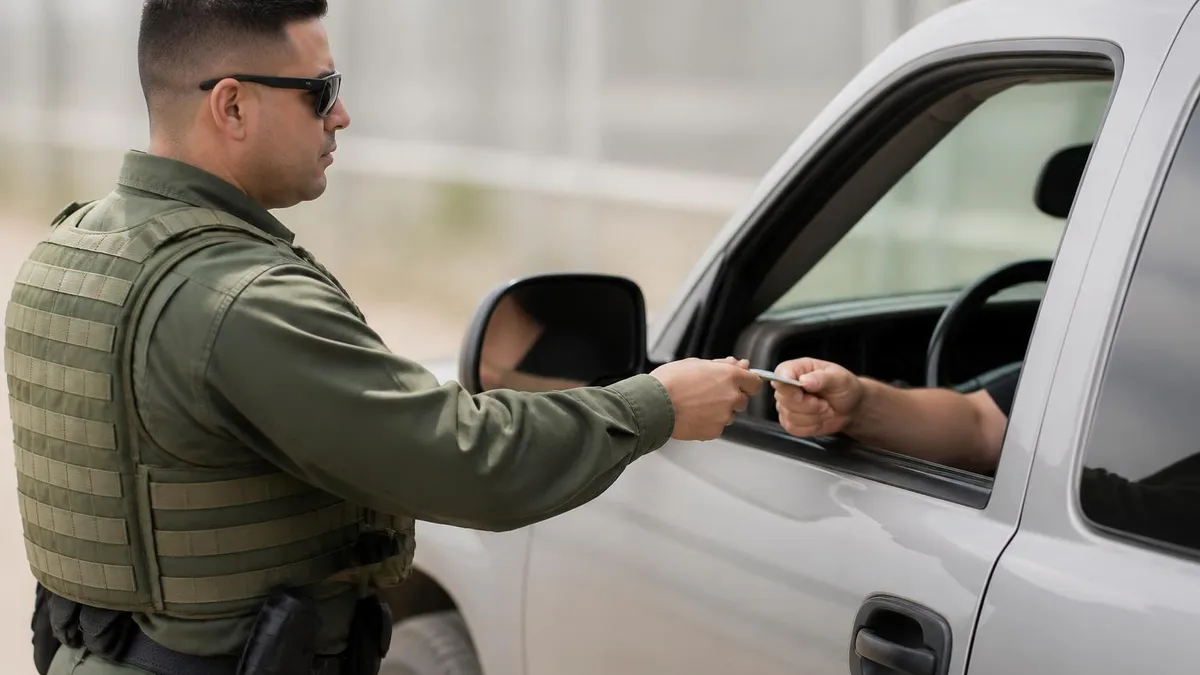
Border Patrol Agent salary depends on grade level (GS-5, GS-7, or GS-9), geographic location (locality pay), and special pay premiums. The federal base pay table is just the starting point—most Border Patrol Agents receive significantly more through Law Enforcement Availability Pay (LEAP) and geographic locality adjustments.
LEAP is a 25% pay supplement added to the base salary of most federal law enforcement officers, including Border Patrol Agents. LEAP is intended to compensate for the availability to work irregular hours, night shifts, and overtime. It is effectively always paid, making it a reliable part of total compensation rather than a variable bonus.
After factoring in LEAP and locality pay, a GS-5 Border Patrol Agent in a high-cost border location like Southern California can earn $65,000 to $72,000 in their first year. A GS-7 in the same location typically earns $72,000 to $82,000. GS-9 starters earn $82,000 to $92,000 in high-cost areas. Lower-cost duty stations, such as certain Texas or New Mexico sectors, will pay less in locality adjustments but offer a lower cost of living in return.
As agents progress through the career ladder to GS-11 and GS-12 (which happens automatically over 3–5 years without promotion competition), total compensation including LEAP and locality commonly reaches $90,000 to $115,000 or more. Supervisory and management positions at GS-13 and above can exceed $130,000 in total annual compensation. The combination of high base pay, LEAP, and comprehensive federal benefits (health insurance, retirement, TSP matching) makes the Border Patrol Agent career one of the highest-compensating entry-level federal law enforcement positions available to applicants without prior law enforcement experience.
Federal employee benefits add substantial value beyond the paycheck. The Federal Employees Health Benefits (FEHB) program offers a wide range of health insurance plans, with the government covering a significant portion of premiums—typically 70% to 75%. The Federal Employees Dental and Vision Insurance Program (FEDVIP) provides additional coverage.
Life insurance through FEGLI, flexible spending accounts, and the Federal Long-Term Care Insurance Program round out the benefits package. New agents also begin accruing annual leave at 4 hours per pay period (13 days per year), increasing to 6 hours after 3 years and 8 hours after 15 years, plus 13 days of sick leave per year.
Law Enforcement Retirement is a major financial benefit. Border Patrol Agents can retire at age 50 with 20 years of service, receiving a pension that typically amounts to 34% to 40% of their highest 3-year average salary, increasing further with additional years. This is substantially earlier and more generous than civilian retirement, and it reflects the physical demands and public safety nature of the role.
The Thrift Savings Plan (TSP) functions as the federal government’s equivalent of a 401(k). CBP contributes an automatic 1% of salary to your TSP account regardless of your own contributions and matches up to 4% of additional contributions you make. For agents who contribute at least 5% of their salary, the government match brings total contributions to 5%—plus the automatic 1%—for a 6% government contribution on top of your own. Over a 20-year career, this compounding benefit adds substantially to retirement income beyond the base pension.
Understanding the retirement structure is important for long-term career planning—the combination of salary, retirement benefits, and federal job security makes this position financially competitive with private sector careers for candidates who qualify and complete the hiring process. You can also read more about the general career pathway in the border patrol career overview.
Border Patrol Agent Career: Benefits and Challenges
- +Competitive federal salary with LEAP pay supplement adding 25% above base
- +Early retirement eligibility at age 50 with 20 years of service
- +Comprehensive federal benefits: FEHB health insurance, TSP retirement, generous leave
- +No education requirement for GS-5 entry — a bachelor's degree in any field qualifies
- +Career advancement to GS-11/12 occurs automatically without promotion competition
- −Lengthy hiring process — 6 to 18 months from application to appointment is typical
- −Age hard cap — must be appointed before age 40 with limited exceptions
- −Mandatory duty stations along remote border areas — relocation to Texas, Arizona, or New Mexico required
- −Polygraph and comprehensive background investigation disqualify many applicants
- −Physically and psychologically demanding work environment with rotation shifts and remote postings
Sample BPA - Border Patrol Agent Practice Questions
Try these questions from our free BPA - Border Patrol Agent practice tests. The correct answer and an explanation follow each question.
During a structured interview for Border Patrol, a candidate is asked 'Describe a time you made a difficult ethical decision.' What type of interview question is this?
- A. Hypothetical situational question
- B. Behavioral interview question based on past experience
- C. Technical knowledge assessment
- D. Fitness standards verification question
Answer: B. Behavioral interview question based on past experience
Behavioral interview questions ask candidates to describe specific past situations, following the principle that past behavior predicts future performance.
A candidate for Border Patrol has well-controlled Type 2 diabetes managed by diet and exercise. What is the most likely outcome of the medical evaluation?
- A. Automatic disqualification regardless of control
- B. Medical evaluation considers functional impact; well-controlled conditions may be waivable
- C. Immediate approval with no restrictions
- D. The candidate must wait 5 years before reapplying
Answer: B. Medical evaluation considers functional impact; well-controlled conditions may be waivable
CBP evaluates conditions based on their functional impact on job performance; well-controlled conditions without end-organ damage may qualify for a medical waiver review.
Which form is used by Border Patrol to document the apprehension of an individual who entered the U.S. illegally?
- A. Form I-9
- B. Form I-213
- C. Form I-485
- D. Form DS-160
Answer: B. Form I-213
Form I-213 (Record of Deportable/Inadmissible Alien) is the CBP document used to record the apprehension and biographical details of individuals encountered in the field.
Under which law is the U.S. Border Patrol primarily authorized to enforce immigration laws?
- A. The Homeland Security Act of 2002
- B. The Immigration and Nationality Act (INA) of 1952, as amended
- C. The USA PATRIOT Act of 2001
- D. The Border Security, Economic Opportunity, and Immigration Modernization Act
Answer: B. The Immigration and Nationality Act (INA) of 1952, as amended
The Immigration and Nationality Act (INA) of 1952, with subsequent amendments, is the foundational statute governing U.S. immigration and Border Patrol enforcement authority.
Border Patrol Agent Questions and Answers
About the Author

Educational Psychologist & Academic Test Preparation Expert
Columbia University Teachers CollegeDr. Lisa Patel holds a Doctorate in Education from Columbia University Teachers College and has spent 17 years researching standardized test design and academic assessment. She has developed preparation programs for SAT, ACT, GRE, LSAT, UCAT, and numerous professional licensing exams, helping students of all backgrounds achieve their target scores.
Join the Discussion
Connect with other students preparing for this exam. Share tips, ask questions, and get advice from people who have been there.
View discussion (8 replies)