
How to Become a Border Patrol Agent: Full Guide 2026 October
Pass your How to Become a Border Patrol Agent: ✏️ exam on the first attempt. Practice questions with detailed answer explanations, hints, and instant scoring.
How to Become a Border Patrol Agent
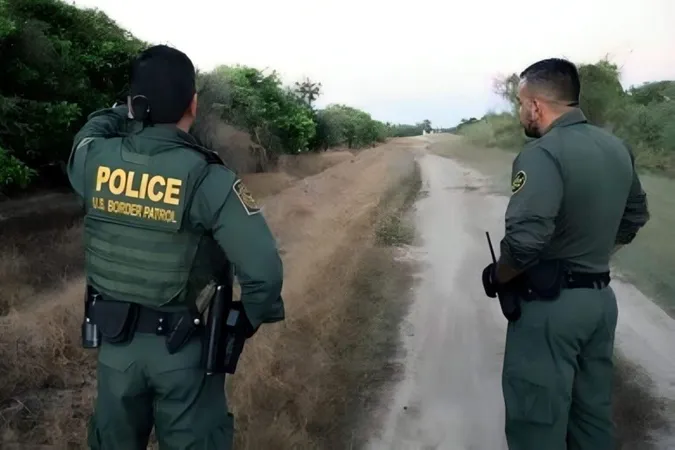
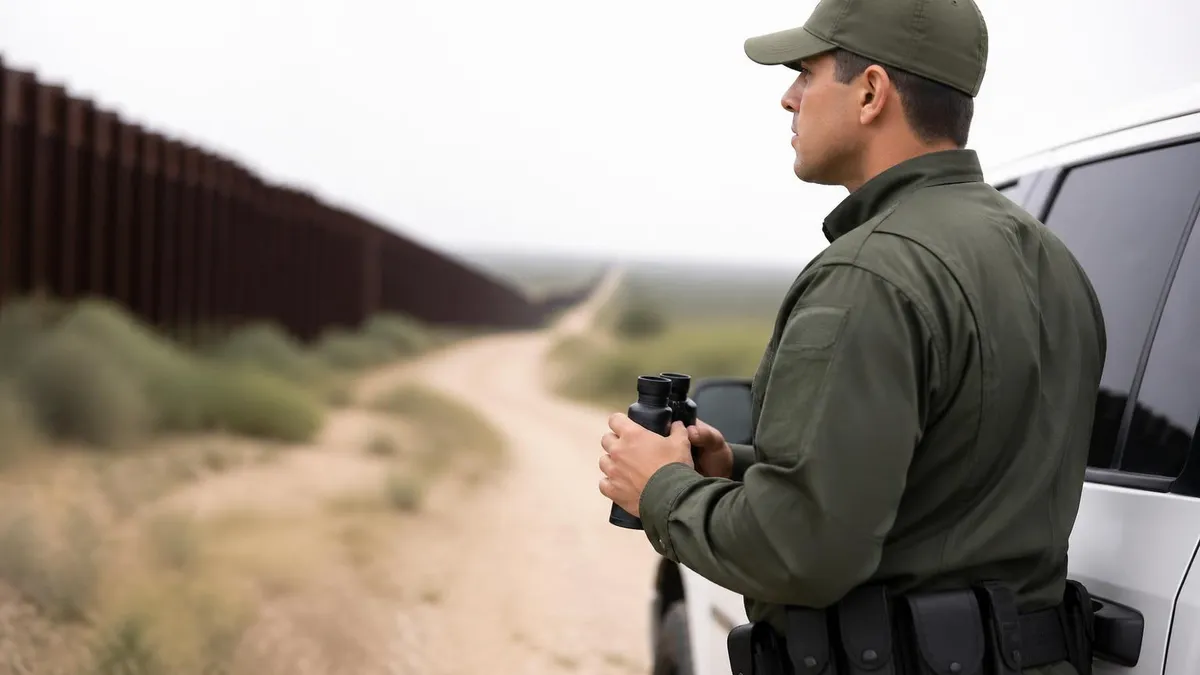
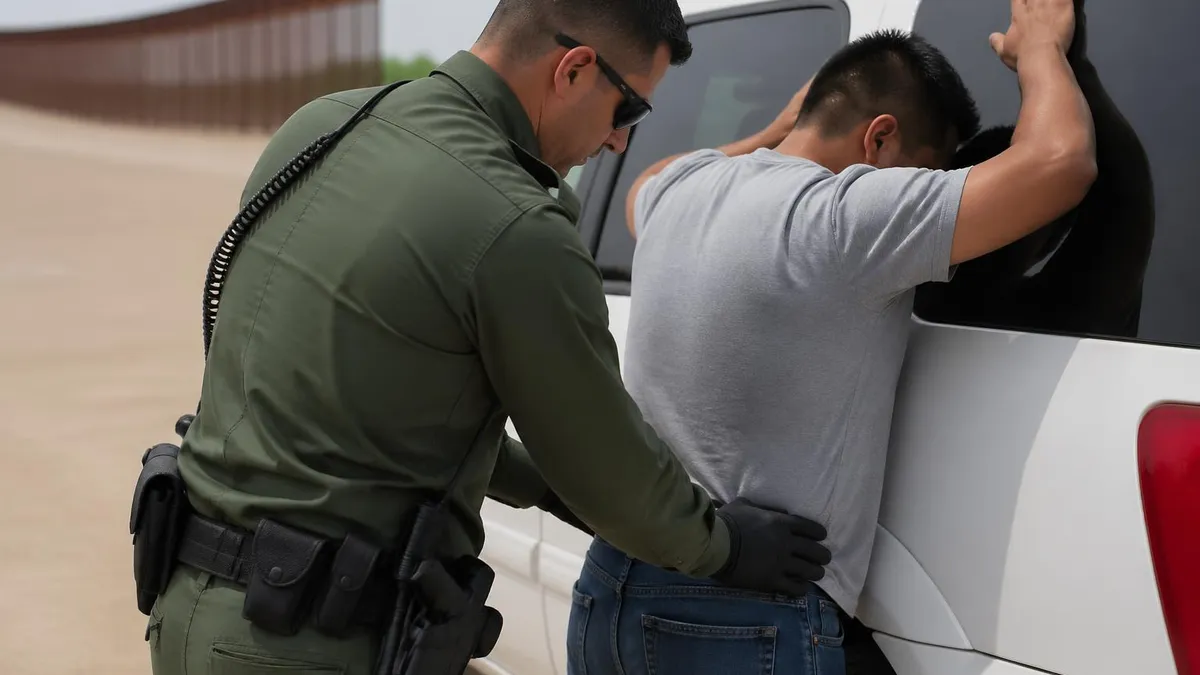
Border Patrol Agents (BPAs) work for U.S. Customs and Border Protection (CBP), one of the largest law enforcement agencies in the country. They patrol the borders between ports of entry — on foot, horseback, ATV, and in vehicles — detecting and apprehending people attempting to enter the United States illegally, and interdicting drugs and other contraband. It's demanding, physical, sometimes dangerous, and for the right person, genuinely meaningful work.
Getting there takes real commitment. The hiring process is rigorous, multi-step, and can take a year or more from application to academy graduation. But it's navigable if you know what's coming. Here's the full picture.
Basic Eligibility Requirements
Before applying, you need to meet basic criteria. CBP is strict on these — there are no waivers for most:
- Citizenship: Must be a U.S. citizen. Dual citizenship may be considered but is scrutinized during the background investigation.
- Age: Must be under 40 years old at time of appointment. There are exceptions for veterans with preference eligibility.
- Driver's license: Valid driver's license required. Your driving record is reviewed during the background check.
- Education or experience: A bachelor's degree or at least one year of criminal investigative experience, or a combination.
- Physical fitness: You must pass a physical fitness test and medical examination. Vision, hearing, and fitness standards are specific and non-negotiable.
- Drug use: CBP has a zero-tolerance policy for illegal drug use. Past marijuana use may be disqualifying depending on recency and frequency.
If you have a criminal record — including arrests that didn't lead to convictions — you'll need to disclose everything. CBP investigates thoroughly, and lying or omitting information on your application is automatic disqualification and potentially criminal.
The Border Patrol Hiring Process Step by Step
The BPA hiring pipeline has several distinct phases. Most candidates don't fail the exam — they get tripped up in the background investigation or medical evaluation. Understanding every step helps you prepare appropriately, not just for the test.
Step 1: Apply Online
Applications go through USAJobs.gov. Announcements open periodically — CBP isn't always actively hiring in every location. When an announcement is open, you have a limited window to apply. Set up a USAJobs profile and alerts for Border Patrol Agent positions well in advance.
Step 2: Entrance Exam
After application review, qualified candidates are invited to take the BPA Entrance Exam. It has two components: a logical reasoning test and a Spanish language proficiency assessment. The logical reasoning section is the primary screening tool — it tests pattern recognition, deductive reasoning, and critical thinking. No law enforcement knowledge is tested at this stage.
The Spanish assessment is for placement — if you're already proficient, you may skip or shorten the mandatory Spanish language training at the academy. If you're not, you'll still be considered, but you'll have a longer training commitment.
Step 3: Structured Interview
Candidates who pass the exam proceed to a structured panel interview. This is a behavioral interview format — they'll ask you to describe specific past situations using STAR (Situation, Task, Action, Result) responses. Prepare examples from your work, military, or volunteer history that demonstrate integrity, problem-solving, composure under stress, and teamwork.
Key Takeaway: BPA certification demonstrates expertise in this field. Most candidates spend 4-8 weeks preparing with practice tests before taking the exam.
Background Investigation, Medical, and Fitness Standards
Step 4: Background Investigation
This is where many candidates are eliminated — not because they're bad people, but because their history doesn't withstand CBP's scrutiny. The investigation covers: criminal history, financial history (delinquencies and debts signal integrity risk), employment history, drug use, international travel, and relationships with foreign nationals. It typically takes 6–12 months. Be completely honest in your SF-86 (the security clearance questionnaire) — investigators will find discrepancies.
Step 5: Medical Examination
CBP has specific medical standards. Vision requirements include distant visual acuity correctable to 20/20 in each eye. Color blindness testing is conducted. Hearing must meet specified thresholds. Existing medical conditions are evaluated for duty fitness. If you wear contact lenses or glasses, that's typically acceptable — but you need to verify current standards against your specific vision status.
Step 6: Physical Fitness Test (PFT)
The BPA PFT includes four components: a sit-and-reach flexibility test, maximum sit-ups in one minute, maximum push-ups in one minute, and a 1.5-mile run. Each component has minimum passing standards and a scale for scoring. The 1.5-mile run time standard is typically under 15 minutes for competitive scoring, though the minimum is somewhat higher. The stronger your fitness going in, the more comfortable you'll be — and the academy itself is physically demanding, so arriving in shape matters beyond just passing the PFT.
The Academy: What to Expect
Candidates who clear all pre-employment hurdles are assigned to the Border Patrol Academy in Artesia, New Mexico. Training lasts approximately 6 months. It's residential — you live at the academy for the duration.
Academy training covers law and authority, physical tactics, firearms qualification, vehicle operations, immigration law, and Spanish language (for those requiring instruction). Physical conditioning is intensive throughout. Academic standards are enforced — you need to pass all course modules to graduate.
Spanish language is taken seriously. Even if you pass the proficiency assessment before the academy, you'll still have language training. If you're starting from zero in Spanish, it's one of the most challenging aspects for many candidates — the expectation is functional working proficiency by graduation, not fluency but enough to conduct basic law enforcement interactions.
After the Academy: Assignment and Career
Graduates are assigned to a Border Patrol Sector — primarily in the Southwest (Texas, New Mexico, Arizona, California), though sectors exist along the Northern Border and in coastal areas. First-year agents typically don't get to choose their location, and rural Border Patrol assignments can mean living in remote areas with limited amenities.
Starting salary for BPAs is in the GL-5 to GL-7 range (depending on education and experience), with law enforcement availability pay (LEAP) adding a significant supplement. Advancement to GL-9 and GL-11 comes with time and performance. Senior agents, supervisors, and special units (BORTAC, intelligence, K-9) offer additional career progression. Federal law enforcement retirement benefits are strong — agents can retire at 50 with 20 years of service or at any age with 25 years.
Preparing for the BPA Entrance Exam
The logical reasoning exam is the first gate most candidates encounter, and it's not something you can cram the night before. The test measures how you think, not what you've memorized. That said, familiarity with the format — inductive and deductive reasoning question types, pattern completion, argument evaluation — makes a real difference in how confidently you work through problems.
Work through practice logical reasoning questions regularly in the weeks before your exam. Time yourself. Get comfortable with the pacing — the exam has time pressure, and candidates who freeze on unfamiliar question formats lose time they can't recover. The more you've seen these question types in practice, the less activation energy each one requires on test day.
- +Industry-recognized credential boosts your resume
- +Higher earning potential (10-20% salary increase on average)
- +Demonstrates commitment to professional development
- +Opens doors to advanced career opportunities
- −Exam preparation requires significant time investment (4-8 weeks)
- −Certification fees can be $100-$400+
- −May require continuing education to maintain
- −Some employers may not require certification
Sample BPA - Border Patrol Agent Practice Questions
Try these questions from our free BPA - Border Patrol Agent practice tests. The correct answer and an explanation follow each question.
What does 'sign cutting' refer to in Border Patrol field operations?
- A. Using wire cutters to breach a border fence
- B. The skill of detecting and interpreting tracks, footprints, and other physical disturbances left by people or animals
- C. Installing surveillance cameras along patrol routes
- D. Cutting communication lines to isolate smuggling suspects
Answer: B. The skill of detecting and interpreting tracks, footprints, and other physical disturbances left by people or animals
Sign cutting is a traditional Border Patrol skill involving reading physical traces — tracks, disturbed soil, broken vegetation — left behind by individuals crossing the terrain.
What does the phrase '¿Cuál es el propósito de su visita?' mean?
- A. What is your final destination?
- B. What is the purpose of your visit?
- C. How long will you stay?
- D. Do you have family here?
Answer: B. What is the purpose of your visit?
'Propósito de su visita' directly translates to 'purpose of your visit,' a standard immigration question.
What does the Spanish phrase '¿Tiene usted documentos de identificación?' mean in English?
- A. Do you have any luggage?
- B. Do you have identification documents?
- C. Where are you traveling to?
- D. How long have you been traveling?
Answer: B. Do you have identification documents?
'¿Tiene usted documentos de identificación?' translates directly to 'Do you have identification documents?'
An agent needs to inform a subject they are under arrest. Which phrase is correct?
- A. Usted está libre de irse.
- B. Usted está bajo arresto.
- C. Usted puede continuar.
- D. Necesita una cita.
Answer: B. Usted está bajo arresto.
'Usted está bajo arresto' means 'You are under arrest,' which is the standard phrase agents must communicate clearly.
Is Border Patrol the Right Career for You?
The BPA career attracts people drawn to law enforcement, public service, military-adjacent work, or simply the prospect of an active, non-desk job with solid federal benefits. It's not for everyone — the assignments can be remote, the shifts can be difficult, and the work carries genuine physical and sometimes personal risk.
But for candidates who want meaningful work with a clear career ladder, federal retirement benefits, and the challenge of outdoor law enforcement — it's a strong path. The hiring process is demanding by design. That rigor is what ensures the people who make it through are the ones who belong in the job.
Start your preparation early. The logical reasoning exam is learnable. The physical fitness standards are achievable with consistent training. And the background investigation rewards candidates who've lived with integrity. None of those things happen by accident — they happen because you started preparing now.
About the Author

Educational Psychologist & Academic Test Preparation Expert
Columbia University Teachers CollegeDr. Lisa Patel holds a Doctorate in Education from Columbia University Teachers College and has spent 17 years researching standardized test design and academic assessment. She has developed preparation programs for SAT, ACT, GRE, LSAT, UCAT, and numerous professional licensing exams, helping students of all backgrounds achieve their target scores.
Join the Discussion
Connect with other students preparing for this exam. Share tips, ask questions, and get advice from people who have been there.
View discussion (8 replies)