
Border Patrol Agent Academy: What to Expect and How to Prep 2026 October
Pass your Border Patrol Agent Academy: What to exam on the first attempt. Practice questions with detailed answer explanations, hints, and instant scoring. 💡
Where Is the Border Patrol Academy?
The U.S. Border Patrol Academy is located at the Federal Law Enforcement Training Centers (FLETC) in Artesia, New Mexico. It's a residential training program — you live on the compound for the duration of your training. Personal vehicles and frequent off-compound trips aren't part of the program, especially in the early weeks. Plan accordingly.
Why Artesia? Partly historical, partly geographic. The high desert terrain and climate actually mirror many of the environments where Border Patrol agents operate in the Southwest. Training in similar conditions helps candidates adapt to the physical demands of field work before they deploy to their first station.
How Long Is the Border Patrol Academy?
The Border Patrol Agent Academy is approximately 19 weeks (roughly 4.5 months) long. It's one of the longer federal law enforcement training programs, and that length is intentional — the curriculum covers a substantial amount of material, from Spanish language training to law, firearms, driving, and physical fitness.
The weeks break down across several major training phases:
Phase 1 — Foundation (weeks 1–4): Physical fitness, academy procedures, introduction to immigration and nationality law, basic Spanish instruction. Candidates establish baseline fitness and begin learning the legal framework that governs their authority as Border Patrol agents.
Phase 2 — Core Skills (weeks 5–12): Firearms qualification, defensive tactics, driving skills on the FLETC driving track, advanced Spanish, sign cutting (tracking), and expanded legal instruction. This is the most intensive phase — both physically and academically — and where the highest number of voluntary and involuntary separations occur.
Phase 3 — Applied Training (weeks 13–18): Scenario-based exercises applying the skills from earlier phases. Candidates participate in simulated field situations, processing exercises, and integrated scenarios combining law, use of force, language, and tracking skills.
Phase 4 — Final Testing and Graduation (week 19): Final examinations, physical fitness testing, firearms qualifications, and graduation ceremony.
The Spanish Language Requirement
This is the component that surprises the most candidates who arrive at the academy. Spanish is not optional, and it's a serious academic requirement — not a conversational phrases module. Candidates receive intensive Spanish instruction throughout the 19 weeks and must pass a Spanish language exam as a graduation requirement.
The exam tests functional proficiency: can you conduct a basic field interview in Spanish? Can you understand responses? Can you issue commands and explain legal rights to individuals who speak only Spanish?
Candidates who arrive with no Spanish background can still pass — the academy's language training is structured for beginners — but they face a much harder road than candidates who arrive with some prior knowledge. If you know you're heading to the academy, start Spanish study now. Apps like Duolingo help build basic vocabulary; conversation practice with native speakers builds the practical fluency the exam requires.
Non-native Spanish speakers typically find this is the hardest single component of the academy. It's also one of the most valuable skills in the job itself — nearly all field work in the Southwest involves Spanish-speaking individuals.
The border patrol agent minimum qualifications don't require Spanish before you apply, but arriving at the academy with some foundation makes a real difference in your first several weeks.
Physical Fitness at the Border Patrol Academy
Physical fitness standards at the Border Patrol Academy are serious. Candidates must meet a Physical Fitness Test (PFT) that includes:
- 1.5-mile run (must complete in under a specified time — varies by age group)
- Push-ups (minimum count)
- Sit-ups (minimum count)
- Pull-ups or flexed arm hang (requirements vary)
PFTs are conducted at the beginning and end of training, and ongoing physical training (PT) sessions happen throughout the 19 weeks. Candidates who don't meet minimum standards face remedial training and potential separation from the program.
The honest advice: arrive at the academy in excellent physical shape. Not adequate shape — excellent. You'll be training in altitude (Artesia is at around 3,380 feet above sea level), heat, and under cumulative stress from the academic workload. Candidates who arrive physically prepared can focus their energy on the academic and tactical components. Candidates who arrive marginally fit spend energy just keeping up on PT days and have less reserve for everything else.
Minimum targets to aim for before arrival: run 1.5 miles in under 13 minutes (faster if you're competitive), complete 45 push-ups and 45 sit-ups without stopping, and sustain 10+ pull-ups. These represent fitness levels that will put you in a comfortable position at the academy — above the minimums but not at the top of the class.
Firearms Training at the Academy
Border Patrol agents carry firearms as part of their duty equipment, and the academy provides comprehensive firearms training from the ground up. You don't need to arrive as an expert shooter — the instructors will teach you the agency's qualification standards and shooting techniques. But prior shooting experience, especially with handguns, helps.
Candidates who've never handled a firearm spend more of their cognitive bandwidth in firearms training just managing the basic mechanics — grip, stance, trigger control — which leaves less bandwidth for the tactics and judgment components. If you have the opportunity to take a basic pistol course before the academy, it's worth doing.
Firearms qualification is a graduation requirement. Candidates who can't qualify must remediate and retest. Repeated failures can result in separation from the program.
Driving Training
Emergency vehicle operations (EVO) training is a significant component of the Border Patrol Academy. Candidates learn pursuit driving, off-road driving, and vehicle handling on FLETC's dedicated driving track. Agents regularly operate in remote, off-road environments where driving skills matter operationally.
Many candidates find driving training one of the more enjoyable components of the academy — it's physically engaging and the skill development is tangible. But it also includes high-speed maneuvers and situations that require focus and composure. Take it seriously.
What Causes Candidates to Wash Out
Understanding why candidates fail to complete the academy helps you prepare to succeed. The most common reasons for separation:
Academic failure: Immigration law, Spanish, and legal topics require genuine study. Candidates who treat the academic components casually and assume they can coast on field skills fail these portions of training. There are real exams with real consequences for failing. Build study habits before you arrive.
Physical fitness failures: Repeated PFT failures or inability to meet physical standards after remedial training. Arriving fit prevents this category entirely.
Spanish language exam failures: As discussed, the Spanish requirement is a genuine graduation hurdle. Start studying before you arrive.
Conduct violations: Lying, cheating on exams, fighting with classmates, violations of alcohol policies, or other professional conduct failures. These result in immediate separation and may affect future federal employment eligibility.
Firearms disqualification: Inability to qualify after remedial training. Less common than academic or fitness failures, but it happens.
Voluntary withdrawal: Some candidates decide the career isn't right for them. The academy is designed to give candidates a realistic preview of the job — the long hours, challenging conditions, and operational environment. Some people find it's not what they expected and choose to withdraw. That's a legitimate outcome, not a failure.
How to Prepare Before the Academy
The best things you can do in the months before you report to the Border Patrol Academy:
- Get physically fit: Build cardio endurance (running), upper body strength (push-ups, pull-ups), and core strength. The 1.5-mile run is the most commonly cited physical challenge — train specifically for it.
- Study Spanish: Even basic vocabulary and common phrases will help. Apps, online courses, conversation partners — all of it is useful. Target conversational proficiency, not textbook grammar.
- Review immigration basics: A general understanding of immigration law, border security concepts, and CBP/Border Patrol organizational structure gives you context for the legal training at the academy.
- Get sleep and health in order: The academy is physically and mentally demanding. Arriving well-rested and healthy matters more than you might expect.
- Practice firearm handling legally: If you have access to legal training ranges and basic pistol instruction, the familiarity will pay off in firearms training.
The border patrol agent salary and career information is genuinely competitive — federal law enforcement with full benefits, retirement system, and advancement opportunities. The academy is the gateway to all of it. Treating preparation as a serious investment in your career outcome makes the entire process more manageable.
- +Industry-recognized credential boosts your resume
- +Higher earning potential (10-20% salary increase on average)
- +Demonstrates commitment to professional development
- +Opens doors to advanced career opportunities
- −Exam preparation requires significant time investment (4-8 weeks)
- −Certification fees can be $100-$400+
- −May require continuing education to maintain
- −Some employers may not require certification
Sample BPA - Border Patrol Agent Practice Questions
Try these questions from our free BPA - Border Patrol Agent practice tests. The correct answer and an explanation follow each question.
What is the purpose of a Border Patrol checkpoint located away from the immediate border?
- A. To process legal immigration applications
- B. To detect and intercept smuggling and illegal entry after individuals have passed through remote border areas
- C. To collect import duties on commercial goods
- D. To provide rest facilities for long-haul truckers
Answer: B. To detect and intercept smuggling and illegal entry after individuals have passed through remote border areas
Interior checkpoints create a second line of defense to stop individuals and vehicles that evaded detection at the immediate border.
What action must a Border Patrol Agent take if a detainee claims a fear of return to their home country?
- A. Immediately grant the person asylum
- B. Refer the individual to a USCIS asylum officer for a credible fear interview
- C. Deport the individual immediately
- D. Release the individual on their own recognizance
Answer: B. Refer the individual to a USCIS asylum officer for a credible fear interview
Federal law requires that individuals who express a fear of return be referred to USCIS for a credible fear interview before any removal can occur.
What level of security clearance is typically required for a Border Patrol Agent position?
- A. Confidential
- B. Secret
- C. Top Secret
- D. Top Secret/Sensitive Compartmented Information (TS/SCI)
Answer: B. Secret
Most Border Patrol Agent positions require a Secret-level security clearance, obtained through a full background investigation.
What is the maximum distance from the U.S. border within which Border Patrol has expanded search authority without a warrant?
- A. 25 miles
- B. 50 miles
- C. 100 miles
- D. 150 miles
Answer: C. 100 miles
Federal regulations authorize Border Patrol to operate checkpoints and conduct warrantless searches within 100 air miles of any external U.S. boundary.
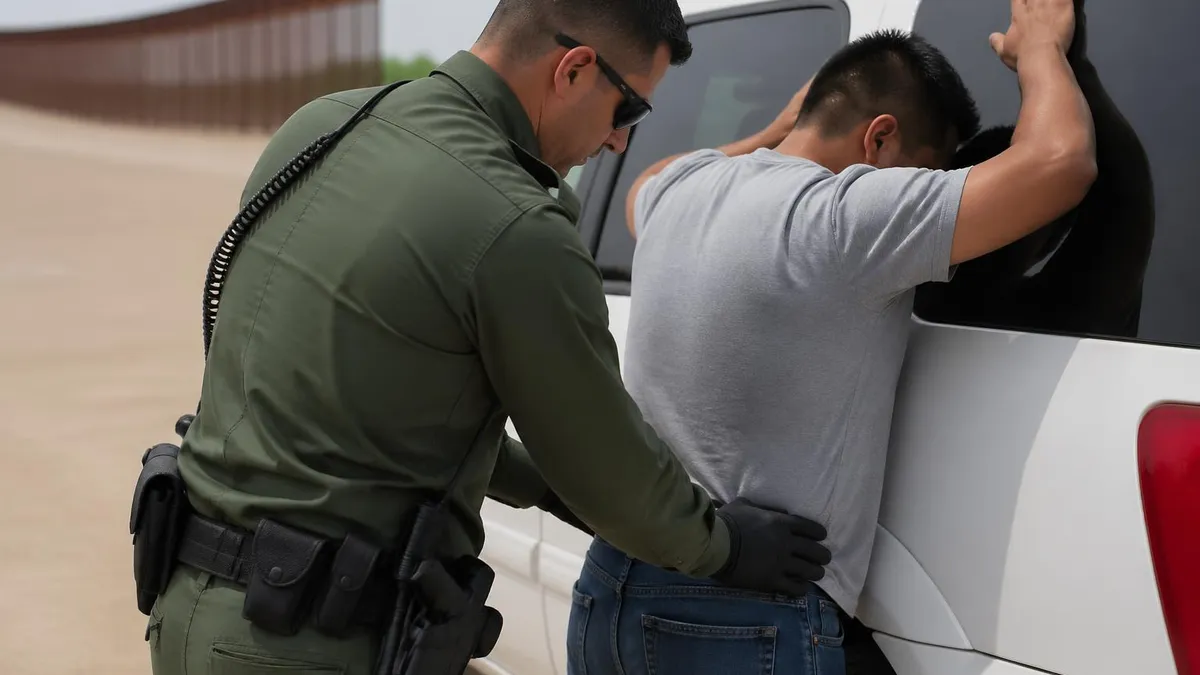
After the Academy: Field Training and Your First Assignment
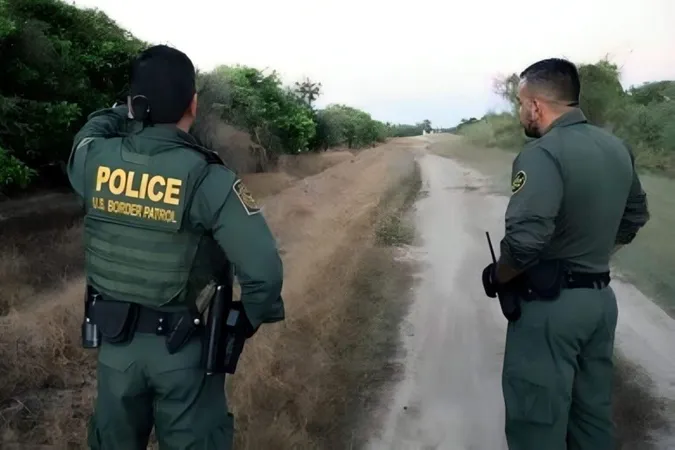
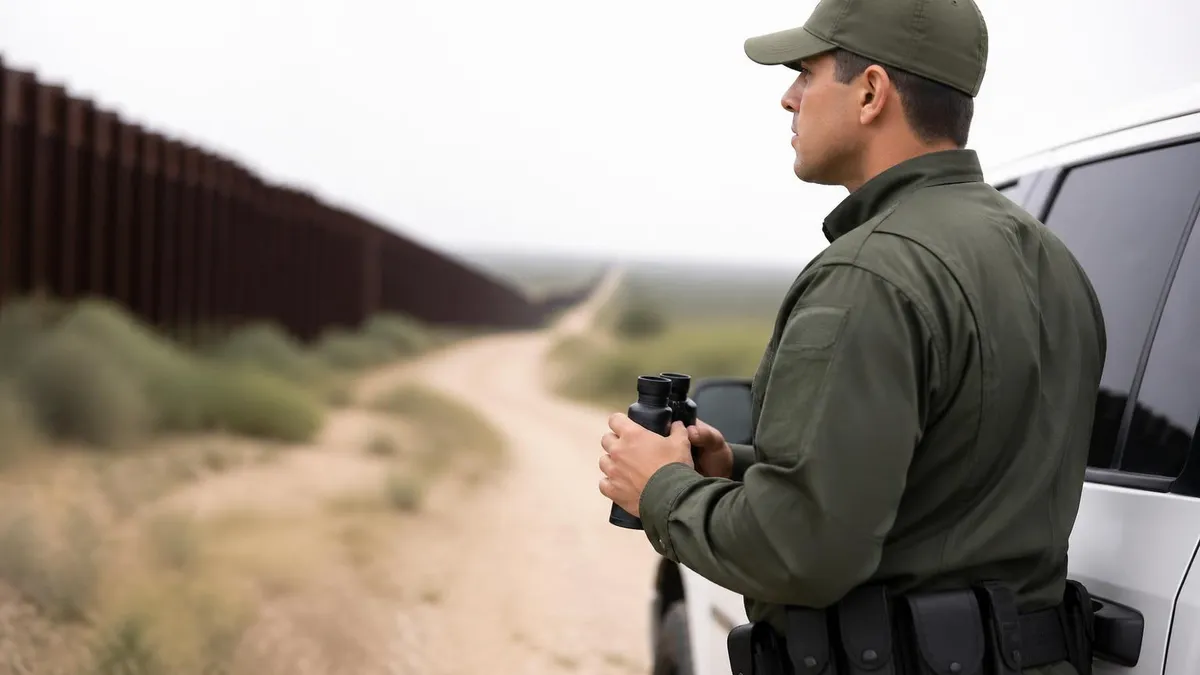
Graduating from the Border Patrol Academy means you're a Border Patrol Agent — but your training doesn't end there. After graduation, you report to your assigned station for field training, which typically lasts several months and involves working alongside experienced agents who mentor and evaluate your performance in actual field conditions.
First station assignments are determined by operational needs, not personal preference. Candidates who express preferences and are flexible about location typically get assigned more quickly than candidates who restrict their availability to specific geographic areas. For most new agents, the first assignment will be in a Southwest border sector — Texas, Arizona, New Mexico, or California — where the largest concentration of enforcement activity occurs.
The career trajectory from there depends on your performance, the needs of the agency, and your own professional ambitions. Some agents spend careers in field operations; others move into supervisory, intelligence, investigative, or training roles. USBP promotes from within, and agents who demonstrate strong performance have clear advancement pathways.
Preparing for the hiring process and the academy isn't a short project — from application to graduation can take 12–18 months. But for candidates who want a federal law enforcement career with genuine mission and competitive compensation, the investment is worth the timeline. Start early, prepare specifically, and arrive at the academy ready to work.
About the Author

Educational Psychologist & Academic Test Preparation Expert
Columbia University Teachers CollegeDr. Lisa Patel holds a Doctorate in Education from Columbia University Teachers College and has spent 17 years researching standardized test design and academic assessment. She has developed preparation programs for SAT, ACT, GRE, LSAT, UCAT, and numerous professional licensing exams, helping students of all backgrounds achieve their target scores.
Join the Discussion
Connect with other students preparing for this exam. Share tips, ask questions, and get advice from people who have been there.
View discussion (8 replies)