
Border Patrol Agent Jobs: How to Become a BPA in 2026 October
✏️ Pass your Border Patrol Agent Jobs: How to Become exam on the first attempt. Practice questions with detailed answer explanations, hints, and instant
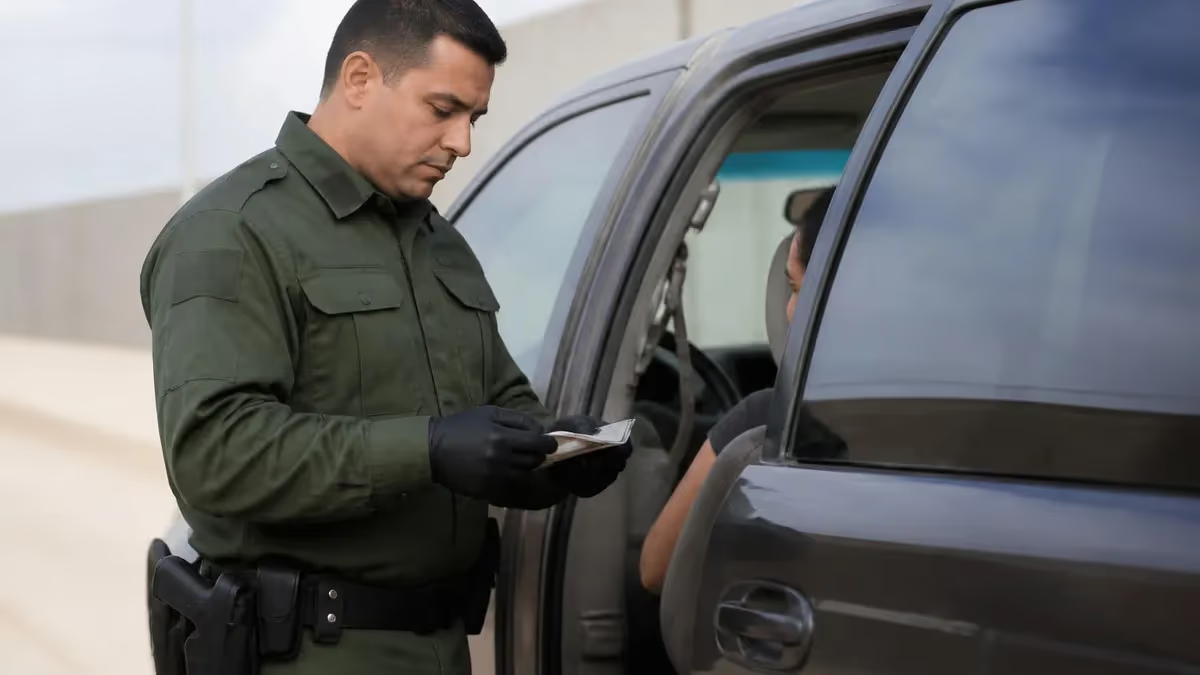
Border Patrol Agent jobs are federal law enforcement positions with U.S. Customs and Border Protection (CBP), a component of the Department of Homeland Security. Border Patrol Agents are responsible for detecting and preventing the unlawful entry of individuals into the United States, interdicting smuggling operations, and maintaining national security along the country's borders — primarily the Southwest border with Mexico, the Northern border with Canada, and coastal areas. The U.S. Border Patrol is the largest federal law enforcement agency in the United States by number of uniformed personnel.
BPA positions are General Schedule (GS) federal positions, typically entering at the GL-5, GL-7, or GL-9 pay grades depending on education and experience. After 18 months in service, agents advance to the GS-12 level through a structured promotion ladder, which represents a significant salary increase over starting pay. Benefits include federal employee health and retirement programs, paid leave, and law enforcement officer retirement at an earlier age than standard federal civilian retirement — typically 20 years of service with retirement available at age 50, or 25 years of service at any age.
CBP periodically opens Border Patrol Agent job announcements on USAJobs.gov, the official federal government jobs portal. Hiring volume has varied significantly over the years depending on congressional appropriations, administration priorities, and attrition rates. When hiring surges occur, CBP may process thousands of applications at once; during lower-volume periods, the hiring pipeline moves more slowly. Candidates who are serious about becoming Border Patrol Agents benefit from preparing ahead of any announcement — completing the required assessments, physical conditioning, and documentation work before an announcement opens reduces time-to-hire and increases the likelihood of successfully clearing all hiring stages.
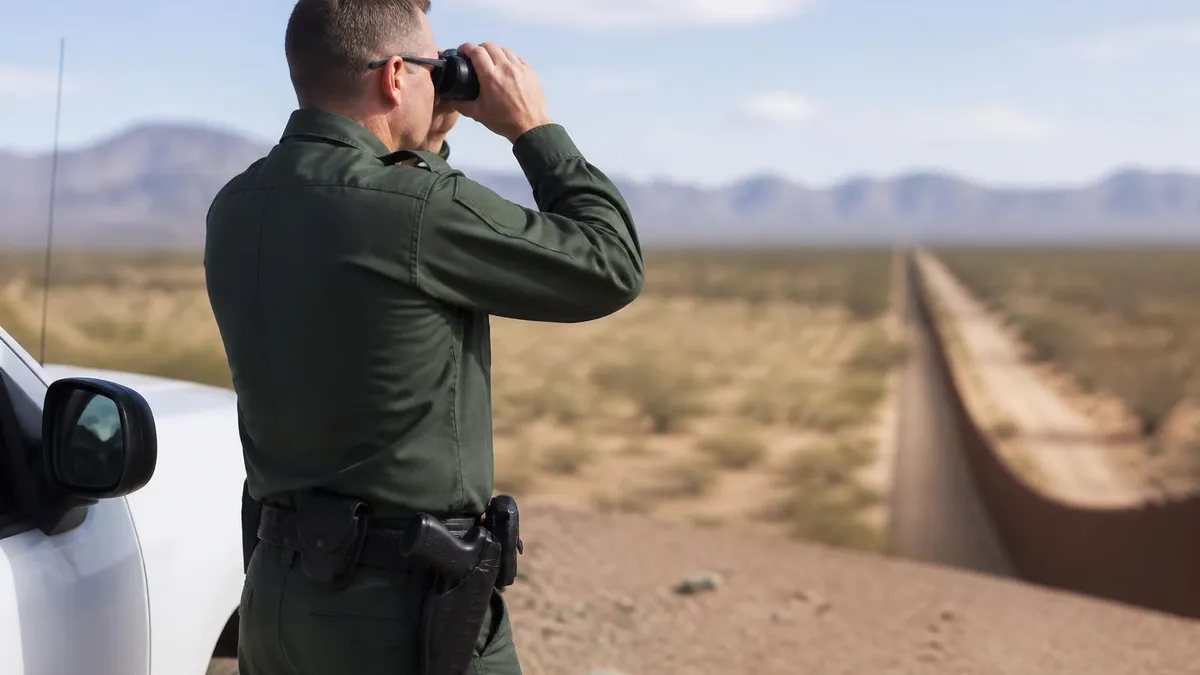
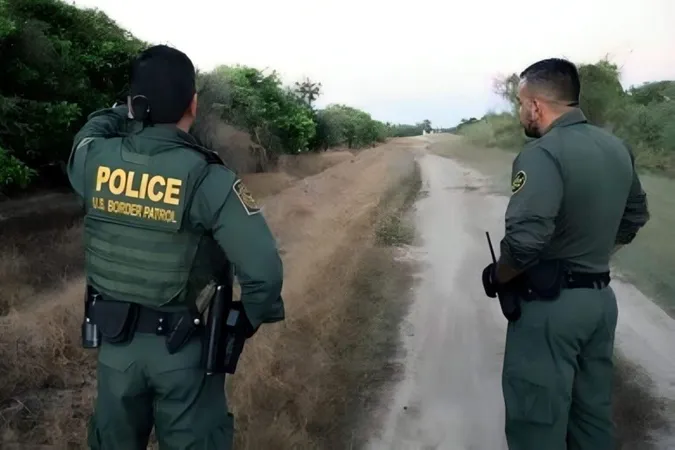
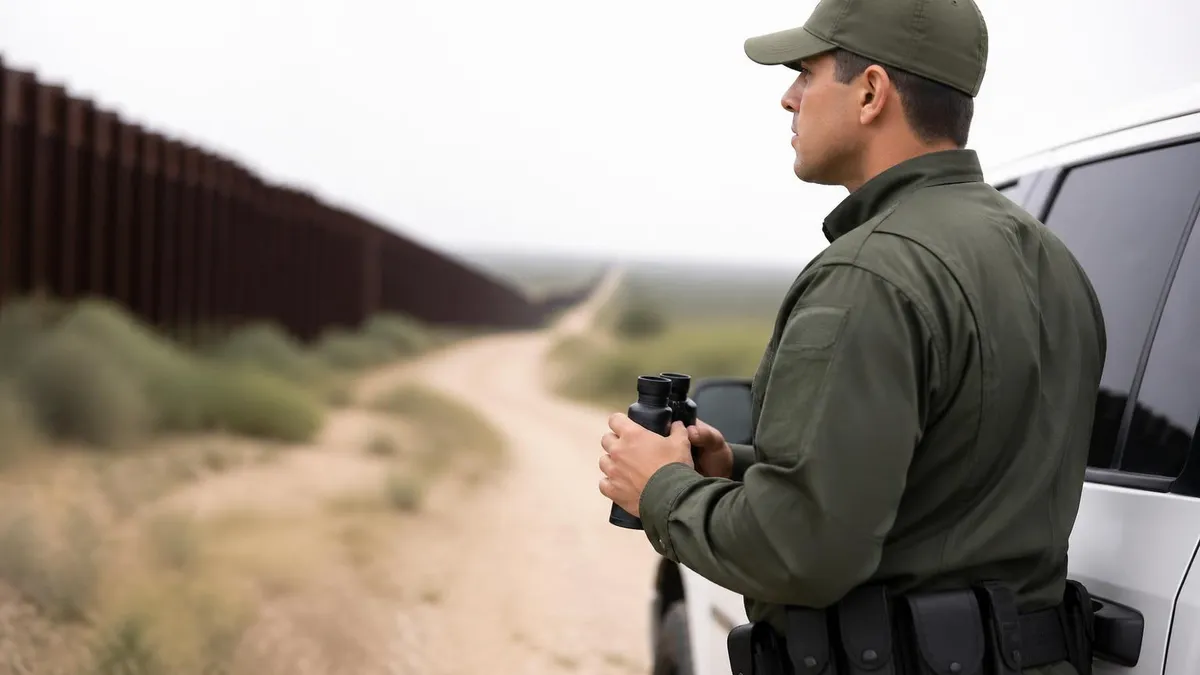
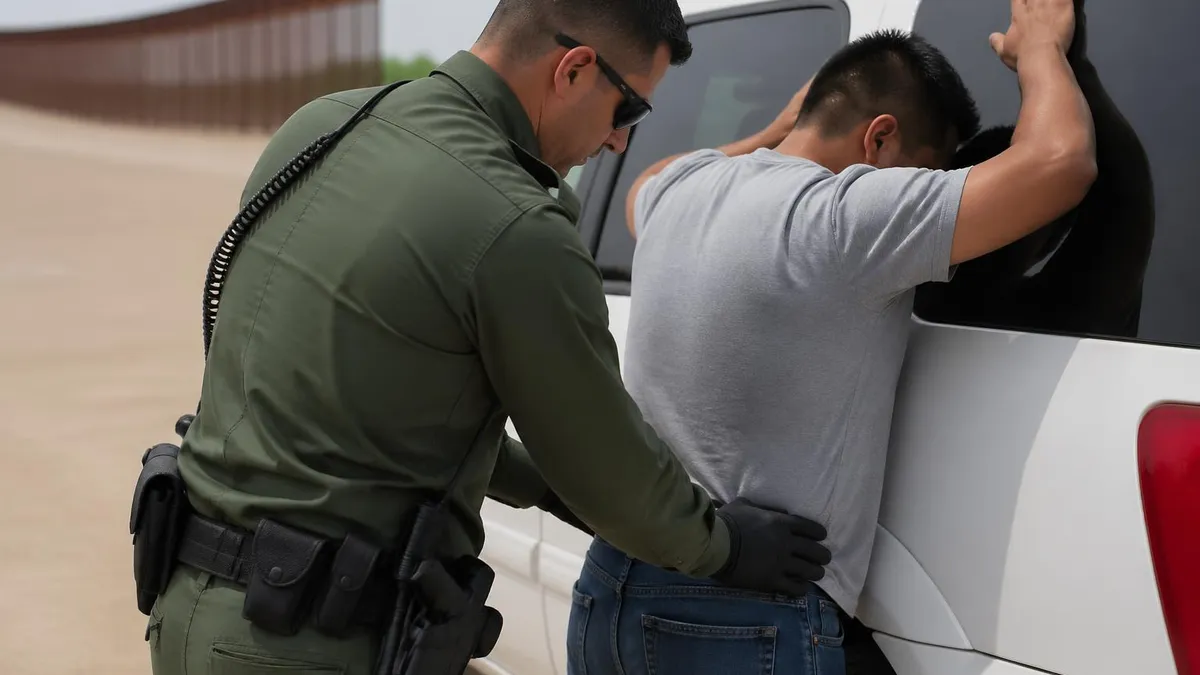
The work of a Border Patrol Agent varies significantly by duty station, sector, and assignment. At high-volume Southwest border stations, agents conduct vehicle and foot patrols of the border line and adjacent terrain, respond to sensor activations and ground disturbances, process apprehensions in the field, and transport individuals to processing facilities. At Northern border stations, the work involves monitoring crossing points, marine patrols, and coordination with Canadian law enforcement agencies on shared border security concerns. Experienced agents can pursue specialized assignments in areas including intelligence, horse patrol, BORSTAR (search and rescue), BORTAC (tactical operations), marine patrol, and air interdiction support.
Career advancement within CBP extends beyond the BPA ladder. Senior agents who demonstrate leadership capability can promote into supervisory positions as Border Patrol Supervisors (GS-13), Border Patrol Assistant Chief Patrol Agents (GS-14), and higher executive positions.
Other agents transition laterally into CBP Office of Field Operations (OFO) port of entry positions, CBP Air and Marine Operations, or investigative roles with Homeland Security Investigations (HSI). The federal law enforcement community also offers lateral transfer opportunities to agencies like DEA, FBI, and ATF for agents who meet specific qualification standards.
The BPA career path is a genuine foundation for a federal law enforcement career that can take many directions depending on individual interests and performance. The skills developed in Border Patrol work — surveillance, interdiction, law enforcement decision-making, working in multi-agency environments, and operating under demanding physical conditions — transfer broadly across federal and state law enforcement careers throughout an agent's working life.
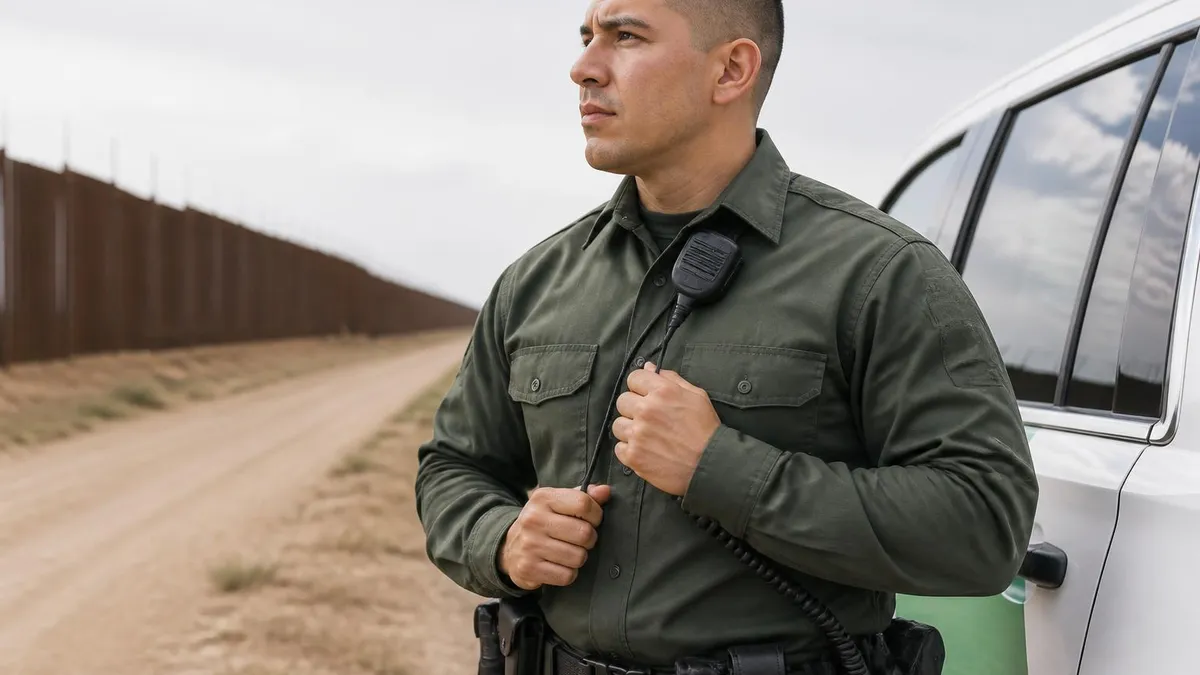
To be eligible for a Border Patrol Agent position, candidates must meet a set of federal law enforcement requirements established by CBP and OPM (Office of Personnel Management). The core eligibility requirements include U.S. citizenship, age requirements (must be under 40 at time of appointment, though veterans may receive exceptions), and a valid driver's license. Candidates who do not meet the age requirement at the time of appointment are ineligible regardless of application timeline.
Education and experience requirements determine the entry grade level. A four-year bachelor's degree qualifies candidates to enter at GL-7. An advanced degree or superior academic achievement (honors, top GPA) may qualify for GL-9 entry. Candidates without a degree can qualify based on experience — one year of specialized experience at the next lower GS grade level is the standard pathway. Military veterans with relevant experience may also qualify through veterans' preference provisions that give their applications priority consideration in competitive hiring.
Language proficiency in Spanish is not a strict requirement for application, but all Border Patrol Agents must achieve proficiency in Spanish within one year of appointment. This requirement reflects the operational reality of BPA work on the Southwest border. Candidates who already have Spanish language skills start with a meaningful advantage in both training and the field. CBP assesses Spanish language skills during training at the Border Patrol Academy, and agents who do not reach required proficiency may face consequences for continued employment.
The background investigation is among the most thorough in federal employment. CBP conducts a Top Secret/Sensitive Compartmented Information (TS/SCI) level background investigation that examines criminal history, financial responsibility, drug use history, foreign contacts, and prior employment going back 10 years or more. Any history of illegal drug use — particularly recent use — is disqualifying. Financial issues including outstanding tax liens, large delinquent debts, or a pattern of financial irresponsibility can also result in disqualification. Candidates with concerns about their background should review the specific adjudicative guidelines before investing time in the hiring process.
The polygraph examination is a significant hurdle in BPA hiring that surprises some candidates. All Border Patrol Agent applicants must pass a polygraph examination that covers topics including prior criminal conduct, illegal drug use, financial fraud, and foreign contacts or affiliations that could create conflicts of interest. CBP's polygraph program has a high failure rate — CBP estimates that a substantial portion of applicants who pass earlier stages do not clear the polygraph examination.
Candidates who have been honest in their application materials and background investigation interviews typically face fewer issues; the polygraph primarily catches those whose disclosed information doesn't match their actual history. Attempting to deceive the polygraph examiner is itself grounds for disqualification and affects the applicant's permanent federal employment record.
Prior law enforcement experience is not required for BPA positions but is a meaningful asset. Candidates with military police, civilian law enforcement, or correctional officer backgrounds enter the hiring process with context that makes the transition to BPA work smoother.
Military veterans in particular make up a significant portion of new Border Patrol Academy classes each year, bringing the discipline, physical fitness foundation, and security clearance experience that supports success through the hiring process and Academy training. Veterans should confirm their DD-214 documentation is current and accurate before applying, as it supports both veterans' preference scoring and possible entrance exam waivers.
BPA candidates must be under 40 years of age at the time of appointment (not application). Veterans who served in the military may be eligible for age waivers under certain conditions. Because the hiring process can take 6–18 months, candidates approaching 40 should check whether they will still be under 40 at the expected appointment date before applying.
Border Patrol Agent salaries follow the federal GS pay scale with law enforcement officer (LEO) pay adjustments that provide additional compensation above the standard GS rate. Entry-level agents at GL-5 start with base salaries in the $49,000–$58,000 range, with agents in higher cost-of-living areas receiving locality pay adjustments that can add 15–30% to base pay. The salary figures vary significantly by duty station location — agents assigned to stations in San Diego, Tucson, El Paso, or the Rio Grande Valley receive different locality pay rates than those at rural or remote stations.
The most significant pay milestone in a BPA career is reaching GS-12, which happens after 18 months at the GS-11 level (following the GL-5/7/9 entry path and normal step increases). GS-12 base pay for law enforcement officers ranges from approximately $72,000 to $94,000 nationally, with locality-adjusted figures in high-cost areas reaching well above $100,000. Senior agents who promote to supervisory or administrative roles can reach GS-13 and higher. Overtime pay is common in Border Patrol work and can meaningfully supplement base salary, particularly at high-activity stations.
Federal employee benefits add substantial value to the total compensation package. FEHB (Federal Employees Health Benefits) provides health insurance options for agents and their families, with the government covering a large share of premium costs. FERS (Federal Employees Retirement System) provides a defined benefit pension, Thrift Savings Plan (TSP) with agency matching, and Social Security coverage.
Law enforcement officers under FERS receive enhanced pension benefits and can retire earlier than standard federal civilian employees — after 20 years of service at age 50, or 25 years of service at any age — making Border Patrol a career with meaningful long-term financial security.
Agents who reach retirement eligibility often have options unavailable to private sector workers of the same age. Retiring at 50 with a federal pension, health coverage that continues into retirement, and the option to take on private sector security or consulting work provides financial flexibility that many careers don't offer.
Some retired agents also return to federal service in civilian positions or continue their careers at state or local law enforcement agencies where prior federal experience adds significant credential value. Understanding the retirement structure before accepting a BPA appointment helps candidates make fully informed career decisions about whether the required service years align with their long-term personal and financial goals.
Law enforcement availability pay (LEAP) is an additional compensation element for BPA positions. LEAP is a premium pay that compensates law enforcement officers for the irregular, unscheduled, and overtime work that the nature of border security operations requires. LEAP is calculated as a percentage of the agent's base salary and effectively provides a built-in overtime supplement even for scheduled hours that fall outside normal parameters. Combined with locality pay, base salary, and actual overtime earnings, BPA total compensation packages often exceed what the base GS pay tables suggest at first glance.
BPA Hiring Process Stages
| Section | Questions | Time | Weight |
|---|---|---|---|
| USAJobs Application | 1 | — | Online |
| BPA Entrance Exam | 2 | — | Pass/Fail |
| Background Investigation | 3 | — | TS/SCI Level |
| Medical Examination | 4 | — | Pass/Fail |
| Physical Fitness Test (CPPFT) | 5 | — | Scored |
| Polygraph Examination | 6 | — | Pass/Fail |
| Structured Interview | 7 | — | Scored |
| Border Patrol Academy | 8 | — | ~6 months |
The CBP Border Patrol Entrance Exam is a logical reasoning test that assesses candidates' ability to apply written rules and guidelines to novel scenarios — a skill core to the work of interpreting and applying immigration law in the field. The exam is not a general knowledge test; it specifically measures logical reasoning ability using a standardized format that has been validated as a predictor of law enforcement job performance.
The exam covers two main components: a logical reasoning section that presents rules and requires candidates to determine the correct outcome in a described scenario, and a Spanish language assessment for candidates who already have Spanish proficiency. Candidates who pass the logical reasoning section with a sufficiently high score may receive a waiver of additional testing requirements. Veterans with three or more years of honorable active duty military service are automatically waived from the entrance exam under veterans' preference provisions.
Preparation for the BPA entrance exam focuses primarily on logical reasoning skills — the ability to read complex rules carefully, identify the relevant conditions, and apply them systematically to the presented scenario without importing assumptions from outside the given rules. Practice tests that mirror this format are valuable preparation tools. The exam is timed, so candidates who practice with time limits develop the reading efficiency needed to complete the exam without rushing at the end.
- ✓Federal resume formatted for USAJobs (more detailed than private sector resume — include hours/week, supervisor names)
- ✓College transcripts (official or unofficial for application; official required before appointment)
- ✓DD-214 Certificate of Release or Discharge from Active Duty (if veteran)
- ✓Driver's license (valid, non-restricted)
- ✓Proof of U.S. citizenship (passport, birth certificate, or naturalization certificate)
- ✓Employment history documentation going back 10 years
- ✓References: supervisors and personal contacts who can vouch for character and reliability
- ✓Financial records: tax returns, outstanding debts — review for issues that could surface in background investigation
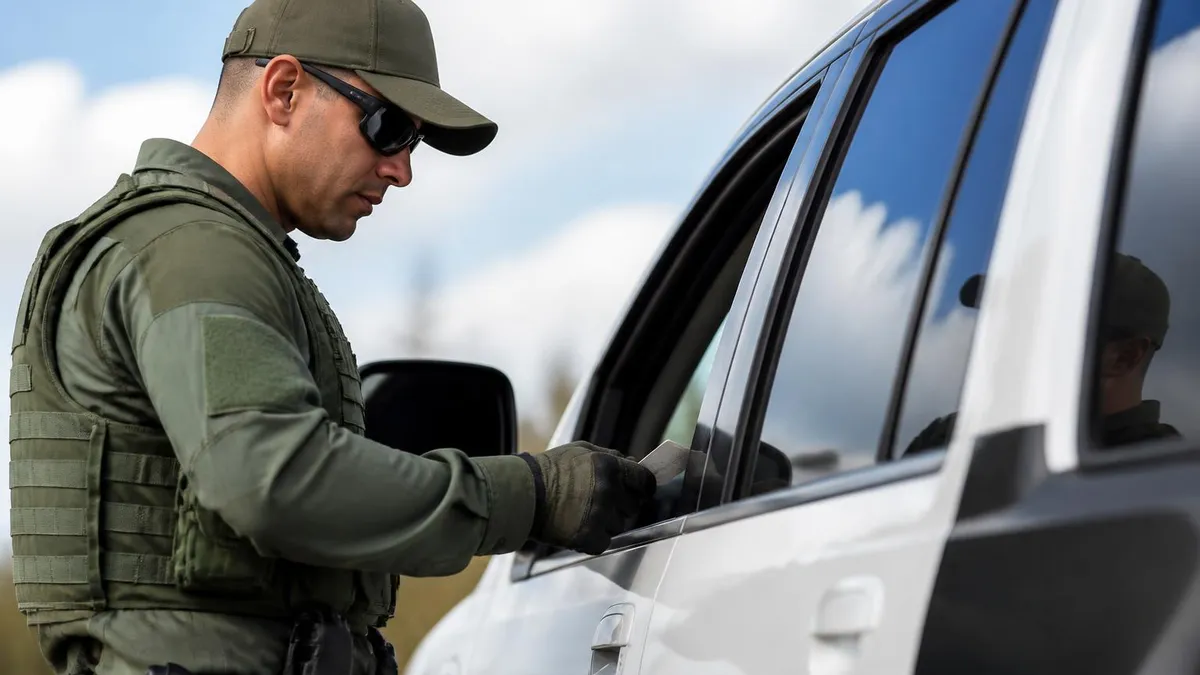
The CBP Pre-Employment Physical Fitness Test (CPPFT) is a scored assessment that measures cardiovascular endurance, muscular endurance, and speed. The four components are maximum sit-ups in one minute, maximum push-ups with no time limit, a 220-meter sprint, and a 1.5-mile run. Each component has minimum cutoff scores, and the composite score determines whether a candidate passes the physical fitness stage of hiring.
Physical conditioning for the BPA fitness test should begin well before submitting an application, since candidates who receive a test appointment often have only weeks to prepare after the appointment is scheduled. The 1.5-mile run is typically the most challenging component for candidates who are not already in good cardiovascular condition — a baseline running program of 3–4 days per week for several months before the exam provides a meaningful fitness buffer. Push-ups and sit-ups improve quickly with consistent daily practice, making them easier to prepare for in a shorter timeline than the run.
Physical fitness standards don't end at hiring. Border Patrol Agents are required to maintain fitness standards throughout their careers, with periodic fitness assessments as part of employment requirements. The physical demands of BPA work — vehicle operations, foot pursuits, extended patrol in extreme temperatures, and tactical operations — require sustained fitness beyond what's tested at hiring. Candidates who enter the position already fit and who treat physical conditioning as a career-long practice adapt most successfully to the operational demands of Border Patrol work.
At the Border Patrol Academy in Artesia, New Mexico, physical fitness training is a daily component of the approximately 19-week program. Academy candidates run, complete obstacle courses, practice defensive tactics, and are held to progressive fitness standards throughout training.
Candidates who arrive at the Academy already conditioned above the minimum hiring standards have more mental energy available for the academic demands of the program — immigration law, Spanish instruction, firearms, and operations coursework — because they aren't also fighting to meet fitness benchmarks for the first time.
Academy instructors consistently note that physically prepared candidates demonstrate more confidence during tactical and scenario training, which contributes to better performance evaluations and stronger class standing at graduation. The Academy is residential and demanding; candidates should approach it as a significant physical and mental commitment, not just a paperwork formality before starting the job. Recruits who underestimate the academic and physical demands of the Academy are consistently the ones who struggle or wash out — the program is genuinely rigorous and designed to be that way.
- +Competitive federal salary with significant pay increases after 18 months at GS-12 level, plus overtime opportunities
- +Enhanced law enforcement retirement after 20 years of service at age 50 — earlier retirement than most federal careers
- +Federal benefits package including FEHB health coverage, TSP with agency match, and FERS pension
- +Job security and career advancement opportunities across the Border Patrol and CBP organization
- −Duty stations are often in remote or border-area locations with limited amenities and harsh climates
- −Shift work, irregular hours, and mandatory overtime are standard — challenging for candidates with family or personal commitments requiring predictable schedules
- −Background investigation is extremely thorough; financial issues, drug use history, or concerning foreign contacts can disqualify candidates
- −Hiring process typically takes 12–18+ months from application to appointment, creating a long uncertain waiting period
Sample BPA - Border Patrol Agent Practice Questions
Try these questions from our free BPA - Border Patrol Agent practice tests. The correct answer and an explanation follow each question.
Which technology is primarily used by Border Patrol to detect underground drug-smuggling tunnels near the border?
- A. Ground-penetrating radar (GPR)
- B. Infrared thermal cameras
- C. Handheld metal detectors
- D. High-resolution satellite imagery
Answer: A. Ground-penetrating radar (GPR)
Ground-penetrating radar emits electromagnetic pulses into the soil to detect voids and disturbances consistent with tunnels beneath the surface.
Which federal agency is the primary partner for Border Patrol agents conducting drug interdiction operations along the Southwest Border?
- A. Drug Enforcement Administration (DEA)
- B. Bureau of Alcohol, Tobacco, Firearms and Explosives (ATF)
- C. Federal Bureau of Investigation (FBI)
- D. Secret Service
Answer: A. Drug Enforcement Administration (DEA)
The DEA is the lead federal agency for drug enforcement and works directly with Border Patrol on interdiction operations and case referrals.
Why is color vision tested as part of the Border Patrol Agent medical examination?
- A. Agents must identify colored flags used in communication protocols
- B. Agents need adequate color vision to read maps, distinguish signal lights, and identify vehicle markings
- C. Color vision affects driving ability exclusively
- D. It is required only for K-9 unit agents
Answer: B. Agents need adequate color vision to read maps, distinguish signal lights, and identify vehicle markings
Adequate color vision is essential for reading maps, identifying vehicle markings and signals, and performing surveillance duties accurately.
Which of the following medical conditions would most likely disqualify a Border Patrol Agent candidate?
- A. Mild seasonal allergies controlled by antihistamines
- B. Color blindness correctable with contact lenses
- C. Uncontrolled epilepsy with frequent seizures
- D. A history of a broken arm fully healed 10 years ago
Answer: C. Uncontrolled epilepsy with frequent seizures
Uncontrolled epilepsy poses a direct safety risk in law enforcement operations and is a disqualifying medical condition for Border Patrol candidates.
Border Patrol Agent Jobs Questions and Answers
About the Author

Educational Psychologist & Academic Test Preparation Expert
Columbia University Teachers CollegeDr. Lisa Patel holds a Doctorate in Education from Columbia University Teachers College and has spent 17 years researching standardized test design and academic assessment. She has developed preparation programs for SAT, ACT, GRE, LSAT, UCAT, and numerous professional licensing exams, helping students of all backgrounds achieve their target scores.
Join the Discussion
Connect with other students preparing for this exam. Share tips, ask questions, and get advice from people who have been there.
View discussion (8 replies)