
Do Border Patrol Agents Get Housing? Benefits Guide 2026 October
Pass the Do Border Patrol Agents Get Housing? exam with confidence. Practice questions with detailed explanations and instant feedback on every answer. 🔎

One of the most common questions prospective applicants ask before joining U.S. Customs and Border Protection is: do border patrol agents get housing? It's a practical question—Border Patrol posts are often in remote areas, and relocating to a new duty station is a real financial consideration. The short answer: agents don't get free government housing as a standard benefit, but there are significant financial supports designed to help with housing costs, and some agents in specific situations do access government-owned housing.
Understanding the full picture of Border Patrol housing and benefits helps you make an informed decision about whether the career is the right fit—and how to plan financially if you're accepted. This guide covers housing allowances, relocation benefits, remote duty station realities, and what the full BPA benefits package looks like.
The Federal Housing Allowance (BAH for Non-Uniformed Federal Employees)
Border Patrol agents are federal civilian employees—not military—so they don't receive the military's Basic Allowance for Housing (BAH) as a formal benefit. Instead, their salary is structured to account for local cost-of-living through the General Schedule (GS) pay scale plus locality pay adjustments.
Locality pay is a percentage added to your base GS salary based on where you're stationed. It's designed to partially compensate for differences in housing costs across the country. A border patrol agent stationed in San Diego earns higher locality pay than one stationed in a rural Texas sector, because housing costs in San Diego are substantially higher. This isn't a housing allowance per se—it's built into your salary—but it serves a similar function.
Beyond locality pay, agents in remote locations may be eligible for Law Enforcement Availability Pay (LEAP), which adds 25% to the agent's base salary. LEAP compensates for the unpredictable overtime and irregular hours inherent in border patrol work. For agents in lower-cost areas, LEAP significantly boosts take-home pay relative to housing costs.
Pro Tip: Focus your BPA study time on areas where you score lowest. Most exam questions test application of knowledge, not memorization.

Government-Owned Housing: When It Exists
In some extremely remote areas—particularly along the southern border in locations where private housing is severely limited—CBP maintains or contracts government-owned housing. This isn't the norm across the agency, but it exists in sectors like Del Rio, Laredo, and parts of the Big Bend sector in Texas, as well as some stations along the northern border in Montana and North Dakota.
When government-owned housing is available, agents may rent it at below-market rates. The CBP charges rent based on the housing's market value, but in areas where the market is thin, that rate can be quite low. Some agents in these locations consider government housing a genuine perk—it significantly reduces their housing expense while they're stationed in a remote area.
However, availability is limited and not guaranteed. Priority for government housing is typically given to agents with families or those transferring from distant locations. New agents shouldn't count on government housing being available at their first duty station.
Relocation Assistance for New Agents
When CBP transfers agents—including during initial assignment from the Border Patrol Academy in Artesia, New Mexico—they typically provide relocation assistance. This includes:
- Travel allowance: Reimbursement for travel to your new duty station
- Temporary lodging expenses (TLE): Per diem for temporary housing while you search for a permanent residence, typically for up to 60 days
- Household goods shipment: CBP pays to move your household goods to the new duty station
- Real estate transaction reimbursement: For career-status agents being relocated, reimbursement for some closing costs on a home sale or purchase
The specifics of relocation assistance depend on your hiring status, career level, and whether the relocation is voluntary or mandatory. First-term agents going to their initial duty station have more limited relocation benefits than career agents being transferred involuntarily to fill operational needs.
What Remote Duty Stations Actually Look Like
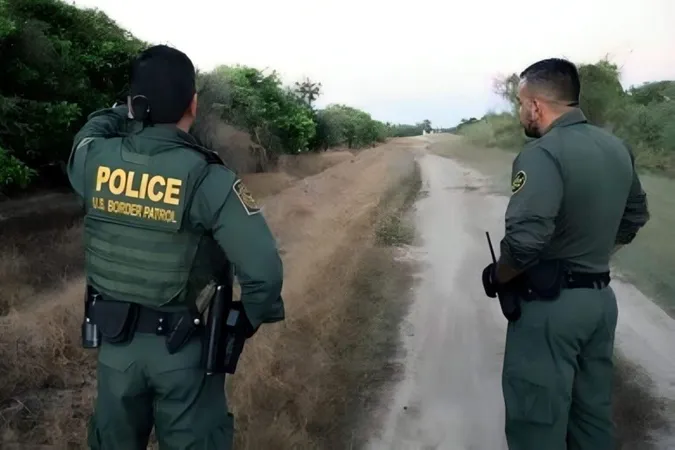
Many Border Patrol stations are in areas that prospective applicants don't think about much during the application process. Some of the larger sectors (Tucson, El Paso, San Diego, Rio Grande Valley) have reasonably developed housing markets nearby, though they can be competitive and expensive. The smaller, more remote stations present a different reality.
Stations in places like Ajo, Arizona; Del Rio, Texas; or Havre, Montana are genuinely rural. Housing options may be limited, rental inventory can be thin, and commutes from the nearest substantial town can be long. Some agents find the remote lifestyle appealing—lower cost of living, outdoor recreation access, tight-knit communities. Others find it isolating, especially for agents with families. It's worth researching your likely duty station assignment before you commit.
The border patrol agent hiring process includes a duty station assignment step. New agents don't typically get to choose their first station—you're assigned based on CBP's operational needs, though you can submit preferences. After your first tour, transfer opportunities to other sectors open up based on seniority and operational needs.
The Full BPA Benefits Package
Housing is one piece of the broader compensation picture. Border Patrol agents receive a federal employee benefits package that's genuinely competitive:
- Federal Employees Health Benefits (FEHB): Access to a wide range of health insurance plans with significant employer contributions. For a family, CBP typically covers 72% or more of the premium cost.
- Federal Employees Dental and Vision Insurance (FEDVIP): Optional dental and vision coverage at group rates.
- Federal Employees Group Life Insurance (FEGLI): Basic life insurance coverage with options to add supplemental coverage.
- Federal Employees Retirement System (FERS): Defined benefit pension plus Thrift Savings Plan (TSP) with government matching contributions up to 5% of salary. This is one of the most valuable parts of the federal benefits package.
- Annual and Sick Leave: Federal accrual rates starting at 13 days annual leave for new employees, increasing with service time. Sick leave accrues at 13 days per year and carries over indefinitely.
- Paid Federal Holidays: 11 paid federal holidays per year.
For law enforcement, FERS includes a special retirement provision: agents who retire at age 50 with 20 years of service, or at any age with 25 years of service, are eligible for enhanced retirement benefits. The enhanced retirement multiplier (1.7% instead of 1%) applies to the first 20 years of law enforcement service. This is a meaningful financial benefit for career agents.
- +Industry-recognized credential boosts your resume
- +Higher earning potential (10-20% salary increase on average)
- +Demonstrates commitment to professional development
- +Opens doors to advanced career opportunities
- −Exam preparation requires significant time investment (4-8 weeks)
- −Certification fees can be $100-$400+
- −May require continuing education to maintain
- −Some employers may not require certification
Sample BPA - Border Patrol Agent Practice Questions
Try these questions from our free BPA - Border Patrol Agent practice tests. The correct answer and an explanation follow each question.
Which federal agency is the primary partner for Border Patrol agents conducting drug interdiction operations along the Southwest Border?
- A. Drug Enforcement Administration (DEA)
- B. Bureau of Alcohol, Tobacco, Firearms and Explosives (ATF)
- C. Federal Bureau of Investigation (FBI)
- D. Secret Service
Answer: A. Drug Enforcement Administration (DEA)
The DEA is the lead federal agency for drug enforcement and works directly with Border Patrol on interdiction operations and case referrals.
Which technology is primarily used by Border Patrol to detect underground drug-smuggling tunnels near the border?
- A. Ground-penetrating radar (GPR)
- B. Infrared thermal cameras
- C. Handheld metal detectors
- D. High-resolution satellite imagery
Answer: A. Ground-penetrating radar (GPR)
Ground-penetrating radar emits electromagnetic pulses into the soil to detect voids and disturbances consistent with tunnels beneath the surface.
What advantage does thermal imaging technology provide to Border Patrol Agents during nighttime operations?
- A. It allows agents to read documents in darkness
- B. It detects heat signatures emitted by humans and animals regardless of light conditions
- C. It provides GPS coordinates of detected individuals
- D. It translates radio communications automatically
Answer: B. It detects heat signatures emitted by humans and animals regardless of light conditions
Thermal imagers detect infrared heat emitted by living bodies, allowing agents to locate individuals in complete darkness or through dense vegetation.
Vision requirements for Border Patrol Agents include corrected visual acuity of at least:
- A. 20/200 in both eyes
- B. 20/100 in one eye and 20/200 in the other
- C. 20/20 in both eyes uncorrected
- D. 20/30 in each eye with correction
Answer: D. 20/30 in each eye with correction
CBP requires corrected vision of at least 20/30 in each eye to ensure agents can effectively perform surveillance and enforcement duties.
Planning Your Housing Before You Accept an Offer
The best approach is to research housing in your likely duty station area before you accept an appointment. CBP will tell you your duty station during the final hiring stages. At that point, look at rental prices, home prices, and inventory in the area. Factor in your likely salary (GS-7 through GS-12 depending on experience and education) plus LEAP to get a real picture of what you can afford.
For remote stations, reach out to current agents in the area—many are willing to share honest information about what the housing market looks like. The Border Patrol union (National Border Patrol Council) and sector-level Facebook groups are good places to find agents who can give you ground-level perspective.
If you're bringing a family, school quality, spousal employment opportunities, and community resources matter as much as housing cost. Remote stations can be excellent for families in some ways—low crime, outdoor access, stable communities—but they can also limit career options for a spouse and access to specialized services like medical specialists or certain extracurricular activities.
Getting the border patrol agent requirements locked in and passing the entrance exam are the first priorities. Once you've cleared the hiring process, the housing and relocation logistics become manageable with proper planning. Many agents find the remote lifestyle unexpectedly rewarding—but it's better to go in with accurate expectations than to be surprised by the realities of frontier living.
About the Author

Educational Psychologist & Academic Test Preparation Expert
Columbia University Teachers CollegeDr. Lisa Patel holds a Doctorate in Education from Columbia University Teachers College and has spent 17 years researching standardized test design and academic assessment. She has developed preparation programs for SAT, ACT, GRE, LSAT, UCAT, and numerous professional licensing exams, helping students of all backgrounds achieve their target scores.
Join the Discussion
Connect with other students preparing for this exam. Share tips, ask questions, and get advice from people who have been there.
View discussion (8 replies)