
BLS Protocols: What Is a BLS Certification and How to Master Every Skill
Learn BLS protocols, what BLS stands for, and how to pass the AHA Basic Life Support exam. Complete guide for healthcare providers. ✅

Understanding bls protocols is the foundation of every healthcare career that involves direct patient contact. BLS, which stands for Basic Life Support, is a set of standardized emergency procedures designed to sustain life when a patient's breathing or heartbeat has stopped. What is a BLS certification, exactly?
It is a credential issued by recognized organizations such as the American Heart Association or the American Red Cross that confirms a provider can correctly perform CPR, operate an AED, and clear airway obstructions in adults, children, and infants. Earning this credential is not optional for most clinical roles — it is a licensing requirement enforced by hospitals, nursing boards, paramedic programs, and dental practices across every US state.
One of the most common questions among students entering healthcare is what does BLS stand for in a practical sense. The phrase Basic Life Support captures a specific tier of emergency response: it sits above bystander first aid but below Advanced Cardiovascular Life Support (ACLS) and Pediatric Advanced Life Support (PALS). BLS focuses on the immediate, hands-on actions a provider takes in the first minutes of a cardiac or respiratory emergency — before advanced airway devices or medications are available.
Mastering these fundamentals is not just about passing a test; every compression performed correctly during a real cardiac arrest significantly improves a patient's chance of surviving to hospital discharge.
Many people wonder whether BLS and CPR are the same thing. The short answer is no — CPR is one critical skill inside the broader BLS curriculum. A full BLS course for healthcare providers also covers bag-mask ventilation, AED operation, two-rescuer techniques, team dynamics, and the management of foreign-body airway obstructions in conscious and unconscious patients. The American Heart Association BLS for Healthcare Providers course and the American Red Cross Basic Life Support course both go well beyond the community CPR class taught at a local gym or library, incorporating clinical decision-making and scenario-based practice that mirrors real hospital environments.
The BLS certification exam administered by the American Heart Association tests both cognitive knowledge and hands-on skills. Written components typically use multiple-choice questions covering compression rates, depth targets, ventilation ratios, AED pad placement, and special-situation scenarios such as pregnant patients or drowning victims. The skills station evaluation requires candidates to demonstrate correct technique on a manikin under the eye of a certified instructor. Knowing the theory without being able to perform the skill correctly will result in a failed skills station, so balanced preparation is essential for first-time candidates.
Renewal matters just as much as initial certification. A BLS card issued by the AHA or Red Cross is valid for two years, after which providers must complete a basic life support renewal class to maintain their credential. Many busy professionals prefer the blended learning format offered by the AHA — HeartCode BLS — which allows candidates to complete the cognitive portion online and then attend a brief in-person skills session. This flexibility has made BLS renewal more accessible for nurses working rotating shifts, paramedics in rural areas, and dental hygienists whose schedules rarely align with traditional classroom blocks.
Preparing strategically for the BLS written exam makes the certification process far less stressful. Working through timed practice questions builds familiarity with the exact phrasing used in AHA and Red Cross exams and exposes knowledge gaps before exam day. Topics that consistently trip up candidates include the correct compression-to-ventilation ratio for two-rescuer infant CPR, the sequence for using an AED when a patient is lying in water, and when to switch compression roles during prolonged resuscitation. This article walks through every major BLS protocol domain so you can approach your exam — and your clinical practice — with genuine confidence.
BLS Certification by the Numbers
Key Facts at a Glance
| Item | Value | Details |
|---|---|---|
| BLS card validity before renewal required | 2 Years | |
| Minutes — typical written exam duration | 30–40 | |
| Total class time for initial BLS course | 4–5 hrs |

What Does a BLS Course Cover? Core Domains Explained
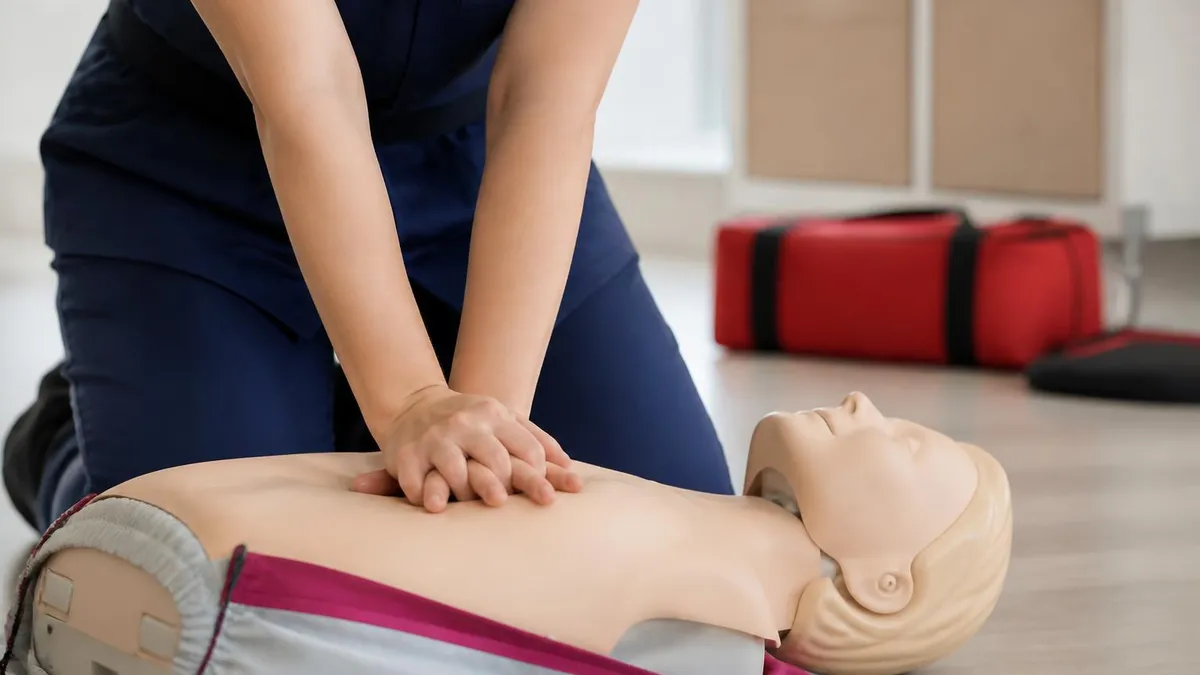
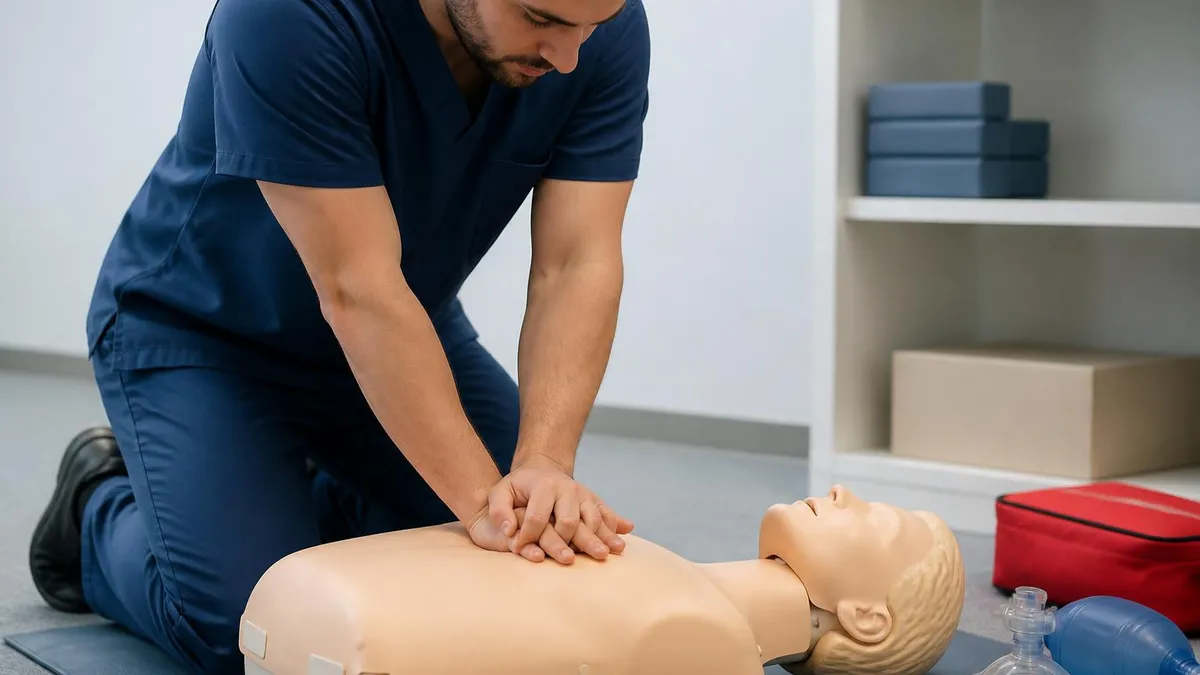
Covers compression rate (100–120/min), depth (at least 2 inches for adults), full chest recoil, minimal interruptions, and avoiding excessive ventilation. Candidates practice on adult, child, and infant manikins until technique is consistent.
Teaches how to power on an AED, attach pads correctly, clear the patient before analyzing rhythm, deliver shocks safely, and immediately resume compressions. Covers wet environments and implanted device scenarios.
Includes head-tilt chin-lift and jaw-thrust maneuvers, one- and two-rescuer bag-mask ventilation, visible chest-rise confirmation, and managing foreign-body airway obstruction in conscious and unconscious patients of all ages.
BLS for healthcare providers emphasizes closed-loop communication, clear role assignments, and the Team Leader model. Providers learn to direct bystanders, switch compressor roles every two minutes, and request resources clearly under pressure.
Addresses unique adaptations for pregnant patients, drowning victims, trauma patients, and opioid overdose situations. The basic life support for healthcare providers curriculum integrates these scenarios into skills station evaluations.
High-quality CPR is the single most impactful intervention in the BLS protocol chain, and the AHA Basic Life Support exam dedicates a significant portion of its written and skills assessments to compression mechanics. The target compression rate for adults, children, and infants is 100 to 120 compressions per minute — a range that research has repeatedly shown maximizes coronary perfusion pressure without causing compressor fatigue-related depth loss.
Rates faster than 120 per minute actually reduce compression depth because the rescuer cannot fully relax between compressions, while rates slower than 100 per minute reduce blood flow duration. Metronome apps and AED audio feedback tones are both accepted tools for maintaining rate during training and real events.
Compression depth targets differ by patient age and must be memorized precisely for the AHA BLS written exam. Adults require at least 2 inches (5 cm) of depth but no more than 2.4 inches (6 cm); the upper limit was added in 2015 guidelines after evidence linked excessive depth to rib fractures and internal injuries.
Children (age 1 through puberty) require at least one-third of the anteroposterior diameter of the chest, which translates to approximately 2 inches. Infants under 12 months require at least one-third AP diameter compression, roughly 1.5 inches, performed with two fingers on the lower half of the sternum or the two-thumb encircling technique when a second rescuer is present.
Full chest recoil between compressions is equally critical and is one of the most commonly failed elements in skills station evaluations. Leaning on the chest prevents venous return to the heart, reducing the blood volume available for the next compression. Evaluators specifically watch for the rescuer lifting the heel of the hand completely between every compression cycle. Providers who pass the written exam but lean during the skills station can still fail certification, which is why deliberate practice — not just reading — is essential preparation for BLS candidates.
Ventilation ratios depend on whether one or two rescuers are present and whether an advanced airway has been placed. For one- or two-rescuer adult CPR without an advanced airway, the ratio is 30 compressions to 2 breaths, with each breath delivered over one second and producing visible chest rise.
Once an advanced airway such as an endotracheal tube or supraglottic device is in place, continuous compressions are delivered at 100–120 per minute while a second rescuer ventilates at 10 breaths per minute, completely asynchronously. Understanding this transition is critical for the aha basic life support exam because questions frequently test the moment providers should switch from synchronized to asynchronous ventilation.
Minimizing interruptions to chest compressions is a theme that runs through every section of the BLS protocol. The AHA recommends limiting pauses to less than 10 seconds for any cause — rhythm analysis, pulse checks, AED shock delivery, or airway intervention. This 10-second benchmark helps calculate CCF (chest compression fraction), which the 2020 AHA guidelines set at a target of at least 60% and ideally above 80% for in-hospital resuscitations. High-performing teams achieve CCF above 80% through pre-assigned roles, practiced transitions, and a team leader who actively monitors the clock and calls role switches at the two-minute mark.
Avoiding excessive ventilation is a frequently overlooked protocol element. Over-ventilation increases intrathoracic pressure, impedes venous return, and can cause gastric inflation that leads to regurgitation and aspiration. Each rescue breath should be just enough to produce visible chest rise — approximately 500–600 mL tidal volume for an average adult. The instinct to breathe hard and fast for a non-breathing patient is natural but counterproductive. BLS exam questions frequently present scenarios where a candidate must identify that excessive ventilation, not insufficient ventilation, is the problem causing deteriorating patient status during a resuscitation attempt.
Switching compressor roles every two minutes is a protocol requirement designed to combat fatigue-related compression depth loss. Studies show that compression quality deteriorates significantly after 90 to 120 seconds of continuous compression, even in physically fit rescuers, because the muscles of the hand and arm fatigue without obvious visible signs.
In a two-rescuer scenario, the second rescuer should position at the opposite side of the patient so the switch can happen in under five seconds. During the switch, the incoming compressor should begin immediately after the outgoing compressor removes hands — not after a pulse check unless two full minutes have elapsed. Exam candidates must know the timing and trigger for role switches, as this appears consistently across AHA written assessments.
AHA, Red Cross & Renewal: Choosing Your Basic Life Support Course
The American Heart Association BLS for Healthcare Providers course is the most widely accepted credential in US hospitals and clinical settings. It covers adult, pediatric, and infant CPR, AED use, bag-mask ventilation, and team-based resuscitation dynamics. The initial course typically runs four to five hours in a classroom setting, combining video instruction with hands-on manikin practice and a written exam. The aha basic life support exam pass score is generally 84% or higher on the written portion, and candidates must also demonstrate competency during the skills station to receive their card.
The AHA also offers HeartCode BLS, a blended learning option that splits the cognitive content into a self-paced online module and a shorter in-person skills check. This format is popular among shift workers and graduate students because the online portion can be completed at any hour. Scores from the online cognitive assessment carry over to the in-person session, reducing total classroom time to roughly 90 minutes. AHA BLS cards are valid for two years and are recognized by virtually every hospital credentialing office and nursing board in the United States.

Is BLS the Same as CPR? BLS vs. Community CPR — Key Differences
- +BLS includes multi-rescuer team coordination skills not taught in community CPR
- +BLS covers bag-mask ventilation and advanced airway integration beyond basic rescue breathing
- +BLS for healthcare providers is required for clinical licensure — community CPR is not
- +BLS training addresses all age groups (adult, child, infant) with age-specific protocols
- +BLS includes AED integration with detailed rhythm-check and shock-delivery protocols
- +BLS renewal ensures providers stay current with evolving AHA guideline updates every two years
- −BLS requires an in-person skills station — fully online certification is not available from AHA or Red Cross
- −BLS courses cost $50–$100+ versus free or low-cost community CPR classes
- −BLS renewal is mandatory every two years, creating an ongoing time and cost commitment
- −BLS certification from one provider (AHA) is not always accepted in place of another (Red Cross) at some hospitals
- −BLS does not cover medication administration — providers needing that level must also earn ACLS
- −BLS skills degrade without regular practice, requiring deliberate refreshers between renewal cycles
BLS Exam Preparation Checklist: 10 Steps to Pass the First Time
- ✓Review the current AHA 2020 BLS algorithm cards for adults, children, and infants before studying anything else.
- ✓Memorize compression rate (100–120/min), adult depth (≥2 in), child depth (~2 in), and infant depth (~1.5 in).
- ✓Practice the 30:2 compression-to-ventilation ratio until it is automatic, then learn the asynchronous advanced-airway exception.
- ✓Complete at least 3 timed practice exams under exam conditions to identify weak knowledge areas.
- ✓Watch AHA BLS skills videos to visualize correct two-rescuer technique and compressor role-switch timing.
- ✓Study AED operation steps in order: power on, attach pads, clear and analyze, shock if advised, immediately resume CPR.
- ✓Learn the jaw-thrust maneuver for suspected spinal injury patients where head-tilt chin-lift is contraindicated.
- ✓Review the Heimlich maneuver sequence for conscious adults and the back-blow and chest-thrust protocol for infants.
- ✓Practice bag-mask ventilation technique on a training manikin to ensure a proper mask seal before the skills station.
- ✓Confirm your testing site, bring a valid photo ID, and arrive at least 15 minutes early to complete any pre-course paperwork.
Chest Compression Fraction Matters More Than Speed Alone
The AHA 2020 guidelines target a chest compression fraction (CCF) of at least 60% — meaning compressions should be actively happening for more than half of total resuscitation time. High-performing teams exceed 80% CCF by pre-assigning roles, practicing rapid AED transitions, and limiting all pauses to under 10 seconds. On the written exam, questions about CCF often test whether candidates understand that each unnecessary pause directly reduces survival odds.
Special situations and scenarios are a dedicated domain on every BLS written exam and skills station, and they are consistently cited by candidates as the questions most likely to cause unexpected failures. The reason is straightforward: most BLS study time focuses on straightforward adult cardiac arrest, which leaves less familiar protocols under-rehearsed.
Understanding the modifications required for pregnant patients, drowning victims, pediatric arrests, and opioid overdose scenarios can mean the difference between passing and retaking the exam. The AHA dedicates multiple algorithm cards and video modules specifically to these populations, and exam writers use these scenarios to test whether candidates can apply principles flexibly rather than recite a single script.
Pregnant patients in cardiac arrest require a specific modification: continuous manual left uterine displacement (LUD) to relieve aortocaval compression by the gravid uterus. A second rescuer places both hands on the right side of the uterus and manually displaces it to the patient's left throughout compressions.
If resuscitation does not achieve ROSC (return of spontaneous circulation) within approximately four minutes, perimortem cesarean delivery should be considered to improve maternal survival odds. BLS written exams frequently include a scenario where the correct answer involves LUD, and candidates who have not reviewed this protocol will likely select the standard adult algorithm response instead.
Drowning victims present a unique challenge because respiratory arrest typically precedes cardiac arrest, making early rescue breaths particularly critical in this population. The AHA recommends that rescuers trained in CPR begin with five initial rescue breaths before initiating compressions if the drowning victim is unresponsive and not breathing normally. This contrasts with the standard adult compression-first algorithm. On the exam, candidates must recognize cues in the scenario description — specifically the drowning context — to switch algorithms correctly. Failure to recognize the context will lead to the wrong answer even if all the mechanics are understood.
Opioid overdose has been integrated into BLS protocols in recognition of the US overdose epidemic, which claimed over 80,000 lives in 2021 alone. For a patient who is unresponsive and not breathing normally, BLS protocol is the same: call for help, begin CPR, and use an AED.
However, the AHA now recommends that trained responders administer naloxone intranasally if it is available, without delaying CPR. The BLS exam may include questions that test whether candidates understand the current guideline language — naloxone is an adjunct to, not a replacement for, CPR in unresponsive opioid overdose patients with absent or abnormal breathing.
Pediatric cardiac arrest in children differs from adult cardiac arrest in both etiology and protocol priorities. In children, cardiac arrest is most often secondary to respiratory failure rather than a primary cardiac event, meaning that high-quality ventilation carries relatively more weight in pediatric resuscitation compared to adult resuscitation. The two-thumb encircling chest compression technique is preferred for infant CPR when two rescuers are present because it generates higher peak systolic pressures and coronary perfusion pressures than the two-finger technique. Solo rescuers use two fingers because the encircling technique is impractical without a partner to perform ventilation simultaneously.
AED use in children under 8 years or weighing less than 55 pounds should use pediatric attenuation pads if available, which reduce the delivered energy to approximately 50–75 joules to avoid potential myocardial damage from adult-level shocks. If only adult pads are available and no pediatric system is accessible, adult pads should still be used — potential AED harm is far outweighed by the near-certain harm of not defibrillating a shockable rhythm.
Pad placement for small children shifts to an anterior-posterior configuration if standard placement would cause pad overlap. BLS candidates should know both the preferred and acceptable AED pad configurations for pediatric patients.
Trauma-related cardiac arrest introduces additional considerations including tension pneumothorax, pericardial tamponade, and hemorrhagic shock as potential reversible causes — the Hs and Ts mnemonic taught in ACLS but also referenced in advanced BLS scenarios. The primary BLS intervention remains the same — high-quality CPR — but providers in clinical settings are expected to communicate suspected trauma etiology to the incoming ACLS team so advanced interventions can be prioritized.
BLS exam questions set in trauma scenarios typically test whether candidates maintain standard BLS protocol while correctly identifying that definitive care (needle decompression, surgical intervention) is beyond BLS scope and must be communicated upward in the chain of care.
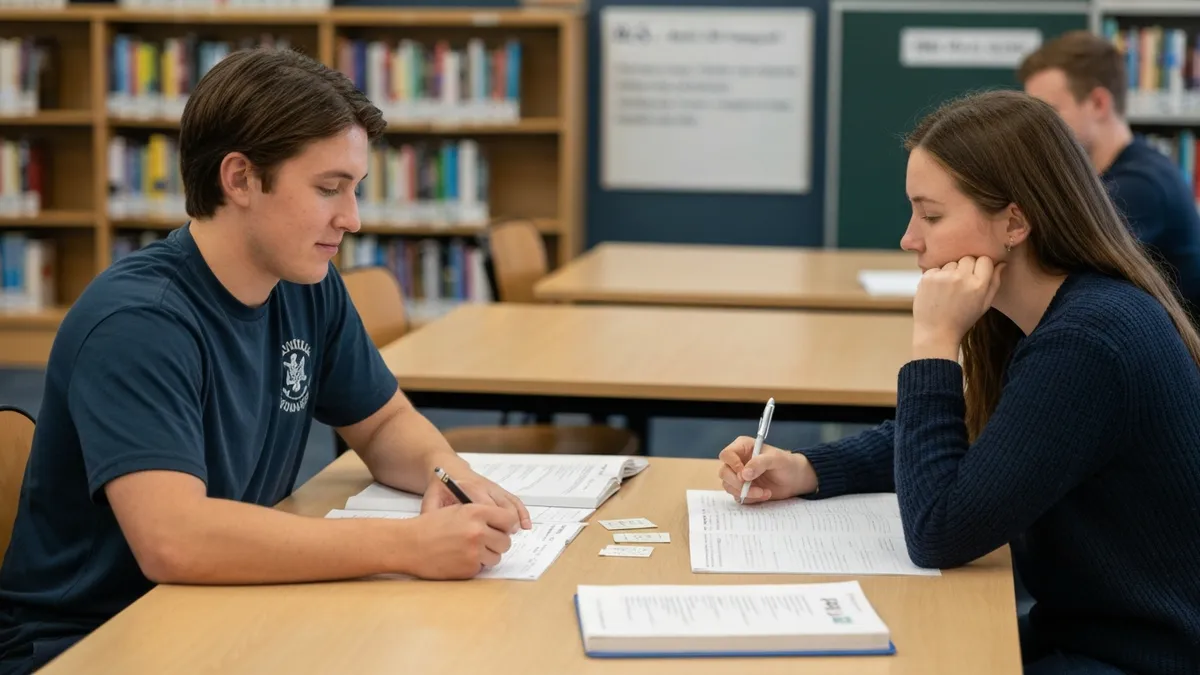
Most hospital credentialing departments require an active BLS card on file at all times. If your card expires before renewal is completed, you may be pulled from clinical duties until your credential is restored — which can affect patient assignments, paycheck continuity, and your employee record. Schedule your basic life support renewal class at least 60 days before your expiration date to account for class availability and any rescheduling needs.
Maintaining your BLS certification across a long healthcare career requires more than showing up for a renewal class every two years. The skills assessed during a basic life support renewal class — compression mechanics, ventilation ratios, AED operation — are highly perishable.
Studies of healthcare providers assessed at the end of their two-year certification cycle consistently show significant degradation in compression depth accuracy, rate consistency, and hand positioning compared to the day they passed their initial exam. This degradation occurs not because providers forget the rules intellectually but because procedural motor memory requires regular physical rehearsal to remain reliable under stress.
The most effective strategy for skill retention is deliberate, periodic practice between formal renewal cycles. Many hospitals now install CPRmeter feedback devices or Laerdal skills stations in break rooms and simulation centers precisely to enable informal practice without requiring full course attendance. Even 10 minutes of manikin practice every three to four months is sufficient to maintain the procedural memory pathways that accurate chest compressions depend on.
Providers who work in high-acuity environments such as emergency departments or cardiac care units often maintain skills naturally through real resuscitation events, but providers in outpatient clinics, dental offices, or administrative roles may go months without performing a single compression and need to deliberately seek out practice opportunities.
Understanding the five-year AHA guideline review cycle helps providers interpret changes that appear in their renewal courses. The AHA publishes updated CPR and emergency cardiovascular care guidelines every five years based on systematic review of new research evidence.
The most recent major revision was the 2020 guidelines update, which among other changes increased the recommended target for CCF, formalized opioid overdose response steps within BLS, and reinforced that high-performance CPR team models improve survival rates in hospital systems. Providers who understand why guidelines change — not just what changed — are better equipped to adapt when a renewal course introduces updated protocol steps.
Digital credential management has become increasingly important as healthcare systems consolidate and providers work across multiple facilities. The AHA eCard system allows providers to access their digital BLS card, share it electronically with employers, and store it in the AHA Training Network wallet. Red Cross credentials are similarly accessible through the Red Cross digital training center.
Both systems allow instant employer verification without faxing paper cards or waiting for physical mail. Providers who change employers or work per diem at multiple facilities should ensure all active employers have the most current digital credential on file to avoid credentialing gaps that create compliance issues during accreditation surveys.
Cost considerations for BLS certification and renewal are a realistic factor for students and early-career providers. Initial AHA BLS for Healthcare Providers courses typically cost between $55 and $95 when booked through AHA Training Centers, though some community hospitals offer discounted or subsidized courses for employees and students in affiliated programs.
Red Cross BLS courses are similarly priced. Some nursing schools and paramedic programs include BLS training in their curriculum fees, meaning students do not pay separately. For providers paying out of pocket, renewal courses are generally 20–30% cheaper than initial certification since they are shorter and require fewer instructor hours per participant.
Selecting the right BLS course format for your learning style and schedule is a decision worth spending time on. In-person traditional courses provide the most structured skills practice and direct instructor feedback, which is especially valuable for first-time candidates who have never performed CPR on any person or manikin. Blended learning formats work best for providers with prior BLS experience who need to refresh cognitive knowledge efficiently before a brief skills verification.
Fully classroom-based renewal classes suit providers who prefer structured learning environments and want the opportunity to ask protocol questions directly to an instructor. None of these formats is inherently superior — the best format is the one that fits your schedule well enough that you actually complete it before your card expires.
Whatever course format you choose, supplementing your preparation with practice questions is one of the highest-return study investments available. The BLS written exam tests applied knowledge — not just whether you can recite a number, but whether you can choose the correct action in a described scenario.
Practice questions expose the exact scenario-framing patterns that exam writers use, train you to read question stems carefully for context clues (drowning, pregnancy, infant), and build the confident decision speed needed to complete a timed assessment without second-guessing correct answers you already know. Combining targeted practice question sessions with physical skills rehearsal is the preparation approach most aligned with how the exam actually tests BLS competency.
Practical preparation for your BLS exam should begin at least one to two weeks before your scheduled course date if you are a first-time candidate, or five to seven days before if you are renewing. Start by downloading the current AHA BLS algorithm pocket cards, which are available as free PDFs from the AHA website.
These cards summarize the adult cardiac arrest algorithm, the pediatric cardiac arrest algorithm, and the post-cardiac arrest care algorithm in a single-page visual format. Reading through the algorithm flow before your first study session gives you a structural map that makes all subsequent study materials easier to integrate — you understand where each protocol element fits in the sequence rather than memorizing facts in isolation.
Use spaced repetition when reviewing compression numbers and ventilation ratios. Write the key numbers — 100–120/min rate, 2 inches adult depth, 30:2 ratio without advanced airway, 10 breaths/min with advanced airway — on index cards and review them at increasing intervals across your study days. Spaced repetition leverages the cognitive science of memory consolidation: information reviewed at spaced intervals is retained far longer than information reviewed repeatedly in a single cramming session. For BLS exam prep, where the same numbers must be recalled accurately under timed exam pressure, spaced repetition is significantly more effective than rereading notes.
Practice under timed conditions for at least one of your exam prep sessions. Set a 30-minute timer and work through a full set of practice questions without pausing to look up answers. This simulates real exam pressure and exposes two important things: first, which questions you can answer confidently within 60–90 seconds, and second, which questions cause hesitation that would consume disproportionate time during the real exam.
Questions that cause consistent hesitation should become the focus of targeted review rather than general re-study of all material. Efficient exam preparation requires diagnosing your actual weak spots rather than studying what you already know well.
On the day of your BLS skills station, prioritize a confident pre-assessment mindset. Arrive early, familiarize yourself with the manikin type being used (Prestan, Laerdal, or similar), and take a moment to feel the resistance of the chest before the assessment begins if your instructor allows it.
During the assessment, narrate your actions aloud as you perform them — announcing pulse checks, compression starts and stops, and AED steps. Narration helps evaluators credit your correct decisions and gives you a structured verbal cue system that reduces the chance of skipping a protocol step under observation anxiety. Most skills station failures result from omitting a step rather than performing a step incorrectly.
After passing your initial certification, build a personal BLS skill maintenance calendar. Mark every six months for informal manikin practice and mark 90 days before your card expires for renewal course registration. If your workplace has a simulation lab or CPR task trainer available, schedule a 15-minute self-directed practice session quarterly.
Review the AHA CPR Guidelines quick reference after each practice session to catch any subtle technique drift — it is common to unconsciously adopt slight variations in hand position or breath timing that diverge from protocol over time. Deliberate self-correction between renewal cycles keeps your skills exam-ready and, more importantly, patient-ready.
Connecting BLS competency to real-world outcomes gives the certification process meaning that goes beyond credential management. Bystander CPR doubles or triples survival rates from out-of-hospital cardiac arrest compared to no CPR. For healthcare providers who initiate BLS in hospital settings within seconds of arrest recognition, survival rates for shockable rhythms like ventricular fibrillation can exceed 40–50% when combined with rapid defibrillation.
Every element of BLS protocol — the compression rate, the depth target, the 10-second pause limit, the role switches — exists because controlled research demonstrated that it materially improves patient outcomes. Knowing that context transforms BLS certification from a bureaucratic requirement into a genuinely life-saving clinical competency worth mastering at the highest level.
The resources available to BLS candidates today are far better than even a decade ago. The AHA's free video library, the Resuscitation Quality Improvement (RQI) program used by many hospitals, and online practice question platforms all make it easier than ever to study efficiently and verify readiness before exam day. Take full advantage of these tools.
Candidates who combine deliberate skills practice with targeted written exam preparation consistently outperform those who attend the course cold and rely on the instructor session alone. Your BLS certification is one of the most consistently valuable credentials you will hold throughout your healthcare career — prepare for it with the seriousness it deserves and the practical strategies that actually work.
BLS Questions and Answers

BLS Certificate Lookup: What Is a BLS Certification and How to Get Yours
Free Basic Life Support MCQ Questions and Answers Guide
AHA BLS Certification: Course, Renewal, and Exam Guide
BLS Training: Course Content, Format & How to Get Certified

Online BLS: Complete Guide to Getting Your Basic Life Support Certification
About the Author

Registered Nurse & Healthcare Educator
Johns Hopkins University School of NursingDr. Sarah Mitchell is a board-certified registered nurse with over 15 years of clinical and academic experience. She completed her PhD in Nursing Science at Johns Hopkins University and has taught NCLEX preparation and clinical skills courses for nursing students across the United States. Her research focuses on evidence-based exam preparation strategies for healthcare certification candidates.
Join the Discussion
Connect with other students preparing for this exam. Share tips, ask questions, and get advice from people who have been there.
View discussion (8 replies)