
USAF ASVAB Test: Complete Air Force ASVAB Guide, Scores, and Practice Tests
Master the USAF ASVAB test with free practice tests, score charts, and study strategies. 🎯 Learn what Air Force jobs your ASVAB scores unlock.

The USAF ASVAB test is the single most important hurdle standing between you and an Air Force career. Every recruit — whether you dream of flying drones, maintaining jet engines, or working in Air Force intelligence — must pass this standardized exam before enlisting.
Taking a quality asvab practice test well in advance of your official exam date is the smartest move you can make, giving you a realistic benchmark of where you stand and which subtests need the most attention. Most Air Force recruiters recommend starting structured preparation at least eight to twelve weeks before your scheduled MEPS (Military Entrance Processing Station) appointment.
Unlike the Army or Navy, the United States Air Force sets some of the highest minimum ASVAB score requirements among all military branches. To qualify for active-duty Air Force enlistment you need a minimum Armed Forces Qualifying Test (AFQT) score of 36 if you hold a high school diploma, or a 65 if you have a GED.
In practice, the vast majority of successful Air Force applicants score well above those minimums — recruiters routinely look for scores in the 50s and 60s to open the door to technical career fields. Understanding the full asvab score range and how your percentile translates to job eligibility is essential from day one of your prep journey.
The ASVAB itself consists of ten subtests covering everything from arithmetic reasoning and mathematics knowledge to electronics information and mechanical comprehension. The Air Force uses a unique scoring system called Aptitude Area (AA) composites — sometimes called MAGE scores — to match recruits with specific career fields, known as Air Force Specialty Codes (AFSCs). Your raw subtest scores are combined in different weighted formulas to produce four composite scores: Mechanical (M), Administrative (A), General (G), and Electronic (E). Every AFSC lists minimum composite scores, so a strong overall AFQT is necessary but not sufficient for the career you want.
Many candidates underestimate the technical depth of the USAF ASVAB test, especially the Electronics Information and Mechanical Comprehension subtests. Air Force career fields are heavily weighted toward technology, avionics, cyber operations, and advanced maintenance — all domains that demand solid scores in those two areas. Even if your target AFSC is administrative or personnel-focused, boosting your General composite score opens backup options and strengthens your negotiating position with your recruiter. A single extra study session focused on vocabulary, paragraph comprehension, and arithmetic can push your G composite above the threshold for several additional jobs.
One question candidates frequently ask is how the ASVAB compares to physical fitness standards. While physical fitness matters deeply for Air Force service life, the ASVAB is a completely separate gate that must be cleared first. Physical standards such as the army combat fitness test benchmark provide useful context for understanding how military branches use standardized assessments to channel recruits into roles, but the ASVAB is purely cognitive and technical — no pushups required. Knowing both what the ASVAB tests and what comes after it helps you build a realistic enlistment timeline.
Your ASVAB scores are valid for two years from the date of your official test administration. If you are unhappy with your scores, you may retest after a mandatory one-month waiting period following your first attempt, and again after another one-month wait following your second attempt. Subsequent retests require a six-month waiting period.
For this reason, preparation quality matters enormously on your first attempt — banking a strong score early gives you maximum flexibility when working with your recruiter to match with your preferred AFSC. Candidates who score 60 or above on the AFQT report the widest selection of career options and the most favorable enlistment bonuses.
This comprehensive guide will walk you through every aspect of the USAF ASVAB test: how it is structured, how Air Force composites work, what scores are required for popular AFSCs, how to build an effective study plan, and where to find the best free practice resources. Whether you are months away from your MEPS date or just beginning to explore an Air Force career, the information and practice tools here will give you a measurable edge on test day.
USAF ASVAB Test by the Numbers
USAF ASVAB Exam Format
| Section | Questions | Time | Weight | Notes |
|---|---|---|---|---|
| General Science (GS) | 25 | 11 min | G Composite | Life, physical, and earth science |
| Arithmetic Reasoning (AR) | 30 | 36 min | AFQT + G Composite | Word problems, math reasoning |
| Word Knowledge (WK) | 35 | 11 min | AFQT + G Composite | Vocabulary in context |
| Paragraph Comprehension (PC) | 15 | 13 min | AFQT + G Composite | Reading passages |
| Mathematics Knowledge (MK) | 25 | 24 min | AFQT + G Composite | Algebra, geometry, number theory |
| Electronics Information (EI) | 20 | 9 min | E + M Composite | Circuits, electrical theory |
| Auto & Shop Information (AS) | 25 | 11 min | M Composite | Automotive systems, tools |
| Mechanical Comprehension (MC) | 25 | 19 min | M + E Composite | Pulleys, gears, fluid dynamics |
| Assembling Objects (AO) | 25 | 15 min | Spatial reasoning | Shapes and spatial assembly |
| Verbal Expression (VE) | — | — | Derived score | Combined WK + PC |
| Total | 145 | 3 hours (P&P) / ~90 min (CAT) | 100% |
Understanding how the Air Force converts raw subtest scores into usable composite scores is one of the most overlooked aspects of USAF ASVAB preparation. The four Aptitude Area composites — Mechanical (M), Administrative (A), General (G), and Electronic (E) — are each calculated by adding specific subtest standard scores together. The General composite, for example, combines Verbal Expression (itself a blend of Word Knowledge and Paragraph Comprehension) plus Arithmetic Reasoning plus Mathematics Knowledge. Because G feeds both the AFQT and so many AFSC thresholds, it represents the single highest-return area for most candidates to invest their study time.
The Mechanical composite draws from Auto and Shop Information, Mechanical Comprehension, Electronics Information, and General Science. Candidates aiming for aircraft maintenance, munitions, or civil engineer roles need particularly strong M scores. The Electronic composite blends Arithmetic Reasoning, Electronics Information, Mathematics Knowledge, and General Science — making it critical for cyber, avionics, communications, and radar career fields. If your career goals involve any Air Force specialty even loosely related to technology infrastructure, plan to dedicate substantial study hours to electronics fundamentals and applied mathematics before your official exam.
The Administrative composite is the narrowest of the four, combining Word Knowledge, Paragraph Comprehension, and Mathematics Knowledge. It gates career fields in personnel, finance, legal, medical administration, and similar support roles. One underappreciated truth is that strong Administrative scores correlate closely with a strong AFQT, because both draw heavily from the Verbal Expression cluster. Candidates who work diligently on vocabulary building and reading comprehension improve multiple composites simultaneously — arguably the most efficient study strategy available.
The AFQT itself is not a subtest — it is a derived percentage score calculated from four of the ten subtests: Arithmetic Reasoning, Mathematics Knowledge, Word Knowledge, and Paragraph Comprehension. The AFQT score determines basic enlistment eligibility; the composites determine which jobs you can actually select. This distinction matters enormously for study planning. If you are scoring well on practice tests but falling short of the minimum AFQT, the fastest path to improvement is intensive focus on arithmetic reasoning and vocabulary. If you already meet the AFQT threshold but want better job options, prioritize Electronics Information and Mechanical Comprehension.
Many candidates turn to an asvab for dummies approach when they first encounter the composite system — looking for the simplest possible path to a passing score. While there is nothing wrong with starting simple, the Air Force rewards candidates who understand the layered scoring architecture.
A recruit who knows that Electronics Information appears in both the E and M composites will naturally prioritize it over a subtest that feeds only one composite. This kind of strategic score optimization, rather than generic overall preparation, is what separates applicants who land their dream AFSC from those who end up in whatever job remains open.
One practical tool for planning your preparation is the ASVAB score range concept. AFQT scores run from 1 to 99 and represent percentile rankings relative to a nationally normed reference group tested in 1997. A score of 60 means you performed better than 60 percent of that reference group — not that you answered 60 percent of questions correctly.
This distinction confuses many first-time test-takers who expect a percentage-correct model. Composite scores, meanwhile, are reported as numerical sums of standard scores and vary in their ranges depending on which subtests they include. Your recruiter or a reputable score chart will translate both types of scores into concrete job eligibility.
Air Force ASVAB scores also influence initial enlistment bonuses, advanced rank at entry, and opportunities for specialized training programs such as Officer Training School (OTS) preparation pathways. While enlisted recruits do not need officer-level scores to enlist, candidates with strong academic backgrounds often discover that exceptional ASVAB performance opens conversations about commissioning programs they had not initially considered. Treating the USAF ASVAB test as merely a pass/fail hurdle misses the full strategic value of maximizing your score across every composite domain.
ASVAB Study Guide: Strategies by Composite
The General composite is the highest-priority target for most Air Force candidates because it feeds the AFQT and unlocks the broadest range of AFSCs. Build a vocabulary flashcard deck of at least 500 words drawn from official ASVAB word lists, and review 30 cards per day on a spaced-repetition schedule. For arithmetic, focus on fractions, ratios, percentages, and multi-step word problems — these question types appear most frequently on timed practice sets and tend to be the biggest score-gainers for candidates who have not studied math recently.
Paragraph comprehension is the fastest subtest to improve because it tests a teachable skill: identifying main ideas, inferring author intent, and understanding vocabulary in context. Practice reading dense informational passages — technical manuals, science articles, military history summaries — and summarize each in one sentence before answering comprehension questions. Candidates who train this way typically see a three-to-five point improvement in their VE (Verbal Expression) standard score within four weeks, which translates directly to a meaningful AFQT percentile jump.
Air Force ASVAB: Is the USAF the Right Branch for You?
- +Highest average technical training quality among all military branches
- +Wide range of cyber, IT, and avionics career fields for high scorers
- +Strong ASVAB scores correlate directly with better signing bonuses
- +Air Force base quality of life is consistently rated best in the military
- +Technical AFSC experience translates directly to civilian IT and aviation jobs
- +Opportunities to cross-train into new career fields after initial enlistment
- −Minimum AFQT of 36 is higher than Army minimum (31) — tougher entry bar
- −Popular AFSCs like Cyber Systems fill quickly and require very high E composite scores
- −ASVAB retesting requires a mandatory waiting period — no same-day second chances
- −GED holders face a much steeper 65 AFQT minimum versus 36 for diploma holders
- −Composite score thresholds for aviation maintenance AFSCs are demanding
- −Limited seats in top-tier technical programs mean score competition is real
Pros and Cons at a Glance
| Pros | Cons |
|---|---|
| Highest average technical training quality among all military branches | Popular AFSCs like Cyber Systems fill quickly and require very high E composite scores |
| Wide range of cyber, IT, and avionics career fields for high scorers | ASVAB retesting requires a mandatory waiting period — no same-day second chances |
| Strong ASVAB scores correlate directly with better signing bonuses | Composite score thresholds for aviation maintenance AFSCs are demanding |
| Air Force base quality of life is consistently rated best in the military | Limited seats in top-tier technical programs mean score competition is real |
USAF ASVAB Prep Checklist: 10 Steps to a Top Score
- ✓Take a full-length diagnostic ASVAB practice test to identify your weakest subtests before studying.
- ✓Set a target composite score for each Air Force Aptitude Area based on your desired AFSC.
- ✓Build a daily 45-minute study schedule covering at least two subtest areas per session.
- ✓Complete a minimum of 200 Arithmetic Reasoning practice questions spread across your prep period.
- ✓Study Electronics Information fundamentals: Ohm's Law, series vs. parallel circuits, and basic components.
- ✓Review Mechanical Comprehension using labeled diagrams of gears, levers, pulleys, and hydraulic systems.
- ✓Use a spaced-repetition flashcard app (such as Anki) to learn 500+ high-frequency ASVAB vocabulary words.
- ✓Simulate real test conditions by taking timed full-length practice tests at least three times before MEPS.
- ✓Review every incorrect answer with a full explanation — understanding why an answer is wrong prevents repeat errors.
- ✓Confirm with your Air Force recruiter which composite scores you need for your top three AFSC choices.

Four Subtests Drive Your Entire AFQT — Focus There First
Arithmetic Reasoning, Mathematics Knowledge, Word Knowledge, and Paragraph Comprehension are the only four subtests that calculate your AFQT percentile. These four areas also overlap heavily with the General composite. Candidates who raise their scores in just these four subtests will simultaneously improve their AFQT eligibility AND their G composite — the single most efficient investment of study time available for Air Force recruits.
Air Force Specialty Codes (AFSCs) are organized into career fields that each carry specific minimum composite score requirements. Understanding these requirements before your USAF ASVAB test is critical because it lets you prioritize the composites that matter most for your goals.
The Cyber Systems Operations career field (3D0X2), for example, requires a General score of 64 — placing it among the most academically demanding enlisted jobs in any branch. Avionics Test Station and Components (2A3X7) requires an Electronic score of 70. Aircraft Loadmaster (1A2X1) requires a General score of 57. These are not suggestions — they are hard cutoffs that determine whether your recruiter can even offer you the job.
On the more accessible end of the spectrum, Security Forces (3P0X1) requires only an AFQT of 36 and a General score of 33, while Services (3F1X1) requires a General score of 40. However, even for these lower-threshold roles, scoring higher than the minimum opens doors to reenlistment bonuses and lateral training opportunities that lower scores cannot access. The Air Force rewards intellectual investment — recruits who enter with strong ASVAB scores consistently report more career flexibility, faster promotion potential, and greater job satisfaction across their enlistment terms.
Many candidates find that their initial diagnostic practice scores fall into the 40-55 AFQT range — well above the minimum but below the threshold for their preferred AFSC. The good news is that the ASVAB is a highly coachable test. Unlike aptitude tests designed to resist preparation, the ASVAB measures learned knowledge in specific domains. A candidate who genuinely did not know electronics fundamentals before studying can achieve meaningful score gains in Electronics Information with four to six weeks of focused preparation. The same principle applies to mechanical comprehension, auto and shop knowledge, and even general science.
For candidates researching fitness requirements alongside cognitive preparation, the army fitness test framework provides helpful context on how military branches structure standardized physical assessment — a process philosophically similar to how the ASVAB structures cognitive assessment. Both systems use standardized metrics to match recruits to roles, and both reward systematic preparation. Understanding that parallel structure helps recruits see their enlistment journey as a series of manageable, coachable gates rather than a single high-stakes moment.
The Computer Adaptive Testing (CAT-ASVAB) version administered at MEPS differs from the pencil-and-paper version in important ways. In the CAT-ASVAB, the difficulty of each question adapts in real time based on your previous answers — correct answers trigger harder questions, and incorrect answers trigger easier ones. This means you cannot skip questions or return to review previous answers. The adaptive design also means that two candidates can receive different sets of questions yet produce comparable scores. Preparing with paper-based practice tests remains valuable, but candidates should understand the no-skip, no-review constraint before sitting at the MEPS terminal.
Score reporting at MEPS happens within minutes of completing the CAT-ASVAB. Your recruiter will receive your full subtest score profile, AFQT, and all four composite scores simultaneously. This is the moment when the job negotiation begins — having a clear priority list of your top three to five AFSCs prepared in advance ensures you can have a productive conversation immediately rather than scrambling to remember career field names and score requirements under pressure. Print out the composite requirements for your target AFSCs and bring them to MEPS as a reference.
Many Air Force recruits also wonder whether ASVAB scores affect security clearance eligibility. While the ASVAB itself is not part of the clearance investigation process, AFSCs that handle classified information — intelligence, signals intelligence, cyber operations, special operations support — universally require high composite scores as a prerequisite for even being considered.
Since the clearance investigation begins after you are selected for those career fields, you must first qualify on ASVAB composites before any other eligibility factors come into play. In this sense, a strong USAF ASVAB score is the key that unlocks the most strategically sensitive and often highest-compensated career pathways in the Air Force.
After your first ASVAB attempt, you must wait a full 30 days before retesting. A second retest requires another 30-day wait. Any further retests require a six-month waiting period each. If your target AFSC requires a specific composite score, missing it on test day can delay your enlistment timeline by months. This is why thorough preparation before your first official attempt is so important — there are no quick do-overs.
Building a realistic and sustainable ASVAB study schedule is where most candidates either set themselves up for success or accidentally undermine their preparation. The most common mistake is studying the wrong things — spending hours on subtests that already meet composite thresholds while neglecting the one or two domains that are actually holding scores back. Begin every multi-week study plan with a full-length diagnostic test, score it by subtest, map each subtest to the composites it feeds, and then allocate study hours proportionally to where your gaps are most costly.
A typical eight-week plan for a candidate targeting a General score of 60 or above might look like this: weeks one and two focused on arithmetic reasoning and mathematics knowledge, working through two full practice sets per week and reviewing every missed question in detail. Weeks three and four shift to vocabulary building and paragraph comprehension, adding 50 new flashcard words per day while completing daily reading comprehension drills.
Weeks five and six address electronics information and general science through conceptual reading plus targeted practice questions. Weeks seven and eight return to full-length timed practice tests — at least one per week — with score analysis driving any final-stretch adjustments.
The cadence of practice matters as much as the volume. Research on spaced repetition consistently shows that reviewing material at increasing intervals — one day, three days, one week, two weeks — produces stronger retention than massed study in a single extended session. Apply this principle to ASVAB vocabulary in particular, where the sheer volume of words makes efficient review essential. Candidates who study 30 vocabulary words daily with spaced review will outperform candidates who try to memorize 300 words in a single weekend session, even if total word count is identical.
Physical and mental readiness on test day is a genuine performance variable. Sleep deprivation measurably reduces working memory capacity and arithmetic processing speed — two cognitive functions heavily tested on the ASVAB. Candidates who pull all-night study sessions the night before MEPS typically underperform their practice test average by five to ten AFQT points. The final 48 hours before your exam should be light review only — vocabulary flashcard run-throughs, a single short practice set to stay warm, and eight hours of sleep. Treat the exam itself as a performance event requiring rest, not a last-minute cramming opportunity.
Nutrition and hydration also play a measurable role during a three-hour cognitive exam. MEPS testing sessions begin early and can feel grueling by the time you reach the final subtests. Eating a protein-rich breakfast with complex carbohydrates sustains blood glucose throughout the testing window, while heavy sugar-laden meals produce an energy spike followed by a crash that often hits during the electronics or mechanical subtests — precisely when you need sustained focus most. Bring water if permitted, and avoid caffeine excess if it tends to produce anxiety or jitteriness for you personally.
The most effective preparation tool available to any Air Force recruit is timed, realistic practice tests followed by careful error analysis. Taking a practice test without reviewing wrong answers is one of the most common and costly mistakes in ASVAB preparation. Every incorrect answer represents a knowledge gap or reasoning error that will recur on the official exam unless it is specifically addressed.
For arithmetic reasoning in particular, candidates should write out the full solution process for every missed problem — not just read the correct answer — because that active reconstruction is what builds procedural memory. Use the army pt test resources and related ASVAB materials on this site to access carefully vetted practice questions that mirror the format and difficulty of the actual exam.
Finally, do not overlook the value of joining an ASVAB study group or working through practice materials with a recruiter-provided study guide. The social accountability of group study tends to increase consistency and help candidates stay on track during the middle weeks of a preparation cycle when motivation naturally dips.
Online communities of Air Force candidates provide valuable firsthand accounts of which subtests proved harder than expected, which career fields have the most open seats, and what the actual MEPS experience feels like from a scheduling and logistics perspective — all information that helps you walk into test day with realistic expectations and genuine confidence.
The final weeks before your USAF ASVAB test should be focused on consolidation, not new content acquisition. By week seven of an eight-week plan, you should have covered all ten subtest domains at least twice. The goal in the final stretch is to sharpen speed and accuracy on question types you have already studied, not to introduce new material that has not had time to settle into long-term memory.
Rushing to learn electronics fundamentals in the final three days before MEPS, for example, will produce surface-level familiarity at best — and surface familiarity is rarely enough to answer timed ASVAB questions under pressure.
Pacing strategy within each subtest is a skill that deserves explicit practice. On the paper-and-pencil ASVAB version, time per question varies by subtest — from roughly 22 seconds per question on Word Knowledge to 76 seconds per question on Arithmetic Reasoning. Candidates who approach every subtest with the same unhurried pace often find themselves rushing through the final quarter of time-constrained subtests. Practice setting a subtest-specific internal pace: check your elapsed time after every five questions and adjust accordingly, rather than looking up at the clock only at the halfway point when it may already be too late to course-correct.
For the CAT-ASVAB specifically, the adaptive difficulty means early questions have outsized weight on your score trajectory. Getting the first several questions right pushes the algorithm toward harder — and higher-scoring — questions for the rest of the subtest. For this reason, candidates should slow down slightly on the first three to five questions of each CAT subtest to ensure accuracy, then maintain a steady pace for the remainder. Rushing the early questions to save time for later is counterproductive in an adaptive format where the later questions may never reach high difficulty if early performance is weak.
Reviewing the ASVAB score report after your test is just as important as the preparation period itself. Even if your scores qualify you for your target AFSC, understanding which subtests produced your strongest and weakest results provides valuable information for any potential retest and for planning the academic side of your early Air Force career. Recruits who understand their own cognitive profile — strong verbal reasoning, developing mechanical knowledge, excellent electronics aptitude — are better positioned to seek out technical training that builds on strengths while managing gaps through additional self-directed learning during basic military training (BMT).
Many candidates find that the process of preparing for the USAF ASVAB test produces benefits well beyond the military context. The vocabulary building required for Word Knowledge improves professional communication across every career. The arithmetic and algebra practice required for the math subtests sharpens everyday financial reasoning.
The electronics and mechanical knowledge gained has obvious applications in home maintenance, automotive ownership, and hobbyist electronics projects. Treating the ASVAB not as a bureaucratic hurdle but as a genuine learning project tends to produce stronger scores and more lasting knowledge — a mindset that serves Air Force recruits well throughout their enlistment and beyond.
Air Force basic military training at Lackland Air Force Base in San Antonio, Texas, is eight and a half weeks long — longer than Army basic training and considerably more academically demanding in its classroom components. Recruits who enter BMT with strong ASVAB scores and the study habits developed during their preparation period consistently report easier transitions into the academic portions of training. The self-discipline, scheduled study habits, and active learning strategies that produce a strong ASVAB score are precisely the habits that BMT and subsequent technical school training will demand at an accelerated pace.
Whether your Air Force dream is to become a pilot (which requires ASVAB scores for the enlisted pathway or a separate Officer Qualifying Test for the commissioned pathway), an avionics technician maintaining the most advanced aircraft in the world, a signals intelligence analyst, or an Air Force pararescueman, your journey begins with the USAF ASVAB test.
The investment you make in preparation today is the investment you are making in the quality and range of your military career tomorrow. Use every practice resource available, stay consistent with your study schedule, approach the exam with realistic confidence — and let your scores speak for themselves.
ASVAB Questions and Answers




About the Author
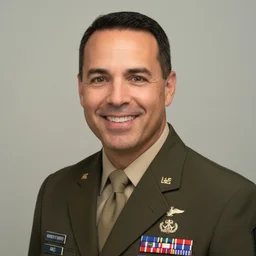
Retired Military Officer & Armed Forces Test Preparation Specialist
United States Army War CollegeColonel Steven Harris (Ret.) served 28 years in the US Army, earning a Master of Arts in Military Science from the Army War College and a Bachelor of Science in Criminal Justice. He has coached thousands of military enlistment and officer candidate program applicants through the ASVAB, AFQT, AFCT, OAR, and officer selection assessment processes across all military branches.
Join the Discussion
Connect with other students preparing for this exam. Share tips, ask questions, and get advice from people who have been there.
View discussion (5 replies)