
ASVAB 2026 September–2026 September Test Simulator: Full Practice Test Guide to Boost Your Scores
Ace your ASVAB practice test with our 2026 September–26 test simulator. Real questions, score breakdowns, and a full study guide. 🎓 Start free today!
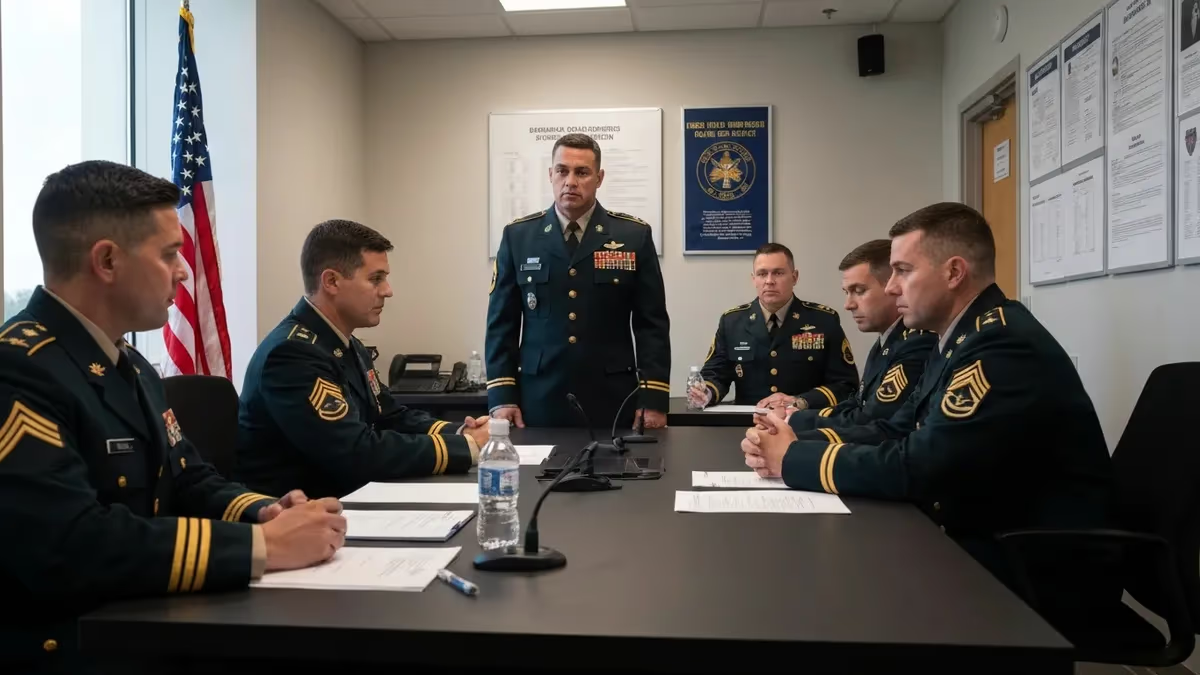
The ASVAB 25-26 test simulator is the single most effective tool you can use to prepare for the Armed Services Vocational Aptitude Battery in 2025 and 2026. An asvab practice test that mirrors real exam conditions — timed sections, adaptive scoring, and instant feedback — trains your brain to perform under pressure rather than just memorize facts in a vacuum. Whether you are enlisting in the Army, Navy, Air Force, Marines, or Coast Guard, your AFQT score determines eligibility, and your line scores determine which military occupational specialties are available to you.
Most recruits underestimate how much the ASVAB differs from a standard high school exam. The test is not simply about general knowledge; it covers nine distinct subject areas ranging from arithmetic reasoning and word knowledge to electronics information and mechanical comprehension. A targeted asvab practice test regimen lets you identify weak domains early, allocate study hours strategically, and track measurable improvement week over week. Without simulated test conditions, even well-read candidates often freeze when the clock starts running on test day.
One of the biggest myths about ASVAB preparation is that reading an asvab for dummies guide or a general study book is enough on its own. While foundational review is essential, passive reading does not build the procedural fluency you need to solve arithmetic reasoning problems in 36 minutes or answer 16 auto-information questions before time expires. Active recall through simulator-style practice is what converts knowledge into reliable test performance — and that distinction can mean the difference between a 31 AFQT and a 65.
The 2025–2026 ASVAB follows the same core structure that has been used in recent years, but military branches periodically update score requirements and MOS cutoffs. Staying current with the latest score thresholds matters because some high-demand jobs — like cryptologic linguist or nuclear-trained Navy ratings — require composite scores well above the branch minimums. Using an updated simulator that reflects current section weights and question formats keeps your preparation aligned with the actual exam you will face at the MEPS testing center.
Beyond eligibility, strong ASVAB scores open doors to signing bonuses, advanced training pipelines, and faster promotion tracks. Recruits who score in the 90th percentile frequently receive bonus offers that can exceed $20,000 for certain specialties. Even a modest improvement from a 50 to a 70 on your AFQT can expand your job options from a handful of general-duty roles to dozens of technical and intelligence career paths. This is why investing serious time in a high-quality simulator — not just skimming a practice sheet — pays genuine dividends.
This guide walks you through everything you need to know about the ASVAB test simulator experience: how the exam is structured, what each section tests, how scoring works, and what a week-by-week study plan looks like for candidates who have four to twelve weeks before their scheduled test date. You will also find direct links to free practice quizzes, a checklist of must-do preparation steps, and answers to the most common questions recruits ask before test day.
Bookmark this page now, because you will want to return to it repeatedly throughout your preparation cycle. The most successful ASVAB candidates do not cram the week before — they build consistent study habits over several weeks, use practice simulators to benchmark progress, review wrong answers with discipline, and arrive at MEPS having already experienced dozens of simulated test sessions. Let us get started with the numbers that define what you are preparing for.
ASVAB 2025–2026 by the Numbers
ASVAB Exam Format & Structure
| Section | Questions | Time | Weight | Notes |
|---|---|---|---|---|
| General Science (GS) | 16 | 8 min | Line Score | Tests physical, biological, and earth science |
| Arithmetic Reasoning (AR) | 16 | 39 min | AFQT + Line Score | Word problems involving basic math operations |
| Word Knowledge (WK) | 16 | 8 min | AFQT + Line Score | Vocabulary and word meaning in context |
| Paragraph Comprehension (PC) | 11 | 22 min | AFQT + Line Score | Reading passages with comprehension questions |
| Mathematics Knowledge (MK) | 16 | 20 min | AFQT + Line Score | Algebra, geometry, and number theory |
| Electronics Information (EI) | 16 | 8 min | Line Score | Circuits, electrical components, and systems |
| Auto & Shop Information (AS) | 11 | 7 min | Line Score | Automotive systems and shop tool use |
| Mechanical Comprehension (MC) | 16 | 20 min | Line Score | Principles of physics and mechanical systems |
| Assembling Objects (AO) | 16 | 16 min | Line Score (Navy) | Spatial reasoning and object assembly |
| Total | 145 | 3 hours (CAT-ASVAB) | 100% |
Understanding how asvab scores are calculated is just as important as knowing the content areas themselves. The AFQT — Armed Forces Qualification Test — is not a standalone subtest but a composite derived from four of the nine ASVAB sections: Arithmetic Reasoning, Word Knowledge, Paragraph Comprehension, and Mathematics Knowledge. Your raw scores on these four sections are converted into a percentile that places you relative to a nationally representative sample tested in 1997. A score of 65 means you performed better than 65 percent of that reference group — not that you answered 65 percent of questions correctly.
Beyond the AFQT, each military branch uses a different combination of subtests to generate what are called line scores or composite scores. These composites are then matched against specific MOS, rating, or AFSC requirements. For example, the Army's Skilled Technical (ST) composite combines General Science, Word Knowledge, Paragraph Comprehension, and Mathematics Knowledge — meaning a soldier hoping to become a medical laboratory specialist needs strong scores in all four of those areas simultaneously. Simply hitting the minimum AFQT to enlist will not unlock specialized technical roles.
The Navy's scoring system is particularly granular. Sailors aiming for cryptology, nuclear engineering, or intelligence ratings must meet composite score thresholds that are significantly higher than the branch's baseline AFQT minimum of 35. The Nuclear Field (NF) composite, for instance, requires scores in Arithmetic Reasoning, Mathematics Knowledge, Electronics Information, and General Science that together reflect a college-level quantitative aptitude. Candidates who want these career paths should allocate extra simulator time to those four specific subtests from the very beginning of their preparation.
The Air Force uses a system called the ASVAB MAGE scores — Mechanical, Administrative, General, and Electronic — and most Air Force Specialty Codes require a qualifying score in one or more of these composites. The General composite alone draws from Arithmetic Reasoning, Word Knowledge, Paragraph Comprehension, and Mathematics Knowledge, making AFQT-heavy preparation doubly valuable for Air Force candidates. Understanding which composites your target career field requires before you begin studying lets you prioritize intelligently rather than spreading your effort evenly across all nine subtests.
Many candidates are surprised to learn that the ASVAB has a mandatory waiting period for retesting. If you do not achieve the score you need on your first attempt, you must wait 30 days before retesting. After a second attempt, you must wait another 30 days. Subsequent retests require a full six-month waiting period. This structure means that your first test attempt is critically important — not because you cannot retake it, but because a poor first attempt delays your enlistment timeline significantly and can affect your options if a recruiter is working against a specific recruiting cycle deadline.
Using the army fitness test preparation mindset — consistent effort over time rather than last-minute cramming — is equally applicable to ASVAB prep. Physical fitness tests respond to progressive overload, and cognitive test performance responds to spaced repetition and interleaved practice. Running the same arithmetic reasoning simulator drill every day for two weeks produces diminishing returns; alternating between arithmetic reasoning, mathematics knowledge, and word knowledge drills within the same study session builds stronger cross-domain fluency.
Score reports after the ASVAB are typically available within hours for the computerized CAT-ASVAB version administered at MEPS. The paper-and-pencil version used at some high school sites (the Student ASVAB) takes longer to process and may not reflect the exact score scale used for enlistment decisions. Always confirm with your recruiter whether your existing scores were obtained from the MEPS CAT-ASVAB or the Student version, as MEPS will sometimes require you to retest if your most recent official score is too old or was obtained under non-standard conditions.
ASVAB Study Guide: 3 Proven Preparation Approaches
The simulator-first method begins with a full-length diagnostic practice test before you open any study materials. By taking a timed ASVAB practice test cold, you generate an honest baseline score that reveals your strongest and weakest subtests without the distortion of pre-study anxiety or overconfidence. Your diagnostic score tells you exactly where to invest your hours — if you score 80 percent on word knowledge but 45 percent on arithmetic reasoning, the math sections deserve the lion's share of your study calendar.
After your diagnostic, build a six-week study calendar that assigns specific subtests to specific days. Use the simulator again at the end of each week to measure progress in that week's focus area. Candidates who follow this cycle consistently report 15 to 25 percentile-point improvements in their AFQT over a six-week window. The simulator provides immediate feedback on wrong answers, which is essential — reviewing why an answer is wrong is at least as valuable as getting it right, because it closes the conceptual gap rather than just confirming what you already know.

ASVAB Practice Test Simulator: Pros and Cons vs. Traditional Study Books
- +Immediate score feedback after every practice session shows exactly where improvement is happening
- +Timed section conditions train your pacing so you never run out of time on test day
- +Adaptive question difficulty mirrors the CAT-ASVAB format used at actual MEPS testing centers
- +Detailed answer explanations close conceptual gaps rather than just marking answers right or wrong
- +Unlimited retakes let you drill weak subtests repeatedly without running out of practice material
- +Progress tracking across sessions gives you a data-driven view of your improvement trajectory
- −Screen-based practice can feel different from paper-and-pencil versions used at some Student ASVAB sites
- −Free simulators sometimes have limited question banks that repeat too quickly after just a few sessions
- −Without structured content review, simulator-only prep leaves foundational knowledge gaps unaddressed
- −Over-reliance on practice test scores can create false confidence if the question difficulty is miscalibrated
- −Some candidates develop test-taking anxiety specifically from timed simulator pressure without adequate breaks
- −Digital simulators cannot replicate the exact MEPS testing environment, including proctoring conditions
ASVAB Test Day Preparation Checklist
- ✓Complete at least three full-length timed practice tests before your scheduled MEPS appointment.
- ✓Review every wrong answer from your simulator sessions and write a one-sentence explanation of the correct concept.
- ✓Confirm your test date, MEPS location, and required identification documents with your recruiter at least one week out.
- ✓Get at least seven to eight hours of sleep for three consecutive nights before your test date.
- ✓Eat a balanced, protein-rich breakfast the morning of the test — avoid high-sugar foods that cause energy crashes.
- ✓Arrive at MEPS at least 30 minutes early to complete check-in without rushing or added stress.
- ✓Bring two valid forms of ID, including a government-issued photo ID such as a driver's license or passport.
- ✓Do not attempt to study new material in the 24 hours before the test — focus only on light review of familiar concepts.
- ✓Practice mental math techniques for the arithmetic sections, including estimation and elimination strategies.
- ✓Know your target AFQT score and the line score requirements for your desired military occupational specialty before test day.
Your AFQT Gets You In — Your Line Scores Choose Your Career
A qualifying AFQT score earns you the right to enlist, but your branch-specific line scores determine which jobs are actually available to you. Candidates who focus exclusively on AFQT-relevant subtests and neglect electronics, mechanical comprehension, and general science may enlist but find themselves locked out of the technical and intelligence careers they wanted. Always map your target MOS to its required line score composites before building your study plan.
Using the ASVAB test simulator effectively requires more than just clicking through questions — it demands a systematic review process after every session. The most common mistake candidates make is finishing a practice test, glancing at their score, feeling satisfied or disappointed, and then closing the browser. That approach wastes at least half the value of the session. The real learning happens in the 20 to 30 minutes after the test when you methodically work through every wrong answer and understand not just what the correct answer was, but why the distractors were designed to mislead you.
Every ASVAB subtest has specific question types that recur with predictable structure. In arithmetic reasoning, approximately 40 percent of questions involve rate-time-distance problems, percentage calculations, or ratio comparisons. In mechanical comprehension, gear systems, pulley ratios, and pressure principles appear consistently across test versions. When you identify these recurring patterns through simulator practice, you can build targeted response scripts — mental shortcuts that let you categorize a question in the first five seconds and apply the correct solving approach without wasted deliberation.
The electronics information and auto-and-shop subtests intimidate many candidates who have no mechanical background, but these sections are highly learnable precisely because they test a finite, well-defined body of knowledge. There are roughly 150 to 200 core concepts across electronics and auto-shop combined — Ohm's law, circuit diagrams, engine systems, tool identification — that account for the vast majority of questions. A focused two-week review of these concepts, paired with simulator drilling, can move a candidate from the 40th to the 70th percentile on these subtests, dramatically improving the line scores that matter for technical MOS assignments.
Word knowledge and paragraph comprehension are the two subtests where incremental daily practice produces the most reliable gains over a six-week window. Learning 15 to 20 vocabulary roots per week — prefixes like poly-, trans-, sub-, and suffixes like -ology, -tion, -ive — allows you to decode unfamiliar words on test day through etymology rather than memorized definitions.
This approach scales better than trying to memorize individual word lists because roots recur across hundreds of different test words. Pair root study with paragraph comprehension simulator drills that force you to identify main idea, supporting detail, and author inference within tight time limits.
The army combat fitness test parallel is instructive here: just as you would not attempt a two-mile run on test day without weeks of progressive running training, you should not approach the timed ASVAB sections without weeks of timed simulator conditioning. Your brain, like your cardiovascular system, adapts to the specific demands you place on it during training.
Candidates who consistently practice under realistic time pressure develop a cognitive pacing sense that tells them when they are spending too long on a single question and need to make an educated guess and move on — a skill that is genuinely difficult to develop through untimed practice alone.
One underutilized simulator strategy is the review-predict cycle. After completing a timed practice test, before revealing your score, predict your performance on each subtest based on how confident you felt during the session. Then compare your predictions to your actual scores. Large gaps between predicted and actual performance — especially overconfidence on sections where you scored poorly — reveal calibration problems in your self-assessment that can be corrected before test day. Well-calibrated candidates who accurately predict their performance tend to manage test anxiety more effectively because they have realistic expectations.
Finally, consider using your simulator data to make a go or no-go decision about your test date. If your practice scores across your final three full-length simulations are consistently meeting or exceeding your target AFQT by at least five percentile points, you are likely ready.
If your scores are still volatile — swinging 10 or more points between sessions — you have not yet reached the stable performance plateau that predicts reliable test-day results. In that case, speaking with your recruiter about adjusting your test date by two to three weeks is a strategically sound decision, not a sign of weakness.
If you do not achieve your required score on the first attempt, you must wait 30 days to retest. After a second attempt, another 30-day wait applies. Any subsequent retest requires a full six-month waiting period, which can delay your enlistment by half a year. This policy makes your first MEPS test attempt critically important — use the simulator extensively to ensure you are genuinely ready before scheduling your appointment.
Physical fitness and cognitive readiness are more connected than most recruits realize, and the best ASVAB candidates treat both as parallel preparation tracks. The asvab study guide resources on this site include video answer walkthroughs that model the kind of step-by-step reasoning you want to internalize before test day. Watching an expert solve an arithmetic reasoning problem in real time — narrating their decision process, eliminating wrong answers, and managing the clock — teaches you cognitive strategies that are difficult to absorb from a static answer key alone.
One of the most effective simulator strategies for candidates targeting high line scores is what test preparation researchers call errorless interleaving. After identifying your two weakest subtests from your diagnostic, alternate between them within the same study session rather than studying them on separate days.
Spend 20 minutes on arithmetic reasoning problems, switch to 20 minutes of electronics information, then return to arithmetic reasoning for a final 15-minute block. This rotation forces your brain to switch cognitive modes repeatedly, which strengthens the neural pathways associated with both skill sets and reduces the tendency to go on autopilot within a single domain.
Many candidates overlook the assembling objects subtest entirely because it does not contribute to the AFQT and only affects Navy line scores. However, if you are considering any Navy rating that involves engineering, hull maintenance, or construction, the AO composite matters significantly. The good news is that spatial reasoning responds quickly to targeted practice — two to three focused simulator sessions per week on assembling objects questions can produce noticeable improvement within ten days because the underlying skill (mentally rotating and connecting shapes) is highly trainable with repetition.
The relationship between asvab scores and military career trajectory extends well beyond initial job assignment. In the Army, soldiers can pursue reclassification into a different MOS after several years of service, and reclassification boards consider your original ASVAB line scores when evaluating your eligibility for technical retraining. A strong performance on the ASVAB at enlistment therefore functions as a long-term career asset — not just a gate you pass through once and forget. Soldiers who scored in the top quartile on relevant composites report having more options when pursuing warrant officer or special operations pipelines later in their careers.
For candidates who tested in high school under the Student ASVAB program and are now approaching enlistment age, it is worth noting that MEPS will typically require a new test if your high school scores are more than two years old.
The Student ASVAB is administered in a group classroom setting that may have been less strictly proctored than the MEPS environment, and your score may not accurately reflect your current ability level, especially if you have taken additional math or science coursework since then. Approach your MEPS test as your primary opportunity and prepare for it as seriously as any college entrance exam.
Simulator sessions are most productive when you treat wrong answers as data points rather than failures. Each incorrect response tells you something specific: you misunderstood the question format, you had a vocabulary gap, you applied the wrong formula, or you ran out of time and guessed. Categorizing your errors by type over several sessions reveals systematic patterns — for example, if you consistently miss rate-time-distance problems but nail percentage questions, your deficit is in setting up multi-step word problems rather than in arithmetic operations per se. Targeted remediation at that specific level is far more efficient than general math review.
The final week before your MEPS test should be treated as a consolidation and confidence-building phase, not a last-minute cramming sprint. Run one or two full-length timed simulator sessions early in the week, review your results, and then taper off. Spend the last two days doing light vocabulary review and mental arithmetic drills — nothing that introduces new material or causes anxiety. Sleep, nutrition, and a calm mindset on test day contribute measurably to cognitive performance, and candidates who arrive at MEPS well-rested and emotionally regulated consistently outperform those who stayed up late studying the night before.
Building a realistic weekly study schedule is one of the most impactful decisions you can make at the start of your ASVAB preparation. Candidates who write out a specific hour-by-hour plan for each week are significantly more likely to follow through than those who commit to vague intentions like studying every day.
A realistic plan for a working adult with two to three hours of daily study time might look like this: Monday and Wednesday focus on arithmetic reasoning and mathematics knowledge; Tuesday and Thursday cover word knowledge and paragraph comprehension; Friday rotates through general science and electronics information; weekends are reserved for full-length timed simulator tests and error review.
One of the most overlooked aspects of ASVAB preparation is the importance of sleep consolidation between study sessions. Research on memory formation consistently shows that the brain consolidates newly learned information during slow-wave and REM sleep cycles.
A candidate who studies arithmetic reasoning for two hours and then sleeps eight hours will retain more of that material than one who studies for four hours with only five hours of sleep. This means that the total number of hours you sleep during your preparation period is almost as important as the total number of hours you study — treat sleep as a non-negotiable study tool.
Vocabulary development for the word knowledge subtest benefits enormously from context-based learning rather than isolated word-definition memorization. Instead of drilling flashcard lists, read one article per day from a publication like The New York Times, Scientific American, or a military history magazine, and look up every unfamiliar word you encounter.
Write the word, its definition, its root, and a sentence using it in context. This approach builds vocabulary the way your brain actually stores it — embedded in meaningful context — which makes the words much more likely to surface correctly when you see them on a simulator or on test day.
The mathematics knowledge subtest covers concepts through approximately the tenth-grade level: linear and quadratic equations, exponent rules, geometric area and perimeter formulas, probability basics, and number properties like factors, multiples, and prime numbers. If any of these topics feel unfamiliar, target them specifically in your simulator sessions. For geometry questions, practice drawing the figure described in the problem before applying any formula — this simple step catches the majority of errors caused by misreading what the question is actually asking you to find.
Mechanical comprehension preparation benefits from hands-on exposure as much as from simulator drilling. If you have access to a vehicle, spend 30 minutes understanding how the basic systems work — the cooling system, the braking system, how a piston engine operates. If you work with tools, pay attention to how levers, pulleys, and gears function in real physical systems. This concrete mental model makes simulator questions about gear ratios and mechanical advantage far less abstract, because you can visualize the system the question describes rather than trying to manipulate it purely in the abstract.
In the final days before your MEPS appointment, practice the administrative logistics of the test day itself. Know exactly how long it takes to drive or travel to your MEPS location. Confirm what you are and are not allowed to bring into the testing room — most MEPS locations prohibit phones, watches, and food in the testing area.
Prepare your ID documents the night before and put them in a designated spot so you are not searching for them on test morning. These logistical details sound minor, but arriving flustered and disorganized is one of the most common causes of underperformance among candidates who were otherwise well-prepared academically.
After you receive your official ASVAB scores, sit down with your recruiter and map every available MOS or rating against your line score profile. Do not let the recruiter steer you exclusively toward high-demand vacancies — ask to see the full list of roles your scores qualify you for and research the training pipeline, day-to-day duties, and career progression for each one. Your ASVAB scores are the result of real work and investment; make sure the military job you accept reflects the full range of opportunities those scores have earned you.
ASVAB Questions and Answers




About the Author
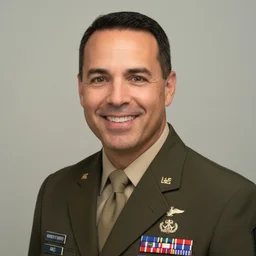
Retired Military Officer & Armed Forces Test Preparation Specialist
United States Army War CollegeColonel Steven Harris (Ret.) served 28 years in the US Army, earning a Master of Arts in Military Science from the Army War College and a Bachelor of Science in Criminal Justice. He has coached thousands of military enlistment and officer candidate program applicants through the ASVAB, AFQT, AFCT, OAR, and officer selection assessment processes across all military branches.
Join the Discussion
Connect with other students preparing for this exam. Share tips, ask questions, and get advice from people who have been there.
View discussion (5 replies)