
What Does ACLS Stand For? Complete 2026 October Guide to Advanced Cardiovascular Life Support Certification
What does ACLS stand for? Learn the meaning of Advanced Cardiovascular Life Support, 🎓 who needs it, costs, exam format, and how to pass in 2026 October.
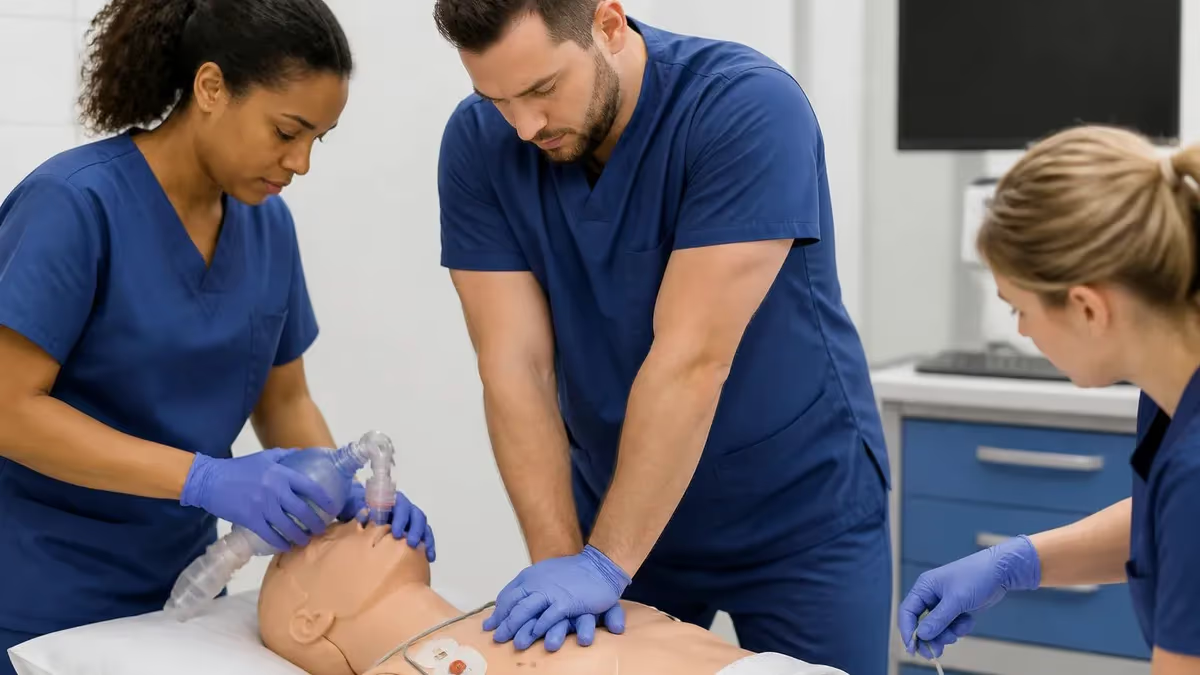
What does ACLS stand for? ACLS stands for Advanced Cardiovascular Life Support, a structured emergency response protocol developed and maintained by the American Heart Association (AHA) to guide clinicians through the management of cardiac arrest, stroke, acute coronary syndromes, and other life-threatening cardiovascular emergencies. The acronym represents far more than a course name — it represents a unified clinical language that allows nurses, physicians, paramedics, and respiratory therapists to coordinate seamlessly during the most chaotic moments of patient care, often when seconds determine survival.
The full phrase — Advanced Cardiovascular Life Support — distinguishes ACLS from its predecessor, Basic Life Support (BLS). While BLS focuses on chest compressions, airway management, and early defibrillation that any trained bystander can perform, ACLS builds on that foundation with advanced airway techniques, intravenous medications, cardiac rhythm interpretation, and team-based resuscitation strategies. Some older textbooks still reference ACLS as Advanced Cardiac Life Support, but the AHA officially updated the terminology to Cardiovascular to reflect the broader scope including stroke and post-arrest neurological care.
Understanding what ACLS stands for matters because the certification is a non-negotiable credential for thousands of healthcare roles across the United States. Emergency departments, intensive care units, cardiac catheterization labs, operating rooms, and ambulance services nearly universally require active ACLS certification as a condition of employment. For a deeper walkthrough of the curriculum, our ACLS study guide breaks down every algorithm, drug, and skill station you'll encounter during your two-day course.
The ACLS program traces its origins to 1974, when the AHA published the first standardized cardiopulmonary resuscitation guidelines. Over five decades, the protocols have been refined through hundreds of peer-reviewed studies, registry data from millions of cardiac arrests, and international collaboration through the International Liaison Committee on Resuscitation (ILCOR). The 2020 Guidelines update — still the foundation for 2026 training — emphasized high-quality CPR, double sequential defibrillation considerations, and post-cardiac-arrest temperature management between 32°C and 37.5°C.
Beyond the acronym, ACLS represents a mindset. It teaches clinicians to think systematically under pressure: assess, prioritize, intervene, reassess. The systematic approach — primary survey (CAB), secondary survey (H's and T's), and continuous rhythm analysis — gives team leaders a mental scaffolding that prevents tunnel vision during resuscitation. This cognitive framework is arguably more valuable than memorizing drug doses, because it allows providers to adapt when patients deviate from textbook presentations, which they routinely do.
This article will explain in depth what ACLS stands for, who needs the certification, what the course covers, how much it costs, what the exam looks like, and how to prepare effectively. Whether you're a new nursing graduate, a paramedic renewing for the third time, or a physician switching specialties, understanding the full meaning behind those four letters will help you approach the certification with the seriousness — and confidence — it deserves. We'll also cover common misconceptions, the relationship between ACLS and PALS, and the practical workflow inside a real code blue.
By the time you finish reading, you'll know not just what the letters mean, but why ACLS remains one of the most clinically impactful certifications in modern medicine. You'll understand which providers must hold it, which optional roles benefit from it, what employers expect during interviews, and how the certification interacts with state licensure boards and hospital credentialing committees across all fifty states.
ACLS by the Numbers
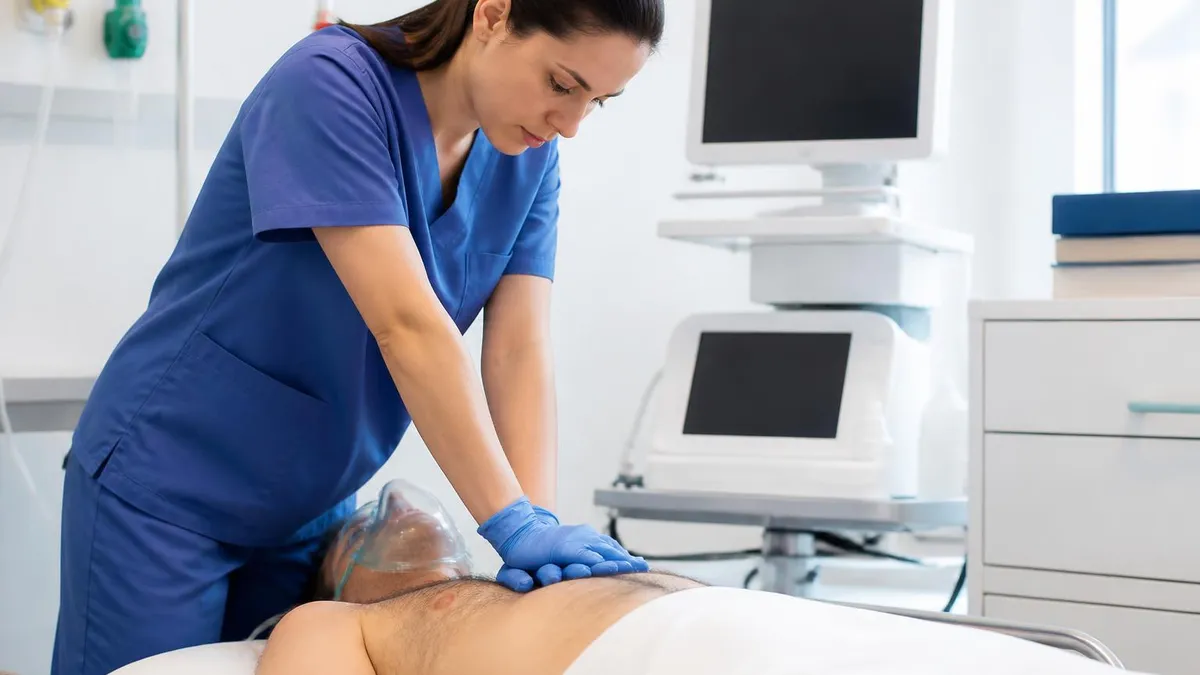
What the ACLS Acronym Actually Means
Distinguishes the course from Basic Life Support (BLS). Advanced interventions include intubation, intravenous and intraosseous medications, manual defibrillation, transcutaneous pacing, and rhythm-specific algorithms requiring clinical judgment beyond bystander CPR.
Replaced the older word 'Cardiac' to reflect broader scope. Covers stroke, hemodynamic shock, peri-arrest arrhythmias, and post-arrest neurological care — not just the heart muscle itself but the entire circulatory and cerebrovascular system.
Reinforces that every protocol is designed around preserving viable life. Algorithms prioritize interventions with the strongest survival evidence: early high-quality CPR, defibrillation within 2 minutes, and reversible-cause identification using the H's and T's.
Emphasizes that ACLS providers support the patient's failing physiology while definitive treatment is arranged. The goal is bridging — maintaining perfusion and oxygenation long enough for cath lab, neurosurgery, or ICU teams to intervene.
Now that we've defined what ACLS stands for, the next critical question is: who actually needs this certification? The answer is broader than most people realize and continues to expand as hospitals tighten credentialing standards. In 2026, ACLS certification is required for virtually every clinician who might encounter an unstable adult patient — including roles that historically didn't need it, like outpatient cardiology nurses and interventional radiology technologists. The credentialing trend has moved decisively toward universal requirement across acute care settings.
Registered nurses working in emergency departments, intensive care units, telemetry floors, post-anesthesia care units (PACU), cardiac catheterization labs, electrophysiology labs, and step-down units are nearly always required to maintain current ACLS certification. Many medical-surgical units now require it as well, particularly in hospitals that have adopted rapid response team models where any floor nurse may be called to participate in code situations before the dedicated team arrives. Some travel nursing contracts explicitly require ACLS before the first shift, and recruiters will not submit applications without proof.
Physicians who require ACLS include emergency medicine specialists, anesthesiologists, intensivists, cardiologists, hospitalists, surgeons, and most fellows training in procedural subspecialties. Many residency programs require ACLS certification before the first clinical rotation, and some require BLS, ACLS, and PALS as a package within the first month of intern year. For attending physicians, hospital privileging committees often verify ACLS status during the biennial reappointment process, and lapsed certification can temporarily suspend admitting privileges.
Paramedics and advanced EMTs use ACLS protocols every shift, though their certification pathway is sometimes integrated into their primary licensure rather than completed as a standalone course. Respiratory therapists who work in adult acute care, perfusionists, certified registered nurse anesthetists (CRNAs), physician assistants in emergency and critical care, and certified surgical first assistants typically need active ACLS as well. Reviewing the official ACLS guidelines can clarify exactly which scope-of-practice elements apply to your role.
Beyond the obvious roles, a growing list of allied professionals pursue ACLS voluntarily because it strengthens their resumes and broadens employment options. Dental anesthesiologists, oral surgeons, plastic surgeons operating in office-based settings, urgent care physicians, sports medicine doctors, and even some chiropractors performing manipulation under anesthesia carry ACLS to satisfy state board sedation regulations. The certification has effectively become a baseline competency marker in any setting where a patient could deteriorate suddenly.
Healthcare students often pursue ACLS before graduation to make themselves more competitive. Nursing students entering critical care residencies, medical students applying to emergency medicine or anesthesia, and physician assistant students rotating through inpatient services all benefit from arriving on day one with certification already in hand. Some BSN programs now build ACLS into the senior practicum curriculum, and an increasing number of accelerated programs include it as a graduation requirement alongside BLS.
Finally, it's worth noting that the requirement isn't just regulatory — it's practical. Hospitals that audit code outcomes consistently find that teams with higher percentages of ACLS-certified providers achieve better return-of-spontaneous-circulation (ROSC) rates and shorter time-to-defibrillation intervals. So while you may initially get certified because your employer demands it, the skills directly translate into measurably better patient outcomes during the most critical moments of clinical practice.
ACLS Practice Test Questions
Prepare for the ACLS Advanced Cardiovascular Life Support Practice exam with our free practice test modules. Each quiz covers key topics to help you pass on your first try.
ACLS Cardiac Rhythms & ECG Interpretation
ACLS Exam Questions covering ACLS Cardiac Rhythms & ECG Interpretation. Master ACLS Test concepts for certification prep.
ACLS Pharmacology & Medications
Free ACLS Practice Test featuring ACLS Pharmacology & Medications. Improve your ACLS Exam score with mock test prep.
ACLS Best Practices & Methodologies
ACLS Mock Exam on Best Practices & Methodologies. ACLS Study Guide questions to pass on your first try.
ACLS Communication & Stakeholder Relations
ACLS Test Prep for Communication & Stakeholder Relations. Practice ACLS Quiz questions and boost your score.
ACLS Core Concepts & Fundamentals
ACLS Questions and Answers on Core Concepts & Fundamentals. Free ACLS practice for exam readiness.
ACLS Data Analysis & Reporting
ACLS Mock Test covering Data Analysis & Reporting. Online ACLS Test practice with instant feedback.
ACLS Documentation & Record Keeping
Free ACLS Quiz on Documentation & Record Keeping. ACLS Exam prep questions with detailed explanations.
ACLS Industry Regulations & Compliance
ACLS Practice Questions for Industry Regulations & Compliance. Build confidence for your ACLS certification exam.
ACLS Leadership & Team Management
ACLS Test Online for Leadership & Team Management. Free practice with instant results and feedback.
ACLS Professional Standards & Ethics
ACLS Study Material on Professional Standards & Ethics. Prepare effectively with real exam-style questions.
ACLS Quality Assurance & Improvement
Free ACLS Test covering Quality Assurance & Improvement. Practice and track your ACLS exam readiness.
ACLS Risk Management & Assessment
ACLS Exam Questions covering Risk Management & Assessment. Master ACLS Test concepts for certification prep.
What ACLS Training Actually Covers
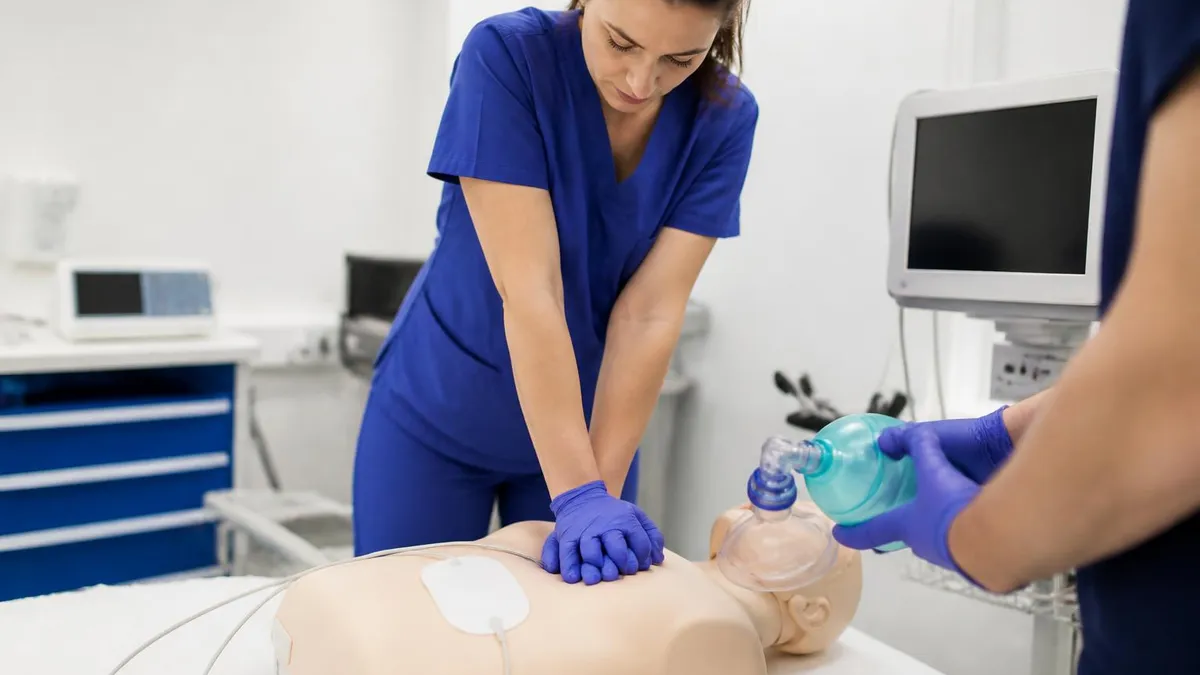
The core of ACLS training is mastery of the AHA algorithms — visual decision trees that guide providers through specific clinical scenarios. The cardiac arrest algorithm covers VF/pulseless VT and asystole/PEA pathways, integrating CPR cycles, defibrillation timing, epinephrine dosing every 3-5 minutes, and amiodarone or lidocaine for refractory shockable rhythms. Each branch includes specific timing intervals and dose calculations students must internalize before testing.
Additional algorithms cover bradycardia (atropine, transcutaneous pacing, dopamine or epinephrine infusions), tachycardia (synchronized cardioversion versus adenosine versus rate control), acute coronary syndromes (12-lead ECG within 10 minutes, aspirin, reperfusion strategy), and suspected stroke (last-known-well time, NIH stroke scale, thrombolytic eligibility). The post-cardiac-arrest care algorithm rounds out the curriculum with targeted temperature management and hemodynamic optimization goals.
Is ACLS Certification Worth Pursuing?
- +Required for most acute care nursing and physician jobs, making it essentially a career prerequisite
- +Significantly improves confidence and competence during real cardiac emergencies
- +Increases salary potential and unlocks higher-paying ICU, ED, and travel positions
- +Valid for two years before renewal, with shorter recertification courses available
- +Available in flexible formats including online didactic with in-person skills check-off
- +Provides standardized language that improves teamwork across departments and shifts
- +Counts toward continuing education credits in most states and specialty board requirements
- −Course costs $225-$350, with renewal fees recurring every two years indefinitely
- −Requires 10-14 hours of dedicated learning for initial certification
- −Pre-course self-assessment and pharmacology review can feel overwhelming for beginners
- −Megacode testing creates significant test anxiety even for experienced clinicians
- −Knowledge fades quickly without regular clinical exposure to codes
- −Algorithms occasionally update mid-cycle, requiring providers to track guideline changes
- −Some online providers offer non-AHA cards that employers won't accept, wasting money
Pre-Course Checklist Before Your ACLS Class
- ✓Verify your BLS certification is current — most ACLS courses require active BLS as a prerequisite
- ✓Download the AHA ACLS Provider Manual (eBook or print) at least two weeks before class
- ✓Complete the AHA pre-course self-assessment online and print your passing score certificate
- ✓Review the 10 core ECG rhythms: NSR, sinus brady, sinus tach, AFib, AFlutter, SVT, VT, VF, asystole, PEA
- ✓Memorize the cardiac arrest algorithm including epinephrine timing and shockable versus non-shockable pathways
- ✓Study the bradycardia and tachycardia algorithms with synchronized cardioversion energy levels
- ✓Practice basic pharmacology flashcards covering doses, indications, and contraindications
- ✓Confirm your course is AHA-branded — non-AHA cards may not be accepted by your employer
- ✓Bring photo ID, BLS card, pre-course assessment results, and payment confirmation to class
- ✓Wear comfortable clothing — you'll be performing CPR on manikins for extended skill stations
ACLS is a Systems Course, Not Just a Knowledge Test
Many candidates fail their first attempt not because they don't know the drug doses, but because they freeze during megacode. The AHA designed ACLS to test how you function inside a team under pressure. Practice verbalizing every action — even alone with a manikin — so the cognitive load of speaking, delegating, and deciding becomes automatic before exam day.
Now that you understand what ACLS stands for and who needs it, the next practical concern is cost and time investment. ACLS certification is not free, but it's one of the highest return-on-investment credentials in healthcare given the salary uplift, job mobility, and clinical competence it unlocks. Costs vary significantly by region, provider, and format — but the general range across the United States in 2026 sits between $225 and $350 for an initial certification course, with renewals typically priced $150 to $250. Hospital-employed clinicians may have their fees fully reimbursed.
The cost variation comes from several factors. Hospital-based training centers often charge the highest rates because they bundle simulation lab time, AHA materials, and instructor expertise into the price. Independent AHA training sites — often run by paramedics or critical care nurses moonlighting as instructors — can offer the same certification for $50 to $100 less because their overhead is lower. Blended learning programs, where you complete online didactic modules and attend only an in-person skills session, frequently land in the $200-$275 range and save substantial time.
For a granular breakdown of current pricing across formats and regions, our ACLS certification cost guide compares hospital training centers, independent sites, blended learning, and online-only options side by side. Hidden costs to watch for include the AHA Provider Manual (around $50 if not included), late fees for missed pre-work, and retesting fees that can add $50-$100 if you don't pass on the first attempt.
Time commitment splits into three phases: pre-course preparation, in-person training, and exam. Pre-course self-assessment and reading typically require 8-15 hours depending on your baseline familiarity with rhythms and pharmacology. The in-person component runs 10-14 hours for initial certification, usually delivered over two consecutive days or split across a few evening sessions. Renewal courses condense the in-person portion to 4-6 hours because you already hold a current card and only need to refresh skills and recertify competency through megacode testing.
The total time investment for an initial certification — including reading, self-assessment, two days of class, and the post-class written exam — usually totals 25-30 hours over a two to four week window. Renewal generally requires 10-15 hours total. Many providers can complete the entire renewal cycle in a single Saturday if they show up well-prepared. Some workplaces offer paid study time and even cover travel and meals during the training days.
Employers frequently reimburse ACLS fees as part of continuing education benefits. Union contracts in many hospital systems explicitly cover certification costs, and even non-union employers commonly offer $500-$1,500 annual CE budgets that easily absorb ACLS expenses. If you're paying out of pocket, check whether your state nursing association, professional society, or employer's tuition benefit can cover the cost before you swipe your card. Some hospitals will even pay your hourly wage while you attend the course.
For travel nurses and per-diem clinicians, maintaining ACLS is essentially a business expense that's tax-deductible in most cases. Keep receipts, certification cards, and any related materials documented in your records. Compared to other clinical certifications — CCRN at $300+ initial exam fees, CEN at $370, or specialty boards costing thousands — ACLS remains one of the most affordable credentials with one of the broadest applications across nearly every acute care setting in the country.
Several online vendors advertise 'ACLS certification' for $99 with no skills check-off. These cards are NOT issued by the American Heart Association and are routinely rejected by hospital credentialing offices. Always verify the course is AHA-branded with both online didactic AND in-person hands-on skills evaluation before paying. If a deal sounds too good to be true, it almost certainly is — and you'll need to pay twice.
Passing the ACLS exam requires a focused strategy rather than rote memorization. The written portion consists of approximately 50 multiple-choice questions, and you need 84% to pass — meaning you can miss roughly 8 questions. Most candidates who fail do so because they didn't review the pre-course material carefully or because they second-guessed answers under time pressure. The exam is open-book in most courses, but candidates who rely on the manual rather than internalized knowledge run out of time before completing all questions.
Start your preparation with the AHA pre-course self-assessment, which is required by most training sites. This online tool tests rhythm recognition, pharmacology, and basic algorithm steps. Score reports show your weak areas, and you should spend extra study time on whichever section you score lowest in. Common weak areas include differentiating second-degree AV blocks, choosing between synchronized cardioversion and defibrillation, and remembering the correct adenosine sequence for stable narrow-complex tachycardia.
For rhythm interpretation, build a daily practice routine using ACLS drugs flashcards alongside rhythm strip apps. Spend 15-20 minutes a day in the two weeks before class drilling rhythms until you can identify each one within three seconds. The exam will not give you time to overthink — recognition must be automatic. Use spaced repetition apps like Anki for both rhythms and drug doses, and quiz yourself in random order rather than always studying them in the same sequence.
Megacode preparation is where most candidates underinvest. The megacode is a simulated cardiac arrest scenario where you serve as team leader, calling out interventions while peers play other roles. Practice verbalizing the algorithm out loud — even in your car, kitchen, or living room. Say 'Pulse check, no pulse, resume CPR, charge to 200 joules biphasic, all clear, shock delivered, resume CPR immediately, IV epinephrine 1 milligram now.' This verbal rehearsal builds the neural pathways you'll need under pressure.
On exam day, arrive early, hydrated, and well-fed. The skills stations are physically demanding — you'll perform compressions, manage airways, and stand for hours. Bring your BLS card, pre-course assessment certificate, photo ID, and your AHA manual. Wear closed-toe shoes and comfortable scrubs or athletic wear. Many instructors note that candidates who treat the day like a clinical shift — well-rested, prepared, and focused — perform dramatically better than those who treat it casually or arrive hung over.
During megacode testing, remember three principles: lead clearly, delegate explicitly, and reassess constantly. Even if you forget a drug dose, your instructor wants to see leadership behavior more than perfect recall. Say 'I want to give amiodarone — what's the dose again?' aloud rather than freezing. Asking for help during a real code is appropriate and expected; ACLS instructors reward providers who maintain situational awareness over those who silently fumble through forgotten details.
Finally, don't underestimate the importance of sleep the night before your written exam. Cognitive performance drops significantly with sleep deprivation, and the ACLS written exam requires both recall and clinical reasoning. Stop studying by 9 PM, review only your weakest area for 30 minutes, then sleep. Trust the preparation you've already done. Walk into the testing room knowing you understand not just what ACLS stands for, but what it represents — and you'll have the confidence to perform.
Beyond the exam itself, several practical tips will help you translate ACLS knowledge into real clinical performance. The first is to integrate ACLS thinking into your daily practice even when you're not in a code. When you assess a patient with chest pain, mentally run through the acute coronary syndrome algorithm. When a patient becomes bradycardic on telemetry, think through atropine versus pacing before you even call the rapid response team. This continual mental rehearsal converts ACLS from a once-every-two-years certification into a living clinical framework you use daily.
Second, attend code blues even when you're not the assigned team member. Most hospitals welcome additional observers, and watching real codes is the single best way to internalize team dynamics. Notice how experienced leaders pace their commands, how they handle conflicting opinions, when they call for the next intervention, and how they communicate with family members. Take mental notes about what worked and what didn't, then debrief informally with colleagues afterward to crystallize the lessons.
Third, volunteer for mock codes and simulation lab sessions whenever your hospital offers them. Repetition under simulated stress is the closest thing to real experience, and you'll make mistakes in a safe environment rather than on a real patient. Many hospitals run quarterly in-situ simulations on actual patient units; if yours doesn't, advocate for the program. Studies consistently show that units running regular mock codes achieve faster defibrillation times and higher survival rates during real events than units that don't.
Fourth, learn to recognize early warning signs before patients arrest. ACLS is most successful when it's never needed because deterioration was caught early. Familiarize yourself with early warning scoring systems used at your hospital — MEWS, NEWS2, or institution-specific versions. Trends matter more than single values. A patient whose heart rate climbed from 78 to 112 over six hours is more concerning than one with a stable rate of 115, even though only one triggers a numeric alert on most monitors.
Fifth, debrief after every code, whether it ended in ROSC, transfer, or death. Debriefing is uncomfortable but invaluable. Discuss what went well, what could improve, and how the team communicated. Many hospitals now mandate post-code debriefs because the evidence supporting them is overwhelming. If your unit doesn't routinely debrief, ask the charge nurse or your manager to start the practice — even informal five-minute conversations make a measurable difference.
Sixth, keep your renewal date on your calendar with a 90-day reminder. Letting ACLS lapse — even by a day — can trigger hospital privileging issues, force you to take the full initial course again instead of the shorter renewal, and create scheduling chaos. Travel nurses and per-diem providers should set redundant reminders because last-minute renewal classes can be hard to find in some regions, particularly during peak training months in late spring and early fall. Some employers even suspend shifts until your card is re-verified.
Finally, mentor newer colleagues once you become comfortable with ACLS. Teaching is the most powerful form of learning, and walking a new nurse or resident through their first megacode reinforces your own mastery while building team cohesion. Many providers report that becoming an AHA instructor — a relatively short additional certification — was the single most impactful step in cementing their long-term competence. The pathway is straightforward, the time commitment is modest, and the professional benefits compound throughout your career.
ACLS Questions and Answers
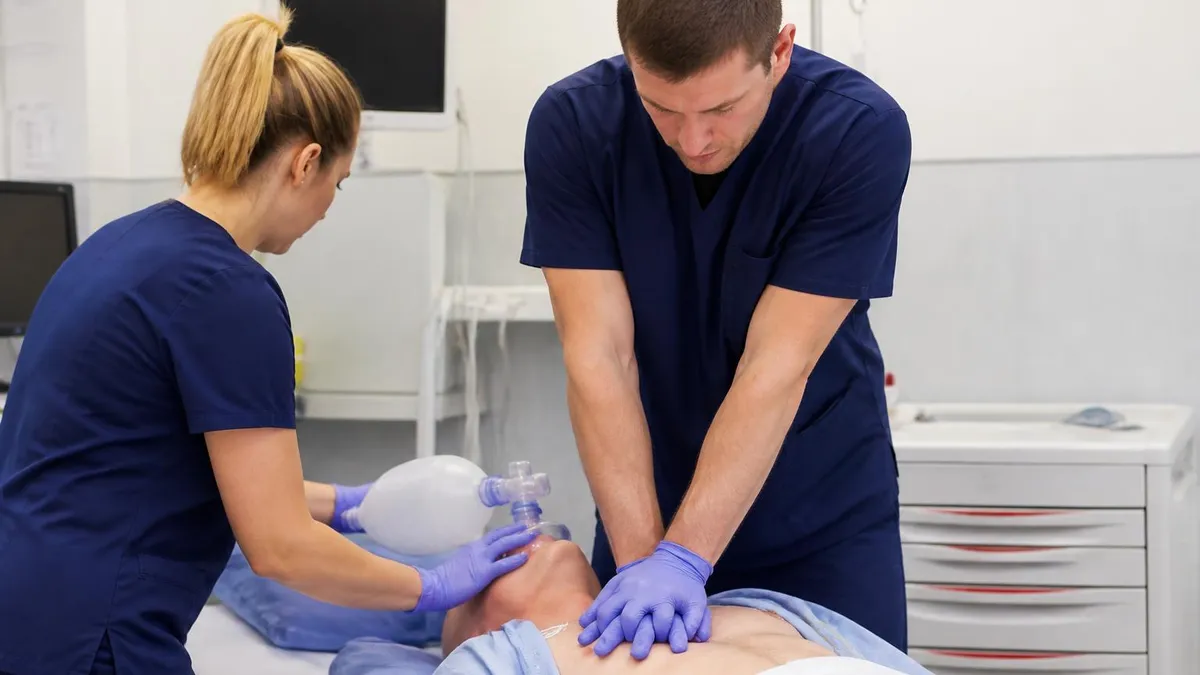
ACLS Study Guide: Complete 2026 Certification Prep with Algorithms, Drugs & Practice Tests

ACLS Guidelines 2026: Complete AHA Update on Algorithms, Drugs, CPR Quality & Post-Arrest Care
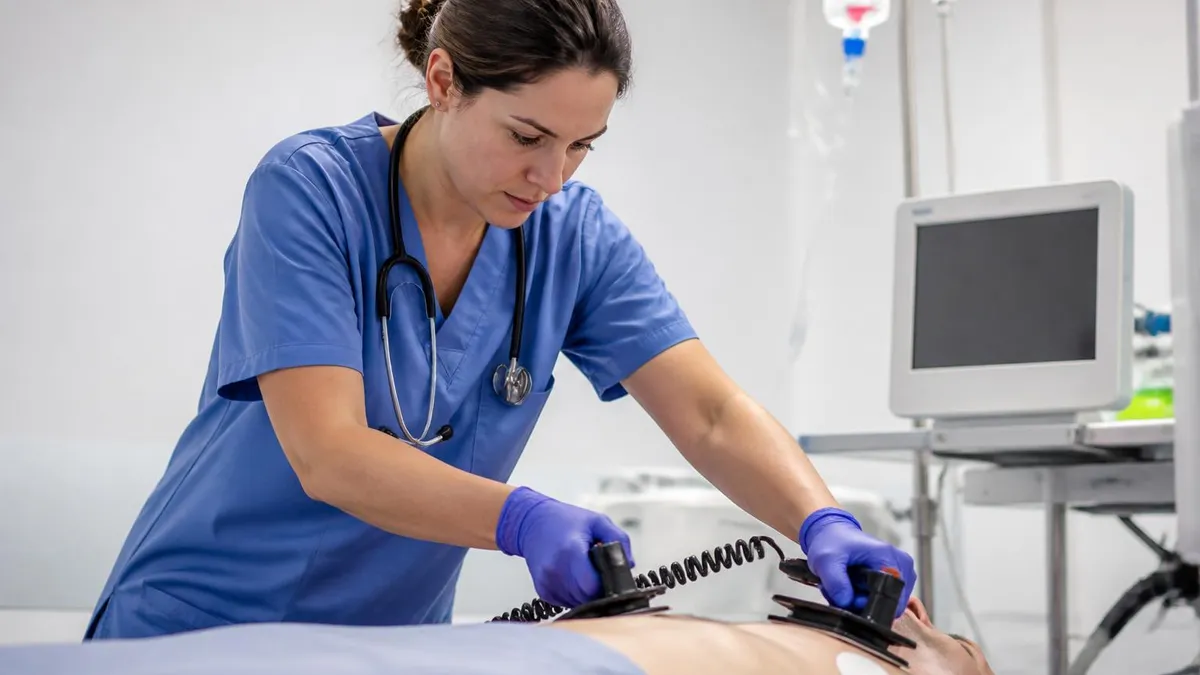
ACLS Drugs: Complete 2026 Guide to Medications, Doses, Indications & Algorithm Use
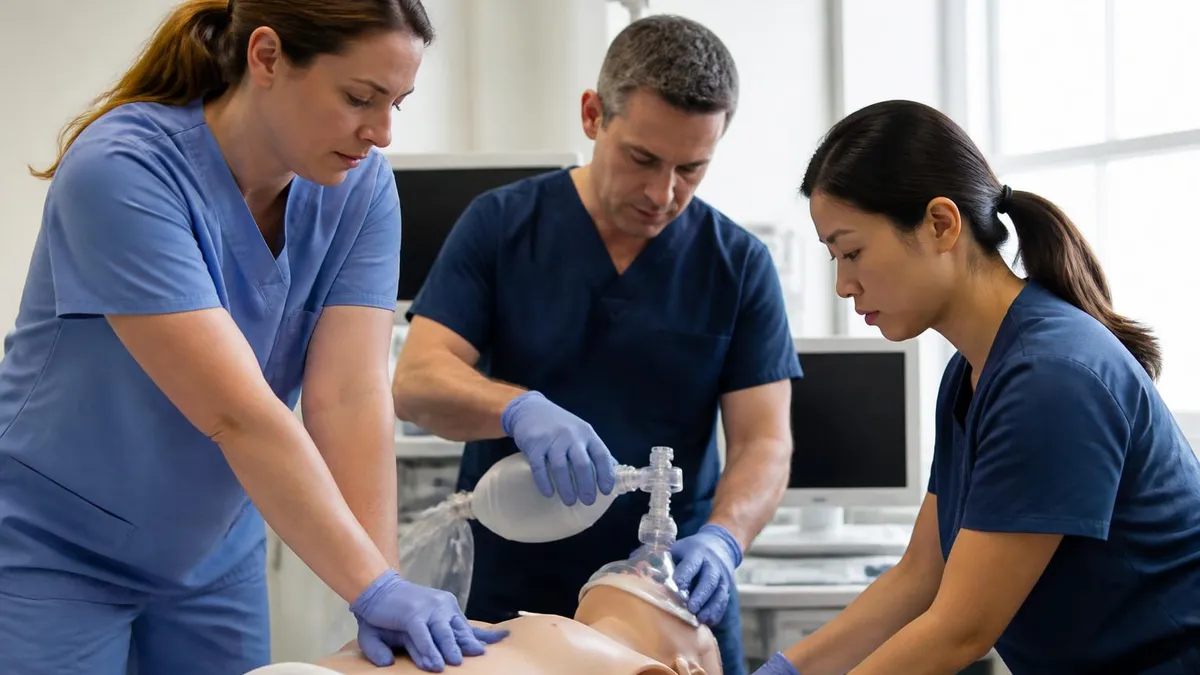
ACLS Renewal Near Me: Find Local Recertification Classes, Costs & Online Options in 2026
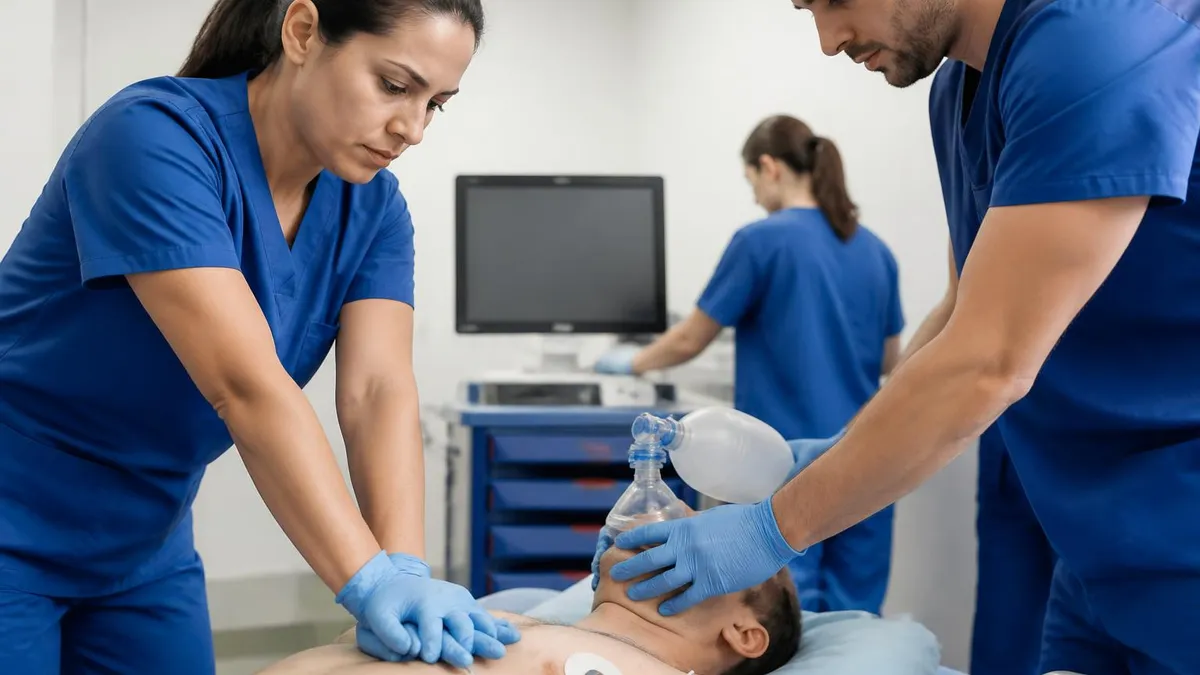
ACLS Certification Cost: Complete 2026 Price Guide for Initial Courses, Renewals, Online Options & Hidden Fees
About the Author

Registered Nurse & Healthcare Educator
Johns Hopkins University School of NursingDr. Sarah Mitchell is a board-certified registered nurse with over 15 years of clinical and academic experience. She completed her PhD in Nursing Science at Johns Hopkins University and has taught NCLEX preparation and clinical skills courses for nursing students across the United States. Her research focuses on evidence-based exam preparation strategies for healthcare certification candidates.