
BLS, ACLS & PALS: Complete Training Guide to Requirements, Differences & Certification
Master bls/acls/pals with our complete training guide. Requirements, differences, costs & prep tips for every certification level. ✅
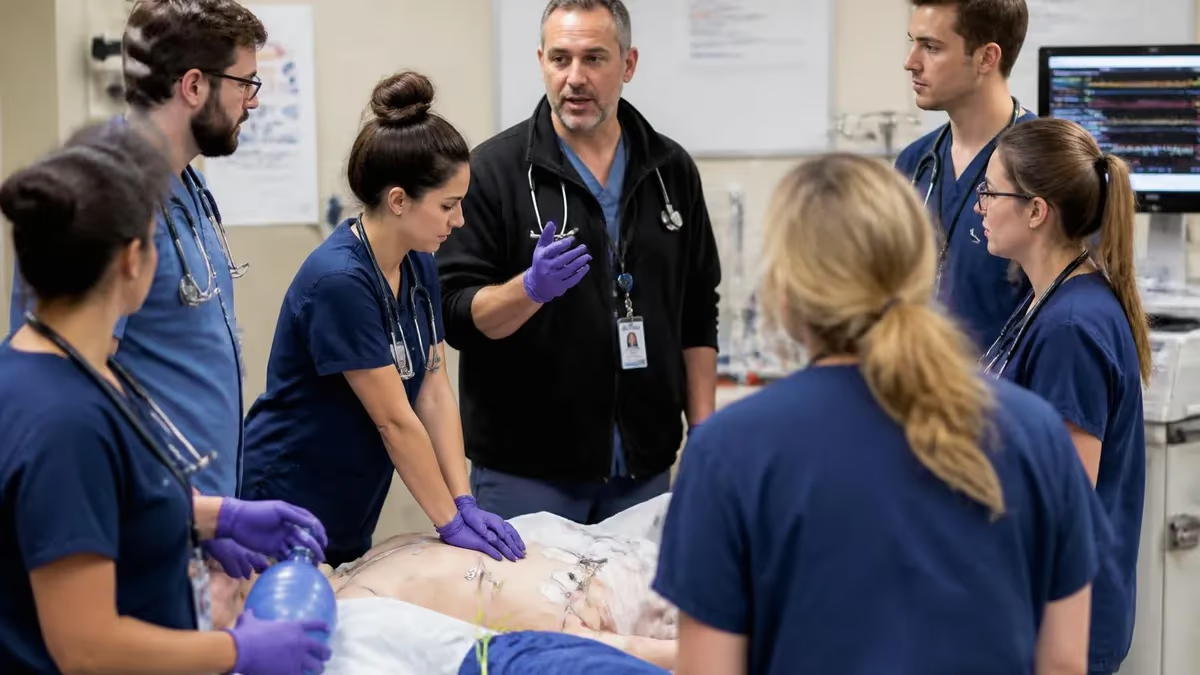
Understanding the differences between bls/acls/pals certifications is one of the most important steps any healthcare professional can take early in their career. These three credentials — Basic Life Support, Advanced Cardiovascular Life Support, and Pediatric Advanced Life Support — form the foundation of emergency resuscitation training in the United States. Each level builds on the previous one, and knowing which certification you need (or which combination your employer requires) can save you significant time, money, and confusion. This guide breaks down every aspect of all three programs in plain, practical terms.
Basic Life Support is the entry-level certification that virtually every clinical professional must hold. It covers high-quality CPR for adults, children, and infants, proper use of an automated external defibrillator, and relief of choking in responsive victims. BLS is designed to be the universal baseline — whether you are a nursing student, a medical assistant, a respiratory therapist, or a dentist, BLS training provides the core skills that allow you to respond effectively during the critical first minutes of a cardiac or respiratory emergency before advanced care arrives.
Advanced Cardiovascular Life Support goes several steps further by equipping providers to manage the entire resuscitation process for adults experiencing cardiac arrest, stroke, acute coronary syndromes, and serious arrhythmias. ACLS introduces pharmacological interventions, advanced airway management, and systematic algorithm-based decision-making. Providers learn to interpret 12-lead ECGs, recognize life-threatening rhythms such as ventricular fibrillation and pulseless ventricular tachycardia, select appropriate medications like epinephrine and amiodarone, and lead or participate effectively in a resuscitation team. You can explore how acls bls pals guidelines have recently evolved to reflect the latest evidence.
Pediatric Advanced Life Support is the third pillar of this certification ladder, focusing specifically on the recognition and management of emergencies in infants and children. Pediatric patients present unique physiological challenges — their airways are smaller, their normal vital sign ranges differ significantly from adults, and the most common cause of cardiac arrest in children is respiratory failure rather than primary cardiac events. PALS training addresses these distinctions through scenario-based practice covering respiratory distress, shock, arrhythmias, and cardiac arrest in patients from newborn age through adolescence.
All three certifications are offered primarily through the American Heart Association, which sets the evidence-based guidelines that govern resuscitation science in the US. The American Red Cross also offers BLS and ACLS programs, and certain hospitals use institution-specific curricula. Regardless of which provider you train with, the core competencies remain aligned with AHA guidelines, and most employers accept certifications from any AHA-recognized training center. Renewal intervals are standardized at two years across all three credentials, making it straightforward to synchronize your recertification schedule.
Healthcare professionals often wonder whether they need all three certifications simultaneously. The answer depends almost entirely on your clinical role and your workplace setting. A nurse working in a pediatric intensive care unit will typically need BLS, ACLS, and PALS. An emergency department nurse will need BLS and ACLS at minimum, with PALS strongly preferred or required if the ED treats pediatric patients.
A primary care physician might only be required to hold BLS, while a hospitalist or intensivist will almost certainly need ACLS as well. Understanding these requirements upfront lets you plan your training efficiently and avoid paying for credentials you do not yet need.
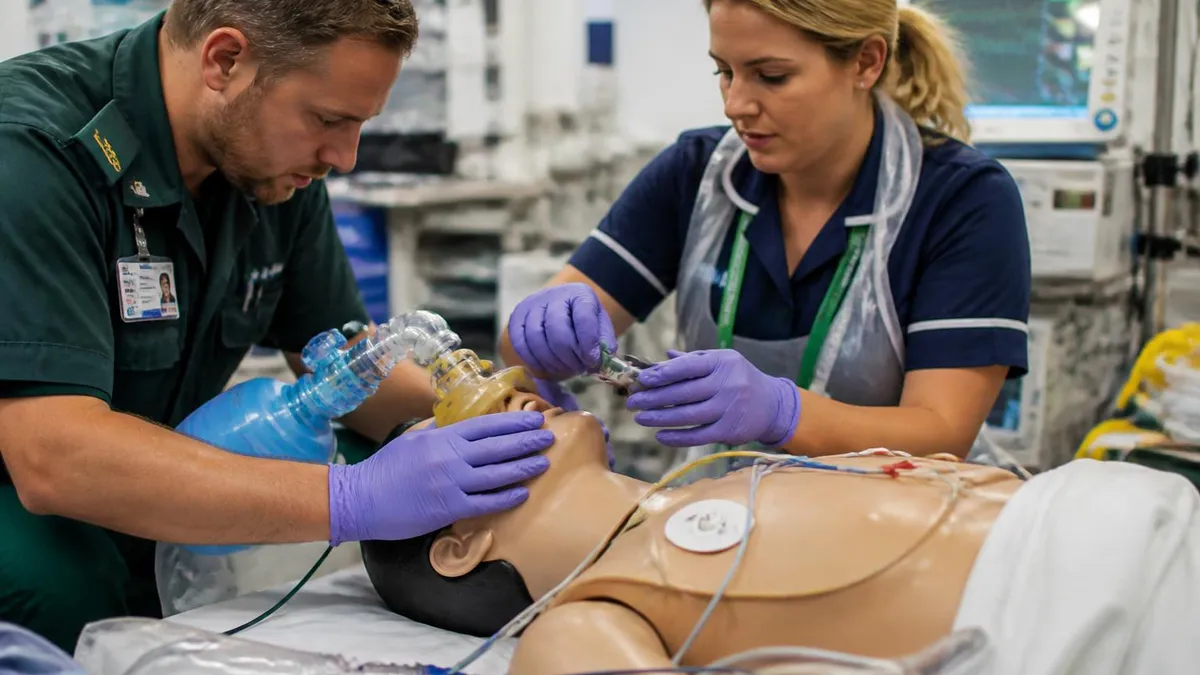
The good news is that the skills you develop across BLS, ACLS, and PALS complement each other deeply. Strong BLS fundamentals — particularly consistent high-quality chest compressions and effective bag-mask ventilation — dramatically improve your performance in both ACLS and PALS scenarios. Investing time in mastering BLS before attempting ACLS is not just a logical progression; it is also a practical strategy for passing the ACLS skills stations more confidently and retaining the material long after your certification card arrives.
BLS, ACLS & PALS Certification by the Numbers
Who Needs BLS, ACLS & PALS Certification?
Required for virtually all clinical healthcare workers including nurses, physicians, medical assistants, dental hygienists, and allied health students. BLS is the mandatory baseline credential before enrolling in ACLS or PALS courses.
Required for RNs, APRNs, paramedics, physicians, and other providers working in ICUs, emergency departments, cardiac care units, operating rooms, and any setting managing adult cardiovascular emergencies.
Required for nurses and physicians in pediatric EDs, PICUs, neonatal units, and transport teams. Highly recommended for any provider who may encounter pediatric emergencies regardless of primary practice setting.
Emergency medicine physicians, flight nurses, pediatric intensivists, and anesthesiologists typically hold all three simultaneously. Many hospitals mandate the full combination for staff working in high-acuity or mixed-age patient areas.
The BLS course is deliberately designed to be completed in a single day and does not require any clinical prerequisites beyond a basic understanding of human anatomy. Most in-person BLS classes run approximately three to four hours, combining brief didactic segments with extensive hands-on practice on manikins. Students learn the adult and pediatric chains of survival, practice two-rescuer CPR, practice rescue breathing with and without a bag-mask device, and demonstrate proficiency with an AED. The AHA Heartsaver BLS course is intended for lay responders, while the Healthcare Provider BLS course is the version required by hospitals and clinical programs.
ACLS training is significantly more intensive and typically spans one or two full days depending on whether you are taking the initial certification course or a renewal class. The course opens with a pre-course self-assessment covering basic pharmacology, ECG rhythm recognition, and airway management principles. Candidates are expected to arrive already competent in these areas — the classroom time is devoted to applying that knowledge through case-based simulations rather than teaching it from scratch. Core algorithms covered include the cardiac arrest algorithm, the post-cardiac arrest care algorithm, the bradycardia algorithm, the tachycardia algorithm, and the acute stroke algorithm.
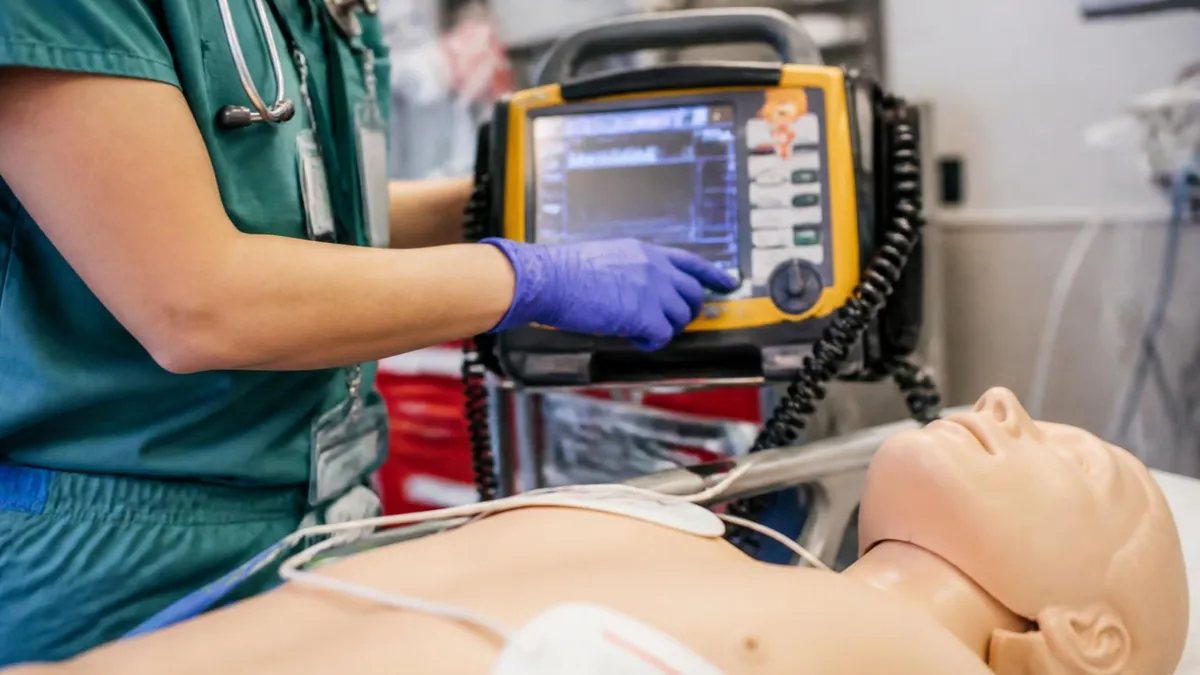
One of the most challenging aspects of ACLS for many candidates is ECG rhythm interpretation. Providers must reliably distinguish between rhythms that require immediate defibrillation (ventricular fibrillation, pulseless ventricular tachycardia), rhythms that require pacing (complete heart block, symptomatic bradycardia), rhythms that may require synchronized cardioversion (unstable supraventricular tachycardias), and rhythms compatible with organized cardiac activity but no pulse (pulseless electrical activity). Misidentifying a rhythm can lead to incorrect treatment choices that directly harm the patient, which is why AHA examiners test this skill rigorously during the megacode station.
PALS training mirrors the ACLS structure but focuses entirely on infants and children. The course opens with a systematic approach to pediatric assessment using the Pediatric Assessment Triangle — a rapid visual tool that helps providers identify whether a child is in respiratory distress, circulatory failure, or immediate cardiovascular collapse. From there, PALS scenarios walk providers through managing respiratory emergencies (upper and lower airway obstruction, lung tissue disease, disordered control of breathing), shock states (hypovolemic, distributive, obstructive, and cardiogenic), and cardiac arrest using pediatric-specific algorithms and weight-based drug dosing.
Drug dosing is one of the areas where PALS differs most sharply from ACLS. Because pediatric drug doses are calculated by weight in kilograms, providers must be comfortable using the Broselow tape or similar length-based resuscitation tools to estimate a child's weight and rapidly look up appropriate medication doses, ETT sizes, and defibrillation energy settings. Many institutions now use electronic Broselow equivalents integrated into their EHR or on mobile apps, but understanding the underlying principles remains essential for any provider working with pediatric patients in emergencies where technology may not be immediately available.
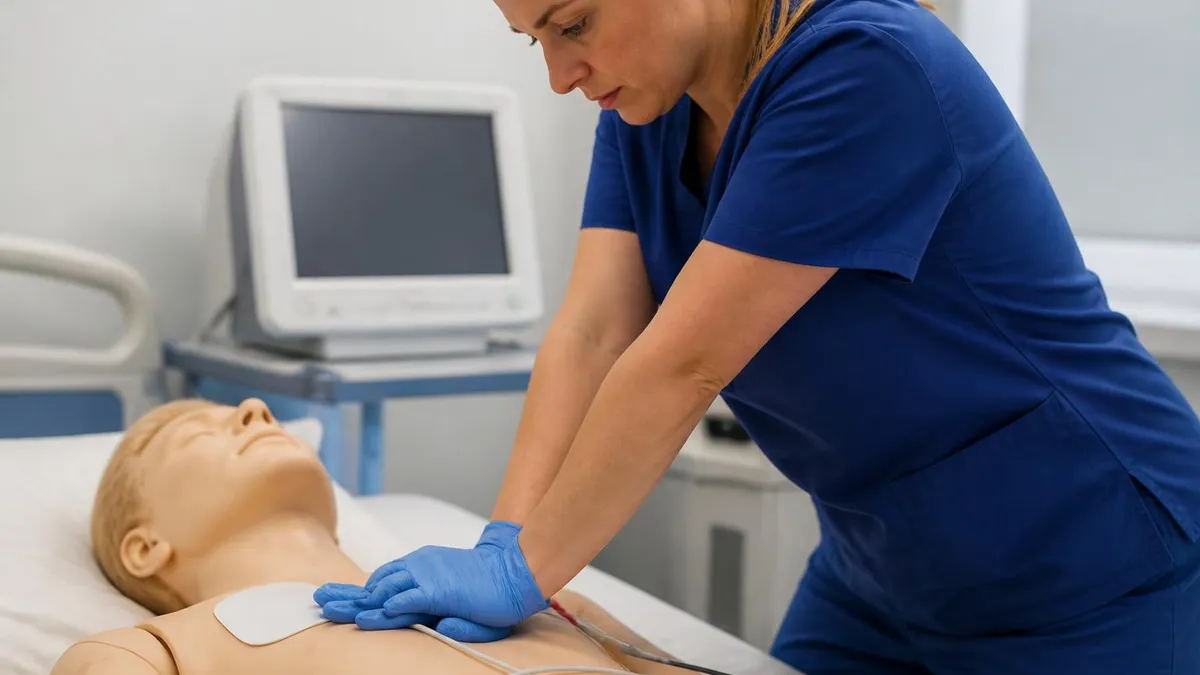
Skills testing is a critical component of all three certifications. BLS candidates must demonstrate two-rescuer CPR with proper hand placement, compression depth of at least two inches in adults, a compression rate of 100 to 120 per minute, and appropriate ventilation with minimal interruptions.
ACLS candidates complete a written exam (typically 50 questions with a passing score of 84 percent) and a megacode skills station where they must successfully manage a cardiac arrest scenario through multiple rhythm changes while directing a simulated resuscitation team. PALS candidates complete a written exam and multiple skills stations covering infant and child CPR, respiratory management, and a cardiac arrest megacode with pediatric-specific scenarios.
Preparation timelines vary by certification level and by the candidate's existing clinical experience. A nursing student with no prior resuscitation background should budget two to three weeks of focused study for BLS and can typically complete the course within a weekend. ACLS preparation for a new graduate nurse often requires four to six weeks of dedicated review, particularly if ECG interpretation is a weak area.
PALS preparation is similar to ACLS in scope but may feel more manageable for providers who already hold ACLS, since the framework — systematic assessment, algorithm-driven management, pharmacological intervention — is largely the same, applied to a pediatric patient population.
BLS vs ACLS vs PALS: Core Differences Explained
Basic Life Support is the universal foundation of emergency response training and the prerequisite for both ACLS and PALS. The BLS Healthcare Provider course covers high-quality CPR for adults, children, and infants using both one-rescuer and two-rescuer techniques, effective bag-mask ventilation, AED operation, and team-based resuscitation principles. The course runs approximately three to four hours and culminates in a skills check rather than a formal written exam, making it one of the most accessible clinical certifications available.
BLS certification is required for virtually every licensed healthcare professional in the United States, from nursing assistants and medical assistants to attending physicians and advanced practice providers. Renewal is required every two years, and most employers mandate proof of current BLS before the first day of clinical work. Online-only BLS courses are not accepted by most hospitals — candidates must complete the in-person skills component with a certified AHA instructor to receive a valid certification card recognized by clinical employers.

Pros and Cons of Online vs In-Person BLS/ACLS/PALS Training
- +Blended (HeartCode) format allows self-paced online learning before the shorter in-person skills session
- +Online modules can be paused and revisited as many times as needed without instructor time pressure
- +Blended courses often cost less than full in-person courses when factoring in reduced instructor hours
- +Self-paced pre-course work lets candidates master weak areas (ECG rhythms, drug dosing) before the skills day
- +In-person skills sessions are shorter in blended formats, requiring less time off work for busy clinicians
- +Simulation-based in-person components provide irreplaceable hands-on practice that builds genuine muscle memory
- −Fully online-only courses are not accepted by most US hospitals and clinical employers for any of the three certifications
- −Blended formats still require attendance at an in-person skills session, which limits scheduling flexibility
- −Self-paced learning requires strong personal motivation — candidates without a study plan often procrastinate
- −In-person courses provide real-time feedback from instructors that online modules cannot fully replicate
- −Course quality varies significantly between different AHA training centers, affecting the depth of skills practice
- −Renewal lapse beyond 30 days typically requires repeating the full initial course rather than the shorter renewal version
BLS/ACLS/PALS Certification Prep Checklist
- ✓Confirm which certifications your employer or clinical program requires before enrolling in any course
- ✓Obtain current BLS certification first — it is a prerequisite for both ACLS and PALS
- ✓Download the AHA ACLS or PALS provider manual and read it cover-to-cover at least once before your course
- ✓Complete the AHA pre-course self-assessment for ACLS or PALS and review every item you answer incorrectly
- ✓Memorize the six core ACLS algorithms (cardiac arrest, post-ROSC care, ACS, bradycardia, tachycardia, stroke)
- ✓Practice identifying at least 10 common ECG rhythms until you can name each one in under five seconds
- ✓Memorize ACLS drug doses, routes, and timing for epinephrine, amiodarone, lidocaine, atropine, and adenosine
- ✓For PALS, practice using the Broselow tape or equivalent tool to look up weight-based drug doses quickly
- ✓Complete at least two full-length ACLS or PALS practice exams under timed conditions before your course date
- ✓Arrive at your skills session rested, with your pre-course work complete and your algorithms reviewed that morning
Your BLS Skills Directly Determine Your ACLS & PALS Performance
Research consistently shows that candidates who perform high-quality CPR — compressions at the correct rate, depth, and with minimal interruptions — achieve better outcomes in ACLS and PALS megacode stations. Before focusing on rhythm interpretation or drug dosing, make sure your basic CPR technique is automatic. Examiners will immediately notice inconsistent compression depth or excessive pauses, and poor BLS fundamentals can cause a megacode failure even when your algorithmic decision-making is correct.
Passing the ACLS written exam requires more than memorizing drug names — it demands understanding the clinical reasoning behind every algorithm step. The 50-question exam presents scenario-based questions where multiple answer choices may seem plausible, and the correct answer is always the one that follows AHA algorithm logic most precisely. Candidates who try to answer from general clinical experience rather than the specific AHA framework often miss questions that their more experienced colleagues answer incorrectly for the same reason. Know the algorithms exactly as the AHA presents them, even when your clinical practice may differ slightly.
One of the most common sources of exam errors in ACLS is confusing the dose and timing of epinephrine with that of amiodarone or lidocaine. Epinephrine 1 mg IV/IO is administered every three to five minutes during cardiac arrest for any non-shockable or shockable rhythm.
Amiodarone 300 mg IV/IO is the first antiarrhythmic dose for ventricular fibrillation or pulseless ventricular tachycardia after the third shock, followed by a 150 mg dose if VF/pVT persists. Lidocaine 1 to 1.5 mg per kilogram IV/IO is the alternative antiarrhythmic when amiodarone is not available. Knowing these doses, routes, and sequencing precisely is essential for both the written exam and the megacode station.
The megacode station is the element of ACLS that most candidates find most intimidating, and it is also the element where thorough algorithm preparation pays off most clearly. During the megacode, the examiner presents a cardiac arrest scenario and evaluates whether the candidate — acting as team leader — correctly identifies each rhythm change, calls for appropriate interventions in the correct sequence, ensures high-quality CPR is ongoing, manages airway appropriately, and makes rational decisions about continuing or terminating resuscitation.
Candidates who have internalized the algorithms can focus their cognitive energy on team communication and clinical reasoning rather than trying to recall what comes next.
For PALS, the megacode experience is similar in structure but adds the complexity of working with weight-based dosing and pediatric-specific equipment sizes.
One practical strategy many PALS candidates use is creating a one-page reference card with the five most common pediatric weights encountered in PALS scenarios — 10 kg, 15 kg, 20 kg, 25 kg, and 30 kg — along with the corresponding epinephrine dose, defibrillation energy (2 J/kg for initial shock, 4 J/kg for subsequent shocks), and ETT size for each weight. Practicing with this reference card until the numbers feel automatic dramatically reduces cognitive load during the actual skills station.
Time management during the written exams is rarely a problem for prepared candidates — both the ACLS and PALS exams allow sufficient time to read each question carefully and review flagged items. The greater risk is overconfidence: candidates who rush through familiar-looking questions often make careless errors on questions that look straightforward but contain subtle clinical details that change the correct answer.
A practical strategy is to read the last sentence of each scenario question first, then read the full scenario, because the last sentence tells you exactly what the question is asking and allows you to read the scenario with the correct frame of reference already in mind.
After passing your written exam and megacode station, your certification card is typically issued on the same day or within a few days by mail or electronic download. The AHA eCard system allows you to store and share your certification digitally, which is increasingly accepted by employers in lieu of the physical card. Keep a digital copy stored securely — cards can be reprinted through the AHA eCard portal if lost, but the process takes time and may create delays if your employer needs proof of certification quickly for onboarding or a new clinical assignment.
One final exam tip that applies across all three certifications: if you are unsure between two answer choices on the written exam, default to the answer that is most consistent with AHA algorithm guidance and least likely to cause patient harm. AHA questions are written with a safety-first philosophy, and the correct answer will almost always be the more conservative, algorithm-compliant choice rather than an innovative clinical judgment call that might be reasonable in practice but does not reflect the standardized framework the AHA teaches and tests.
BLS, ACLS, and PALS certifications are valid for exactly two years from the date of issue. If your certification expires, most hospitals will immediately restrict your clinical privileges until you present a valid current card. Many employers require renewal at least 30 days before the expiration date to ensure no gap in coverage. Candidates who lapse beyond 30 days after expiration are typically required to repeat the full initial course rather than the shorter, faster renewal version — adding hours and cost to the process.
Renewal training for BLS, ACLS, and PALS is designed to be faster and more efficient than the initial certification course, built on the assumption that providers are refreshing existing competencies rather than learning the material for the first time. BLS renewal courses typically run two to two and a half hours and focus primarily on skills practice and a brief review of any guideline updates since the previous certification cycle. The written exam component is minimal or absent in many BLS renewal formats, with the emphasis placed entirely on demonstrated skill proficiency.
ACLS renewal is considerably more involved than BLS renewal but is still significantly shorter than the initial two-day course. Most ACLS renewal classes run approximately eight hours and cover the same core content — cardiac arrest algorithms, rhythm interpretation, pharmacology, megacode management — but move at a faster pace and expect candidates to arrive already familiar with the material. The renewal megacode may involve a different rhythm sequence than the one used in the initial certification, keeping experienced providers engaged and ensuring that muscle memory for the algorithms remains accurate rather than becoming anchored to a single practiced scenario.
PALS renewal follows a similar structure to ACLS renewal, typically running six to eight hours and including both a written exam and skills stations. One important distinction is that PALS renewal candidates should review any updates to pediatric resuscitation guidelines issued since their last certification, as the AHA revises PALS algorithms periodically in response to new evidence. Providers who renew without reviewing guideline changes sometimes find that algorithm steps or drug dosing recommendations have been updated, and answering questions based on outdated information is a common reason for renewal exam failures.
Many healthcare systems now offer on-site renewal training through their education departments, making it easier for staff to renew without taking time off to travel to an external training center. Hospital-based training programs are fully authorized by the AHA and issue the same valid certification cards as independent training centers. If your hospital offers on-site renewal, check whether the schedule aligns with your expiration date and register well in advance — popular renewal sessions fill quickly, especially at the end of each calendar year when many certifications issued in November and December come due simultaneously.
For providers who travel frequently or work in locum tenens arrangements, managing certification renewals across multiple states can be complicated by varying employer requirements. While AHA certifications are nationally standardized and recognized across all states, some employers prefer specific training providers or require documentation of the training center's AHA training site number in addition to the provider card. Keeping a digital copy of your eCard and your training center's AHA site number readily accessible can prevent delays when credentialing with a new employer or hospital system.
Healthcare professionals who hold all three certifications — BLS, ACLS, and PALS — and allow any one of them to lapse while keeping the others current create a compliance gap that many employers treat as equivalent to having no certification at all for the lapsed credential. It is worth creating calendar reminders eighteen months after each certification date to begin planning your renewal rather than waiting until the ninety-day or thirty-day warning that some hospitals send. Proactive renewal scheduling eliminates last-minute scrambling and ensures your credentials remain continuously valid throughout your career, regardless of how busy your clinical schedule becomes.
Staying current with changes to AHA guidelines is also valuable independent of the renewal cycle. The AHA publishes updated guidelines and focused updates to specific algorithms between major guideline revision cycles, and these updates are incorporated into courses as they are released.
Providers who read the AHA's Circulation journal updates or subscribe to their provider newsletter stay ahead of changes before they appear on renewal exams, giving them a meaningful advantage when they sit for recertification. Understanding not just what the guidelines say but why the evidence supports those recommendations is also the hallmark of a provider who can adapt confidently when real clinical situations diverge from the textbook scenario.
Building a structured study plan is the single most effective thing you can do to improve your performance in any of these three certifications, and the optimal plan looks different depending on your starting point. A new nursing graduate studying for initial ACLS certification should begin with a thorough read-through of the AHA ACLS provider manual, focusing particularly on the algorithm flowcharts, the pharmacology tables, and the ECG rhythm identification sections. After completing the manual, the next priority is drilling ECG rhythm recognition daily using flashcards, practice questions, or dedicated rhythm recognition apps until identification becomes automatic rather than effortful.
One effective study approach for ACLS pharmacology is to organize the medications by clinical situation rather than memorizing them in isolation. For a cardiac arrest with a shockable rhythm, the sequence is: shock, CPR, shock, CPR with epinephrine 1 mg IV/IO, shock, CPR with amiodarone 300 mg IV/IO, and so on. Organizing drug knowledge around the algorithm context in which each medication is used makes it far easier to recall the correct drug and dose under the pressure of the megacode station, where there is no time to systematically search your memory for medication information.
Practice exams are an indispensable part of preparation for all three certifications, and the format of your practice should mirror the format of the actual exam as closely as possible. The AHA ACLS written exam uses scenario-based multiple-choice questions with four answer choices, and your practice questions should follow the same structure. Practicing with questions that are simply factual recall ("what is the dose of epinephrine in cardiac arrest?") is useful for initial learning, but scenario-based questions are essential for exam readiness because they require you to apply knowledge in context rather than simply retrieve a memorized fact.
Skills practice outside of the formal course environment is also valuable, particularly for candidates who have access to simulation equipment or CPR manikins through their employer or training program. Even ten to fifteen minutes of CPR skills practice per week in the months before a course significantly improves compression quality and bag-mask ventilation technique. Many candidates complete the written exam portions successfully but struggle with skills stations because they have not practiced the physical techniques recently enough for muscle memory to take over under stress. Physical practice is the only reliable way to develop that automaticity.
For PALS specifically, reviewing the Pediatric Assessment Triangle and the systematic PALS approach to respiratory emergencies and shock is worth disproportionate attention. These foundational assessment frameworks underpin every PALS scenario, and candidates who can apply them rapidly and correctly to any pediatric presentation will find the simulation stations far more manageable. The scenarios themselves become almost predictable once you understand that every PALS case will follow the same assessment pathway before moving to intervention — the variables are simply which respiratory problem, which type of shock, or which rhythm is presented.
Mental preparation matters as much as content knowledge for the megacode station. Many candidates who know the algorithms thoroughly still perform poorly on the megacode because they freeze under the artificial pressure of being evaluated, or because they are uncomfortable giving clear, confident verbal directions to a simulated team.
Practicing out loud — literally saying the words you will say during the megacode — in the days before your course is one of the most underutilized preparation techniques. Say: "I see ventricular fibrillation, charge the defibrillator to 200 joules, continue CPR, stand clear, I'm going to shock" — repeatedly, until the words come naturally and quickly regardless of your emotional state during the scenario.
Finally, remember that the goal of BLS, ACLS, and PALS training is not simply to pass a test — it is to be genuinely prepared to save a life. The certification exam is a proxy measure for readiness, but the real standard is whether you can walk into a room where a patient is in cardiac arrest and immediately begin delivering high-quality, coordinated, algorithm-driven resuscitative care.
Every hour you spend studying pharmacology, drilling rhythms, and practicing CPR technique is an investment in that readiness, and that readiness is what ultimately defines the value of your certifications to your patients and your team.
ACLS Questions and Answers

2025 ACLS Changes: Complete Guide to Updated Guidelines, Algorithms & Certification Requirements

ACLS Acute Coronary Syndrome Algorithm: Complete Study Guide for Certification Prep
ACLS Renewal Class: Complete 2026 Guide to Recertification Requirements, Costs, Formats & Pass Strategies
ACLS Bradycardia Algorithm: Complete 2026 Guide to Recognition, Treatment Steps & Drug Doses

ACLS Study Guide: Complete 2026 Certification Prep with Algorithms, Drugs & Practice Tests
About the Author

Registered Nurse & Healthcare Educator
Johns Hopkins University School of NursingDr. Sarah Mitchell is a board-certified registered nurse with over 15 years of clinical and academic experience. She completed her PhD in Nursing Science at Johns Hopkins University and has taught NCLEX preparation and clinical skills courses for nursing students across the United States. Her research focuses on evidence-based exam preparation strategies for healthcare certification candidates.