
Does ACLS Expire at the End of the Month? Complete Guide to ACLS Expiration Rules
Does ACLS expire at the end of the month? ⏳ Learn exact expiration rules, grace periods, renewal deadlines & what happens if your card lapses.
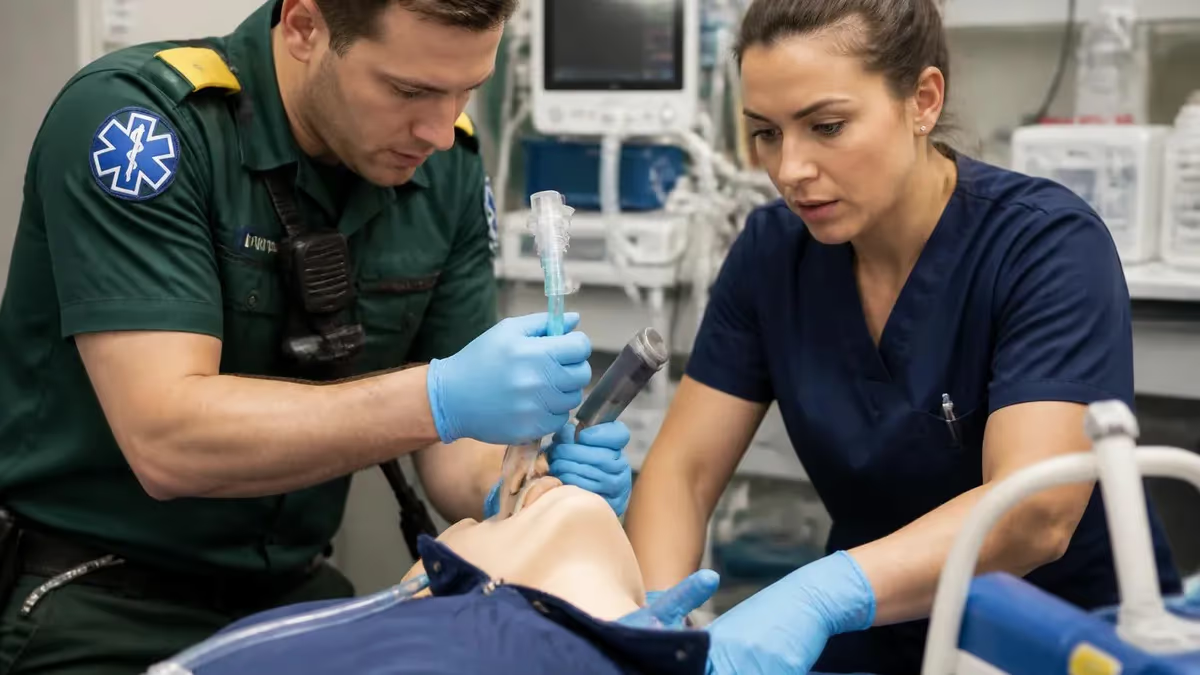
If you have ever flipped over your ACLS provider card and wondered, does ACLS expire at the end of the month, you are not alone. This question comes up constantly among nurses, paramedics, respiratory therapists, and physicians who need to stay compliant with hospital credentialing requirements.
The short answer is yes — the American Heart Association (AHA) grants ACLS certification that is valid for two years, and your card expires on the last day of the expiration month printed on the card, not on the specific date you completed training. Understanding exactly when your certification lapses can save you from a costly compliance gap and keep you eligible to practice in critical care settings.
The two-year certification window is not arbitrary. Research on skill retention consistently shows that resuscitation competencies — including high-quality CPR, rhythm recognition, and drug-dose recall — begin to decay within months of training without reinforcement. By setting a firm two-year limit, the AHA ensures that certified providers periodically revisit updated algorithms, evidence-based drug protocols, and team-dynamics best practices. The expiration date printed on your card represents the outer boundary of that competency window, and your employer's credentialing office will typically treat the final day of that printed month as the hard deadline for maintaining active status.
Many providers are surprised to learn that the expiration operates on a calendar-month basis rather than an exact anniversary date. If you completed your initial ACLS course on March 15, 2024, your card will likely show an expiration of March 2026, meaning you are covered through March 31, 2026 — not just through March 15. This extra window can give you flexibility when scheduling your renewal class, but it can also create a false sense of security if you wait until the last week of your expiration month and cannot find an available seat in a renewal course nearby.
Hospital systems and accrediting bodies such as The Joint Commission treat acls expiration with zero tolerance in many settings. A lapsed certification — even by a single day — can result in removal from high-acuity assignments, suspension of procedural privileges, or a requirement to retake the full initial ACLS provider course rather than the shorter renewal format. The stakes are high enough that most credentialing offices send automated reminders at 90, 60, and 30 days before expiration, but it is ultimately the individual provider's responsibility to track and renew on time.
Renewal courses are available in two primary formats: in-person HeartCode ACLS with a skills check, and traditional classroom-based renewal. Both formats are widely accepted by hospitals, clinics, and emergency medical services agencies across the United States. Online-only courses that do not include a hands-on skills session with an authorized AHA instructor do not fulfill AHA renewal requirements, though some third-party certification bodies do offer fully online options that are accepted in specific non-hospital settings. Always verify what your employer requires before enrolling in any renewal program.
Planning ahead is the single most effective strategy for avoiding a lapsed certification. Scheduling your renewal course four to six weeks before your expiration date gives you a buffer in case the first session is full, an instructor cancels, or you encounter a scheduling conflict at work.
Many providers make the mistake of waiting until the final two weeks, only to discover that the nearest AHA Training Center is booked or that the online HeartCode portion requires more study time than anticipated. A proactive approach to renewal also allows you to review updated guidelines and arrive at the skills session feeling confident rather than rushed.
This guide covers everything you need to know about ACLS certification expiration: how the end-of-month rule works in practice, what happens when certification lapses, how to navigate renewal requirements, and how practice tests can sharpen your readiness for both the written and skills components of recertification. Whether you are renewing for the first time or managing your team's compliance calendar, the information here will help you stay continuously certified without unnecessary stress.
ACLS Expiration by the Numbers
Key Facts at a Glance
| Item | Value | Details |
|---|---|---|
| Certification Validity | 2 Years | From month of completion |
| Lapse = Full Retake | 1 Day | Many hospitals require initial course if expired |
| Recommended Renewal Lead Time | 4–6 Weeks | Before expiration month ends |

How the End-of-Month Expiration Rule Works
Certification Issued
Two-Year Clock Starts
90-Day Renewal Window Opens
Expiration Month Deadline
Lapsed Status & Remediation
Understanding what actually happens the moment ACLS certification lapses is critical for every healthcare provider who works in an acute care environment. When your card expires — even by a single calendar day — you cross from an active-certified status to a lapsed status, and the practical consequences can be immediate and significant. Most hospitals maintain credentialing databases that flag expiring certifications automatically, and a lapsed ACLS card can trigger a formal administrative hold on certain job functions before you even arrive for your next shift. Knowing the downstream effects motivates timely renewal far more effectively than any abstract reminder.
At the employer level, a lapsed ACLS certification commonly results in temporary reassignment away from high-acuity units such as the ICU, cardiac step-down, or emergency department. In hospital settings governed by The Joint Commission or the Centers for Medicare and Medicaid Services (CMS) conditions of participation, maintaining staff certifications in alignment with job descriptions is a compliance requirement — not merely a preference. A department manager who knowingly allows a provider with lapsed ACLS to respond to cardiac arrest codes puts the facility's accreditation status at risk, which is why enforcement is typically swift and non-negotiable.
For travel nurses, locum tenens physicians, and contract healthcare workers, a lapsed ACLS certification can have even more serious financial consequences. Most staffing agencies require active certifications as a condition of assignment, and a gap in documentation can lead to contract termination or the forfeiture of an assignment bonus. Rebuilding your certification file after a lapse — especially if you need to complete the longer initial provider course — can cost several hundred dollars in course fees plus the opportunity cost of lost shifts during the time required to retrain and retest.
The distinction between the renewal format and the initial provider format is important to understand. The AHA's ACLS renewal course is shorter, typically four to six hours, and presupposes familiarity with the algorithms and pharmacology. It focuses on skill verification and case scenario performance rather than foundational didactic instruction. The full initial ACLS provider course, by contrast, runs eight hours or more and is designed for providers who have never been certified or whose certification has been lapsed long enough that foundational review is necessary. Falling back to the initial format costs more in both time and money.
Some healthcare facilities have internal grace period policies that allow a provider a short window — typically three to seven calendar days past the expiration date — to complete renewal without incurring a full workflow restriction. These are employer-specific policies, not AHA policies, and they vary widely across institutions. Never assume a grace period exists at your facility; confirm the policy with your educator or credentialing office well before your expiration month arrives. Relying on an assumed grace period that does not exist is one of the most common reasons providers end up in compliance trouble.
Monitoring your expiration date proactively is the most reliable protection against a lapse. Keep a digital reminder set for 90, 60, and 30 days before your expiration month ends. Many AHA Training Centers and eLearning platforms also send email reminders, but these systems are not infallible — email addresses change, notifications land in spam folders, and institutional email systems sometimes block external senders. Treat those automated reminders as a backup, not a primary tracking system. Your certification is your professional responsibility, and the consequences of a lapse fall on you, not on the notification service.
Providers who have experienced a lapse should also review their state's scope-of-practice regulations. In some states, certain advanced practice activities — such as independently managing a patient on a vasopressor drip or performing transcutaneous pacing — are tied to documented advanced cardiac life support competency. A lapsed ACLS certification may not automatically prohibit these activities under state law, but employer credentialing policies typically create a de facto restriction regardless. Consulting your facility's nursing or medical staff office for specific guidance is always the right move when navigating a lapse situation.
ACLS Renewal Formats: Which Option Fits Your Schedule?
The traditional in-person ACLS renewal course is conducted entirely at an AHA Training Center or authorized healthcare institution. Participants complete a pre-course self-assessment, engage in instructor-led algorithm review, and rotate through high-fidelity simulation stations that replicate cardiac arrest, stroke, and acute coronary syndrome scenarios. Instructors provide immediate feedback on team leadership, communication, and technical skills including airway management and defibrillation. Most in-person renewal courses run four to six hours and conclude with a 50-question written exam requiring a minimum score of 84 percent to pass.
In-person renewal is the preferred format for providers who benefit from hands-on coaching, real-time skill correction, and the opportunity to practice team dynamics in a simulated resuscitation environment. It is also the format most universally accepted by hospitals, surgery centers, and emergency medical services agencies across all fifty states. If you have not practiced megacode scenarios recently or feel rusty on pharmacology dosing, the structured environment of an in-person class offers the most comprehensive preparation for returning to high-acuity clinical assignments with confidence.

Renewing Early vs. Waiting Until the Last Month
- +Early renewal preserves your two-year clock — new card expires from old card's expiration month, not from renewal date
- +More scheduling flexibility — Training Centers fill up fast in peak renewal periods like January and September
- +Reduces stress by giving you a buffer if the first course attempt is unavailable or you need to reschedule
- +Allows time to study and review updated AHA guidelines before the skills session and written exam
- +Minimizes risk of a lapse caused by illness, shift conflicts, or unexpected life events in the final weeks
- +Demonstrates professional reliability to employers and credentialing offices tracking your certification timeline
- −Renewing more than 90 days early resets your two-year clock, effectively shortening your total certification window
- −Paying for renewal four to six weeks out requires upfront cost before the certification has actually lapsed
- −Online HeartCode portion completed early may feel less fresh by the time of the skills check if there is a long gap
- −Some providers feel less motivated to study rigorously when the deadline feels far away, reducing retention
- −Scheduling a skills session weeks in advance can conflict with future shift changes or personal commitments
- −If AHA updates its guidelines significantly before your renewal date, early-renewed content may feel slightly dated
ACLS Renewal Readiness Checklist
- ✓Locate your current ACLS card and confirm the exact expiration month and year printed on it.
- ✓Calculate whether you are within the 90-day early renewal window to preserve your existing expiration timeline.
- ✓Verify with your employer's credentialing office what certification format (AHA vs. third-party) is accepted.
- ✓Register for a renewal course at an authorized AHA Training Center or enroll in HeartCode ACLS online.
- ✓Review the current AHA ACLS algorithms, including the cardiac arrest, bradycardia, and tachycardia pathways.
- ✓Study ACLS pharmacology: memorize epinephrine, amiodarone, lidocaine, atropine, and adenosine dosing.
- ✓Complete at least two full-length ACLS practice exams targeting the 84% passing threshold.
- ✓Practice rhythm strip interpretation, focusing on shockable vs. non-shockable rhythms and pacemaker rhythms.
- ✓Review team dynamics and closed-loop communication principles used in megacode scenarios.
- ✓Confirm your renewal completion date is documented in your employer's credentialing system before the expiration month ends.
Your ACLS Card Expires on the Last Day of the Printed Month — Not the Day You Took the Course
The AHA's end-of-month expiration rule means a card showing "March 2026" is valid through March 31, 2026, even if you completed your course on March 1. This gives you scheduling flexibility, but never treat the extra days as a safety net — hospital credentialing systems flag lapses automatically the morning after the final day of your expiration month, and even a one-day gap can trigger a workflow restriction in high-acuity units.
Preparing effectively for ACLS renewal requires more than a quick review of your old study materials the night before class. The written component of the ACLS renewal exam covers the same core domains as the initial certification — cardiac rhythm recognition, algorithm application, pharmacology, and post-resuscitation care — and the passing threshold of 84 percent leaves little margin for guessing.
Providers who treat the renewal exam as a formality often find themselves unexpectedly struggling with updated drug protocols or revised algorithm decision points introduced in the most recent AHA guidelines update. Structured preparation over several weeks consistently produces better outcomes than last-minute cramming.
Rhythm recognition is one of the highest-yield areas for both the written exam and the megacode skills station. The ability to rapidly and accurately identify shockable rhythms (ventricular fibrillation and pulseless ventricular tachycardia), non-shockable rhythms (asystole and pulseless electrical activity), and the range of hemodynamically unstable tachycardias and bradycardias is fundamental to every ACLS scenario.
Providers who cannot confidently distinguish a fine ventricular fibrillation waveform from artifact, or who hesitate to classify a wide-complex tachycardia, will struggle under the time pressure of a simulated code. Dedicated rhythm strip practice using validated question banks is one of the most efficient ways to sharpen this skill before renewal.
Pharmacology is the second major challenge area for renewal candidates. ACLS drug protocols involve precise weight-independent dosing for some agents and weight-based dosing for others, and the exam tests both the correct drug for a given clinical scenario and the correct dose and administration route.
Common high-yield drugs include epinephrine 1 mg IV every three to five minutes in cardiac arrest, amiodarone 300 mg IV push for the first dose in refractory ventricular fibrillation, adenosine 6 mg IV push for stable supraventricular tachycardia, and atropine 0.5 mg IV for symptomatic bradycardia. Each drug also has specific contraindications and precautions that the exam tests in clinical scenario format.
The megacode station, conducted during the skills check portion of renewal, evaluates your ability to function as both a team leader and a team member in a simulated resuscitation. As team leader, you are expected to direct CPR quality, call for rhythm checks at two-minute intervals, announce energy levels and shock delivery, assign airway management and vascular access roles, and narrate your clinical reasoning aloud so the instructor can assess your algorithm adherence.
As a team member, you will be evaluated on your ability to receive and confirm orders, provide closed-loop communication, and perform high-quality chest compressions at the correct rate and depth.
One underappreciated aspect of renewal preparation is reviewing the post-cardiac arrest care algorithm, which covers targeted temperature management, hemodynamic optimization, and early coronary angiography considerations in patients who achieve return of spontaneous circulation. This segment of the ACLS curriculum was significantly updated in the 2020 AHA guidelines and is increasingly represented on renewal exams. Providers who are current on the science behind post-resuscitation care — including the shift away from routine aggressive hypothermia in favor of targeted normothermia in many patients — will have a meaningful advantage on scenario-based exam questions in this domain.
Practice exams are among the most validated preparation tools available for ACLS renewal. Studies on medical certification preparation consistently show that retrieval practice — actively recalling information under test conditions — produces stronger long-term retention than passive review of textbooks or algorithm cards. Taking multiple full-length practice exams, reviewing every incorrect answer against the authoritative algorithm reference, and retaking questions you initially missed creates the kind of durable knowledge that performs well under the cognitive load of a real renewal exam. Aim to complete at least three to four practice exams across the week before your renewal course.
Time management during the actual written exam also matters. The 50-question format with a 50-minute time limit gives you one minute per question, which is sufficient for straightforward recall questions but can feel tight when you encounter complex scenario-based items that require you to work through an algorithm decision tree mentally. Flagging difficult questions and returning to them after answering easier items is a proven test-taking strategy that prevents a single hard question from consuming disproportionate time. Providers who have practiced under timed conditions on practice exams develop the pacing instincts needed to complete the renewal exam efficiently and confidently.
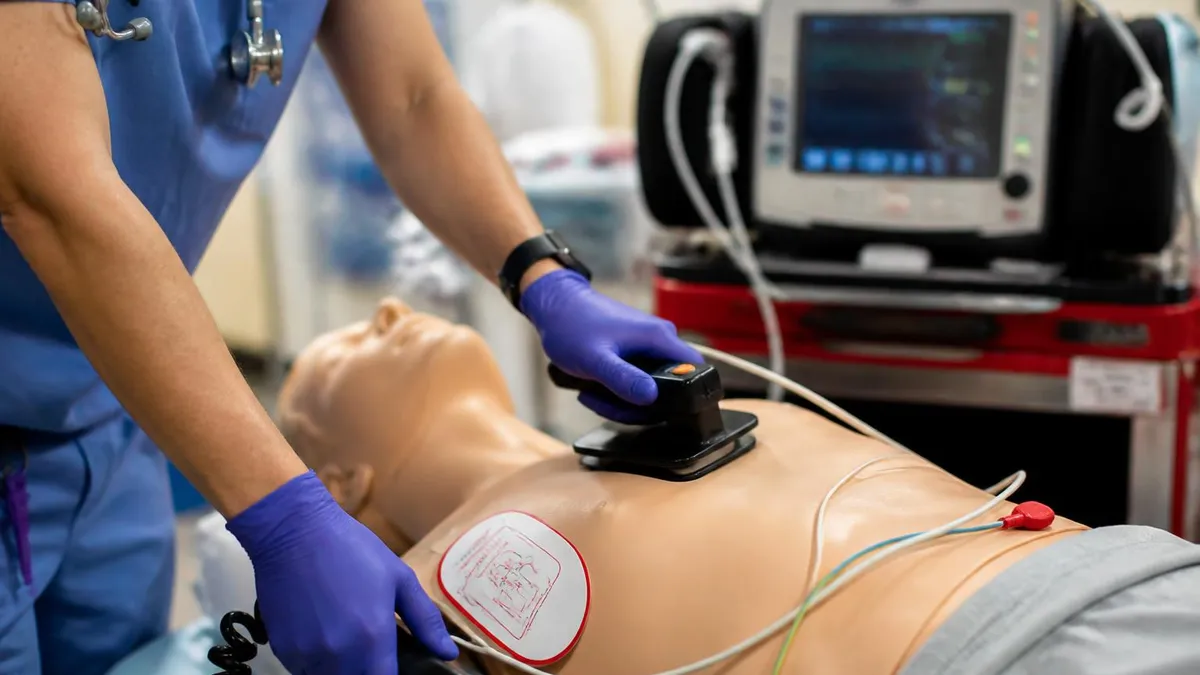
AHA Training Centers in major metro areas frequently have limited availability during peak renewal months, and HeartCode skills check appointments can book two to three weeks out. If you wait until the final two weeks of your expiration month, you may be unable to complete renewal before your certification lapses. Schedule your renewal course at least four to six weeks before your expiration date to ensure uninterrupted certification status and protect your clinical assignments.
Passing the ACLS renewal written exam requires a systematic approach to both content mastery and test-taking strategy. The exam is composed of 50 multiple-choice questions drawn from the full breadth of the ACLS curriculum, and questions are written at an application level — meaning the correct answer requires you to apply algorithm knowledge to a clinical scenario rather than simply recall a fact in isolation.
Understanding how exam questions are constructed is just as important as knowing the content itself. Every question presents a patient scenario with vital signs, rhythm strip descriptions, and treatment history, and you must identify the next correct step in management according to the current AHA algorithm.
The single most common reason providers fail the ACLS renewal written exam is over-reliance on memory from their last certification cycle without accounting for guideline updates. The AHA revises its emergency cardiovascular care guidelines on a rolling basis, with major comprehensive updates approximately every five years and focused updates published between cycles. The 2020 guidelines introduced meaningful changes to post-arrest care, CPR quality metrics, opioid-associated emergency response, and the management of special resuscitation circumstances including pregnancy and drowning. Providers whose last renewal was two years ago may have been certified against slightly different evidence thresholds than the current exam tests.
Algorithm fluency — the ability to move through a decision pathway quickly and without hesitation — is the skill that most reliably predicts success on both the written and skills portions of the renewal exam. The AHA publishes its algorithms in a standardized flowchart format, and committing the key decision nodes to memory allows you to answer scenario questions rapidly.
For the cardiac arrest algorithm, the critical branch points are: Is the rhythm shockable? If yes, deliver shock and immediately resume CPR. If no, continue CPR and address reversible causes using the Hs and Ts mnemonic. Every two minutes, pause for a rhythm check and reassess. This structure should be as automatic as reciting the alphabet.
The Hs and Ts framework — covering the reversible causes of cardiac arrest — is a perennial exam topic because it requires integrating clinical findings with treatment decisions. The eight Hs include hypovolemia, hypoxia, hydrogen ion excess (acidosis), hypo- and hyperkalemia, hypothermia, hypoglycemia, and tension pneumothorax (sometimes grouped under the Ts). The four Ts are tamponade, tension pneumothorax, toxins, and thrombosis (both pulmonary and coronary). Exam questions frequently present a patient in PEA or asystole with a clinical clue pointing toward one of these reversible causes and ask you to identify the most likely etiology and the appropriate targeted intervention.
Providers preparing for renewal should also ensure they are comfortable with the tachycardia algorithm, which branches based on whether the patient is stable or unstable, whether the QRS complex is narrow or wide, and whether the rhythm is regular or irregular. Unstable tachycardia regardless of QRS morphology triggers immediate synchronized cardioversion. Stable narrow-complex regular tachycardia is typically managed with vagal maneuvers followed by adenosine. Stable wide-complex tachycardia is treated with amiodarone if the rhythm is regular and ventricular tachycardia is suspected. Knowing these branch points cold eliminates hesitation on scenario questions and skill station evaluations alike.
Post-exam debriefs, even after a passing performance, are a valuable learning opportunity that many providers skip. If your Training Center provides score breakdowns by domain, review which content areas generated the most incorrect answers and spend additional time on those topics before your next renewal cycle.
Building a personal log of challenging question types creates a targeted study resource that compounds in value over multiple certification cycles. Providers who systematically analyze their exam performance improve their scores and their clinical competency simultaneously, since the same knowledge gaps that produce exam errors are the ones most likely to matter during an actual resuscitation.
For additional depth on one of the highest-yield ACLS algorithm topics, reviewing the comprehensive breakdown in the acls expiration guide for acute coronary syndrome will reinforce your understanding of the STEMI and NSTEMI management pathways that appear on renewal exams with consistent frequency. Integrating this content with your rhythm recognition and pharmacology review creates a well-rounded preparation strategy that addresses the full scope of what the renewal exam tests.
Building a sustainable system for managing your ACLS certification over a long career is one of the most practical investments you can make in your professional life. Healthcare providers who work in acute care settings for two or three decades will renew their ACLS certification ten or more times, and each renewal is an opportunity to reinforce life-saving skills, internalize updated evidence, and demonstrate the professional commitment that advanced certification represents. Treating each renewal cycle as a meaningful educational event rather than a bureaucratic obligation produces cumulative competency gains that translate into better patient outcomes over time.
One practical strategy is to create a centralized personal certification tracker — whether a simple spreadsheet, a notes app entry, or a calendar event series — that lists every certification you hold alongside its expiration month and year. For most acute care providers, this list includes at minimum BLS, ACLS, and possibly PALS, NRP, or TNCC depending on specialty.
Setting automated reminders at 90, 60, and 30 days before each expiration gives you layered protection against missing a deadline. Some providers also photograph their certification cards and store them in a secure cloud folder so they can access documentation quickly when onboarding at a new facility or responding to a credentialing audit.
When preparing your study plan for ACLS renewal, allocate your preparation time across three primary content domains in rough proportion to their exam weight: approximately 40 percent on rhythm recognition and algorithm application, 35 percent on pharmacology and drug protocols, and 25 percent on team dynamics, post-arrest care, and special resuscitation circumstances. This distribution mirrors the exam blueprint and ensures you are not over-investing in areas where you are already strong while neglecting domains where knowledge gaps are more likely to affect your score. Adjust the allocation based on your own practice exam performance data.
Hands-on practice outside of the formal renewal course is one of the most effective ways to maintain ACLS skills between certification cycles. Many hospitals offer regular code team simulations, skills fairs, or low-fidelity manikin stations in break rooms or skills labs. Participating in these opportunities — even informally — keeps defibrillator operation, airway management, and CPR mechanics fresh in your procedural memory. Providers who regularly participate in in-situ simulation or code team debriefs consistently demonstrate stronger megacode performance at renewal than those who rely solely on the biennial course for skills practice.
Understanding the relationship between your ACLS renewal date and your employer's performance review or annual competency cycle can help you maximize the administrative efficiency of your renewal. Many hospitals align competency verification requirements with fiscal year or calendar year schedules, and completing your ACLS renewal shortly before an annual competency review ensures that your certification is fresh and prominently documented in your personnel file. Some facilities also offer tuition reimbursement or shift credit for completing renewal during work hours, incentives that are worth investigating with your manager or professional development coordinator before paying out of pocket.
Pharmacology mastery deserves special emphasis in the final days before renewal. Drug dose errors are a leading cause of preventable harm during actual resuscitations, and the renewal exam tests pharmacology with a specificity designed to catch providers who know the right drug but are uncertain about the right dose, route, or timing.
Create a personal drug reference card listing the name, indication, dose, route, and key contraindication for each core ACLS medication, and review it daily during the week before your course. This active rehearsal creates the automatic recall needed to manage a real resuscitation under cognitive stress without hesitating over dosing details.
Finally, approach the megacode station of your renewal with the mindset of a confident team leader rather than a student trying not to make mistakes. Instructors are evaluating your clinical reasoning, communication clarity, and algorithm adherence — not looking for reasons to fail you. Speaking your decision-making process aloud, clearly directing your simulated team, and demonstrating comfort with the defibrillator and airway equipment are all behaviors that signal competency.
Providers who have practiced leadership language — phrases like "I am calling for a rhythm check," "Give 1 mg epinephrine IV now," and "Resume CPR immediately" — perform more confidently and authentically under observation than those improvising under pressure for the first time.
ACLS Questions and Answers

ACLS Acute Coronary Syndrome Algorithm: Complete Study Guide for Certification Prep

ACLS Renewal Class: Complete 2026 Guide to Recertification Requirements, Costs, Formats & Pass Strategies
ACLS Bradycardia Algorithm: Complete 2026 Guide to Recognition, Treatment Steps & Drug Doses

ACLS CPR Certification: Complete Training Guide for Healthcare Professionals

ACLS Study Guide: Complete 2026 Certification Prep with Algorithms, Drugs & Practice Tests
About the Author

Registered Nurse & Healthcare Educator
Johns Hopkins University School of NursingDr. Sarah Mitchell is a board-certified registered nurse with over 15 years of clinical and academic experience. She completed her PhD in Nursing Science at Johns Hopkins University and has taught NCLEX preparation and clinical skills courses for nursing students across the United States. Her research focuses on evidence-based exam preparation strategies for healthcare certification candidates.