
ACLS Pre Assessment Answers 2026: Pre-Course Self-Assessment Study Guide
🎯 ACLS pre assessment answers 2026: the correct clinical logic, drug doses, rhythms and renewal options you need to pass the AHA precourse self-assessment.
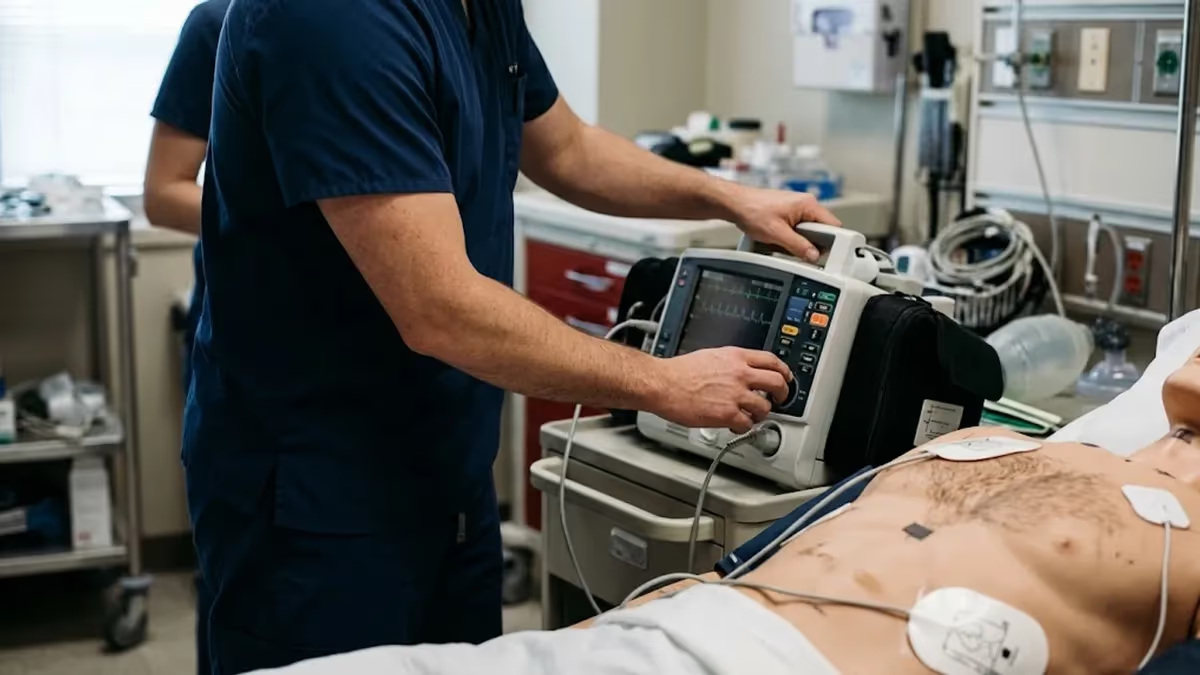
Searching for acls pre assessment answers 2024 usually means one thing: you have a course date coming, the AHA precourse self-assessment is waiting in your inbox, and you want to know what it actually tests. Here is the honest picture. The assessment is a diagnostic, not a gatekeeper, and the best way to pass it is to understand the reasoning behind each answer. This guide walks through the content, the correct clinical logic, and a prep plan. Practice with the free ACLS Advanced Cardiovascular Life Support Practice practice test on PracticeTestGeeks (7 questions with answer explanations).
The AHA precourse self-assessment is an online test you take before an initial or renewal ACLS class. It covers ECG rhythm recognition, pharmacology, and core algorithms, and you need at least 70 percent to receive your certificate of completion. Many instructors will not let you start the classroom portion without it. The test is usually open resource, but the clock and the scoring still matter, because a weak score tells you exactly where your knowledge has gaps.
Think of it the way people think of an ultimate California DMV cheat sheet: a compact reference that condenses what you must know into something you can scan in minutes. For ACLS, that cheat sheet is the short list of rhythms, drug doses, shock energies, and compression targets that appear again and again. Memorize those anchors and most pre-course questions become recognition exercises rather than guesswork, which makes the whole course feel calmer and faster.
Be realistic about what a page like this can and cannot do. The AHA rotates question wording, and sharing a leaked answer key would not help you at the bedside anyway. What helps is knowing the correct answer pattern: shockable rhythms get defibrillation, pulseless nonshockable rhythms get epinephrine and high quality CPR, and every unstable patient gets treated by the algorithm for the rhythm in front of you, not the rhythm you expected to see.
Core numbers carry most of the exam. Compressions run at 100 to 120 per minute, at least 2 inches deep. Epinephrine 1 mg is repeated every 3 to 5 minutes. Amiodarone starts at 300 mg and follows with 150 mg. Adenosine begins at 6 mg, then 12 mg. With an advanced airway you deliver one breath every 6 seconds. If you can recite those figures without hesitation, you have already answered a surprising share of the questions you will meet.
Another common question is whether certification can move online. Many clinicians ask can you renew acls online, and the answer is a qualified yes: the cognitive portion can be completed through AHA HeartCode, but a hands-on skills session with an instructor is still required. Our free megacode practice guide shows what that skills session looks like, so you walk in confident. The pre-assessment sits at the start of that same pathway.
Use the sections below in order. First you will see the numbers that matter, then what the assessment covers, the pharmacology and rhythm logic, a comparison of renewal pathways, and a final checklist. Each section points to free practice quizzes so you can test yourself immediately. Spend two or three focused evenings, and you should score comfortably above the 70 percent threshold while building knowledge that holds up when a real patient crashes.
- To pass the AHA ACLS Provider Course Exam, students need a score of at least 84%. (American Heart Association)
- The AHA ACLS Provider Course Completion Card is valid for two years. (American Heart Association)
- Providers renewing their AHA ACLS card can take the shorter ACLS Update Course, which runs about 8.25–9.25 hours with video prework or 8.50–9.50 hours without it, breaks included. (American Heart Association)
- The AHA ACLS course is offered as instructor-led classroom training or as HeartCode blended learning, and both lead to the same AHA ACLS course completion card. (American Heart Association)
- Before attending the AHA ACLS Course, every student has to complete the online Precourse Self-Assessment with a score of at least 70%. (American Heart Association)
Facts verified Oct 15, 2026 against American Heart Association. Dates that have passed are removed automatically.
ACLS Exam at a Glance
| Item | Detail | Official source |
|---|---|---|
| Passing score | 84% minimum on the ACLS Provider Course Exam | American Heart Association |
| Validity | Valid for 2 years | American Heart Association |
| Renewal | ACLS Update Course: about 8.25–9.50 hours with breaks | American Heart Association |
| Delivery | Instructor-led classroom, or HeartCode blended learning (online + hands-on skills session) | American Heart Association |
| Eligibility | Score of at least 70% on the mandatory Precourse Self-Assessment, plus proficiency in BLS, ECGs, ACLS pharmacology and bag-mask ventilation | American Heart Association |
Facts verified Oct 15, 2026 against American Heart Association. Dates that have passed are removed automatically.
Free ACLS Advanced Cardiovascular Life Support Practice Study Tools
Interactive ACLS Advanced Cardiovascular Life Support Practice resources on PracticeTestGeeks, free to start:
- ACLS Advanced Cardiovascular Life Support Practice flashcards — review key terms and concepts card by card
- ACLS Advanced Cardiovascular Life Support Practice study guide — topic-by-topic overview of what the exam covers
- ACLS Advanced Cardiovascular Life Support Practice cheat sheet — one-page printable summary for last-minute review
ACLS Pre-Course Assessment by the Numbers

What the ACLS Pre-Course Assessment Covers
Expect strips showing sinus rhythm, atrial fibrillation, SVT, ventricular tachycardia, ventricular fibrillation, asystole, PEA, and heart blocks. You must name the rhythm quickly and decide whether it is shockable, unstable, or treatable with medication.
Questions test doses, routes, and indications for epinephrine, amiodarone, lidocaine, adenosine, atropine, and magnesium. Knowing when not to give a drug is just as important as knowing the correct dose.
Cardiac arrest, bradycardia, tachycardia, and acute coronary syndrome algorithms appear in scenario form. You also answer questions on compressor, airway, and leader responsibilities during a resuscitation.
Expect items on return of spontaneous circulation targets, targeted temperature management, stroke timing benchmarks, and capnography. These items reward knowing numeric goals rather than memorizing long explanations.
Start with the shockable pathway, because it drives a large share of assessment questions. When monitoring shows ventricular fibrillation or pulseless ventricular tachycardia, you deliver a shock as soon as the defibrillator is ready, then resume compressions immediately for two minutes. Biphasic devices use the manufacturer-recommended energy, commonly 120 to 200 joules, while monofilament devices use 360 joules. The most common wrong answer is pausing compressions to check a pulse before shocking, which wastes seconds and lowers coronary perfusion.
After the second shock, epinephrine 1 mg IV or IO enters the sequence and repeats every 3 to 5 minutes. After the third shock, amiodarone 300 mg is the antiarrhythmic of choice, with a second dose of 150 mg if the rhythm persists. Lidocaine is an acceptable alternative at 1 to 1.5 mg/kg. Questions often test this order, so remember that shocks come first, drugs layer in during the compression cycles, and rhythm checks happen only at two-minute marks.
Nonshockable rhythms, meaning asystole and pulseless electrical activity, follow a different path. Give epinephrine as soon as possible, continue high quality CPR, and search aggressively for reversible causes. The classic list is the Hs and Ts: hypovolemia, hypoxia, hydrogen ion acidosis, hypo or hyperkalemia, hypothermia, tension pneumothorax, tamponade, toxins, and thrombosis in the lungs or coronaries. If a question describes PEA with narrow complexes after trauma, think hypovolemia or tension pneumothorax before reaching for any drug.
Rhythm recognition is the other half of the test. Learners who get stuck usually confuse coarse ventricular fibrillation with torsades, or second-degree type II block with third-degree block. Practice with real strips rather than descriptions. If you have been scrolling acls renewal reddit threads for tips, you have likely seen the same advice repeated: drill strips daily until recognition takes under five seconds, and always check the rate, regularity, P waves, and QRS width in that order.
Bradycardia questions follow a predictable script. If the patient has a pulse but is symptomatic, with hypotension, altered mental status, chest pain, or signs of shock, give atropine 1 mg IV every 3 to 5 minutes up to a maximum of 3 mg. If atropine fails, move to dopamine infusion at 5 to 20 mcg/kg/min, epinephrine infusion at 2 to 10 mcg/min, or transcutaneous pacing. A stable bradycardic patient needs monitoring, not drugs, and that distinction appears constantly.
Tachycardia with a pulse splits on stability. An unstable patient gets synchronized cardioversion, with typical starting energies of 50 to 100 joules for narrow regular rhythms and 100 joules for wide regular rhythms. A stable narrow regular tachycardia gets vagal maneuvers, then adenosine 6 mg rapid IV push followed by 12 mg. Stable wide regular tachycardia can receive amiodarone 150 mg over ten minutes. Always synchronize the shock, because an unsynchronized shock delivered on the T wave risks triggering ventricular fibrillation.
Finally, expect questions on post-cardiac arrest care and acute coronary syndromes. After return of spontaneous circulation, aim for a systolic pressure of at least 90 mm Hg or a mean arterial pressure of at least 65, oxygen saturation of 92 to 98 percent, and a 12-lead ECG right away. Comatose survivors need targeted temperature management. For suspected stroke, remember the benchmarks of imaging within 25 minutes of arrival and a fibrinolytic decision within 60 minutes of arrival.
For a fuller set of questions on this topic, see our new acls guidelines resource.
For a fuller set of questions on this topic, see our acls test questions and answers resource.
Can ACLS Be Renewed Online? Three Pathways Compared
The traditional route is a classroom ACLS renewal class, usually four to six hours, led by an AHA instructor. You review algorithms, practice team roles on manikins, complete a megacode scenario, and take the 50-question written exam, which requires 84 percent to pass. This option suits people who learn best through discussion and want immediate feedback, and every employer and licensing board accepts it without question.
The drawbacks are scheduling and travel. Classes may run on fixed weekdays, and seats in larger cities such as Chicago or Sacramento can fill weeks ahead. You also sit through review you may already know. If your employer pays and your calendar allows, in-person remains the safest choice, because there is no ambiguity about acceptance and you typically receive your eCard within a day or two.
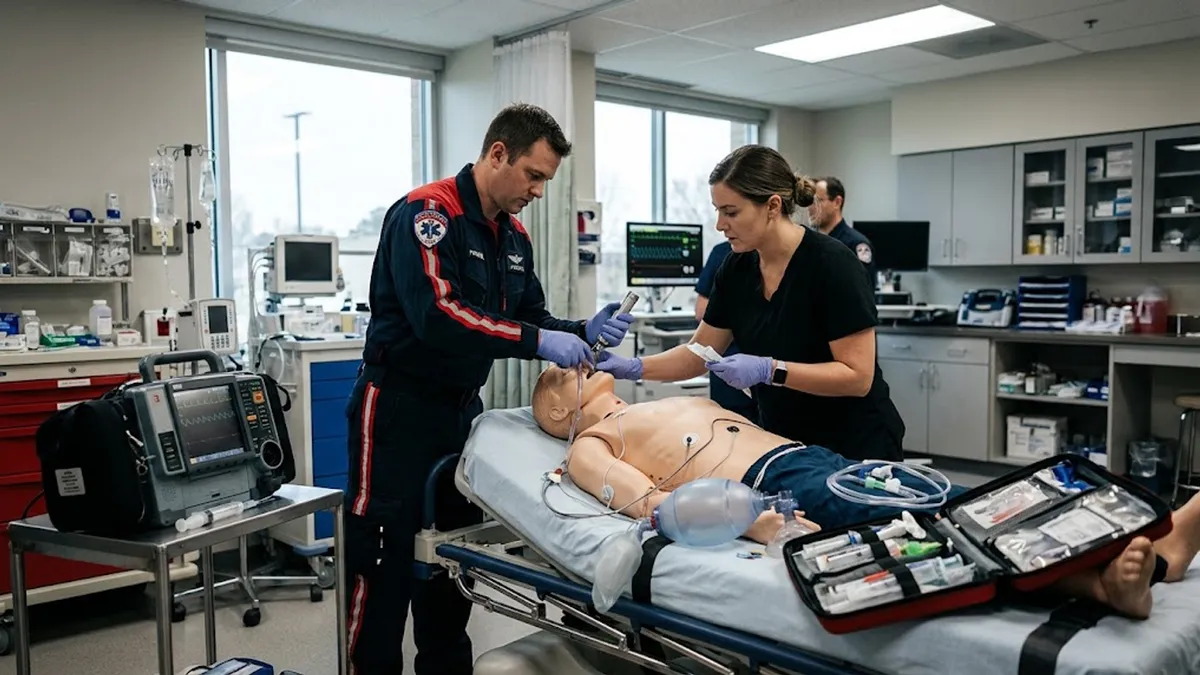
Is Studying for the ACLS Pre-Course Assessment Worth It?
- +Scoring 70 percent or higher unlocks your course certificate and class entry
- +Identifies weak rhythms and drug doses before the instructor notices them
- +Makes the classroom megacode feel familiar instead of overwhelming
- +Shortens remediation time because you already know where you struggle
- +Builds memory of doses and algorithms that transfers to real patient care
- +Usually open resource, so low-pressure practice before the proctored exam
- −Question wording changes, so memorizing an answer key rarely works
- −Open resource format can tempt you to look up everything and learn little
- −Rhythm strips require repeated practice, not a single evening of reading
- −Scores do not replace the 84 percent required on the written exam
- −Skipping BLS review can hurt your compressions and airway performance
- −Cramming the night before reduces retention for the skills session
Pros and Cons at a Glance
| Pros | Cons |
|---|---|
| Identifies weak rhythms and drug doses before the instructor notices them | Question wording changes, so memorizing an answer key rarely works |
| Makes the classroom megacode feel familiar instead of overwhelming | Open resource format can tempt you to look up everything and learn little |
| Shortens remediation time because you already know where you struggle | Rhythm strips require repeated practice, not a single evening of reading |
| Builds memory of doses and algorithms that transfers to real patient care | Skipping BLS review can hurt your compressions and airway performance |
| Usually open resource, so low-pressure practice before the proctored exam | Cramming the night before reduces retention for the skills session |
Pre-Assessment Checklist Before You Renew ACLS BLS Online
- ✓Confirm your ACLS and BLS card expiration dates today.
- ✓Register for the AHA precourse self-assessment at least a week early.
- ✓Save your provider manual or digital copy for quick lookup.
- ✓Memorize the five core drug doses on a single index card.
- ✓Label ten rhythm strips from memory and check the answers.
- ✓Review the shockable and nonshockable cardiac arrest algorithms aloud.
- ✓Learn the Hs and Ts list without looking at notes.
- ✓Take one timed practice quiz and note every missed topic.
- ✓Print or save your certificate of completion after scoring 70 percent.
- ✓Book the in-person skills session before starting the online modules.
Identify Rhythm, Pulse, and Stability First
Before reading any answer choice, name the rhythm, check whether the patient has a pulse, and decide if they are stable. Those three facts eliminate most wrong answers immediately, and they mirror exactly how your instructor expects you to think during the megacode.
Epinephrine deserves its own discussion because it appears in more questions than any other drug. The cardiac arrest dose is 1 mg of the 1:10,000 concentration given IV or IO every 3 to 5 minutes. Do not confuse this with the anaphylaxis dose of 0.3 to 0.5 mg of 1:1,000 given intramuscularly. High-dose epinephrine is no longer recommended, and a question offering escalating doses is almost always a distractor. Early epinephrine matters most for nonshockable rhythms, where each minute of delay lowers the chance of survival.
Amiodarone and lidocaine are the two antiarrhythmics used for refractory ventricular fibrillation or pulseless ventricular tachycardia. Amiodarone comes as a 300 mg rapid push, then 150 mg. Lidocaine uses 1 to 1.5 mg/kg initially and 0.5 to 0.75 mg/kg for repeat doses, up to a total of 3 mg/kg. Neither replaces defibrillation. If an answer choice delays a shock to give a drug, it is wrong, because defibrillation remains the definitive therapy for fibrillation.
Adenosine slows conduction through the AV node and works for regular narrow complex supraventricular tachycardia. Give 6 mg as a rapid IV push followed immediately by a 20 mL saline flush, ideally through a large proximal vein. If there is no response in one to two minutes, give 12 mg and repeat once. Warn the patient about brief chest discomfort or flushing. Adenosine should not be used for irregular wide complex tachycardias, which may be atrial fibrillation with pre-excitation.
Magnesium sulfate has a narrow role: torsades de pointes, given as 1 to 2 g IV or IO diluted in fluid. Calcium chloride, sodium bicarbonate, and vasopressin are not routine in cardiac arrest, and questions that offer them as first-line choices test whether you know that. Vasopressin was removed from the adult algorithm in 2015 because it offered no advantage over epinephrine alone. Reserve calcium for hyperkalemia, calcium channel blocker overdose, and documented hypocalcemia.
Route matters. IV access is preferred, but if you cannot establish it quickly, an intraosseous line is the next step, and current guidelines place IV and IO on equal footing. Endotracheal drug delivery is no longer favored because absorption is unpredictable. Questions may ask what to do after two failed IV attempts during a code, and the correct answer is to place an IO needle, not to keep trying peripheral sites while compressions continue without any medication reaching the patient.
Waveform capnography is another reliable source of points. An end-tidal CO2 below 10 mm Hg suggests compressions need improvement, and a value that stays under 10 after 20 minutes in an intubated patient signals a poor prognosis. An abrupt sustained rise to 40 mm Hg or higher suggests return of spontaneous circulation. Capnography also confirms endotracheal tube placement. It should guide decisions as one component of the picture, never as the only reason to stop.
Most missed questions come from three habits: rushing past the stem, ignoring patient stability, and mixing up doses. Slow down and identify the rhythm, pulse status, and stability before reading the choices. Write the key doses on a single index card and review it nightly. Pair that card with timed quizzes so you also practice pacing. Learners who combine these habits usually see steady improvement within a week, and the gains carry directly into the classroom.
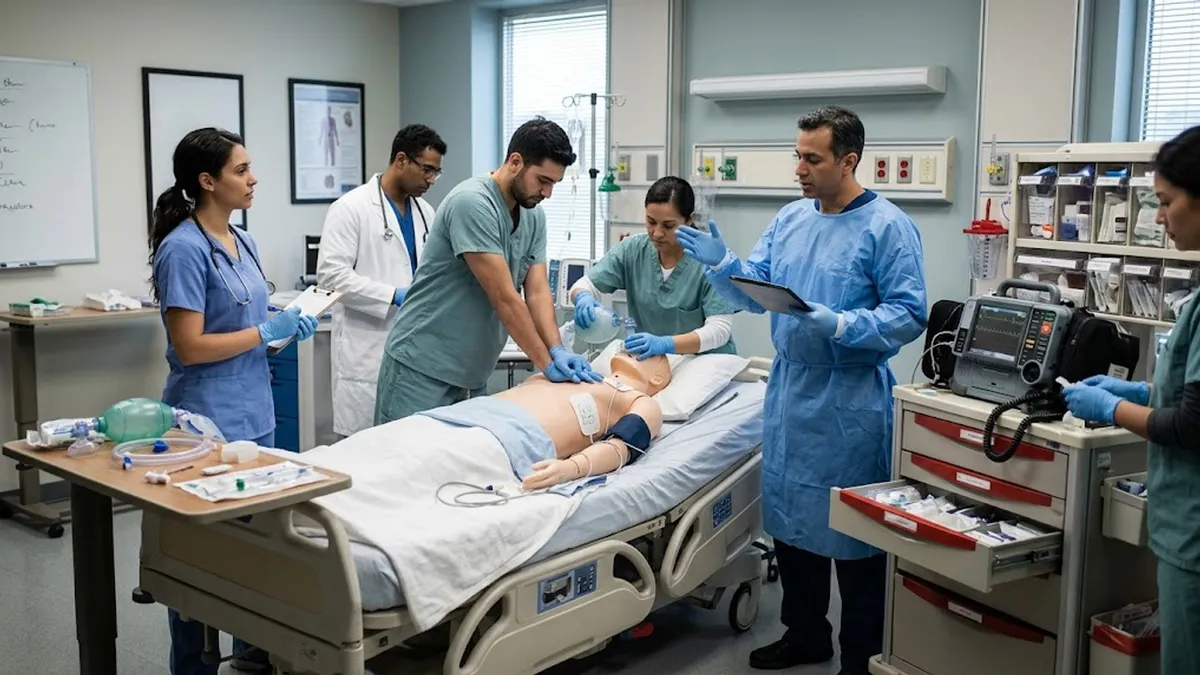
The AHA does not publish an official grace period, and many training centers require the full initial course once a card has expired. Schedule your renewal and skills session at least 30 days before the expiration date printed on your eCard.
Once the self-assessment is behind you, the next question is logistics. Certification lasts two years, so the renewal date is easy to miss. Clinicians in busy metros such as Chicago frequently search for acls renewal online chicago options, while those in California look for acls and bls renewal online sacramento providers. The pattern is the same everywhere: you want convenience without risking a card your employer will reject. Verify acceptance before you pay anything.
The American Heart Association offers HeartCode ACLS, a blended format. You complete the cognitive modules, simulation cases, and written exam online at your own pace, then attend a short hands-on skills session with an AHA instructor. People who type american heart acls renewal online into a search bar are usually looking for exactly this. The online portion takes several hours, and the skills session is usually much shorter than a full classroom day.
Be careful with providers advertising a card with no hands-on component. Many employers, hospitals, and state boards require a documented in-person skills evaluation, and a fully online certificate may be refused. Before purchasing, ask the training site whether the card carries the AHA logo, whether skills are tested live, and whether your employer accepts it. Keeping the confirmation email and the instructor's contact details also helps if HR later questions your credential.
Guideline updates also affect renewal content. If you are asking can acls be renewed online using only the latest changes, read our summary of the newest AHA updates first. The core algorithms remain stable, but emphasis on team dynamics, post-arrest care, and opioid-associated emergencies has grown, and the pre-course assessment reflects those themes through scenario-based questions that ask what you would do next rather than what a term means.
Many learners also bundle BLS with ACLS. If your BLS card expires within the same quarter, plan to renew acls bls online together through a blended pathway, then complete a single combined skills visit where available. Schedule the session at least 30 days before expiration, since instructor slots fill quickly near month end. Letting a card lapse can force you to repeat the longer initial course instead of the shorter renewal class, costing time and money.
Expect to pay roughly 150 to 300 dollars for an AHA renewal pathway, depending on the training center and whether the price bundles the skills session and the student manual. Initial courses usually run longer and cost more. Hospital employees often receive free or discounted classes through their education department, so ask before paying out of pocket. Keep your eCard accessible, because AHA eCards can be verified online by employers within seconds.
Finally, treat the precourse self-assessment as a free diagnostic. Score it once honestly, review each missed topic, and then retake practice quizzes until you are consistently above 85 percent. That buffer protects you against test-day nerves and unfamiliar wording. Most instructors say students who arrive prepared finish skills stations faster, receive better feedback, and leave with stronger retention than students who treat the prerequisite as a box to tick before class.
Build a simple three-evening plan. Evening one covers rhythms: normal sinus, atrial fibrillation, flutter, SVT, ventricular tachycardia, ventricular fibrillation, asystole, PEA, and the heart blocks. Evening two covers drugs and doses. Evening three covers algorithms and team roles. Each session should last about 90 minutes with a short quiz at the end. Spacing the material across days beats a single marathon, because recall improves when you revisit the same facts after sleeping.
Use active recall instead of rereading. Cover the answer, state the dose or action aloud, then check yourself. Flashcards work well for drug names, indications, and doses. For rhythms, print ten strips, label them from memory, and compare to an answer key. Saying the algorithm out loud as if you were leading a code also trains the verbal habits your instructor will watch for during the megacode station.
Take the self-assessment in a quiet place with your provider manual open, because the test is designed as an open resource tool. Even so, avoid leaning on the book for every item. Looking up each answer slows you down and hides weak spots. Flag questions you had to search, then study those topics afterwards. Print or save your certificate of completion, because instructors usually collect it at the door on class day.
Do not neglect team dynamics. The ACLS course grades communication as much as medication knowledge. Know the roles: team leader, compressor, airway manager, IV or medication provider, monitor or defibrillator operator, and timer or recorder. Practice closed-loop communication by repeating orders back and confirming completion. Questions about a team member who disagrees with an order reward respectful, direct language and quick resolution rather than silence or confrontation.
Prepare for the megacode by rehearsing out loud. Walk through a scenario such as a 58-year-old with chest pain who becomes unresponsive. State your first actions: check responsiveness, call for help, start compressions, attach the monitor. Identify the rhythm, pick the algorithm, order drugs with dose and route, and name reversible causes. Practicing even five minutes a day builds fluency and makes the real station feel like a repeat of something you have already done.
On class day, arrive 15 minutes early with your certificate, your provider manual, a valid ID, and comfortable clothing, since you will kneel at manikins. Eat beforehand, hydrate, and bring a pen. If you feel nervous, remember that instructors want you to succeed and will remediate before failing anyone. Ask questions during the review segments; those are free coaching opportunities that many students waste by staying silent through the entire session.
After you pass, set a calendar reminder for 22 months from the date on your card so you have time to renew without stress. Store a digital copy of your eCard on your phone and in your email. Keep practicing rhythms monthly, because skills decay quickly without use. Consistent short practice sessions are the real answer key: they keep your knowledge sharp for the day a real patient needs it.
ACLS Questions and Answers

Free ACLS Megacode Practice: Master Every Scenario Before Your Certification

ACLS Rhythm Strips: How to Read and Identify the Core Rhythms in 2026

Online ACLS Renewal: Complete 2026 Guide to Recertifying Your Advanced Cardiovascular Life Support Credential Fast

2025 AHA ACLS Updates: Complete Study Guide for Certification Prep

ACLS Rhythms: The Complete Guide to Recognizing Cardiac Rhythms for ACLS Certification
Written and edited by Nathan Beja, founder of Practice Test Geeks, with AI assistance. Exam facts are checked against the official sources linked below. Editorial policy
Sources & references
Exam facts on this page (fees, format, dates, passing scores) are checked against these official sources; the date is our last check. Editorial policy
- cpr.heart.org — Score validity, test delivery, renewal, eligibility · verified Nov 2026
- heart.org — Passing score · verified Oct 2026