
2026 October AHA ACLS Updates: Complete Study Guide for Certification Prep
Master the 2026 October AHA ACLS updates ✅ Algorithms, drug doses, key changes & practice tests to pass your certification on the first try.
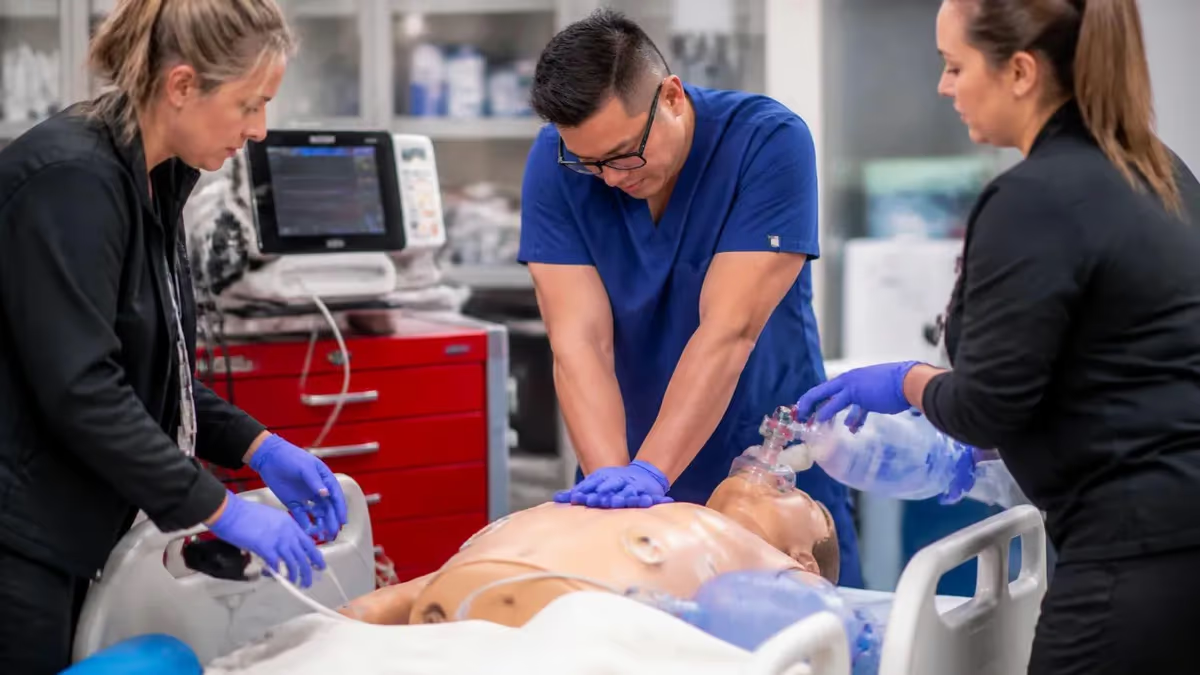
The 2025 AHA ACLS updates represent the most comprehensive revision to Advanced Cardiovascular Life Support guidelines in nearly a decade, reshaping how healthcare providers recognize and manage life-threatening cardiac emergencies. Whether you are preparing for your initial certification or renewing an existing credential, understanding these guideline changes is not optional — exam developers build their question banks directly from the latest AHA science statements, and providers who study outdated materials routinely discover gaps on test day. This guide breaks down every major update so you can study with confidence.
At the core of the 2025 revisions is a renewed emphasis on high-quality CPR as the single most modifiable determinant of survival from cardiac arrest. The AHA has refined target metrics for chest compression rate, depth, recoil, and fraction — and the updated exam questions reflect these specifics with greater precision than ever before. Providers must not only know the numbers but understand the physiologic rationale behind each parameter so they can apply the concepts across novel clinical scenarios on the exam.
Medication protocols have also evolved significantly in the 2025 cycle. Amiodarone dosing sequences for refractory ventricular fibrillation have been clarified, the role of epinephrine timing relative to defibrillation has been updated with new evidence, and several drug interactions that affect resuscitation outcomes have been added to the core curriculum. Pharmacology questions account for a substantial portion of the ACLS written exam, making this content area a high-yield study priority for every candidate.
Post-cardiac arrest care — often called the fifth link in the chain of survival — received extensive updates. Targeted temperature management recommendations were refined based on landmark trials published between 2022 and 2024, and the threshold criteria for initiating advanced neuroprotective interventions have changed. Providers who understand these nuances will answer hemodynamic optimization questions correctly, while those relying on older guidelines may select the distractor that was correct under previous recommendations.
The updated algorithms for special resuscitation circumstances — including pregnancy, opioid overdose, pulmonary embolism, and tension pneumothorax — were restructured for clarity and now appear with greater frequency on certification exams. These scenarios test whether providers can deviate from the standard adult arrest algorithm intelligently, applying modified interventions without abandoning the fundamental resuscitation framework. Scenario-based practice questions are the best preparation strategy for this content area.
Team dynamics and communication standards also received a dedicated update in 2025. The AHA reinforced closed-loop communication, clearly defined team roles, and updated the criteria for calling a resuscitation attempt. These behavioral competencies are assessed during the skills station of the certification course and are increasingly appearing as knowledge questions on the written component. Providers who have practiced in strong team environments have a natural advantage, but structured review can bridge the gap for those who have not.
This article walks through each major update category systematically, connects the science to what you will see on the exam, and points you toward the practice resources — including aha acls updates on acute coronary syndrome algorithms — that will reinforce your knowledge before test day. Read every section carefully, then use the practice tests embedded throughout to identify your weak areas before they cost you on the real exam.
2025 ACLS Updates by the Numbers

ACLS Certification Prep Schedule
- ▸Review the updated cardiac arrest algorithm step-by-step
- ▸Compare 2020 vs 2025 CPR quality metrics
- ▸Complete one ECG rhythm practice test
- ▸Watch AHA 2025 update highlight video
- ▸Memorize epinephrine, amiodarone, and lidocaine dosing sequences
- ▸Study vasopressor timing relative to defibrillation
- ▸Review drug interactions affecting resuscitation
- ▸Complete ACLS pharmacology practice test sets 1 and 2
- ▸Study pregnancy, opioid, and PE arrest modifications
- ▸Review updated targeted temperature management criteria
- ▸Practice hemodynamic optimization scenarios
- ▸Complete tabs and scenario-based question bank
- ▸Run three full timed practice exams
- ▸Review every wrong answer with rationale
- ▸Practice team leader and team member roles
- ▸Final algorithm review — all 2025 changes only
The 2025 AHA ACLS algorithm updates introduced structural changes to the cardiac arrest sequence that every certification candidate must internalize before exam day. The most significant revision affects the timing of epinephrine administration in non-shockable rhythms. Updated evidence supports early epinephrine delivery — within the first minute of resuscitation for PEA and asystole — rather than delaying until CPR has been established for multiple cycles. This represents a departure from prior practice patterns and generates high-frequency exam questions.
In shockable rhythms, the 2025 guidelines reinforce the priority of defibrillation above all other interventions. The algorithm now explicitly sequences CPR initiation, rhythm check, and defibrillation in a tighter time window, emphasizing that drug administration should never delay the delivery of a shock when ventricular fibrillation or pulseless ventricular tachycardia is confirmed. Exam writers frequently create distractors that tempt candidates to administer epinephrine before the first shock — an error that the 2025 revision specifically discourages.
The bradycardia algorithm received targeted updates addressing the threshold for transcutaneous pacing. The 2025 revision clarifies that symptomatic bradycardia causing hemodynamic instability warrants immediate pacing preparation concurrent with atropine administration, rather than sequential. Providers who understand this parallel-action approach will correctly answer scenario questions involving a deteriorating patient with a heart rate in the low 30s and dropping blood pressure, where delayed pacing setup could result in clinical harm.
Supraventricular tachycardia management pathways were refined to account for adenosine administration technique. The updated algorithm specifies rapid IV push followed immediately by a 20 mL saline flush in the antecubital vein or above — a detail that appears directly in exam questions about why adenosine failed to convert a rhythm. Providers who understand the pharmacokinetics of adenosine's extremely short half-life will recognize why technique matters as much as dose selection in SVT management.
The updated acute coronary syndrome pathway now incorporates revised antiplatelet and anticoagulation timing guidance based on post-2022 interventional cardiology data. ACLS providers are expected to initiate the ACS algorithm promptly, including aspirin administration, 12-lead acquisition, and notification of the catheterization laboratory — all within defined time benchmarks. Questions on the certification exam frequently test whether providers can correctly sequence these interventions under time pressure, making systematic algorithm memorization essential.
Stroke recognition and initial management also received updated emphasis in the 2025 curriculum. The BE-FAST mnemonic — Balance, Eyes, Face, Arm, Speech, Time — is now the AHA-endorsed screening tool, replacing the older FAST acronym in official materials. Candidates should expect to see BE-FAST in written exam questions and must understand the clinical significance of each component, particularly balance and eye findings, which were absent from the prior screening tool and which represent added sensitivity for posterior circulation strokes.
Structured algorithm review is the most efficient way to lock in these changes, and connecting each algorithm step to a real patient scenario accelerates retention. Practice with scenario-based questions that force you to apply the algorithm under simulated time pressure, and review every incorrect answer with the updated 2025 guideline rationale rather than your clinical intuition from prior training cycles.
2025 ACLS Updates: CPR, Drugs & Special Circumstances
The 2025 AHA guidelines tightened quality benchmarks for chest compressions, requiring a rate of 100 to 120 per minute, depth of 2 to 2.4 inches (5 to 6 cm) in adults, complete chest recoil between compressions, and a chest compression fraction above 60 percent. Providers must minimize interruptions so that any pause — including rhythm checks, shock delivery, and airway placement — lasts no longer than 10 seconds.
A major 2025 addition is the formalized use of physiologic feedback to guide CPR quality in monitored settings. When arterial lines are present, a diastolic pressure below 20 mmHg signals inadequate coronary perfusion pressure and should prompt a CPR technique adjustment before medication escalation. End-tidal CO2 values below 10 mmHg after 20 minutes of high-quality CPR are now recognized as a valid prognostic marker that informs resuscitation termination discussions, a nuanced standard that appears on advanced certification exams.
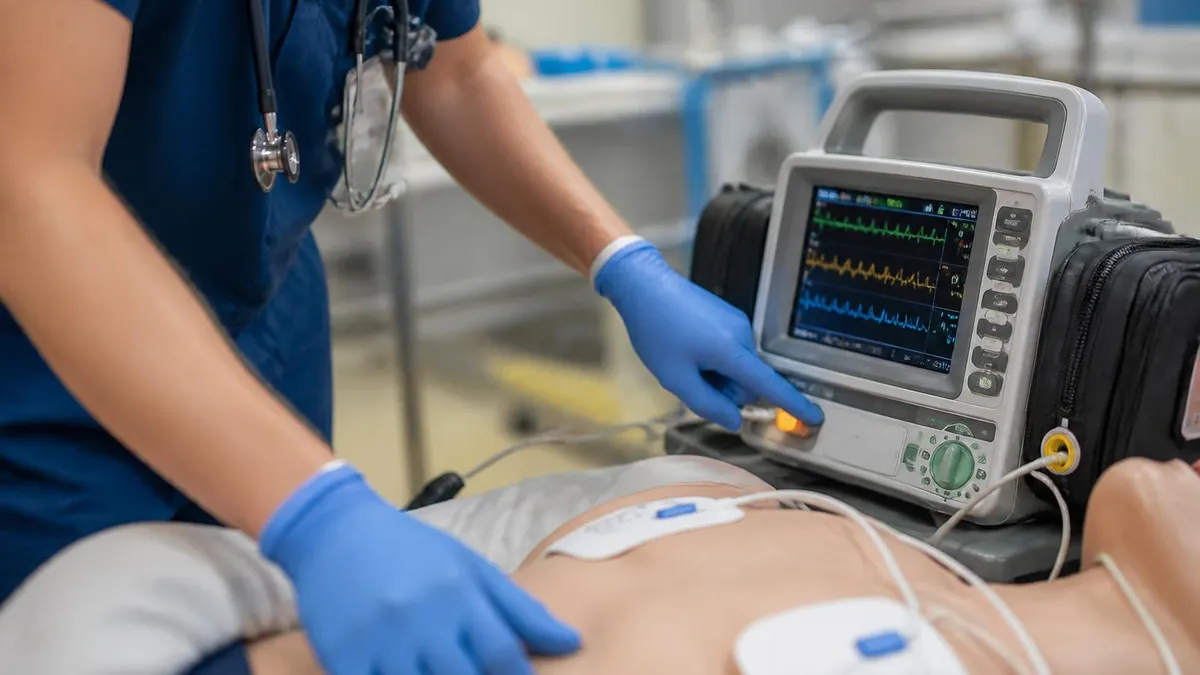
Studying 2025 Updates vs. Relying on Prior ACLS Training
- +New algorithm sequences reflect strongest current evidence and improve patient outcomes
- +Updated pharmacology timing aligns drug administration with physiologic windows for maximum effect
- +Expanded special circumstances module prepares providers for high-acuity non-standard arrests
- +Refined CPR quality metrics give providers measurable targets to optimize during resuscitation
- +Post-arrest TTM guidance based on landmark trials reduces unnecessary interventions
- +Behavioral competency standards improve team coordination and reduce critical errors during codes
- −Providers with deep prior ACLS experience must actively unlearn several previously correct responses
- −Updated drug timing recommendations differ enough from prior cycles to create confident wrong answers
- −Special circumstances content requires additional study time beyond the core cardiac arrest algorithm
- −TTM temperature range change may conflict with institutional protocols not yet updated to 2025 standards
- −Increased emphasis on physiologic monitoring assumes equipment availability not universal in all settings
- −Behavioral competency questions on the written exam are newer and less represented in older study banks
Pros and Cons at a Glance
| Pros | Cons |
|---|---|
| New algorithm sequences reflect strongest current evidence and improve patient outcomes | Providers with deep prior ACLS experience must actively unlearn several previously correct responses |
| Updated pharmacology timing aligns drug administration with physiologic windows for maximum effect | Updated drug timing recommendations differ enough from prior cycles to create confident wrong answers |
| Expanded special circumstances module prepares providers for high-acuity non-standard arrests | Special circumstances content requires additional study time beyond the core cardiac arrest algorithm |
| Refined CPR quality metrics give providers measurable targets to optimize during resuscitation | Increased emphasis on physiologic monitoring assumes equipment availability not universal in all settings |
| Post-arrest TTM guidance based on landmark trials reduces unnecessary interventions | Behavioral competency questions on the written exam are newer and less represented in older study banks |
2025 ACLS Certification Prep Checklist
- ✓Review the complete 2025 AHA cardiac arrest algorithm for both shockable and non-shockable rhythms
- ✓Memorize epinephrine timing: after third shock for VF/pVT; immediate for PEA/asystole
- ✓Practice identifying VF, pVT, PEA, asystole, SVT, and bradycardia on 12-lead and rhythm strips
- ✓Confirm amiodarone dosing: 300 mg first dose, 150 mg second dose for shock-refractory VF
- ✓Study the updated targeted temperature management range of 32–36°C for post-arrest neuroprotection
- ✓Review perimortem cesarean delivery timing for cardiac arrest in pregnancy (delivery by minute 5)
- ✓Learn the BE-FAST stroke screening mnemonic and understand why Balance and Eyes were added
- ✓Study the criteria for appropriate calcium and sodium bicarbonate use during resuscitation
- ✓Practice closed-loop communication and team role definitions for the skills station
- ✓Complete at least three full-length ACLS practice exams under timed conditions before test day

The #1 Mistake on ACLS Written Exams in 2025
The most common error candidates make is selecting the epinephrine-first response for a shockable rhythm. In VF and pulseless VT, defibrillation is always the priority — epinephrine is given after the third shock, never before. Exam writers deliberately create distractors that make early epinephrine seem logical. Know the sequence cold: shock, shock, shock, then drugs.
Post-cardiac arrest care is one of the fastest-evolving areas in emergency medicine, and the 2025 AHA ACLS updates reflect a substantial body of new evidence that has emerged from international multicenter trials. Providers who achieve return of spontaneous circulation face a second critical window of decision-making that is just as consequential as the resuscitation itself — and the exam tests this phase with increasing rigor. Understanding post-ROSC hemodynamic targets, oxygenation goals, and neuroprotection strategies is essential for both certification and clinical practice.
Targeted temperature management recommendations were formally revised based on data from the TTM2 trial and subsequent meta-analyses. The current 2025 guidance acknowledges that fever prevention — maintaining core temperature below 37.5°C — is the minimum acceptable standard, while active cooling to 32–36°C remains appropriate for selected patients at higher neurologic risk. The key exam distinction is that providers must understand the rationale for patient selection rather than applying a single temperature target universally, as scenario questions will present patients with different clinical profiles requiring individualized responses.
Hemodynamic optimization targets for post-arrest patients were refined in the 2025 cycle. Mean arterial pressure goals of 65–70 mmHg or greater are now specified as minimum targets, with evidence supporting higher MAP goals of 80–100 mmHg in patients with known or suspected elevated intracranial pressure. Vasopressor selection guidance has also been updated — norepinephrine remains the first-line agent for post-arrest hypotension, with vasopressin as an adjunct and epinephrine reserved for refractory cases. These distinctions appear on advanced-level ACLS examination questions.
Oxygenation and ventilation targets received important clarification. The 2025 guidelines strongly discourage hyperoxia in post-cardiac arrest patients, citing evidence that PaO2 above 300 mmHg is associated with worse neurologic outcomes. Target SpO2 should be maintained at 94–98 percent using the lowest FiO2 that achieves this range. Similarly, normocapnia — PaCO2 of 35–45 mmHg — is the ventilation target, as both hyperventilation-induced hypocapnia and hypercapnia carry documented harms in this population.
Coronary angiography timing guidance evolved significantly between the 2020 and 2025 guideline cycles. Prior recommendations suggested universal early angiography for all post-arrest patients without an obvious non-cardiac cause. The 2025 update, informed by the COACT and TOMAHAWK trials, now recommends that angiography be individualized based on clinical presentation. Patients with ST-elevation on post-ROSC ECG still warrant immediate catheterization, but those without STEMI and without obvious cardiac cause may have angiography deferred to after neurologic stabilization.
Prognostication after cardiac arrest is now addressed more formally in the ACLS curriculum, with a multimodal approach recommended rather than reliance on any single test or clinical finding. The 2025 update specifies that prognostic assessments should not be made before 72 hours post-arrest in patients undergoing temperature management, and that no single clinical sign — including absent pupillary reflexes, burst suppression on EEG, or absent N20 response on somatosensory evoked potentials — should be used in isolation to predict poor outcome. This is both clinically important and an emerging area of written exam content.
Neurologic monitoring and the role of continuous EEG were expanded in the 2025 curriculum. Providers at institutions with EEG capability are now expected to understand the significance of seizure activity in post-arrest patients and the appropriate initial management of post-hypoxic myoclonus. These concepts bridge the gap between ACLS and critical care neurology, reflecting the AHA's recognition that resuscitation science increasingly extends beyond the emergency phase into the ICU. Study this content deliberately — it differentiates candidates who will score in the top percentile from those who merely pass.
ACLS certification exams are updated to reflect current AHA guidelines, which means questions written to prior guideline cycles may contain answers that are now incorrect. Using outdated question banks — particularly those written before 2023 — risks reinforcing wrong drug timing, outdated temperature targets, and deprecated algorithm sequences that will cost you points on the actual exam. Always verify that your study materials reference the 2025 AHA guidelines explicitly.
Developing an effective exam strategy for ACLS certification requires more than simply reading the guidelines — it demands active retrieval practice, scenario application, and systematic identification of weak areas. The providers who pass with the highest scores are rarely those who read the most; they are the ones who practiced answering questions under pressure, reviewed their errors analytically, and drilled algorithm sequences until retrieval was automatic. The following strategies are drawn directly from what works for candidates preparing against the 2025 curriculum.
Start your preparation by establishing a baseline. Take one full-length ACLS practice exam before you review any content, and score it honestly. Your baseline result will reveal whether your weak areas are in rhythm recognition, pharmacology, algorithm sequencing, or post-arrest management — and it will prevent you from spending disproportionate study time on topics you already know. Most providers are stronger in the areas they encounter most frequently in clinical practice and weakest in the content they rarely apply at the bedside.
Rhythm recognition is a high-yield skill that responds quickly to deliberate practice. Spend 20 to 30 minutes daily on rhythm strips for the first two weeks of your preparation, focusing on the rhythms most commonly tested: VF, pVT, PEA, asystole, third-degree heart block, second-degree type II, rapid AF, SVT, and accelerated idioventricular rhythm. The 2025 exam includes more nuanced strip interpretation than prior cycles, with questions that distinguish between similar-appearing rhythms based on subtle rate, regularity, or morphology differences.
Pharmacology mastery is non-negotiable for ACLS certification. Build a drug table that includes each medication, its indication, dose, route, mechanism, and contraindications — then quiz yourself on this table daily until you can reproduce it from memory. Pay particular attention to the conditions under which you would choose lidocaine over amiodarone, when to use atropine versus pacing for bradycardia, and why adenosine is inappropriate for irregular wide-complex tachycardia. These distinctions appear on the exam repeatedly in different clinical scenarios designed to test whether you understand the drug or simply memorized the name.
Scenario-based questions are the format that separates high scorers from average performers. These questions present a clinical situation, describe the patient's condition and current interventions, and ask what should happen next. The key to answering them correctly is to identify the algorithm pathway first — before reading the answer choices — and then match your predetermined answer against the options. Candidates who read the scenario and then evaluate each answer choice are more susceptible to attractive distractors that are clinically plausible but algorithmically incorrect.
Time management during the written exam is more important than most candidates anticipate. Many ACLS written exams are administered with a time limit that allows approximately 60 to 90 seconds per question. Questions that require rhythm strip interpretation or multi-step scenario analysis can consume three to four minutes if you are not deliberate. Develop a habit of flagging questions you are uncertain about, moving forward, and returning to flagged questions with remaining time rather than allowing one difficult question to consume time that would have been better spent on the next five.
The skills stations — particularly the megacode simulation — require preparation that is distinct from written exam study. In the megacode, evaluators are assessing whether you can direct a team, call interventions at the correct algorithm step, and communicate clearly under simulated stress. Practice running megacode scenarios out loud, even if you are studying alone. Verbalize your decision-making process, call out the rhythm interpretation, specify drug doses by name and route, and close the loop on every action you direct. This is the single most effective preparation technique for the skills station component.
In the final 48 hours before your exam, shift your focus from learning new material to consolidating what you already know. Review your algorithm one-card summary, run through your drug table once more, and complete a brief 30-question practice set to keep retrieval sharp without inducing fatigue. Sleep is a more valuable resource in the final 24 hours than any additional reading. Arrive at the exam rested, with your algorithm sequences automatic and your confidence grounded in genuine preparation rather than last-minute cramming.
Practical preparation for the 2025 ACLS certification exam begins with building a realistic study schedule that you will actually follow. Most providers working full clinical schedules need four to six weeks of preparation time to cover the 2026 content thoroughly and complete enough practice questions to identify and remediate weak areas. Providers who are renewing after a two-year lapse often need additional time to account for the volume of guideline changes since their last certification cycle, while those renewing within six months of an active study cycle may be able to condense preparation to three weeks.
Algorithm memorization is the foundation of ACLS preparation, and the most durable method for encoding algorithms is to write them out from memory repeatedly — not to re-read them passively. Each time you write out the cardiac arrest algorithm from scratch, you strengthen the retrieval pathway that your brain will activate when you encounter a scenario question. Start with the adult cardiac arrest algorithm, add the bradycardia and tachycardia pathways, then layer in the special circumstances modifications. By the end of week two, you should be able to draw any algorithm in under three minutes without reference materials.
High-quality practice questions are the most direct preparation tool available, and the volume of questions you complete matters as much as the quality of your review. Research on test preparation consistently shows that retrieval practice — answering questions, receiving feedback, and correcting errors — produces stronger long-term retention than re-reading or passive review. Aim for a minimum of 300 practice questions before your exam, distributed across rhythm recognition, pharmacology, algorithm application, and post-arrest management. Review every wrong answer with the 2025 guideline rationale, not just the correct option.
Study groups can accelerate preparation when structured effectively. The most productive format pairs two to three providers who take turns running megacode scenarios while the others evaluate against the 2025 algorithm. This active recall and peer feedback format replicates the skills station environment and surfaces gaps in algorithm knowledge that solo study often misses. If an in-person study group is not feasible, video-based megacode review — watching a recorded simulation and pausing to call out the next correct intervention before the video reveals it — provides a similar benefit.
Managing test anxiety is a legitimate component of certification preparation that many providers neglect. Providers who know the material but perform below their knowledge level under exam conditions typically share a common pattern: they second-guess first instincts that were correct, change answers to distractors, and lose time to rereading questions they have already answered.
The antidote is deliberate exposure to timed practice conditions that mirror the actual exam format — not just answering questions, but answering them under the same time pressure and without access to reference materials. The more familiar the exam format feels, the less cognitive load anxiety consumes on the actual test day.
After passing your certification, the habits that made you successful on the exam are the same habits that will make you a more effective resuscitation provider at the bedside. Keeping your algorithms current, understanding the evidence behind each intervention, and practicing team communication skills in your clinical environment are what translate certification into competence. The AHA designed ACLS as a competency standard, not merely an exam credential — and providers who approach it that way get the most value from both the preparation and the certification itself.
Use the practice resources embedded throughout this guide to reinforce every content area before your exam. Take the cardiac rhythms tests to sharpen your ECG interpretation, work through the pharmacology question sets to lock in drug dosing sequences, and return to this article whenever you need to review a specific 2025 update. Consistent, structured preparation built on active retrieval practice is the strategy that reliably produces first-attempt passes — and the resources here are designed to support exactly that approach from your first study session through exam day.
ACLS Questions and Answers

ACLS Acute Coronary Syndrome Algorithm: Complete Study Guide for Certification Prep
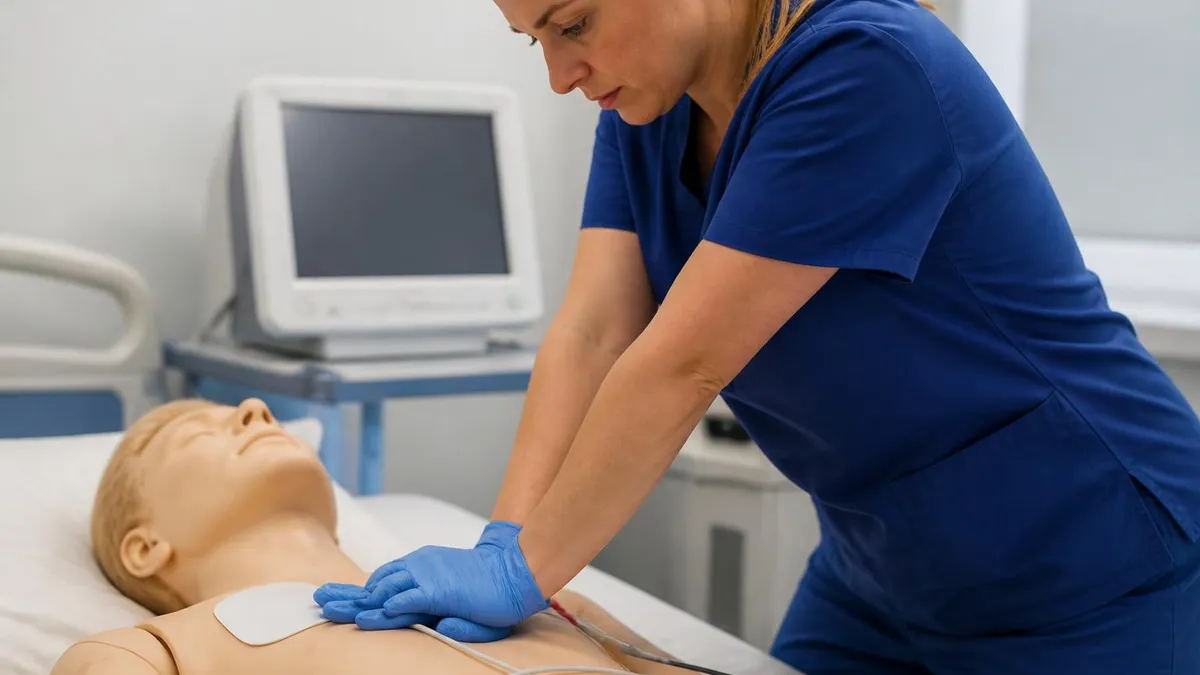
ACLS Renewal Class: Complete 2026 Guide to Recertification Requirements, Costs, Formats & Pass Strategies
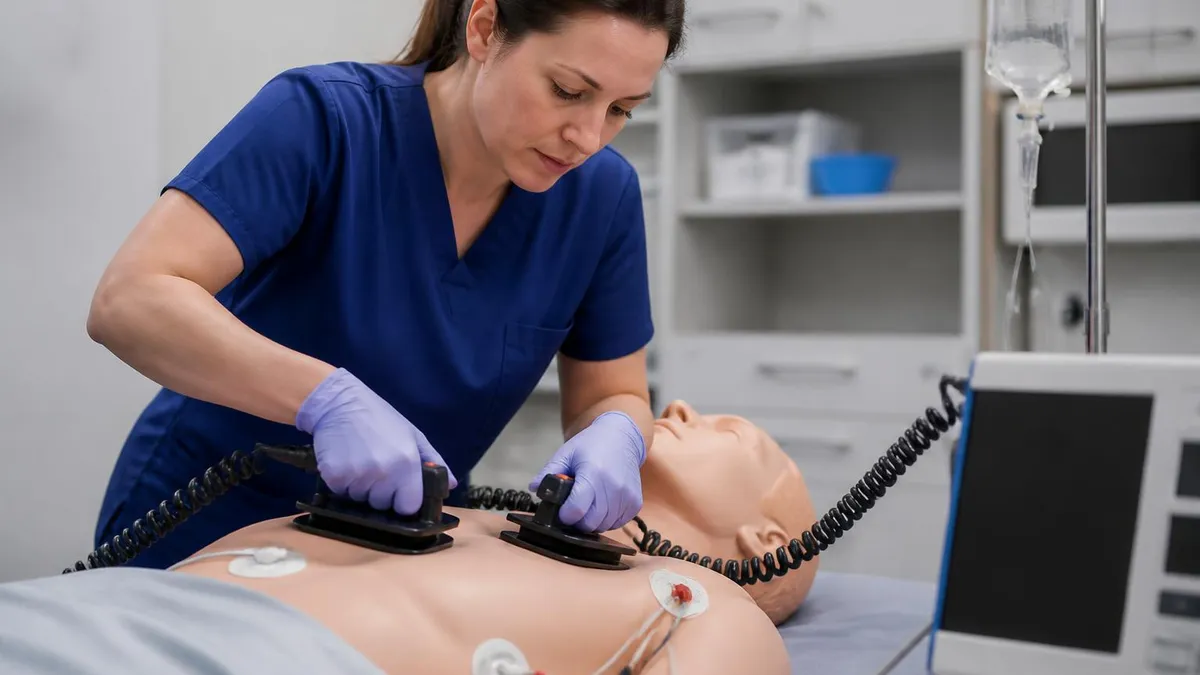
ACLS Bradycardia Algorithm: Complete 2026 Guide to Recognition, Treatment Steps & Drug Doses

ACLS CPR Certification: Complete Training Guide for Healthcare Professionals

ACLS Study Guide: Complete 2026 Certification Prep with Algorithms, Drugs & Practice Tests
About the Author

Registered Nurse & Healthcare Educator
Johns Hopkins University School of NursingDr. Sarah Mitchell is a board-certified registered nurse with over 15 years of clinical and academic experience. She completed her PhD in Nursing Science at Johns Hopkins University and has taught NCLEX preparation and clinical skills courses for nursing students across the United States. Her research focuses on evidence-based exam preparation strategies for healthcare certification candidates.