
ACLS Guidelines 2026 October PDF: Complete Study Guide with Practice Tests & Algorithm Updates
Master the ACLS guidelines 2026 October PDF updates. Algorithms, drug doses, practice tests & exam prep strategies for certification. ✅ Free quizzes included.
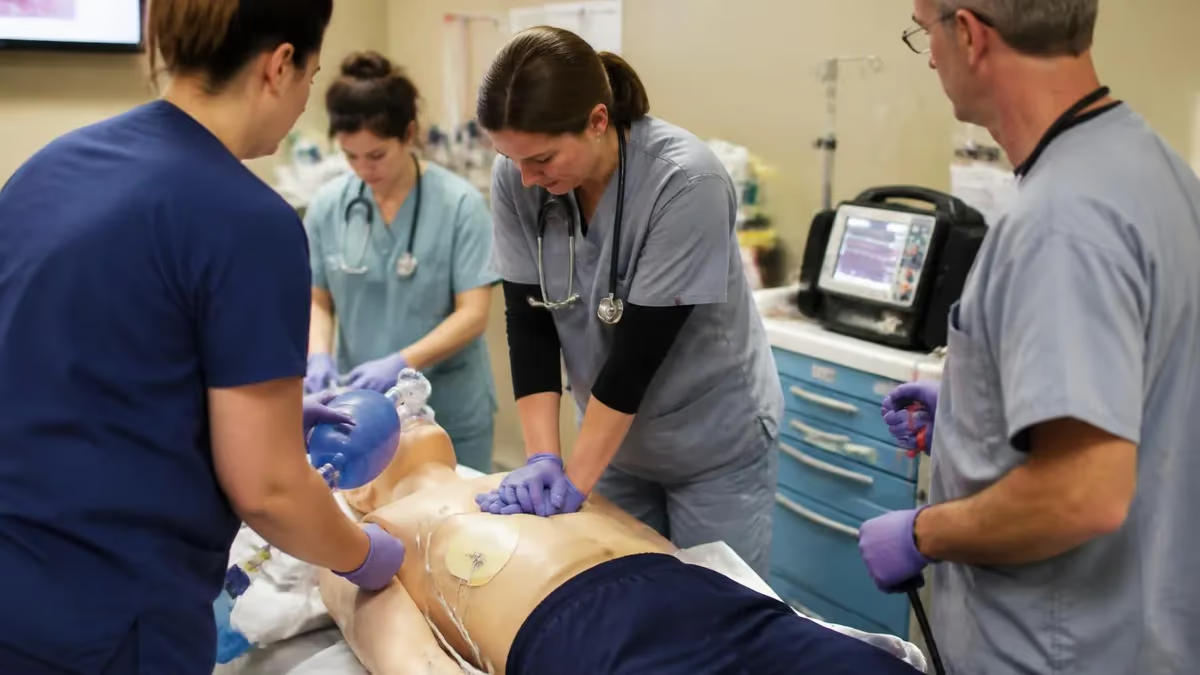
The acls guidelines 2025 pdf represents the most comprehensive update to Advanced Cardiovascular Life Support protocols in recent years, incorporating new evidence from thousands of resuscitation studies conducted since the 2020 guidelines were published. Healthcare professionals preparing for ACLS certification or recertification need to understand exactly what changed, why it changed, and how those changes affect clinical decision-making during cardiac emergencies. Whether you are a nurse, paramedic, physician, or respiratory therapist, the 2025 guidelines directly influence how you will be tested and how you must perform during real resuscitation events.
Released by the American Heart Association in coordination with the International Liaison Committee on Resuscitation (ILCOR), the 2025 guidelines build on the continuous evidence evaluation process that replaced the previous decade-by-decade update model. This continuous review allows guideline writers to incorporate strong new evidence more quickly, meaning the 2025 update includes refinements to CPR quality metrics, vasopressor timing, post-cardiac arrest care, and several key algorithm changes that every ACLS provider must know cold before sitting for their exam or working a resuscitation in a real clinical environment.
Understanding the structure of the guidelines themselves helps you study more efficiently. The full document is organized by cardiac arrest rhythm type, covering ventricular fibrillation, pulseless ventricular tachycardia, pulseless electrical activity, and asystole in separate algorithm tracks.
There are also dedicated sections for bradycardia, tachycardia, post-cardiac arrest care, and special resuscitation circumstances including pregnancy, opioid overdose, and drowning. Each section provides a graded recommendation with a Class designation (I, IIa, IIb, or III) and a Level of Evidence (A, B-R, B-NR, C-LD, or C-EO), helping clinicians understand both the strength of the recommendation and the quality of the underlying research supporting it.
For candidates preparing for the ACLS written examination, the 2025 guidelines serve as the primary source document from which all exam questions are derived. The AHA does not publish the exam blueprint in detail, but questions consistently cluster around the major algorithms, drug doses and indications, rhythm recognition, and the sequence of interventions during arrest and peri-arrest situations. Knowing the guidelines thoroughly — not just memorizing algorithms but understanding the reasoning behind each step — is what separates candidates who pass comfortably from those who struggle with the higher-order application questions.
One of the most practically significant updates in the 2025 guidelines involves CPR quality standards. The recommended compression rate remains 100 to 120 per minute, and compression depth of at least 2 inches but no more than 2.4 inches for adults continues to be emphasized.
However, the 2025 document provides clearer guidance on the use of feedback devices and real-time CPR quality monitoring, with a stronger recommendation for their use in hospital settings where such technology is readily available. This matters for exam purposes because questions about CPR quality now more frequently address the nuanced targets rather than just the basic rate and depth numbers.
Airway management recommendations have also been refined. The 2025 guidelines continue to support a de-emphasis on early endotracheal intubation in out-of-hospital cardiac arrest when adequate bag-mask ventilation can be provided, reflecting accumulated evidence that aggressive early intubation attempts can interrupt chest compressions without improving outcomes. For in-hospital arrest, the picture is more nuanced, and the guidelines acknowledge that provider skill level and local resources should guide airway strategy. These distinctions are frequently tested and require candidates to understand context rather than apply a single rule universally.
This article walks through every major section of the 2025 ACLS guidelines update, explains the clinical reasoning behind key changes, and shows you exactly how to apply that knowledge to both your certification exam and your real-world practice. You will also find targeted practice quizzes aligned to 2025 content, a detailed study checklist, and answers to the most commonly asked questions about the current guidelines. Use this resource alongside the official AHA materials to build the depth of understanding that the modern ACLS exam demands.
ACLS Guidelines 2025 by the Numbers
Key Facts at a Glance
| Item | Value | Details |
|---|---|---|
| Chest compressions per minute (2025 standard) | 100–120 | Continuous from 2020 guidelines |
| Epinephrine dose every 3–5 minutes during arrest | 1 mg | Unchanged in 2025 update |
| ACLS certification validity period | 2 years | Renewal required before expiration |

ACLS 2025 Guidelines Study Schedule
- ▸Download and read the AHA 2025 ACLS Guidelines summary document
- ▸Review the Adult Cardiac Arrest Algorithm in full detail
- ▸Practice BLS skills: compression rate, depth, and recoil
- ▸Complete ECG rhythm identification flashcards for V-fib, V-tach, PEA, asystole
- ▸Study the ACLS Bradycardia Algorithm step by step
- ▸Study the ACLS Tachycardia Algorithm including stable vs. unstable differentiation
- ▸Memorize atropine dose, transcutaneous pacing indications, and cardioversion energy levels
- ▸Take at least one full-length practice quiz focused on rhythms
- ▸Memorize epinephrine, amiodarone, lidocaine, and adenosine doses and indications
- ▸Study vasopressor timing relative to CPR cycles and defibrillation
- ▸Review antiarrhythmic drug selection criteria from 2025 guidelines
- ▸Complete pharmacology-focused practice quizzes
- ▸Study post-cardiac arrest care including targeted temperature management updates
- ▸Review special resuscitation circumstances: pregnancy, opioid overdose, PE
- ▸Practice full mock ACLS scenarios from start to finish
- ▸Take timed practice exams under simulated test conditions
The cardiac arrest algorithm remains the centerpiece of the 2025 ACLS guidelines, and understanding every branch point is essential for both exam success and clinical competence. The algorithm begins the moment cardiac arrest is confirmed: activate the emergency response, begin high-quality CPR, attach a defibrillator as soon as one is available, and administer supplemental oxygen.
These first steps must be nearly automatic for any ACLS provider. The 2025 guidelines continue to reinforce that high-quality CPR — meaning adequate rate, depth, full recoil, and minimal interruptions — is the single most important intervention and should never be compromised to prioritize other tasks.
Defibrillation strategy is one area where the 2025 guidelines introduce meaningful nuance. For shockable rhythms — ventricular fibrillation and pulseless ventricular tachycardia — early defibrillation remains the highest priority after confirming arrest and starting compressions. The recommended energy for biphasic defibrillators is the manufacturer's recommended dose, typically 120 to 200 joules for the first shock, with equal or higher energy for subsequent shocks if the first is unsuccessful. The 2025 guidelines provide updated language acknowledging that some evidence supports higher initial energies, though no definitive recommendation to change from current practice has been made pending further study.
Vasopressor administration during cardiac arrest has been an area of ongoing research, and the 2025 guidelines reflect the current state of evidence. Epinephrine 1 mg IV or IO every 3 to 5 minutes remains the standard vasopressor recommendation for all cardiac arrest rhythms.
The 2025 update reaffirms the timing guidance that for non-shockable rhythms, epinephrine should be given as soon as possible after arrest onset and IV or IO access is established. For shockable rhythms, epinephrine administration after the initial defibrillation attempts is still supported, with the reasoning that early defibrillation should not be delayed for drug delivery in VF or pulseless VT.
Antiarrhythmic drug selection for refractory VF or pulseless VT has remained consistent with prior guidelines, though the 2025 document provides additional context for clinical decision-making. Amiodarone and lidocaine are both listed as acceptable options when defibrillation has failed after multiple attempts. Amiodarone is given as a 300 mg IV bolus for the first dose, with a 150 mg bolus for the second dose if needed.
Lidocaine is an alternative for providers or systems where amiodarone is not available or is contraindicated. The key takeaway for exam preparation is that neither drug has been shown to improve survival to hospital discharge compared to placebo in large randomized trials, but both may increase the rate of return of spontaneous circulation and are therefore still included in the algorithm.
The H's and T's mnemonic for reversible causes of cardiac arrest appears prominently in the 2025 guidelines and is consistently tested on the ACLS exam. Hypoxia, hypovolemia, hydrogen ion excess (acidosis), hypo/hyperkalemia, and hypothermia represent the H's. Tension pneumothorax, tamponade, toxins, and thrombosis (both pulmonary and coronary) represent the T's. Effective ACLS team leadership involves simultaneously directing CPR and drug administration while searching for and treating reversible causes. The 2025 guidelines emphasize that this search should begin early in the resuscitation, not as a last resort after other interventions have been tried.
Rhythm check timing is another point that frequently appears on ACLS examinations. The guidelines specify that rhythm checks should be performed every 2 minutes, corresponding with CPR cycle changes. These checks should be brief — ideally no longer than 10 seconds — to minimize hands-off time. If a rhythm check reveals an organized rhythm, a pulse check should follow immediately.
If a pulse is present, post-cardiac arrest care begins. If there is no pulse despite an organized rhythm, that is PEA, and CPR resumes with a focus on identifying and treating reversible causes. The distinction between PEA and asystole matters because PEA has a broader range of potentially reversible causes that may respond to targeted treatment.
Post-resuscitation care, sometimes called post-cardiac arrest care or PCAS, has become an increasingly important component of the ACLS guidelines as evidence has accumulated that what happens in the hours and days after return of spontaneous circulation significantly influences neurological outcomes and survival. The 2025 guidelines devote substantial attention to targeted temperature management, hemodynamic optimization, and early coronary angiography in selected patients, all of which represent areas where ACLS-certified providers in ICU and emergency settings can directly influence patient outcomes beyond the initial resuscitation itself.
ACLS Guidelines 2025: Algorithms, Drugs & Special Circumstances
The 2025 ACLS guidelines organize resuscitation into three primary algorithm tracks based on the presenting rhythm. Shockable rhythms — ventricular fibrillation and pulseless ventricular tachycardia — follow a path that prioritizes early defibrillation, with drugs introduced after the first shock if the rhythm persists. Non-shockable rhythms — PEA and asystole — follow a separate path that emphasizes high-quality CPR and immediate search for reversible causes, since defibrillation provides no benefit to a disorganized or absent electrical signal. The tachycardia and bradycardia algorithms address peri-arrest states where the patient still has a pulse but is hemodynamically unstable or at immediate risk of deteriorating to arrest.
For the peri-arrest tachycardia algorithm, the critical decision point is whether the patient is stable or unstable. Unstable tachycardia — defined as tachycardia causing hypotension, altered mental status, signs of shock, ischemic chest pain, or acute heart failure — requires immediate synchronized cardioversion regardless of rhythm type. Stable tachycardia is managed based on the QRS width and regularity, with narrow-complex tachycardias often responding to vagal maneuvers and adenosine, while wide-complex tachycardias typically require antiarrhythmic therapy or cardioversion. The 2025 update reinforces the importance of identifying and treating any underlying cause driving the tachycardia alongside rhythm management.
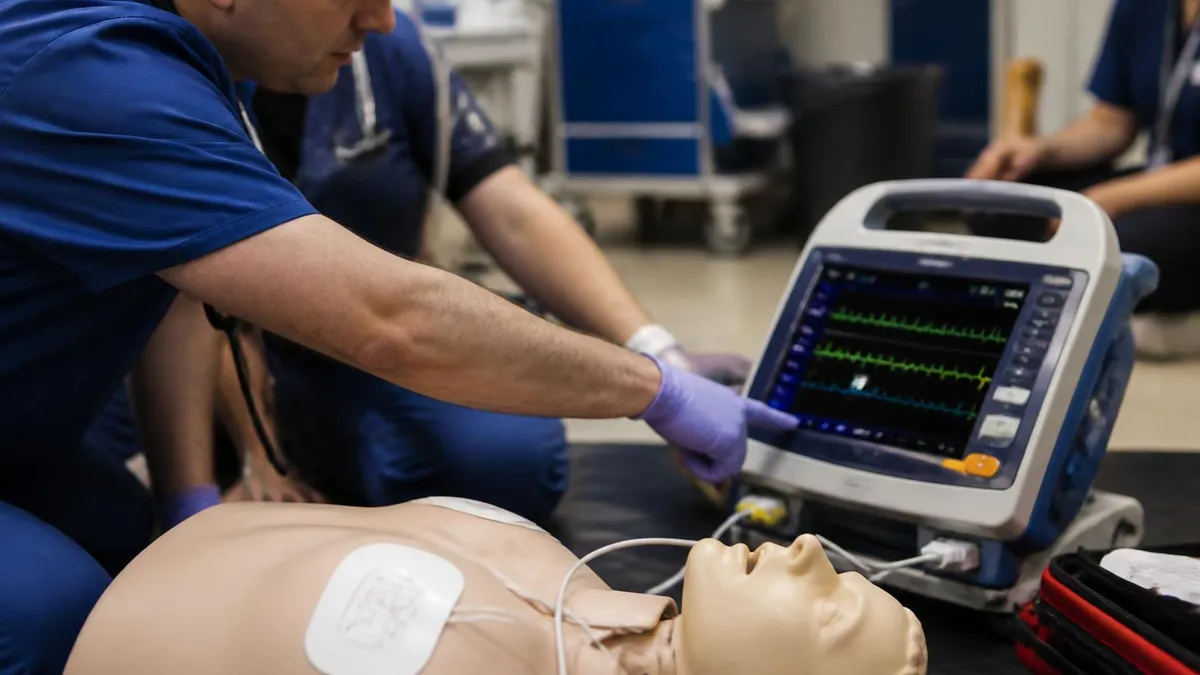
2025 vs. 2020 ACLS Guidelines: What Changed and What Stayed the Same
- +Clearer language on CPR feedback device use improves real-world quality monitoring
- +Updated post-cardiac arrest care guidance reflects stronger evidence base
- +More nuanced vasopressor timing instructions for shockable vs. non-shockable rhythms
- +Expanded special circumstances section covers more clinical scenarios
- +Stronger emphasis on team dynamics and closed-loop communication during resuscitation
- +Refined antiarrhythmic sequencing language reduces ambiguity in complex arrest scenarios
- −Core drug doses unchanged makes it harder to identify what is actually new
- −Full guidelines document is lengthy and difficult to navigate without a structured study plan
- −Some recommendations remain Class IIb or C-EO due to ongoing evidence gaps
- −Continuous update model means staying current requires ongoing effort beyond one certification cycle
- −Special circumstances section can overwhelm candidates who focus only on core algorithms
- −No major algorithm restructuring means prior bad habits are easy to carry forward undetected
ACLS 2025 Exam Preparation Checklist
- ✓Download the official AHA 2025 ACLS Guidelines summary and highlight all Class I recommendations
- ✓Memorize all drug doses, routes, and timing for epinephrine, amiodarone, lidocaine, adenosine, and atropine
- ✓Practice identifying V-fib, V-tach, PEA, asystole, and sinus rhythms on 12-lead and rhythm strip examples
- ✓Trace through the adult cardiac arrest algorithm until you can recite every branch point from memory
- ✓Study the bradycardia algorithm including atropine dosing, transcutaneous pacing, and dopamine or epinephrine infusions
- ✓Study the tachycardia algorithm including stable vs. unstable differentiation and cardioversion energy settings
- ✓Memorize all H's and T's reversible causes and be able to describe the treatment for each
- ✓Review post-cardiac arrest care including targeted temperature management targets and hemodynamic goals
- ✓Practice at least three full-length ACLS practice exams under timed conditions before your test date
- ✓Complete a megacode simulation or skills station practice with a partner or in a skills lab

CPR Quality Is Still the Most Evidence-Supported Intervention in Cardiac Arrest
Despite all the attention given to drugs and algorithms, the 2025 ACLS guidelines reinforce what research consistently shows: high-quality CPR — compressions at the right rate and depth, with full recoil and minimal interruptions — has more impact on survival than any pharmacological intervention. Every ACLS provider should be able to deliver and supervise high-quality CPR automatically, freeing cognitive resources for rhythm analysis, drug decisions, and reversible cause identification during an actual resuscitation.
Rhythm recognition is one of the highest-yield skill areas for both the ACLS written exam and the hands-on megacode component. The 2025 guidelines assume that ACLS providers can rapidly identify the four pulseless arrest rhythms — ventricular fibrillation, pulseless ventricular tachycardia, pulseless electrical activity, and asystole — as well as the common peri-arrest rhythms including sinus bradycardia, complete heart block, supraventricular tachycardia, atrial fibrillation, atrial flutter, and stable versus unstable ventricular tachycardia. Speed and accuracy in rhythm identification directly determines what algorithm you follow and what treatments you administer, making this skill foundational to everything else in ACLS.
Ventricular fibrillation appears on the ECG as a chaotic, disorganized waveform with no discernible P waves, QRS complexes, or T waves, and no regular pattern. The amplitude of the fibrillation waveform can provide clinical clues — coarse VF with large-amplitude waves is often more responsive to defibrillation than fine VF with small-amplitude waves — though the 2025 guidelines do not recommend a different defibrillation strategy based on VF amplitude.
The immediate response to confirmed VF in a pulseless patient is defibrillation followed by immediate resumption of CPR starting with chest compressions. Checking the pulse before or after defibrillation should not delay the shock once the rhythm is confirmed.
Pulseless ventricular tachycardia is distinguished from stable VT by the absence of a pulse. On the monitor, pulseless VT looks identical to stable VT: a wide QRS tachycardia at a rate typically between 100 and 250 beats per minute, with uniform QRS morphology in monomorphic VT or varying morphology in polymorphic VT.
The presence or absence of a pulse is what determines the algorithm. Pulseless VT follows the same shockable rhythm algorithm as VF. Stable VT with a pulse follows the tachycardia algorithm and may be managed with antiarrhythmics, cardioversion, or both depending on the clinical situation and the patient's hemodynamic status.
PEA — pulseless electrical activity — is among the most challenging diagnoses in cardiac arrest because it presents as an organized-appearing rhythm on the monitor without a palpable pulse. Any organized rhythm can be a PEA rhythm, including sinus rhythm, junctional rhythm, idioventricular rhythm, or even a rhythm that looks completely normal. The key is to check for a pulse whenever an organized rhythm is identified.
PEA responds only to treatment of its underlying cause, making rapid identification of the H's and T's critical. The most common reversible causes seen in PEA include hypovolemia, tension pneumothorax, cardiac tamponade, and pulmonary embolism — all of which have specific treatments that can restore perfusing rhythm if identified quickly enough.
Asystole is confirmed when the ECG shows a flat or near-flat line with no discernible electrical activity. The guidelines recommend confirming asystole in more than one lead to avoid mistaking a loose lead or artifact for true asystole. Asystole carries the worst prognosis of the four arrest rhythms, and its management focuses entirely on high-quality CPR, epinephrine every 3 to 5 minutes, and a thorough search for reversible causes.
Defibrillation is not indicated for asystole. Some ACLS candidates incorrectly believe that shocking asystole might restart the heart; the guidelines are explicit that defibrillation for asystole is not beneficial and may cause harm by inducing parasympathetic discharge.
For the tachycardia algorithm, the critical initial assessment is hemodynamic stability. An unstable tachycardia — any tachycardia causing hypotension below 90 mmHg systolic, altered mental status, signs of shock, ischemic chest discomfort, or acute pulmonary edema — requires immediate synchronized cardioversion.
The word synchronized is critical: synchronizing the shock to the QRS complex prevents the energy delivery from falling on the T wave, which could trigger VF. Energy recommendations for cardioversion vary by rhythm type: 50 to 100 joules for regular supraventricular tachycardias, 120 to 200 joules for atrial fibrillation, 50 to 100 joules for atrial flutter, and 100 joules for monomorphic VT, with escalation as needed.
Bradycardia management in the 2025 guidelines follows a clear path based on whether the bradycardia is causing symptoms and whether those symptoms are due to the bradycardia itself or an underlying cause. Asymptomatic bradycardia does not require immediate treatment. Symptomatic bradycardia — causing hypotension, altered mentation, signs of shock, ischemic chest pain, or acute heart failure — is treated with atropine 1 mg IV as the first-line agent.
If atropine is ineffective, transcutaneous pacing is indicated while preparing for transvenous pacing or while dopamine or epinephrine infusions are initiated as a bridge. High-degree AV blocks — second-degree Mobitz II and complete heart block — are more likely to require pacing than blocks at the AV node level that may respond to atropine.
ACLS certification is valid for two years from the date of successful completion. Many hospitals and healthcare employers require current ACLS certification as a condition of employment, and an expired certification can create credentialing and liability issues. Begin your renewal process at least 60 to 90 days before your current certification expires to ensure you have adequate time to complete the required coursework, schedule a renewal class, and receive your new certification card before your current one lapses.
Post-cardiac arrest care has emerged as one of the most dynamic and evidence-rich areas in the 2025 ACLS guidelines, reflecting a growing understanding that what happens in the first 24 to 72 hours after return of spontaneous circulation has a profound effect on long-term neurological outcomes.
The AHA's updated guidance emphasizes a systematic, bundle-based approach to post-arrest care that addresses oxygenation and ventilation targets, hemodynamic optimization, targeted temperature management, and neurological prognostication. For ACLS exam candidates, understanding the broad strokes of this approach is sufficient, though providers working in intensive care or emergency settings will need to master the detailed protocols.
Oxygenation management after ROSC has been refined in the 2025 guidelines. The prior recommendation to avoid hypoxia while also avoiding hyperoxia has been sharpened with more specific targets. Once reliable pulse oximetry can be established, the guidelines recommend titrating supplemental oxygen to maintain SpO2 at 92 to 98 percent.
The concern with hyperoxia — defined as a PaO2 above 300 mmHg — is that excess oxygen may contribute to oxidative injury in the post-arrest brain, which is already vulnerable due to ischemia-reperfusion injury. Ventilation targets for patients requiring mechanical ventilation after ROSC include a PaCO2 of 35 to 45 mmHg, avoiding both hypocarbia and significant hypercarbia.
Targeted temperature management (TTM) remains a recommended intervention for comatose survivors of cardiac arrest, though the 2025 guidelines reflect the evolution of this evidence with more nuanced guidance. The landmark TTM2 trial published after the 2020 guidelines found no significant difference between a target temperature of 33 degrees Celsius and a target of 37.5 degrees Celsius with aggressive fever prevention, challenging the prior emphasis on active cooling to 32 to 36 degrees for all comatose patients.
The 2025 guidelines now recommend actively preventing fever — defined as a temperature above 37.7 degrees Celsius — in all comatose post-arrest patients, while acknowledging that active cooling to lower target temperatures may be beneficial in selected cases.
Hemodynamic optimization after ROSC is addressed with specific targets in the 2025 guidelines. A mean arterial pressure target of at least 65 mmHg is recommended, with some evidence supporting higher targets of 80 to 100 mmHg in selected patients based on the clinical context and evidence of end-organ perfusion. Vasopressors and intravenous fluids should be titrated to achieve adequate MAP while avoiding fluid overload, which can worsen post-arrest pulmonary function. The guidelines support continuous arterial blood pressure monitoring in post-arrest patients and emphasize the importance of frequent clinical reassessment to guide hemodynamic management rather than relying solely on protocol-driven targets.
Early coronary angiography after cardiac arrest has been an area of active debate, and the 2025 guidelines reflect the current evidence with a more selective recommendation than prior versions. For post-arrest patients with ST-elevation on ECG — strongly suggesting acute coronary occlusion — emergency coronary angiography remains a Class I recommendation with strong evidence.
For post-arrest patients without ST elevation, the evidence from the COACT and TOMAHAWK trials suggests that immediate angiography does not improve outcomes compared to delayed or selective angiography, leading the 2025 guidelines to support a more individualized approach based on clinical features suggesting ischemia as the cause of arrest rather than universal immediate angiography for all post-ROSC patients.
Neurological prognostication after cardiac arrest is a complex topic addressed in detail in the 2025 guidelines and is occasionally tested on advanced ACLS examinations. The guidelines recommend waiting at least 72 hours after ROSC before attempting formal prognostication in patients who received TTM, and emphasize using multiple complementary tools rather than relying on any single test.
Clinical exam findings, EEG patterns, somatosensory evoked potentials, brain CT, and biomarkers such as neuron-specific enolase are all discussed in the guidelines. The key principle is that no single finding is sufficient to predict poor outcome with certainty early in the post-arrest course, and premature withdrawal of life-sustaining therapy based on early findings may deprive potentially recoverable patients of the chance to survive.
Family notification and support during and after cardiac arrest is acknowledged in the 2025 guidelines as an important but often neglected component of resuscitation care. The option of family presence during resuscitation — when feasible and with appropriate support — is discussed with evidence suggesting that family members who witness resuscitation attempts may experience less complicated grief and anxiety than those who do not. For ACLS providers in leadership roles, anticipating family communication needs and designating a team member to support family members during and after a resuscitation is part of comprehensive, compassionate care that the guidelines now formally recognize.
For a fuller set of questions on this topic, see our aha acls algorithms resource.
Practical preparation for the ACLS certification exam requires a different approach than reading through the guidelines once and hoping the content sticks. The ACLS exam is a 50-question written test administered in the context of a provider course that also includes hands-on skills stations and a megacode simulation. The written portion tests knowledge across all major content areas, with particular emphasis on rhythm recognition, algorithm application, and drug dosing.
A passing score is typically 84 percent or higher, meaning you can miss no more than 8 questions on a 50-question exam. That margin is tight enough that comprehensive preparation across all content areas is necessary — you cannot safely skip any major topic and hope to pass on core algorithm knowledge alone.
Spaced repetition is the most evidence-supported learning technique for the type of factual and procedural knowledge required for ACLS certification. Rather than studying everything at once in a single long session, spaced repetition involves reviewing material multiple times over increasing intervals, capitalizing on how memory consolidation works in the brain.
For ACLS preparation, this means starting your study at least 4 weeks before your scheduled exam date, cycling through the algorithms and drug tables multiple times, and using practice tests to identify weak areas that need additional review. The practice quizzes on this page are designed specifically to support spaced repetition practice with questions that target the exact content areas covered by the 2025 guidelines.
Algorithm mastery is different from algorithm memorization. Many candidates can recite the steps of the cardiac arrest algorithm but struggle when exam questions present an unusual clinical scenario or ask them to identify what should happen next given a specific combination of findings. Building true algorithm mastery requires working through scenarios, not just reading flowcharts.
Practice saying out loud what you would do at each decision point. Work through scenarios where the first intervention does not produce the expected result. Ask yourself what reversible cause might explain why a patient is not responding to standard interventions. This kind of deliberate practice is far more effective than passive reading.
Drug dosing should be memorized systematically using a table format that groups each drug with its indication, dose, route, and key considerations. The drugs most likely to appear on the ACLS exam include epinephrine (arrest), amiodarone (arrest and stable tachycardia), lidocaine (arrest alternative), adenosine (SVT), atropine (bradycardia), dopamine infusion (bradycardia and hypotension), epinephrine infusion (bradycardia), norepinephrine (post-arrest hypotension), magnesium sulfate (torsades de pointes and severe hypomagnesemia), and calcium gluconate or chloride (specific indications). For each drug, know not just the dose but when to use it, when not to use it, and what to expect as a response.
The megacode component of the ACLS provider course requires you to lead a simulated resuscitation as the team leader or participate as a team member. Team leader performance is evaluated on several dimensions: correct algorithm application, appropriate drug orders, clear and specific directions to team members, closed-loop communication, frequent reassessment, and recognition of when to adjust the plan based on changing patient status.
Many candidates who know the content thoroughly still struggle with megacodes because they have not practiced the verbal communication patterns that are expected. Rehearse giving drug orders in the format the AHA expects: state the drug name, dose, route, and timing, then confirm the order was heard and repeat back to you.
Time management during the written exam is straightforward because the 50-question test has a generous time limit, but some candidates spend too long on difficult questions and rush through easier ones toward the end. A more effective strategy is to answer every question once on the first pass, marking any you are uncertain about, then return to marked questions for a second review. Avoid changing answers unless you have a specific reason to believe your first answer was wrong — research on multiple-choice testing consistently shows that first instincts are more often correct than second-guessed answers, particularly for well-prepared candidates.
After passing your ACLS certification exam, the work of staying current does not stop. The AHA updates the guidelines on a continuous basis through the Science Advisory and Coordinating Committee process, and major updates — like the comprehensive 2025 revision — are released alongside summary documents, algorithm cards, and provider manual updates.
Subscribing to AHA email updates, following resuscitation science journals, and participating in regular skills refreshers between certification cycles will keep your knowledge current and your skills sharp. ACLS is ultimately a perishable skill set, and the candidates who perform best on recertification exams are those who have actively applied and reviewed their knowledge throughout the two-year certification period, not just in the weeks before their renewal date.
ACLS Questions and Answers

ACLS Acute Coronary Syndrome Algorithm: Complete Study Guide for Certification Prep
ACLS Renewal Class: Complete 2026 Guide to Recertification Requirements, Costs, Formats & Pass Strategies
ACLS Bradycardia Algorithm: Complete 2026 Guide to Recognition, Treatment Steps & Drug Doses

ACLS CPR Certification: Complete Training Guide for Healthcare Professionals
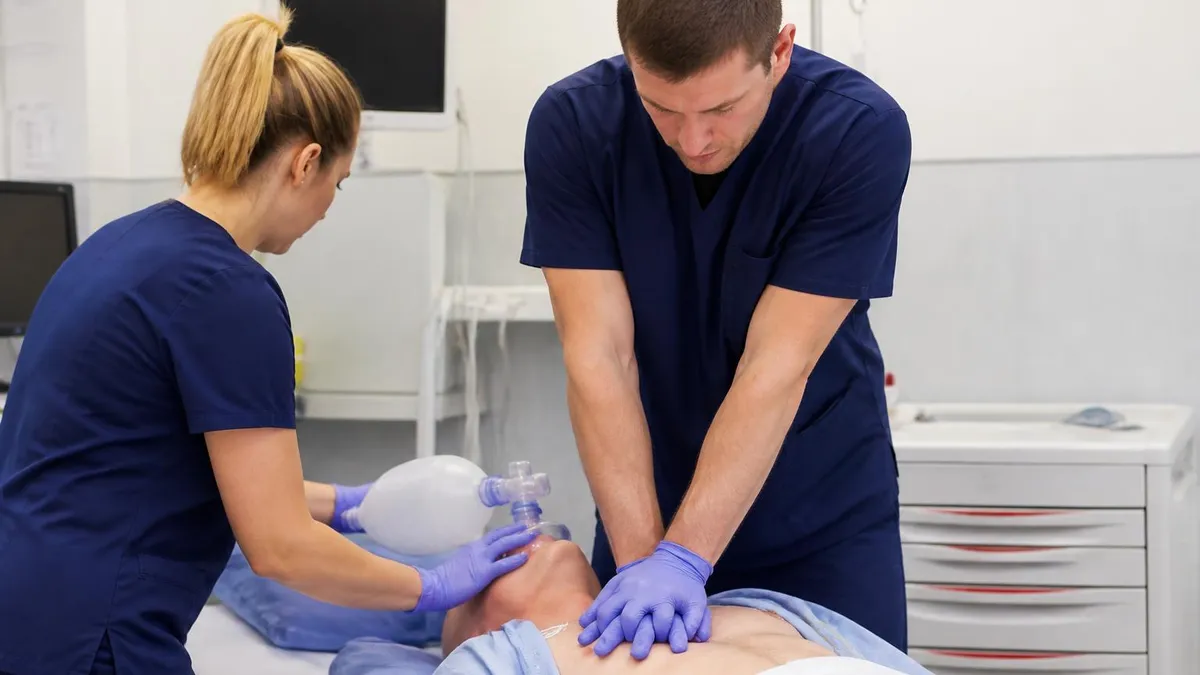
ACLS Study Guide: Complete 2026 Certification Prep with Algorithms, Drugs & Practice Tests
About the Author

Registered Nurse & Healthcare Educator
Johns Hopkins University School of NursingDr. Sarah Mitchell is a board-certified registered nurse with over 15 years of clinical and academic experience. She completed her PhD in Nursing Science at Johns Hopkins University and has taught NCLEX preparation and clinical skills courses for nursing students across the United States. Her research focuses on evidence-based exam preparation strategies for healthcare certification candidates.