
Forklift Models — Complete Guide (2026 October)
Forklift models compared: 🆕 Toyota, Hyster, Linde, Komatsu, Crown. Classes I-VII, capacities, diesel vs LPG vs electric for TLILIC0003 operators.
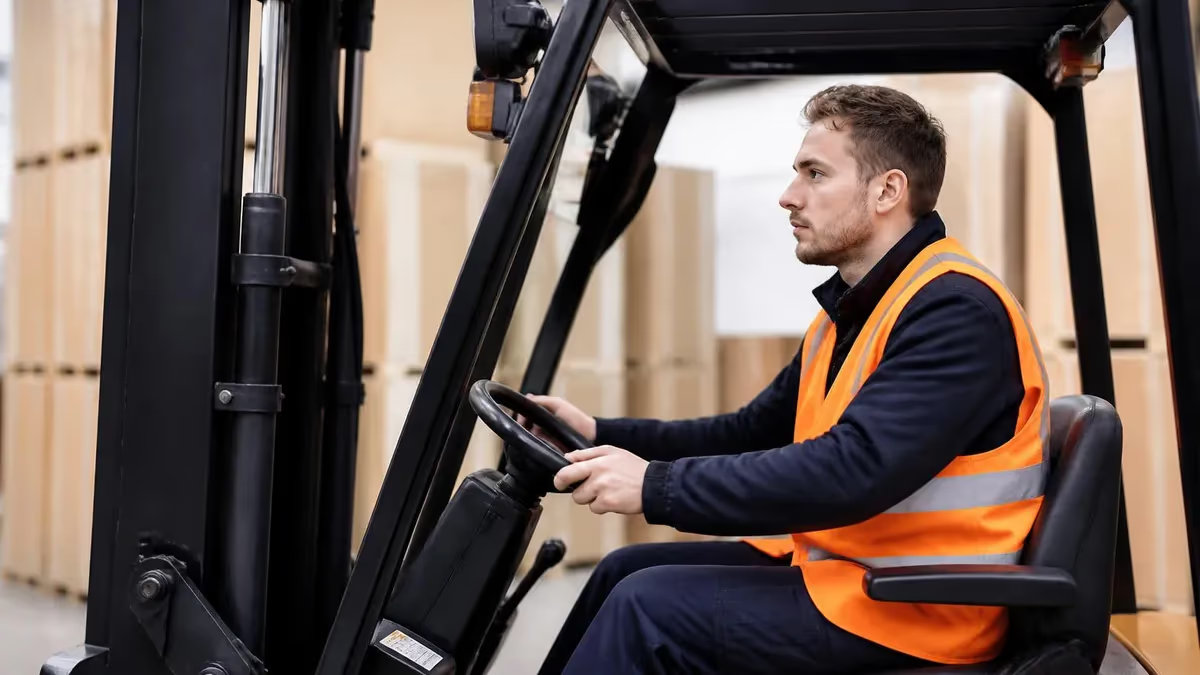
Forklift Models — Complete Guide (2026)
Walk into any Australian warehouse and you'll spot the same handful of forklift models doing the heavy lifting. Toyota 8-series. Hyster H2.5FT. Linde E20. They aren't there by accident — these forklift brands dominate because their engineering, parts availability, and resale value beat the rest. If you're chasing a TLILIC0003 ticket, knowing which machine you'll actually drive matters more than memorising specs.
Toyota holds roughly 26% of the global market. That's not marketing fluff — it's recorded sales data from the Industrial Truck Association tracked over the last two decades. The 8FG and 8FB series alone account for the lion's share of sit-down counterbalance units across Aussie sites.
You'll see them in Sydney, Melbourne, Brisbane, Adelaide, and Perth. The brand earned its share through reliability data: average uptime above 96% across 10,000-hour service intervals. That's why fleet managers keep buying them — predictable downtime is worth real money on tight logistics schedules.
Hyster runs second in many regions. Its H2.5FT and H3.0FT diesel and LPG units handle the 2.5 to 3 tonne load range — exactly the bracket TLILIC0003 covers. Linde leads electric. The German maker's hydrostatic drive technology gives single-pedal control that feels weird at first but speeds up load placement once you get used to it.
Komatsu owns the heavy-duty middle. Crown crushes the warehouse reach truck game with their RC and RR series. Each maker built a niche, then doubled down for decades. The result is a market where specific models become almost synonymous with specific job types.
Forklift Models at a Glance
Here's the honest answer: no single model is best. The right pick depends on what you lift, where you lift it, and how long the shift runs. A 2.5 tonne diesel Hyster makes sense outdoors loading shipping containers. Indoors, in a food warehouse, that same machine is a non-starter — exhaust fumes alone kill the deal.
You'd grab a Linde E20 electric or a Crown RC stand-up reach truck instead. Same pallet, different machine, completely different operating envelope. That's the lesson every new operator learns in the first week on a real site.
Load capacity, mast height, turning radius, fuel type, tyre type — change any one of these and the model shortlist shifts completely. Operators who pass how to get a forklift licence training quickly learn the spec sheet matters more than the badge on the bonnet.
Worth knowing: every machine you'll touch on the job will have a different feel even within the same class. A Toyota and a Komatsu both rated 2.5T at 600mm load centre can handle the same pallet, but the throttle response, hydraulic speed, and turning circle vary noticeably.
One trap newcomers fall into is assuming bigger machines are universally safer. They aren't. A 4.5T forklift carrying a 1.5T pallet sits higher off the centre of gravity than a properly-sized 2T unit. That extra mass becomes a liability the moment you hit a ramp, an uneven floor seam, or a tight corner. Choosing the right machine for the load is itself a safety decision — not just an efficiency one.
The other thing nobody mentions during licence training: comfort matters. Eight hours on a poorly-designed cab leaves you sore, slow, and accident-prone by hour six. Crown and Linde lead on operator ergonomics — adjustable seats, low cab entry, sensible control placement.
Cheaper machines often skip these features. Your back will thank you for picking carefully. Ask any operator who's done a few years and they'll tell you — the difference between a great cab and a bad one shows up after lunch on a long shift, not in the first hour.
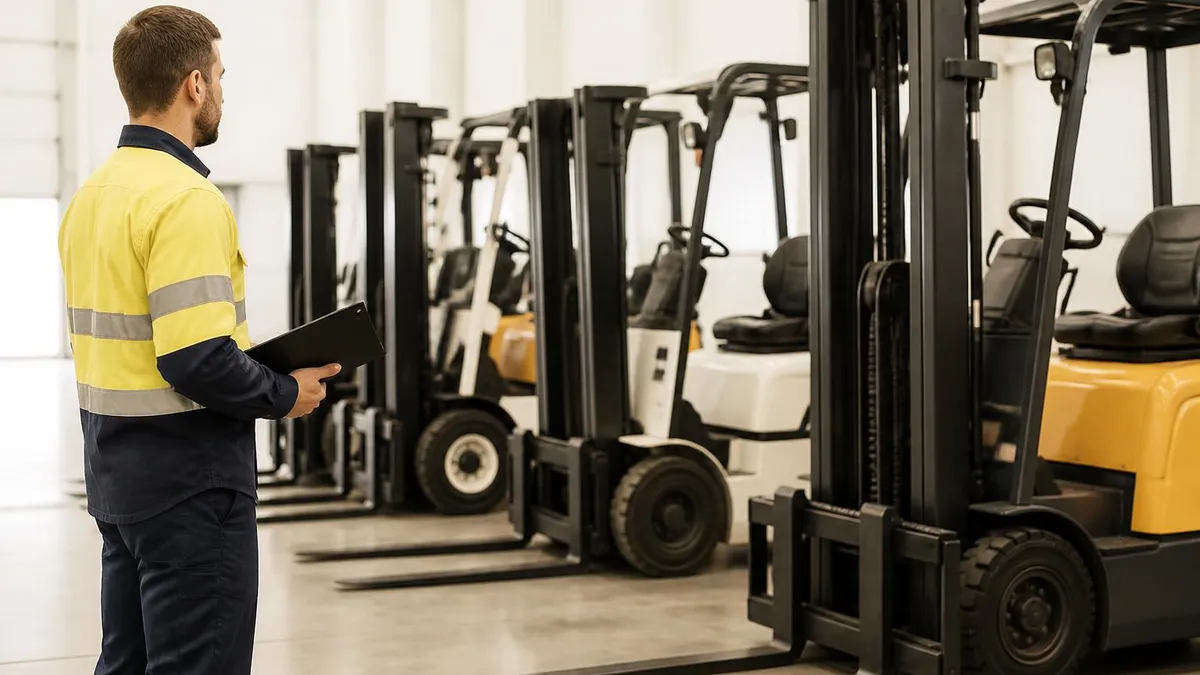
TLILIC0003 = Licence to Operate a Forklift Truck. Covers all sit-down counterbalance forklifts under 4.5 tonnes lifting capacity. Issued by Safe Work Australia, valid nationwide, renewed every 5 years. Bigger machines need TLILIC0004 (Order-Picking Forklift) or TLILIC0028 (Reach Stacker — over 5 tonnes).
Top Brands & Market Share
Global #1 since 2002. 8FG/8FB series dominates 2-3.5T counterbalance segment.
- Market Share: ~26% global
- Flagship: 8FGCU25 (2.5T LPG)
- Electric Line: 8FBE/8FBN series
- Australia: Toyota Material Handling Australia
Heavy-duty specialist owned by Hyster-Yale Group. Strong in 2.5-8T diesel and LPG units.
- Popular Models: H2.5FT, H3.0FT, H4.0FT
- Strength: Container handling, outdoor work
- Sister Brand: Yale (lower-cost tier)
- Australia: Adaptalift Hyster dealer network
German engineering, hydrostatic transmission. Electric forklift market leader in Europe.
- Popular Models: E20, E25, E30 (electric)
- Strength: Electric, low noise, hydrostatic drive
- Australia: Linde Material Handling AU
- Owner: KION Group (also owns STILL)
Japanese giant. FG/FB series covers 1-15 tonne range. Strong dealer support across Asia-Pacific.
- Popular Models: FG25T-16, FB25-12 (5T capable)
- Strength: Heavy-duty, mining, port work
- Australia: Komatsu Forklift Australia
- Fuel: Diesel + electric lines
US-built warehouse king. Owns the reach truck and order picker segment.
- Popular Models: RC stand-up, RR reach, SP order picker
- Strength: Narrow-aisle, ergonomic cab
- Australia: Crown Equipment Pty Ltd
- Tech: InfoLink fleet management
Sister brand to Hyster under Hyster-Yale Group. Mid-tier pricing, broad model range.
- Popular Models: GLP/GDP series (LPG/diesel)
- Strength: Value pricing, parts shared with Hyster
- Range: 1.5-8T capacity
- Australia: Adaptalift dealer network
Compact and mid-size workhorse. FG/FD series strong in Asian-Pacific markets.
- Popular Models: FGE25N, FD25N (2.5T)
- Strength: Reliability, low total cost of ownership
- Australia: MLA Holdings (Mitsubishi Logisnext)
- Tech Partner: Cat / Jungheinrich tie-ins
Cat lift trucks built by Mitsubishi Logisnext. DP series diesel, 2P propane line.
- Popular Models: DP25N, 2P3000 (3,000 lb LPG)
- Strength: Construction, mixed indoor/outdoor
- Australia: Cat Forklift via MLA Holdings
- Range: 1.5-7T capacity
Korean budget-friendly option. Strong warranty, growing dealer base.
- Popular Models: B25X-7 (electric), D25S-7 (diesel)
- Strength: Sharp pricing, decent build quality
- Australia: Doosan Industrial Vehicle AU
- Now Branded: Some markets renamed 'Bobcat Industrial'
Forklift Classes I-VII (OSHA + AS Standards)
OSHA splits forklifts into seven classes. Australian Standard AS 2359 mirrors most of this with minor terminology shifts. The class number tells you what the machine is designed for — not how strong it is.
A Class IV diesel cushion-tyre forklift and a Class V diesel pneumatic-tyre forklift might both lift 2.5 tonnes, but you'd never swap them. One's an indoor warehouse unit, the other's a yard machine. Know the class, know the job.
Most TLILIC0003 candidates will spend their working life on Class IV and V machines. That's the counterbalance category — the classic sit-down forklift with forks at the front and a counterweight at the back. Toyota 8FG, Hyster H2.5FT, Komatsu FG25 — all Class IV or V depending on tyre type. The split between IV and V is purely about what's under the tyre.
Class Quick Reference
Class I covers electric forklift sit-down counterbalance units with cushion or pneumatic tyres. Quiet. Zero emissions. Indoor warehouses, food storage, retail distribution.
Class II is narrow-aisle electric — stand-up reach trucks, order pickers, turret trucks. Crown RR and Raymond models live here. Aisles down to 2.4m wide become workable. The Raymond 9700 swing-reach can run aisles as narrow as 1.7m with wire guidance.
Class III is the manual or motorised pallet jack family. Electric walkies. Riders. The little machines doing the bulk of pallet movement on every dock. Class IV is internal combustion cushion-tyre — propane or LPG, smooth tyres, indoor warehouse work.
Class V is internal combustion pneumatic-tyre — same engines, beefier tyres, made for outdoor or rough terrain. Class VI is electric or internal combustion tractors — tow tractors, not lift trucks. You'll see them on airport tarmacs pulling baggage trains and in big plants pulling trailers of parts between buildings.
Class VII is rough terrain forklifts — pneumatic tyres, mast in front, built for construction sites and unpaved ground. Bobcat-style telehandlers technically sit in their own subcategory but show up under Class VII for licencing purposes.
Why Class Matters for the Operator
The licence ticket doesn't care about brand, model number, or fuel type — it cares about class and capacity. TLILIC0003 covers Class I, IV, and V machines under 4.5T. Class II reach trucks need their own competency assessment from the employer. Class III walkies and rider pallet jacks fall under TLILIC0029 in most states.
Class VI tow tractors and Class VII rough terrain machines need separate licences entirely. Big civil construction sites running telehandlers can't put a TLILIC0003 holder on the controls and call it covered — that's a different ticket.
One reason new operators get caught out: the classification on the data plate isn't always obvious. A Crown SC5200 stand-up counterbalance looks like a Class II machine but is actually Class I because it's electric counterbalance, not narrow-aisle reach. The forks position and the counterweight tell you the answer — not how the operator stands.
Counterbalance vs Reach vs Order Picker vs Pallet Jack
The classic sit-down forklift. Operator faces forward, forks lift loads in front, a counterweight at the rear stops the machine tipping. This is what TLILIC0003 trains you to operate.
- Examples: Toyota 8FG25, Hyster H2.5FT, Komatsu FG25T-16, Linde E25
- Capacity: 1.0T to 8.0T (TLILIC0003 covers up to 4.5T)
- Lift height: 3-7 metres typical, up to 12m with triplex mast
- Use case: Loading docks, container work, general warehousing, yard work
- Fuel: Diesel, LPG, electric (battery)
Diesel vs LPG vs Electric — Operating Cost
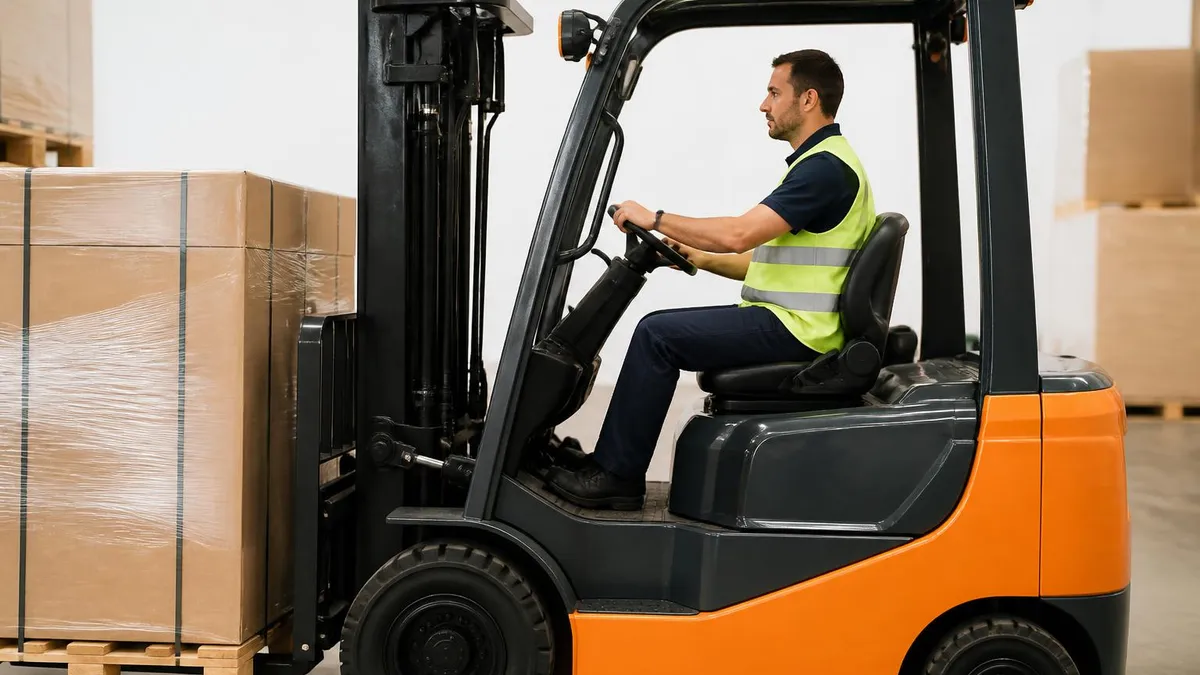
Load Capacity & Lift Height — How They Interact
The rated capacity on a forklift data plate isn't the capacity at every lift height. That's the trap. A Toyota 8FGCU25 is rated 2,500 kg — but at the load centre, which is the centre of mass of the load measured forward of the fork heel.
Push the load centre out to 600mm or run the mast up to 6 metres, and the safe lift drops fast. Operators who skip the load chart calculation cause most of the rollover incidents you'll read about in Safe Work Australia bulletins.
Every machine carries a load capacity plate near the operator's seat or printed on the mast. Two columns: load centre distance, and rated capacity at each mast height. A 2.5 tonne forklift might only safely lift 1.4 tonnes at 6m height with a 600mm load centre. That's a 44% drop.
Knowing how to read this plate is core forklift training content, and assessors test it directly during the practical assessment. Get it wrong and you re-test. The plate isn't optional reading — it's the whole foundation of safe operation.
Common Capacity Brackets
Below 2 tonnes covers stand-up reach trucks, narrow-aisle work, light warehouse moves. The Linde E16, Toyota 7FBE15, Crown RR 5700-30 all sit here. Two to 3.5 tonnes is the TLILIC0003 sweet spot — 70% of Australian sit-down forklifts fall in this bracket. Hyster H2.5FT, Toyota 8FGCU25, Komatsu FG25T-16, Linde E25.
Three-and-a-half to 4.5 tonnes still falls under TLILIC0003 but pushes the upper limit. You'll need this for heavy pallet loads, mixed loads with timber or steel, or shipping containers half-loaded. Above 4.5 tonnes you've crossed into TLILIC0028 territory — reach stackers, big container handlers, port equipment. Different licence, different machine, different game.
Lift Height Reality Check
Standard masts top out around 3-4m. Most warehouse work happens between 1m and 5m. Triplex masts reach 6-7m. Quad masts hit 9-12m, but only specific reach trucks and order pickers get up there safely. Going taller means narrower aisles, slower travel, mandatory wire-guidance systems, and operator certification beyond TLILIC0003.
The other height factor that bites new operators: collapsed mast height. That's how tall the machine is when the mast is fully lowered, sitting on the truck. Walk into a low-ceiling cold storage facility with a 2.8m collapsed mast Toyota 8FBE25 and you'll clip the door frame. Always check overhead clearance against the spec sheet before you take a machine into an unfamiliar space.
Attachments Change the Maths
The capacity numbers on the data plate assume forks only. Bolt on a side-shift attachment, a fork positioner, a paper roll clamp, a carpet pole, or a slip-sheet push-pull — and the rated capacity drops. Sometimes by 30-50%. Each attachment must have its own capacity plate mounted alongside the original. Operators who run attachments without checking the de-rated capacity are betting against physics.
Forklift Models — By the Numbers
Electric Forklifts vs Diesel/LPG
- +Lower running cost — 50-70% cheaper per hour than diesel
- +Zero emissions — legal for indoor food storage and pharmaceutical sites
- +Quieter — under 70 dB at operator ear, vs 85+ for diesel
- +Lower maintenance — no engine oil, filters, exhaust system
- +Lithium-ion option allows opportunity charging during breaks
- +Better cab visibility — no rear engine block, smaller counterweight design
- +Regenerative braking extends shift range by 10-15%
- −Higher upfront purchase price — $35-50K premium with battery and charger
- −Battery swap or charging time interrupts multi-shift operations
- −Lead-acid batteries need watering and equalisation charges
- −Cold storage operations reduce battery efficiency 15-25%
- −Limited capacity at high lift heights versus diesel equivalents
- −Battery replacement after 5-7 years adds $8-15K to lifecycle cost
Choosing the Right Forklift Model — Quick Checklist
- ✓Define maximum load weight — measure your heaviest pallet, add 20% buffer
- ✓Measure your widest aisle — counterbalance needs 3.6m, reach truck 2.5m
- ✓Confirm maximum lift height — check top beam height of tallest rack
- ✓Indoor or outdoor primary use — drives fuel type (electric indoors)
- ✓Average shift hours — under 6 hrs/day allows single battery; longer needs opportunity charging
- ✓Floor condition — pneumatic tyres for rough, cushion tyres for smooth concrete
- ✓Operator licence held — TLILIC0003 (under 4.5T), TLILIC0004 (order picker), TLILIC0028 (reach stacker)
- ✓Parts availability in your region — Toyota, Hyster, Crown have widest AU dealer networks
- ✓Total cost of ownership — purchase + 5-year fuel + service + battery replacement
- ✓Resale value — Toyota and Crown hold value best at 5-year mark
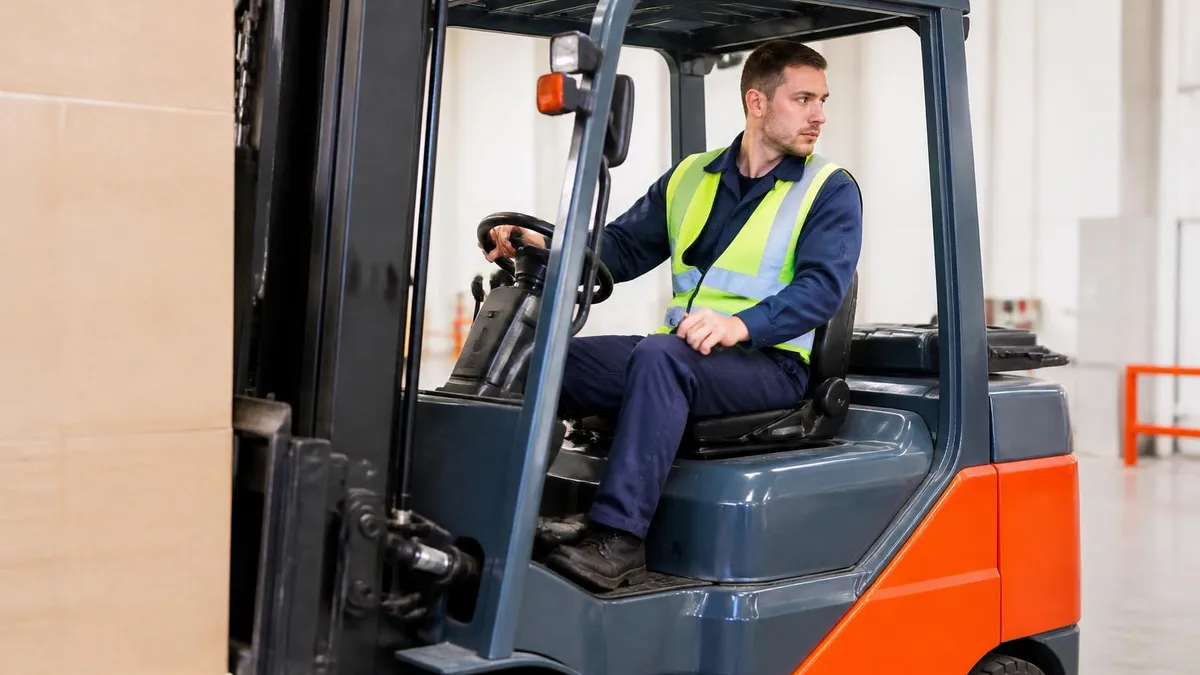
Australian Market & TLILIC0003 in Practice
Australia's forklift fleet skews Japanese. Toyota, Komatsu, and Mitsubishi between them sell more than half of every new sit-down counterbalance machine. Hyster, Crown, and Linde fight for the rest. The reason is dealer density — Toyota Material Handling Australia has branches in every capital city plus regional hubs, so parts and service are never a week away.
Komatsu Forklift Australia matches that footprint. Hyster operates through Adaptalift, which runs branches and field service vans coast to coast. Linde and Crown have smaller dealer networks but strong city coverage.
For TLILIC0003 candidates, this matters because your training school will likely run Toyota or Komatsu machines. Pass the assessment on one model, and the licence covers all sit-down forklifts under 4.5 tonnes. You won't need separate tickets for Hyster, Linde, or Crown. The card you get from WorkSafe doesn't list a brand — it lists a class of equipment.
Site-Specific Familiarisation Still Required
Holding TLILIC0003 doesn't mean you can hop on any model and start lifting. Australian WHS legislation requires site-specific familiarisation — what's called "verification of competency" or VOC. Each employer must verify you understand that specific machine's controls, capacity plate, attachments, and safety systems before authorising you to operate.
A Toyota 8FG and a Hyster H2.5FT have similar controls but different pedal layouts. Linde uses a single foot pedal — forward and reverse on the same pedal, no inching pedal at all. Crown stand-up reach trucks need completely different stance, deadman switches, and hand controls.
Forty hours on one model doesn't translate to forty hours on another. Smart operators ask for a 30-minute familiarisation on any unfamiliar machine before turning it on for the first shift. Costs nothing. Saves a lot.
Forklift Hire vs Buy in Australia
Short-term hire rates run $180-280 per day for a 2.5T LPG counterbalance, $250-350 for diesel pneumatic, and $320-450 for electric. Weekly rates drop 30-40%. Monthly rates are cheaper still — a year-long contract often costs less per month than a 5-day hire pro-rata. Big advantage of hire: maintenance is the rental company's problem.
Brand Strengths in the Australian Market
- ✓Toyota — general warehousing, distribution centres, 2.5T LPG on smooth concrete
- ✓Komatsu — heavy mining and ports, 5T-15T units for steel coil and container components
- ✓Hyster — outdoor diesel work, log yards, builders' merchants, container terminals
- ✓Linde — indoor electric where ergonomics and quiet operation matter
- ✓Crown — selective racking high-bay distribution centres (Woolworths, Coles, Bunnings, Amazon)
- ✓Mitsubishi / Caterpillar — mid-tier value buyer, Japanese build at lower cost than Toyota
- ✓Doosan — budget play, sharp pricing, growing dealer base outside metro areas
- ✓Yale — Hyster sister brand, shared parts, lower price tier
Used Forklift Market in Australia
The used forklift market is huge. A 5-year-old Toyota 8FGCU25 with 8,000-12,000 hours sells for $18-26K. The same model new costs $42-55K. Hyster H2.5FT sits in similar territory used. Older Crown reach trucks (RR 5700 series, 2018-2020 vintage) sell $35-50K used versus $90-110K new.
Buying used makes sense for many businesses. The catch: service history matters more than hours. A 6,000-hour machine that's been serviced every 250 hours runs better than a 2,000-hour machine that's been thrashed. Always ask for the service log book. Walk-away from any used unit that can't produce one.
Career Path & Pay Brackets
Forklift operators in Australia earn $28-38/hr in warehousing, climbing to $42-48/hr for container handling at ports or mining site work. Add nightshift loading or weekend penalty rates and the figure climbs another 25%. Picking up additional tickets — TLILIC0004, TLILIC0028, dangerous goods, traffic management — pushes the ceiling above $60/hr in remote operations.
What Comes Next
Most operators starting with TLILIC0003 stay on counterbalance forklifts their whole career. Some progress to reach trucks for high-bay distribution centres — Crown RR or Raymond 7500 machines paying premium rates for narrow-aisle expertise. A smaller group moves into reach stackers, telehandlers, or rough terrain forklifts on construction and port sites. Each step needs its own licence, its own competency verification, its own learning curve.
Knowing your forklift hydraulic system and the difference between a Class IV and Class V machine matters more on day one than you'd expect. Operators who learn the spec sheet get the better shifts. They get the high-pay containers. They get hired faster.
The badge on the bonnet is the cover — the data plate is the book. Bottom line: spend an hour with the manual of whatever machine you're about to drive, before you turn the key. That hour pays back tenfold over the first month.
TLILIC0003 Pathway — From Beginner to Working Operator
Step 1: Choose RTO
Step 2: Theory & Practical
Step 3: Pass Assessment
Step 4: Issued WorkSafe Card
Step 5: Site Induction & VOC
Step 6: Build Hours
Step 7: Renewal at Year 5
Forklift Questions and Answers
Related TLILIC0003 Guides
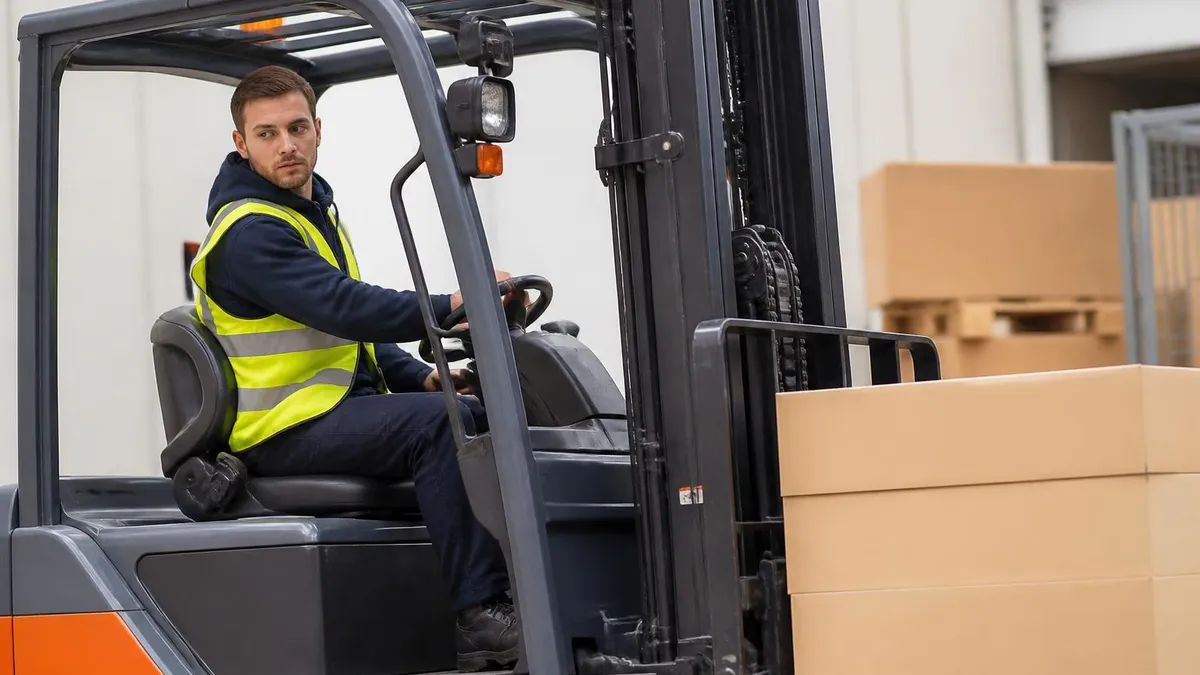
Toyota Electric Forklifts: Complete Guide to Forklift Brands and Models for TLILIC0003 Operators in Australia
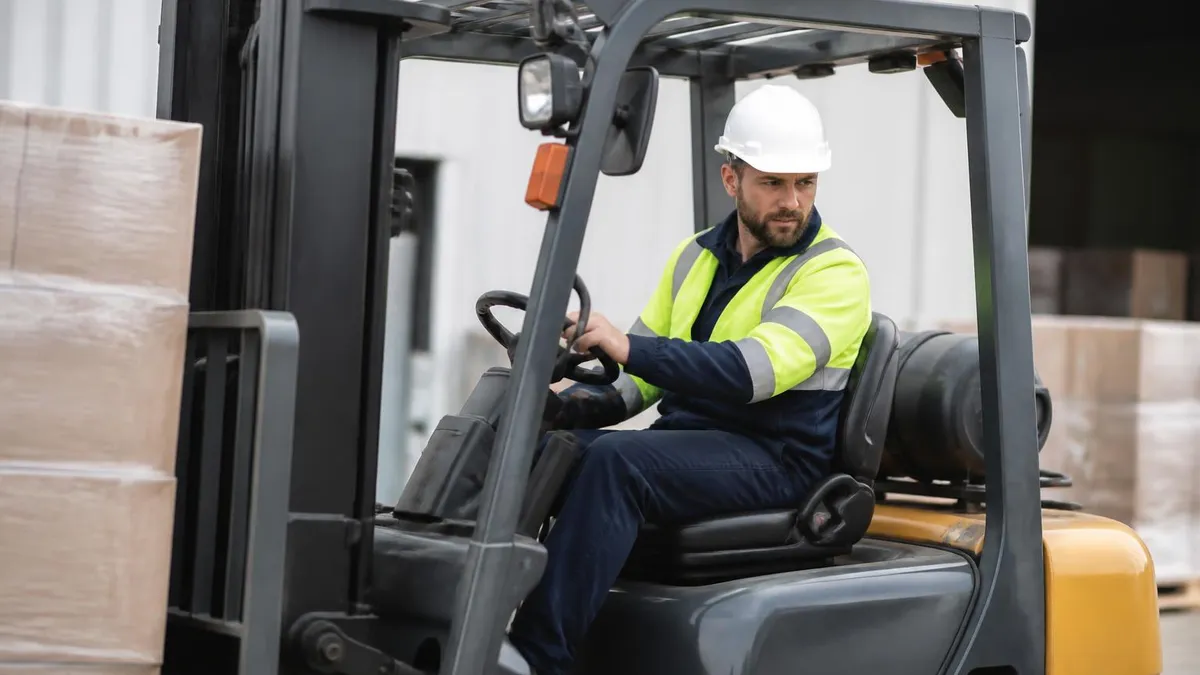
Electric 3 Wheel Forklift: Complete Guide to Electric Forklift Types for TLILIC0003 Operators in Australia
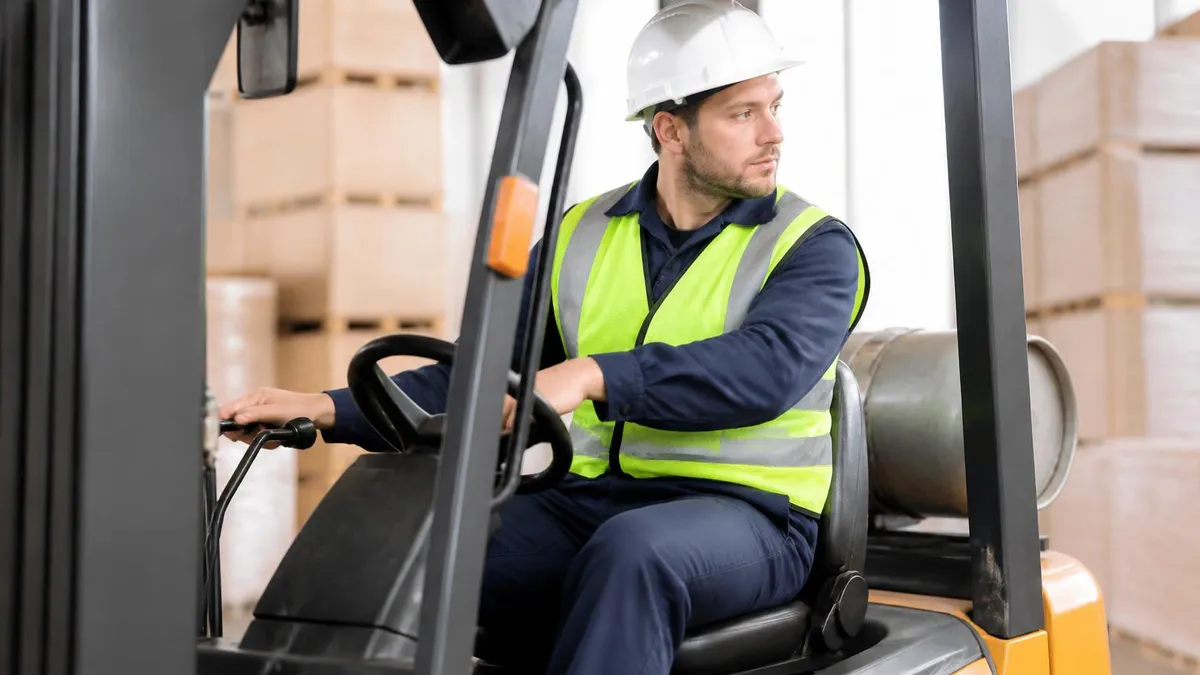
Forklift Hydraulic System: Complete Guide to Hydraulic Components, Operation, and Safety for TLILIC0003 Operators in Australia
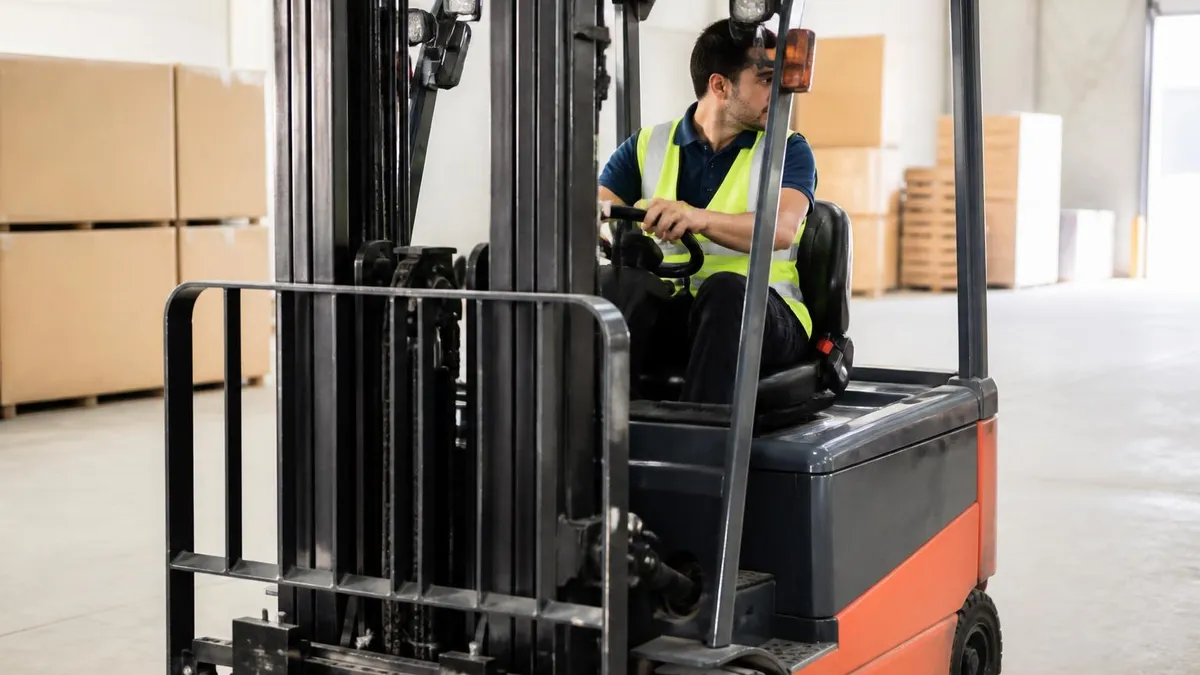
How to Get a Forklift Licence in Australia: Complete TLILIC0003 Guide for 2026
Traffic Management Plan Forklift: Complete Guide to Forklift Safety and Operations for TLILIC0003 Operators in Australia
About the Author

Certified Crane Operator & Skilled Trades Exam Specialist
Ferris State UniversityRobert Martinez is a Journeyman Ironworker, NCCCO-certified crane operator, and forklift trainer with a Bachelor of Science in Construction Technology from Ferris State University. He has 21 years of ironworking, rigging, and heavy equipment operation experience across high-rise and industrial construction sites. Robert prepares candidates for crane operator, rigger, forklift, and skilled trades certification examinations.