
Toyota Electric Forklifts: Complete Guide to Forklift Brands and Models for TLILIC0003 Operators in Australia
🎯 Toyota electric forklifts and other top forklift brands explained for TLILIC0003 operators in Australia. Models, specs, capacities and exam tips inside.
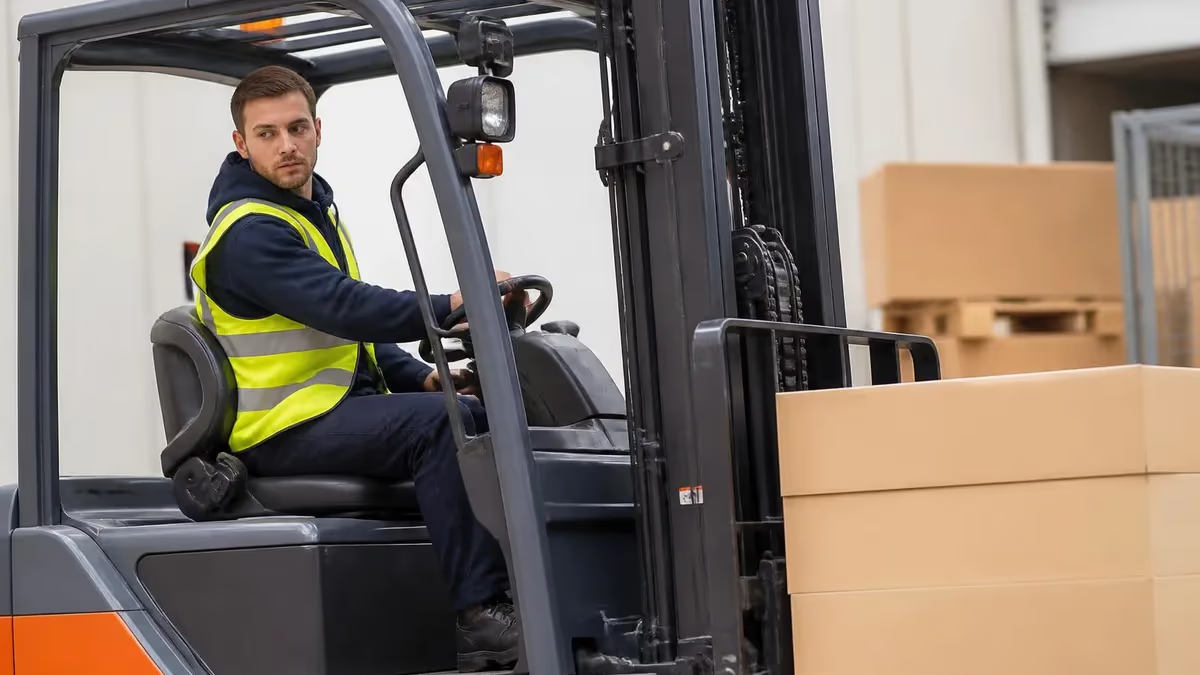
Toyota electric forklifts dominate Australian warehouses, distribution centres and cold storage facilities, and any operator preparing for the TLILIC0003 high risk work licence assessment needs a working knowledge of the major forklift brands and models on the market. Understanding the differences between Toyota, Crown, Hyster, Linde, Yale, Mitsubishi, Komatsu, TCM and Caterpillar machines is not just trivia. Knowing which brand sits under you on assessment day shapes how you complete pre-start checks, interpret data plates and respond to brand-specific control layouts.
The TLILIC0003 unit of competency requires operators to demonstrate safe operation of a powered industrial truck across a range of load types, environments and attachments. Because registered training organisations across Australia source their assessment fleets from different manufacturers, you might sit your test on a Toyota 8FBE15 one day and a Crown FC 5200 the next. Each machine handles tilt, lift, travel and braking slightly differently, and the data plate language varies between Japanese, European and American conventions.
Electric forklifts have surged in popularity across Australian sites over the last decade. Lithium-ion technology, faster opportunity charging and quieter operation have pulled buyers away from LPG and diesel in indoor applications. Toyota leads the Australian electric segment, but Crown, Linde and Hyster all hold meaningful share, particularly in food, pharmaceutical and retail distribution centres where emissions, noise and floor cleanliness matter as much as raw lifting capacity.
This guide walks through the brands and models a TLILIC0003 candidate is most likely to encounter in training and at work. It covers counterbalance, reach, order picker and pallet jack categories, with a focus on the operator-facing controls, capacities and safety systems you must understand. The goal is to give you confidence regardless of which machine your assessor rolls out on the day, and to help you spot the brand-specific quirks that catch unprepared candidates out.
You will also find practical tips on reading data plates, interpreting model numbers and matching attachments to base machines without compromising the rated capacity. We have included links to deeper resources on the mast of forklift assemblies, specifications and parts that tie directly into the brand comparisons here. Use this article alongside your RTO learner guide and the WorkSafe national assessment instrument.
For a refresher on broader forklift anatomy and how brand design choices affect the lifting hardware, see our companion article on the mast of forklift assemblies used across the major manufacturers. That piece pairs well with the brand-by-brand model breakdown that follows here.
By the end of this guide you should be able to identify the major Australian forklift brands by sight, read any common model code, compare equivalent machines across manufacturers and answer the brand and model questions in the TLILIC0003 knowledge assessment with confidence. Let us get into the numbers.
Australian Forklift Brands by the Numbers
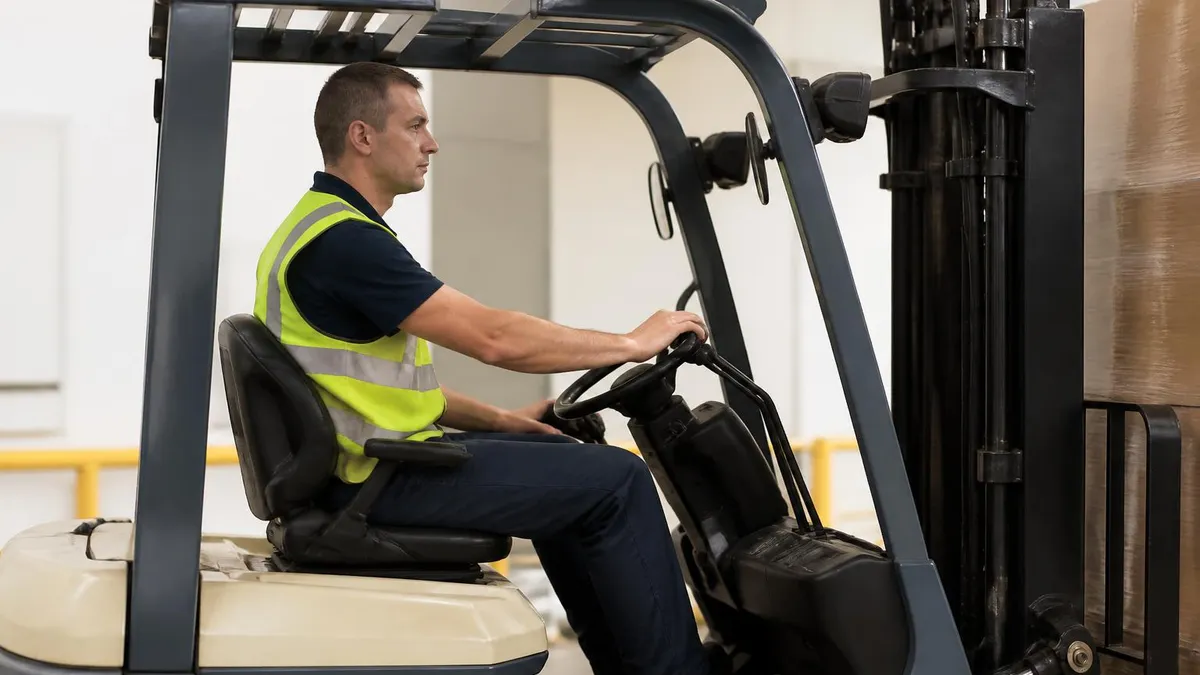
Major Forklift Brands in the Australian Market
Market leader in Australia with the 8-Series and Traigo electric ranges. Known for System of Active Stability, durable internal combustion 02-8FG models and strong dealer support across every state and territory.
US-built specialist in electric warehouse equipment. The FC 5200, RC, RM reach trucks and order pickers dominate cold storage and high-bay racking applications across Sydney, Melbourne and Brisbane distribution centres.
Sister brands under Hyster-Yale Group offering heavy counterbalance from 1.5T to 52T. Common on ports, timber yards and steel mills. Yale tends to compete in lighter electric and warehouse applications.
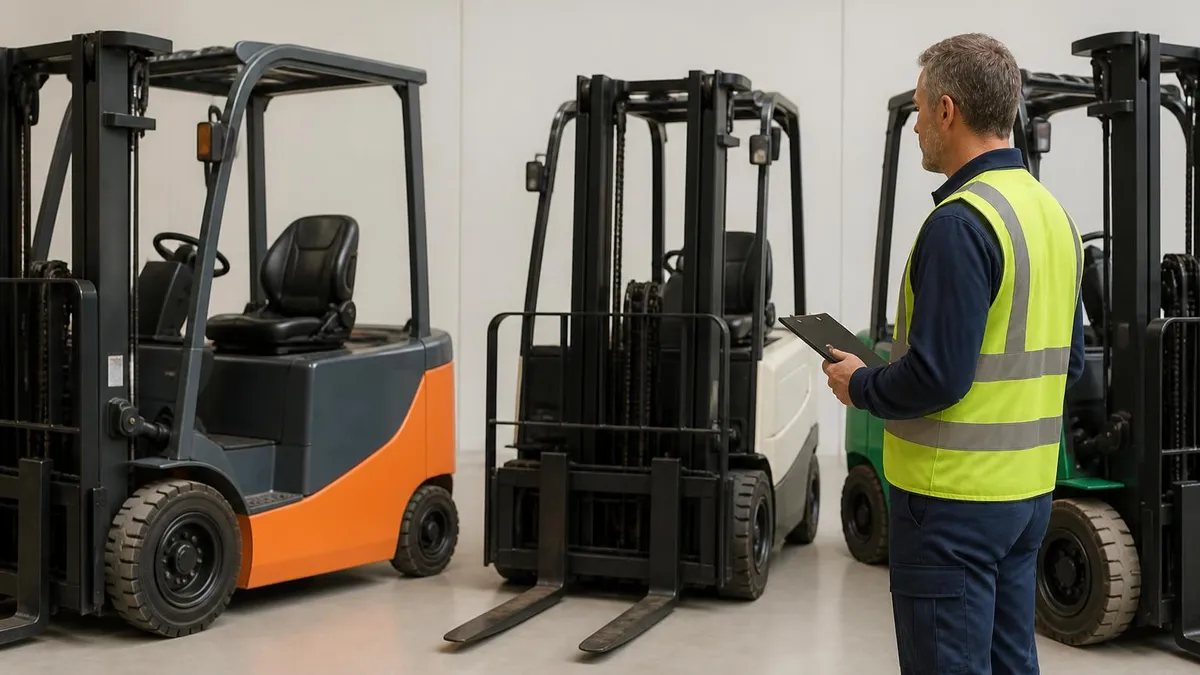
Linde brings German hydrostatic drive technology and the iconic dual-pedal layout. Mitsubishi shares platforms with Caterpillar Lift Trucks through MCFA and is popular in mid-size LPG and electric applications.
Japanese heavy-duty options favoured on construction sites, recycling yards and ports. TCM machines are widely used in regional Australian warehouses and have a reputation for simple, strong hydraulics.
Toyota electric forklifts have become the default specification for many Australian fleet buyers, and TLILIC0003 candidates will almost certainly encounter at least one Toyota machine during training. The current 8-Series and Traigo ranges cover capacities from 1.0 tonne walkie stackers right through to 8.5 tonne heavy counterbalance units, with three-wheel and four-wheel configurations and lithium-ion options replacing traditional lead-acid batteries in most new orders since 2023.
The 8FBE range, including the 8FBE15, 8FBE18 and 8FBE20, sits in the popular 1.5 to 2.0 tonne three-wheel electric category. These compact units are perfect for tight aisle warehouses, food manufacturing and parcel distribution. The dual front drive motors deliver smooth acceleration, regenerative braking returns energy to the battery during deceleration, and the integrated System of Active Stability automatically reduces tilt speed when the load is raised above two metres.
Step up to the four-wheel 8FBN family and you find capacities from 1.5 to 3.5 tonnes, with the 8FBN25 and 8FBN30 being the most common units in Australian general warehousing. These machines use 80V battery systems, hydrostatic power steering and the SAS rear-axle swing lock that triggers if lateral instability is detected. Lift heights range from 3.0 metres on a simplex mast up to 7.0 metres on a triplex full-free-lift configuration.
Heavier Toyota electric models include the 8FBMT and the new Traigo 80 series, rated from 4.0 to 8.5 tonnes. These compete directly with diesel and LPG counterbalance machines in lumber yards, container handling and concrete product manufacturing. Lithium-ion versions can opportunity charge during operator breaks, eliminating the battery change rooms required by older lead-acid fleets.
From a TLILIC0003 perspective, the Toyota controls you must know are the multi-function display, the SAS warning indicators, the directional control lever (typically left of the steering column), the OPS operator presence system and the parking brake. The OPS cuts hydraulic and travel functions whenever the operator leaves the seat, and assessors will check that you understand it is a safety system, not a substitute for proper park-and-secure procedures.
Toyota counterbalance machines also share data plate conventions across the range. The plate sits on the front cowling near the steering column and lists model code, serial number, mast type, attachment fitted, lift height, rated capacity at standard load centre and the de-rated capacity when attachments or extended forks are fitted. Knowing how to read and interpret these plates is a non-negotiable skill for any high risk work licence holder.
For deeper coverage of how Toyota and other brands configure their forks, carriages and mast assemblies, our guide on the multi directional forklift trucks walks through specialty configurations including the Toyota Bendi and Combilift units used in Australian timber and steel handling. The brand-specific quirks covered there directly support the model knowledge required for assessment.
TLILIC0003 Practice Test Questions
Prepare for the Forklift Licence Australia - TLILIC0003 exam with our free practice test modules. Each quiz covers key topics to help you pass on your first try.
TLILIC0003 Forklift Licence Australia Atta...
TLILIC0003 Exam Questions covering Forklift Licence Australia Attachments and Modifications. Master TLILIC0003 Test concepts for certification prep.
TLILIC0003 Forklift Licence Australia Batt...
Free TLILIC0003 Practice Test featuring Forklift Licence Australia Battery and Fuel Safety. Improve your TLILIC0003 Exam score with mock test prep.
TLILIC0003 Forklift Licence Australia Emer...
TLILIC0003 Mock Exam on Forklift Licence Australia Emergency Procedures. TLILIC0003 Study Guide questions to pass on your first try.
TLILIC0003 Forklift Licence Australia Fork...
TLILIC0003 Test Prep for Forklift Licence Australia Forklift Pre-Operational Checks. Practice TLILIC0003 Quiz questions and boost your score.
TLILIC0003 Forklift Licence Australia Haza...
TLILIC0003 Questions and Answers on Forklift Licence Australia Hazard Identification. Free TLILIC0003 practice for exam readiness.
TLILIC0003 Forklift Licence Australia Load...
TLILIC0003 Mock Test covering Forklift Licence Australia Load Centre Calculations. Online TLILIC0003 Test practice with instant feedback.
TLILIC0003 Forklift Licence Australia Load...
Free TLILIC0003 Quiz on Forklift Licence Australia Load Handling and Capacity. TLILIC0003 Exam prep questions with detailed explanations.
TLILIC0003 Forklift Licence Australia Oper...
TLILIC0003 Practice Questions for Forklift Licence Australia Operating in Different Environments. Build confidence for your TLILIC0003 certification exam.
TLILIC0003 Forklift Licence Australia Oper...
TLILIC0003 Test Online for Forklift Licence Australia Operating Techniques. Free practice with instant results and feedback.
TLILIC0003 Forklift Licence Australia Pede...
TLILIC0003 Study Material on Forklift Licence Australia Pedestrian Safety. Prepare effectively with real exam-style questions.
Comparing Toyota Electric Forklifts with Other Power Options
Toyota electric forklifts deliver zero exhaust emissions, quieter operation and lower long-term running costs compared with LPG counterparts like the Toyota 02-8FG25. Electric machines suit indoor environments such as food warehouses, pharmaceutical facilities and cold storage where air quality and noise matter. The trade-off is initial purchase price and the need to manage battery charging infrastructure or invest in lithium-ion technology.
LPG counterbalance still wins for outdoor yards, mixed indoor and outdoor duties and rapid refuelling. Cylinder swaps take under five minutes versus eight hours for a standard lead-acid charge. However, opportunity charging and lithium chemistry are quickly closing this gap, and many Australian sites have switched their entire 2.5 tonne fleet from LPG to electric over the past three years.
Toyota Electric Forklifts: Strengths and Limitations
- +Industry-leading System of Active Stability reduces tip-over risk during turns and lifts
- +Wide model range covers 1.0 to 8.5 tonnes with three-wheel and four-wheel options
- +Strong Australia-wide dealer network with parts availability in major cities and regional hubs
- +Lithium-ion options enable opportunity charging and eliminate battery rooms
- +Operator presence system, seatbelt interlocks and overhead guards meet AS 2359 requirements
- +Resale values remain among the highest in the Australian used forklift market
- −Higher upfront purchase price than equivalent LPG counterbalance units
- −Lithium-ion premium adds 20 to 30 percent over lead-acid for the same capacity
- −Battery charging infrastructure requires upfront site planning and electrical works
- −Compact three-wheel models have lower rated capacities at higher lift heights
- −Some older 7-Series machines lack the integrated SAS warning displays of current units
- −Replacement traction motors and controllers can carry significant lead times
Pros and Cons at a Glance
| Pros | Cons |
|---|---|
| Industry-leading System of Active Stability reduces tip-over risk during turns and lifts | Higher upfront purchase price than equivalent LPG counterbalance units |
| Strong Australia-wide dealer network with parts availability in major cities and regional hubs | Battery charging infrastructure requires upfront site planning and electrical works |
| Lithium-ion options enable opportunity charging and eliminate battery rooms | Compact three-wheel models have lower rated capacities at higher lift heights |
| Resale values remain among the highest in the Australian used forklift market | Replacement traction motors and controllers can carry significant lead times |
Forklift Brand Identification Checklist for TLILIC0003
- ✓Locate the manufacturer badge on the front cowling and rear counterweight
- ✓Find the data plate on the front column or operator compartment and confirm model code
- ✓Read the rated capacity at standard load centre, usually 500 mm or 600 mm
- ✓Identify the de-rated capacity when an attachment or extended forks are fitted
- ✓Note mast type (simplex, duplex or triplex) and free-lift specification
- ✓Check power source (electric, LPG, diesel or dual fuel) and battery voltage if electric
- ✓Confirm tyre type (cushion, solid pneumatic or air pneumatic) suits the application
- ✓Verify the presence of overhead guard, seatbelt and operator presence system
- ✓Identify brand-specific control layouts including direction selector and hydraulic levers
- ✓Record the serial number and last service date for pre-start documentation
Never assume controls are identical between brands
A Linde dual-pedal counterbalance is operated very differently from a Toyota 8FBN single-pedal direction selector. Always take five minutes for a familiarisation walkaround before operating an unfamiliar brand. TLILIC0003 assessors specifically watch for this behaviour and will mark candidates down for hopping straight into the seat of a machine they have never used.
Reading data plates and model codes is the single highest-value brand skill you can develop for the TLILIC0003 assessment. Every legitimate forklift sold in Australia carries a data plate that meets AS 2359.1 requirements. The plate must show manufacturer, model, serial number, year of manufacture, unladen mass, rated capacity, load centre, lift height, fuel type and any attachment-specific de-rated capacities. Inability to read the plate is grounds for the assessor to fail you on the spot.
Toyota model codes follow a fairly logical pattern once you know the system. Take 8FBN25 as an example. The 8 indicates the eighth-generation chassis, FB stands for forklift battery (electric), N denotes the four-wheel pneumatic configuration, and 25 is the rated capacity in hundreds of kilograms, so 2,500 kg. A 7FBR15 would therefore be a seventh-generation electric reach truck with 1,500 kg capacity. Toyota internal combustion models swap FB for FG (LPG) or FD (diesel).
Crown uses a different convention. The FC 5200 series is a four-wheel cushion-tyre counterbalance, the SC 6000 is a three-wheel sit-down, and the RC 5500 is a stand-up rider. Pallet jacks carry WP or PE codes, walkies use WT, and reach trucks fall under the RM and RR series. Crown is unusual in that the model number does not directly encode the capacity, so always go to the data plate for the rated load.
Linde model codes start with a letter denoting machine type (E for electric counterbalance, H for IC counterbalance, R for reach truck) followed by a number indicating capacity in hundreds of kilograms. An E25 is a 2,500 kg electric counterbalance and an H35 is a 3,500 kg IC unit. Hyster and Yale share the H, J and S series prefixes followed by capacity in pounds for export markets or tonnes for some Australian-spec machines, which can be confusing.
Mitsubishi forklifts share design heritage with Caterpillar and use the FB series for electric, FG for LPG and FD for diesel. The numerical portion reflects rated capacity in hundreds of kilograms, similar to Toyota but with subtle differences in mast availability. Komatsu and TCM use FB, FG and FD prefixes too, but the post-number suffixes vary, indicating mast height options, transmission type and tyre configuration.
The capacity de-rate when fitting attachments is one of the most heavily examined areas in TLILIC0003 theory. Side shifters typically reduce capacity by 100 to 200 kg depending on the carriage class. Fork positioners can knock another 200 to 300 kg off. Rotators, push-pull units and clamp attachments can reduce rated capacity by 30 to 50 percent. The new de-rated figure must appear on a supplementary attachment plate fitted by the supplier.
If the data plate or attachment plate is missing, illegible or shows tampering, the machine must be taken out of service immediately. This is a non-negotiable safety requirement under the model WHS regulations and the AS 2359 series. Assessors will sometimes present candidates with a machine carrying a damaged plate to see whether they spot the issue and refuse to operate the unit. Always check the plate first.
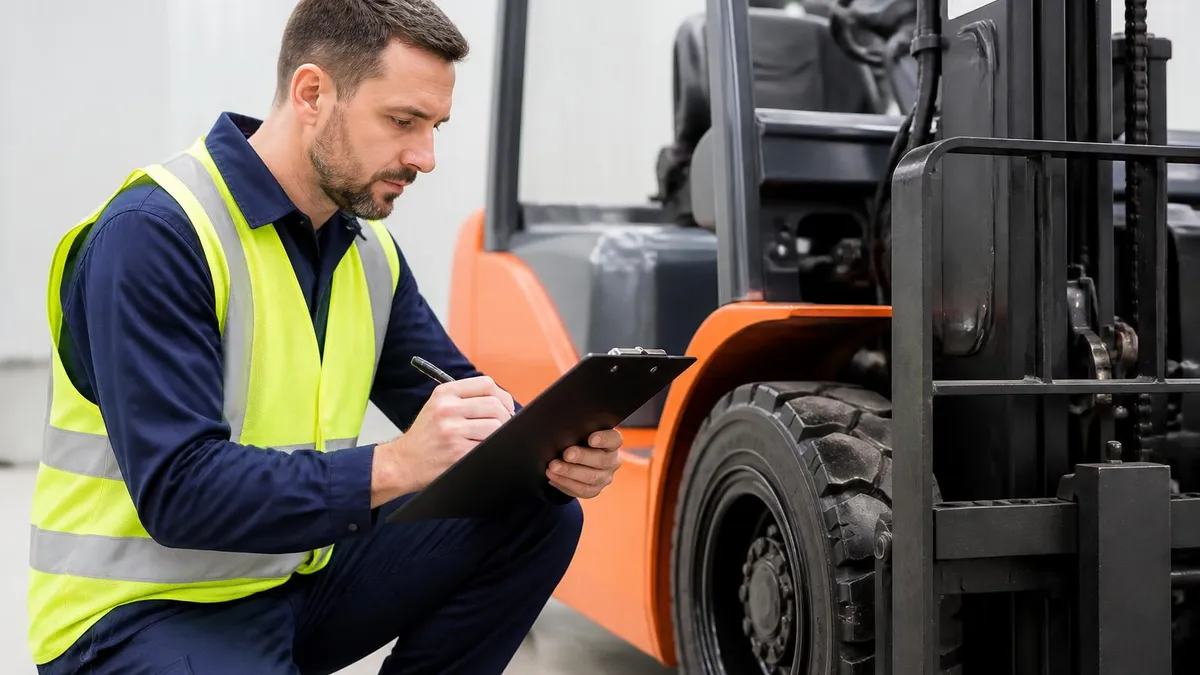
Fitting any non-standard attachment, including longer forks, side shifters, drum clamps or push-pull units, requires the supplier to issue a new rated capacity plate that reflects the de-rated load. Operating without this plate breaches AS 2359.2 and is grounds for immediate suspension of your high risk work licence. Always check both the original and supplementary plates before lifting.
Brand knowledge weaves through almost every section of the TLILIC0003 knowledge assessment. The national assessment instrument expects candidates to identify forklift types and configurations, interpret rated capacities, recognise different mast and carriage assemblies and explain how brand-specific safety systems function. While you do not need to memorise every model number, you do need broad familiarity with the eight or nine major brands sold in Australia and the way they communicate critical information.
Counterbalance machines from Toyota, Crown, Hyster, Yale, Linde, Mitsubishi, Caterpillar, Komatsu and TCM make up the bulk of the Australian market. Your assessor will almost certainly use a counterbalance of 2.0 to 3.5 tonnes for the practical test. Reach trucks, order pickers and walkies are covered by separate units of competency, though understanding their existence and applications is part of the TLILIC0003 theory bank.
One area where brand differences really matter is the control layout. Toyota and Crown lean toward single direction-selector levers and finger-tip hydraulic controls. Linde has championed the dual-pedal layout for decades, where one pedal drives forward and the other reverse. Some Linde models also offer joystick hydraulic controls. A candidate accustomed only to Toyota will need extra familiarisation time before operating a Linde safely.
Safety system branding is another common exam topic. Toyota markets System of Active Stability (SAS). Crown calls its equivalent e-GEN braking and Access 1 2 3 systems. Linde uses Linde Safety Pilot and Linde Truck Control. Hyster offers Auto Deceleration System (ADS). Regardless of brand name, the underlying technologies do similar things: stability monitoring, speed limiting, regenerative braking and operator presence detection. Knowing they exist by name across brands is enough for the assessment.
For the practical, focus on the brand and model you actually train on. Read its operator manual, identify the lockout-tagout points, locate the daily inspection items and learn the warning lamps and gauges. Then spend at least one session each on two other brands so you are not thrown if the assessment fleet differs from your training fleet. RTOs typically offer this familiarisation as part of a refresher session if you ask.
Used forklift markets in Australia heavily feature older Toyota 7-Series, Crown FC 4000, Hyster H series and TCM 2.5 tonne machines. If you operate one of these at work, study its specific manual and update yourself on any retrofitted safety devices. Older machines may lack OPS, SAS or seatbelt interlocks, in which case the WHS responsibility shifts toward stricter operator behaviour and supervisor controls.
For a focused breakdown of how to read the data plate on one of the most common Australian machines, our companion guide on TCM 2.5 ton forklift specifications walks through the plate layout, mast configurations and parts catalogue numbering that operators see every day in regional warehouses and recycling yards.
Final preparation for the TLILIC0003 brand and model questions comes down to deliberate familiarisation rather than rote memorisation. In the week before your assessment, spend at least two hours walking around any forklifts you have access to. Identify the brand, model, capacity, mast type, attachments and data plate condition for each. If you can, take photos of the plates and review them at home. This builds the pattern recognition that the assessment really tests.
Pair your physical practice with online practice tests. Aim for an 85 percent pass rate on attachment, modification and brand identification quizzes before booking the formal assessment. The free practice tests on our site cover the same question structures used by RTOs across Australia. They are not the actual exam questions, but they are written to mirror the depth of knowledge required and to catch the same misconceptions assessors commonly find in failing candidates.
On the day, arrive early and ask the assessor which brand and model you will be using for the practical. If you have not used that brand before, request a five to ten minute familiarisation. Reputable assessors will allow this. Use the time to start the machine, test all hydraulic functions, locate the parking brake, identify warning lamps and confirm the OPS and seatbelt interlocks work. This is not cheating, it is professional behaviour.
During the theory test, read each question twice. Brand and model questions often hinge on a single detail like load centre, mast type or attachment de-rating. Do not skim past the data plate image if one is provided. If the question references a specific brand or model you have not used, fall back on the general principles of AS 2359, the WHS Act and the load chart logic. These principles apply across every brand sold in Australia.
For ongoing competence after you receive your licence, follow the major brands on LinkedIn or subscribe to their dealer newsletters. Toyota Material Handling Australia, Crown Lift Trucks, Linde MH Australia, Adaptalift Group and TCM Forklifts all publish operator tips, recall notices and new model releases. Staying current keeps you employable and ensures you are aware of any safety bulletins that affect machines on your site.
Finally, remember that brand and model knowledge is just one slice of TLILIC0003. The unit covers planning the work, conducting routine checks, shifting loads safely, finalising work and managing risks. Brand familiarity supports each of these, but it does not replace the safe work practices that the assessment really targets. Combine model knowledge with rigorous pre-start checks, defensive operating habits and clear communication with pedestrians and traffic controllers.
With consistent study, hands-on familiarisation and regular practice testing, the brand and model component of TLILIC0003 becomes one of the easier sections to lock in. Use the structure in this guide, work through the quizzes linked below and review the related articles for deeper specifications data. Good luck with your assessment and welcome to safe, professional forklift operation in Australia.
Sample Forklift Licence Practice Questions
Try these questions from our free Forklift Licence practice tests. The correct answer and an explanation follow each question.
Under WHS legislation, who is responsible for ensuring forklift operators hold a valid High Risk Work (HRW) licence?
- A. The forklift operator only
- B. The person conducting the business or undertaking (PCBU)
- C. The state transport authority
- D. The equipment hire company only
Answer: B. The person conducting the business or undertaking (PCBU)
The PCBU has the primary duty to ensure that only workers holding a valid HRW licence for the class of forklift operate the equipment at their workplace.
Under the Work Health and Safety (WHS) Act, what duty does a forklift operator have regarding hazards in the workplace?
- A. Report hazards only if they are in the operator's immediate work area
- B. Take reasonable care to identify hazards and report them to the person conducting the business or undertaking (PCBU)
- C. Ignore minor hazards and only report serious injuries
- D. Only follow instructions from supervisors, with no independent duty to report
Answer: B. Take reasonable care to identify hazards and report them to the person conducting the business or undertaking (PCBU)
Under the WHS Act, workers have a duty to take reasonable care for their own and others' health and safety, which includes identifying and reporting hazards to the PCBU.
When must a forklift operator record an entry in the logbook?
- A. Only when a serious fault is found during pre-operational checks
- B. At the start and end of each shift, including any faults or damage found
- C. Only when instructed to do so by a supervisor
- D. Once per week, summarising all operations performed
Answer: B. At the start and end of each shift, including any faults or damage found
Logbook entries must be made at the start and end of each shift, recording pre-operational check results and any faults, damage, or incidents that occurred during operation.
What penalties apply for non-compliance with Forklift Pre-Operational Checks regulations in Australia?
- A. No penalties
- B. Significant fines (up to millions of AUD for corporations) and potential imprisonment for serious offences
- C. A verbal warning only
- D. A small administrative fee
Answer: B. Significant fines (up to millions of AUD for corporations) and potential imprisonment for serious offences
Australian WHS penalties are severe, with Category 1 offences carrying fines up to AUD 3 million and potential imprisonment.
TLILIC0003 Questions and Answers
Mast of Forklift: Complete Guide to Forklift Parts for TLILIC0003 Operators in Australia
Multi Directional Forklift Trucks: Complete Guide to Forklift Types and Parts for TLILIC0003 Operators in Australia
Free Forklift Practice Test 2026 - Forklift Exam Questions
TCM 2.5 Ton Forklift Specifications and Parts: Complete Guide for TLILIC0003 Operators in Australia
Forklift Clearance Height: Complete Guide to Forklift Specifications for TLILIC0003 Operators in Australia
About the Author

Certified Crane Operator & Skilled Trades Exam Specialist
Ferris State UniversityRobert Martinez is a Journeyman Ironworker, NCCCO-certified crane operator, and forklift trainer with a Bachelor of Science in Construction Technology from Ferris State University. He has 21 years of ironworking, rigging, and heavy equipment operation experience across high-rise and industrial construction sites. Robert prepares candidates for crane operator, rigger, forklift, and skilled trades certification examinations.