
State Trooper Qualifications: Complete Requirements Guide for 2026 September
State trooper qualifications by state: Texas, Florida, Illinois, NC & more. Age, education, fitness, salary & exam requirements explained. 🏆

Becoming a state trooper is one of the most competitive law enforcement careers in the United States, and understanding state trooper qualifications is the critical first step toward earning a badge. Whether you are researching the state trooper texas a program, exploring opportunities as a florida state trooper, or comparing requirements across illinois, carolina, and arizona, every state maintains a rigorous set of standards designed to ensure only the most qualified candidates serve on state highways.
These requirements typically span education, physical fitness, background history, psychological evaluations, and formal academy training — each stage acting as a filter that shapes a capable, professional trooper.
Across the country, minimum qualifications tend to follow a consistent baseline: applicants must be U.S. citizens, hold a high school diploma or GED, maintain a clean criminal record, and pass a battery of written, physical, and psychological exams. However, the specific thresholds vary considerably from state to state.
Texas, for instance, operates through the Texas Department of Public Safety and places strong emphasis on written examination scores and physical agility benchmarks, while the North Carolina State Highway Patrol is known for its demanding entry-level written test and multi-phase interview process. Understanding these differences before you apply saves enormous time and lets you target the right opportunity.
Physical fitness requirements are universally demanding across state trooper programs, reflecting the rigors of patrol work on busy highways and rural roads alike. Most states require candidates to complete push-ups, sit-ups, a timed 1.5-mile run, and in some cases a vertical jump or obstacle course. The standards are often differentiated by age and gender, but they are consistently set well above general population norms. Candidates who begin a structured fitness program at least six months before applying significantly improve their chances of clearing the physical agility test on the first attempt, which matters because many agencies limit re-test opportunities.
Educational requirements are evolving rapidly. While a high school diploma or GED remains the minimum in most states, agencies like the Illinois State Police and the Arizona Department of Public Safety increasingly prefer applicants who hold some college coursework or an associate degree, and actively incentivize candidates with a bachelor's degree through higher starting pay or accelerated promotion timelines. The carolina state trooper program, for example, awards preference points to applicants with college credits in criminal justice, public administration, or a related field, giving degree holders a measurable advantage in the scoring process.
Background investigations are thorough and comprehensive in every state. Investigators examine criminal history, credit reports, driving records, employment history, military service records, and personal references going back ten years or more. Drug use history is scrutinized carefully — most agencies dispost any applicant who has used marijuana within the past year, and certain hard drugs may constitute permanent disqualifiers regardless of how much time has passed.
Honesty during this phase is paramount: investigators cross-reference every piece of information you provide, and any inconsistency discovered during the background check is typically treated as grounds for automatic disqualification, regardless of the underlying conduct.
The psychological evaluation is a stage many candidates underestimate. Most state police agencies use a standardized battery of assessments — frequently the Minnesota Multiphasic Personality Inventory (MMPI-2) combined with a clinical interview conducted by a licensed psychologist. Evaluators are not looking for perfection; they are screening for patterns associated with impulsive behavior, difficulty accepting authority, emotional instability, or antisocial tendencies. Preparing for this stage means reflecting honestly on your history and approaching the evaluation with transparency. Attempting to game psychological instruments typically backfires, as most assessments include built-in validity scales that detect inconsistent or overly favorable response patterns.
State trooper salary figures are a common motivator for applicants, and the numbers are genuinely competitive with private-sector positions when benefits are factored in. Average base salaries for entry-level state troopers nationwide range from roughly $45,000 to $75,000 annually, with states like California, New Jersey, and Connecticut paying well above $70,000 to start. Benefits packages typically include defined-benefit pensions, comprehensive health insurance, paid leave, and tuition reimbursement programs. Over a full 25-year career, the total compensation value of a state trooper position — including retirement benefits — frequently exceeds that of comparably educated private-sector workers.
State Trooper Qualifications by the Numbers

Core State Trooper Qualification Requirements
All state trooper agencies require U.S. citizenship at the time of appointment. Some states — including Texas and Florida — additionally require applicants to establish in-state residency within 12 months of hire. Dual citizens are generally eligible, but must provide documentation.
The minimum age for most state trooper positions is 21, though some states allow candidates as young as 18 if they hold a college degree. Maximum age limits vary: several states cap applicants at 34–40, while others — like Florida — have eliminated maximum age restrictions entirely.
A high school diploma or GED is the universal floor. Roughly 30 states give preference or extra points to applicants with college credits or a degree. States like Illinois and North Carolina actively recruit candidates with criminal justice backgrounds and offer salary incentives for college graduates.
Felony convictions are automatic disqualifiers in every state. Most agencies also disqualify applicants for domestic violence convictions, certain misdemeanors within the past 5–10 years, dishonorable military discharge, or a pattern of financial irresponsibility evidenced by the credit check.
A valid, unrestricted driver's license with a clean driving record is required. Most agencies review the last 3–5 years of driving history. Multiple DUIs, reckless driving convictions, or license suspensions within that window are typically disqualifying offenses for patrol positions.
Education and age standards for state troopers differ meaningfully across states, and knowing how your target agency compares can help you time your application strategically. The texas state trooper program, operated by the Texas Department of Public Safety (DPS), requires a minimum of 60 college credit hours for applicants who do not have prior law enforcement experience — a threshold higher than many other states.
This effectively means that applicants without college credits must first complete roughly two years of coursework before they are eligible to apply. The Texas DPS does accept military service as a partial credit substitute in some cases, which is worth investigating if you have a service background.
The Florida Highway Patrol accepts applicants as young as 19, making it one of the more accessible entry points for younger candidates in the Southeast. Florida's program also has no maximum age requirement — a meaningful distinction in an era when career changers increasingly transition into law enforcement from other fields.
This flexibility has drawn applicants in their late 30s and early 40s who bring professional experience that enriches patrol work. The florida state trooper application process includes a physical fitness test, written examination, psychological evaluation, polygraph, and structured oral board interview, all of which must be cleared before an offer of admission to the academy is extended.
Illinois takes a different approach, running state trooper hiring through large, periodic cadet classes rather than continuous rolling admissions. The Illinois State Police typically opens applications every 18–24 months, and the competition within each class cycle is intense — thousands of applicants compete for fewer than 200 academy seats. The written test used by Illinois includes sections on reading comprehension, writing ability, math reasoning, and situational judgment. Scoring well above the passing threshold is important because class rankings from the written test often determine who receives an academy invitation among the pool of otherwise qualified candidates.
The texas a&m state trooper research program at Texas A&M University's Law Enforcement Management Institute offers specialized training resources and data analysis that directly informs Texas DPS recruitment and training standards. Understanding how the DPS designs its qualification thresholds — including physical fitness cutoffs and written test scoring — helps candidates from all over Texas prepare more efficiently. The program publishes reports on trooper demographics, training outcomes, and retention data that provide valuable benchmarks for anyone navigating the application process.
North Carolina's trooper selection process is considered among the most rigorous in the Southeast. The nc state trooper written examination covers grammar, reading comprehension, and problem-solving at a level that requires genuine preparation rather than casual review. North Carolina also requires applicants to pass a state-mandated Basic Law Enforcement Training (BLET) course either before or during their trooper training, which adds a layer of prerequisite credentialing that candidates in other states do not face. The BLET typically runs 620+ hours and is offered at community colleges throughout the state.
Arizona rounds out the regional picture as a state with a relatively open educational requirement — a high school diploma or GED is sufficient — but the Arizona Department of Public Safety compensates with one of the more demanding physical fitness tests and polygraph examinations in the country. The arizona state trooper written exam includes personality assessment components alongside traditional cognitive ability sections, giving the department a multi-dimensional picture of each candidate well before the formal psychological evaluation stage. Arizona's maximum hiring age is 40 for most positions, though exceptions exist for candidates with prior law enforcement experience.
Arkansas presents a unique case through its state trooper Emergency Uniform Program (EUP), which is referenced frequently in online searches by GTA roleplay communities as the arkansas state trooper eup. While EUP in that gaming context refers to vehicle and uniform packs, real Arkansas State Police qualifications require candidates to be at least 21, hold a high school diploma, and maintain a clean felony-free record.
The Arkansas State Police Academy runs approximately 16 weeks and is conducted at the main campus in Little Rock. Starting salaries for Arkansas troopers are among the more modest in the region, beginning around $47,000, though full benefits and retirement contributions meaningfully supplement that figure.
State Trooper Physical, Written & Psychological Exam Requirements
The physical agility test (PAT) is a non-negotiable gateway in every state trooper hiring process. Standard components include a timed 1.5-mile run (typically requiring completion in under 15 minutes for males under 30, with adjusted standards by age and gender), push-ups, sit-ups, and in some states a 300-meter sprint or obstacle course. Texas DPS requires a minimum of 25 push-ups, 30 sit-ups, and a 1.5-mile run in 15:54 or less for male candidates in the 20–29 age bracket. Candidates who arrive undertrained are frequently surprised by how demanding the standards are in practice.
Preparation should begin at least four to six months before your scheduled test date. Focus on progressively increasing your run distance and pace while incorporating interval training to improve cardiovascular capacity. Supplement with daily push-up and sit-up sets, starting from your current baseline and adding reps each week. Many candidates who struggle on the PAT on their first attempt successfully clear it on a retake after a focused 90-day training block. Check whether your target agency limits retake attempts — some states allow only two or three chances before disqualifying an applicant for that hiring cycle.

Is a State Trooper Career Right for You?
- +Competitive state trooper salary with defined-benefit pension and full benefits from day one
- +High job security with protected civil service status in most states
- +Meaningful public service role with visible community impact on highway safety
- +Structured career advancement with clear promotion timelines to sergeant, lieutenant, and above
- +Tuition reimbursement programs allow continued education while working
- +Diverse assignments available including traffic enforcement, investigations, SWAT, and K-9 units
- −Highly competitive selection process with acceptance rates often below 10% of applicants
- −Mandatory residential academy of 22–26 weeks requiring separation from family
- −Shift work, holidays, and weekends are standard and unavoidable for years after hire
- −Significant physical and psychological demands sustained throughout a long career
- −Geographic mobility may be required — initial post assignments are not self-selected
- −Maximum age limits in many states restrict career-change candidates over 35–40
State Trooper Application Process Checklist
- ✓Confirm you meet the minimum age, citizenship, education, and driving record requirements for your target state.
- ✓Request and review your official driving record and criminal background check before the agency does.
- ✓Begin a structured physical fitness training program at least 4–6 months before your scheduled PAT date.
- ✓Gather all required documentation: birth certificate, Social Security card, military DD-214 (if applicable), and transcripts.
- ✓Complete your online or paper application accurately and submit all supporting documents by the posted deadline.
- ✓Schedule and take the written entrance examination, aiming for a score well above the minimum passing threshold.
- ✓Pass the physical agility test — practice all specific components (run, push-ups, sit-ups) under timed conditions.
- ✓Clear the medical examination, vision test, and hearing evaluation as scheduled by the hiring agency.
- ✓Complete the psychological evaluation honestly and consistently, both written instruments and the clinical interview.
- ✓Cooperate fully with the background investigation, providing complete and accurate employment, residence, and personal reference information.
Honesty Is Your Most Valuable Asset
Background investigators routinely discover discrepancies that applicants assume will go unnoticed. Misrepresenting drug history, criminal history, or prior employment on your application is almost always disqualifying — not because of the underlying conduct, but because of the deception itself. Agencies can work with imperfect histories; they cannot work with dishonest candidates. Disclose accurately and let the process play out.
State trooper salary and compensation packages are among the strongest selling points of a career in state-level law enforcement, and understanding how compensation is structured helps candidates evaluate the long-term value of the opportunity. Entry-level state trooper salaries in 2026 range from approximately $45,000 annually in lower cost-of-living states like Arkansas and Mississippi to over $90,000 in states like California and New Jersey. The national average for entry-level positions sits around $64,000 per year, and most agencies include automatic step increases tied to time-in-service that push compensation meaningfully higher within the first five years without requiring promotion.
Beyond base salary, state trooper benefit packages are genuinely exceptional by modern employment standards. Virtually all state police agencies offer defined-benefit pension plans — a retirement structure that has largely disappeared from private-sector employment — guaranteeing troopers a fixed monthly income for life after meeting service and age thresholds.
Most pension systems become fully vested after 20–25 years of service, at which point troopers can retire with benefits regardless of age in many states. Combined with health insurance, dental, vision, life insurance, and generous paid leave, the total compensation value of a trooper position frequently exceeds its headline salary by 30–40%.
Geographic variations in pay are significant and worth mapping before you decide where to apply. A florida state trooper earns a starting base salary of approximately $56,000, which rises to around $63,000 after the one-year probationary period. North Carolina Highway Patrol trooper compensation begins near $53,000 and climbs with longevity steps.
Texas DPS troopers start around $60,000, with the Texas Ranger division — the elite investigative branch of DPS — commanding salaries well above $70,000 for experienced officers. Illinois State Police troopers begin near $71,000 under current contract terms, reflecting the state's higher cost of living in the Chicago metro area.
Overtime pay is another meaningful income component for working troopers, as highway patrol agencies frequently face understaffing relative to their patrol coverage requirements. Troopers who work overtime at DUI checkpoints, special events, or during weather emergencies can add $5,000 to $15,000 annually above base salary in many states. Specialty assignments in units such as investigations, canine, aviation, or SWAT typically come with additional pay differentials. Promotional advancement to corporal, sergeant, and lieutenant levels adds further compensation increases that compound over a career, making the long-term earning trajectory of a trooper position competitive with professional-level private employment.
Loan forgiveness programs are increasingly available to state trooper candidates. The federal Public Service Loan Forgiveness (PSLF) program applies to state government employees, meaning troopers who carry federal student loans and make qualifying income-driven repayment plan payments for 10 years while employed as state troopers can have their remaining balance forgiven tax-free.
This benefit is particularly valuable for candidates who hold college degrees with associated loan debt, as it effectively transforms student debt into a zero-cost investment when combined with a state trooper career. Many candidates are unaware of this program and fail to enroll promptly at hire, costing themselves years of qualifying payments.
Housing assistance programs exist in a growing number of state police agencies, particularly in rural states that struggle to attract and retain troopers in remote post locations. Some states offer relocation allowances for new hires assigned to posts outside major metropolitan areas, while others provide subsidized housing in state-owned facilities adjacent to barracks. These programs are worth investigating in states where you have geographic flexibility, as they can dramatically reduce living expenses during the early years of your career when salary is at its lowest point on the pay scale.
Career path flexibility is a significant advantage of the state trooper profession that compensation figures alone do not capture. After typically five years of patrol experience, troopers become eligible to apply for specialized units covering criminal investigations, narcotics enforcement, homeland security, training, or administration. These lateral moves within the agency frequently come with pay differentials and provide professional variety that prevents the career stagnation many officers in smaller municipal agencies experience. For ambitious candidates, the state police environment offers a structured, meritocratic path to supervisory and command-level positions that rewards consistent performance and continued professional development.

State trooper hiring cycles often open only once every 12–24 months, and application windows can close within 2–4 weeks. Missing the deadline means waiting for the next full cycle. Set calendar alerts when your target state agency announces an upcoming class, and have all documentation ready in advance so you can submit a complete application the day the window opens.
State trooper academy training is the defining crucible of the qualification process — the phase where candidate potential is forged into operational competency. Academies typically run between 22 and 26 weeks on a residential basis, meaning recruits live on campus, follow a structured daily schedule from early morning physical training through evening study sessions, and are subject to a quasi-military code of conduct throughout the program.
The intensity of this environment is deliberate: it tests not only whether recruits can absorb the curriculum, but whether they can perform under sustained stress, sleep restriction, and institutional pressure — conditions that mirror aspects of real patrol work.
The curriculum at most state trooper academies is divided into several broad categories. Legal and procedural training covers constitutional law, state criminal statutes, traffic enforcement law, arrest authority, use of force standards, evidence collection, and courtroom testimony. Tactical training includes firearms qualification with handgun and long rifle, emergency vehicle operations on closed courses, defensive tactics and control techniques, first aid and CPR certification, and scenario-based training exercises that simulate actual patrol situations. Academics cover report writing, communications, maps and geography, and in many states, basic Spanish or another second language relevant to the regional population.
Firearms qualification is a critical milestone within the academy. Recruits who do not meet minimum qualification scores after remediation opportunities are typically dismissed from the program. Most agencies use the same qualification standards that active troopers must meet during annual recertification, ensuring that academy graduates are immediately deployable to the field. Recruits who enter the academy with prior shooting experience or civilian firearms training frequently have an advantage in the early stages, but the training staff is experienced at bringing candidates without that background to a qualifying standard through structured instruction.
The arizona state trooper exam preparation resources available through practice test platforms give candidates a meaningful preview of the academic portion of academy training. Many of the knowledge areas tested in the entrance examination — criminal law fundamentals, traffic code provisions, patrol procedure — recur in more advanced form during academy instruction. Candidates who perform well on the written entrance exam are therefore better positioned to succeed academically at the academy, making pre-application exam preparation an investment that pays dividends across multiple phases of the qualification process.
Dismissal rates at state trooper academies are non-trivial. Depending on the state and the cohort, between 10% and 25% of candidates who enter the academy do not graduate. The most common reasons for dismissal include academic failure (particularly in legal subjects), failure to meet firearms qualification standards, physical fitness deficiencies, violations of the academy code of conduct, and honor code violations related to academic integrity. Understanding these statistics underscores why thorough pre-academy preparation — in fitness, written knowledge, and character — is not optional but essential for any candidate serious about completing the process.
Field training follows graduation and typically lasts an additional 12–16 weeks, during which new troopers are paired with certified field training officers (FTOs) who evaluate their real-world performance against a structured checklist of competencies. This phase is distinct from the academy in that it takes place on actual patrol, involving real traffic stops, calls for service, and enforcement situations.
The FTO relationship is mentorship combined with high-stakes evaluation — new troopers who struggle in field training can be extended or, in some cases, returned to probationary status pending remediation. Successfully completing field training marks the point at which a trooper is cleared to work solo patrol assignments.
Continuing education requirements extend throughout a state trooper's career. Most states mandate annual recertification in firearms, emergency vehicle operations, first aid, and use of force policy updates. Troopers interested in specialty assignments must complete additional certification courses — often 40 to 80 hours — for each specialized function they add to their qualifications. Many agencies encourage or require supervisory candidates to complete formal leadership training through programs offered by the Southern Police Institute, the National Academy at Quantico, or state-sponsored management institutes. This culture of ongoing professional development distinguishes the state police environment from many other law enforcement settings.
Strategic preparation for state trooper qualifications is what separates candidates who make the academy from the much larger pool who apply and fall short. The most successful candidates treat the process like a structured project with discrete milestones, allocating specific preparation time each week to physical training, written exam study, document gathering, and background review — rather than approaching it reactively and trying to address deficiencies as they surface during the selection process itself.
Building in a 6–12 month preparation runway before your planned application date gives you time to improve fitness, strengthen academic weak areas, and resolve any background items that might otherwise become surprises.
The written entrance examination deserves dedicated preparation time that most candidates underestimate. Strong scores on the written test are increasingly decisive in competitive states where the written rank is used to order candidates before the next selection stage. Studying reading comprehension, grammar rules, basic math operations (fractions, percentages, ratios), and logical reasoning — the consistent content areas across multiple state exams — builds a broad competency base.
Supplementing general preparation with state-specific practice materials is particularly valuable in states like North Carolina and Illinois where the exam format has distinctive emphases. Taking 15–20 timed practice tests before your actual exam date builds the mental endurance needed to sustain performance across a 2–3 hour testing session.
Networking with current troopers and recent graduates is a preparation strategy that many candidates overlook. Most state police agencies hold career information sessions or open houses that allow prospective applicants to speak directly with recruiters and active troopers.
These conversations surface practical insights — the specific fitness standards that catch candidates off guard, the types of background items that have been handled successfully by prior applicants, the realistic timeline from application to academy entry — that no official publication captures. If your target agency has a citizens' academy or a ride-along program, participating before you apply demonstrates initiative and gives you firsthand knowledge of patrol work that strengthens your oral board interview performance.
The oral board interview is a structured evaluation in which a panel of typically three to five personnel — often including a ranking officer, a human resources representative, and sometimes a psychologist — evaluates each candidate's communication skills, professional demeanor, ethical reasoning, and motivation.
Questions are typically situational: "Describe a time you faced an ethical dilemma and how you resolved it" or "What would you do if you observed a fellow trooper engaging in misconduct?" Preparing structured answers using the STAR method (Situation, Task, Action, Result) for 10–15 likely question types builds the confidence and fluency needed to perform well under the evaluation pressure of a formal panel interview.
Mental health preparation is rarely discussed but genuinely important for academy success and long-term career sustainability. State trooper work involves regular exposure to traumatic scenes — fatal accidents, violent crimes, child victims — and the cumulative effect of this exposure is a recognized occupational health risk.
Agencies have made meaningful progress in recent years in normalizing the use of employee assistance programs, peer support networks, and professional counseling services. Candidates who develop healthy stress management practices — exercise, quality sleep, social support, mindfulness — before entering the job are better equipped to sustain those habits once the operational demands of patrol work make self-care more challenging.
For candidates using the state trooper at texas a application system or their state's equivalent online portal, attention to detail during the application submission is critical. Incomplete applications, missing documents, or errors in the personal history statement are common reasons for early elimination that have nothing to do with underlying candidate quality.
Read every instruction twice, have a trusted person review your personal history statement for accuracy and completeness before submission, and keep copies of every document you submit. The agencies processing thousands of applications use missing information as a simple, objective screen — don't give them a reason to eliminate you before a human reviewer ever reads your qualifications.
Finally, resilience through the process itself is a qualification. The state trooper selection timeline from initial application to academy entry commonly spans 9–18 months, during which candidates may be placed in an extended background investigation hold, delayed by hiring freezes, or wait-listed for an upcoming class.
Staying physically prepared, continuing professional development, and maintaining a positive relationship with the recruiting office throughout this waiting period demonstrates the patience and persistence that are genuinely valued in law enforcement careers. Many of the candidates who eventually become excellent troopers were not the strongest on paper at the start — they were the ones who stayed in the process and kept improving.
State Trooper Questions and Answers
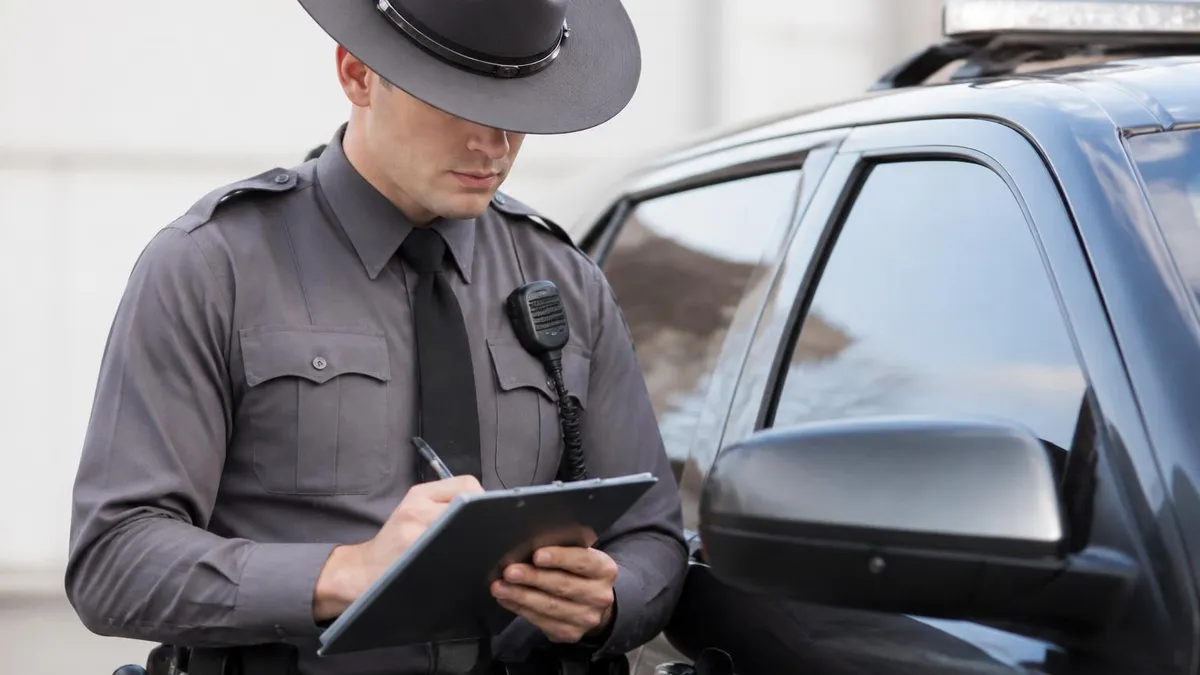
State Trooper Requirements: Age, Height & State Rules 2026

Florida State Trooper Salary 2026: Pay, Benefits, and Career Path

Prepare for the State Trooper Entrance Exam - JobTestPrep

State Trooper Application: Complete Step-by-Step Guide for 2026
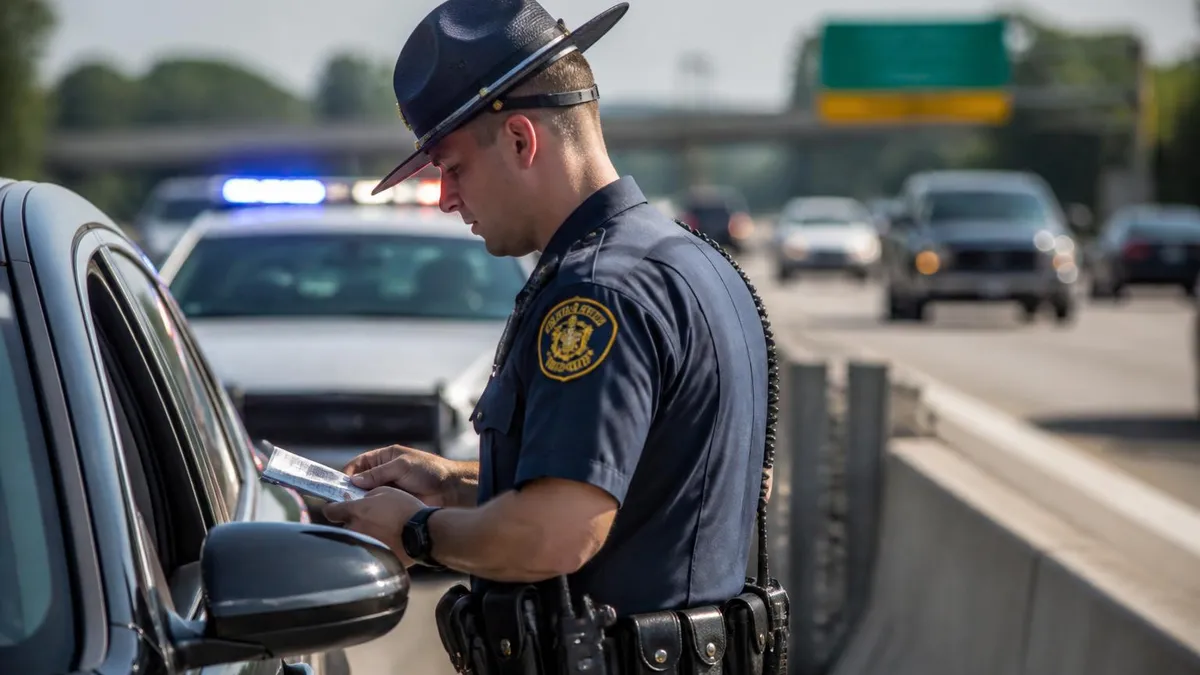
State Trooper Academy: Complete Training Guide for Recruits in 2026
About the Author

Educational Psychologist & Academic Test Preparation Expert
Columbia University Teachers CollegeDr. Lisa Patel holds a Doctorate in Education from Columbia University Teachers College and has spent 17 years researching standardized test design and academic assessment. She has developed preparation programs for SAT, ACT, GRE, LSAT, UCAT, and numerous professional licensing exams, helping students of all backgrounds achieve their target scores.
Join the Discussion
Connect with other students preparing for this exam. Share tips, ask questions, and get advice from people who have been there.
View discussion (3 replies)