
State Trooper Academy: Complete Training Guide for Recruits in 2026 September
Learn what happens at state trooper academy — training phases, physical standards, and tips to pass. Covers Texas, Florida, Illinois, NC, and more. ❓
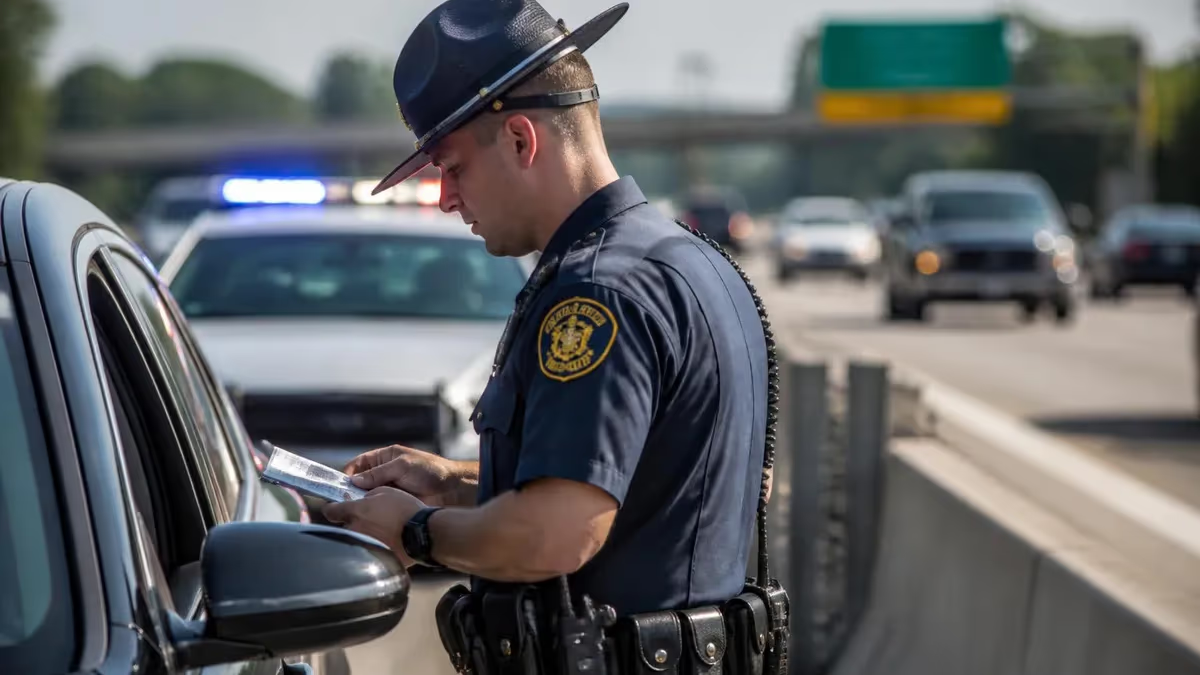
The state trooper academy is one of the most rigorous law enforcement training programs in the United States, requiring recruits to master everything from defensive driving and firearms qualification to constitutional law and emergency medical response. Whether you are pursuing a career as a state trooper texas a department candidate or preparing to join the Florida Highway Patrol, the academy experience will push your mental and physical limits in ways few civilian jobs can match. Understanding what awaits you before your first day on campus can be the difference between graduating with your class and washing out in week two.
Academy length varies widely by state, ranging from a compact 16-week program in some smaller states to grueling 6-month residential programs in Texas, California, and North Carolina. During that time, recruits live on campus under paramilitary discipline, wearing uniforms, following strict schedules, and earning demerits for violations as minor as a wrinkle in a uniform shirt. The structure is intentional — it simulates the high-stakes, rule-governed environment troopers will operate in for the next two or three decades on the road.
Physical training is introduced on day one and never stops. Morning runs of three to five miles, obstacle courses, defensive tactics sessions, and weekly fitness evaluations keep recruits in a constant state of physical conditioning. Most academies require recruits to meet minimum physical fitness standards before they even arrive, then raise those standards progressively throughout training. Recruits who fall below the minimum standard are typically placed on a remediation plan; repeated failures result in termination from the program without the ability to retake it immediately.
Classroom academics are equally demanding. Recruits study traffic and criminal law in depth, learning state statutes and federal constitutional precedents that govern every traffic stop and arrest. They complete hundreds of hours studying patrol procedures, report writing, evidence handling, and first aid. In states like Texas, recruits at the Texas A&M Law Enforcement Management Institute facility complete additional specialized coursework in highway interdiction and commercial vehicle enforcement before they graduate.
Firearms training is a core pillar of academy curriculum. Recruits typically fire thousands of rounds throughout training, qualifying on handguns, shotguns, and patrol rifles under timed and stress-induced conditions. Many states require recruits to achieve an 80 percent or higher qualification score before they can advance. Night qualification scenarios, low-light shooting, and moving-target drills are standard components in modern programs, reflecting the reality of patrol work after dark on rural interstates.
The state trooper salary waiting at the end of academy training is a powerful motivator. Entry-level troopers in most states earn between $45,000 and $60,000 per year, with states like California and New Jersey offering starting salaries above $70,000. After completing the academy and a field training period, most troopers receive automatic pay increases tied to their time-in-service, and the benefits package — including health insurance, retirement pension, and paid leave — significantly boosts total compensation beyond base pay.
Preparation before the academy begins is not optional — it is essential. Recruits who arrive in peak physical condition, with a solid working knowledge of traffic law and basic first aid, consistently outperform peers who showed up unprepared. Reading your state's vehicle code, practicing report writing, and running at least 15 to 20 miles per week in the months before your start date are the minimum preparation steps experienced troopers recommend to incoming classes.
State Trooper Academy by the Numbers
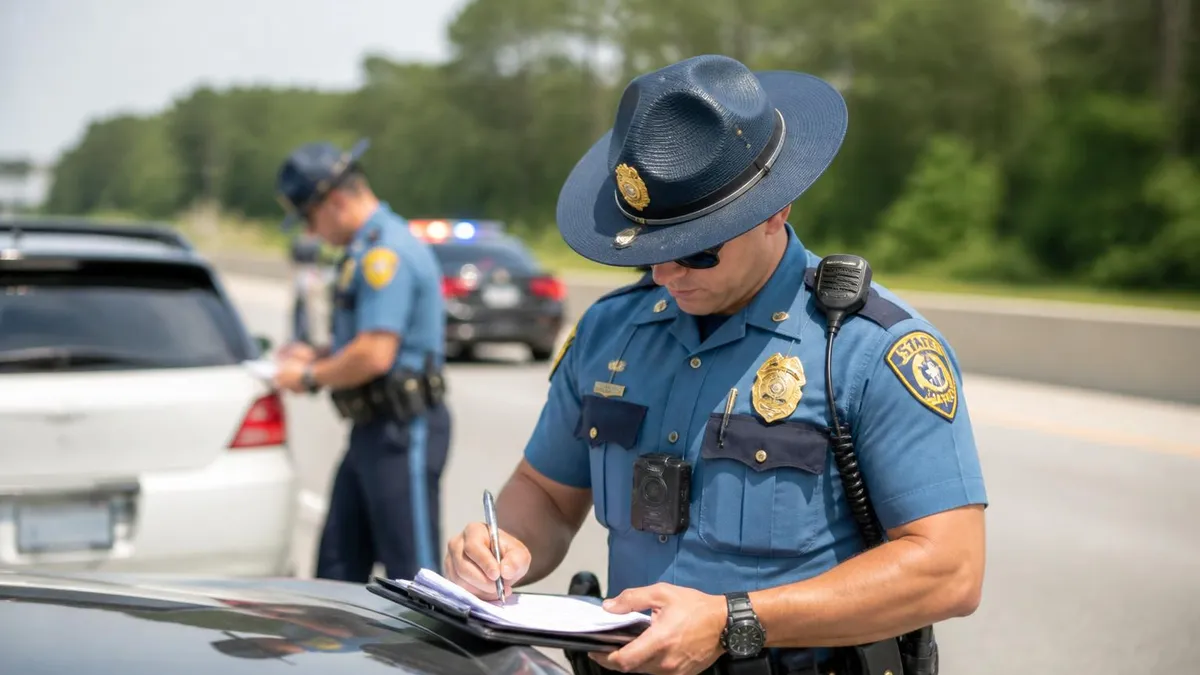
State Trooper Academy Training Phases
Orientation & Indoctrination (Weeks 1–2)
Academics & Legal Foundations (Weeks 3–8)
Defensive Tactics & Firearms (Weeks 5–14)
Vehicle Operations & Emergency Driving (Weeks 10–18)
Scenario-Based Training (Weeks 16–24)
Graduation & Field Training Assignment
Physical fitness standards at state trooper academies are non-negotiable, and they are designed to screen out recruits who cannot safely perform the duties of a highway patrol officer. Most states use the Cooper Institute's law enforcement fitness battery, which tests a 1.5-mile run, push-ups, sit-ups, and a vertical jump or sit-and-reach flexibility measurement.
Texas, Florida, Illinois, and North Carolina all publish their minimum entry standards online, and each raises those standards at various points during training. Arriving at the academy already performing well above the minimum gives a recruit a critical buffer when the stress of training, poor sleep, and caloric restriction begin to erode peak performance.
Academic performance requirements are just as strict. Most academies require recruits to score at least 70 percent on every major exam and maintain an overall cumulative average of 75 percent or higher to remain in good standing. Some programs, including those in California and Florida state trooper training centers, administer comprehensive midterm and final examinations worth up to 40 percent of a recruit's total academic grade. Recruits who score below the threshold on a major exam are usually given one remediation opportunity; a second failure triggers termination from the class.
Firearms qualification is graded on a 100-point scale in most states, with passing scores ranging from 70 to 85 percent depending on the agency. The qualification course typically involves shooting from multiple distances — 3, 7, 15, and 25 yards — from various positions including standing, kneeling, and around a barricade. Recruits who struggle with firearms early in training benefit enormously from civilian range practice before the academy begins, as dry-fire drills and grip fundamentals are much easier to learn without the added pressure of a timed qualification environment.
Defensive tactics instruction covers a spectrum of use-of-force options aligned with the agency's force continuum policy. Recruits learn verbal de-escalation techniques, come-along holds, takedowns, handcuffing procedures, and ground-control positions. Pepper spray deployment and exposure — recruits are typically required to be sprayed with OC aerosol and then complete a functional task — is a memorable training milestone. Electronic control device (Taser) certification is standard in most modern programs, with recruits required to demonstrate both deployment accuracy and legal knowledge governing its use.
Emergency vehicle operations training takes place on closed driving courses maintained by the state patrol. Recruits learn the physics of high-speed driving, emergency braking distances, tire-failure management, and the legal standards governing pursuit decisions. In states with high-profile pursuit fatalities in recent years, such as Illinois and North Carolina, academies have added extended modules on pursuit decision-making frameworks and post-pursuit reporting requirements. The carolina state trooper academy's driving course is widely considered one of the most technically demanding in the Southeast.
First aid and emergency medical training has expanded significantly in recent years as troopers are increasingly the first responders to serious traffic collisions on rural highways far from EMS coverage. Most academies now require recruits to earn a basic EMT certification or at minimum a CPR and first-responder certificate before graduation. Tourniquets, hemorrhage control, airway management, and recognition of common trauma injury patterns are covered in dedicated practical sessions. In Texas and Arizona, recruits also receive training in pediatric trauma response due to the frequency of family-vehicle accidents on major interstate corridors.
Mental resilience training has become a formal part of the modern academy curriculum, recognizing that psychological fitness is as important as physical conditioning for long-term career success. Recruits receive instruction on stress inoculation, peer support resources, and the warning signs of post-traumatic stress. Scenario trainers deliberately use emotionally intense simulations — including mock child injury and officer-down scenarios — to expose recruits to psychological stress in a controlled setting. Recruits who demonstrate emotional regulation and clear decision-making under these conditions are marked as high performers throughout the remainder of training.
State Trooper Academy by State: Texas, Florida, Illinois & More
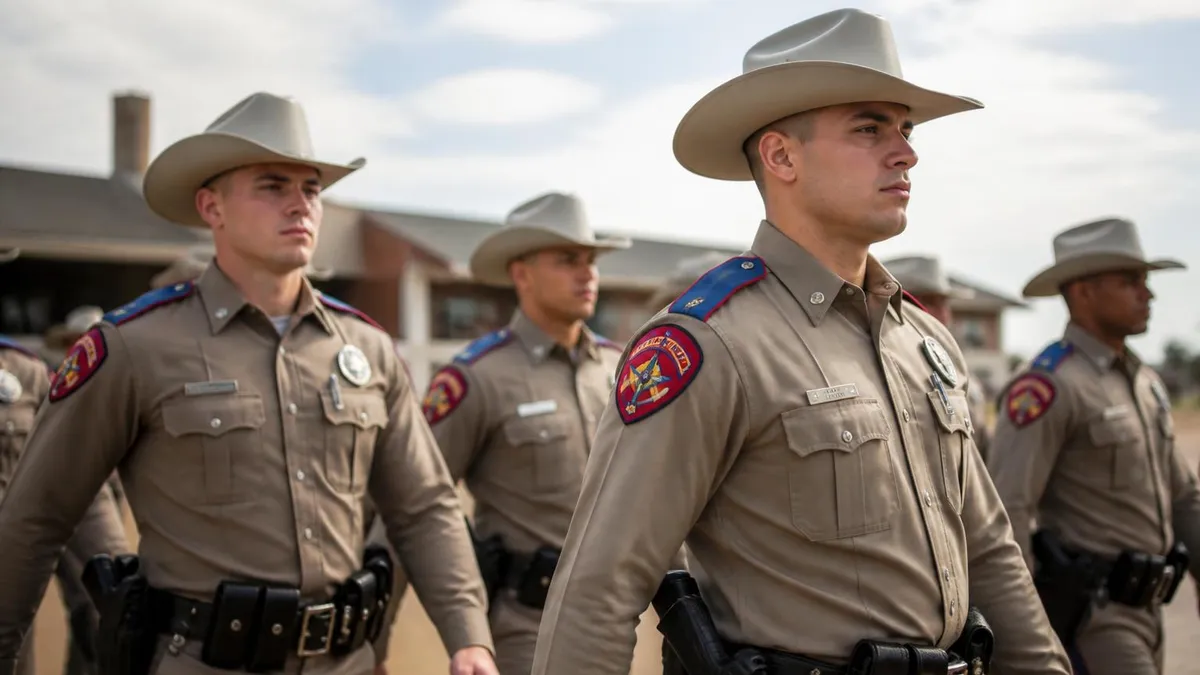
The Texas Department of Public Safety operates its primary recruit school at the DPS Training Academy in Austin, while advanced leadership programs run through the Texas A&M Law Enforcement Management Institute. The residential program runs approximately 26 weeks and is widely regarded as one of the most demanding in the country. Recruits must meet strict physical standards, pass comprehensive academic exams in Texas criminal and traffic law, and qualify on multiple firearms platforms before earning the distinctive Texas trooper badge.
Texas recruits also complete specialized training in commercial motor vehicle enforcement, border security interdiction techniques, and disaster response protocols unique to the state's geographic challenges. The DPS operates across a vast rural territory, and academy training reflects the self-sufficiency demands of solo patrol on remote West Texas highways. Recruits who struggle in early weeks are typically counseled and given a remediation plan, but the program maintains a high attrition standard — roughly one in four recruits does not graduate with their starting class.
Is State Trooper Academy Worth the Challenge?
- +Guaranteed job placement and competitive salary upon graduation
- +Comprehensive benefits including pension, health insurance, and paid leave
- +Academy tuition and housing are fully paid by the state patrol
- +Training certifies you for statewide law enforcement, opening diverse career paths
- +Strong camaraderie and lifelong professional network built during training
- +Physical fitness training produces lasting health benefits beyond the job
- −Residential separation from family for 4–6 months causes significant personal strain
- −Attrition rates of 20–35% mean there is no guarantee of graduation
- −The first year of patrol following academy is high-stress with limited autonomy
- −Night shifts, holiday duty, and rural solo patrol come with the territory
- −Firearms and defensive tactics carry real injury risk during training scenarios
- −Psychological demands of traffic crash response accumulate over a career
State Trooper Academy Preparation Checklist
- ✓Run at least 15–20 miles per week for three months before your academy start date.
- ✓Complete 100 push-ups and 100 sit-ups daily to build upper-body and core endurance.
- ✓Read your state's full vehicle code and annotate the statutes most tested at the academy.
- ✓Study the Fourth, Fifth, and Sixth Amendments and key Supreme Court cases governing stops and arrests.
- ✓Obtain a valid CPR and first-responder certification before reporting to the academy.
- ✓Practice dry-fire handgun drills at home to develop trigger control and grip fundamentals.
- ✓Review your state patrol's use-of-force continuum policy and memorize the key decision thresholds.
- ✓Sleep 7–8 hours per night consistently in the weeks before the academy to build a recovery baseline.
- ✓Resolve any outstanding financial or legal issues that could trigger a background re-investigation.
- ✓Contact a current or former state trooper to conduct an informational interview about academy life.
Arrive Overtrained — Not Just Ready
Academy instructors consistently report that recruits who arrive above the minimum fitness and academic standards are far more likely to graduate, not because the training is easier for them, but because they have a performance buffer when stress and fatigue erode peak output. Aim to run your 1.5-mile fitness test in under 11 minutes and score above 85 percent on practice law exams before your first day on campus.
Graduating from the state trooper academy is only the beginning of a structured transition into solo patrol. Every graduating recruit is assigned to a field training program supervised by a certified Field Training Officer (FTO) — an experienced trooper who evaluates the new recruit's performance across a standardized rubric covering traffic enforcement, criminal investigations, vehicle operations, report writing, and community interaction. The FTO period typically lasts 12 to 16 weeks and is broken into progressive phases, each granting more independence as the recruit demonstrates competency. Recruits who struggle during FTO may be extended or, in serious cases, separated from employment.
The FTO evaluation process is rigorous and documentation-heavy. FTOs complete a Daily Observation Report (DOR) at the end of every shift, rating the recruit on dozens of individual performance dimensions. These reports are reviewed by supervisors and become part of the permanent personnel record. Recruits who receive consistently low scores in specific areas — such as criminal law application or driving safety — are flagged for remediation training before advancing to the next FTO phase. Many troopers describe the FTO period as more stressful than the academy itself, because every decision now has real-world consequences.
Post-academy specialization opportunities open quickly for high-performing troopers. Most state patrols offer specialty assignments including commercial vehicle enforcement, criminal interdiction, motorcycle patrol, aviation support, and special weapons and tactics (SWAT) units. These assignments typically become available after two to five years of service, depending on the agency. Troopers interested in criminal investigation can apply for detective or investigative bureau assignments, which often come with plainclothes status and specialized case portfolios focusing on organized crime, drug trafficking, or human exploitation.
Promotional pathways in state patrol follow a paramilitary rank structure, typically progressing from Trooper to Corporal, Sergeant, Lieutenant, Captain, Major, and Colonel. Each promotion requires a combination of time-in-grade, performance evaluations, written examinations, and oral board interviews. In states like Texas, Florida, and Illinois, promotional exams are highly competitive and recruits who performed well academically during their original academy training often carry that advantage into promotional testing years later. Supervisory promotions also require completion of leadership development courses, many of which are delivered through university partnerships or national law enforcement training centers.
Continuing education is mandatory throughout a state trooper's career. Most states require 40 to 80 hours of in-service training annually, covering updated legal precedents, new technology deployments, policy changes, and wellness programming. Officers who fail to complete required in-service training by the end of the calendar year risk losing their law enforcement certification — a consequence that effectively ends their career. The texas a&m state trooper management institute and similar continuing education providers deliver a significant portion of advanced leadership training for supervisors across the country.
Retirement benefits are one of the most compelling aspects of a state trooper career and represent a significant portion of total compensation when evaluated over a full career. Most state patrol retirement systems offer a defined-benefit pension calculated as a percentage of final salary multiplied by years of service.
A trooper retiring after 25 years in a state offering a 2.5 percent multiplier would receive 62.5 percent of their final salary as an annual pension — for life. Many states allow retirement at 20 years of service with a reduced benefit, and some provide full retirement at 55 regardless of years served, recognizing the physical demands of the job.
The personal and professional growth that emerges from academy training extends well beyond the patrol car. Troopers report that the discipline, problem-solving under pressure, and communication skills developed during academy training permeate every aspect of their lives — from parenting and community leadership to personal health habits. The shared adversity of academy training creates bonds between graduating classmates that are compared by many veterans to military unit cohesion, and the alumni network of state troopers is a powerful professional and personal resource throughout an officer's career and into retirement.
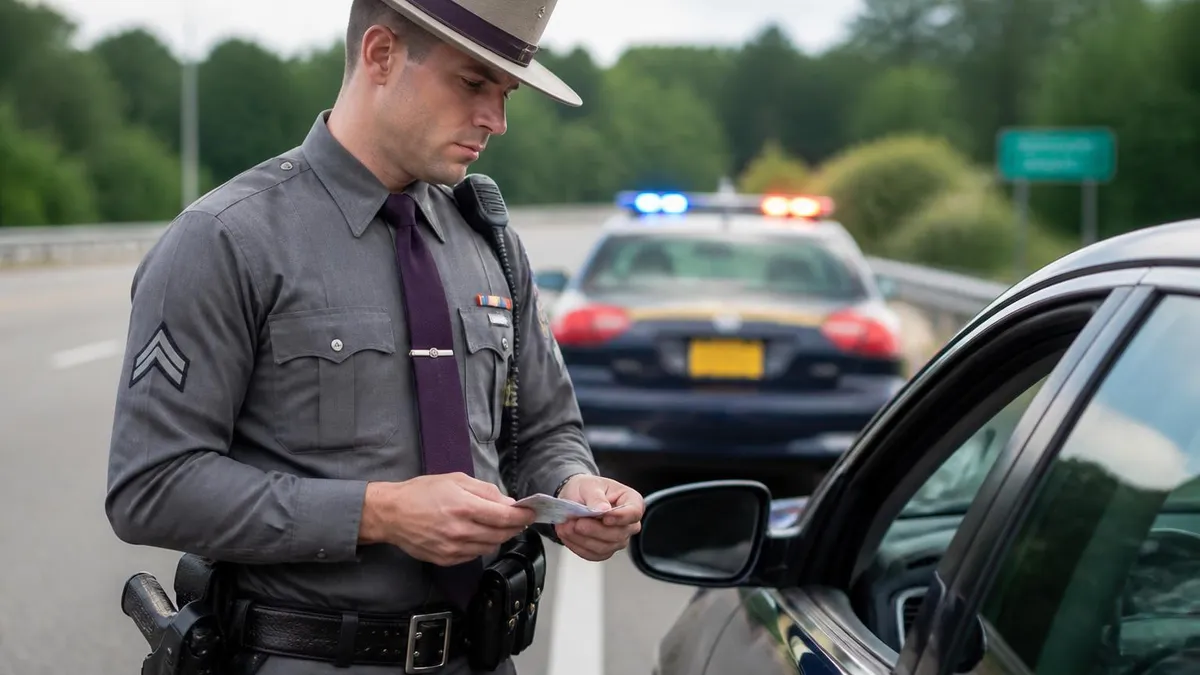
Many recruits assume that clearing the pre-hire background investigation means the scrutiny is over — it is not. Agencies conduct periodic re-investigations throughout an officer's career, and conduct during the academy itself is evaluated for character. Recruits who lie about minor infractions, attempt to cheat on academic exams, or engage in dishonest behavior with instructors are terminated and permanently barred from state patrol employment in most states, regardless of how well they perform in other areas.
Understanding state trooper salary structures is critical for anyone evaluating the career, because base pay is only one component of a compensation package that includes overtime, specialization pay, court time pay, and benefits valued at 30 to 50 percent of base salary. Entry-level troopers in most states start between $45,000 and $58,000 per year, with automatic step increases every one to two years during the first decade of service. By year five, most troopers are earning between $58,000 and $72,000, and senior troopers with 15 or more years can earn over $80,000 in base pay alone in high-cost states.
State-by-state salary variation is significant. Texas DPS troopers start at approximately $54,000 with a competitive benefits package that includes the Employee Retirement System of Texas pension. Florida Highway Patrol troopers begin around $49,000 but benefit from Florida's no-state-income-tax policy, which meaningfully increases take-home pay relative to peer states. Illinois State Police offers starting salaries near $56,000 plus a Tier 1 pension that, for troopers hired before 2011, provides exceptional retirement security. North Carolina Highway Patrol starts at $42,000 but has implemented aggressive retention bonuses for officers with five or more years of service.
Overtime and specialty pay add substantially to base compensation. Troopers working overtime — which is common during holidays, major events, and staffing shortfalls — typically earn time-and-a-half on top of their hourly base rate. Court appearance pay (often called court time) compensates troopers for off-duty court appearances at a minimum of two to four hours' pay regardless of how long the appearance lasts. Troopers assigned to commercial vehicle enforcement, aviation, or criminal interdiction units often receive specialty assignment pay of $1,500 to $5,000 per year above their base rate.
Benefits beyond salary include employer-paid health insurance for the trooper and dependents, life insurance, disability coverage, paid vacation and sick leave, and access to state employee wellness programs. The retirement pension is by far the most valuable long-term benefit — a defined-benefit plan that guarantees a specific monthly payment for life, shielded from stock market volatility, is increasingly rare in the private sector and represents enormous financial security for retiring troopers. Many states also extend healthcare benefits to retirees, which eliminates a major cost concern for troopers retiring in their late 40s or early 50s before Medicare eligibility.
Geographic assignment has a real impact on quality of life and career opportunity. Troopers assigned to high-traffic urban interstate corridors in the Dallas–Fort Worth metroplex, Miami, or Chicago typically encounter more calls for service, more complex criminal cases, and faster promotional competition than counterparts in rural posts. However, rural assignments come with the significant autonomy of being the only trooper covering a large geographic area, which many officers find deeply satisfying. Most state patrol systems allow troopers to request transfer to preferred posts after a minimum tenure — typically two to five years — at their initial assignment.
The arizona state trooper application process, like most state patrol hiring systems, includes a comprehensive compensation discussion during the conditional offer stage so candidates fully understand what they will earn from day one through retirement. Candidates who do thorough salary research before applying are better positioned to negotiate relocation assistance and signing bonuses, which several states now offer to attract qualified applicants in a competitive law enforcement hiring market. Signing bonuses ranging from $5,000 to $15,000 have been deployed by Texas, Florida, and North Carolina in recent recruitment cycles.
Total career earnings for a state trooper who serves 25 years and retires at the mid-career pension rate, then collects that pension for 25 to 30 years of retirement, routinely exceed $2 million in combined earnings and pension payments. When healthcare benefits and the tax advantages of certain pension structures are included, the total lifetime compensation of a state trooper career compares favorably to many private-sector careers requiring equivalent or greater educational investment. The financial case for the career, when analyzed across a full lifetime, is far stronger than the starting salary alone suggests.
Practical preparation for the state trooper academy requires a multi-month commitment that begins the moment you receive your conditional appointment. The candidates who graduate — and who graduate near the top of their class — are almost universally those who treated their pre-academy months as a second training program in their own right. They built running bases of 25 to 30 miles per week, studied traffic and criminal law systematically, visited a range regularly, and researched the specific culture and expectations of the academy they were assigned to attend. Information is available — use it.
Study groups among incoming recruit classes have become increasingly common, particularly as pre-academy communication through official and informal channels makes it easier for recruits to connect before day one. Many states distribute a pre-academy study guide covering the legal topics and policy frameworks that will be tested in the first several weeks of classroom instruction. Recruits who complete that guide thoroughly arrive at the academy with a meaningful academic head start, allowing them to focus cognitive energy on integrating new information rather than learning foundational concepts under time pressure.
Sleep and nutrition are performance variables that are frequently underestimated by new recruits. Academy training places extreme demands on the body's recovery systems, and recruits who arrive with healthy sleep habits and dietary practices adapted to high-output physical training perform measurably better across all evaluation categories. Nutritionists working with law enforcement academies consistently find that recruits consuming insufficient protein and complex carbohydrates show cognitive performance degradation in the academic setting that mirrors the effects of mild sleep deprivation — a compounding problem when both are present simultaneously.
Mental preparation for the academy's pressure environment is as important as physical conditioning, and it is the dimension least addressed by candidates who wash out. The academy is designed to create stress — that is its function. Instructors deliver criticism loudly and publicly, schedules change without notice, and recruits are routinely evaluated on tasks they have not been explicitly taught yet, testing adaptive reasoning under pressure. Candidates who have prior exposure to high-stress environments — military service, competitive athletics, emergency medical work — tend to adapt more quickly because they recognize the pattern: stress is information, not threat.
Time management during the academy is a skill unto itself. Recruits who struggle academically often do so not because they lack intelligence but because they have not developed efficient study habits under time constraints. An academy day that ends at 10 PM and begins again at 5 AM leaves perhaps four hours for study, personal care, and sleep preparation — three of which may feel essential. The recruits who navigate this successfully are those who prioritize ruthlessly: flash cards for legal terms, active recall instead of passive re-reading, and paired study with a classmate who covers different material first.
Peer relationships within the recruit class are a critical resource throughout training and beyond. Classmates cover each other's weak spots — the recruit who struggles with firearms benefits from range time advice from a classmate with a shooting sports background, while that same classmate may need help from a paralegal-trained recruit during criminal law exams. The interdependence is intentional, mirroring the team environment of actual patrol work. Instructors observe and evaluate how recruits interact under stress, and those who demonstrate leadership and peer support within their squads are marked as management potential early in their careers.
The final days of academy training, culminating in graduation, are among the most emotionally intense experiences a new trooper will have. The ceremony typically includes the badge pinning by a family member, the recitation of the law enforcement oath of office, and remarks from the patrol's commanding officer.
Many graduates describe the moment as equivalent in emotional weight to a military commissioning or a wedding — a public declaration of identity and commitment witnessed by the people who matter most. That moment, and everything it represents, begins months earlier with the first preparation step a candidate takes before the academy even starts.
State Trooper Questions and Answers



About the Author

Educational Psychologist & Academic Test Preparation Expert
Columbia University Teachers CollegeDr. Lisa Patel holds a Doctorate in Education from Columbia University Teachers College and has spent 17 years researching standardized test design and academic assessment. She has developed preparation programs for SAT, ACT, GRE, LSAT, UCAT, and numerous professional licensing exams, helping students of all backgrounds achieve their target scores.
Join the Discussion
Connect with other students preparing for this exam. Share tips, ask questions, and get advice from people who have been there.
View discussion (3 replies)