
State Trooper Job Openings: Career Guide for Texas, Florida, NC & More
Explore state trooper job openings in Texas, Florida, NC & more. Salary data, duties, requirements & prep tips. ✅ Start your career today.

State trooper job openings represent one of the most competitive and rewarding career paths in American law enforcement, drawing thousands of applicants each year across every state in the nation.
Whether you are eyeing a position as a state trooper texas a candidate through the Texas Department of Public Safety or exploring roles with the Florida Highway Patrol, North Carolina State Highway Patrol, or Illinois State Police, the fundamental mission remains the same: protect the public on state highways and respond to emergencies with speed and professionalism. Understanding where openings exist, what they pay, and what qualifications are required is the critical first step toward landing your badge.
The demand for qualified state troopers has surged in recent years as agencies across the country face historic staffing shortages. The Bureau of Justice Statistics reports that state law enforcement agencies collectively employ more than 90,000 sworn officers, yet vacancy rates in many departments have climbed above 15 percent. States like Texas, Florida, Arizona, and North Carolina are actively recruiting and offering enhanced signing bonuses, accelerated academy timelines, and improved benefit packages to attract qualified applicants. If you have ever considered a career in state law enforcement, 2026 represents an exceptional window of opportunity to apply.
Each state operates its own trooper agency with distinct hiring cycles, physical fitness standards, written examination requirements, and compensation structures. The Texas Department of Public Safety, for example, holds recruitment cycles multiple times per year and draws candidates interested in the prestige of the state trooper at texas a pipeline, particularly those graduating from Texas A&M University law enforcement programs. Meanwhile, the North Carolina State Highway Patrol and the Arizona Department of Public Safety hold continuous open enrollment periods to fill persistent vacancies across dozens of troop districts.
State trooper salaries have improved dramatically over the past decade as agencies compete with municipal police departments and federal law enforcement for the same pool of qualified candidates. The national average starting salary for a state trooper now sits at approximately $52,000 to $58,000 annually, with experienced troopers in high-cost states like California, New York, and Connecticut earning well above $90,000. Texas state troopers start around $69,000 with a comprehensive benefits package, while Florida Highway Patrol troopers begin at approximately $55,000 with the potential to exceed $80,000 after promotions and specialized assignments.
Beyond compensation, state trooper careers offer exceptional job stability, early retirement options, strong healthcare coverage, and a defined-benefit pension plan — benefits that have become increasingly rare in the private sector. Most state agencies offer retirement eligibility after 20 to 25 years of service, meaning an officer who joins at age 22 can retire with a full pension by their mid-40s. This combination of public service mission, competitive pay, and long-term financial security makes state trooper job openings among the most sought-after positions in government employment.
Preparation is absolutely essential for anyone serious about landing one of these coveted positions. The written entrance examination alone eliminates a substantial percentage of applicants who have not adequately prepared for the cognitive, behavioral, and legal knowledge sections. This guide walks you through the career landscape state by state, explains what duties troopers perform daily, outlines the application and hiring timeline, and equips you with actionable strategies to maximize your chances of success from your very first application through academy graduation and beyond.
State Trooper Jobs by the Numbers

State Trooper Job Openings: Major States Hiring Now
The Texas Department of Public Safety runs continuous recruitment cycles. Starting salary is approximately $69,000 with comprehensive benefits. Candidates need 60 college credit hours or two years of military/law enforcement service. Texas hires several hundred new troopers annually across 700+ miles of highways.
The Florida Highway Patrol actively recruits statewide with starting pay near $55,000 plus overtime and shift differential. Florida offers an expedited hiring process for prior military and law enforcement. The FHP has over 1,800 troopers and regularly opens new recruit classes.
The NC State Highway Patrol accepts applications year-round and offers a competitive starting salary of around $50,000, increasing rapidly with experience. NC troopers are assigned to one of eight troops covering every county in the state with a strong emphasis on highway safety enforcement.
The Illinois State Police conducts periodic recruitment drives with starting pay ranging from $55,000 to $62,000. Illinois requires a two-year associate degree minimum and has a rigorous 26-week residential academy. The agency currently has open positions across all 22 ISP districts statewide.
The Arizona Department of Public Safety hires continuously due to high turnover and a large rural territory. Starting salary is around $57,000 with rapid step increases. Arizona offers lateral transfer opportunities for certified officers and has one of the more simplified background investigation processes in the country.
State trooper salary is one of the first things prospective candidates research, and for good reason — it varies enormously from state to state, ranging from just under $45,000 at entry level in some rural states to well above $100,000 for experienced officers in high-cost-of-living areas. Understanding how compensation is structured, what benefits are included, and how pay increases over a career helps candidates make informed decisions about which agency to target and whether the financial picture aligns with their long-term goals.
In Texas, the state trooper salary structure starts at approximately $69,000 for a Trooper I, with automatic step increases every year for the first ten years of service. By year ten, a Texas trooper with no promotions can expect to earn approximately $85,000 to $90,000 annually.
The Texas Department of Public Safety also offers a $20,000 hiring bonus spread over the first two years of employment, which has helped the agency remain competitive against municipal departments in Dallas, Houston, and Austin that offer similar or higher base pay. The texas a&m state trooper pipeline is particularly well-regarded, with A&M graduates often entering the DPS at slightly higher starting steps due to their academic credentials.
Florida Highway Patrol troopers begin at roughly $55,000 and progress through a salary schedule that can push experienced officers past $80,000 before supervisory promotions are considered. Florida also provides a defined-benefit pension through the Florida Retirement System, subsidized health insurance, and 15 paid holidays annually. The FHP has also introduced performance bonuses and specialty pay for troopers assigned to commercial vehicle enforcement, aviation operations, and criminal interdiction — roles that can add $5,000 to $12,000 per year on top of base salary.
Illinois state trooper salary starts near $60,000 under the current Illinois State Police collective bargaining agreement and climbs to over $90,000 at the top of the pay scale. Illinois also provides a strong pension through the State Employees' Retirement System, healthcare coverage, and 12 sick days plus 12 vacation days per year starting from day one. One notable perk in Illinois is the uniform and equipment allowance, which covers most of the out-of-pocket expenses new troopers might otherwise face during their academy and probationary period.
North Carolina state trooper pay begins around $50,000 but comes with a comprehensive benefits package that many career analysts consider one of the best in state government. NC troopers participate in the North Carolina Local Governmental Employees' Retirement System and receive full coverage under the State Health Plan with no premium contribution required for the employee. The state also provides a $5,000 educational incentive bonus for troopers who hold a four-year college degree, effectively making NC one of the most education-friendly agencies in the Southeast.
Beyond base salary, state troopers in nearly every jurisdiction receive compensation for overtime, court overtime, and on-call availability. Many agencies pay time-and-a-half or even double-time for hours worked beyond the standard 40-hour week or 8-hour shift, meaning that an enterprising trooper willing to pick up extra shifts can dramatically boost their annual earnings.
In some cases, troopers working court overtime — appearing in court on days off to testify in cases they investigated — can add 10 to 20 percent to their annual gross income. When you factor in all forms of additional compensation, the effective earnings of a state trooper with five or more years of experience are often 20 to 30 percent higher than the published base salary figures.
Retirement benefits represent another major component of the state trooper compensation picture that candidates frequently underestimate. Unlike most private-sector workers who rely on 401(k) accounts with uncertain outcomes, state troopers in the vast majority of states receive a defined-benefit pension that guarantees a fixed monthly payment for life after they meet vesting requirements.
Most agencies vest troopers after five years and offer full retirement eligibility after 20 to 25 years of service. A trooper who retires after 25 years of service in a state with a 2.5 percent multiplier would receive 62.5 percent of their final average salary as a monthly pension — often $45,000 to $60,000 annually — for the rest of their life, with cost-of-living adjustments in many states.
Florida, Illinois & Carolina State Trooper: Agency Profiles
The Florida Highway Patrol is one of the largest state law enforcement agencies in the nation, with approximately 1,900 sworn troopers patrolling more than 12,000 miles of state highways and interstates. The FHP is headquartered in Tallahassee and operates through seven troops covering the entire peninsula. Applicants must be at least 19 years old, possess a high school diploma or GED, and pass a multi-stage hiring process that includes a physical agility test, written exam, polygraph, psychological evaluation, and a comprehensive background investigation that typically takes three to six months to complete.
Florida troopers are equipped with full-size patrol vehicles, body-worn cameras, radar and LIDAR devices, and access to state-of-the-art traffic management systems. The FHP Academy in Tallahassee runs approximately 26 weeks and covers over 770 hours of instruction including defensive driving, firearms qualification, emergency medical response, and Florida criminal and traffic law. New recruits who successfully complete the academy and 12-month probationary period are eligible for specialty assignments including the Criminal Interdiction Unit, Commercial Vehicle Enforcement, and the FHP Aviation Section.

Is a State Trooper Career Right for You?
- +Competitive starting salary ranging from $50,000 to $70,000+ depending on the state
- +Defined-benefit pension plan guaranteeing retirement income after 20-25 years of service
- +Comprehensive health insurance with low or no employee premium contributions
- +High job stability and virtually no risk of layoffs in most state agencies
- +Opportunities for specialized assignments in aviation, SWAT, canine, and criminal investigations
- +Strong sense of purpose and community service in a career that directly protects lives
- −Shift work and mandatory overtime can disrupt family schedules and social life
- −Regular exposure to traumatic incidents and high-stress emergency situations
- −Physical fitness requirements are rigorous and must be maintained throughout the career
- −The hiring process is lengthy, often taking 6 to 18 months from application to academy start
- −Rural assignments may require relocation to areas far from family and urban amenities
- −Constant public scrutiny and the emotional weight of working in high-accountability roles
Pros and Cons at a Glance
| Pros | Cons |
|---|---|
| Comprehensive health insurance with low or no employee premium contributions | Shift work and mandatory overtime can disrupt family schedules and social life |
| High job stability and virtually no risk of layoffs in most state agencies | Regular exposure to traumatic incidents and high-stress emergency situations |
| Opportunities for specialized assignments in aviation, SWAT, canine, and criminal investigations | Physical fitness requirements are rigorous and must be maintained throughout the career |
| Strong sense of purpose and community service in a career that directly protects lives | Rural assignments may require relocation to areas far from family and urban amenities |
State Trooper Job Application Checklist
- ✓Verify you meet the minimum age requirement for your target state (usually 21 years old).
- ✓Confirm you hold the required education credential — high school diploma, GED, or college degree depending on the state.
- ✓Request certified copies of all academic transcripts and diplomas from every institution attended.
- ✓Obtain a certified copy of your driving record and resolve any outstanding violations or suspensions.
- ✓Gather five to ten character references who are not relatives and can speak to your integrity and work ethic.
- ✓Begin a structured physical fitness training program targeting the sit-up, push-up, and 1.5-mile run standards.
- ✓Register for and complete a state-approved TABE or entrance examination preparation course.
- ✓Review your social media profiles and remove any content that could raise concerns during the background investigation.
- ✓Draft a detailed personal history statement covering all employment, residences, and significant life events for the past 10 years.
- ✓Begin practicing with free state trooper exam question banks to build familiarity with the written test format.
Background Investigations Are the #1 Disqualifier
The majority of state trooper applicants who are rejected do not fail the written exam or the physical fitness test — they are disqualified during the background investigation phase. Honesty, a clean financial history, a stable employment record, and responsible social media conduct are the factors that matter most. Agencies can often overlook minor youthful indiscretions if the applicant is fully transparent; what they cannot overlook is dishonesty about those events.
State trooper academy training is among the most rigorous law enforcement preparation programs in the country, and candidates who underestimate its demands often find themselves struggling after the first few weeks. Most residential academies operate on a paramilitary model with strict daily schedules, mandatory physical training before sunrise, classroom instruction through the afternoon, and scenario-based practical exercises in the evenings. Recruits are typically housed at the academy Monday through Friday and allowed to return home on weekends, though some agencies require full residential commitment for the entire training period.
The physical training component of academy is specifically designed to push recruits to their physical and psychological limits. Daily physical training typically includes a combination of distance running, calisthenics, and defensive tactics drilling. In the first weeks, recruits often complete two to three miles of running before breakfast, followed by push-ups, sit-ups, and body weight exercises.
By the middle of the academy, physical training escalates to include obstacle courses, swimming qualifications where applicable, and extended tactical drills with full duty gear. Candidates who arrive at the academy already performing at or above the entry-level standards give themselves a meaningful advantage and dramatically reduce their risk of attrition.
Firearms training is a cornerstone of every state trooper academy curriculum. Recruits typically fire thousands of rounds over the course of the academy, learning to qualify with a duty handgun, patrol rifle, and shotgun under progressively more challenging conditions including low-light scenarios and shoot-don't-shoot judgment drills.
Many agencies require recruits to qualify at a high standard — some require 90 percent accuracy on the qualification course — before they can advance to the next phase of training. Recruits with no prior firearms experience who begin practicing at a range several months before the academy start date consistently outperform those who show up without prior exposure.
Emergency vehicle operations courses, commonly abbreviated as EVOC, are a major component of trooper training that surprises many recruits with their intensity. EVOC training teaches recruits to operate patrol vehicles at high speeds, execute precision maneuvers, perform pursuit driving, and conduct vehicle intervention techniques such as the PIT maneuver. Most agencies conduct EVOC on closed driving tracks and require recruits to demonstrate proficiency in rain, darkness, and simulated adverse conditions. Accidents during EVOC training, while uncommon, do result in occasional academy dismissals, making mental preparation and focus just as important as technical skill.
Legal instruction at the state trooper academy covers criminal law, traffic law, constitutional law, and agency-specific policies and procedures in exhaustive detail. Recruits are expected to memorize key case law, statutory definitions, and procedural requirements for everything from routine traffic stops to felony arrests and search warrant applications.
Written examinations are held throughout the academy, and recruits who fall below the passing threshold — usually 70 to 80 percent — are placed on academic probation and may be dismissed if they cannot recover within a specified period. The depth of legal instruction required is one of the primary reasons that candidates who prepare with practice examinations before the academy begin consistently achieve higher scores and lower stress levels during training.
Mental health and wellness training has become an increasingly prominent component of state trooper academies in recent years as agencies respond to the documented mental health crisis in law enforcement. Most modern academies dedicate multiple blocks of instruction to stress management, critical incident response, peer support programs, and resources for officers experiencing trauma-related symptoms.
Recruits are introduced to their agency's Employee Assistance Program, chaplain services, and peer support team during the academy so they are already familiar with these resources before they face their first critical incident on patrol. This proactive approach to mental wellness is reflected in the growing number of agencies that have seen reductions in officer suicide rates and improved retention of experienced personnel.
Upon graduating from the academy, new troopers enter a field training program that typically lasts 12 to 16 weeks and pairs them with an experienced Field Training Officer, or FTO. During field training, probationary troopers handle real calls and traffic stops under direct supervision and are evaluated on every aspect of their performance using a standardized rating instrument.
The FTO phase is where classroom knowledge is translated into real-world competence, and the troopers who arrive at field training with the strongest foundational knowledge — particularly in traffic and criminal law — consistently advance through the program with the highest ratings. Successful completion of field training marks the official transition from probationary trooper to fully independent patrol officer.

Many state trooper agencies open recruitment classes only once or twice per year, and late applications are not accepted under any circumstances. Missing the application deadline by even one day means waiting for the next cycle, which could be six to twelve months away. Set a calendar reminder at least 60 days before the expected opening of any recruitment cycle you plan to target, and have all required documents prepared and certified in advance so you can submit immediately when the application window opens.
Career advancement within state trooper agencies follows a structured promotional ladder that rewards both seniority and competitive examination performance. Unlike many private-sector careers where advancement depends heavily on subjective manager evaluations, law enforcement promotions in most state agencies are governed by civil service rules that require candidates to take and pass competitive written examinations before they are eligible for promotional consideration. This system, while sometimes criticized for its rigidity, provides a transparent and merit-based path for ambitious troopers to move into leadership positions.
The first promotional step for most state troopers is the Corporal or Senior Trooper designation, which typically becomes available after three to five years of service and requires a combination of a written examination, performance record review, and supervisor recommendations. Corporals and Senior Troopers often serve as informal field leaders, mentors to probationary officers, and primary contacts for complex incidents when a sergeant is not immediately available. This rank also typically comes with a pay increase of 5 to 10 percent and may include assignment as a Field Training Officer.
The Sergeant rank represents the first true supervisory position in the trooper career ladder. Sergeants are responsible for the day-to-day supervision of a patrol unit, typically overseeing five to ten troopers across a geographic area or shift. They approve reports, respond to complex incidents, handle citizen complaints, conduct performance evaluations, and make scheduling and resource allocation decisions.
Sergeant promotional examinations are among the most competitive in any state agency, with passing rates on written components sometimes below 50 percent. Preparation for the Sergeant exam — which covers supervisory principles, agency policy, and state law — typically begins months in advance and often involves formal study groups and commercial examination preparation courses.
Beyond Sergeant, the promotional path typically moves through Lieutenant, Captain, and Major before reaching command-level positions like Colonel or Director. These upper-management ranks are filled through a combination of competitive examination, assessment centers, and executive appointment processes that vary by state. Some states use a pure examination-based system all the way up the chain; others rely increasingly on executive discretion at the higher ranks. Either way, troopers who demonstrate exceptional leadership, specialized expertise, and consistent high performance create the strongest promotional profiles over the course of their careers.
Specialized assignments offer another dimension of career development that many troopers find equally or more rewarding than traditional supervisory promotions. Most state agencies maintain specialized units including Criminal Investigations Divisions, Special Weapons and Tactics teams, K-9 units, Aviation Sections, Commercial Vehicle Enforcement units, and Criminal Interdiction programs. Assignment to these units typically requires a minimum number of years of patrol experience, a clean disciplinary record, and successful completion of a competitive selection process that may include an interview panel, written application, and skills demonstration. Specialty assignments often carry additional compensation in the form of specialty pay or assignment bonuses.
The arizona state trooper career path illustrates how geographic assignment affects advancement opportunities. Arizona's large rural territory means that many troopers spend the early years of their career assigned to posts in remote communities far from major metropolitan areas.
While this can be personally challenging, rural assignments often provide more investigative autonomy and a broader range of calls compared to urban posts, giving ambitious troopers an opportunity to develop a wider skill set in a shorter period of time. Many of Arizona's most experienced investigators and supervisors trace their professional development to formative years spent handling everything from traffic fatalities to drug smuggling operations in the state's remote desert corridors.
Retirement planning should begin the moment a trooper graduates from the academy, not in the years approaching retirement eligibility. Understanding your agency's pension formula, vesting schedule, healthcare continuation options, and DROP program — Deferred Retirement Option Program — can mean the difference of tens of thousands of dollars in lifetime benefits.
Many experienced troopers work closely with their state's retirement system administrators starting around year 15 to model out different retirement scenarios and optimize their departure timing. Agencies also typically provide access to supplemental retirement savings vehicles such as 457(b) deferred compensation plans that allow troopers to save additional pre-tax dollars on top of their pension contributions.
Preparing effectively for state trooper job openings requires a strategic approach that covers every phase of the hiring process simultaneously. Most candidates make the mistake of focusing exclusively on one aspect of preparation — usually either the physical fitness test or the written examination — while neglecting the others. A candidate who can run a six-minute mile and ace the reading comprehension test but has unresolved financial delinquencies or inconsistencies in their personal history statement will still be disqualified. True readiness means having all components of your candidacy in strong shape at the same time.
Written examination preparation should begin at least three to four months before you expect to submit your application. The state trooper entrance exam varies by agency but typically covers reading comprehension, grammar and writing skills, basic mathematics, situational judgment, and in some states, law enforcement-specific knowledge such as traffic law and criminal procedure fundamentals.
Candidates who use structured practice test platforms score measurably higher on their actual examinations than those who rely solely on general reading or informal preparation. Focus especially on the judgment and behavioral sections, which assess how you would respond to realistic law enforcement scenarios — these sections are difficult to cram for and require thoughtful, repeated practice.
Physical fitness preparation should be framed around the specific standards used by your target agency, not generic fitness goals. Pull up the physical ability test requirements for every agency you are applying to and structure your training around those exact standards. If the agency tests a 300-meter sprint, train 300-meter sprints.
If they require a 1.5-mile run under a specific time, train to beat that time by a comfortable margin so that testing-day nerves do not push you over the threshold. Many candidates make the error of training generally and then discovering on test day that the specific event format they face is subtly different from what they practiced — causing them to underperform despite being otherwise physically capable.
Personal history statement preparation is one of the most underappreciated aspects of the trooper hiring process. The personal history statement, sometimes called the personal data questionnaire or background investigation packet, requires you to account for your entire adult life — every job, every address, every financial account, every criminal contact, and often every romantic relationship.
Gathering all this information accurately takes time, and inaccuracies — even innocent ones — can raise red flags during the background investigation. Start collecting this information early, cross-check it against your actual records rather than relying on memory, and have a trusted friend or mentor review your draft statement for clarity and completeness before you submit.
Interview preparation is another area where candidates frequently under-invest. State trooper oral board interviews typically involve a panel of three to five officers and supervisors who ask behavioral and situational questions designed to assess your judgment, communication skills, and suitability for the role. Structured preparation using the STAR method — Situation, Task, Action, Result — helps you deliver organized, specific, and compelling answers rather than rambling generalities.
Practice your answers out loud, ideally with a practice partner who can give you honest feedback on your clarity, confidence, and body language. Research the agency's mission, recent initiatives, and community partnerships so you can speak intelligently about why you want to serve with that specific organization.
Networking with current and retired state troopers is a preparation strategy that many successful candidates cite as pivotal to their success. Troopers who have recently completed the hiring process can tell you exactly what to expect at each stage, what questions the oral board is currently asking, which fitness events candidates typically struggle with, and what specific areas of the written exam receive the heaviest weighting.
LinkedIn, local law enforcement career fairs, and ride-along programs are excellent ways to build these connections. Many agencies actively encourage applicants to schedule informational meetings with their recruitment team — take advantage of this opportunity every time it is offered, as it demonstrates initiative and gives you firsthand intelligence that most of your competitors will not have.
Finally, approach the entire process with patience and persistence. Even highly qualified candidates sometimes need to apply multiple times before being selected for a trooper class. The hiring process is competitive, cyclical, and sometimes subject to budget constraints or political factors entirely outside your control.
If you are not selected in your first cycle, request feedback from the agency's recruitment office — many will tell you what aspect of your application was weakest — and use that information to strengthen your next application. The candidates who ultimately earn their trooper badge are almost always those who treated each rejection as a temporary setback and each subsequent application as a better-prepared attempt than the last.
Sample State Trooper Practice Questions
Try these questions from our free State Trooper practice tests. The correct answer and an explanation follow each question.
Read this excerpt: 'Officers who accumulate three or more unexcused absences within a 90-day period are subject to a formal review. Officers with five or more are subject to suspension.' A trooper has had four unexcused absences in 60 days. What action applies?
- A. No action, as the 90-day period is not complete
- B. A formal review
- C. Immediate suspension
- D. Both a formal review and suspension
Answer: B. A formal review
Four unexcused absences exceeds the threshold of three within the 90-day window, triggering a formal review but not yet the five required for suspension.
During a lawful traffic stop for speeding, a Trooper observes the driver making furtive movements, appearing extremely nervous, and sees a bulge in the driver's waistband consistent with a firearm. The Trooper orders the driver out of the car. What legal standard allows the Trooper to conduct a pat-down search of the driver's outer clothing?
- A. Probable Cause
- B. Proof Beyond a Reasonable Doubt
- C. Reasonable Suspicion
- D. Mere Hunch
Answer: C. Reasonable Suspicion
Based on Terry v. Ohio, an officer can conduct a limited pat-down search (or 'frisk') of a person's outer clothing for weapons if the officer has a reasonable suspicion that the person is armed and dangerous. This standard is less than probable cause but more than a mere hunch, requiring specific and articulable facts to justify the belief of a threat to officer safety.
A state trooper observes a suspect fleeing from a convenience store with merchandise. Under what circumstances can the trooper use deadly force?
- A. When the suspect poses an imminent threat of serious bodily harm to others
- B. Whenever the suspect refuses to stop running
- C. Only after verbal warnings have been issued three times
- D. Only if the stolen merchandise exceeds $500 in value
Answer: A. When the suspect poses an imminent threat of serious bodily harm to others
Under Tennessee v. Garner, deadly force is justified only when the suspect poses a significant threat of death or serious physical injury.
A trooper conducts a consensual encounter with a pedestrian who becomes uncooperative. The trooper has no reasonable suspicion of criminal activity. The trooper should:
- A. Detain the pedestrian until they cooperate
- B. Allow the person to leave since no legal basis for detention exists
- C. Conduct a pat-down for the trooper's safety
- D. Place the person in handcuffs temporarily
Answer: B. Allow the person to leave since no legal basis for detention exists
A consensual encounter requires no legal justification but also grants no authority to detain — without reasonable suspicion, the person is free to leave.
State Trooper Questions and Answers

State Police Troop Locations: A Complete Guide to Troops Across the US

State Trooper Reports: Duties, Salaries & Career Guide Across Every State

State Trooper Practice Test PDF 2026
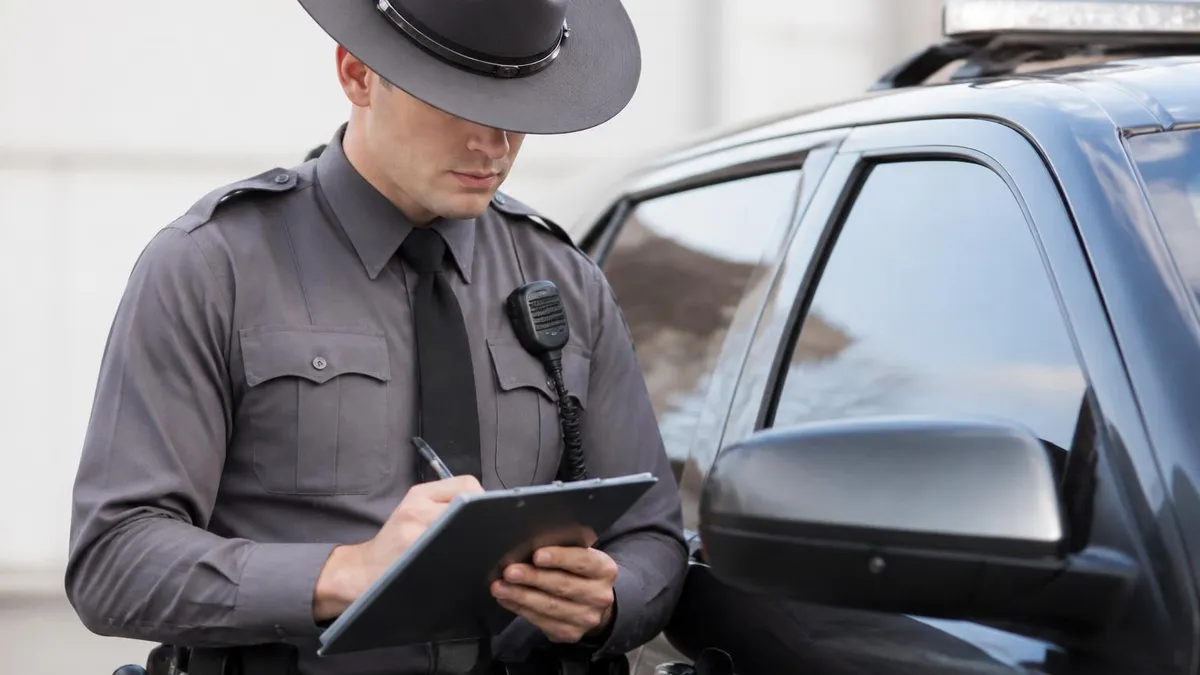
State Trooper Requirements: Age, Height & State Rules 2026
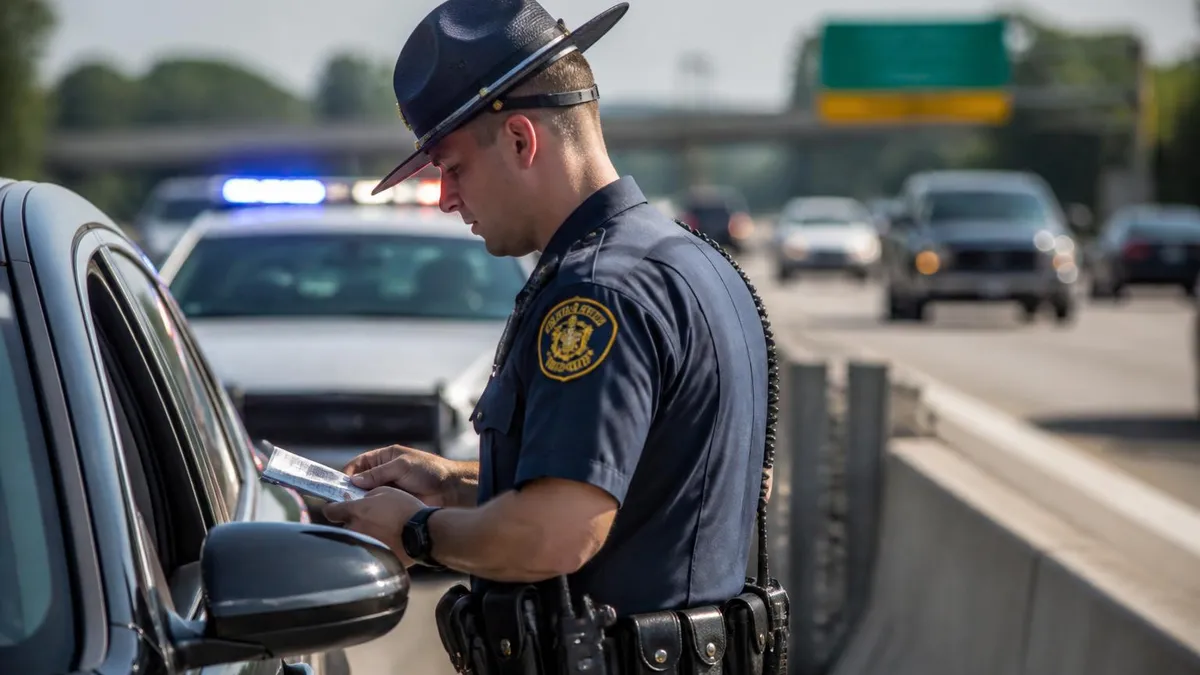
State Trooper Academy: Complete Training Guide for Recruits in 2026
About the Author

Educational Psychologist & Academic Test Preparation Expert
Columbia University Teachers CollegeDr. Lisa Patel holds a Doctorate in Education from Columbia University Teachers College and has spent 17 years researching standardized test design and academic assessment. She has developed preparation programs for SAT, ACT, GRE, LSAT, UCAT, and numerous professional licensing exams, helping students of all backgrounds achieve their target scores.
Join the Discussion
Connect with other students preparing for this exam. Share tips, ask questions, and get advice from people who have been there.
View discussion (3 replies)