
ServSafe FDA Food Code: What Food Handlers Need to Know 2026 October
Master the ServSafe FDA Food Code with our complete guide. Learn key rules, TCS foods, and temperature requirements. ✅ Boost your exam score today.
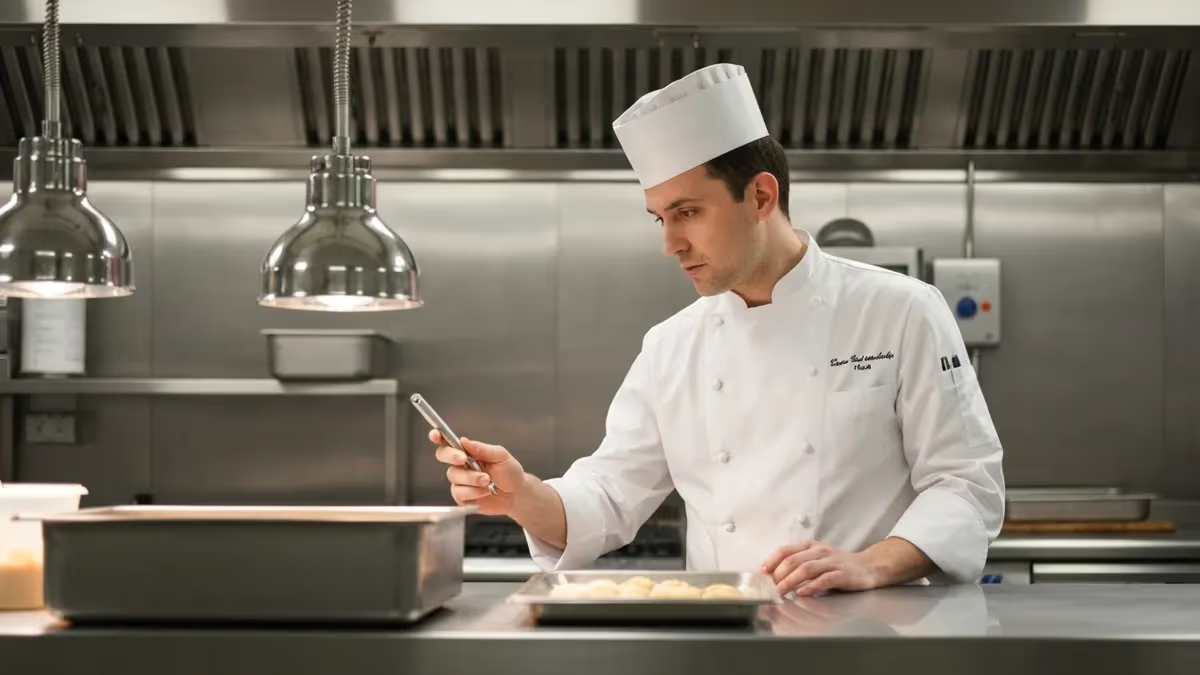
The ServSafe FDA Food Code forms the backbone of food safety regulation across the United States, and understanding it thoroughly is essential for anyone pursuing food handler or manager certification. The FDA Model Food Code is a science-based reference document published by the U.S. Food and Drug Administration that provides guidance to retail-level food establishments — restaurants, grocery stores, cafeterias, and other food service operations. ServSafe training programs are built directly around this code, which means that nearly every topic you study for your certification exam traces back to FDA Food Code principles.
The FDA Model Food Code is not a federal law in itself, but rather a model ordinance that state and local governments adopt — in whole or in part — as the legal framework for regulating food service in their jurisdictions. As of the most recent edition, more than 48 states have adopted the FDA Food Code or a closely aligned version. This widespread adoption means that ServSafe-certified professionals can work confidently across state lines, knowing that the safety standards they learned apply consistently in virtually every U.S. food service environment.
One of the most important concepts you will encounter when studying the servsafe fda food code is the distinction between Time/Temperature Control for Safety (TCS) foods and non-TCS foods. TCS foods — including meat, poultry, dairy, eggs, cooked starches, cut melons, and leafy greens — require careful temperature management throughout the flow of food. The FDA Food Code establishes specific temperature thresholds that define the danger zone (41°F to 135°F) and mandates that TCS foods spend as little time as possible within that range to prevent bacterial growth.
ServSafe certification programs translate the FDA Food Code into practical, exam-ready knowledge by organizing principles around the flow of food: receiving, storage, preparation, cooking, holding, cooling, reheating, and service. Each stage of this flow carries specific FDA Food Code requirements that ServSafe tests on. For example, the FDA Food Code specifies that raw proteins must be stored in the refrigerator in a particular order — from highest to lowest required minimum internal cooking temperature — to prevent cross-contamination from drips and spills.
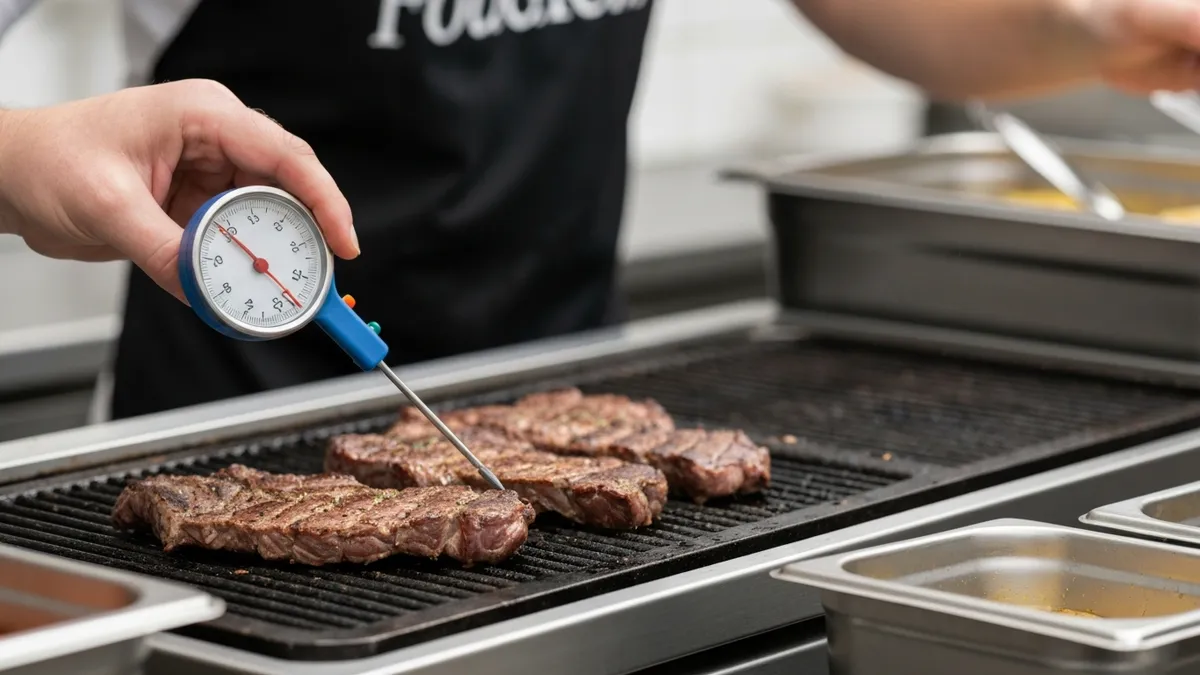
Temperature requirements under the FDA Food Code are among the most frequently tested ServSafe topics. The code mandates minimum internal cooking temperatures for different protein categories: poultry must reach 165°F for at least 15 seconds, ground beef 155°F for 15 seconds, and whole cuts of beef, pork, veal, and lamb 145°F for 15 seconds with a 3-minute rest time. Fish and commercially raised game animals also follow the 145°F standard. These exact temperatures appear on the ServSafe Manager exam, and knowing them cold is non-negotiable for passing.
Cooling is another critical area where the FDA Food Code establishes precise requirements. Cooked foods that need to be cooled must drop from 135°F to 70°F within the first 2 hours, and then from 70°F to 41°F or below within the next 4 hours — a total cooling window of 6 hours. Failing to cool foods rapidly enough is one of the most common causes of foodborne illness outbreaks in food service operations, which is why the FDA Food Code treats cooling requirements with particular stringency and why ServSafe devotes significant exam weight to the topic.
Personal hygiene rules in the FDA Food Code are equally rigorous. The code establishes handwashing procedures, requirements for when gloves must be used, restrictions on bare-hand contact with ready-to-eat foods, and guidelines for what employees must do when they are ill. ServSafe training covers all of these requirements in depth, helping food handlers understand not just what the rules say but why each rule exists — a deeper level of comprehension that pays dividends when answering tricky scenario-based exam questions.
ServSafe FDA Food Code by the Numbers
FDA Food Code Structure: The Five Key Areas
Covers person-in-charge responsibilities, employee health policies, personal hygiene requirements, handwashing procedures, and restrictions on bare-hand contact with ready-to-eat foods. These rules protect customers from illness transmitted by food workers.
Establishes temperature requirements for receiving, storage, cooking, holding, cooling, and reheating. Defines TCS foods, specifies the temperature danger zone, and sets minimum internal cooking temperatures for all protein categories served in food service.
Regulates materials, design, construction, and maintenance of food-contact surfaces and equipment. Specifies sanitization concentrations for chemical sanitizers and sets standards for warewashing equipment, thermometer calibration, and storage of clean utensils.
Requires potable water sources, proper plumbing design to prevent backflow and cross-connections, and appropriate waste disposal. These requirements prevent contamination of the water supply used in food preparation and cleaning operations.
Sets standards for floors, walls, ceilings, lighting, ventilation, and pest control in food service establishments. A properly designed and maintained physical facility is a foundational requirement for controlling hazards and maintaining food safety.
Temperature control is arguably the single most important concept in both the FDA Food Code and the ServSafe certification curriculum. The FDA Food Code identifies temperature as a primary control measure because most bacterial pathogens that cause foodborne illness — including Salmonella, Listeria, E. coli O157:H7, and Campylobacter — grow most rapidly within the temperature danger zone of 41°F to 135°F. Understanding why this range matters, not just memorizing the numbers, allows food handlers to make smart decisions in real kitchen situations that do not perfectly match textbook scenarios.
TCS foods require active temperature management at every stage of the food flow. When receiving shipments, food handlers must verify that refrigerated TCS foods arrive at 41°F or below and that frozen foods arrive solidly frozen with no evidence of thaw-refreeze cycles. The FDA Food Code allows some exceptions — for example, shucked shellfish may arrive at 45°F — but these exceptions are narrow and food-specific. ServSafe exam questions frequently test whether students know which foods qualify for temperature exceptions and which do not.
Cold holding requirements under the FDA Food Code mandate that TCS foods on a salad bar, buffet, or cold display must be maintained at 41°F or below at all times. Hot holding, by contrast, requires maintaining TCS foods at 135°F or above. The ServSafe exam tests not just these thresholds but also what actions must be taken when a food item falls out of the correct temperature range. If a TCS food has been in the danger zone for fewer than 4 hours, it may be reheated or re-chilled, but documentation and judgment about total cumulative time are essential.
Reheating rules in the FDA Food Code are frequently misunderstood. Foods that are reheated for hot holding must reach an internal temperature of 165°F within 2 hours — not gradually, not eventually, but within that strict time limit. This requirement prevents the scenario where a food item sits in a warming unit that only brings it to 120°F or 130°F, temperatures warm enough to encourage bacterial growth but not hot enough to destroy pathogens. ServSafe emphasizes this rule because violations are common in real food service environments.
The time-as-a-control provision in the FDA Food Code offers an alternative to temperature monitoring for certain operations where temperature control is impractical, such as sushi rice or time-limited pizza buffets. Under this provision, a written policy must be in place specifying that TCS foods will be discarded within 4 hours of being removed from temperature control. ServSafe covers this topic because it represents a legitimate FDA-approved exception that some food service operations use, and understanding both the flexibility and the strict documentation requirements it imposes is important for managers.
Calibrating thermometers is a practical FDA Food Code requirement that ServSafe tests regularly. Thermometers used to monitor food temperatures must be accurate to ±2°F and must be calibrated regularly using either the ice-point method (32°F in an ice slurry) or the boiling-point method (212°F at sea level, adjusted for altitude). Digital and bi-metallic stem thermometers are both acceptable, but thermometers must be the right type for the food being measured — a surface thermometer, for example, is not appropriate for checking the internal temperature of a thick roast.
Variance requests under the FDA Food Code apply when a food service operator wants to use a process or procedure that deviates from standard requirements — for example, smoking food for preservation, using raw shellfish in unusual preparations, or operating a reduced oxygen packaging operation. These activities carry elevated risk and require regulatory approval and often a HACCP plan. ServSafe managers need to understand that variances exist, when they are required, and what documentation the regulatory authority expects to see before a variance is granted.
FDA Food Code: Hygiene, HACCP, and Facility Standards
The FDA Food Code establishes detailed personal hygiene requirements that food handlers must follow to prevent contaminating food. Handwashing must occur for at least 20 seconds using soap and warm water in a designated handwashing sink — never in a prep sink or utility sink. Employees must wash hands after using the restroom, after handling raw animal products, after touching their face or hair, after sneezing or coughing, after handling garbage, and any time hands may have become contaminated. Gloves do not replace handwashing; they supplement it.
Employee health policies required by the FDA Food Code specify that food handlers diagnosed with certain illnesses — including Salmonella Typhi, hepatitis A, norovirus, Shigella, and E. coli O157:H7 — must be excluded from work entirely until cleared by a medical professional. Workers with symptoms such as vomiting, diarrhea, jaundice, or sore throat with fever must be restricted from working with exposed food. ServSafe managers are responsible for enforcing these policies consistently and documenting employee health agreements as required by their local regulatory authority.
FDA Food Code Adoption: Strengths and Limitations for Food Service Operations
- +Provides a nationally consistent, science-based framework that makes food safety training transferable across state lines
- +Updated approximately every 4 years to reflect current food safety science, emerging pathogens, and new food service technologies
- +Widely adopted basis for ServSafe curriculum ensures that certification has practical, real-world regulatory relevance
- +Clearly defines roles and responsibilities for the Person in Charge, simplifying accountability in food service operations
- +Integrates HACCP principles into everyday food service operations, moving from reactive to proactive hazard management
- +Detailed temperature, time, and sanitation requirements reduce ambiguity and make compliance measurable and enforceable
- −States adopt different editions of the FDA Food Code, creating variation in specific requirements across jurisdictions
- −Local health departments may add amendments that create differences between what ServSafe teaches and what local regulations require
- −The model code language can be complex and legalistic, making it difficult for front-line food handlers without manager training to interpret
- −Variance and HACCP plan requirements for specialized processes add administrative burden for small, independent operators
- −Frequent updates require ongoing staff retraining to stay current, which can be costly for high-turnover food service environments
- −Enforcement intensity varies significantly by jurisdiction, creating uneven compliance levels across similarly situated food service operations
ServSafe FDA Food Code Exam Prep Checklist
- ✓Memorize the temperature danger zone (41°F–135°F) and all minimum internal cooking temperatures for each protein category.
- ✓Learn the two-stage cooling requirement: 135°F to 70°F within 2 hours, then 70°F to 41°F within 4 additional hours.
- ✓Know the FDA Food Code storage order for raw proteins in the refrigerator from top to bottom by cooking temperature.
- ✓Study the seven HACCP principles and be able to identify critical control points in sample food production scenarios.
- ✓Review the three acceptable chemical sanitizers (chlorine, iodine, quaternary ammonium) and their required concentration ranges.
- ✓Understand the five Big-8 allergens expanded to Big-9 under FASTER Act and FDA Food Code allergen disclosure requirements.
- ✓Practice identifying TCS foods versus non-TCS foods, including knowing which foods qualify for temperature exceptions.
- ✓Learn the handwashing procedure steps, required duration (20 seconds), and all situations that require handwashing.
- ✓Study employee health policies including which illnesses require exclusion versus restriction from food service work.
- ✓Review variance requirements and the types of specialized food service processes that require prior regulatory approval.
The FDA Food Code Is a Model — Your State's Version Is What Legally Applies
While ServSafe curriculum is based on the FDA Model Food Code, your state or local health department may have adopted an earlier edition or added specific amendments. Always verify the current edition and any local modifications in effect where you work — this is especially important for managers who oversee regulatory compliance and interact with health inspectors.
Understanding how states adopt the FDA Food Code — and where local variations occur — is practically important for any food service professional, especially managers who interact with health inspectors and must ensure their operations meet the legally enforceable standard in their specific jurisdiction. The FDA publishes a new edition of the Model Food Code approximately every four years, and states typically have a multi-year window to review, adapt, and formally adopt the updated code through their legislative or regulatory process. This means that at any given time, different states may be operating under different editions of the code.
As of the most recently published adoption data, most states have adopted the 2017 or 2022 FDA Food Code, with a small number still operating under the 2013 or even earlier editions. The differences between editions are usually incremental rather than sweeping — refinements to temperature requirements, additions to the TCS food list, updates to allergen provisions, or new guidance on emerging pathogens.
However, some changes do matter operationally. For example, the 2022 edition includes updated language on sesame as the ninth major food allergen under the FASTER Act, and food service operations in states that have adopted the 2022 code are legally required to implement sesame allergen controls.
Local health departments — typically at the county or city level — also play a significant role in food safety regulation. Even when a state has formally adopted the FDA Food Code, the local health department is usually the entity that conducts inspections, issues permits, and enforces the code day-to-day.
Local health departments may have additional requirements that go beyond what the state code specifies, particularly in areas like pest control, employee health documentation, or specific equipment standards. ServSafe managers need to know both the general FDA Food Code principles that ServSafe teaches and the specific local rules that apply to their operation.
The relationship between ServSafe certification and legal compliance is an important nuance that food service professionals should understand clearly. Holding a ServSafe Manager Certification does not automatically mean that your operation is in compliance with all applicable food codes — it means that you have demonstrated knowledge of the food safety principles that the FDA Food Code is built upon. Operational compliance requires applying that knowledge consistently in your specific facility, with your specific menu, equipment, and staff, in a way that satisfies the local health department's interpretation of the applicable code edition.
Health inspections typically evaluate food service operations against the local food code that has been adopted, not the most current FDA Model Food Code edition. Inspectors use standardized forms that reflect the categories and requirements of the applicable code, and violations are typically classified as priority items (direct threats to food safety), priority foundation items (practices that support priority items), and core items (good retail practices). ServSafe training helps managers understand the inspection framework, anticipate what inspectors are looking for, and maintain ongoing compliance rather than scrambling to correct violations only when an inspection is scheduled.
Variance requests are a mechanism the FDA Food Code provides for food service operations that want to use processes or ingredients that do not conform to standard requirements. Common examples include smoking food for preservation purposes, using live shellfish displays, operating a raw seed sprouting operation, or packaging food under reduced oxygen conditions.
Each of these processes presents elevated food safety risks that are not adequately controlled by standard procedures alone, so the regulatory authority must review and approve a detailed HACCP plan before the operation can proceed. ServSafe manager content covers variances in the context of specialized processes, and exam questions may test whether students can identify which operations require a variance and which do not.
Regulatory inspections are not adversarial by nature — most health departments view their role as educational and collaborative, helping food service operations achieve and maintain compliance rather than simply penalizing violations. Building a positive working relationship with your local health department, understanding what they look for during inspections, and proactively correcting potential violations are all practices that ServSafe encourages. The FDA Food Code is ultimately a public health tool, and food service managers who internalize that purpose — rather than treating compliance as a box-checking exercise — tend to build safer, more sustainable operations.
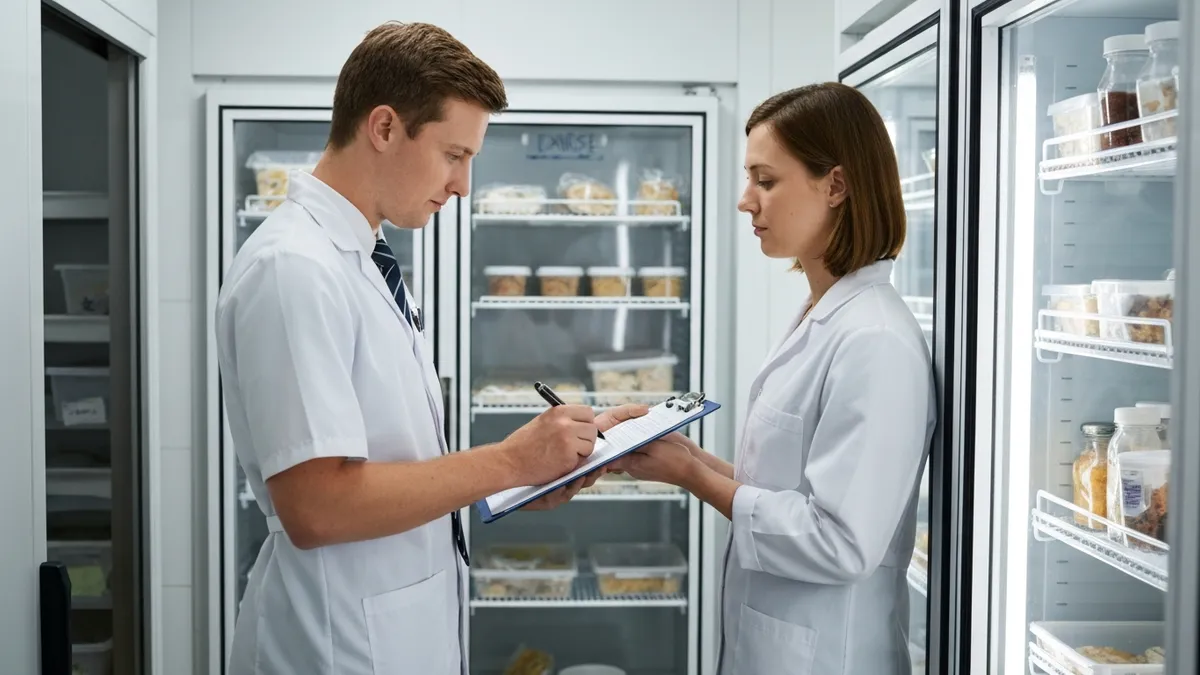
ServSafe training is based on the FDA Model Food Code, but your state may have adopted an earlier edition with different specific requirements. If your local jurisdiction has requirements that differ from what ServSafe teaches, you must follow the stricter standard in actual practice. For the national ServSafe exam, study the FDA Food Code principles as presented in the current ServSafe Coursebook edition used in your class.
Applying FDA Food Code knowledge effectively on the ServSafe Manager exam requires more than memorizing rules — it requires understanding the reasoning behind each requirement well enough to analyze scenarios you have never seen before. The ServSafe exam is deliberately scenario-based: rather than asking you to recite a temperature requirement, it describes a real kitchen situation and asks what the correct action is.
Students who understand why the FDA Food Code requires a 2-hour cooling window for the first stage of cooling — because bacterial growth accelerates fastest in the upper temperature range of the danger zone — will perform much better on these types of questions than students who only know the numbers.
One high-yield area for exam preparation is the correct response to out-of-temperature incidents. The FDA Food Code does not mandate that food must always be discarded the moment it exceeds or falls below a required temperature — the correct response depends on how long the food has been out of range and whether it can be safely returned to proper temperature or must be discarded.
ServSafe questions in this area often require students to consider cumulative time in the danger zone, which means tracking how long a food item has been out of temperature throughout the day, not just at the moment of discovery.
The Person in Charge (PIC) requirements under the FDA Food Code are another frequently tested area. The FDA Food Code requires that a knowledgeable PIC be present during all hours of operation and that this person be able to demonstrate compliance with food safety requirements when asked by the regulatory authority.
The PIC does not necessarily have to hold a food manager certification in all jurisdictions, but in many states, the PIC must be a certified food protection manager — which is exactly what the ServSafe Manager certification qualifies a person to be. Understanding the PIC role and its specific responsibilities is important for the exam and for daily operations.
Food allergen management has become an increasingly prominent part of both the FDA Food Code and the ServSafe curriculum. The FDA Food Code incorporates the major food allergen requirements established by the Food Allergen Labeling and Consumer Protection Act (FALCPA) and the FASTER Act of 2021, which added sesame as the ninth major food allergen.
In a food service context, allergen management requires staff training, careful menu labeling, procedures to prevent cross-contact, and protocols for responding to guest allergen inquiries. ServSafe exam questions on allergens test both knowledge of the Big 9 allergens and the operational procedures required to protect allergic guests.
Water activity and pH are two physical characteristics of food that the FDA Food Code uses to classify whether a food requires time and temperature control for safety. Foods with a water activity (Aw) below 0.85 or a pH below 4.6 do not support the growth of most bacterial pathogens and are therefore not classified as TCS foods — which is why commercially bottled salad dressings, crackers, and dried goods do not require refrigeration. ServSafe exams may include questions where students must determine whether a specific food or food combination qualifies as TCS based on its Aw and pH values.
Contamination prevention is woven throughout every section of the FDA Food Code and, correspondingly, throughout ServSafe training. Physical contaminants such as bone fragments, glass, or metal shavings; chemical contaminants such as cleaning agents or pesticide residue; and biological contaminants such as bacteria, viruses, parasites, and fungi each have specific FDA Food Code provisions aimed at preventing their introduction into food. Cross-contamination — where biological hazards transfer from one food or surface to another — is particularly emphasized because it is one of the most common causes of foodborne illness in commercial food service settings.
Pest control requirements in the FDA Food Code support contamination prevention by mandating that food service facilities be constructed and maintained to prevent pest entry and harborage. Gaps around pipes, holes in walls, improper door seals, and improperly stored garbage all create pest access opportunities that the FDA Food Code requires operators to address. ServSafe training covers pest identification, prevention strategies, and the requirement to work with a licensed pest control operator (PCO) when infestation evidence is found — a ServSafe manager cannot independently apply pesticides in a food service facility without appropriate certification.
Building a strong study plan around the FDA Food Code means organizing your preparation by the major topic areas that ServSafe covers, rather than trying to read the FDA Food Code document itself from cover to cover. The FDA Model Food Code is a detailed regulatory document written in legal language — it is not a study guide.
The ServSafe Coursebook distills the most food-service-relevant provisions of the code into practical, exam-ready content organized by the flow of food and the major hazard categories. Use the coursebook as your primary study resource and refer to the FDA Food Code only when you need to verify a specific regulatory detail.
Practice exams are one of the most effective tools for preparing to apply FDA Food Code knowledge in the ServSafe exam format. Scenario-based questions — the kind that the ServSafe Manager exam uses — require you to synthesize multiple food code principles simultaneously.
For example, a question might describe a scenario where a chicken breast is undercooked, a food handler reaches across the chicken to grab a ready-to-eat vegetable, and a thermometer is used without being calibrated — and ask which violation presents the most immediate risk. Answering correctly requires understanding cooking temperature requirements, cross-contamination principles, and thermometer accuracy standards all at once.
Time management during the actual ServSafe Manager exam is an often-overlooked preparation strategy. ServSafe does not publish an official time limit for the Manager exam (90 questions — 80 scored, 10 unscored pretest, 70% / 56-of-80 needed to pass); many test centers and candidates informally report a total session of around 2 hours, which leaves enough time to read carefully and think through scenarios without needing to extensively deliberate on every question. Students who have internalized FDA Food Code principles tend to answer questions more efficiently because they can quickly identify the relevant rule and apply it to the scenario, rather than trying to recall a memorized fact under time pressure.
Group study and scenario-based discussion exercises are highly effective preparation strategies for the ServSafe Manager exam. Working through hypothetical kitchen scenarios with colleagues — asking questions like "What would you do if a refrigerator thermometer read 50°F during your opening checklist?" or "How would you handle a food handler who came to work showing symptoms of norovirus?" — reinforces FDA Food Code principles in the operational context where they actually apply. This kind of active recall practice is significantly more effective than passive re-reading of course material.
Official ServSafe practice exams, available through the National Restaurant Association Educational Foundation (NRAEF), are calibrated to match the difficulty and format of the actual certification exam. These practice tests include questions drawn from every major FDA Food Code topic area and are weighted to reflect the relative importance of each topic on the actual exam. Taking multiple full-length practice exams under timed conditions is the closest simulation of the actual test experience and is the single most reliable predictor of exam-day performance.
After passing your ServSafe Manager exam, maintaining your certification requires recertification every five years. During that five-year window, the FDA Food Code may be updated, your state may adopt a new edition, or local regulations in your jurisdiction may change. Staying current with food safety science and regulatory updates is an ongoing professional responsibility, not a one-time credential. Many food service managers choose to refresh their ServSafe training before the five-year mark to stay current with any changes and to reinforce knowledge that may have become rusty through the routine of daily operations.
Ultimately, the connection between ServSafe certification and the FDA Food Code is a direct one: ServSafe teaches the food safety principles that the FDA Food Code codifies, in the operational context where food service professionals will actually apply them.
Every temperature requirement, every handwashing procedure, every cooling rule, and every pest control standard that you study for your ServSafe exam has a corresponding provision in the FDA Model Food Code — a provision that exists because food safety scientists, public health officials, and regulators determined it was necessary to protect the millions of Americans who eat meals prepared in commercial food service facilities every day.
ServSafe Questions and Answers

ServSafe Montana: Complete Food Handler Training & Certification Guide

Which Is an Example of Possible Chemical Contamination ServSafe: Complete Guide

ServSafe Manager Exam Flushing Queens Location: Complete Guide to Finding & Booking Your Test

ServSafe Coursebook 8th Edition: Complete Study Guide & Certification Prep

ServSafe Video Training: How Video-Based Learning Accelerates Your Food Safety Certification
About the Author

Registered Sanitarian & Food Safety Certification Expert
Cornell University College of Agriculture and Life SciencesThomas Wright is a Registered Sanitarian and HACCP-certified food safety professional with a Bachelor of Science in Food Science from Cornell University. He has 17 years of experience in food safety auditing, regulatory compliance, and foodservice management training. Thomas prepares food industry professionals for ServSafe Manager, HACCP certification, and state food handler examinations.
Join the Discussion
Connect with other students preparing for this exam. Share tips, ask questions, and get advice from people who have been there.
View discussion (8 replies)