
ServSafe Coursebook 7th Edition: Complete Training Guide & What You Need to Know
Master the ServSafe Coursebook 7th edition ebook — chapters, key topics, exam tips & free practice tests. 📚 Everything food handlers need.
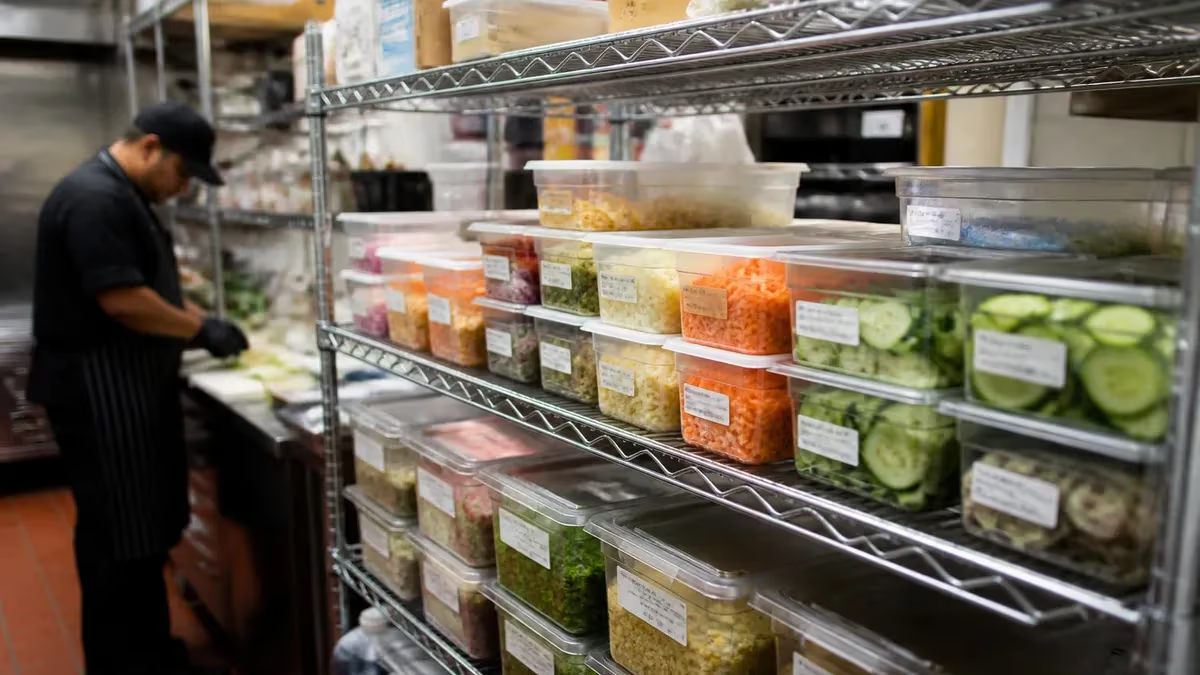
The ServSafe Coursebook 7th edition ebook is the definitive training resource for food service professionals preparing for ServSafe certification. Published by the National Restaurant Association Educational Foundation (NRAEF), this edition was updated to reflect the most current FDA Food Code guidelines, modern food safety science, and real-world kitchen scenarios that food handlers encounter daily. Whether you are studying for the ServSafe Food Handler exam or the more advanced ServSafe Manager certification, this coursebook is the primary study tool recommended by state health departments and culinary schools across the country.
Understanding what makes the 7th edition different from previous versions is essential for anyone who has older materials on hand. The updated coursebook incorporates significant revisions to chapters on time-temperature control, allergen management, and cleaning and sanitizing protocols. The NRAEF worked with food safety experts and regulatory agencies to ensure that every chapter aligns with the 2017 FDA Food Code, which serves as the model for most state and local food safety regulations. If you are studying from an older edition, you may encounter outdated temperature thresholds or procedures that no longer reflect current best practices.
One of the most compelling reasons food service workers choose the ebook format is flexibility. The digital version of the ServSafe Coursebook 7th edition can be accessed on smartphones, tablets, and laptops, meaning you can study during a commute, a break between shifts, or at home without carrying a heavy print textbook. Many third-party retailers and the official ServSafe website offer the ebook for purchase, and some culinary programs provide access as part of enrollment. Comparing prices between platforms before buying is a smart move since the ebook often costs significantly less than the print edition.
The coursebook is structured around the core competencies that ServSafe exams test. Each chapter builds on the previous one, starting with an introduction to the importance of food safety and progressing through hazard analysis, personal hygiene, purchasing and receiving, storage, preparation, cooking, service, and facility maintenance. This logical progression makes the coursebook easy to follow even for students who have never worked in a commercial kitchen. Sidebars, case studies, and review questions at the end of each chapter reinforce learning and help you identify gaps before test day.
It is worth noting that the servsafe coursebook 7th edition devotes an entire chapter to chemical contamination hazards, covering everything from improper storage of cleaning products near food to the risks of using non-food-safe lubricants on equipment. This focus on chemical hazards reflects real enforcement patterns in health department inspections, where chemical contamination violations are among the most commonly cited issues in food service operations. Understanding these hazards thoroughly will serve you well both on the exam and in day-to-day kitchen management.
Instructors who lead ServSafe courses typically assign the coursebook as required reading and pair it with hands-on activities, video content from the ServSafe online platform, and practice exams. If you are self-studying without an instructor, the coursebook still provides everything you need to prepare, but supplementing with practice tests is strongly encouraged. Free and paid practice question banks are available online and can help you become comfortable with the multiple-choice format used on official ServSafe exams. Tracking which chapters correspond to the questions you miss most often allows you to focus your review sessions more efficiently.
This guide walks you through the structure of the ServSafe Coursebook 7th edition, highlights the most important topics covered in each major section, explains how the ebook and print versions compare, and gives you a practical study plan for passing your exam with confidence. Whether you are a first-time test-taker or renewing an expiring certification, the information here will help you get the most out of your study time and walk into the exam room fully prepared.
ServSafe Coursebook 7th Edition by the Numbers
Key Facts at a Glance
| Item | Value | Details |
|---|---|---|
| Passing Score Required | 90% | For Manager certification |
| eBook Price Range | $30–$55 | Varies by retailer |
| Certification Valid | 5 years | Then renewal required |

Recommended Study Schedule for the ServSafe Coursebook 7th Edition
- ▸Read Chapters 1–2 on foodborne illness causes and FDA Food Code overview
- ▸Study Chapter 3 on personal hygiene standards and handwashing procedures
- ▸Complete Chapter 4 review questions on contamination prevention
- ▸Take a timed practice quiz on hygiene and contamination topics
- ▸Read Chapters 5–6 on safe purchasing, receiving inspections, and supplier requirements
- ▸Study Chapter 7 on time-temperature control for safety (TCS) foods
- ▸Memorize key internal cooking temperatures and cold-holding thresholds
- ▸Practice flow-of-food scenarios and identify critical control points
- ▸Read Chapters 8–9 on preparation methods, thawing, and cross-contamination prevention
- ▸Study Chapter 10 on cooking and reheating temperature requirements
- ▸Review Chapter 11 on safe service and holding temperatures
- ▸Complete end-of-chapter quizzes and review missed questions
- ▸Read Chapters 12–13 on cleaning, sanitizing, and chemical safety
- ▸Study Chapters 14–15 on pest control and facility design requirements
- ▸Take two full-length ServSafe practice exams under timed conditions
- ▸Review all flagged questions and re-read weak chapters before exam day
The ServSafe Coursebook 7th edition is organized into fifteen chapters that collectively cover every domain tested on the ServSafe Manager exam. The book opens with a foundational discussion of why food safety matters, presenting sobering statistics: according to the CDC, approximately 48 million Americans suffer from foodborne illnesses each year, resulting in 128,000 hospitalizations and 3,000 deaths. This data sets the tone for the entire coursebook, reminding students that food safety is not a bureaucratic exercise but a genuine public health responsibility that restaurant workers carry every shift.
Chapters 1 through 3 establish the theoretical groundwork. Chapter 1 introduces the major categories of foodborne hazards — biological, chemical, physical, and allergenic — and explains how the FDA Food Code provides a regulatory framework that local health departments use to write their own ordinances.
Chapter 2 dives into the specific pathogens most commonly responsible for foodborne illness outbreaks in the United States, including Salmonella, Norovirus, E. coli O157:H7, Listeria monocytogenes, and Hepatitis A. Chapter 3 focuses on personal hygiene, covering handwashing technique, glove use, illness reporting policies, and the behavioral habits that protect guests from contamination introduced by food handlers themselves.
The middle section of the coursebook — Chapters 4 through 9 — addresses the entire flow of food from purchasing through service. Chapter 4 covers how to evaluate suppliers, what to look for when receiving deliveries, and how to reject shipments that fail temperature or quality standards.
Chapters 5 and 6 explain proper storage techniques for dry goods, refrigerated items, and frozen products, including rules about stacking order in walk-in coolers to prevent cross-contamination. Chapters 7 through 9 address preparation and cooking, with detailed guidance on thawing methods, marinating safely, minimum internal cooking temperatures for different proteins, and the dangers of the temperature danger zone between 41°F and 135°F.
Chapter 10 is one of the most practically important sections of the entire coursebook because it addresses cooling and reheating, two processes that are frequently mishandled in busy commercial kitchens. The ServSafe two-stage cooling method requires food to be cooled from 135°F to 70°F within two hours and then from 70°F to 41°F within the next four hours.
Reheating for hot holding requires food to reach 165°F within two hours. These specific numbers appear directly on the exam, and understanding the reasoning behind them — preventing pathogen growth in the temperature danger zone — helps students remember them more reliably than rote memorization alone.
Chapters 11 and 12 shift focus to service and holding. Whether you are operating a buffet, a cafeteria line, a catering event, or a sit-down restaurant, maintaining safe hot-holding temperatures above 135°F and cold-holding temperatures at or below 41°F is non-negotiable. Chapter 12 introduces the concept of time as a public health control, which allows certain operations to hold food without temperature monitoring for a defined period as long as strict documentation and disposal protocols are followed. This is a nuanced topic that trips up many test-takers who have not studied the coursebook carefully.
Chapters 13 through 15 cover the physical environment of food safety: cleaning and sanitizing surfaces and equipment, pest management, and facility design. Chapter 13 distinguishes between cleaning (removing visible dirt and debris) and sanitizing (reducing pathogens to safe levels) and explains the factors that affect sanitizer effectiveness, including concentration, contact time, temperature, and pH.
Chapter 14 walks through Integrated Pest Management (IPM) principles, explaining how to identify signs of infestation, work with licensed pest control operators, and eliminate the conditions that attract pests in the first place. The final chapter discusses how facility layout, ventilation, plumbing, and equipment selection all contribute to an operation's overall food safety performance.
Throughout every chapter, the 7th edition incorporates real-world case studies drawn from actual foodborne illness outbreaks and health department inspection reports. These case studies are invaluable study tools because they show how abstract principles play out in concrete, high-stakes situations. Reading them carefully and asking yourself what went wrong and how it could have been prevented is one of the most effective active-learning strategies you can use with this coursebook.
ServSafe Coursebook 7th Edition: eBook vs. Print vs. Online Coursework
The ServSafe Coursebook 7th edition ebook is available through the official ServSafe website and major academic retailers like VitalSource and Chegg. The digital format typically costs between $30 and $45, making it noticeably cheaper than the print edition. It supports highlighting, note-taking, and text search, which can dramatically speed up reviewing specific topics before your exam. Most platforms allow access on up to three devices simultaneously, so you can read on your phone during a break and switch to a tablet at home without losing your place.
One important consideration with the ebook is that access licenses are often time-limited — commonly 180 days or one year from purchase. This means if you buy the ebook well in advance of your exam date, you need to budget your access window carefully. Some platforms offer offline reading modes that allow you to download chapters for use without an internet connection, which is useful in environments with unreliable Wi-Fi. Always verify the DRM (digital rights management) terms before purchasing, as some editions cannot be printed or shared.
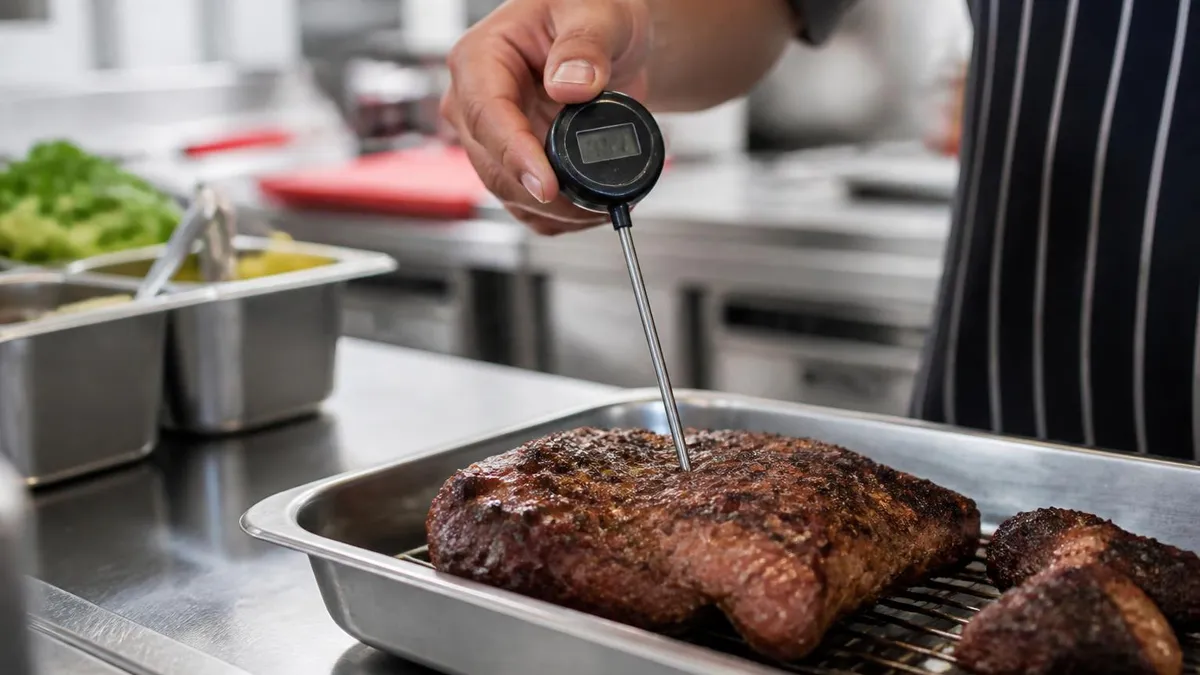
ServSafe Coursebook 7th Edition: Pros and Cons for Exam Prep
- +Fully aligned with the 2017 FDA Food Code, ensuring exam-accurate content
- +Comprehensive coverage of all 15 exam domains in a single resource
- +Real-world case studies reinforce abstract concepts with memorable examples
- +Chapter-end review questions help identify knowledge gaps before test day
- +eBook format offers affordable, portable access across multiple devices
- +Widely recognized by state health departments and culinary schools nationwide
- −Print edition is relatively expensive at $55–$80 for a new copy
- −eBook licenses often expire within 180 days to one year of purchase
- −Dense, textbook-style writing can feel dry compared to video-based instruction
- −Does not include an exam voucher unless purchased as part of a bundle
- −Some topics like HACCP planning require supplemental materials for deeper understanding
- −Earlier editions still in circulation can mislead students studying outdated standards
ServSafe Coursebook 7th Edition Study Checklist
- ✓Confirm you have the 7th edition (not 6th or earlier) before beginning your study plan.
- ✓Read the preface and introduction to understand how the book maps to the ServSafe Manager exam domains.
- ✓Memorize the four categories of food safety hazards: biological, chemical, physical, and allergenic.
- ✓Learn all minimum internal cooking temperatures for beef, poultry, pork, seafood, and eggs.
- ✓Master the two-stage cooling method: 135°F to 70°F in 2 hours, then to 41°F within 4 more hours.
- ✓Study the Big 9 food allergens and understand how cross-contact differs from cross-contamination.
- ✓Review the chapter on cleaning and sanitizing, including sanitizer types, concentrations, and contact times.
- ✓Complete every chapter-end review quiz and track which domains you miss most consistently.
- ✓Take at least two full-length timed practice exams before your scheduled test date.
- ✓Review the glossary for any technical terms you are uncertain about, especially regulatory vocabulary.

The 7th Edition Reflects the 2017 FDA Food Code — Older Editions Do Not
Using a pre-7th edition ServSafe Coursebook is one of the most common reasons students answer exam questions incorrectly. The 7th edition introduced updated temperature requirements, expanded allergen coverage, and revised HACCP guidance that directly appear on current exams. If you borrowed or purchased an older copy, replace it before you begin studying — the cost of a retake far exceeds the price difference between editions.
One of the most frequently tested areas in the ServSafe Manager exam is the Hazard Analysis and Critical Control Points (HACCP) system, and the 7th edition devotes substantial attention to explaining how HACCP principles apply in everyday food service settings.
HACCP is a systematic, science-based approach to identifying points in the food preparation process where hazards are most likely to occur and establishing controls to prevent, eliminate, or reduce those hazards to acceptable levels. The FDA Food Code encourages but does not universally mandate HACCP plans for all food service operations, but understanding HACCP principles is critical for the exam and for professional kitchen management.
The seven HACCP principles covered in the coursebook are: conducting a hazard analysis, identifying critical control points (CCPs), establishing critical limits, establishing monitoring procedures, establishing corrective actions, establishing verification procedures, and establishing record-keeping and documentation systems. The coursebook walks through each principle using practical examples from common restaurant operations — for instance, using a grill station to illustrate how the cooking step serves as a CCP for pathogens in ground beef, with a critical limit of 155°F for 15 seconds. These examples make abstract regulatory language concrete and memorable for students without formal food science backgrounds.
Temperature control is arguably the single most important topic in the entire coursebook, and the 7th edition addresses it with greater precision than earlier editions. The concept of Time-Temperature Control for Safety (TCS) foods — formerly called potentially hazardous foods — is central to preventing biological hazard growth.
TCS foods are those that support the rapid growth of pathogenic microorganisms due to their composition: they are typically moist, have a neutral to slightly acidic pH, and contain protein. Examples include meat, poultry, seafood, dairy products, cooked starches, cooked vegetables, cut melons, and raw seed sprouts. Knowing which foods are TCS foods and which are not is an important test-taking skill.
The coursebook also does an excellent job explaining the science behind why certain rules exist, not just stating the rules themselves. For example, when discussing why the temperature danger zone runs from 41°F to 135°F, the book explains that most pathogenic bacteria grow most rapidly between 70°F and 125°F and that the outer boundaries of the danger zone represent temperatures at which growth is slow enough to be manageable over short periods.
Understanding this reasoning helps students apply rules to novel scenarios on the exam rather than being confused by questions that describe situations slightly different from those in the text.
Allergen management received significantly expanded coverage in the 7th edition, reflecting the growing public health focus on food allergy incidents in restaurants. The book covers the Big 9 food allergens recognized by the FDA: milk, eggs, fish, shellfish, tree nuts, peanuts, wheat, soybeans, and sesame (sesame was added to the list under the FASTER Act of 2021 and is addressed in supplemental materials). The coursebook explains the difference between food allergies and food intolerances, describes the physiological mechanism of anaphylaxis, and provides detailed protocols for preventing allergen cross-contact during storage, preparation, and service.
These protocols include using dedicated equipment, preparing allergen-free dishes first, and training all front-of-house staff to communicate accurately with guests about ingredients.
The section on active managerial control (AMC) is another area where the 7th edition distinguishes itself from earlier versions. AMC refers to the intentional incorporation of specific actions or procedures that a person in charge uses to attain control over foodborne illness risk factors.
Rather than merely reacting to problems after they arise, AMC requires managers to proactively monitor critical control points, correct deviations in real time, and create a food safety culture that motivates staff to follow proper procedures consistently. The coursebook ties AMC directly to the FDA Food Code's five most common risk factors for foodborne illness: improper holding temperatures, inadequate cooking, contaminated equipment, food from unsafe sources, and poor personal hygiene.
Understanding food safety regulations and how they vary by jurisdiction is also covered in the 7th edition, which notes that while the FDA Food Code serves as a national model, individual states and localities adopt their own codes based on the FDA model with potential modifications.
This means the specific requirements in your state may differ slightly from what the coursebook describes. The ServSafe exam tests knowledge of the FDA Food Code model, not state-specific variations, so students from states with more stringent local rules should answer exam questions based on the federal model standards rather than their own state's code.
Many students assume the ServSafe Coursebook automatically includes an exam voucher, but it does not unless you purchase a specific bundle. The manager certification exam costs approximately $36 separately. Always check whether the package you are buying includes the exam access code before checkout. Purchasing the coursebook and exam voucher together as a bundle is typically the most cost-effective option for first-time test-takers.
Preparing effectively for the ServSafe Manager exam requires more than simply reading the coursebook from cover to cover. Research on adult learning consistently shows that active retrieval practice — testing yourself on material rather than passively re-reading it — produces significantly stronger long-term retention. The ServSafe Coursebook 7th edition supports this approach through its end-of-chapter review questions, but supplementing with additional practice tests drawn from multiple sources will accelerate your preparation considerably. Aim to answer at least 200 to 300 practice questions before your exam date, distributed across all major topic areas.
One effective strategy is to work through the coursebook chapter by chapter, completing the review questions at the end of each chapter immediately after reading rather than saving them for a final review period. This approach leverages the spacing effect and interleaving — two evidence-based learning techniques that prevent the illusion of competence that comes from reading text that feels familiar.
When you get a review question wrong, do not just note the correct answer and move on. Instead, find the relevant passage in the chapter, re-read it in full context, and write a brief explanation in your own words of why the correct answer is right and why the distractors are wrong.
Flashcards are another tool that pairs exceptionally well with the ServSafe Coursebook 7th edition. Key data points — minimum cooking temperatures, sanitizer concentrations, cooling time limits, pathogen incubation periods — are precisely the kind of factual information that flashcards handle best.
Physical index cards work well, but apps like Anki allow you to use spaced repetition algorithms that automatically schedule review of cards you find difficult more frequently than cards you have mastered. A well-built ServSafe flashcard deck covering the 50 to 75 most commonly tested facts can serve as an efficient daily warm-up during the final two weeks before your exam.
Group study can be highly effective for ServSafe preparation when managed well. Explaining concepts to peers requires a deeper level of processing than solo reading and surfaces misunderstandings that solo study might leave hidden. Practice teaching each other the HACCP principles, walking through the flow of food verbally, or quizzing each other on pathogen characteristics can solidify knowledge in ways that passive review cannot. Many culinary programs and community colleges host ServSafe study groups, and some food service industry associations offer free or low-cost preparation workshops for their members.
Simulation exercises are particularly valuable for topics that involve judgment calls rather than simple fact recall. For example, practicing how to evaluate a delivery truck's refrigeration temperature, how to respond when a food handler reports symptoms of a gastrointestinal illness, or how to determine whether a food item that has been in the temperature danger zone is safe to serve requires applying multiple pieces of knowledge simultaneously.
The case studies in the 7th edition coursebook provide excellent material for this kind of practice, and you can extend the exercise by creating your own scenarios based on real situations you have encountered in your workplace.
In the days immediately before your exam, shift your study strategy from learning new material to consolidating what you already know. Re-read chapter summaries, review your flashcard deck, and take one final timed practice exam under conditions that simulate the actual test environment — a quiet space, no reference materials, and a strict time limit. The ServSafe Manager exam allows 3.5 hours for 90 questions, which works out to approximately 2.5 minutes per question. Most students finish well within the time limit, but practicing under timed conditions prevents anxiety on test day and helps you develop a natural pacing instinct.
Nutrition, sleep, and physical preparation matter more than many students realize in the final days before a high-stakes exam. Pulling an all-night study session the night before the ServSafe exam is counterproductive: sleep is when the brain consolidates newly learned information, and sleep deprivation impairs both memory retrieval and cognitive flexibility — exactly the capacities you need for exam success.
A moderate review session the evening before, followed by seven to eight hours of sleep, will serve you better than staying up until 3 a.m. re-reading chapters. Arrive at the test center well-fed, hydrated, and a few minutes early so you can settle in calmly before the exam begins.
The ServSafe Manager certification exam itself consists of 90 multiple-choice questions, and you must answer at least 70percent of them correctly — that is 56 of the 80 scored questions — to pass. The exam is available in two formats: paper-and-pencil proctored sessions administered through ServSafe-approved instructors and test centers, and an online proctored format that allows you to test from home using a webcam and identity verification software.
Both formats test the same content drawn from the ServSafe Coursebook 7th edition, and neither format is inherently easier than the other. Your choice should be based on whichever environment you find most conducive to performing well under pressure.
The 90 exam questions are drawn from eight major domains that correspond directly to the chapters in the 7th edition coursebook. These domains include the importance of food safety, forms of contamination, the safe food handler, the flow of food (purchasing through service), food safety management systems, safe facilities and pest management, and cleaning and sanitizing.
Questions are distributed roughly proportionally to the importance of each domain, meaning the flow of food and food safety management systems tend to have the most questions. Reviewing the domain weighting before your exam helps you allocate study time strategically rather than treating all chapters as equally important.
Understanding how ServSafe exam questions are written is itself a useful test preparation skill. Many questions present a scenario and ask you to identify the correct action, the violation, or the underlying principle. The distractors — the wrong answer choices — are carefully crafted to resemble plausible-sounding responses, and they often reflect common real-world misconceptions or partial knowledge.
When you encounter a question and two answers seem potentially correct, ask yourself which one fully satisfies all the conditions described in the scenario and aligns most precisely with the FDA Food Code standard. Choosing an answer that is partially correct but not complete is one of the most common ways students lose points.
After passing your ServSafe Manager exam, your certification is valid for five years from the date you passed. Approximately six months before expiration, ServSafe will send you a renewal reminder. Renewal requires retaking and passing the exam rather than completing a shorter refresher course, so plan to revisit the 9th edition coursebook — or whatever the current edition is at that time — when your renewal period approaches.
Food safety regulations and best practices evolve continuously, and the renewal requirement ensures that certified managers stay current with the latest guidance rather than relying on knowledge that may be five or more years old.
Many states require food service workers and managers to maintain current ServSafe certification as a condition of employment or as part of obtaining an operating permit for a food service establishment. The specific requirements vary considerably: some states mandate certification only for the designated person in charge at each operation, while others require all food handlers to hold some form of food safety certification.
Checking with your state's department of health or agriculture before registering for your exam confirms which certification level you need and whether the ServSafe Manager certification satisfies your jurisdiction's requirements or whether a state-specific program is preferred.
Employers in the food service industry increasingly view ServSafe certification as a baseline qualification rather than an optional credential, particularly for supervisory and management roles. In addition to meeting regulatory requirements, certified managers typically command higher salaries and have broader advancement opportunities than non-certified peers. The investment in the ServSafe Coursebook 7th edition and exam fee typically pays for itself many times over in career terms, and the food safety knowledge you gain will make you a more effective and responsible food service professional throughout your career, regardless of where you work or what role you hold.
For students who do not pass on their first attempt, ServSafe allows retesting but charges a new exam fee each time. Carefully reviewing your score report — which indicates the domains where you performed below the passing threshold — is essential before retesting. Focus your second-round preparation on those specific domains rather than re-reading the entire coursebook from the beginning.
A targeted, efficient review of weak areas combined with substantial additional practice testing is the most reliable path to passing on a retake. Most students who fail their first attempt and follow a disciplined review process pass comfortably on their second attempt.
Sample ServSafe Food Safety Test Practice Questions
Try these questions from our free ServSafe Food Safety Test practice tests. The correct answer and an explanation follow each question.
What does the ServSafe program primarily teach food service workers about?
- A. Preventing foodborne illness by following safe food handling practices
- B. Managing customer complaints and reviews
- C. Marketing food products to consumers
- D. Designing restaurant floor plans
Answer: A. Preventing foodborne illness by following safe food handling practices
The ServSafe program educates food service workers on preventing foodborne illness through proper food handling, hygiene, and safety protocols.
What is the correct thawing method for large frozen food items according to ServSafe?
- A. In a refrigerator at 41°F or below
- B. On a counter at room temperature
- C. In hot water above 100°F
- D. In direct sunlight outdoors
Answer: A. In a refrigerator at 41°F or below
The safest way to thaw food is under refrigeration at 41°F or below, which keeps the food out of the danger zone throughout the process.
What is the correct material for food-contact surfaces according to ServSafe guidelines?
- A. Wood, because it is natural and non-toxic
- B. Smooth, non-porous, and easy-to-clean materials
- C. Porous materials that absorb moisture to prevent pooling
- D. Any material approved by the supplier
Answer: B. Smooth, non-porous, and easy-to-clean materials
Food-contact surfaces must be smooth, non-porous, and easy to clean to prevent harboring pathogens and facilitate sanitation.
What is the maximum number of days ready-to-eat TCS food can be stored in a cooler at 41°F (5°C) or lower?
- A. 3 days
- B. 5 days
- C. 7 days
- D. 10 days
Answer: C. 7 days
Ready-to-eat TCS food stored at 41°F or lower may be held for a maximum of 7 days before it must be discarded.
ServSafe Questions and Answers

Which Is an Example of Possible Chemical Contamination ServSafe: Complete Guide

ServSafe FDA Food Code: What Food Handlers Need to Know

ServSafe Montana: Complete Food Handler Training & Certification Guide

Are You ServSafe Certified? What It Means and Why It Matters

ServSafe Certification Michigan: Complete Training Guide & Requirements
About the Author

Registered Sanitarian & Food Safety Certification Expert
Cornell University College of Agriculture and Life SciencesThomas Wright is a Registered Sanitarian and HACCP-certified food safety professional with a Bachelor of Science in Food Science from Cornell University. He has 17 years of experience in food safety auditing, regulatory compliance, and foodservice management training. Thomas prepares food industry professionals for ServSafe Manager, HACCP certification, and state food handler examinations.
Join the Discussion
Connect with other students preparing for this exam. Share tips, ask questions, and get advice from people who have been there.
View discussion (8 replies)