
ServSafe Coursebook 8th Edition: Complete Study Guide & Certification Prep
Master the ServSafe coursebook 8th edition ebook with our complete study guide. Practice tests, chapter breakdowns & exam tips. 📚 Pass on your first try!

The ServSafe Coursebook 8th Edition ebook is the definitive resource for food service professionals pursuing certification in the United States. Published by the National Restaurant Association Educational Foundation (NRAEF), this updated edition reflects the most current FDA Food Code guidelines and introduces expanded content on allergen management, digital food safety monitoring, and updated temperature protocols. Whether you are a first-time candidate or renewing an existing certification, the 8th edition provides the science-backed foundation examiners expect you to master before you sit for the proctored exam.
Food safety certification is no longer optional in most states. More than 40 states either require or strongly recommend that food service managers hold a nationally recognized credential, and ServSafe is widely accepted as the gold standard. The coursebook is structured around real-world scenarios that food handlers and managers face every shift — from receiving deliveries at the back door to managing a multi-station kitchen during a busy Friday dinner rush. Its scenario-based approach means that studying the material also directly prepares you for the day-to-day demands of your role.
One of the most significant updates in the 8th edition is the integration of the Time-Temperature Control for Safety (TCS) food guidelines, which replace older terminology and introduce clearer thresholds for holding, cooling, and reheating. These changes align the text with current regulatory expectations and ensure that certified managers are equipped to prevent the foodborne illnesses that affect roughly 48 million Americans every year. Understanding these updates is critical, because the exam tests precisely these revised standards.
The ebook format has become increasingly popular among candidates who prefer to study on tablets, laptops, or smartphones during commutes or breaks. Unlike the printed version, the digital format allows for searchable text, instant bookmarking, and easy navigation between chapters. Many candidates combine the ebook with online practice tests to simulate exam conditions and identify weak areas before test day. This hybrid study approach consistently produces better first-attempt pass rates than passive reading alone.
If you are studying in a state with specific regulatory requirements, it is worth reviewing local rules alongside the national content. For example, students following servsafe coursebook 8th edition guidelines in Montana will find that the core content maps directly to state health code expectations, making the national textbook fully applicable for local compliance purposes. Pairing the coursebook with state-specific supplemental materials and practice tests covers every angle of your preparation.
This guide walks you through every major section of the ServSafe Coursebook 8th Edition, explains what to expect on the certification exam, and gives you a structured study plan to maximize your score. You will find chapter-by-chapter breakdowns, key vocabulary lists, high-frequency exam topics, and links to targeted practice tests that mirror the question style and difficulty of the real ServSafe Manager Certification Exam. By the time you finish this resource, you will have the knowledge and confidence to walk into the testing room ready to pass.
Whether you purchased the official ebook through the National Restaurant Association's online portal or are accessing it through an approved instructor-led course, the content you need to master is identical. This guide references chapter numbers and topic areas that match the 8th edition exactly, so you can open your coursebook alongside this article and follow along. Let's start with the big-picture numbers so you know exactly what you are preparing for.
ServSafe Certification by the Numbers
Key Facts at a Glance
| Item | Value | Details |
|---|---|---|
| Passing Score Required | 70% | 80 scored questions minimum |
| Exam Time Limit | Not published | For the Manager Certification Exam |
| Certification Validity | 5 Years | Renewal required every 5 years |
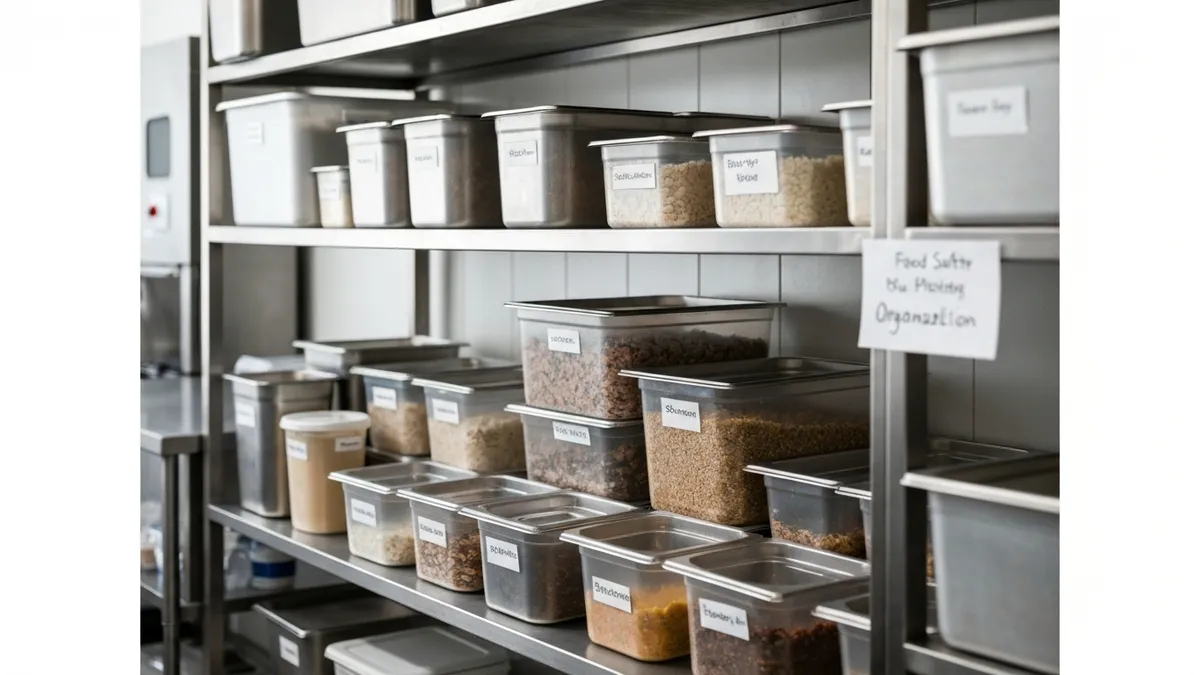
4-Week Study Schedule for the ServSafe 8th Edition
- ▸Read Chapter 1: Providing Safe Food — focus on FDA Food Code definitions
- ▸Read Chapter 2: Forms of Contamination — biological, chemical, physical, allergenic
- ▸Read Chapter 3: The Safe Food Handler — personal hygiene and health policies
- ▸Complete a 20-question practice quiz on foodborne illness causes
- ▸Create flashcards for TCS foods, FAT TOM conditions, and Big 9 allergens
- ▸Read Chapter 4: The Flow of Food — receiving, storage, and temperature controls
- ▸Read Chapter 5: The Flow of Food: Preparation — thawing, cooking, cooling, reheating
- ▸Read Chapter 6: The Flow of Food: Service — holding temps and self-service rules
- ▸Practice minimum internal cooking temperature tables until memorized
- ▸Take a timed 30-question mock exam covering Chapters 4–6
- ▸Read Chapter 7: Food Safety Management Systems — HACCP, Active Managerial Control
- ▸Read Chapter 8: Safe Facilities and Pest Management — design, equipment, and pest prevention
- ▸Read Chapter 9: Cleaning and Sanitizing — chemical concentrations, sanitizing methods
- ▸Memorize the seven HACCP principles and critical control point examples
- ▸Review supplemental appendices on regulatory inspections and crisis management
- ▸Retake all chapter quizzes and note every wrong answer
- ▸Complete two full-length 90-question timed practice exams
- ▸Review all missed questions and reread relevant coursebook sections
- ▸Focus additional study time on your two lowest-scoring topic areas
- ▸Rest the night before the exam — no cramming after 9 PM
The ServSafe Coursebook 8th Edition is organized into nine core chapters, each of which maps directly to a testable content area on the certification exam. Understanding what each chapter covers — and how much exam weight it carries — allows you to allocate your study time strategically rather than reading every page with equal effort. Some chapters, particularly those covering the flow of food and contamination, appear more frequently in exam questions than others.
Chapter 1, "Providing Safe Food," establishes the regulatory framework. It defines foodborne illness, explains the legal liability food service operators face, and introduces the concept of Active Managerial Control (AMC). The chapter also outlines the most common causes of foodborne illness outbreaks: purchasing food from unsafe sources, failing to cook food to correct temperatures, improper holding temperatures, using contaminated equipment, and poor personal hygiene. These five risk factors appear repeatedly throughout the exam in various forms.
Chapters 2 and 3 cover contamination and food handler safety. Chapter 2 distinguishes between biological, chemical, physical, and allergenic contamination, with particular emphasis on the pathogens most responsible for foodborne outbreaks — Salmonella, E. coli O157:H7, Norovirus, Hepatitis A, and Shigella. Chapter 3 pivots to the human element, covering proper handwashing technique, when to restrict or exclude sick employees, and the correct use of single-use gloves. These topics generate a significant volume of exam questions because they reflect real-world failure points in food service operations.
Chapters 4 through 6 trace the "flow of food" — the journey food takes from receiving at the back door through preparation and ultimately to the customer's plate.
Chapter 4 addresses purchasing, receiving, and storage, including how to inspect deliveries, reject non-compliant shipments, and store food at correct temperatures in the right order (the FIFO principle and the top-to-bottom refrigerator storage rule). Chapter 5 covers preparation in detail, including the four approved thawing methods, minimum internal cooking temperatures for every protein category, and the two-stage cooling method (from 135°F to 70°F within two hours, then to 41°F or below within four additional hours).
Chapter 6 completes the flow-of-food section with guidance on service, including hot and cold holding temperatures, time as a control mechanism, and self-service food safety rules such as sneeze guard requirements and customer utensil management. Chapter 7 introduces food safety management systems, most importantly Hazard Analysis and Critical Control Points (HACCP). The seven HACCP principles — conduct hazard analysis, identify CCPs, establish critical limits, monitor CCPs, establish corrective actions, verify the system, and keep records — are heavily tested and must be memorized in order.
Chapter 8 shifts focus to the physical environment: facility design, equipment selection, water supply safety, and integrated pest management (IPM). The exam frequently asks about the correct temperature range for a three-compartment sink, the pests most likely to infest specific areas of a kitchen, and the signs of an infestation. Chapter 9, the final chapter, addresses cleaning versus sanitizing — a distinction the exam tests carefully — including chemical sanitizer types (chlorine, iodine, quaternary ammonium), correct concentration ranges, and the importance of water temperature and contact time in sanitizer effectiveness.
The appendices in the 8th edition include updated regulatory inspection checklists, a glossary of key terms, and reference charts for temperatures, allergens, and HACCP documentation. These sections are not always covered in instructor-led courses but are fair game on the exam. Spending a few hours with the appendices in your final study week often reveals one or two topic areas that you have not yet reviewed, giving you an edge over candidates who stop at Chapter 9 and call it done.
ServSafe Exam Topics: What the 8th Edition Tests
The ServSafe Manager Certification Exam draws heavily from the flow-of-food chapters. Expect 20–25% of questions to cover temperature control — specifically minimum internal cooking temperatures (poultry at 165°F, ground meats at 155°F, whole cuts and seafood at 145°F), proper cooling procedures, and the danger zone (41°F–135°F). HACCP principles account for another significant portion, particularly identifying critical control points and corrective actions. The Big 9 food allergens introduced prominently in the 8th edition now appear regularly in scenario-based questions about customer disclosures and cross-contact prevention.
Contamination questions are the second-largest category. Candidates are asked to identify whether a scenario represents biological, chemical, physical, or allergenic contamination and to select the correct preventive action. The 8th edition places new emphasis on naturally occurring toxins (like scombroid poisoning from improperly refrigerated fish) and foodborne viruses, particularly Norovirus, which is responsible for the largest share of foodborne illness outbreaks in food service settings. Mastering these pathogen profiles — transmission route, symptoms, incubation period, and prevention — is essential for a passing score.

ServSafe Coursebook 8th Edition eBook vs. Print: Which Should You Choose?
- +Instantly searchable text makes reviewing specific topics faster than flipping pages
- +Accessible on any device — phone, tablet, or laptop — for study on the go
- +No shipping wait time; download and start studying the same day you purchase
- +Bookmarks and highlights sync across devices so your notes are always available
- +Typically costs less than the print edition, reducing overall certification expenses
- +Eco-friendly alternative that eliminates paper waste without sacrificing content
- −Requires a reliable device and battery charge; print books never run out of power
- −Some learners retain information better when physically interacting with printed pages
- −Screen fatigue can reduce focus during multi-hour study sessions
- −DRM restrictions on ebooks may limit printing, sharing, or offline access depending on platform
- −Harder to annotate fluidly compared to handwriting margin notes in a physical textbook
- −Access may expire after a set period, unlike a print book you own permanently
ServSafe 8th Edition Exam Prep Checklist
- ✓Purchase or access the official ServSafe Coursebook 8th Edition ebook or print copy before starting any other resource
- ✓Register for your exam through ServSafe.com so you have a test date driving your study timeline
- ✓Complete all nine chapters in order, paying special attention to bolded terms and chapter review questions
- ✓Memorize all minimum internal cooking temperatures and hold them to an accuracy of ±5°F
- ✓Learn the seven HACCP principles in sequence and be able to apply each to a novel food safety scenario
- ✓Study the Big 9 food allergens: milk, eggs, fish, shellfish, tree nuts, peanuts, wheat, soybeans, and sesame
- ✓Practice the two-stage cooling method until you can state the time-temperature benchmarks from memory
- ✓Review chemical sanitizer concentration ranges for chlorine (50–100 ppm), iodine (12.5–25 ppm), and quaternary ammonium (200 ppm)
- ✓Take at least two full-length 90-question timed practice exams under realistic test conditions
- ✓Review every incorrect answer and trace it back to the relevant coursebook chapter before exam day

The 75% Rule: What It Really Means for Your Study Plan
To pass the ServSafe Manager Certification Exam, you must answer at least 70% of the 80 scored questions (out of 90 total, including 10 unscored pilot questions) correctly — that means you can miss no more than 22 questions. Because scenario-based questions make up roughly 60% of the exam, candidates who understand the reasoning behind food safety rules consistently outperform those who only memorize isolated facts. Structure your study sessions around applying concepts, not just recalling them.
One of the most common mistakes ServSafe candidates make is underestimating how much the 8th edition differs from earlier versions. The 9th edition, which was the standard reference from 2017 through 2022, did not include sesame as a recognized allergen, used slightly different language around TCS food definitions, and had less comprehensive coverage of digital food safety monitoring systems. If you studied from an older edition or are using borrowed materials, you risk learning outdated information that could cost you points on the current exam.
The Big 9 allergen update is perhaps the most consequential change between editions. Congress passed the FASTER Act in 2021, adding sesame as the ninth major food allergen recognized under federal law. The 8th edition incorporates this change throughout Chapter 2 and the allergen management sections, including guidance on labeling, cross-contact prevention, and how to communicate allergen information to customers with life-threatening sensitivities. The exam now includes questions that specifically test knowledge of all nine allergens, so candidates using the 7th edition are at an immediate disadvantage.
Another significant update involves the cooling process. The 8th edition clarifies the two-step cooling requirement and provides additional guidance on approved cooling methods — including ice-water baths, blast chillers, and dividing large quantities into smaller shallow pans. The exam frequently presents scenarios involving improper cooling and asks candidates to identify the violation. Understanding not just the temperature benchmarks but also the practical techniques for achieving them quickly is essential for answering these scenario questions correctly.
The 8th edition also introduces expanded content on food safety management systems beyond HACCP. Active Managerial Control (AMC) receives much more detailed treatment, including how managers are expected to proactively identify and address the five CDC risk factors that contribute most to foodborne illness outbreaks. The exam tests candidates on how to implement AMC in a real kitchen environment, including how to conduct pre-shift employee health screenings, how to respond when a critical control point falls outside its established limit, and how to document corrective actions for regulatory review.
Digital monitoring technology receives brief but notable coverage in the 8th edition, reflecting the industry's growing use of automated temperature logging systems, digital HACCP records, and app-based food safety checklists. While the exam does not test deep technical knowledge of specific software products, candidates are expected to understand the purpose and value of these systems within a broader food safety management framework. Familiarity with this content also signals to employers that you are current with contemporary food service practices.
Pest management is another area where the 8th edition provides more nuanced guidance than previous versions. Integrated Pest Management (IPM) — a structured, documentation-based approach to preventing and responding to pest activity — is now covered in greater depth, including the roles of licensed pest control operators, how to identify signs of specific pests (rodents, cockroaches, flies), and what structural conditions invite infestations. The exam tests practical application: given a described kitchen scenario, candidates must identify whether a pest management response is appropriate and what the correct next step should be.
Finally, the 8th edition updates the regulatory landscape section to reflect changes in how health departments conduct inspections and issue risk-based intervention priorities. Understanding that inspectors operate within a risk-based framework — prioritizing facilities with a history of violations or serving highly susceptible populations — helps candidates understand the regulatory context in which food safety management decisions are made. This conceptual framing underpins several exam questions that ask about the purpose of inspections and the correct response to a failed health department inspection.
Using the 6th or 7th edition of the ServSafe Coursebook to study for a current exam is a significant risk. The 9th edition adds sesame as the ninth major allergen, updates TCS food definitions, and revises cooling and reheating protocols. Exam questions are written to the current edition, and answers based on outdated content may be marked incorrect even if they were accurate under a previous version of the coursebook.
Earning your ServSafe Manager Certification is a meaningful professional milestone, but the journey does not end when you receive your certificate. The certification is valid for five years, after which you must complete a recertification exam to maintain your credential. Many food service professionals use that five-year window to advance into senior management roles, open their own establishments, or pursue complementary credentials such as the Certified Food Safety Manager (CFSM) designation recognized by ANSI National Accreditation Board (ANAB).
In the immediate aftermath of passing your exam, your first priority should be to register your certification with your employer and, if applicable, with your local health department. Some jurisdictions require that a copy of your ServSafe certificate be posted prominently in the establishment or kept on file for health inspections. Confirm your state's specific requirements with your local health authority, as these rules vary significantly across the country and can change when new food safety legislation takes effect.
Many certified managers find that the knowledge gained from studying the 8th edition transforms how they approach day-to-day operations. You will start noticing HACCP critical control points in your own kitchen, questioning temperature logs that haven't been filled out, and catching potential cross-contamination risks before they become incidents. This shift in professional consciousness is exactly what the certification is designed to produce — not just knowledge on paper, but an instinct for identifying and mitigating food safety risks in real time.
Career advancement is a concrete benefit of ServSafe certification. According to Bureau of Labor Statistics data, food service managers earn a median annual salary of approximately $64,000, with the highest earners working in hotel and resort settings. Many employers offer pay increases or promotion eligibility tied directly to manager certification status. The credential also signals to hiring managers that you take professional development seriously — a differentiator in a competitive job market where food safety expertise is increasingly valued at every level of the organization.
Some certified managers choose to become ServSafe instructors or proctors themselves after gaining experience in the industry. The instructor pathway requires completing an online instructor course, passing a certification exam, and renewing annually. As an approved instructor, you can deliver ServSafe training at your workplace, for industry associations, or as an independent training provider — a rewarding way to give back to the profession while generating additional income. The 9th edition is the required teaching resource for all current instructor-led programs.
For candidates preparing for state-specific exams, the national content remains the foundation, but it is worth reviewing your state's unique supplementary requirements. States like California, Illinois, and New York have additional rules around food handler card requirements that affect the entire workforce, not just managers. If your role requires you to train your team, understanding these layered regulatory requirements ensures your internal training program covers everything employees need to know to remain compliant at both the federal and state levels.
No matter where your career takes you after certification, the investment you make in understanding the ServSafe Coursebook 8th Edition pays dividends far beyond the exam itself. The science of food safety — how pathogens grow, how contamination spreads, how temperature and time interact to either protect or endanger food — is foundational knowledge for anyone who leads a kitchen. The certification validates that knowledge to your employer, your customers, and the regulatory agencies responsible for keeping the public safe every time someone sits down to eat.
With your study plan in place and a strong grasp of the 8th edition's content, the final phase of preparation is about sharpening execution. The most successful ServSafe candidates combine deep content knowledge with deliberate test-taking strategies that help them stay calm, read questions carefully, and make the right choice even when two answer options look nearly identical. This section covers the practical tactics that consistently separate passing scores from near-misses.
Start every practice session with a timed component. Even if you are only doing 20 questions at a time, set a timer and practice the discipline of reading the question fully before looking at the answer choices. Many wrong answers on the ServSafe exam are there specifically to catch candidates who skim rather than read. Scenario questions often contain a crucial detail — the temperature, the time elapsed, the type of food, the population being served — that determines the correct answer, and speed-reading causes candidates to miss it.
Process of elimination is your most reliable tool when you are uncertain. The ServSafe exam includes distractor answers that are plausible but technically incorrect — often because they describe a real practice that applies in a different context or at a different threshold. If you can eliminate two of four answer choices with confidence, your odds of selecting the correct answer improve dramatically. Never leave a question blank; there is no penalty for wrong answers, so an educated guess is always better than no response.
Temperature memorization deserves its own dedicated drill session. Create a temperature reference table and quiz yourself on it daily during your final two weeks of preparation. Include: the danger zone (41°F–135°F), minimum cooking temperatures for all protein categories, holding temperatures for hot and cold foods, the two-stage cooling benchmarks, and reheat temperature (165°F within two hours). These numbers appear in 25–30% of exam questions in one form or another, and instant recall under time pressure requires genuine memorization, not reference-sheet dependency.
On the day of the exam, arrive early and bring acceptable identification. Most testing centers require a government-issued photo ID, and some require the confirmation number from your ServSafe registration. Read the testing center's policies in advance — food, water, and mobile phones are typically prohibited in the examination room. During the exam, work at a steady pace that leaves you time to review flagged questions. A common guideline is to spend no more than 90 seconds per question on first pass, then return to flagged items with the remaining time.
After submitting your exam, most candidates receive their score immediately through the testing platform. If you pass, your digital certificate is typically available within 24–48 hours through your ServSafe account. If you do not pass on the first attempt, you must wait at least 24 hours before retesting, and you may retake the exam up to five times within a 12-month period. Each retake requires a new exam fee, which is why thorough preparation before the first attempt is worth the extra investment of time.
Mindset matters more than most candidates expect. Food safety content can feel dense and technical, especially if you are new to the regulatory language. But the underlying logic is consistent and learnable: keep hot food hot, keep cold food cold, keep clean equipment clean, keep sick employees away from food, and always know where your food came from. Every chapter in the 8th edition is an elaboration of these five principles. When a scenario question stumps you, return to first principles and ask which of these five fundamentals is at stake — the answer usually follows.
Build confidence through repetition, not just review. Reading the chapter once gives you exposure; taking ten practice quizzes on the same material gives you fluency. There is a meaningful difference between recognizing the correct answer when you see it and being able to retrieve it under exam-day pressure. The candidates who pass on their first attempt almost universally report that active practice — not passive reading — made the decisive difference. Use the practice tests linked throughout this guide, track your performance by category, and direct your final study hours toward the topics where your scores are lowest.
Sample ServSafe Food Safety Test Practice Questions
Try these questions from our free ServSafe Food Safety Test practice tests. The correct answer and an explanation follow each question.
Which of the following is an example of a reportable illness that requires exclusion per ServSafe guidelines?
- A. Hepatitis A
- B. Common cold
- C. Minor headache
- D. Mild seasonal allergies
Answer: A. Hepatitis A
Hepatitis A is one of the 'Big 6' pathogens identified by ServSafe that requires a food handler to be excluded from the operation.
What is the recommended approach to staying current in Emergency Procedures & Crisis Management?
- A. Regular professional development, industry publications, and peer collaboration
- B. Reviewing initial training materials once per year
- C. Relying solely on past experience
- D. Waiting for regulatory changes to force updates
Answer: A. Regular professional development, industry publications, and peer collaboration
Staying current in Emergency Procedures & Crisis Management requires ongoing professional development, reading industry publications, and collaborating with peers to share knowledge and best practices.
When combining a batch of leftover ready-to-eat food with a freshly prepared batch, which date should the combined container be labeled with?
- A. Today's date
- B. The date of the oldest batch
- C. The date of the newest batch
- D. The average of both dates
Answer: B. The date of the oldest batch
When combining batches, the use-by date of the combined product must reflect the oldest batch to prevent serving spoiled food.
What common challenge do professionals face when applying Foodborne Illness Prevention principles?
- A. Balancing theoretical best practices with practical constraints
- B. Finding the relevant textbook chapter
- C. Obtaining permission to use the principles
- D. The principles are too simple to present any challenge
Answer: A. Balancing theoretical best practices with practical constraints
Professionals commonly face the challenge of adapting theoretical best practices to practical constraints and real-world conditions.
ServSafe Questions and Answers

ServSafe Montana: Complete Food Handler Training & Certification Guide

Which Is an Example of Possible Chemical Contamination ServSafe: Complete Guide

ServSafe Manager Exam Flushing Queens Location: Complete Guide to Finding & Booking Your Test

ServSafe Video Training: How Video-Based Learning Accelerates Your Food Safety Certification

How Can I Get My ServSafe Certificate? Complete Step-by-Step Guide to Certification
About the Author

Registered Sanitarian & Food Safety Certification Expert
Cornell University College of Agriculture and Life SciencesThomas Wright is a Registered Sanitarian and HACCP-certified food safety professional with a Bachelor of Science in Food Science from Cornell University. He has 17 years of experience in food safety auditing, regulatory compliance, and foodservice management training. Thomas prepares food industry professionals for ServSafe Manager, HACCP certification, and state food handler examinations.
Join the Discussion
Connect with other students preparing for this exam. Share tips, ask questions, and get advice from people who have been there.
View discussion (8 replies)