
ServSafe Exam Questions: Complete Study Guide and Certification Prep Hub for 2026
🎯 Master ServSafe exam questions with our complete 2026 study guide. Practice tests, exam format breakdowns, and state-by-state food handlers card requirements.
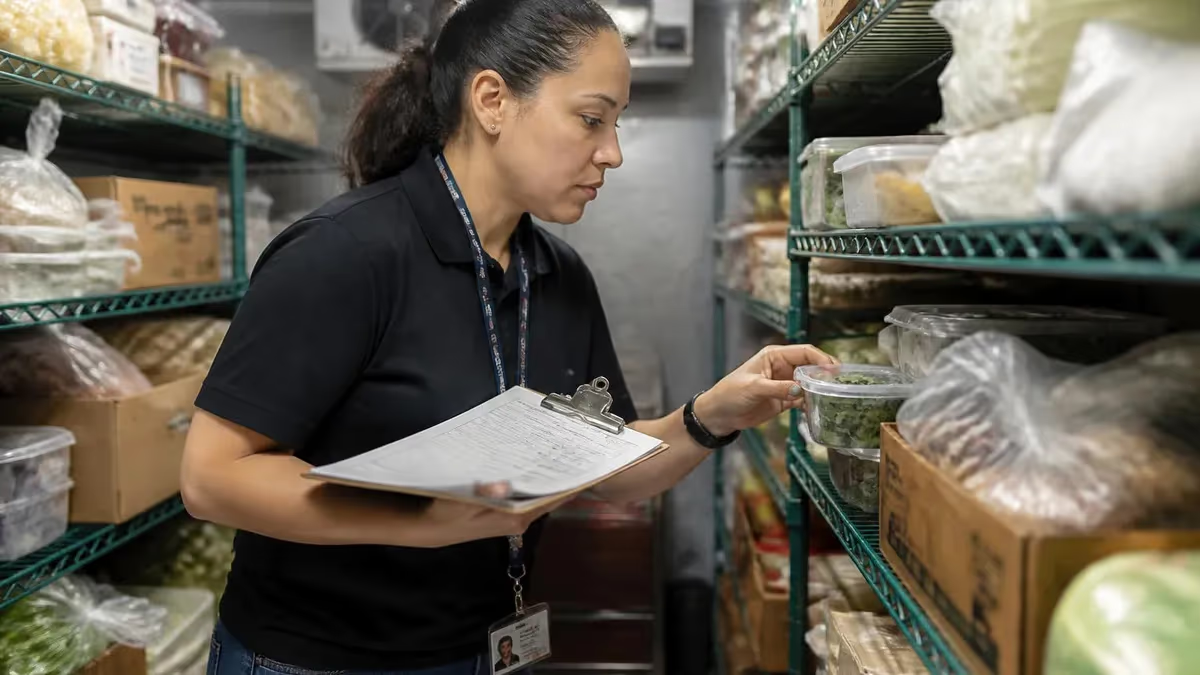
ServSafe exam questions are the gateway to one of the most widely recognized food safety credentials in the United States. Whether you are pursuing a food handlers card for your first restaurant job, upgrading to a full manager certification, or renewing credentials you earned years ago, understanding exactly what the exam tests — and how it tests it — is the single most effective investment you can make before test day. Practice with the free ServSafe Certification Practice practice test on PracticeTestGeeks (7 questions with answer explanations).
The National Restaurant Association Educational Foundation (NRAEF) designs the ServSafe program to ensure that food service professionals at every level can identify and control the hazards that cause foodborne illness, and the exam questions reflect that mission precisely.
The ServSafe Food Handler exam consists of 40 questions covering basic food safety principles such as personal hygiene, cross-contamination prevention, safe temperature ranges, and proper cleaning and sanitizing procedures. The Manager certification exam is considerably more rigorous, featuring 80 scored questions (out of 90 total, including 10 unscored pilot questions) drawn from seven content domains. Passing requires a score of 75 percent or higher on the Manager exam, and most proctored test sessions run up to two hours. Knowing these parameters before you sit down to study helps you allocate time wisely and avoid the common mistake of over-preparing in low-weight domains while under-preparing in high-weight ones.
State and local requirements add another layer of complexity. A food handlers card in Oregon carries different documentation rules than a Texas food handlers license or a food handlers card in Arizona. Some states mandate ServSafe specifically; others accept any ANSI-accredited program. A few jurisdictions require workers to hold a valid food handlers permit within 30 days of hire, while others give employers 60 or 90 days.
If you are also studying for an RBS certification — California's Responsible Beverage Service credential — or a bartender license that requires food safety knowledge, the ServSafe curriculum overlaps meaningfully with those programs, making joint study an efficient strategy.
Practice testing is the most evidence-backed method for improving exam performance. Cognitive science research consistently shows that retrieving information under test-like conditions strengthens memory far more effectively than passive re-reading. For servsafe exam questions specifically, active recall practice forces you to apply temperature danger zone rules, HACCP decision trees, and sanitizer concentration formulas in the same way the real exam will demand — not just recognize them on a highlighted page. This guide walks you through the complete exam framework, high-yield topic clusters, state-specific requirements, and a proven study schedule designed to get you certified on your first attempt.
Beyond the test itself, ServSafe certification delivers real career value. Managers holding a valid ServSafe Manager Certificate are often preferred for promotion into kitchen supervisor and food and beverage director roles. In many states, at least one certified manager must be on-site during all hours of operation, making the credential a practical requirement for advancement rather than a nice-to-have. Entry-level workers who hold a food handlers certificate also signal to employers that they take food safety seriously — a differentiator in competitive hiring markets where restaurants turn over staff frequently and value workers who reduce liability risk from day one.
This comprehensive study hub covers everything from exam format and scoring to topic-by-topic breakdowns, study schedules calibrated to your available prep time, and a curated library of practice questions matched to the actual NRAEF content outline. Use the table of contents to jump to the section most relevant to your current prep stage, whether that is understanding the exam blueprint for the first time or fine-tuning knowledge in a specific domain during the final week before your test date. Every section is designed to be actionable, precise, and grounded in the real content you will encounter on exam day.
PracticeTestGeeks.com has assembled this resource specifically for learners who want to pass efficiently and confidently. The practice quizzes linked throughout this article mirror the difficulty, style, and topic distribution of authentic ServSafe questions. Work through them systematically, review every incorrect answer carefully, and you will enter your exam session with the deep, flexible understanding that separates candidates who pass on the first attempt from those who must retake.
Free ServSafe Certification Practice Study Tools
Interactive ServSafe Certification Practice resources on PracticeTestGeeks, free to start:
- ServSafe Foodborne Illness & Pathogens 1 — 7 questions with answer explanations
- ServSafe Certification Practice flashcards — review key terms and concepts card by card
- ServSafe Certification Practice study guide — topic-by-topic overview of what the exam covers
- ServSafe Certification Practice cheat sheet — one-page printable summary for last-minute review
ServSafe Certification by the Numbers
- The ServSafe Food Protection Manager Certification Examination has 90 multiple-choice questions, 10 of which are unscored pilot questions. (National Restaurant Association)
- Candidates have 2 hours to complete the ServSafe Manager Exam, and with online proctoring the launch process does not count against that time. (National Restaurant Association)
- To pass the ServSafe Food Protection Manager Examination, you need a score of 70% or higher, which means answering at least 56 of the 80 scored questions correctly. (National Restaurant Association)
- A ServSafe Manager Exam access code costs $38.99, and the exam must then be given by a Registered ServSafe Instructor or Proctor, who may charge their own fee. (National Restaurant Association)
- The ServSafe Manager Exam with online proctoring costs $99.00, and ProctorU proctoring is included in that price. (National Restaurant Association)
- Each retake of the ServSafe Manager exam requires buying a new exam at the full price. (National Restaurant Association)
- ServSafe Manager candidates may take the exam twice within 30 days. A third or later attempt requires a 60-day wait after the last attempt, and no more than four attempts are allowed in 12 months. (National Restaurant Association)
- The ServSafe Food Protection Manager Certification is valid for 5 years, though state or local rules may require earlier renewal. (National Restaurant Association)
- To renew a ServSafe Manager certification, you buy a new exam and pass it again when your current certification is expiring. (National Restaurant Association)
Facts verified Oct 20, 2026 against National Restaurant Association. Dates that have passed are removed automatically.
ServSafe Exam at a Glance
| Item | Detail | Official source |
|---|---|---|
| Number of questions | 90 multiple-choice questions (80 scored + 10 pilot) | National Restaurant Association |
| Time limit | 2 hours | National Restaurant Association |
| Passing score | 70% (56 of 80 scored questions) | National Restaurant Association |
| Exam fee (Exam Access Code (registered proctor)) | $38.99 access code; proctor fees extra | National Restaurant Association |
| Exam fee (Online Proctor (ProctorU)) | $99.00 (online proctoring included) | National Restaurant Association |
| Exam fee (Testing Center (Pearson VUE)) | $108.99 (Pearson VUE testing center access included) | National Restaurant Association |
| Retake fee | Full new exam purchase for each retake | National Restaurant Association |
| Retake policy | 2 attempts in 30 days, then a 60-day wait; maximum 4 attempts in 12 months | National Restaurant Association |
| Validity | 5 years | National Restaurant Association |
| Renewal | Pass the exam again (new exam purchase) before the certification expires | National Restaurant Association |
| Delivery | Online proctoring (ProctorU), Pearson VUE test centers, or in person with a Registered ServSafe Proctor (online or print exam) | National Restaurant Association |
| Score release | Online: almost immediately; print: 3–4 business days | National Restaurant Association |
Facts verified Oct 20, 2026 against National Restaurant Association. Dates that have passed are removed automatically.
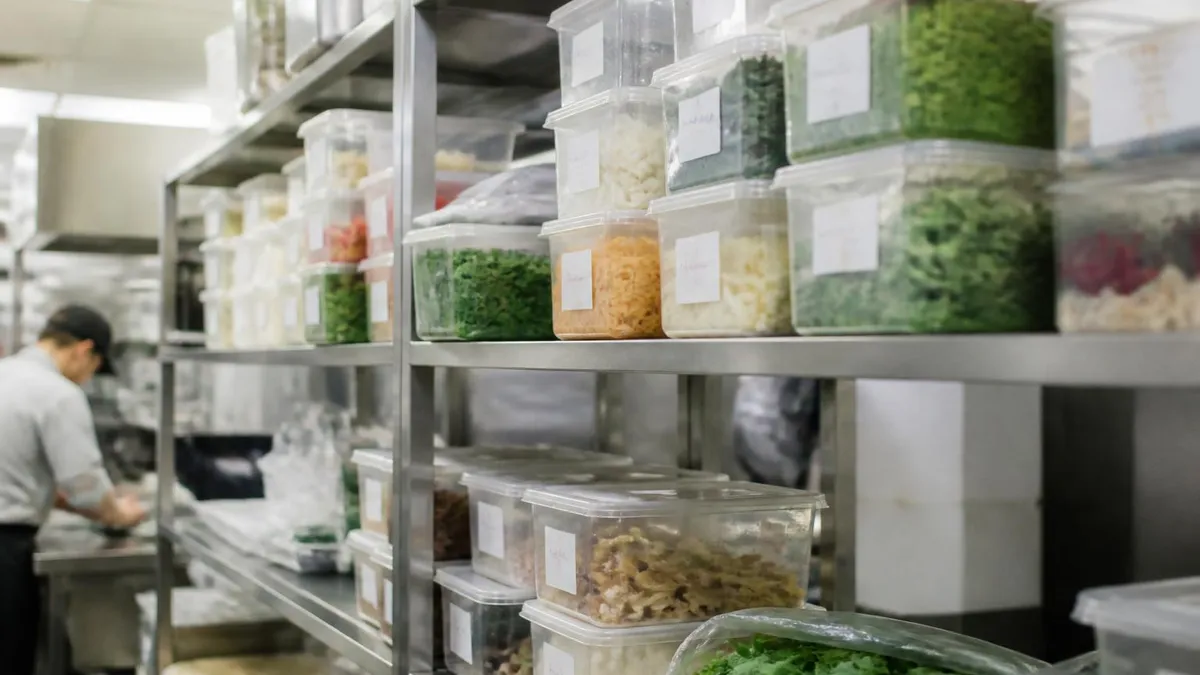
ServSafe Manager Exam Format
| Section | Questions | Time | Weight | Notes |
|---|---|---|---|---|
| Providing Safe Food | 15 | ~20 min | 17% | Foodborne illness agents, risk factors, and safe food definitions |
| Forms of Contamination | 12 | ~16 min | 13% | Biological, chemical, and physical hazards |
| The Safe Food Handler | 8 | ~11 min | 9% | Personal hygiene, illness policies, handwashing |
| The Flow of Food | 20 | ~27 min | 22% | Purchasing through service, temperature control |
| Food Safety Management | 15 | ~20 min | 17% | HACCP, active managerial control, crises |
| Safe Facilities & Pest Management | 10 | ~13 min | 11% | Design, equipment, pest control procedures |
| Cleaning & Sanitizing | 10 | ~13 min | 11% | Procedures, schedules, chemical concentrations |
| Total | 90 | 2 hours | 100% |
Understanding which content domains carry the most exam weight is the foundation of an efficient study plan. The Flow of Food domain earns 22 percent of the total score — nearly one in four questions — making it the single highest-priority area for any ServSafe Manager candidate.
This domain encompasses everything that happens to food from the moment a delivery truck arrives at your dock to the moment a server places a plate in front of a guest. Temperature control, time limits, cross-contamination prevention during storage and prep, and proper cooling and reheating methods all live within this domain. If you master nothing else, master this.
Providing Safe Food and Food Safety Management Systems each account for 17 percent of exam questions. The Providing Safe Food domain is deceptively conceptual — it asks you to understand the biological, chemical, and physical properties of common pathogens, recognize conditions that promote their growth, and identify the populations most vulnerable to foodborne illness.
The Food Safety Management domain shifts to systems thinking: how do you design and implement an active managerial control program? What are the seven HACCP principles, and how do you apply them to a real production flow? Candidates who can answer these questions at an application level, rather than just reciting definitions, consistently outscore those who memorize facts without context.
Cleaning and Sanitizing, Safe Facilities, and Forms of Contamination each account for 11 to 13 percent of the exam. These domains reward precision. Sanitizer concentration ranges — chlorine between 50 and 100 parts per million, iodine between 12.5 and 25 ppm, quaternary ammonium compounds between 200 and 400 ppm — are testable facts that appear on virtually every exam administration.
Equipment requirements such as NSF-certified food-contact surfaces, proper ventilation hood specifications, and three-compartment sink dimensions frequently appear in scenario-based questions. Pest management questions tend to focus on integrated pest management principles and the critical importance of denying pests food, water, and entry points rather than relying solely on chemical treatments.
The Safe Food Handler domain, at 9 percent, is the lowest-weighted section but arguably the most intuitive. Proper handwashing procedure (20 seconds minimum, specific steps), when workers must report illness to managers, and which symptoms require exclusion from food handling versus restriction to non-food-contact duties are all covered here. While this domain carries less exam weight, negligence in these areas causes a disproportionate share of real-world foodborne illness outbreaks, which is why the NRAEF includes it as a foundational competency for every certified manager.
For the Food Handler exam — the entry-level credential required for a food handlers certificate in many jurisdictions — the content structure is simpler. The 40-question exam is divided across five areas: food safety basics, contamination prevention, temperature control, cleaning and sanitizing basics, and safe food preparation. No section carries a published weight, but NRAEF practice materials indicate that temperature control and contamination prevention together represent roughly half the question pool. Workers pursuing a food handlers permit or an Oregon food handlers card through an ANSI-accredited online program can typically complete the course and exam in two to three hours.
High-yield topics that consistently appear across both exam levels include the temperature danger zone (41°F to 135°F), the big six pathogens that require immediate notification to the health department (Shigella spp., Salmonella typhi, Shiga toxin-producing E. coli, Hepatitis A, and Norovirus), proper thawing methods, and the minimum internal cooking temperatures for different food categories. Chicken must reach 165°F; ground beef 155°F; whole muscle beef, pork, lamb, and seafood 145°F with a three-minute rest time. Stuffed foods and dishes containing previously cooked ingredients must also hit 165°F. These numbers are non-negotiable on the exam and in practice.
One frequently overlooked study area is the regulatory framework. ServSafe exam questions regularly reference the FDA Food Code, the basis for most state food safety regulations. Understanding how the Food Code defines terms like potentially hazardous food (now called Time/Temperature Control for Safety food, or TCS food), what constitutes a certified food protection manager, and how variance requests work for specialized processes like smoking, curing, or using additives for preservation gives candidates a meaningful edge.
The exam rewards candidates who understand the why behind the rules, not just the rules themselves, and grounding your knowledge in the Food Code framework accelerates that deeper understanding.
Food Handlers Card Requirements by State
An Oregon food handlers card is mandatory for anyone who handles unpackaged food, food equipment, or food-contact surfaces in a food service establishment. Workers must obtain the card within 30 days of hire by completing an accredited food handler training course and passing the accompanying exam. Oregon accepts several ANSI-accredited providers including ServSafe, and the card is valid for three years. The fee typically runs between $10 and $15 depending on the provider and delivery method — online or in-person.
Washington State requires a Food Worker Card, also valid for three years, obtainable through the Washington State Department of Health's online portal or approved in-person training programs. Idaho follows a county-by-county approach: Ada County mandates food handler certification, while requirements in rural counties vary. Candidates working across state lines in the Pacific Northwest should verify the specific county or city ordinance that applies to their worksite, as municipal requirements sometimes exceed state minimums by requiring shorter renewal cycles or additional topic coverage.

ServSafe vs. Other Food Safety Certifications: Is It the Right Choice?
- +Accepted in all 50 states and U.S. territories as a nationally recognized credential
- +Manager certification meets ANSI/CFP accreditation requirements used by most state health departments
- +Available in multiple languages including Spanish, Chinese, and Korean for diverse workforces
- +Online, in-person, and hybrid delivery formats offer scheduling flexibility for working adults
- +Extensive official study materials including textbooks, practice tests, and online courses from NRAEF
- +Strong employer recognition — many national restaurant chains require ServSafe for management roles
- −Manager exam fee of $36 to $50 plus proctor fees can total $100 to $150, higher than some alternatives
- −Manager textbook is sold separately and costs an additional $50 to $75 for the latest edition
- −Five-year recertification cycle requires full re-examination, not just a refresher course
- −Some states mandate state-specific programs (e.g., California RBS) in addition to ServSafe for certain roles
- −Proctored exam sessions may not be available in rural areas, requiring travel to testing centers
- −Practice materials are not free — the official question bank requires purchase through NRAEF portals
ServSafe Exam Prep Checklist: 10 Steps Before Test Day
- ✓Download and review the official NRAEF exam content outline to identify every testable topic before opening a textbook.
- ✓Take a full-length diagnostic practice test on day one to establish a baseline score and identify your weakest domains.
- ✓Purchase or borrow the current edition ServSafe Manager Book (9th Edition for 2026 exams) and read the chapters matching your lowest-scoring domains first.
- ✓Create a flashcard deck for all minimum internal cooking temperatures, sanitizer concentration ranges, and pathogen-specific details.
- ✓Complete at least three full-length timed practice exams under realistic conditions to build test-taking endurance and time management skills.
- ✓Study the FDA Food Code definitions for TCS foods, ready-to-eat foods, and highly susceptible populations — these appear frequently in scenario questions.
- ✓Review all seven HACCP principles and practice applying them to sample production flow scenarios like those used in actual exam questions.
- ✓Verify your state's specific food handlers card or food handlers permit renewal requirements and confirm your exam is administered by an approved proctor.
- ✓Arrive at your testing location or log into your online proctored session at least 15 minutes early with valid government-issued photo ID.
- ✓After passing, submit your certificate to your employer and note your recertification deadline — ServSafe Manager certificates expire after five years.

The Flow of Food Domain Is Worth 22% of Your Score
More than one in five Manager exam questions comes from the Flow of Food domain, which covers temperature control, purchasing, receiving, storage, preparation, cooking, cooling, reheating, and service. Candidates who master this single domain before test day give themselves an enormous statistical advantage. Focus your deepest study effort here first, then allocate remaining time to Food Safety Management Systems (17%) and Providing Safe Food (17%).
The most effective study strategies for ServSafe combine spaced repetition, active recall, and scenario-based practice — three techniques that decades of cognitive science research have validated as superior to passive reading or highlighting. Spaced repetition means distributing your study sessions over days or weeks rather than cramming everything into a single marathon session.
The human brain consolidates memories during sleep and consolidates them further when information is reviewed just before it would naturally be forgotten. A practical implementation: review new material the day you learn it, again after two days, again after five days, and once more after two weeks. This schedule is demanding but dramatically reduces the forgetting that plagues last-minute studiers.
Active recall means testing yourself constantly rather than re-reading notes. Close your textbook and try to write down everything you remember about, say, the cooling process from the top of your head. Can you name the two-stage cooling method — from 135°F to 70°F within two hours, then from 70°F to 41°F or below within an additional four hours?
Can you list five approved rapid cooling methods: ice-water baths, blast chillers, ice paddles, reducing food mass, and adding ice as an ingredient? If you can produce these facts from memory without looking, they will be available to you on exam day. If you can only recognize them when they appear in a list, they may not be.
Scenario-based practice is the third pillar. The ServSafe Manager exam is not a simple recall test — it presents realistic workplace scenarios and asks you to apply principles to novel situations. A question might describe a cook who is preparing a large batch of chicken soup, place the soup in a walk-in cooler in a 12-inch-deep stockpot at 10:00 PM, and ask whether this procedure is compliant.
Knowing that cooling must begin within two hours of cooking and that deep stockpots inhibit rapid heat loss — meaning the soup will almost certainly not cool from 135°F to 70°F within the required two hours — requires you to apply the cooling rule, not just recite it. Practice questions that mimic this scenario format are the closest thing to a genuine exam preview.
Time management during the exam itself is a skill worth practicing deliberately. With 90 questions in 120 minutes, you have an average of 80 seconds per question — enough time for careful reading and deliberate reasoning, but not enough for extended second-guessing. If a question stumps you, mark it and move on; returning to it after completing the rest of the exam often yields the correct answer once you have subconsciously processed the question further. Never leave questions blank: there is no penalty for incorrect answers on ServSafe exams, so a guess always has positive expected value over no response.
Language and terminology precision matters on ServSafe exams in ways that trip up candidates who study casually. The program uses specific defined terms — TCS food, RTE food, variance, critical control point, critical limit, corrective action — that carry precise meanings distinct from everyday usage. Reading questions carefully and applying the program's own definitions, rather than general intuition, is the difference between correct and incorrect answers on a significant minority of questions. Make a study list of every bolded term in the official textbook and ensure you can use each one accurately in a sentence, not just recognize its definition.
A servsafe manager practice test taken under fully realistic conditions — timed, no notes, no interruptions — is the gold standard final preparation activity. Research on exam performance consistently shows that simulating test conditions during practice reduces test anxiety on the actual exam day.
Familiarity with the question format, time pressure, and the need to sustain concentration for a full two hours means that candidates who have already done this multiple times in practice approach the real exam with a sense of calm confidence that directly improves performance. Aim to complete at least two full-length, timed practice exams in the week before your scheduled test date.
Finally, consider the physical and logistical dimensions of exam success. Get a full night's sleep before your exam — sleep deprivation reduces working memory capacity and slows processing speed, both of which hurt performance on application-level questions. Eat a balanced meal beforehand. If you are taking a proctored in-person exam, visit the testing location in advance so you know exactly where to park, how long it takes to reach the room, and where restrooms are located. These details feel trivial but consistently matter: candidates who are rushed, hungry, or uncertain of their surroundings underperform relative to their preparation level.
ServSafe Manager exam retakes require a mandatory waiting period. If you do not pass on your first attempt, you must wait at least 24 hours before retaking the exam, and you will need to pay the exam fee again. After a second failed attempt, the waiting period increases, and NRAEF recommends completing additional coursework before retesting. To avoid this situation, ensure your practice test scores consistently exceed 80 percent before scheduling your official exam session.
After passing the ServSafe Manager exam, your immediate next steps determine how much practical value the certification delivers in your career. The first step is ensuring that your certificate is properly registered with your employer and, where required by state or local ordinance, with the relevant health department.
In some jurisdictions — including parts of California, New York City, and Chicago — a copy of the manager's food safety certificate must be posted conspicuously in the food service establishment or be available for immediate inspection. Failure to comply can result in violations during routine health inspections even though the manager is technically certified.
The five-year recertification window sounds generous, but it passes quickly in a busy food service career. Set a calendar reminder 12 months before your expiration date to give yourself adequate preparation time for the recertification exam. NRAEF does not offer a streamlined renewal path — recertification requires passing the full Manager exam again, which means going through the same study process you completed the first time.
Candidates who stay current with food safety developments throughout their five-year certification period by reading NRAEF updates, attending annual food safety training sessions, and keeping their knowledge active consistently pass recertification exams more easily than those who let their knowledge go dormant.
For food handlers who passed the entry-level exam and are now considering a pathway to manager certification, the progression is straightforward but requires meaningful additional preparation. The Manager exam covers all the content of the Food Handler exam plus considerably deeper material on HACCP, facility management, pest control, legal compliance, and food safety management systems.
Most candidates need between 20 and 40 hours of focused study to bridge the gap between handler-level and manager-level knowledge, depending on their hands-on food service experience. Workers who have spent years actually managing kitchens often find that their practical experience accelerates their understanding of the textbook content considerably.
For those pursuing a food handlers certificate in multiple states — common for workers in the hospitality and food service industries who relocate frequently — it is worth noting that while ServSafe is nationally recognized, some states maintain lists of additional approved providers and have specific documentation requirements.
Always verify whether your target state accepts out-of-state certifications, whether it requires the certificate to be renewed on a state-specific schedule, and whether any state-specific food safety topics (such as shellfish handling regulations in Gulf Coast states or specific temperature requirements for Alaska Native foods) require supplemental training beyond the standard ServSafe curriculum.
The SerSafe certification ecosystem also includes specialized credentials worth considering depending on your role. ServSafe Alcohol is designed for servers and bartenders and covers responsible alcohol service, recognizing intoxication, checking identification, and intervention techniques. This credential complements a bartender license application in states that require food safety knowledge as part of the licensure process. ServSafe Allergens is a standalone online course that addresses the eight major food allergens, cross-contact prevention, and accommodating guests with food allergies and intolerances — increasingly important as allergy-related incidents generate significant legal liability for food service establishments.
Employers who invest in systematic ServSafe training for their teams — rather than leaving workers to self-study individually — typically see measurable improvements in health inspection scores, reduction in food waste from improperly stored or cooled items, and lower rates of customer complaints related to foodborne illness.
The return on investment is well-documented: the FDA estimates that each preventable foodborne illness outbreak costs an affected establishment an average of $75,000 in direct costs including legal fees, medical costs, regulatory penalties, and lost revenue. A workplace culture built around active food safety management, anchored by ServSafe-certified managers and trained food handlers, is one of the most cost-effective risk management investments a food service business can make.
Whether you are just beginning your journey toward a food handlers card or returning for your second ServSafe Manager recertification, the resources and practice tools on PracticeTestGeeks.com are designed to make your preparation as efficient and effective as possible. Use the practice quizzes throughout this guide to test your knowledge, identify gaps, and build the domain-specific confidence that translates directly into exam performance. The certification process is demanding by design — the food safety stakes are high — but with structured preparation and consistent practice, you are fully equipped to succeed.
You can continue preparing with the servsafe manager practice test pdf, which includes answer explanations for every question.
Practical exam-day tips can meaningfully improve your score even when your knowledge preparation is complete. Start with the questions you find easiest and build momentum before tackling harder scenarios. On ServSafe Manager exams, the questions are not arranged by difficulty — easy and hard questions are interspersed throughout. Scanning the exam and answering familiar questions first ensures you accumulate correct answers efficiently, reduces time pressure during harder questions, and prevents a single difficult cluster from derailing your pacing in the early stages of the test.
Read every answer option before selecting your response. ServSafe questions are designed with highly plausible distractors — wrong answers that are partially correct or correct in different circumstances. The classic example involves cooking temperatures: a question asking for the minimum internal temperature for poultry might offer 145°F, 155°F, 160°F, and 165°F as options.
All four numbers are minimum internal temperatures for different food categories, so only careful reading and precise recall will steer you to 165°F for poultry. Rushing to the first answer that seems right without evaluating all options is one of the most common sources of preventable errors on food safety exams.
For scenario-based questions, identify the food safety principle at stake before attempting to evaluate the answer options. Is this a question about temperature control, contamination prevention, personal hygiene, HACCP application, or regulatory compliance? Naming the principle mentally before reading the answers frames your thinking correctly and reduces the chance that an attractive but irrelevant option pulls you in the wrong direction. This metacognitive step takes only two or three seconds per question but consistently improves accuracy on application-level questions where multiple answers might seem defensible.
Manage your uncertainty explicitly. If you are genuinely unsure between two answer options, apply the elimination strategy rigorously: identify what makes each remaining option potentially correct and potentially incorrect, then choose the option that is more consistently correct across a broader range of scenarios described in the ServSafe curriculum. When all else fails, answers involving temperature control for TCS foods, proper handwashing, and preventing cross-contamination are disproportionately likely to be correct on ServSafe exams because these principles underlie the majority of the program's food safety framework.
After completing each practice quiz, review every incorrect answer — not just the ones you flagged as uncertain. Research shows that confident wrong answers are more dangerous to exam performance than uncertain wrong answers, because you are less likely to reconsider them on the real exam. For each incorrect response, identify specifically which rule or principle you misapplied, write it down in a running error log, and review that log before every subsequent practice session. This systematic error analysis turns every practice test into a targeted study session rather than just a score-checking exercise.
The week before your exam, shift from learning new material to consolidating and reviewing what you already know. Read through your flashcard deck daily, complete one timed practice exam, and spend your remaining study time on your personal error log rather than introducing new content. Your brain consolidates information during sleep, so prioritize seven to eight hours of sleep in the final week. Last-minute cramming of new material the night before an exam reliably hurts performance by interfering with the consolidation of the material you studied weeks earlier and elevating test anxiety on exam day.
On the morning of your exam, avoid reviewing complex material — a quick glance at your temperature flashcards is fine, but do not try to work through HACCP scenarios or textbook chapters. Your knowledge is already prepared; what matters now is entering the exam in a calm, focused state. Arrive early, set up your workspace if testing online, and take three slow breaths before the timer starts.
Candidates who approach the ServSafe Manager exam with confidence grounded in thorough, structured preparation consistently achieve passing scores — and the certification they earn opens doors to career advancement, higher wages, and greater responsibility in one of America's most dynamic and essential industries.
Sample ServSafe Certification Practice Practice Questions
Try these questions from our free ServSafe Certification Practice practice tests. The correct answer and an explanation follow each question.
Hepatitis A is primarily spread in food service settings through which route?
- A. Contaminated cooking equipment and surfaces
- B. Infected food handlers contaminating ready-to-eat food with fecal matter
- C. Undercooked meat products harboring the virus
- D. Airborne transmission in poorly ventilated kitchens
Answer: B. Infected food handlers contaminating ready-to-eat food with fecal matter
Hepatitis A is primarily spread in food service when infected food handlers contaminate ready-to-eat foods through the fecal-oral route, often due to inadequate handwashing.
What should a food establishment do to prepare for a health inspection?
- A. Maintain food safety practices consistently, not just before inspections
- B. Clean thoroughly only the day before an expected inspection
- C. Hide any violations before the inspector arrives
- D. Close the establishment during all inspections
Answer: A. Maintain food safety practices consistently, not just before inspections
Food safety practices should be maintained consistently every day, not just in preparation for inspections. Consistent compliance ensures food safety at all times.
What common challenge do professionals face when applying Food Preparation Standards principles?
- A. Balancing theoretical best practices with practical constraints
- B. Finding the relevant textbook chapter
- C. Obtaining permission to use the principles
- D. The principles are too simple to present any challenge
Answer: A. Balancing theoretical best practices with practical constraints
Professionals commonly face the challenge of adapting theoretical best practices to practical constraints and real-world conditions.
What is a Critical Control Point (CCP)?
- A. A step where control can be applied to prevent, eliminate, or reduce a food safety hazard
- B. Any step in the food preparation process
- C. The point where food is served to customers
- D. The temperature of the walk-in cooler
Answer: A. A step where control can be applied to prevent, eliminate, or reduce a food safety hazard
A CCP is a step in the food handling process where control measures can be applied to prevent, eliminate, or reduce a food safety hazard to an acceptable level.
Take the full ServSafe Certification Practice practice test
ServSafe Questions and Answers

Temperature Danger Zone ServSafe: Preventing Time-Temperature Abuse When Transporting Food

Food Handler Certification: State-by-State Guide for 2026

ServSafe Manager Certificate: Complete Study Guide and Certification Prep Hub for 2026

ServSafe Certification Practice Test: Complete Prep Guide for Food Handlers and Managers

ServSafe Contact Information: How to Reach the National Restaurant Association Education Foundation
How this page was made: written with AI tools and published by Nathan Beja, founder of Practice Test Geeks, who is responsible for its content. Exam facts are checked against the official sources listed below. Not reviewed by a subject-matter expert. Editorial policy
Sources & references
Exam facts on this page (fees, format, dates, passing scores) are checked against these official sources; the date is our last check. Editorial policy
- servsafe.com — Renewal, retake fee, score validity, score release, time limit, exam format, passing score, test delivery · verified Oct 2026