
Temperature Danger Zone ServSafe: Preventing Time-Temperature Abuse When Transporting Food
Master ServSafe temperature danger zone rules to prevent time temperature abuse when transporting food. 📚 Complete guide with practice questions and tips.
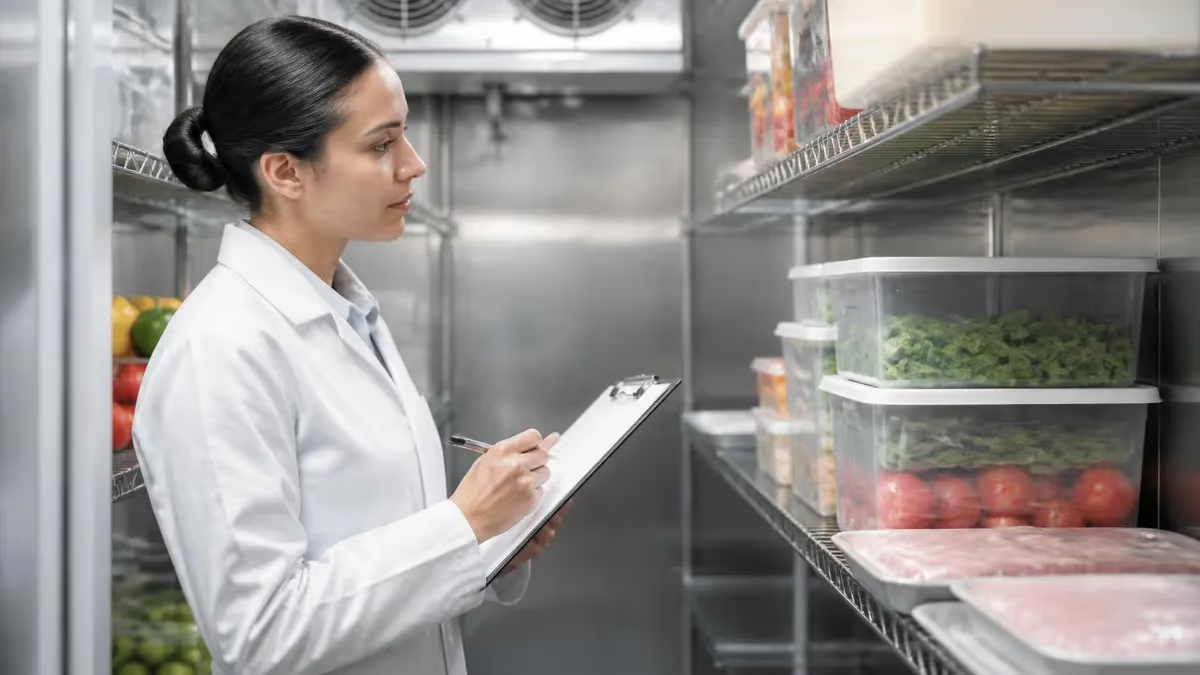
Understanding how to prevent time temperature abuse when transporting servsafe-regulated food is one of the most critical skills any foodservice professional can develop. The servsafe curriculum places heavy emphasis on the temperature danger zone — the range between 41°F and 135°F where pathogenic bacteria multiply rapidly. When food sits in this zone for more than four cumulative hours, it becomes unsafe to serve, and transportation scenarios create some of the highest-risk moments in any food operation because temperature control is harder to maintain on the road.
Transportation introduces variables that stationary kitchens rarely face: ambient heat from delivery vehicles, vibration that loosens lid seals, prolonged travel times through traffic, and limited access to thermometers or recovery equipment. A catering van without proper insulation can see internal cargo temperatures climb 15 to 20 degrees in under 30 minutes during summer months. This is why the servsafe manager exam dedicates an entire competency area to time-temperature control for safety foods, commonly abbreviated as TCS foods.
The financial and reputational stakes are real. A single foodborne illness outbreak traced to your operation can trigger health department closure, lawsuits averaging $75,000 per case, and irreversible damage to your brand. Whether you are studying for your texas food handlers license or preparing for the national ServSafe Manager exam, mastering transportation protocols is non-negotiable. Operators who treat transport as an afterthought consistently fail health inspections and food safety audits.
This guide walks you through every ServSafe-aligned requirement for safe food transportation, from pre-loading temperature verification to documentation practices that protect your operation during inspections. We cover hot-holding above 135°F, cold-holding at or below 41°F, the proper use of insulated carriers, ice baths, frozen gel packs, and direct-fired catering equipment. You will learn how the FDA Food Code and ServSafe materials define abuse, what corrective actions are required, and which records inspectors expect to see.
Time-temperature abuse is not just a regulatory checkbox. It is the leading root cause of foodborne illness in the United States according to CDC outbreak data, with Salmonella, Listeria monocytogenes, and Clostridium perfringens being the most common culprits in transported foods. Each of these organisms thrives in the 70°F to 125°F sweet spot of the danger zone, where their generation times can drop to as little as 20 minutes. That means one bacterium becomes over a million within four hours under ideal conditions.
By the end of this article, you will know exactly which procedures to follow, which thermometers to carry, how to monitor cumulative danger zone exposure, and how to document everything for both regulatory compliance and ServSafe certification success. We have also embedded practice questions throughout the article so you can test your knowledge in real time. This is the same material that appears on the ServSafe Manager exam, the ServSafe Food Handler exam, and most state-level food handler card programs.
Finally, we will address the unique challenges of third-party delivery services, food truck commissary transport, school lunch program logistics, hospital meal carts, and catering operations where food travels long distances between production and service. Each environment has its own quirks, but every one is governed by the same underlying principle: keep cold food cold, keep hot food hot, and minimize the time anything spends in between.
Temperature Danger Zone by the Numbers
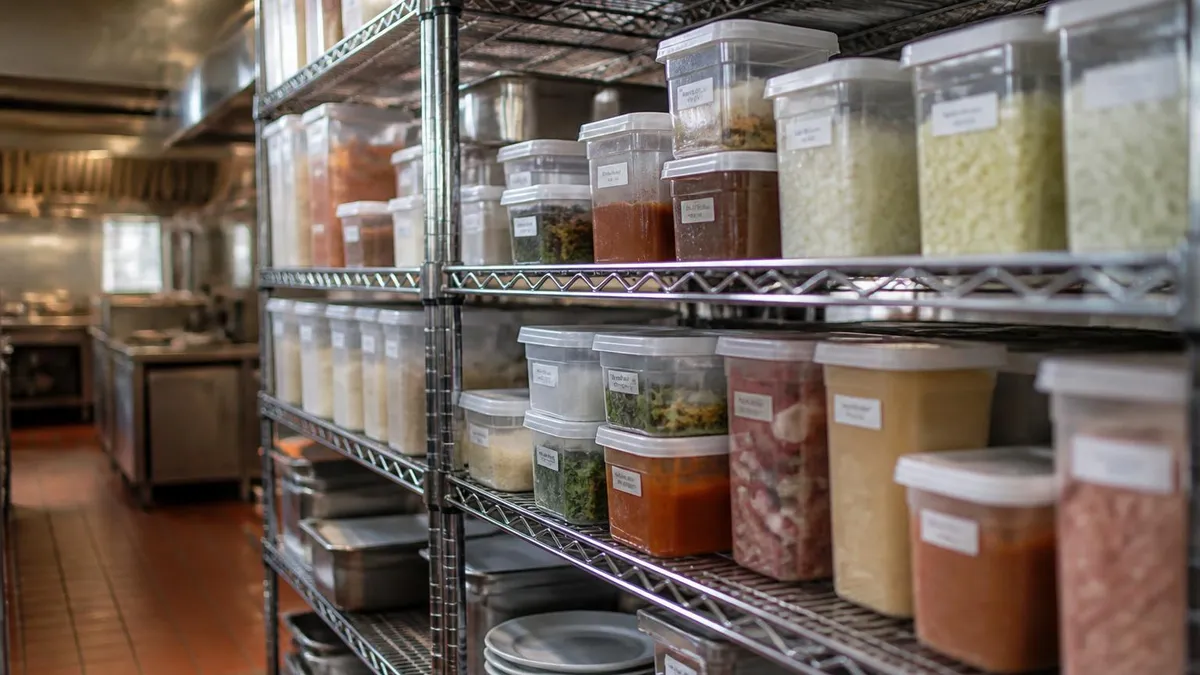
Core Temperature Danger Zone Concepts
ServSafe defines the danger zone as the temperature range where pathogenic bacteria multiply most rapidly. Cold TCS foods must stay at or below 41°F, hot foods at or above 135°F. The middle band is where foodborne illness risk explodes.
Total time TCS food spends in the danger zone across all stages — receiving, prep, transport, holding — must not exceed four hours. Once you hit that threshold, the food must be discarded regardless of how it looks or smells.
Time-temperature control for safety foods include meat, poultry, seafood, dairy, eggs, cooked rice, cut melons, cut tomatoes, cut leafy greens, sprouts, and cooked plant proteins. These are the foods that demand rigorous transport temperature control.
Salmonella doubles every 20 minutes at 95°F. Clostridium perfringens spores survive cooking and germinate in slowly cooled food. Listeria grows even at refrigerator temperatures if held above 40°F for extended periods. Knowing your enemies improves your defenses.
ServSafe requires bimetallic or thermocouple thermometers calibrated to within ±2°F using the ice-point method. Every transport vehicle must carry at least one calibrated thermometer accessible to the driver for spot checks during long routes.
Selecting and setting up proper transport equipment is the foundation of preventing time-temperature abuse. ServSafe materials emphasize that the carrier you choose must be capable of maintaining food at safe temperatures for the entire duration of the trip, including unexpected delays. For hot foods this means insulated thermal carriers, Cambro-style hot boxes, or direct-fired holding equipment that can maintain 135°F or above. For cold foods this means refrigerated trucks, insulated coolers with sufficient ice or gel packs, or refrigerated catering bags.
Pre-conditioning your equipment is just as important as the equipment itself. A cold container at room temperature will absorb heat from the food the moment you load it, raising internal temperatures into the danger zone within minutes. Best practice is to chill insulated coolers with ice for at least 30 minutes before loading, and preheat hot carriers with hot water or steam for 10 minutes before adding food. This simple step can keep food in the safe zone for an extra 60 to 90 minutes on long routes.
The packaging itself plays a major role. Tightly sealed containers retain temperature better than loose-lidded ones. Vacuum-sealed pouches outperform standard foodservice film. Stainless steel hotel pans transfer heat faster than disposable aluminum, which can be either an advantage or a disadvantage depending on whether you are trying to retain hot or cold temperatures. ServSafe recommends matching your container material to the temperature requirement: aluminum for hot, plastic or stainless for cold.
Vehicle preparation matters more than most operators realize. A delivery van that sat in the sun all morning can have an interior temperature of 140°F, which will quickly heat any cold food loaded inside. Run the air conditioning for 15 minutes before loading on hot days. Conversely, in winter, run the heater to warm the cargo area before loading hot foods. Park in shade whenever possible, and never use open pickup truck beds for TCS foods unless they are inside fully insulated, sealed containers.
For larger operations, refrigerated trucks with continuous temperature monitoring and chart recorders provide the gold standard. These vehicles can maintain 38°F cargo space temperatures even in summer heat and produce printable records that satisfy any health inspector. The investment pays off quickly for catering companies, meal kit services, and multi-location restaurant groups. Operators studying the rbs certification curriculum will find that beverage transport follows many of the same principles, particularly for prepared cocktails containing dairy or fresh juice.
Smaller operations can still achieve excellent results with insulated nylon delivery bags, frozen gel packs, and rigid coolers. The key is sufficient quantity: one gel pack per six pounds of cold food, and at minimum two gel packs per insulated bag. For hot food, ceramic heat retention discs or specialty hot bricks placed at the bottom of insulated carriers can maintain 145°F or higher for two to three hours. Never rely on residual heat from cooking alone for trips longer than 30 minutes.
Loading sequence matters too. Load cold items last so they are unloaded first. Keep hot and cold compartments physically separated — never stack a hot pizza on top of a cold salad container. Cross-contamination of temperatures is a real phenomenon and one that inspectors look for. Raw proteins must always be stored below ready-to-eat foods, even during transport, to prevent dripping cross-contamination. These principles are core ServSafe Manager exam content.

ServSafe Practice Test Questions
Prepare for the ServSafe Certification Practice exam with our free practice test modules. Each quiz covers key topics to help you pass on your first try.
ServSafe Cleaning & Sanitization
ServSafe Exam Questions covering Cleaning & Sanitization. Master ServSafe Test concepts for certification prep.
ServSafe Food Preparation Standards
Free ServSafe Practice Test featuring Food Preparation Standards. Improve your ServSafe Exam score with mock test prep.
ServSafe Food Safety Management Systems
ServSafe Mock Exam on Food Safety Management Systems. ServSafe Study Guide questions to pass on your first try.
ServSafe Food Storage & Inventory Management
ServSafe Test Prep for Food Storage & Inventory Management. Practice ServSafe Quiz questions and boost your score.
ServSafe HACCP Principles
ServSafe Questions and Answers on HACCP Principles. Free ServSafe practice for exam readiness.
ServSafe Kitchen Safety & Emergency Proced...
ServSafe Mock Test covering Kitchen Safety & Emergency Procedures. Online ServSafe Test practice with instant feedback.
ServSafe Personal Hygiene Standards
Free ServSafe Quiz on Personal Hygiene Standards. ServSafe Exam prep questions with detailed explanations.
ServSafe Receiving & Inspecting Deliveries
ServSafe Practice Questions for Receiving & Inspecting Deliveries. Build confidence for your ServSafe certification exam.
ServSafe Regulatory Standards & Health Ins...
ServSafe Test Online for Regulatory Standards & Health Inspections. Free practice with instant results and feedback.
ServSafe Staff Training & Food Safety Culture
ServSafe Study Material on Staff Training & Food Safety Culture. Prepare effectively with real exam-style questions.
ServSafe Monitoring Methods for Food Handlers Card Holders
Continuous temperature monitoring uses electronic data loggers placed inside transport containers to record temperature every 30 to 60 seconds. These devices, often Bluetooth-enabled, allow real-time alerts when temperatures approach the danger zone. ServSafe recommends continuous monitoring for any transport exceeding 30 minutes or for high-volume operations like school lunch programs and hospital food service where any failure would affect hundreds of meals.
The recorded data creates an immutable audit trail. If a foodborne illness complaint surfaces, you can demonstrate exactly what temperatures the food experienced. Health inspectors increasingly expect this documentation from large operators. Investment runs $40 to $150 per logger, with cloud-based dashboards adding $20 per month per device. The cost is trivial compared to the protection it provides against liability claims and certification audits.
Refrigerated Truck vs. Insulated Carrier: Which Is Right for Your Operation?
- +Refrigerated trucks maintain consistent temperatures regardless of route length
- +Built-in chart recorders satisfy health inspector documentation requirements automatically
- +Active cooling compensates for opening doors during multi-stop delivery routes
- +Larger cargo capacity handles full catering loads or multi-location restocking
- +Insurance and lender financing often available for commercial vehicle purchase
- +Resale value preserved when properly maintained over five to seven years
- −Capital cost ranges from $45,000 to $120,000 for a new refrigerated van
- −Fuel consumption higher due to refrigeration unit power draw
- −Requires CDL or specialty driver training in many jurisdictions over 26,000 lbs
- −Maintenance complexity includes refrigeration unit servicing every 1,000 hours
- −Overkill for operations delivering fewer than 50 meals per day
- −Parking restrictions in urban areas limit access to delivery destinations
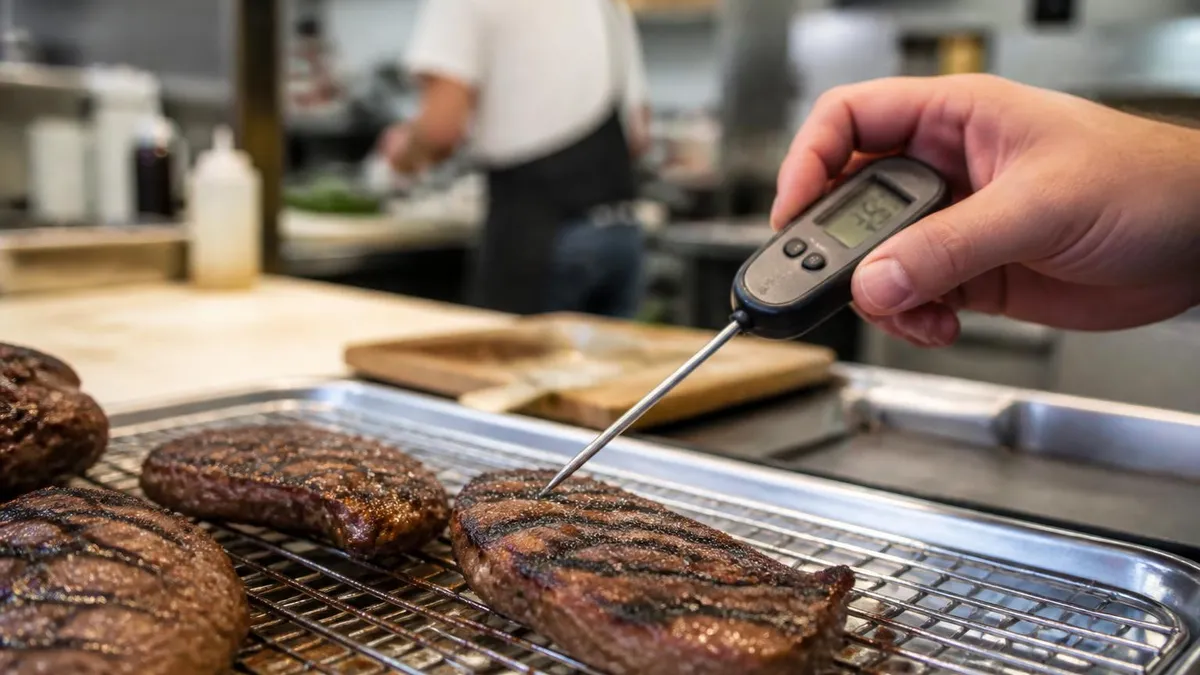
Pre-Transport Food Handlers Permit Checklist
- ✓Verify all TCS foods have been at safe holding temperatures for less than two cumulative hours before loading
- ✓Pre-chill insulated cold carriers with ice for at least 30 minutes before loading cold foods
- ✓Pre-warm hot carriers with hot water or low-temperature steam for 10 minutes before loading hot foods
- ✓Calibrate your bimetallic or thermocouple thermometer using the ice-point method to within ±2°F accuracy
- ✓Record initial internal food temperatures with timestamp on the transport log immediately before sealing containers
- ✓Separate raw proteins from ready-to-eat foods using physical barriers or separate compartments
- ✓Run vehicle air conditioning or heater for at least 15 minutes to condition the cargo area before loading
- ✓Confirm route timing keeps total transport under two hours when possible, or under four cumulative hours maximum
- ✓Verify driver carries a backup calibrated thermometer and sanitizer wipes for mid-route spot checks
- ✓Place data loggers or temperature indicators in the largest and warmest-risk containers in the load
Two hours is the practical decision point, not four
Although the four-hour cumulative rule is the absolute maximum, ServSafe and FDA guidance recommend treating two hours as your operational threshold. After two hours in the danger zone, you can still rapidly cool or reheat the food back to safe temperatures and continue service. After four hours, discard is mandatory with no recovery option. Smart operators target a two-hour ceiling to preserve recovery flexibility.
Even with the best planning, things go wrong during transport. A flat tire, an accident on the interstate, an unexpected delivery delay — any of these can push food into the danger zone for longer than planned. Knowing how to execute corrective actions properly is what separates a passing ServSafe Manager exam from a failure, and what separates a recoverable situation from a costly discard event in your real operation. The first principle is honest temperature assessment. Do not guess; measure.
When you discover food in the danger zone, immediately check both the internal food temperature and the elapsed time since it left safe holding. If less than two hours have passed and the food temperature is between 41°F and 70°F, you can rapidly cool the food back below 41°F using an ice bath, blast chiller, or shallow pan method. The food must reach 41°F within four total hours from the moment it left refrigeration. Document the entire recovery action on your corrective action log.
For hot foods that have dropped below 135°F but remained above 70°F for less than two hours, reheating to 165°F for at least 15 seconds within two hours restores the food to safe holding status. This is allowed only for foods that were properly cooked initially. You cannot use reheating as a substitute for initial cooking, and you cannot reheat the same food more than once. Reheating must be rapid, using a stove, oven, or steam table — never a slow-cooker or holding unit.
If the food exceeded the four-hour cumulative danger zone limit, no corrective action is possible. The food must be discarded, documented, and the loss recorded in your food safety log. Many operators are tempted to serve food that looks and smells fine even after the four-hour mark, but pathogenic bacteria do not change food appearance until well past the point of guaranteed illness. Trust the timer, not your nose. Studying for the oregon food handlers card reinforces this exact principle through scenario-based questions.
Root cause analysis must follow every temperature abuse incident. Was the carrier under-prepped? Did the driver take an unauthorized stop? Did equipment fail? Was the initial holding temperature already too low or too high? Identifying the cause prevents recurrence. Your food safety management system should include a brief incident report form that captures the cause, corrective action taken, and preventive measure implemented. This documentation is invaluable during regulatory inspections.
Staff training on corrective actions cannot be a one-time event. ServSafe certification renewals occur every five years for managers and three years for food handlers in most states, but knowledge degrades faster than that. Conduct quarterly refresher training using realistic transport scenarios. Role-play the discovery of a temperature excursion, walk staff through the decision tree, and verify they can document the response properly. Operations with regular drills experience 60% fewer abuse incidents.
Customer notification protocols are also part of the corrective action toolkit. If a delivered food order experienced confirmed temperature abuse before delivery and you cannot recover the food, the customer must be offered replacement product, refund, or both. Hiding the issue is a violation of consumer protection laws in most states and constitutes deceptive trade practice. Honesty preserves your reputation and prevents the much larger problem of a foodborne illness traced back to your operation.
A common ServSafe exam trap and real-world compliance error involves returning food to refrigeration after a danger zone excursion. The cumulative four-hour clock continues running even after the food returns to safe temperatures. If food spent 90 minutes between 50°F and 70°F during transport and was then re-chilled, it has only 2.5 hours of remaining danger zone time across its remaining service life, not a fresh four-hour window.
Documentation is what transforms food safety from intention into compliance. Health inspectors do not assess your good intentions; they assess your records. Every operation transporting TCS foods must maintain a written or electronic temperature log that captures specific data points: date, time, food item, internal temperature at loading, internal temperature at unloading, transport duration, vehicle ID, and the initials of the responsible employee. These logs should be retained for at least 90 days, and longer if your state regulations require it.
The format matters less than the consistency. A simple paper clipboard log works as well as an expensive software platform, provided entries are made consistently and accurately. The most common documentation failure is the after-the-fact log, where a manager fills in plausible-looking numbers at the end of the shift rather than recording real readings as they happen. Inspectors are trained to spot patterns suggesting fabricated logs, and operations caught falsifying records face severe penalties including license suspension.
Digital documentation offers real advantages for multi-vehicle operations. Cloud-based platforms like Trace, FoodLogiQ, and built-in modules within POS systems automatically timestamp entries, prevent retroactive edits, and produce inspector-ready reports on demand. The investment pays back quickly through reduced labor for record review, better trend analysis, and decisive evidence in the event of a foodborne illness complaint. For operators preparing for the food handlers card arizona exam, understanding electronic versus paper documentation distinctions is testable content.
Beyond temperature logs, your documentation portfolio should include calibration records for each thermometer, training records for each employee certified in food handling, equipment maintenance logs for refrigeration and heating units, vehicle inspection records, and a master corrective action log capturing every temperature excursion and the response taken. Together these documents form your food safety management system, and ServSafe expects every certified manager to maintain them.
HACCP integration takes documentation further. Critical Control Points during transport are identified, monitoring procedures defined, critical limits established (the 41°F and 135°F thresholds), and verification activities scheduled. The HACCP plan ties all your documentation together into a defensible regulatory posture. Smaller operations can use a simplified Active Managerial Control approach, but the underlying principle is the same: write down what you do, do what you wrote down, and prove it.
Regulatory inspections increasingly include digital records review. Inspectors may ask to see your last 30 days of temperature logs and will look for gaps, anomalies, and patterns of borderline readings that suggest under-documentation. Be prepared to demonstrate calibration of every thermometer in use, training certificates for every staff member handling food, and corrective action documentation for every incident. The absence of incident documentation is itself a red flag, because no operation goes 90 days without at least one minor excursion.
Finally, customer-facing documentation matters too. Catering contracts, third-party delivery agreements, and corporate client service-level agreements should specify temperature control standards, allowed transport durations, and corrective action protocols. This protects you legally and clarifies expectations. Many corporate clients now require ServSafe Manager certification for the on-site lead, plus written transport temperature protocols, before signing service contracts. Documentation is competitive advantage as much as it is compliance.
Putting it all together for exam day and daily operations requires a few final practical tips that separate competent operators from exceptional ones. First, build a transport readiness routine that runs every single shift. Calibrate at least one thermometer at the start of the day using the ice-point method. Inspect all insulated carriers for damage, loose seals, or contamination. Verify your vehicle refrigeration unit is operating within range. These steps take five minutes and prevent 80% of common transport failures.
Second, invest in your team's certification. The ServSafe Manager credential remains the gold standard in the United States, accepted in all 50 states, and required by an increasing number of municipal regulations. The ServSafe Food Handler certification covers entry-level positions. Many states also offer state-specific food handler cards with their own curricula. Studying with a quality servsafe manager practice test bank for two to three weeks before the exam yields pass rates above 85% on the first attempt, compared to 65% for unprepared candidates.
Third, integrate temperature awareness into your kitchen culture. Post the 41°F and 135°F thresholds prominently in receiving, prep, holding, and dispatch areas. Conduct daily five-minute pre-shift huddles that include at least one temperature safety reminder. Reward employees who catch and correct potential excursions before they become incidents. Operations with strong food safety culture experience 50% fewer health code violations and 40% lower employee turnover, according to NRA research.
Fourth, plan for the worst-case scenario. What happens if your refrigeration truck breaks down mid-route in 95°F heat? Do you have a backup vehicle? A local relief depot? An emergency contact at a partner kitchen who can hold your product? Document these contingencies in writing and review them quarterly. Operations with documented contingency plans recover from incidents in 60% less time than those operating reactively.
Fifth, use technology where it makes economic sense. Bluetooth temperature loggers cost $40 and prevent multi-thousand-dollar discard events. GPS-enabled fleet management with temperature integration costs $25 per vehicle per month and creates indisputable compliance records. Cloud-based HACCP platforms reduce inspector audit time from four hours to 90 minutes on average. The ROI on food safety technology investments is consistently positive, especially for operations transporting more than 100 meals per day.
Sixth, recognize that ServSafe principles apply universally across the foodservice landscape. Whether you operate a food truck, a catering company, a school lunch program, a hospital food service department, a restaurant with delivery, or a meal kit company, the underlying temperature control science is identical. The packaging may differ, the regulatory framework may vary by state, but the bacteria do not care about your business model. Pathogens grow in the same way whether you serve burgers or banh mi.
Finally, treat continuous learning as a competitive advantage. Food safety regulations evolve, new pathogens emerge, transportation technology improves, and consumer expectations rise every year. Subscribe to FDA Food Code updates, attend at least one food safety conference annually, and renew certifications proactively rather than waiting until they expire. The operators who build sustainable, profitable foodservice businesses are the ones who view food safety as a craft to be mastered rather than a hurdle to be cleared. Your customers, your employees, and your bottom line will all reward the investment.
Sample ServSafe Certification Practice Practice Questions
Try these questions from our free ServSafe Certification Practice practice tests. The correct answer and an explanation follow each question.
What temperature range is known as the Temperature Danger Zone where pathogens multiply most rapidly?
- A. 0°F to 32°F (-18°C to 0°C)
- B. 32°F to 40°F (0°C to 4°C)
- C. 41°F to 135°F (5°C to 57°C)
- D. 135°F to 165°F (57°C to 74°C)
Answer: C. 41°F to 135°F (5°C to 57°C)
The Temperature Danger Zone is 41°F to 135°F (5°C to 57°C), where pathogens can multiply to dangerous levels within hours.
What common challenge do professionals face when applying Temperature Control & Food Storage principles?
- A. Balancing theoretical best practices with practical constraints
- B. Finding the relevant textbook chapter
- C. Obtaining permission to use the principles
- D. The principles are too simple to present any challenge
Answer: A. Balancing theoretical best practices with practical constraints
Professionals commonly face the challenge of adapting theoretical best practices to practical constraints and real-world conditions.
What is the 'danger zone' for food temperature?
- A. 41°F to 135°F (5°C to 57°C)
- B. 0°F to 32°F
- C. 135°F to 200°F
- D. Below 0°F
Answer: A. 41°F to 135°F (5°C to 57°C)
The temperature danger zone is 41°F to 135°F (5°C to 57°C), where bacteria multiply most rapidly. Food should not remain in this range for more than 4 hours total.
What is the most important competency assessed in Temperature Control & Food Storage?
- A. Applied knowledge and practical problem-solving ability
- B. Memorization of textbook definitions only
- C. Years of experience without demonstrated skill
- D. Academic credentials without practical application
Answer: A. Applied knowledge and practical problem-solving ability
Temperature Control & Food Storage assessment focuses on applied knowledge and practical problem-solving, ensuring professionals can perform effectively in real-world situations.
ServSafe Questions and Answers
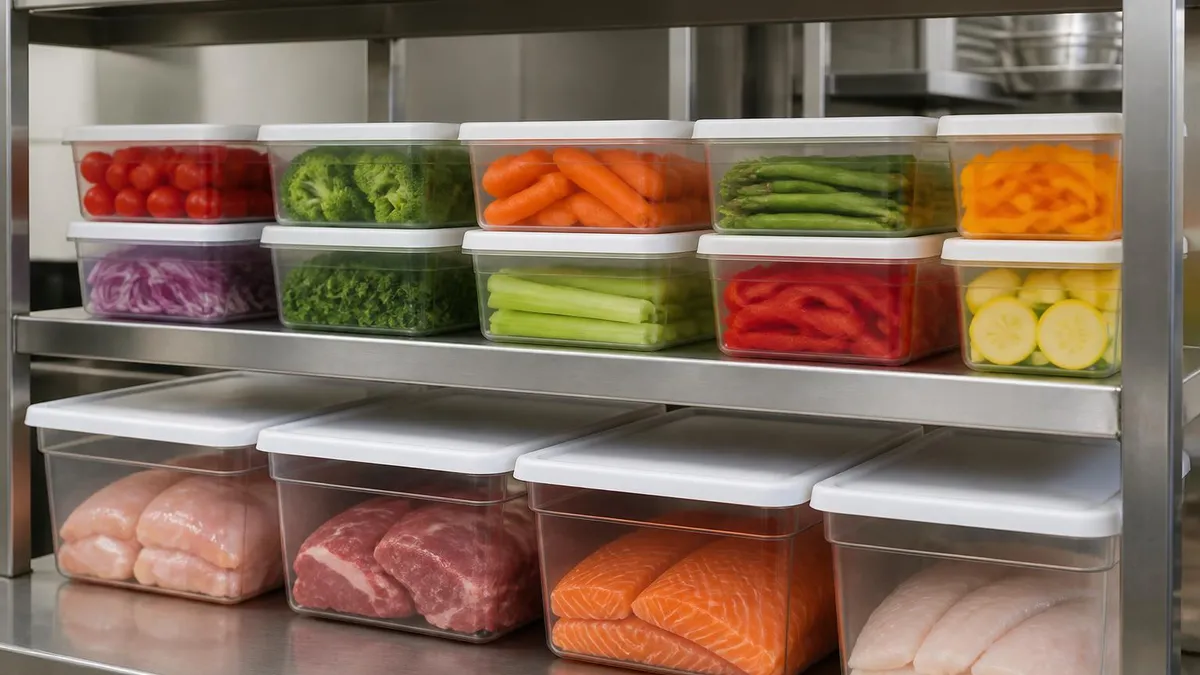

About the Author

Registered Sanitarian & Food Safety Certification Expert
Cornell University College of Agriculture and Life SciencesThomas Wright is a Registered Sanitarian and HACCP-certified food safety professional with a Bachelor of Science in Food Science from Cornell University. He has 17 years of experience in food safety auditing, regulatory compliance, and foodservice management training. Thomas prepares food industry professionals for ServSafe Manager, HACCP certification, and state food handler examinations.