
ServSafe Manager Certificate: Complete Study Guide and Certification Prep Hub for 2026
Earn your ServSafe Manager Certificate in 2026. Full study guide, 🎓 exam format, practice tests, costs, renewal rules, and proven prep strategies inside.

The servsafe manager certificate is the most widely recognized food safety credential in the United States, accepted by regulatory authorities in all 50 states and required by thousands of restaurant brands, school districts, hospitals, and corporate dining operations. Earning it proves that a person in charge understands how to prevent foodborne illness, control time-temperature abuse, train staff, and pass a routine health inspection without major violations. For many managers, this single card is the difference between getting hired and being passed over. Practice with the free ServSafe Certification Practice practice test on PracticeTestGeeks (7 questions with answer explanations).
This guide is built as a complete prep hub for the 2026 exam cycle. You will find the official exam format, the eight knowledge domains the National Restaurant Association tests, a realistic study schedule, cost breakdowns, renewal timing, and direct links to free practice quizzes that mirror the real test. Whether you are renewing for the third time or sitting for your first proctored exam, the structure below moves you from registration to passing score in a predictable way.
Most candidates confuse the manager credential with a basic food handlers card arizona style permit, but the two serve very different roles. A handler card covers entry-level employees handling unpackaged food, with a short 60 to 90 minute course. The manager certificate is a five-year credential tied to the person legally responsible for food safety on the shift, and it requires passing a proctored 90-question exam with a 75 percent minimum score.
The Conference for Food Protection accredits the ServSafe Manager exam under ANSI National Accreditation Board standards, which is why state and county health departments accept it as proof of the Certified Food Protection Manager requirement found in the FDA Food Code. As of 2024, at least 36 states mandate that every food establishment have one CFPM on staff, and several more counties require it locally even when the state does not.
Pass rates hover around 70 to 75 percent for first-time takers who complete the full prep course, and drop into the 40s for candidates who walk in cold. The single biggest predictor of passing is whether the candidate completed a timed practice test in the two weeks before the exam. That is why this guide leans heavily on practice testing rather than passive reading, and every section ends with a quiz tile you can use immediately.
By the end of this article you will know exactly which study materials to buy, how many hours to schedule per week, what the proctor will check at check-in, how the eight content domains are weighted, and which mistakes cause the most retakes. You will also learn how the manager credential interacts with state-specific rules like the Texas CFPM rule, California Food Handler Card law, and alcohol-server credentials that often run alongside it.
If you only have two weeks before your exam, skip directly to the study schedule and the FAQ section at the bottom, then run the practice tests until you can score 85 percent twice in a row. If you are planning further ahead, read the article in order and follow the timeline as written. Either way, this hub is designed to be the only resource you need from registration to results day.
Free ServSafe Certification Practice Study Tools
Interactive ServSafe Certification Practice resources on PracticeTestGeeks, free to start:
- ServSafe Certification Practice flashcards — review key terms and concepts card by card
- ServSafe Certification Practice study guide — topic-by-topic overview of what the exam covers
- ServSafe Certification Practice cheat sheet — one-page printable summary for last-minute review
ServSafe Manager Certificate by the Numbers
Key Facts at a Glance
| Item | Value | Details |
|---|---|---|
| Exam Questions | 90 | Multiple choice, proctored |
| Passing Score | 70% | Equivalent to 56 of the 80 scored scored items |
| Time Limit | Not published | Most finish in 75 minutes |
| Credential Validity | 5 yrs | Then full retake required |

ServSafe Manager Exam Format and Domain Weighting
| Section | Questions | Time | Weight | Notes |
|---|---|---|---|---|
| Providing Safe Food | 10 | 13 min | 11% | Foundational food safety responsibilities |
| Forms of Contamination | 16 | 21 min | 18% | Biological, chemical, physical hazards |
| Personal Hygiene | 9 | 12 min | 10% | Handwashing, glove use, illness reporting |
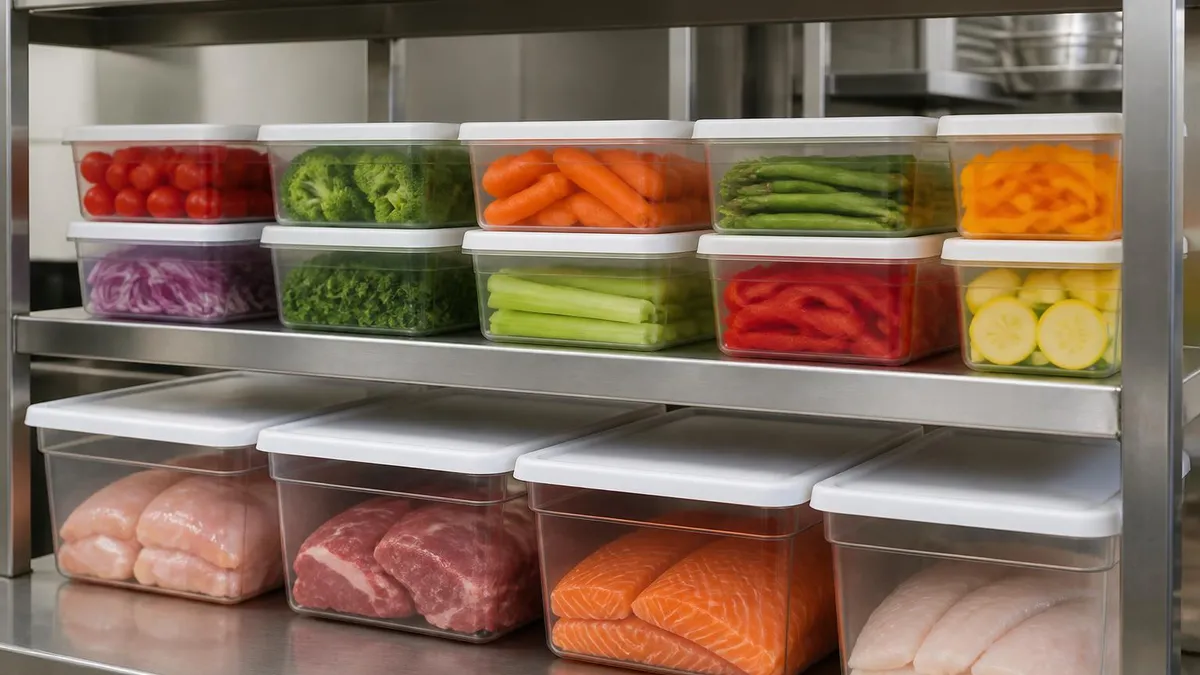
| Purchasing, Receiving, Storage | 13 | 17 min | 14% | Approved suppliers, FIFO rotation |
| Preparation, Cooking, Service | 20 | 27 min | 22% | Cook temps, holding, time as control |
| Facilities, Cleaning, Pest Control | 13 | 17 min | 14% | Sanitizer concentration, equipment design |
| Regulatory Authority and HACCP | 9 | 13 min | 10% | Inspections, active managerial control |
| Total | 90 | 2 hours | 100% |
The servsafe manager certificate is required for the person identified as the Certified Food Protection Manager on a food establishment's permit. That role might be the general manager, the executive chef, a shift supervisor, or in small operations the owner-operator. The FDA Food Code requires at least one CFPM per establishment, and most jurisdictions interpret that to mean one must be reachable during every operating shift, although physical presence is not always mandatory.
Outside of restaurants, the credential applies to school nutrition directors, hospital food service managers, assisted-living dining coordinators, catering company leads, food-truck owners, ghost-kitchen operators, grocery prepared-food managers, and corporate cafeteria supervisors. Even concession stand coordinators at college football stadiums increasingly need it because temporary-event vendors are subject to the same person-in-charge rules as fixed establishments.
State requirements vary in important ways. Texas requires a CFPM in every permitted establishment, with a 60-day grace period for new managers. California requires the Food Safety Manager certification in nearly all retail food facilities, separate from the basic texas food handlers license equivalent California Food Handler Card. Illinois, North Carolina, and Florida have similar mandates, while Oregon and Washington use a county-level approach that effectively requires the credential in most counties.
Employers also use the certificate as a hiring filter for assistant-manager and shift-leader roles. National chains like Chipotle, Panera, Cava, and Sweetgreen list ServSafe Manager as a preferred or required qualification on most management postings. Independent operators often pay a small monthly stipend, typically 50 to 150 dollars, to staff who hold and maintain the credential because it reduces the operator's insurance premiums and inspection risk.
The credential is portable across state lines, which matters for managers in multi-unit groups, franchise operations, or anyone planning to relocate. Because it is ANAB-CFP accredited, a certificate earned in Florida is recognized in Oregon, Arizona, and every other state that accepts CFPM credentials. The only catch is that some states require a separate state registration fee or a short jurisdictional supplement before the credential is fully active locally.
One common misunderstanding involves food handler cards. The servsafe manager certificate does not automatically substitute for a food handler card in states that require both. In Oregon, for example, the manager still needs an Oregon-specific food handler card during their first 30 days unless they hold the CFPM and the county accepts it as an exemption. Always check local rules before assuming one credential covers another.
For aspiring restaurant owners, completing the manager exam early is strategically smart. Lenders, landlords, and franchisors frequently require proof of CFPM credentialing during the lease or franchise-agreement phase, sometimes months before opening. Having the card already in hand removes a common delay during the permitting process and signals professionalism to inspectors, who tend to give well-prepared first-time operators more constructive feedback during initial walkthroughs.
ServSafe Practice Test Questions
Prepare for the ServSafe Certification Practice exam with our free practice test modules. Each quiz covers key topics to help you pass on your first try.
ServSafe Cleaning & Sanitization
ServSafe Exam Questions covering Cleaning & Sanitization. Master ServSafe Test concepts for certification prep.
ServSafe Food Preparation Standards
Free ServSafe Practice Test featuring Food Preparation Standards. Improve your ServSafe Exam score with mock test prep.
ServSafe Food Safety Management Systems
ServSafe Mock Exam on Food Safety Management Systems. ServSafe Study Guide questions to pass on your first try.
ServSafe Food Storage & Inventory Management
ServSafe Test Prep for Food Storage & Inventory Management. Practice ServSafe Quiz questions and boost your score.
ServSafe HACCP Principles
ServSafe Questions and Answers on HACCP Principles. Free ServSafe practice for exam readiness.
ServSafe Kitchen Safety & Emergency Proced...
ServSafe Mock Test covering Kitchen Safety & Emergency Procedures. Online ServSafe Test practice with instant feedback.
ServSafe Personal Hygiene Standards
Free ServSafe Quiz on Personal Hygiene Standards. ServSafe Exam prep questions with detailed explanations.
ServSafe Receiving & Inspecting Deliveries
ServSafe Practice Questions for Receiving & Inspecting Deliveries. Build confidence for your ServSafe certification exam.
ServSafe Regulatory Standards & Health Ins...
ServSafe Test Online for Regulatory Standards & Health Inspections. Free practice with instant results and feedback.
ServSafe Staff Training & Food Safety Culture
ServSafe Study Material on Staff Training & Food Safety Culture. Prepare effectively with real exam-style questions.
Eight Knowledge Domains You Will See on the ServSafe Manager Practice Test
The contamination domain covers biological hazards like Salmonella, Norovirus, Shigella, and the Big Six pathogens that managers must legally exclude from work. You will see questions on reportable illnesses, the symptoms that require immediate exclusion versus restriction, and the 24-hour symptom-free window before a worker can return. Expect at least three questions on allergens and the eight major allergens recognized by the FDA, including the newer addition of sesame in 2023.
Personal hygiene questions focus on handwashing duration (20 seconds total scrub plus rinse), when to change gloves, and bare-hand contact with ready-to-eat food. The servsafe manager practice test is heavy on scenarios where you must decide whether to send an employee home, document the incident, or simply restrict their duties to non-food tasks. Memorize the difference between exclusion and restriction because the wording trips up most candidates.
Online vs In-Person ServSafe Manager Certificate: Which Format Wins?
- +Online proctored format lets you test from home with a webcam at any hour
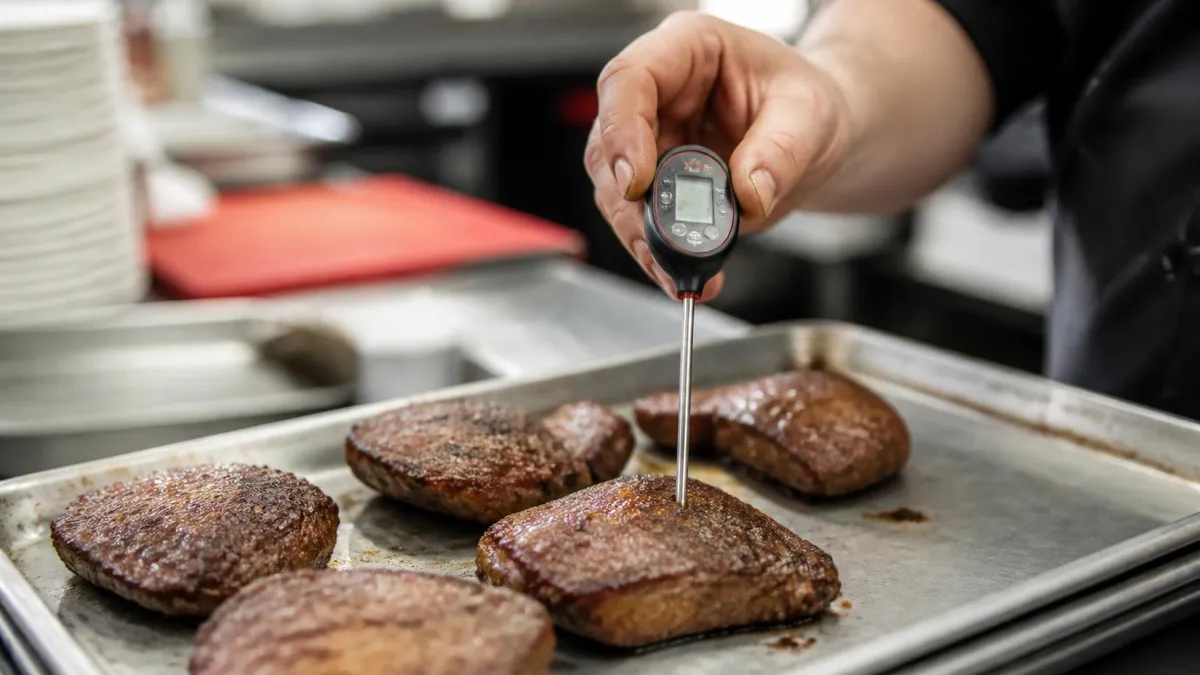
- +In-person classes provide hands-on demonstration of sanitizer testing and thermometer calibration
- +Instructor-led courses include real-time Q&A on confusing topics like cooling charts
- +Self-paced online study fits around restaurant shifts and evening responsibilities
- +In-person exams have slightly higher first-time pass rates due to focused review sessions
- +Online courses are typically 30 to 50 dollars cheaper than classroom equivalents
- +Both formats produce the same ANAB-CFP accredited certificate accepted everywhere
- −Online proctoring requires a quiet room, government ID, and stable internet for 2+ hours
- −Self-paced learners often procrastinate and underestimate the eight-domain workload
- −In-person classes require full day off work plus travel time and parking
- −Some county health departments still prefer paper proof, which can delay online certificate delivery
- −Online webcam exams have stricter rules: no leaving the room, no second monitor, no phone
- −Classroom seats fill quickly in major cities, sometimes booked four to six weeks out
- −Both formats charge full retake fees if you fail, with no partial credit for retakes
Pre-Exam Checklist for Your ServSafe Manager Certificate Day
- ✓Verify your government-issued photo ID matches the name on your ServSafe registration exactly
- ✓Download and install the ProctorU or Examity software at least 48 hours before your exam slot
- ✓Test webcam, microphone, and internet speed (minimum 1 Mbps upload) the morning of the exam
- ✓Clear your desk of all books, notes, phones, smartwatches, and secondary monitors
- ✓Print and read the candidate handbook PDF so you know what proctors will and will not allow
- ✓Complete two full-length practice tests scoring 85 percent or higher in the week before
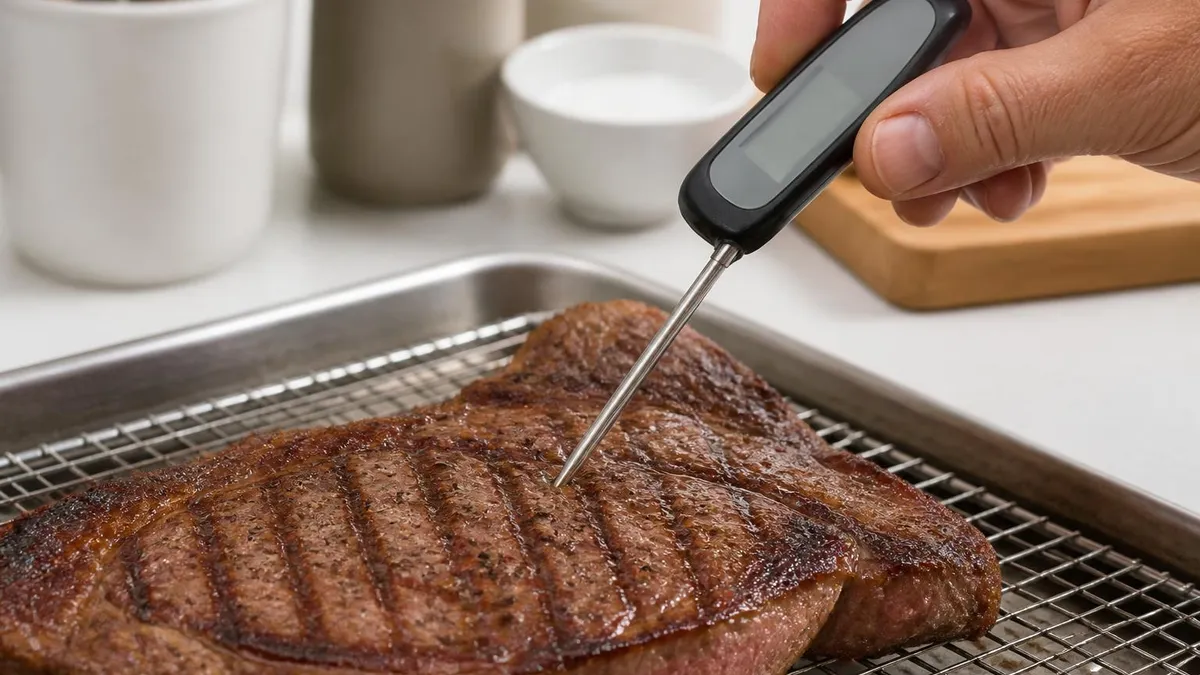
- ✓Memorize the seven minimum internal cooking temperatures and the danger zone range
- ✓Bring a bottle of water in a clear container and use the restroom before launching the exam
- ✓Inform anyone in your household that interruptions will void the exam and require a full retake fee
- ✓Have your employer's address ready to enter as the certificate mailing destination if requested

Take three timed practice tests in the final five days
Candidates who complete at least three full-length 90-question timed practice tests within five days of their exam pass at a rate near 88 percent, compared to 54 percent for those who only review the textbook. The practice tests train pacing, expose weak domains, and acclimate your brain to ServSafe's distinctive scenario phrasing. This single habit matters more than total study hours.
The cost of earning the servsafe manager certificate breaks down into three predictable buckets: study materials, exam fee, and optional retake fee. The complete online course plus proctored exam bundle runs 179 dollars in 2026, while the exam-only voucher for candidates who already studied costs 99 dollars. The printed sixth-edition textbook with answer sheet adds 65 dollars, though most candidates use only the online materials and free practice tests.
Classroom instruction through an Authorized ServSafe Instructor typically costs 175 to 250 dollars depending on city, and includes the exam, textbook, and a one-day review session. Larger employers often arrange group sessions for 125 to 150 dollars per seat when they book ten or more candidates at once. Many community colleges offer the course as a continuing education class for under 200 dollars including all materials, which can be paid through workforce development grants.
The certificate is valid for five years from the exam date, after which a full retake is required because no renewal exam exists. Set a calendar reminder for the four-year-six-month mark to give yourself time to study without scrambling. Some states like California require certificate holders to register the credential with the state and renew the registration separately every three to five years, which is a different fee from the ServSafe retake.
Bartenders and beverage managers often pair the credential with an alcohol-server license, and depending on the state that might be the ServSafe Alcohol certificate, a TIPS card, or a state-issued rbs certification card such as California's RBS Training. None of these substitute for the manager food safety credential, but holding both signals to employers that you can run a complete bar program with full regulatory coverage.
If you fail the exam, you can retest after a 24-hour cooling-off period for the first attempt and 60 days for the second attempt. After three failed attempts, you must complete the full eight-hour instructor-led course before retesting. Each retake costs 99 dollars for online proctored format or whatever the local classroom charges. Most candidates who fail the first time pass on attempt two if they double their practice-test reps and focus on the two weakest domains identified in the score report.
Travel expenses can also factor in for in-person exams. Major test sites cluster in chain restaurant offices, distributor warehouses, and Authorized Trainer classrooms, but rural candidates sometimes drive two hours each way. The online proctored option eliminates that entirely, which is why over 70 percent of 2025 candidates chose remote proctoring, up from about 22 percent in 2019.
Finally, plan for incidental costs that surprise candidates: 8 to 12 dollars for the digital wallet card download, possible 25 dollar duplicate certificate fee if you lose the original, and any state registration fee that runs 15 to 75 dollars depending on jurisdiction. Budget around 220 dollars total for a smooth first-attempt journey including a small buffer for unexpected line items.
The servsafe manager certificate does not have a grace period. The moment your card hits its five-year anniversary, your CFPM status is invalid and your employer may be cited at the next inspection. Schedule your retake at least 60 days before expiration. Many candidates forget because no automatic renewal email is sent unless you opted in.
Your final two-week prep window is where pass rates are made or lost. Week one should be diagnostic. Take one full-length 90-question practice test under timed conditions on day one, with no notes and no pausing. Score yourself by domain rather than overall percentage, and identify the two lowest-scoring areas. Spend the next four days drilling only those two domains using the textbook, video lessons, and topic-specific practice quizzes until your accuracy on those subjects exceeds 85 percent.
Week two pivots to integration. Take a second full-length practice test on day eight to confirm your weak domains have improved without your strong areas slipping. Then alternate between mixed practice tests and targeted flashcard review for cooking temperatures, sanitizer concentrations, and the Big Six pathogens. By day twelve, you should be scoring 85 to 90 percent consistently on full-length tests, which historically correlates with a comfortable pass on the real exam.
Day thirteen is light review only. Read the candidate handbook one more time, confirm your ID and webcam setup, and skim your handwritten cheat sheet of facts you have personally missed twice or more. Avoid cramming new material in the last 24 hours, because new information rarely sticks and tends to crowd out the patterns you have already built. Sleep eight hours the night before; tired candidates fail at nearly double the rate of rested ones.
On exam day, log in 20 minutes early to complete the proctor check-in, which usually involves a 360-degree room scan, ID verification, and a brief screen-share check. Do not eat a heavy meal beforehand. Use the first two minutes to read the on-screen instructions completely, then pace yourself at roughly 60 seconds per question, flagging anything that requires more than 90 seconds for second-pass review.
For ambiguous questions, use the ServSafe wording test: choose the answer that most directly protects public health, even if another answer is technically also correct. The exam consistently rewards the most conservative, most regulator-aligned answer rather than what might be acceptable in a busy real kitchen. When two answers seem equally right, the one that prevents contamination earlier in the flow almost always wins.
If you encounter a scenario about a sick employee, default to exclusion if they show Big Six symptoms (vomiting, diarrhea, jaundice, sore throat with fever, or open infected wounds) and restriction for milder symptoms. For temperature scenarios, default to discarding food rather than reheating when in doubt. For sanitizer questions, default to checking concentration with test strips before assuming the solution is correct. These default heuristics resolve a surprising number of close-call questions.
After submitting, your score appears immediately on screen for online proctored exams and within ten business days for paper-based exams. A passing score generates a digital certificate within 7 to 10 business days, accessible through your ServSafe account. The physical card arrives by mail 2 to 4 weeks later. Save a PDF copy in cloud storage and email it to your employer the same day you pass so it can be posted in the kitchen as inspectors expect.
The practical tips that follow come from candidates and trainers who have run thousands of exam sessions, and they will save you hours of wasted effort. First, do not buy used textbooks older than the seventh edition. The FDA Food Code updates every four years and ServSafe revises its materials accordingly. A 2017 textbook will teach you outdated cooling rules, missing allergens (sesame became the ninth major allergen in 2023), and obsolete sanitizer guidance that could cost you 8 to 12 questions on the current exam.
Second, build a one-page cheat sheet of every number on the exam. Cook temperatures, sanitizer concentrations, holding temperatures, cooling time-frames, dishwasher water temperatures (171°F for high-temp final rinse, 165°F for stationary rack machines), refrigerated thaw-out windows, and the four-hour time-as-control rule should all fit on a single page. Review it three times daily during your final week. Pure number recall accounts for roughly 20 to 25 percent of the exam.
Third, watch one Authorized ServSafe Instructor video per domain on YouTube or the ServSafe learning portal. The audio-visual format reinforces sequencing in ways that reading does not, particularly for the dishwashing flow, cooling sequence, and HACCP seven principles. Instructors also reveal which scenario types appear most frequently, because they have proctored the exam dozens of times and notice patterns the textbook does not advertise.
Fourth, study with someone else if possible. Pair-quizzing using flashcards or open-ended scenario questions exposes gaps that solo reading hides. If a friend asks "what do you do if a customer reports a wire in their food" and you blank, you have just identified a glaring weak spot that the textbook chapter on physical contamination would have covered. Spaced retrieval with a partner doubles long-term retention compared to silent reading.
Fifth, do not skip the regulatory chapter. Many candidates assume the inspection and HACCP questions will be light because they only represent 10 percent of weighting. But those questions are easy points if you simply memorize the seven HACCP principles in order, the difference between a critical control point and a control point, and the basic flow of a routine health inspection. Skipping this chapter costs candidates an average of 6 to 8 points they could have earned with one hour of study.
Sixth, treat the day before your exam as a recovery day rather than a study day. Eat a normal dinner, hydrate well, lay out your ID and exam materials, and go to bed early. Cognitive fatigue from cramming reduces working memory by 15 to 20 percent the next morning, which is the difference between a borderline pass and a borderline fail. Your brain consolidates everything you have studied during sleep, so protect those eight hours.
Seventh and finally, once you pass, take a photo of your physical card the moment it arrives and store it in three places: your phone, cloud storage, and a copy emailed to your employer. Replacement cards cost 25 dollars and take three weeks. Set a calendar reminder five years out for renewal, and a second reminder four years and six months out so you have time to study without panic. The credential is too valuable to let lapse over a forgotten date.
Sample ServSafe Certification Practice Practice Questions
Try these questions from our free ServSafe Certification Practice practice tests. The correct answer and an explanation follow each question.
What is a Certified Food Protection Manager (CFPM)?
- A. A person who has passed an approved food safety certification exam
- B. Any restaurant owner
- C. A health inspector
- D. A food delivery driver
Answer: A. A person who has passed an approved food safety certification exam
A CFPM is a person who has demonstrated food safety knowledge by passing an exam from an accredited certification program, often required in food service establishments.
What common challenge do professionals face when applying Temperature Control & Food Storage principles?
- A. Balancing theoretical best practices with practical constraints
- B. Finding the relevant textbook chapter
- C. Obtaining permission to use the principles
- D. The principles are too simple to present any challenge
Answer: A. Balancing theoretical best practices with practical constraints
Professionals commonly face the challenge of adapting theoretical best practices to practical constraints and real-world conditions.
What is the recommended approach to staying current in Receiving & Inspecting Deliveries?
- A. Regular professional development, industry publications, and peer collaboration
- B. Reviewing initial training materials once per year
- C. Relying solely on past experience
- D. Waiting for regulatory changes to force updates
Answer: A. Regular professional development, industry publications, and peer collaboration
Staying current requires ongoing professional development, reading industry publications, and collaborating with peers.
How long after consuming contaminated food does a foodborne illness typically become apparent?
- A. Always within 30 minutes
- B. Always exactly 24 hours
- C. Always within 6 hours
- D. It varies from hours to weeks depending on the pathogen
Answer: D. It varies from hours to weeks depending on the pathogen
The incubation period for foodborne illness varies widely depending on the specific pathogen, ranging from a few hours to several weeks.
ServSafe Questions and Answers


About the Author

Registered Sanitarian & Food Safety Certification Expert
Cornell University College of Agriculture and Life SciencesThomas Wright is a Registered Sanitarian and HACCP-certified food safety professional with a Bachelor of Science in Food Science from Cornell University. He has 17 years of experience in food safety auditing, regulatory compliance, and foodservice management training. Thomas prepares food industry professionals for ServSafe Manager, HACCP certification, and state food handler examinations.