
ServSafe Course Online: Complete Training Guide & Exam Prep 2026 October
🎓 Pass your ServSafe course online with confidence. Practice tests, study tips, exam format, and everything you need to get certified in 2026 October.

If you are searching for the best way to complete your servsafe course online, you have landed in the right place. ServSafe is the food safety certification program developed by the National Restaurant Association Educational Foundation (NRAEF), and it is recognized by health departments across all 50 states.
Whether you are a line cook preparing for your first food handler card or a restaurant manager pursuing the ServSafe Manager certification, taking your training online gives you the flexibility to study at your own pace without sacrificing the rigor that employers and regulators expect. Getting started with a servsafe practice test 2026 can help you quickly assess where you stand before you even open the course material.
The ServSafe online course is divided into two main credential tracks: the Food Handler program and the Manager Certification program. The Food Handler course typically takes about two hours to complete and covers the fundamentals of personal hygiene, cross-contamination prevention, time and temperature control, and proper cleaning and sanitizing procedures.
It is designed for entry-level employees who need a basic certification to work legally in food service in many jurisdictions. The ServSafe Manager course, by contrast, is far more comprehensive, running eight to fifteen hours of instruction and covering advanced concepts like HACCP, facility management, supplier verification, and responding to foodborne illness outbreaks.
One of the biggest advantages of completing your ServSafe training online rather than in a traditional classroom setting is scheduling flexibility. You can log in from any device, pause a module mid-lesson, and return to exactly where you left off. This is especially valuable for food service workers who deal with irregular shift schedules, multiple jobs, or caregiving responsibilities. The NRAEF platform saves your progress automatically, so you never lose hours of work if your session times out or your internet connection drops unexpectedly.
Another key benefit is cost. Online ServSafe courses are generally priced competitively compared to instructor-led classroom sessions, and you avoid the hidden costs of travel, parking, and time off work. Many employers will reimburse online certification fees as a condition of hiring, especially for management-level roles. Some state workforce development agencies even offer subsidized or free access to ServSafe training for qualifying food service workers, so it is worth researching what assistance might be available in your area before paying full price.
The servsafe practice test is one of the most effective study tools available to candidates regardless of which track they are pursuing. Taking multiple practice exams under timed conditions simulates the pressure of the real assessment and forces you to recall information from memory rather than simply recognizing it while reading course material. Research in cognitive science consistently shows that active retrieval practice — doing practice questions — produces far better long-term retention than passive review of notes or videos. Building this habit early in your study plan pays dividends on exam day.
This article walks you through every stage of the ServSafe online course experience: how the program is structured, what the actual exam looks like, the best strategies for passing on your first attempt, the pros and cons of online versus classroom delivery, and the most common mistakes candidates make. By the time you finish reading, you will have a clear roadmap for earning your ServSafe certification efficiently and confidently, whether you are a first-time candidate or retaking the exam after a previous unsuccessful attempt.
ServSafe Certification by the Numbers
Key Facts at a Glance
| Item | Value | Details |
|---|---|---|
| Manager Course Length | 8-15 hrs | Self-paced online modules |
| Exam Questions | 90 | 75 scored + 10 pilot questions |
| Passing Score Required | 70% | Must answer 56 of 80 correctly |
| Certification Validity | 5 years | Manager cert valid before renewal |
ServSafe Manager Exam Format
| Section | Questions | Time | Weight | Notes |
|---|---|---|---|---|
| The Safe Food Handler | 10 | ~20 min | 13% | Personal hygiene, health policies, handwashing |
| Food Safety Hazards | 15 | ~30 min | 20% | Biological, chemical, physical, and allergen hazards |
| The Flow of Food | 20 | ~40 min | 27% | Purchasing, receiving, storage, preparation, service |
| Food Safety Management Systems | 15 | ~30 min | 20% | HACCP, crisis management, regulatory compliance |
| Facilities & Pests | 15 | ~30 min | 20% | Cleaning, sanitizing, integrated pest management |
| Total | 90 | 3 hours (165 minutes) | 100% |
Understanding the structure of the ServSafe Manager course online is your first step toward passing the servsafe manager exam on your first attempt. The NRAEF organizes the online curriculum into eight core chapters that mirror the content domains tested on the exam. Each chapter contains reading modules, embedded video segments, interactive knowledge checks, and a chapter-end quiz.
Most chapters take between 45 minutes and two hours to complete, depending on your reading speed and how much time you spend reviewing supplemental materials. The platform tracks your completion percentage in real time, which helps you plan your study sessions around a realistic schedule.
The first two chapters focus on foundational concepts: the nature of foodborne illness, who is most vulnerable, and how the spread of pathogens is linked to specific food handler behaviors. These sections are relatively straightforward, but they are important because the exam often includes scenario-based questions that require you to apply these principles to real kitchen situations rather than simply recall definitions.
For example, you might be given a description of a food handler who comes to work with symptoms of norovirus and asked which management action is most appropriate — isolating them from food preparation, sending them home, requiring them to wear gloves, or requiring frequent handwashing.
Chapters three through six cover what ServSafe calls the flow of food — the path food takes from purchasing and receiving all the way through preparation, cooking, cooling, reheating, and service. This section is where most candidates encounter the most challenging material, because it requires memorizing specific temperature thresholds, time limits, and procedural sequences. The servsafe manager practice test questions in this domain are the most numerous on the actual exam, accounting for roughly 27 percent of your total score. Knowing the temperature danger zone, minimum internal cooking temperatures for different proteins, and proper cooling procedures is absolutely essential.
Chapters seven and eight introduce food safety management systems, with a heavy emphasis on Hazard Analysis and Critical Control Points (HACCP). HACCP is a systematic, science-based approach to identifying, evaluating, and controlling food safety hazards before they cause harm. The ServSafe exam tests whether you can identify the seven HACCP principles in order, apply critical limit concepts to practical scenarios, and understand the difference between corrective actions and verification procedures. Many candidates find this section conceptually dense; working through servsafe exam practice questions specifically tagged to HACCP content is one of the fastest ways to build fluency in this vocabulary.
The online course also includes a dedicated final review section that presents all key concepts in summary form, organized by exam domain. This section is invaluable during the last 24 to 48 hours before your exam date. Rather than re-reading all eight chapters, most candidates benefit from focusing their final review on the summary pages and running through as many servsafe manager sample test questions as they can find. The goal at this stage is not to learn new information but to confirm that the material you have already studied is locked in and easily retrievable under exam conditions.
Timing your study sessions strategically also matters. Cognitive research shows that studying in focused 45- to 60-minute blocks separated by short breaks produces better retention than marathon sessions that last three or four hours. The Pomodoro technique — 25 minutes of focused study followed by a 5-minute break, with a longer 15-minute break every four cycles — works particularly well for online course material because each online module is roughly the same length as a single Pomodoro interval. This alignment makes it easy to structure your day without fighting the platform's natural pacing.
Finally, do not underestimate the value of the course's built-in knowledge checks. Many candidates click through these quickly to reach the next module, but these embedded quizzes are actually carefully calibrated to flag the concepts that most frequently appear on the real exam.
Pausing to read the explanation for each wrong answer — not just checking whether you got it right — builds a much deeper understanding of why certain food safety practices are required, which translates directly into better performance on the servsafe test when answer choices are designed to look similar and only subtle distinctions separate the correct response from the most common wrong answer.
ServSafe Manager Practice Test Strategies by Study Stage
Begin your servsafe test prep with a full-length diagnostic practice exam before opening any course material. This baseline attempt — even if your score is very low — reveals your starting point and identifies the content domains where you have the most ground to cover. Write down every question you got wrong and group them by topic. This gap analysis becomes your personal study priority list for the following two weeks.
After the diagnostic, spend the remainder of the first week working through chapters one through four of the online course. Focus on understanding the reasoning behind each rule rather than memorizing isolated facts. For example, understanding why ground beef must reach 155°F internally — because grinding distributes surface pathogens throughout the meat — makes that number much easier to remember than treating it as an arbitrary figure to memorize from a table.

Online vs. Classroom ServSafe Training: Which Should You Choose?
- +Complete modules on your own schedule — ideal for shift workers and busy managers
- +Self-paced format lets you spend extra time on difficult topics without slowing others down
- +Lower total cost when you factor in no travel, parking, or time off work
- +Instant access to course materials after purchase — start studying the same day
- +Progress saved automatically so you can resume exactly where you left off
- +Access to course materials for review even after completing all modules
- −No live instructor to answer questions or clarify confusing concepts in real time
- −Requires strong self-discipline and motivation to stay on track without external accountability
- −Some learners retain information better in a hands-on, interactive classroom environment
- −Technical issues like browser compatibility or slow internet can disrupt the study session
- −Online exams require a separate proctoring arrangement or testing center visit in some cases
- −Group discussion and peer learning opportunities — valuable for scenario-based questions — are absent
ServSafe Test Prep Checklist: Are You Ready to Register?
- ✓Complete all eight chapters of the ServSafe online course and finish each chapter quiz
- ✓Score at least 80% on two consecutive full-length servsafe manager practice tests
- ✓Memorize all minimum internal cooking temperatures for beef, poultry, pork, fish, and eggs
- ✓Understand and be able to list all seven HACCP principles in the correct order
- ✓Know the temperature danger zone range (41°F–135°F) and all time-temperature rules
- ✓Review proper cooling procedures: 135°F to 70°F within 2 hours, then to 41°F within 4 more hours
- ✓Study chemical sanitizer concentration ranges for chlorine, iodine, and quaternary ammonium
- ✓Practice identifying high-risk populations (elderly, immunocompromised, pregnant, children under 5)
- ✓Review receiving and storage temperature requirements for all major food categories
- ✓Confirm your exam registration, location or online proctoring setup, and required identification
The 75% Rule: What It Actually Means
The ServSafe Manager exam contains 90 questions, but only 75 of them are scored. the remaining 10 are unscored pilot questions used to develop future exams. You need to answer 56 of the 80 scored questions correctly to pass — a 74.7% threshold rounded up to 70%. Because you cannot identify which questions are pilot questions, treat every question as if it counts toward your score.
One of the most common reasons candidates fail the servsafe manager exam on their first attempt is over-confidence in content they only passively reviewed rather than actively practiced. Reading through a chapter and recognizing the correct answer when you see it is a very different cognitive skill from retrieving the right answer under time pressure when four plausible options are displayed on screen.
The servsafe manager sample test questions available through practice platforms are the single most reliable bridge between course completion and exam success, and candidates who skip this step consistently underperform relative to those who invest equivalent study hours in practice testing.
Another failure mode involves misreading scenario-based questions. The ServSafe Manager exam is deliberately written to include scenarios where multiple answers seem defensible, and the correct answer is the one that best reflects the most important food safety principle in the given context. For example, a question might describe a situation where a food handler is observed not washing hands after handling raw chicken, and ask what the manager should do first.
Options might include retraining the employee, documenting the incident, correcting the behavior immediately, or scheduling a staff meeting. The correct answer — correcting the behavior immediately — requires knowing that immediate correction of an active unsafe practice takes priority over administrative responses.
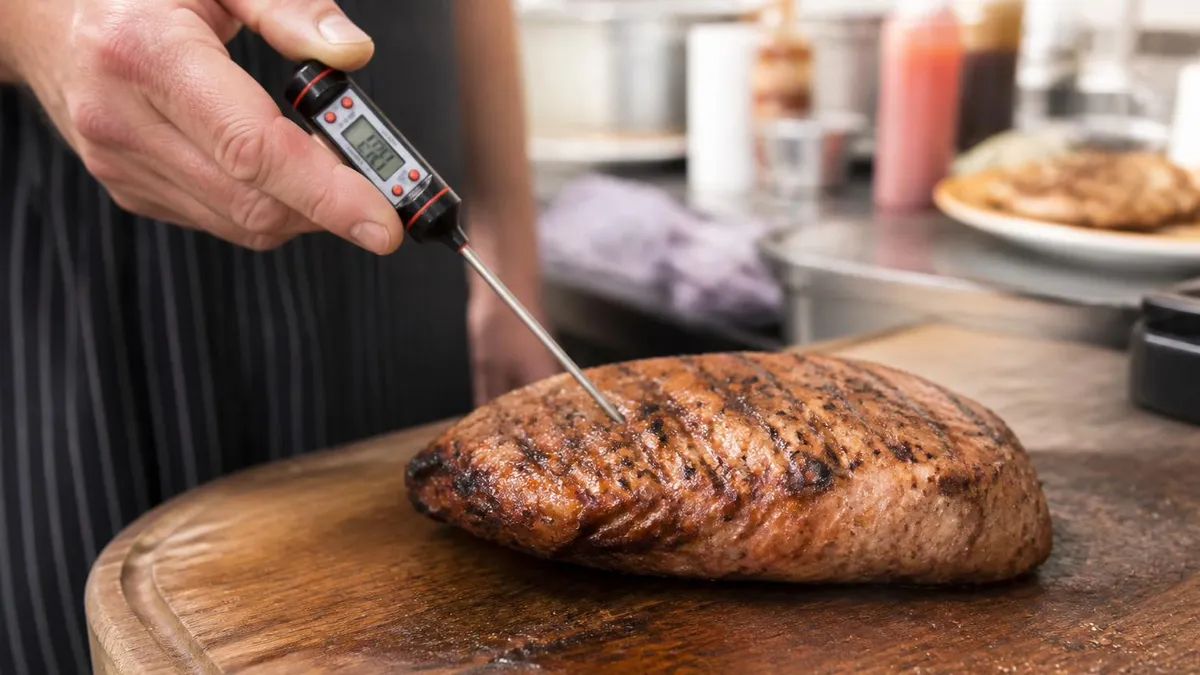
Temperature and time questions are another area where careful reading is critical. Many candidates lose points by confusing cooling requirements with reheating requirements, or by misidentifying which temperature range applies to a specific food category. Ground meat, whole-muscle beef, poultry, stuffed meats, and ready-to-eat foods all have different minimum internal cooking temperatures, and the exam will test your ability to distinguish between them. Creating a simple table that lists each food type alongside its required internal temperature and any special notes (such as the 3-second holding time for whole-muscle beef) is one of the most effective memorization tools available.
The servsafe test 90 questions and answers format also means you need to pace yourself carefully. At 165 minutes for 90 questions, you have an average of slightly less than two minutes per question. Most questions will take you 30 to 60 seconds, which means you can afford to spend two to three minutes on the handful of genuinely difficult scenario questions without running out of time.
A good strategy is to answer every question you are confident about on a first pass, flag any questions you are uncertain about for review, and then return to flagged questions with whatever time remains after completing the full exam.
Food allergen content is increasingly prominent on the ServSafe exam, reflecting growing regulatory attention to allergen management in food service operations. The eight major allergens recognized under the Food Allergen Labeling and Consumer Protection Act — milk, eggs, fish, shellfish, tree nuts, peanuts, wheat, and soybeans — appear in multiple question types, including questions about menu labeling, cross-contact prevention, staff training requirements, and emergency response when a guest experiences an allergic reaction.
Candidates often underestimate the weight of allergen content because it receives less emphasis in the course chapters than temperature control, but it is a reliable source of several scored questions on every exam administration.
Chemical safety questions are another underestimated domain. ServSafe tests whether candidates understand the correct concentrations for common sanitizers, the difference between cleaning and sanitizing, and what to do when a chemical sanitizer test strip shows that a solution is too weak or too strong.
Chlorine-based sanitizers should test between 50 and 100 parts per million for most food-contact surface applications. Quaternary ammonium compounds typically operate at 200 ppm. Iodine sanitizers work at 12.5 to 25 ppm. Knowing these numbers cold — not just recognizing them when you see them — is what separates candidates who pass comfortably from those who pass narrowly or fail.
Finally, many candidates arrive at the exam without reviewing the regulatory and legal content that appears at the end of the ServSafe Manager course. This section covers topics like the role of the regulatory authority, how inspections work, what a variance is, when a HACCP plan is required by regulation, and what managers must do during and after a foodborne illness outbreak.
These questions may seem dry compared to the practical food safety content, but they are consistently tested and represent a meaningful portion of the exam's final scoring domains. Spending 30 to 60 minutes reviewing this material in the days before your exam can add two to four correct answers to your total — more than enough to push a borderline pass into a comfortable one.
ServSafe Manager exam vouchers expire 365 days from the purchase date, and there is no grace period extension. If you purchase a voucher and do not schedule your exam within that window, you forfeit the fee. Additionally, candidates who fail the exam must wait 60 days before retaking it, and a new exam voucher must be purchased for each attempt. Plan your study schedule to allow at least three to four weeks of preparation before your first exam attempt so you have buffer time if you need to reschedule.
Once you pass the ServSafe Manager exam, your certification is valid for five years from the date of the exam — not the date you completed the online course. This distinction matters because some candidates complete their online training weeks or months before actually sitting for the exam, and the five-year clock starts only when you pass the proctored assessment. Keeping track of your certification expiration date is the manager's responsibility; the NRAEF does not send automatic renewal reminders, and letting your certification lapse can have consequences for your establishment's health department inspection results.
Renewal requires completing a new ServSafe Manager certification course and passing the exam again within the 30-day window before your current certificate expires, or at any time after expiration. There is no abbreviated renewal path or experience waiver — every manager must go through the full course and exam process regardless of how many times they have previously certified. This requirement reinforces the fact that food safety regulations and best practices do evolve over time, and returning managers genuinely benefit from reviewing updated content that reflects current regulatory guidance.
Employers in many states are legally required to have at least one ServSafe-certified food protection manager on duty or on staff at all times. Specific requirements vary significantly by jurisdiction: some states require that every establishment have a certified manager, others require certification only for operations above a certain license tier, and a few states have their own equivalent certifications that satisfy the requirement without specifically requiring ServSafe. Before investing in certification, it is worth confirming which credential your local health department accepts, though ServSafe is recognized by the vast majority of jurisdictions nationwide and is effectively the industry standard.
If you are concerned about servsafe test answers and the overall cost of certification, know that the NRAEF and many third-party training providers offer bundle pricing that includes the online course, the textbook, and the exam voucher in a single package.
These bundles are typically more cost-effective than purchasing components separately and are especially valuable for first-time candidates who may not know which study materials will work best for their learning style. Group pricing is also available for establishments that need to certify multiple managers at the same time, which can produce meaningful savings for larger restaurant groups or hotel food and beverage operations.
The ServSafe Food Handler certificate, by contrast, has a shorter validity period — typically two to three years depending on the issuing jurisdiction — and a much simpler renewal process. Food handler certificates can usually be renewed by completing a new online food handler course, without requiring a separately proctored exam. This makes the Food Handler program accessible to high-turnover segments of the food service industry, where maintaining a consistently certified workforce is an ongoing operational challenge rather than a one-time investment.
For candidates who want to understand the full scope of investment before committing to the program, it helps to map out the total cost including course fees, exam voucher, textbook, and any proctoring fees charged by the testing center. Online proctoring through the NRAEF's approved vendor is available for the Manager exam, allowing candidates to test from home with a webcam-based monitoring system rather than traveling to a physical testing site. The convenience premium for remote proctoring is modest — typically $30 to $50 — and is worth considering if the nearest testing center requires significant travel time.
Maintaining your certification is ultimately about more than regulatory compliance — it signals to your team, your customers, and your local health authority that your establishment takes food safety seriously. Managers who pursue ongoing food safety education beyond the minimum required certification consistently report higher team confidence in food safety procedures, fewer health code violations during inspections, and better outcomes when foodborne illness complaints arise. The ServSafe Manager certification is a credential that continues to pay dividends in operational credibility long after the exam itself is a distant memory.
Building a practical study routine around the ServSafe online course is the single most impactful thing you can do to improve your first-attempt pass rate. The candidates who struggle most are those who treat the online course as something to get through rather than something to learn from — clicking through modules quickly, skipping the knowledge checks, and relying on a single cramming session the night before the exam.
The candidates who pass with strong scores are those who spread their study across two to four weeks, use practice testing as a primary learning tool rather than a final check, and review incorrect answers with genuine curiosity about why they were wrong.
One particularly effective technique is creating real-world connection points for abstract regulatory content. When you encounter the rule that ready-to-eat food must be used within seven days if held at 41°F or below, connect it to a real scenario from your own kitchen: the container of house-made ranch dressing that was prepped on Monday — what day does it need to be discarded? Grounding abstract numbers in concrete operational scenarios makes them much easier to retrieve under exam pressure than treating them as isolated facts on a list to memorize.
Group study can also be surprisingly effective for ServSafe preparation, even in an online course context. Forming a small study group with colleagues who are also pursuing certification creates accountability, allows you to quiz each other on weak areas, and generates discussion about real-world application of the concepts that individual study does not produce. Even a brief weekly video call where each member shares two or three practice questions they found challenging can dramatically accelerate the group's collective understanding of the most difficult exam content.
If English is not your primary language, note that ServSafe offers its manager course and exam in multiple languages including Spanish, Chinese, Korean, and French, among others. Taking the course and exam in your strongest language significantly reduces cognitive load and gives you a better chance of demonstrating the food safety knowledge you actually have rather than struggling with language barriers under exam conditions. Contact the NRAEF directly or check with your training provider to confirm which language options are available for both the online course and the proctored exam in your region.
For candidates who have previously failed the ServSafe Manager exam, the retake process deserves special attention. The mandatory 60-day waiting period between attempts is an opportunity — not just a delay. Use that time to conduct an honest diagnostic of why you did not pass: Was it a specific content domain where your scores were consistently low?
Was it poor time management during the exam? Was it test anxiety that caused you to second-guess correct answers? Identifying the root cause of a failed attempt and building a targeted study plan around it is far more effective than simply repeating the same preparation approach and hoping for a different result.
The servsafe test prep resources available from third-party providers — including this site's practice tests — are an important complement to the official NRAEF course materials. Third-party practice questions are often written to closely mirror the difficulty level and question format of the real exam, and working through a variety of question sources exposes you to a wider range of phrasings and scenarios than any single resource provides.
The goal is to build strong, flexible knowledge that can handle the way the real exam asks about concepts, not just the way the official course presents them. Combining official course study with third-party practice testing is the gold-standard preparation approach endorsed by most ServSafe instructors and high-achieving candidates alike.
Remember that passing the ServSafe Manager exam is an achievable goal for any motivated candidate who prepares systematically. The content is challenging but not impenetrable — it is grounded in practical food safety principles that directly protect the health of the customers you serve every day. Approaching your preparation with that perspective, rather than treating the certification as a bureaucratic hurdle, will make the entire process more meaningful and more likely to result in the kind of deep, lasting knowledge that makes you a genuinely better food safety manager long after you have received your certificate in the mail.
Sample ServSafe Practice Questions
Try these questions from our free ServSafe practice tests. The correct answer and an explanation follow each question.
A floor drain in a prep area is draining slowly. What hazard does this primarily create?
- A. A fire hazard due to grease buildup
- B. A physical hazard from slip-and-fall risk and a biological hazard from standing water
- C. Only an aesthetic problem with no food safety impact
- D. A chemical hazard from drain cleaning products
Answer: B. A physical hazard from slip-and-fall risk and a biological hazard from standing water
Slow floor drains create slip-and-fall hazards and allow standing water to accumulate, which can harbor pathogens and attract pests.
A food handler's hand or wrist has a cut or a boil on it. What would be the best course of action?
- A. Be restricted to duties that do not involve food contact
- B. Wash hands thoroughly between each task
- C. Stay home until the wound or boil is completely healed
- D. Wear an impermeable bandage and cover it with a single-use glove
Answer: D. Wear an impermeable bandage and cover it with a single-use glove
An open wound or boil on a food handler's hand or wrist can harbor pathogens and directly contaminate food. To prevent this, the wound must first be covered with an impermeable bandage to prevent leakage. Then, a single-use glove must be worn over the bandage to provide a double barrier and ensure food safety.
A manager is training staff on the flow of food. At which point in the flow is food safety FIRST at risk?
- A. Purchasing from unapproved suppliers
- B. Cooking to the wrong temperature
- C. Improper cooling after service
- D. Holding on the buffet line
Answer: A. Purchasing from unapproved suppliers
The flow of food begins with purchasing, so using unapproved suppliers introduces hazards before food even enters the operation.
Who has the primary responsibility for food safety training in an establishment?
- A. The person in charge (manager)
- B. The local health inspector
- C. The newest staff member
- D. The food supplier
Answer: A. The person in charge (manager)
The person in charge is responsible for ensuring staff are trained in food safety.
ServSafe Questions and Answers




About the Author

Registered Sanitarian & Food Safety Certification Expert
Cornell University College of Agriculture and Life SciencesThomas Wright is a Registered Sanitarian and HACCP-certified food safety professional with a Bachelor of Science in Food Science from Cornell University. He has 17 years of experience in food safety auditing, regulatory compliance, and foodservice management training. Thomas prepares food industry professionals for ServSafe Manager, HACCP certification, and state food handler examinations.
Join the Discussion
Connect with other students preparing for this exam. Share tips, ask questions, and get advice from people who have been there.
View discussion (7 replies)