
Phlebotomy Services: Complete Guide to Mobile Draws, Lab Partnerships, and Career Pathways
Explore phlebotomy services, mobile draws, lab partnerships, salary data, and certification paths. Find phlebotomy classes near me and start your career. 📗
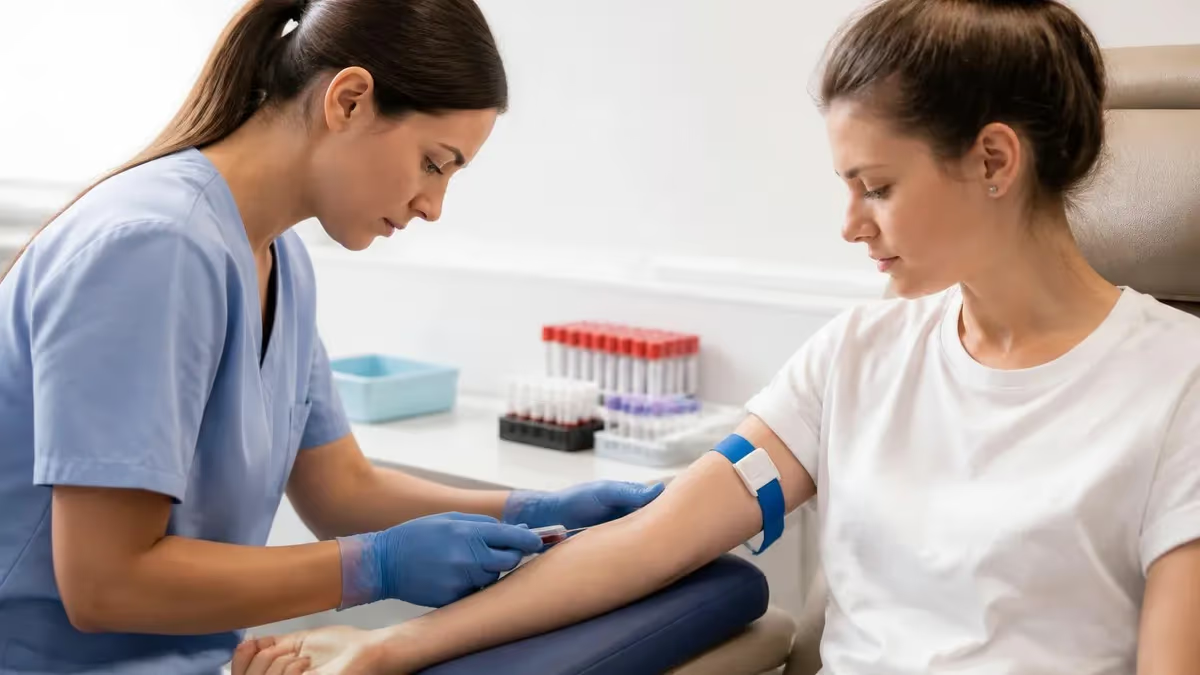
Phlebotomy services form the invisible backbone of modern healthcare diagnostics, connecting every patient encounter to the laboratory data that drives treatment decisions. Whether you are searching for phlebotomy classes near me to launch a new career or trying to understand the broader landscape of blood collection in clinics, hospitals, mobile units, and research settings, this guide breaks down everything you need to know. Phlebotomy services span specimen collection, patient identification, processing, transport, and reporting workflows that hospitals, urgent cares, and home-health agencies rely on every single day.
The demand for skilled phlebotomy professionals continues to climb because more than 70 percent of medical decisions depend on laboratory testing, and nearly all of those tests begin with a venipuncture or capillary stick. As outpatient clinics expand, as telehealth providers add at-home draws, and as wellness companies push direct-to-consumer biomarker testing, the variety of phlebotomy service models has grown dramatically. Understanding the differences between hospital-based, mobile, fixed-site, and concierge models helps both patients and aspiring technicians make smart decisions.
Phlebotomy training specialists have responded to this demand by building short, focused programs that prepare students for entry-level work in as little as four to twelve weeks. If you are exploring phlebotomy courses near me, you will find community college certificates, vocational school diplomas, hospital-sponsored apprenticeships, and accelerated online-plus-clinical hybrids. Each pathway has tradeoffs in cost, length, clinical hour requirements, and certification eligibility, but all share the same fundamental goal: producing technicians who can safely draw blood while protecting patient comfort and specimen integrity.
Before you commit to a path, it helps to map out a concrete phlebotomy program near me that matches your timeline, budget, and career goals. Some learners want a fast on-ramp to a hospital lab assistant role, while others plan to use phlebotomy as a stepping stone toward nursing, medical lab science, or physician assistant programs. The credential you choose, the clinical site you train at, and the volume of sticks you log during externship will all influence your hiring prospects.
This article also examines therapeutic phlebotomy, a specialized service used to treat conditions like polycythemia vera and hereditary hemochromatosis by removing measured volumes of blood. Therapeutic services require additional training in patient monitoring, infusion-style workflows, and documentation, and they typically pay more than routine outpatient drawing. We will look at the regulatory framework, the clinical indications, and the skills you need to add this scope of practice to your resume.
Finally, we will explore the order of draw phlebotomy professionals follow, the certifications employers prefer, the realistic phlebotomy salary ranges across regions, and the workflow design choices that distinguish high-performing teams from chaotic ones. Whether you are a patient comparing providers, a healthcare administrator designing a new service line, or a future certified phlebotomy technician planning your training, you will leave this guide with a clear, actionable understanding of the field.
Keep this page open as a reference. Use the table of contents to jump to the sections most relevant to you right now, and use the practice quiz buttons throughout the article to test your knowledge against real certification-style questions used by the NHA, ASCP, AMT, and other national bodies.
Phlebotomy Services by the Numbers

Phlebotomy Service Models Compared
Inpatient and ER draws happen 24/7 with phlebotomy teams covering trauma, ICU, pediatrics, and routine morning rounds. High volume, rotating shifts, and exposure to difficult sticks build broad clinical skill quickly.
Patient service centers operated by Quest, Labcorp, and hospital networks handle scheduled draws, walk-ins, and employer wellness panels. Workflow is steady, patient-facing, and built around insurance-driven order sets.
Mobile phlebotomists travel to homes, assisted-living facilities, and worksites to collect specimens for home-health agencies, hospice, and direct-to-consumer testing companies. Independence is high; logistics and chain of custody matter most.
Apheresis suites, blood donor centers, and therapeutic phlebotomy clinics manage longer procedures, larger volumes, and clinical monitoring. Staff typically hold advanced certification and work under direct physician oversight.
Pharma sponsors and academic centers hire phlebotomists for protocol-driven draws with strict timing windows, specialized tubes, and rigorous documentation. Pay premium reflects the precision and regulatory environment required.
Training pathways shape every part of your future as a phlebotomy technician, from the employers willing to interview you to the long-term salary trajectory you can build. The most common starting point is a certificate program offered by a community college, vocational school, or hospital education department. These programs typically run between four and twelve weeks of didactic instruction followed by a supervised clinical externship where students must complete a minimum number of successful venipunctures and capillary sticks before they can sit for certification.
When evaluating phlebotomy courses near me, look closely at the clinical hour requirement and the externship partner sites. California, Washington, Louisiana, and Nevada have specific state licensure requirements that mandate documented draws, infection control training, and approved curricula. Even in states without licensure, employers strongly prefer candidates who have completed at least 40 hours of supervised clinical practice and logged 100 or more successful sticks under preceptor supervision before graduating.
Online phlebotomy programs have proliferated, but the hands-on nature of the job means a pure online format is impossible. Reputable hybrid programs combine self-paced theory, anatomy, and order-of-draw modules with mandatory in-person skills labs. Be wary of any program that claims you can become certified entirely from home or that promises certification eligibility without a verifiable externship. The major certifying bodies including NHA, ASCP, AMT, NCCT, and AMCA all require documented clinical experience before testing.
The cost of training varies widely. Community colleges typically charge between 800 and 2,500 dollars for the full program including textbooks and lab fees, while private vocational schools can run from 1,500 to over 4,000 dollars. Hospital-sponsored apprenticeships often cover tuition in exchange for an employment commitment, which is one of the most underrated entry routes in the industry. Compare total cost against the realistic phlebotomy technician salary in your metro area to understand your payback timeline.
Phlebotomy training specialists who teach in these programs come from diverse backgrounds, including registered nurses, medical laboratory scientists, and veteran phlebotomists with decades of bedside experience. The best instructors emphasize patient communication and de-escalation as heavily as needle technique, because anxious patients, pediatric draws, and difficult veins are the situations where new graduates most often struggle. Ask any program for instructor bios and student pass-rate data before enrolling.
Certification is a separate step from program completion. After graduating, you register for one of the national exams, pay a fee ranging from 105 to 165 dollars, and sit for a computer-based test typically containing 100 to 120 multiple-choice questions covering safety, anatomy, specimen collection, processing, and quality assurance. Pass rates hover between 65 and 80 percent depending on the credential, with the ASCP PBT and NHA CPT exams considered the most rigorous and most widely recognized.
Once certified, your work is not done. Most credentials require continuing education credits every one or two years, covering topics like bloodborne pathogens, new collection devices, and updated CLSI guidelines. Plan to spend roughly 6 to 10 hours per year maintaining your credential, and consider stacking additional skills such as IV insertion, EKG, or specimen processing to broaden your earning potential.

Phlebotomy Practice Test Questions
Prepare for the Phlebotomy Test exam with our free practice test modules. Each quiz covers key topics to help you pass on your first try.
Phlebotomy American Medical Certification ...
Phlebotomy Exam Questions covering American Medical Certification Association Phlebotomy. Master Phlebotomy Test concepts for certification prep.
Phlebotomy American Medical Technologists ...
Free Phlebotomy Practice Test featuring American Medical Technologists Phlebotomy. Improve your Phlebotomy Exam score with mock test prep.
Phlebotomy American Society for Clinical P...
Phlebotomy Mock Exam on American Society for Clinical Pathology Phlebotomy. Phlebotomy Study Guide questions to pass on your first try.
Phlebotomy Association of Phlebotomy Techn...
Phlebotomy Test Prep for Association of Phlebotomy Technicians. Practice Phlebotomy Quiz questions and boost your score.
Phlebotomy National Center for Competency ...
Phlebotomy Questions and Answers on National Center for Competency Testing Phlebotomy. Free Phlebotomy practice for exam readiness.
Phlebotomy National Healthcareer Associati...
Phlebotomy Mock Test covering National Healthcareer Association Phlebotomy. Online Phlebotomy Test practice with instant feedback.
Phlebotomy Order of Draw and Additives
Free Phlebotomy Quiz on Order of Draw and Additives. Phlebotomy Exam prep questions with detailed explanations.
Phlebotomy Legal and Ethics
Phlebotomy Practice Questions for Phlebotomy Legal and Ethics. Build confidence for your Phlebotomy certification exam.
Phlebotomy Safety and Infection Control
Phlebotomy Test Online for Safety and Infection Control. Free practice with instant results and feedback.
Phlebotomy Special Collection Procedures
Phlebotomy Study Material on Special Collection Procedures. Prepare effectively with real exam-style questions.
Phlebotomy Specimen Processing and Handling
Free Phlebotomy Test covering Specimen Processing and Handling. Practice and track your Phlebotomy exam readiness.
Phlebotomy Test Arterial Blood Gas Collection
Phlebotomy Exam Questions covering Test Arterial Blood Gas Collection. Master Phlebotomy Test concepts for certification prep.
Phlebotomy Test Capillary and Dermal Puncture
Free Phlebotomy Practice Test featuring Test Capillary and Dermal Puncture. Improve your Phlebotomy Exam score with mock test prep.
Phlebotomy Test Pediatric Blood Collection
Phlebotomy Mock Exam on Test Pediatric Blood Collection. Phlebotomy Study Guide questions to pass on your first try.
Phlebotomy Test Phlebotomy Anatomy and Phy...
Phlebotomy Test Prep for Test Phlebotomy Anatomy and Physiology. Practice Phlebotomy Quiz questions and boost your score.
Phlebotomy Test Phlebotomy Exam Simulation
Phlebotomy Questions and Answers on Test Phlebotomy Exam Simulation. Free Phlebotomy practice for exam readiness.
Phlebotomy Test Phlebotomy Patient Identif...
Phlebotomy Mock Test covering Test Phlebotomy Patient Identification and Communication. Online Phlebotomy Test practice with instant feedback.
Phlebotomy Test Point of Care Testing
Free Phlebotomy Quiz on Test Point of Care Testing. Phlebotomy Exam prep questions with detailed explanations.
Understanding Therapeutic Phlebotomy
Therapeutic phlebotomy is a prescribed treatment used to remove a measured volume of blood from patients diagnosed with conditions such as polycythemia vera, hereditary hemochromatosis, porphyria cutanea tarda, and certain secondary erythrocytoses. The goal is to lower hematocrit, reduce iron overload, or relieve symptoms tied to elevated red cell mass, and each session typically removes 450 to 500 milliliters depending on physician orders.
Unlike donor draws, therapeutic phlebotomy occurs under a written treatment order with specific frequency, target hematocrit, and stopping criteria. Patients with hemochromatosis may need weekly sessions during initial induction therapy and then quarterly maintenance for life. Documentation must reflect vital signs before, during, and after the procedure, plus any adverse reactions such as vasovagal episodes.
Is a Phlebotomy Career Right for You?
- +Short training timeline allows entry into healthcare in under three months
- +Strong job growth projected at 8 percent through 2034
- +Flexible work settings including hospitals, clinics, mobile, and research
- +Excellent stepping stone toward nursing, MLS, PA, and medical school
- +Direct patient interaction without years of advanced schooling
- +Predictable schedules and shift options including 7-on/7-off models
- +Low upfront tuition compared to most healthcare credentials
- −Starting wages are modest, especially in rural or non-union markets
- −Repetitive motion and standing can cause physical strain over time
- −Bloodborne pathogen exposure risk requires constant vigilance
- −Dealing with anxious or combative patients can be emotionally taxing
- −Career ceiling without additional credentials or specialization
- −Weekend, holiday, and early-morning shifts are common
Pros and Cons at a Glance
| Pros | Cons |
|---|---|
| Short training timeline allows entry into healthcare in under three months | Starting wages are modest, especially in rural or non-union markets |
| Flexible work settings including hospitals, clinics, mobile, and research | Repetitive motion and standing can cause physical strain over time |
| Excellent stepping stone toward nursing, MLS, PA, and medical school | Bloodborne pathogen exposure risk requires constant vigilance |
| Direct patient interaction without years of advanced schooling | Dealing with anxious or combative patients can be emotionally taxing |
| Low upfront tuition compared to most healthcare credentials | Career ceiling without additional credentials or specialization |

Daily Skills Checklist for Phlebotomy Services
- ✓Verify two patient identifiers before every draw, no exceptions
- ✓Inspect tubes for expiration date, cracks, and adequate vacuum
- ✓Apply tourniquet no longer than 60 seconds to prevent hemoconcentration
- ✓Clean the venipuncture site with appropriate antiseptic and allow it to fully dry
- ✓Follow the CLSI order of draw to prevent additive cross-contamination
- ✓Invert anticoagulant tubes the correct number of times immediately after collection
- ✓Label tubes at the bedside before leaving the patient
- ✓Document any difficulty, redirection, or patient reaction in the LIS
- ✓Apply pressure to the site and confirm hemostasis before bandaging
- ✓Dispose of sharps directly into approved containers without recapping
Externship volume predicts hiring success
Hiring managers consistently rate clinical externship sticks as the single most important factor in new-graduate hiring. Aim for at least 100 successful venipunctures and 25 capillary draws before graduation. Programs that log under 50 sticks per student often produce graduates who struggle in their first 90 days.
The phlebotomy salary landscape rewards experience, certification, geography, and specialization. According to the most recent Bureau of Labor Statistics data, the median annual wage for phlebotomists sits at roughly 41,810 dollars, with the top ten percent earning over 58,000 dollars. Entry-level technicians fresh out of certification typically start between 17 and 21 dollars per hour, while seasoned technicians in high-cost metros such as San Francisco, Seattle, Boston, and New York routinely earn 26 to 34 dollars per hour with shift differentials.
Geography matters more in phlebotomy than in many healthcare fields because the work is hands-on and cannot be outsourced. California phlebotomists average the highest wages in the country, partly because the state requires formal licensure and partly because labor costs are higher overall. New York, Massachusetts, Washington, and Alaska round out the top five paying states. The lowest-paying states tend to cluster in the South, where cost of living and union density are both lower.
Specialization is the fastest way to grow your earnings without leaving the profession. Therapeutic phlebotomy, apheresis, donor center work, pediatric draws, oncology infusion support, and research-protocol phlebotomy all carry pay premiums of 10 to 30 percent. Some technicians stack credentials such as EKG, medical assisting, or specimen processing to qualify for cross-trained roles in physician offices that pay several dollars more per hour than single-skill positions.
Travel phlebotomy has emerged as another high-paying niche. Travel contracts running 8 to 13 weeks can pay 1,500 to 2,200 dollars per week including tax-free stipends for housing and meals. The demand is driven by ongoing staffing shortages at rural hospitals and reference labs. Travel work requires flexibility, a clean professional record, and usually two or more years of bedside experience to be considered.
Career growth beyond bench phlebotomy is also strong. Lead phlebotomist, phlebotomy supervisor, lab assistant, specimen processing technician, and laboratory operations coordinator are all reachable within three to five years. Some employers pay for additional schooling, allowing motivated phlebotomists to bridge into medical laboratory technician or registered nurse programs while continuing to work. Hospitals are especially generous with tuition assistance when you commit to staying for two to four years post-graduation.
Benefits often add 20 to 30 percent on top of base pay when you work for hospital systems or large reference labs. Comprehensive medical, dental, retirement matching, paid time off, and tuition reimbursement are standard. Smaller physician offices and mobile companies may offer less generous benefits but often provide more schedule flexibility, faster promotion paths, and direct exposure to clinical decision-making.
To negotiate effectively, gather wage data from BLS, Glassdoor, and Indeed for your specific metro before any interview. Know your shift availability, your certifications, and your stick volume from externship. Employers respond well to candidates who can articulate exactly what they bring to the workflow and what they want in return. Confidence supported by data converts directly into higher offers.
California, Washington, Louisiana, and Nevada have specific phlebotomy licensure laws that go beyond national certification. Failing to confirm state-specific requirements before enrolling in a program can leave you ineligible to practice, even with a passing exam score. Always check your state board website before paying tuition.
Safety, quality, and compliance form the regulatory floor on which all phlebotomy services operate. The Clinical and Laboratory Standards Institute publishes the foundational guidance document GP41 covering venous blood collection, while CLSI GP42 governs capillary draws. Together, these documents define everything from acceptable antiseptics to tourniquet duration to phlebotomy order of draw sequencing, and they are referenced by every accrediting body including CAP, Joint Commission, and COLA.
OSHA regulates bloodborne pathogen exposure through the standard 29 CFR 1910.1030. Every phlebotomist must complete annual training covering universal precautions, sharps safety, post-exposure protocols, hepatitis B vaccination availability, and use of personal protective equipment. Employers must provide engineered safety devices such as self-sheathing needles and butterfly sets with retractable mechanisms, and they must document training and equipment compliance in writing.
HIPAA governs every patient interaction. Phlebotomists routinely handle protected health information when they verify identifiers, review test orders, and document procedures. Discussing patient information outside clinical channels, leaving requisitions visible to unauthorized people, or sharing details on social media can result in termination, civil penalties, and personal liability. Training in privacy and information security is just as important as needle skills.
Quality assurance programs use measurable indicators such as recollection rates, hemolysis rates, mislabeling events, and patient identification errors to monitor performance. High-performing teams keep hemolysis under three percent and mislabeling under 0.05 percent. New graduates typically have higher hemolysis rates that improve quickly with feedback and continued practice, especially when supervisors review each indicator with the technician individually.
Infection control extends beyond bloodborne pathogens. Multi-drug resistant organisms, tuberculosis, COVID-19, and emerging infectious diseases all influence how phlebotomists work in isolation rooms and patient transport scenarios. Following proper donning and doffing of PPE, hand hygiene before and after every patient, and tube transport in leak-proof bags reduces both staff exposure and cross-contamination of laboratory samples.
Documentation is the legal record of every encounter. Time of collection, technician identifier, draw site, complications, patient cooperation, and any deviation from standard protocol must all be recorded in the laboratory information system. Incomplete or inaccurate documentation has been cited in numerous malpractice cases involving mislabeled specimens, delayed diagnoses, and patient harm. Treat the documentation step with the same seriousness as the draw itself.
Finally, continuous learning protects both you and your patients. Subscribe to CLSI updates, follow ASCLS and ASCP educational webinars, and pursue at least one continuing education topic per quarter beyond the minimum required for recertification. The field evolves as new tubes, devices, and testing technologies arrive, and the technicians who stay current are the ones who become trusted preceptors, supervisors, and quality leads.
Practical preparation for a phlebotomy career or service expansion comes down to a handful of repeatable habits. First, treat every draw as a learning opportunity. Even after a thousand sticks, every patient brings a unique combination of vein quality, anxiety, medication status, and clinical context. Technicians who reflect on each difficult draw and adjust their approach for next time develop the intuitive skill that separates good phlebotomists from great ones.
Second, master your equipment before you need it. Know which butterfly gauge works best for fragile geriatric veins, which tube manufacturers your facility uses, and which order of draw applies when an order combines blood cultures with chemistry and hematology requests. Familiarity reduces cognitive load during stressful moments and frees you to focus on the patient in front of you rather than the supplies in your tray.
Third, invest in your communication skills as seriously as your technical skills. The phrase you use to introduce yourself, the way you explain the procedure, and the calm steadiness of your voice during a difficult draw shape patient experience scores and complaint rates more than any other factor. Patients rarely remember the specific gauge of needle used, but they always remember whether the technician treated them with dignity.
Fourth, build a study habit using online phlebotomy classes and timed practice questions even after you certify. Repeated exposure to scenario-based items keeps your decision-making sharp for unusual situations such as pediatric heel sticks, dialysis patients, post-mastectomy arm restrictions, and indwelling central line draws. Aim for at least two hours of structured review each week during your first year on the job.
Fifth, document your professional growth deliberately. Keep a log of stick counts, unusual cases, complications managed, training completed, and feedback received from preceptors. This portfolio becomes evidence during performance reviews, internal promotions, and external job applications. Many employers will pay for additional certifications when they can see clear evidence of your engagement and improvement trajectory.
Sixth, find a mentor early and become one later. A senior phlebotomist or laboratory supervisor who answers your questions, watches difficult draws, and gives you honest feedback compresses your learning curve dramatically. After two or three years, returning the favor by training new graduates strengthens your own knowledge and prepares you for leadership roles. Mentorship is the quiet engine behind every high-performing phlebotomy team.
Seventh and finally, take care of your body. Phlebotomy is physically demanding work that involves repetitive motion, prolonged standing, and frequent bending. Stretch before shifts, alternate dominant hands when possible, wear supportive shoes, and address any wrist or shoulder discomfort early. Career-ending repetitive strain injuries are common in technicians who ignore early warning signs, and they are largely preventable with deliberate ergonomic habits.
Sample Phlebotomy Practice Questions
Try these questions from our free Phlebotomy practice tests. The correct answer and an explanation follow each question.
According to CLSI standards, which two patient identifiers must be used before performing a blood draw?
- A. Room number and date of birth
- B. Full name and date of birth (or medical record number)
- C. Physician name and insurance ID
- D. Floor number and diagnosis
Answer: B. Full name and date of birth (or medical record number)
CLSI and TJC require at least two patient identifiers — most commonly full name and date of birth or medical record number — before any specimen collection.
A phlebotomist draws a light blue top tube and notices the tube did not fill completely. What is the main concern?
- A. Hemolysis will occur due to incomplete mixing
- B. The blood-to-additive ratio will be incorrect, affecting PT/INR results
- C. The tube will clot before reaching the lab
- D. Glycolysis will continue in the underfilled tube
Answer: B. The blood-to-additive ratio will be incorrect, affecting PT/INR results
Light blue (sodium citrate) tubes require a precise 9:1 blood-to-anticoagulant ratio; underfilling alters this ratio and skews coagulation test results.
A patient verbally agrees to a blood draw but then pulls their arm away mid-procedure. What should the phlebotomist do?
- A. Quickly finish the draw before the patient moves again
- B. Stop immediately and document the refusal
- C. Ask a colleague to hold the patient's arm
- D. Proceed since verbal consent was already given
Answer: B. Stop immediately and document the refusal
Withdrawing consent at any point must be respected; the phlebotomist must stop and document the incident.
What is the minimum number of patient identifiers required by The Joint Commission before performing a blood draw?
- A. One
- B. Two
- C. Three
- D. Four
Answer: B. Two
The Joint Commission requires at least two patient identifiers (e.g., name and date of birth) to ensure accurate specimen labeling and patient safety.
Phlebotomy Questions and Answers
Phlebotomy Exam 2026: Complete Certification Study Guide & Practice
Phlebotomy: Classes, Certification, Salary & Career Guide
Phlebotomy Certification Exam 2026: Complete Guide to NHA CPT, ASCP PBT, AMT, NCCT & ASPT
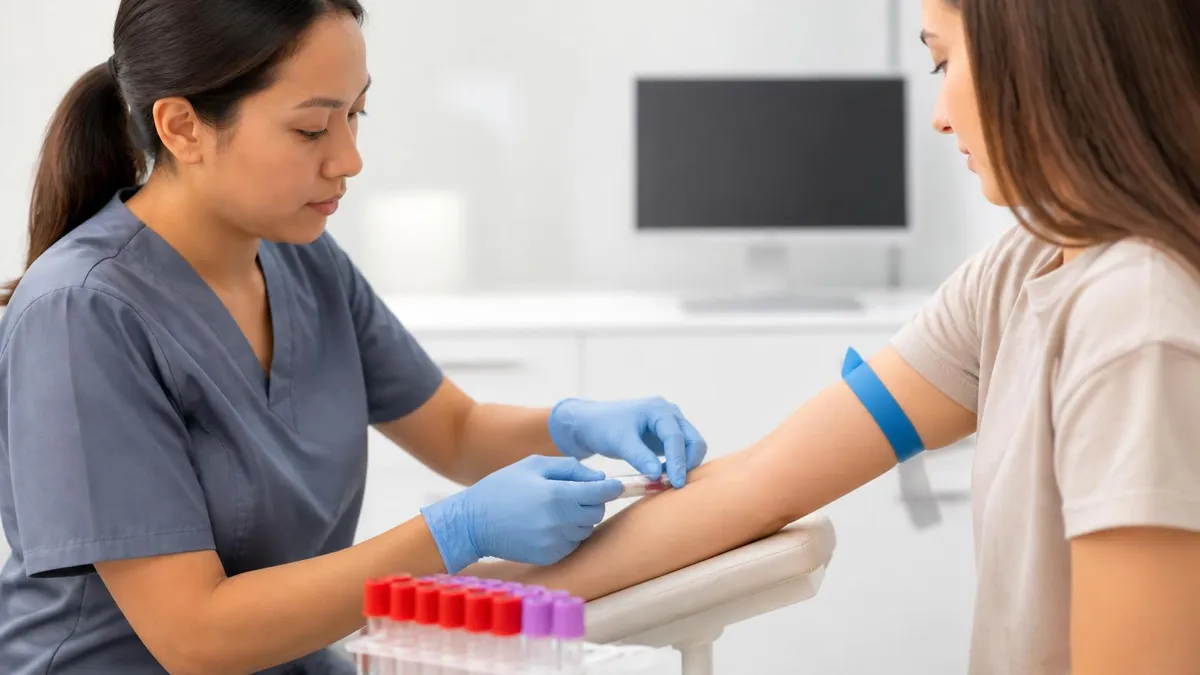
Phlebotomy Test 2026: Complete Practice Exam Prep Guide
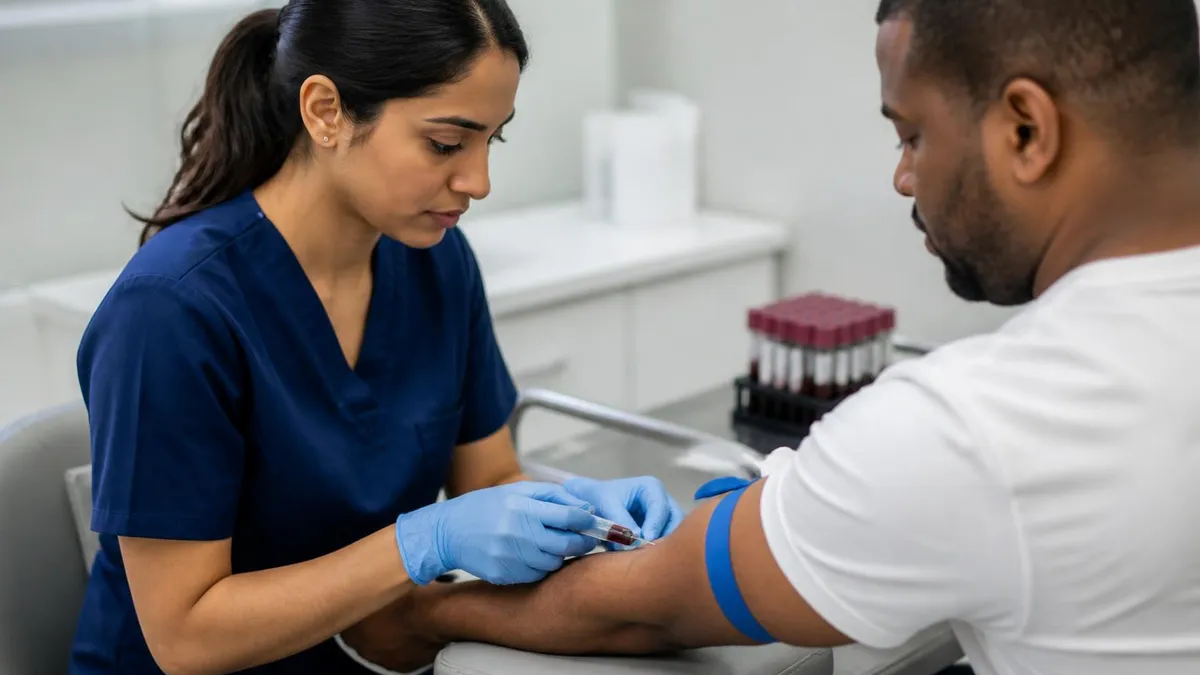
Phlebotomy Tube Colors: Complete Guide to the Order of Draw, Additives & Lab Tests
About the Author

Registered Nurse & Healthcare Educator
Johns Hopkins University School of NursingDr. Sarah Mitchell is a board-certified registered nurse with over 15 years of clinical and academic experience. She completed her PhD in Nursing Science at Johns Hopkins University and has taught NCLEX preparation and clinical skills courses for nursing students across the United States. Her research focuses on evidence-based exam preparation strategies for healthcare certification candidates.