

Pharm.D. Doctor of Pharmacy Practice Test
Updated October 2026Doctor of Pharmacy Questions and Answers
A professional doctorate in pharmacy is known as a doctor of pharmacy. People holding a doctorate in pharmacy are often permitted to practice independently and can give patients direct drug prescriptions.
It offers a concentration in administrative pharmacy services and evidence-based pharmacotherapy.
In the US, a doctor of pharmacy typically earns $94,634.
A professional degree called a Pharm.D. resembles a Doctor of Medicine (MD) or a Doctor of Dental Surgery (DDS).
In many nations, individuals with a doctorate in pharmacy are permitted to give patients direct medication prescriptions.
Pre-professional (prerequisite) education at the undergraduate level for three to four years is followed by four academic years of the professional program.
A Pharm.D. is typically obtained after eight years of college study in order to become a pharmacist.
In the US, a doctor of pharmacy makes an average salary of $130097 annually.
Pharm.D. or Pharm. D. is a common abbreviation for the Doctor of Pharmacy degree.
‥ Complete the prerequisites for undergraduate study.
‥ The Pharmacy College Admissions Test must be passed (PCAT).
‥ Send in your application for pharmacy school.
‥ Finish your PharmD courses.
‥ Obtain expertise working in a pharmacy.
Indeed, pharmacists are health doctors. Despite the fact that you might not refer to your pharmacist as “doctor,” a PharmD is a doctoral degree.
A PharmD, or doctorate in pharmacy, is the educational requirement for becoming a pharmacist. To become a Pharmaceutical Scientist, you must possess a pharmacology degree, such as a PhD.
It is a professional doctorate degree.
Yes, it is a professional doctorate degree.
Yes, since it is a respected profession. For their abilities and depth of knowledge, pharmacists are highly valued.
Possible Career Paths:
‥ Community Pahrmacist
‥ Medical Scientist
‥ Veterinary Pharmacist
‥ Clinical Pharmacist
‥ Pharmacologist
A PharmD, or doctor of pharmacy, is another name for it.
There is no distinction between a pharmacist and a doctor of pharmacy in terms of technicality. Doctor of Pharmacy (Pharm. D.) is the academic credential, while “pharmacist” is the job title.
‥ Get your bachelor’s in pharmacy, chemistry, health sciences, or a related discipline.
‥ Attend an internship at a pharmacy or medical facility.
‥ Pass the PRC Pharmacy Licensure Examination. You must achieve a minimum exam score of 75%, with no topic receiving a score of less than 50%.
‥ Attend the PRC ceremony, take the oath, and receive your license. Every three years, PRC licenses need to be renewed.
‥ You might be promoted to Senior Pharmacist or Pharmacy Manager after obtaining experience. You can also think about opening your own pharmacy or getting a job in academic or medical research.
The Pharmacy Council of India now recognizes the six-year professional degree known as a Pharm. D, or doctor of pharmacy (PCI). The field of pharmacy covers a wide range of topics. The learnings of patient healthcare services are also incorporated in the curriculum of this degree in addition to the pharmacy core areas.
Pharmacy professionals can prepare for board exams and jurisprudence requirements with our MPJE pharmacy jurisprudence exam 2026, covering federal and state-level regulations.
Healthcare candidates preparing for certification exams should also practice with our NAPLEX practice test 2026, which covers the clinical reasoning and professional standards sections of the real exam.
Our free PTCB Medication practice test covers brand/generic drug names, routes of administration, dose calculations, and controlled substance regulations.
Pharmacy technician candidates can review with our free PTCB practice exam questions — 90 timed questions covering all competency areas with detailed video explanations.
Pharmacy technician candidates can prepare for the NHA certification exam with our free ExCPT pharmacy technician practice test — covering pharmacy law, drug names, IV calculations, and dispensing procedures.
Free Pharm.D. Doctor of Pharmacy Study Tools
Interactive Pharm.D. Doctor of Pharmacy resources on PracticeTestGeeks, free to start:
- Pharm.D. Doctor of Pharmacy flashcards — review key terms and concepts card by card
- Pharm.D. Doctor of Pharmacy study guide — topic-by-topic overview of what the exam covers
- Pharm.D. Doctor of Pharmacy cheat sheet — one-page printable summary for last-minute review
Pharm.D. Doctor of Pharmacy Practice Test Questions
Prepare for the Pharm.D. Doctor of Pharmacy exam with our free practice test modules. Each quiz covers key topics to help you pass on your first try.
Pharm.D. Doctor of Pharmacy Doctor of Phar...
Pharm.D. Doctor of Pharmacy Exam Questions covering Doctor of Pharmacy General. Master Pharm.D. Doctor of Pharmacy Test concepts for certification prep.
Pharm.D. Doctor of Pharmacy Doctor of Phar...
Free Pharm.D. Doctor of Pharmacy Practice Test featuring Doctor of Pharmacy MCQ. Improve your Pharm.D. Doctor of Pharmacy Exam score with mock test prep.
Pharm.D. Doctor of Pharmacy Doctor of Phar...
Pharm.D. Doctor of Pharmacy Mock Exam on Doctor of Pharmacy. Pharm.D. Doctor of Pharmacy Study Guide questions to pass on your first try.
Pharm.D. Doctor of Pharmacy Clinical Pharm...
Pharm.D. Doctor of Pharmacy Test Prep for Clinical Pharmacology and Therapeutics. Practice Pharm.D. Doctor of Pharmacy Quiz questions and boost your score.
Pharm.D. Doctor of Pharmacy Clinical Pharm...
Pharm.D. Doctor of Pharmacy Questions and Answers on Clinical Pharmacy and Patient Care. Free Pharm.D. Doctor of Pharmacy practice for exam readiness.
Pharm.D. Doctor of Pharmacy Drug Interacti...
Pharm.D. Doctor of Pharmacy Mock Test covering Drug Interactions and Adverse Effects. Online Pharm.D. Doctor of Pharmacy Test practice with instant feedback.
Pharm.D. Doctor of Pharmacy Microbiology a...
Free Pharm.D. Doctor of Pharmacy Quiz on Microbiology and Infectious Diseases. Pharm.D. Doctor of Pharmacy Exam prep questions with detailed explanations.
Pharm.D. Doctor of Pharmacy Pharmaceutical...
Pharm.D. Doctor of Pharmacy Practice Questions for Pharmaceutical Calculations and Compounding. Build confidence for your Pharm.D. Doctor of Pharmacy certification exam.
Pharm.D. Doctor of Pharmacy Pharmaceutical...
Pharm.D. Doctor of Pharmacy Test Online for Pharmaceutical Chemistry and Drug Design. Free practice with instant results and feedback.
Key Takeaway: Pharm.D. Doctor of Pharmacy certification demonstrates expertise in this field. Most candidates spend 4-8 weeks preparing with practice tests before taking the exam.

- ✓Review the official Pharm.D. Doctor of Pharmacy exam content outline
- ✓Take a diagnostic practice test to identify weak areas
- ✓Create a study schedule (4-8 weeks recommended)
- ✓Focus on your weakest domains first
- ✓Complete at least 3 full-length practice exams
- ✓Review all incorrect answers with detailed explanations
- ✓Take a final practice test 1 week before exam day
- +Industry-recognized credential boosts your resume
- +Higher earning potential (10-20% salary increase on average)
- +Demonstrates commitment to professional development
- +Opens doors to advanced career opportunities
- −Exam preparation requires significant time investment (4-8 weeks)
- −Certification fees can be $100-$400+
- −May require continuing education to maintain
- −Some employers may not require certification
Sample Pharm.D. Doctor of Pharmacy Practice Questions
Try these questions from our free Pharm.D. Doctor of Pharmacy practice tests. The correct answer and an explanation follow each question.
Which clinical pharmacy service is MOST associated with reducing hospital readmissions for heart failure patients?
- A. Compounding sterile preparations
- B. Medication therapy management (MTM) and adherence counseling
- C. Investigational drug services
- D. Drug information consultation
Answer: B. Medication therapy management (MTM) and adherence counseling
MTM with adherence counseling helps heart failure patients understand their complex regimens, improving adherence and reducing readmissions.
What anti-thyroid treatment is most effective for pregnant women with clinically severe hyperthyroidism?
- A. Propylthiouracil first trimester followed by methimazole for the remainder of pregnancy
- B. Methimazole first trimester followed by propylthiouracil for the remainder of pregnancy
- C. Stop treatment and resume post-partum
- D. Propylthiouracil
Answer: A. Propylthiouracil first trimester followed by methimazole for the remainder of pregnancy
Propylthiouracil (PTU) is the preferred anti-thyroid drug during the first trimester of pregnancy because methimazole (MMI) has been associated with a higher risk of teratogenicity, specifically aplasia cutis. After the first trimester, methimazole is generally preferred due to its longer half-life and less frequent dosing, and the risk of teratogenicity decreases.
A pharmacist prepares a compound by mixing 30 g of a 2.5% hydrocortisone cream with 70 g of a plain base. What is the final concentration?
- A. 0.75%
- B. 1.75%
- C. 2.0%
- D. 2.5%
Answer: A. 0.75%
Active drug = 30 g × 0.025 = 0.75 g; total weight = 100 g; final concentration = 0.75/100 = 0.75%.
A patient experiences a severe anaphylactic reaction. What is the first-line treatment?
- A. IV diphenhydramine
- B. Oral prednisone
- C. Epinephrine IM 0.3–0.5 mg
- D. Inhaled albuterol
Answer: C. Epinephrine IM 0.3–0.5 mg
Intramuscular epinephrine is the first-line treatment for anaphylaxis due to its rapid onset and alpha/beta adrenergic effects.
Pharm.D. Doctor of Pharmacy Questions and Answers
About the Author
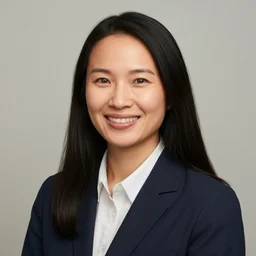
Clinical Pharmacist & Pharmacy Licensing Exam Specialist
USC Alfred E. Mann School of PharmacyDr. Lisa Nguyen holds a Doctor of Pharmacy and a PhD in Pharmaceutical Sciences from the University of Southern California School of Pharmacy. She is a licensed pharmacist with 14 years of clinical practice in hospital and community settings, and coaches pharmacy graduates and technicians through NAPLEX, MPJE, PTCE, ExCPT, and state pharmacy licensing examinations.