
Occupational Therapy Assistant Program: 2026 September Requirements, Cost & Career Guide
Complete occupational therapy assistant program guide: ✍🏼 accreditation, admissions, cost, fieldwork, the NBCOT exam, and how to launch your OTA career.
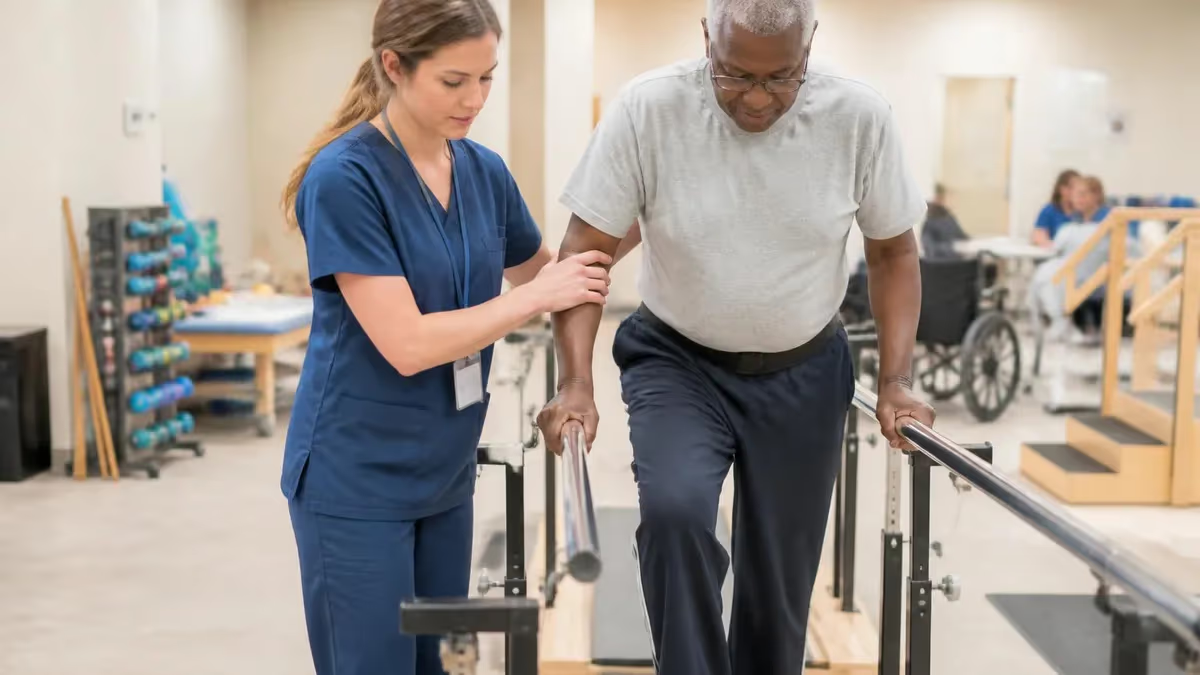
Choosing the right occupational therapy assistant program is the single biggest decision standing between you and a stable, rewarding healthcare career. An OTA works directly under a licensed occupational therapist to help patients regain the everyday skills they need to live independently, from dressing and cooking to returning to work after an injury. This guide walks you through every step: accreditation, admission prerequisites, tuition, fieldwork, and the national certification exam that turns a graduate into a credentialed, employable professional in all fifty states.
The profession is booming for a reason. The U.S. Bureau of Labor Statistics projects employment for occupational therapy assistants to grow far faster than the average for all occupations through 2032, driven by an aging population and rising demand for rehabilitation services. Median pay sits in the mid-$60,000 range, and you can earn it with an associate degree rather than the four-plus years a registered nurse or physical therapist must complete. That favorable ratio of training time to salary is exactly why so many career-changers gravitate toward the field.
Most OTA programs are two-year associate of applied science degrees offered at community colleges and technical schools, though a handful of universities and online-hybrid options exist as well. What unites every legitimate program is one non-negotiable feature: accreditation by the Accreditation Council for Occupational Therapy Education, known as ACOTE. Without ACOTE accreditation, you cannot sit for the national board exam, and without that exam you cannot get licensed. Verifying accreditation before you apply is therefore the first and most important task on your checklist.
Beyond the classroom, hands-on fieldwork sets OTA training apart from a purely academic degree. You will complete supervised Level I and Level II fieldwork rotations in real clinical settings such as hospitals, skilled nursing facilities, schools, and outpatient clinics. These rotations typically add up to roughly sixteen weeks of full-time, unpaid clinical practice before graduation. They are demanding, but they transform textbook knowledge into the practical confidence employers expect on day one of your first paid job.
If you are still weighing whether the field fits your goals, our deep-dive on the occupational therapy assistant program role explains daily responsibilities, work settings, and long-term advancement options in detail. Reading it alongside this guide gives you a complete picture of both the training pipeline and the career it leads to, so you can commit to enrolling with realistic expectations rather than surprises after you have already paid tuition.
Throughout this article you will also find free practice questions linked at key points. The national certification exam is challenging, and early, consistent practice with realistic multiple-choice items is one of the strongest predictors of a first-attempt pass. Treat the quizzes not as an afterthought but as a study tool you return to from your very first semester. The sooner you understand the exam's style and clinical reasoning demands, the more confident and prepared you will feel when test day finally arrives.
OTA Programs by the Numbers
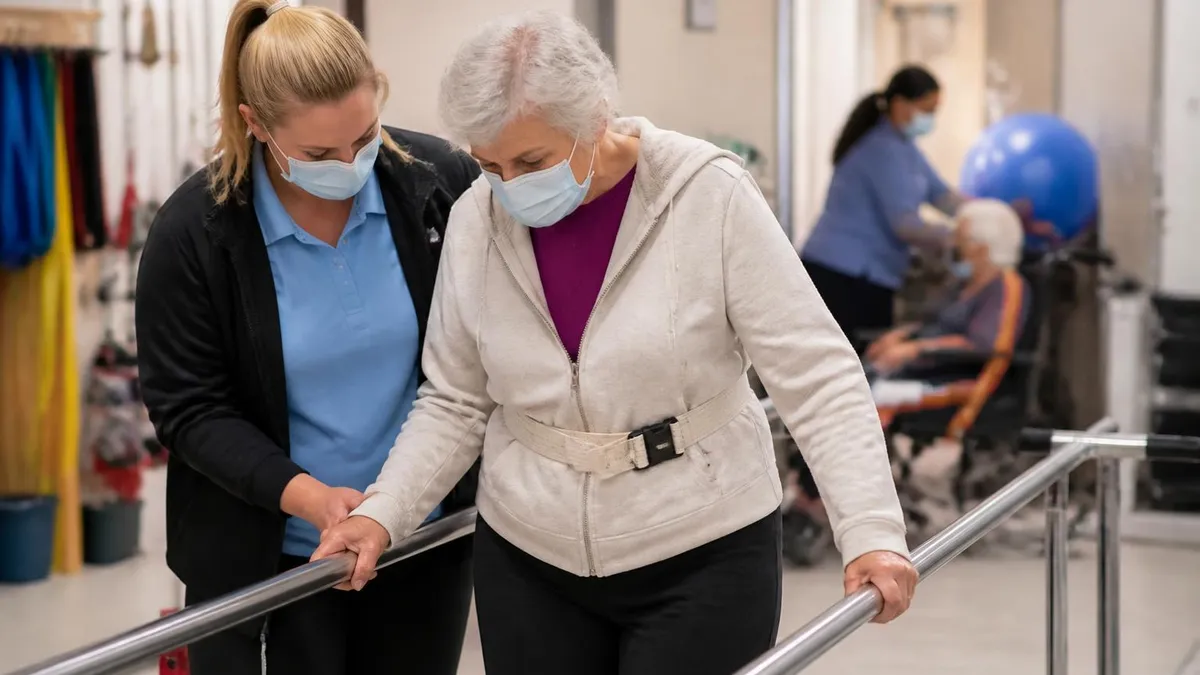
How an OTA Program Is Structured
First-year courses cover anatomy and physiology, psychology, English composition, and medical terminology, building the scientific and communication foundation every clinician needs before specialized OTA coursework begins.
You study activity analysis, therapeutic interventions, conditions across the lifespan, and the models of practice that guide treatment planning under the supervision of a licensed occupational therapist.
Campus labs let you practice transfers, splinting, adaptive equipment fitting, and therapeutic exercise on classmates and standardized patients before you ever treat a real client.
Short observational rotations introduce you to clinical settings and professional behavior, usually spread across the program so you connect classroom theory to real patient care early.
Two full-time clinical rotations, roughly eight weeks each, place you in hospitals, schools, or rehab facilities where you carry a supervised caseload and demonstrate entry-level competence.
Getting into an occupational therapy assistant program is competitive, and understanding admission requirements early gives you a meaningful edge. Most community colleges treat OTA admission as a separate, selective process layered on top of general college enrollment. You first apply to the college, then submit a distinct application to the OTA department, often with a limited number of seats filling each fall cohort. Because seats are scarce, programs use point systems, prerequisite GPAs, and observation hours to rank applicants, so meeting the bare minimum rarely guarantees a spot.
Prerequisite coursework forms the backbone of most applications. Expect to complete anatomy and physiology with a laboratory component, introductory psychology, English composition, and frequently a math or statistics course before you can be considered. Many programs require a minimum grade of C or better in each prerequisite and a cumulative GPA around 2.5 to 3.0. Competitive applicants, however, routinely present GPAs well above 3.5, so treat the published minimum as a floor rather than a realistic target if you want to be admitted on your first try.
Observation or shadowing hours are another common requirement that catches applicants off guard. Programs frequently ask for twenty to forty documented hours spent observing a licensed occupational therapist or OTA in at least one clinical setting. These hours serve a dual purpose: they prove you understand the realities of the job, and they confirm your commitment to a faculty that does not want to invest a seat in someone who quits after one semester. Start logging hours months before your application deadline, because clinics book observers slowly.
Background checks, immunization records, CPR certification, and drug screening round out the non-academic requirements. Because you will work with vulnerable patients during fieldwork, clinical sites impose strict health and safety clearances. A documented criminal history or an incomplete vaccination record can delay or even prevent placement, which in turn stalls graduation. Address these items proactively. Gather your immunization history, schedule a CPR course, and resolve any background concerns honestly with the admissions office well before you are formally placed in a fieldwork rotation.
Some programs also require an entrance exam such as the TEAS, an interview, or a written essay describing why you want to become an OTA. These components let faculty assess communication skills and professionalism that grades alone cannot capture. Prepare for an interview the way you would for a job: research the program, rehearse concrete examples of teamwork and resilience, and dress professionally. A thoughtful, confident interview can lift a borderline applicant above peers with slightly stronger transcripts but weaker interpersonal presentation.
Finally, do not underestimate the value of building a relationship with the admissions team. Attend information sessions, ask specific questions about cohort size and pass rates, and confirm exactly how the program weighs each application component. Demonstrating genuine, informed interest signals maturity and helps you avoid costly missteps, such as taking a prerequisite at a school whose credits will not transfer. Strategic preparation across academics, observation hours, and professional documentation is what separates accepted applicants from the waitlist year after year.
Choosing Your Occupational Therapy Assistant Program Format
Traditional on-campus programs remain the most common path and offer the richest hands-on experience. You practice transfers, splinting, and therapeutic activities in fully equipped labs with immediate instructor feedback, and you build relationships with classmates who become a lasting professional network. For students who learn best with structure and in-person accountability, the fixed schedule and physical campus presence keep momentum high across the demanding two-year curriculum.
The trade-off is flexibility. On-campus programs assume you can commute to daytime classes and labs, which strains students juggling jobs or childcare. Tuition may also run higher at private institutions, and relocation is sometimes required if no accredited program exists nearby. Still, for many applicants the immersive clinical environment and dense peer support justify the logistical demands, especially when fieldwork sites are arranged close to campus through long-standing partnerships.
Is an OTA Career Right for You?
- +Earn a solid mid-$60,000 salary with just a two-year associate degree
- +Enter one of the fastest-growing healthcare occupations in the country
- +Make a daily, visible difference in patients' independence and quality of life
- +Enjoy varied work settings from pediatric schools to geriatric rehab
- +Spend less time and money on training than nurses or therapists
- +Benefit from strong job security and nationwide demand for OTAs
- −Admission is competitive with limited cohort seats each year
- −Fieldwork rotations are full-time and typically unpaid
- −Physical demands include lifting, transferring, and standing for hours
- −You must pass the national NBCOT exam before you can practice
- −State licensure requires ongoing continuing education credits
- −Career ceiling is lower than that of a full occupational therapist
Your Occupational Therapy Assistant Program Enrollment Checklist
- ✓Verify the program holds current ACOTE accreditation on the official ACOTE website.
- ✓Compare cohort pass rates and graduation rates published in program disclosures.
- ✓Complete all prerequisite courses with a grade of C or better.
- ✓Log the required 20–40 observation hours with a licensed OT or OTA.
- ✓Gather official transcripts from every college you have attended.
- ✓Update your immunization records and obtain current CPR certification.
- ✓Pass any required entrance exam such as the TEAS well before the deadline.
- ✓Request strong letters of recommendation from instructors or supervisors.
- ✓Submit your departmental OTA application separately from college admission.
- ✓Complete background check and drug screening before fieldwork placement.
- ✓Apply for FAFSA financial aid and research OTA-specific scholarships.
- ✓Confirm fieldwork sites and their locations relative to your home.
Accreditation is non-negotiable
You can only sit for the NBCOT certification exam if you graduate from an ACOTE-accredited program. Attending a non-accredited or merely "candidacy-status" school can leave you unable to get licensed in any state. Always verify accreditation directly on the ACOTE website before paying a single dollar of tuition.
Understanding the full cost of an occupational therapy assistant program helps you plan realistically and avoid debt surprises. Tuition varies widely by institution type. A two-year associate degree at an in-district community college might total $8,000 to $20,000, while a private or for-profit school can charge $40,000 or more for the same credential. Because the resulting job and salary are identical regardless of where you train, savvy students prioritize the lowest-cost accredited option rather than chasing prestige that the profession does not actually reward.
Tuition is only part of the picture. Budget for textbooks and clinical kits, which can run several hundred dollars, plus lab fees, uniforms or scrubs, and a stethoscope or goniometer for skills courses. Background checks, immunizations, CPR certification, and professional liability insurance add incremental costs that programs often pass to students. Many cohorts also require membership in a student professional association. Tallied together, these ancillary expenses can add one to three thousand dollars on top of posted tuition figures, so read the program's published cost sheet carefully.
Fieldwork introduces a hidden cost that catches many students by surprise: lost income. Level II rotations are full-time and unpaid, often spanning sixteen weeks total, during which you cannot realistically hold a standard job. Some students relocate temporarily for a placement and incur housing and travel costs. Planning a financial cushion for this stretch is essential. Build savings during your first year, because the final clinical semester is when budgets feel tightest even though graduation and a paycheck are finally within sight.
Fortunately, substantial financial aid exists. Completing the FAFSA unlocks federal grants and low-interest student loans, and many community colleges offer the lowest sticker prices in higher education to begin with. Beyond federal aid, look for OTA-specific scholarships from the American Occupational Therapy Foundation, state OT associations, and individual schools. Employer tuition assistance is another underused resource; some hospitals and skilled nursing facilities will fund your education in exchange for a work commitment after you earn your credential and license.
It pays to weigh cost against outcomes rather than price alone. A slightly more expensive program with a 95 percent first-time exam pass rate and strong fieldwork partnerships may deliver far better value than a cheaper program with weak placement support and a mediocre pass rate. Our overview of occupational therapy assistant program options breaks down how to compare these quality signals so your tuition dollars translate into an actual job rather than just a diploma.
Finally, calculate your return on investment with clear eyes. If you graduate with $15,000 in debt and step into a $60,000-plus salary, the math is genuinely favorable compared with most four-year degrees. Map out projected monthly loan payments against entry-level OTA wages in your region before enrolling. When you choose an accredited, reasonably priced program and finish the certification exam on your first attempt, an OTA education ranks among the strongest value propositions in all of allied health.
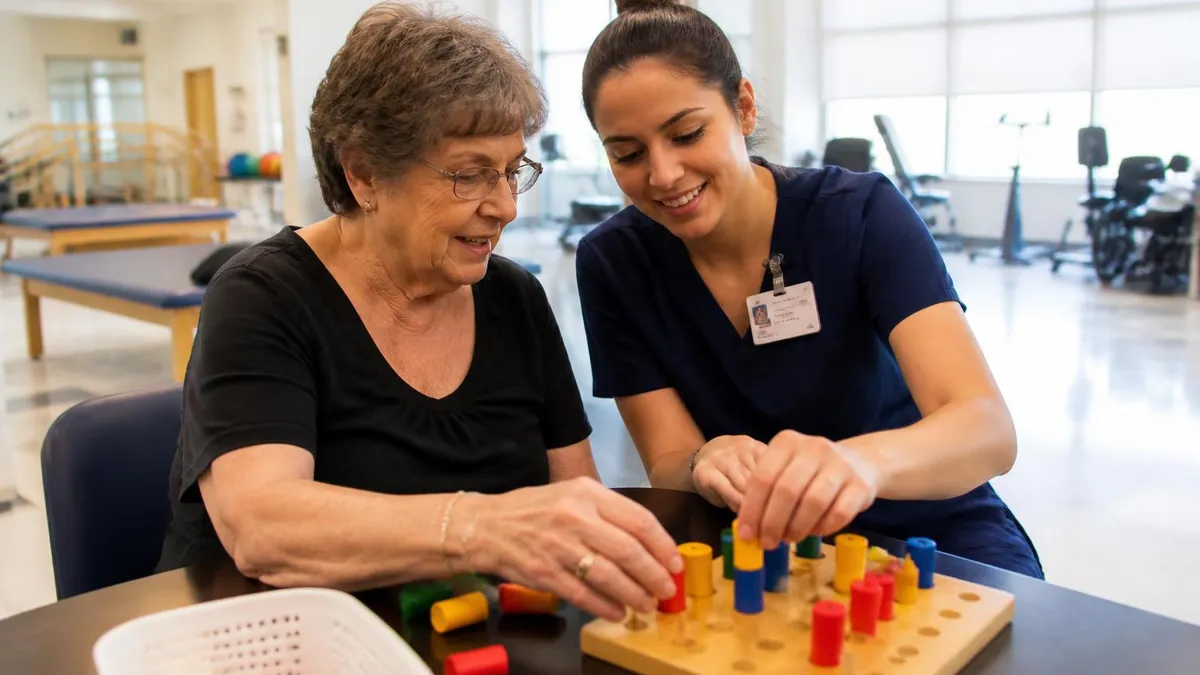
You must complete Level II fieldwork within a limited window after finishing coursework, commonly 12 to 18 months, or your eligibility can lapse. Missing immunization, background check, or insurance deadlines can delay placement and push graduation back an entire semester. Track every clinical requirement on a calendar from day one.
Graduating from your occupational therapy assistant program is a milestone, but it is not the finish line. Before you can legally work, you must pass the national certification exam administered by the National Board for Certification in Occupational Therapy, or NBCOT. Passing earns you the Certified Occupational Therapy Assistant, or COTA, credential. This exam is the gateway between being a graduate and being an employable, licensed professional, so understanding its format and demands early shapes how effectively you study throughout your two years of training.
The NBCOT exam for assistants consists of multiple-choice questions delivered over roughly four hours at a secure testing center. Items are scenario-based, testing not rote memorization but clinical reasoning: given a patient profile, what intervention is most appropriate, what safety concern takes priority, or how should an activity be graded. This style rewards students who practiced applying knowledge to realistic cases throughout school, which is exactly why working through practice questions from your first semester onward pays such large dividends on test day.
Eligibility to test flows directly from accreditation. NBCOT verifies that you graduated from an ACOTE-accredited program before approving your application, which is why accreditation matters so deeply at the enrollment stage. Once approved, you schedule your exam, pay the testing fee of several hundred dollars, and choose a date. Most graduates test within a few weeks of finishing fieldwork while the material is freshest, and program data consistently shows that shorter gaps between graduation and testing correlate with higher pass rates.
Passing NBCOT grants the national COTA credential, but you still need a state license to practice. Every state regulates occupational therapy assistants, and licensure typically requires your NBCOT certification, an application, a fee, and sometimes a jurisprudence exam covering state-specific practice law. Processing can take several weeks, so apply promptly after passing the national exam. If you plan to relocate, research the destination state's requirements early, because reciprocity is common but never automatic across state lines.
Maintaining your credential is an ongoing responsibility. NBCOT certification renews on a three-year cycle and requires documented professional development units, while state licenses demand their own continuing education hours on their own schedules. Building a habit of tracking continuing education from your very first year of practice prevents a last-minute scramble. Many employers help by funding workshops and conferences, recognizing that a well-trained, fully credentialed OTA delivers safer, more effective patient care and reduces costly compliance risk for the organization.
For a deeper look at credentialing timelines, exam content domains, and renewal logistics, our dedicated guides on OTA certification and exam preparation expand on everything covered here. Treat certification not as a single hurdle but as the launch of a lifelong professional commitment. The graduates who plan for it deliberately, schedule the exam promptly, and keep their continuing education current enjoy the smoothest transition from student to confident, fully licensed clinician earning a competitive salary in a high-demand field.
With your program chosen and certification in view, the final piece is a smart, sustainable study strategy that carries you from your first anatomy lecture to a first-attempt pass on the NBCOT exam. The single most effective habit is starting early and studying consistently. Cramming fails on a clinical-reasoning exam because the material is cumulative and applied. Devote a focused hour several times a week from your first semester, and the content compounds naturally rather than overwhelming you in a frantic final month before the test.
Use practice questions as a diagnostic tool, not just a confidence booster. After each quiz, review every item you missed and, crucially, every item you guessed correctly. Understanding why the right answer is right and why the distractors are wrong builds the clinical reasoning the exam rewards. Keep an error log of recurring weak spots, such as pediatric milestones or splinting precautions, and target those topics deliberately. This active-review loop is far more powerful than passively rereading lecture notes or highlighting a textbook.
Lean on your fieldwork experiences as living study material. When you fit a patient with adaptive equipment or grade a therapeutic activity in the clinic, you are encoding exactly the kind of applied knowledge the exam tests. Reflect each evening on the conditions you encountered and connect them to your coursework. Students who treat Level II rotations as immersive exam prep, rather than a separate chore, consistently report that test questions felt familiar because they had already lived the clinical scenarios firsthand.
Form or join a study group, but keep it disciplined. Teaching a concept to a peer is one of the most reliable ways to discover gaps in your own understanding. Rotate who explains each topic, quiz one another with scenario questions, and hold the group accountable to a schedule. Be wary of groups that drift into socializing; cap sessions at a defined length with a clear agenda. A focused two-hour group session can cement difficult material like neuroanatomy or psychosocial frames of reference far faster than solo study.
In the final four to six weeks before your exam, shift into full-length timed practice. Sitting for a four-hour block of questions builds the stamina and pacing the real test demands, and it surfaces fatigue patterns you can plan around. Simulate test conditions: no notes, a quiet room, and strict timing. Review your performance afterward to fine-tune which domains still need attention. This rehearsal removes surprises on test day, letting you walk in calm, paced, and confident rather than rattled by an unfamiliar format.
Finally, protect your wellbeing as deliberately as you protect your study schedule. Sleep, exercise, and nutrition directly affect memory consolidation and test-day focus, and burnout sabotages even the most diligent student. Schedule genuine rest, lean on classmates and family for support during fieldwork, and remember why you chose this path: helping people reclaim their independence and daily lives. A balanced, well-prepared candidate who paces study over two years, practices actively, and rests adequately is the candidate who passes on the first attempt and steps confidently into a meaningful OTA career.
OTA Questions and Answers

Occupational Therapy Assistant (OTA): Role, Training & Career Guide

OTA Certification: Complete 2026 Requirements, Exam, and Career Guide

Occupational Therapy Assistant Programs: Accreditation, Cost, and Path

Occupational Therapy Assistant Test Practice Test PDF (Free Printable 2026)

Online Occupational Therapy Assistant Programs: 2026 Enrollment, Accreditation & Career Guide
About the Author

Physical Therapist & Allied Health Licensing Exam Expert
University of Pittsburgh School of Health and Rehabilitation SciencesDr. Michelle Park holds a Doctor of Physical Therapy and a PhD in Physical Therapy from the University of Pittsburgh, a top-ranked PT program in the nation. With 13 years of orthopedic and neurological rehabilitation experience, she coaches physical therapy and occupational therapy graduates through the NPTE, NBCOT, and state allied health licensing board examinations.
Join the Discussion
Connect with other students preparing for this exam. Share tips, ask questions, and get advice from people who have been there.
View discussion (8 replies)