
Occupational Therapy Assistant Programs: Accreditation, Cost, and Path
OTA programs guide: ACOTE accreditation, associate degree path, costs, fieldwork requirements, NBCOT exam, and how to choose right OTA program. 🎓
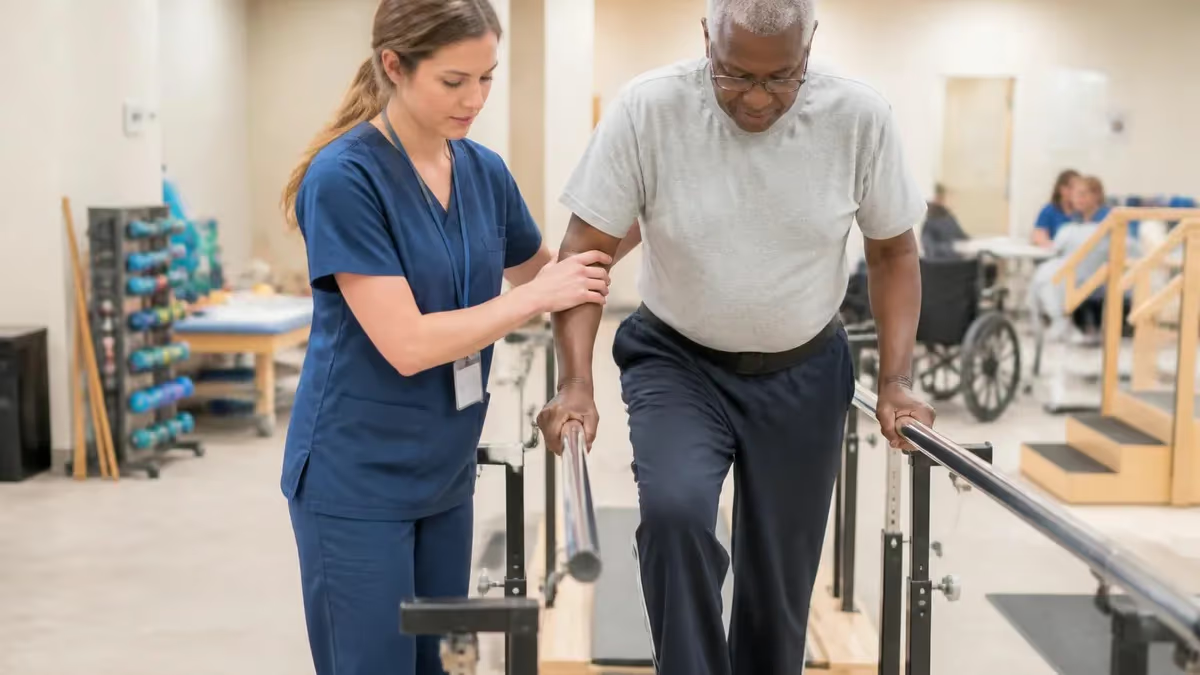
Occupational therapy assistant programs prepare students for careers as licensed occupational therapy assistants (OTAs) — healthcare professionals who work under occupational therapists' supervision to help clients regain or develop skills for daily living and work activities. OTA programs typically lead to associate degrees (AS or AAS) over 2 years of full-time study. Programs must be accredited by ACOTE (Accreditation Council for Occupational Therapy Education) for graduates to qualify for the NBCOT certification exam required for state licensing. Selecting the right program affects everything from cost to career outcomes; understanding accreditation, program quality, and curriculum helps make informed decisions.
Common program elements include classroom courses (anatomy, physiology, kinesiology, OT theory, conditions and disabilities, OT process, professional ethics, group dynamics, etc.), laboratory practice (treatment techniques, equipment use, simulated client scenarios), and supervised fieldwork (extensive clinical practice in actual healthcare settings). Total program length is typically 2 years for full-time students, with some programs offering accelerated or part-time options. Hybrid online-plus-fieldwork programs have grown but require careful evaluation for accreditation and clinical placement availability.
For the OTA career path specifically, several stages matter. Complete accredited OTA program (associate degree, 2 years typical). Pass NBCOT certification exam (Certified Occupational Therapy Assistant credential). Apply for state license to practice. Begin supervised practice as licensed OTA. Build experience with various populations and settings. Some OTAs eventually pursue OT (master's or doctoral level) credentials for expanded scope. The career offers solid income ($55,000-$80,000+ typical), accessible entry compared to many healthcare careers, and meaningful client impact.
This guide covers OTA programs comprehensively: program structure and curriculum, accreditation requirements (essential), cost ranges and funding options, fieldwork expectations, NBCOT exam preparation, and how to select the right program for your circumstances. Whether you're considering OTA as career path or evaluating specific programs, you'll find practical guidance for navigating this educational and professional choice.
Required accreditation: ACOTE (Accreditation Council for Occupational Therapy Education)
Typical degree: Associate (AS or AAS), 2 years full-time
Cost range: $5,000-$30,000+ depending on program type and length
Required exam after graduation: NBCOT Certified Occupational Therapy Assistant
Career outcome: $55,000-$80,000+ typical OTA income
For ACOTE accreditation specifically, this is non-negotiable for OTA programs. NBCOT (the national certification body) requires graduates of ACOTE-accredited programs to take the certification exam. Without ACOTE accreditation, graduates cannot become certified and licensed OTAs. ACOTE accredits approximately 200+ OTA programs across the United States. Verifying current accreditation status before enrolling is essential — programs occasionally lose accreditation, and graduates of unaccredited programs can't access licensing. Check ACOTE's online directory (acoteonline.org) for current accreditation status of any program you're considering.
For program types specifically, several formats exist. Traditional in-person programs at community colleges and technical schools (most common) — full classroom and lab attendance. Hybrid programs combining online theory with in-person labs and clinical experiences. Fully online theoretical components with in-person fieldwork (limited availability). Accelerated programs (15-18 months) for students with prior healthcare or relevant credits. Part-time programs spanning 3-4 years. Each format has tradeoffs in cost, time, and learning experience. Verify ACOTE accreditation regardless of format.
For program length specifically, standard timing is 2 years (typically 5-6 semesters or 4-6 quarters depending on academic system). Some programs offer accelerated tracks for students with significant prior coursework. Part-time options extend timeline. Total credit hours typically 60-72 for the associate degree. Fieldwork requirements add additional time beyond classroom instruction — typically 16+ weeks of supervised clinical practice spread across program. Total weekly time investment can be substantial; full-time students typically commit 30-40+ hours weekly to studies and clinical experiences. The occupational therapy assistant resources cover the role broadly.
For curriculum specifically, OTA programs cover several core content areas. Anatomy and physiology relevant to occupational therapy practice. Kinesiology — study of human movement. Conditions affecting clients: orthopedic, neurological, mental health, pediatric, geriatric. OT theory and process — how OT works conceptually. Treatment techniques and modalities — hands-on intervention skills. Therapeutic activities — using activities purposefully for therapeutic outcomes. Documentation and professional skills. Group dynamics and counseling basics. Each content area has dedicated coursework throughout the program.
For fieldwork specifically, OTA programs require extensive supervised clinical experience. Level I fieldwork (shorter observational and limited practice experiences during program). Level II fieldwork (more intensive, full-time supervised practice in healthcare settings, typically 4 months total or two 8-week placements). Level II fieldwork is the gateway between classroom learning and licensed practice — successful completion is required for graduation and exam eligibility. Programs partner with local healthcare facilities to provide fieldwork placements; geography sometimes limits placement options. The OTA practice test resources cover exam preparation.

OTA Program Components
Anatomy, physiology, kinesiology, conditions, OT theory, treatment techniques, professional ethics, documentation. 2 years of integrated coursework typically. Combination of lecture and discussion. Foundation knowledge supporting all clinical practice. Most programs require minimum grades in core courses to continue.
Hands-on practice of treatment techniques. Use of OT equipment and assessment tools. Simulated client scenarios. Skills practice before clinical placements. Often paired with classroom courses to reinforce concepts. Critical for developing competence before working with actual clients in fieldwork.
Shorter observational and limited-practice experiences during program. Typically 1-2 weeks per placement. Multiple placements across different settings. Builds exposure to OT practice variety. Bridges classroom theory with practice realities. Lower stakes than Level II — focused on observation and limited skill application.
Intensive supervised practice in actual healthcare settings. 4 months total typical (two 8-week placements). Required for graduation. Extensive client interaction under licensed OT supervision. Bridge between student status and licensed practice. Successful completion gateway to NBCOT exam eligibility.
For program cost specifically, several patterns matter. Community college OTA programs are typically lowest cost: $5,000-$15,000 total tuition for in-state students. Public 4-year colleges (when offering OTA programs): $10,000-$25,000 total. Private colleges and technical schools: $20,000-$50,000+ typical. Online or hybrid programs: vary widely. Plus additional costs: textbooks ($1,000-$2,000), uniforms, supplies, fees, transportation to fieldwork sites. Compare total cost of attendance not just tuition. Financial aid (federal, state, scholarships) can substantially reduce out-of-pocket cost.
For financial aid specifically, several options support OTA students. Federal financial aid (Pell Grants, Direct Loans, Work-Study) through FAFSA filing. State financial aid varies by state. Scholarships from various organizations (some specific to occupational therapy careers). Employer tuition assistance (some healthcare employers help current employees pursue OTA credentials). Military and veterans benefits where applicable. Comparing financial aid packages between programs sometimes reveals better effective cost than sticker price suggests. The OTA practice test resources cover exam-related preparation costs.
For program selection criteria specifically, several factors matter. ACOTE accreditation status (verify directly with ACOTE — non-negotiable). Program reputation among healthcare employers in your target work area. NBCOT exam pass rates from program (publicly available data). Job placement rates for graduates. Cost relative to alternatives. Format matching your life circumstances (full-time vs part-time, in-person vs hybrid). Geographic location and fieldwork placement availability. Personal fit with program approach and faculty. Each criterion individually doesn't determine right program; multiple together identify best fit.
For program quality indicators specifically, several signals identify stronger programs. NBCOT exam pass rate above national average. High graduate employment rates. Strong program-employer relationships in local healthcare. Faculty with diverse practice backgrounds. Modern facilities and equipment. Adequate fieldwork placements. Alumni success in field. Reviews from current students and recent graduates. Visit programs and observe class/lab settings if possible — environment provides cues about program quality that statistics don't fully capture.
For prerequisites specifically, OTA programs typically require some prior coursework before admission. Common prerequisites: basic college English, basic math (some programs require algebra), introductory biology or anatomy/physiology, introductory psychology. Some programs require minimum GPA from prior coursework. Some require shadowing hours observing OTAs at work. Some require interview or essay components. Specific prerequisites vary by program — verify directly with target programs. Completing prerequisites before applying strengthens applications and reduces total time to OTA credential.

OTA Program Considerations
In-person community college program:
- Cost: $5,000-$15,000 typical total tuition (in-state)
- Length: 2 years full-time
- Format: In-person classroom, lab, fieldwork
- Pros: Most affordable, established programs, local fieldwork connections
- Cons: Schedule may not accommodate working students well
For NBCOT exam specifically, the certification exam is required after graduation for state licensing. The COTA (Certified Occupational Therapy Assistant) exam is administered by NBCOT (National Board for Certification in Occupational Therapy). Exam covers OT process, intervention, professional behaviors, and other content covered in OTA programs. 200 multiple choice questions over 4 hours. Pass rate national average around 80% for first-time takers. Failing requires retaking after waiting period. The exam is challenging but reasonable preparation through quality OTA program plus dedicated exam prep produces high pass rates.
For exam preparation specifically, several approaches work. Use NBCOT's official study resources. Take advantage of program's exam prep components in final semester. Use commercial study guides and practice exams from various providers. Form study groups with classmates. Build comprehensive review covering all content areas. The 2-3 month dedicated preparation period after graduation is typical. Most OTA graduates pass first time with thorough preparation; graduates of programs with strong NBCOT pass rates have strong foundation supporting exam success. The OTA practice test PDF resources cover specific exam preparation materials.
For state licensing specifically, after passing NBCOT, apply for state license to practice. State licensing process typically requires: NBCOT certification verification, state license application and fees, sometimes background check, sometimes additional state-specific requirements (jurisprudence exam in some states). License typically issued within 1-3 months of completed application. Some states have temporary practice permits allowing work while permanent license processes. Each state's specific requirements vary; researching target state's requirements early in program supports timely licensure after graduation.
For OTA work settings specifically, several environments employ OTAs. Hospitals and rehabilitation centers — acute and post-acute rehabilitation. Skilled nursing facilities — long-term care and rehabilitation. Outpatient clinics — various specialties (orthopedic, neurological, hand therapy, etc.). Schools — pediatric occupational therapy services for school-aged children with various needs. Home health — providing services in clients' homes. Mental health settings — psychiatric and behavioral health programs. Each setting has different daily routines, client populations, and physical demands. Most OTAs find specific settings preferred over time.
For OTA specializations specifically, while specific specialty certifications are less common for OTAs than for OTs, several areas of focus develop through experience. Pediatric OTA focuses on children's development and disability. Hand therapy OTA works with upper extremity rehabilitation. Geriatric OTA serves elderly populations. Mental health OTA works in psychiatric and behavioral health settings. Driver rehabilitation OTA helps clients return to driving after injury or aging. Various specialty contexts develop through targeted continuing education and clinical experience. Building specialty depth supports both expertise and earning potential.

ACOTE accreditation is non-negotiable for OTA programs. Without it, graduates cannot become NBCOT certified or state licensed — the entire educational investment is lost from professional practice perspective. Programs that promise OTA credentials without ACOTE accreditation are misleading prospective students. Always verify accreditation status directly with ACOTE through their online directory before enrolling in any OTA program. Programs occasionally lose accreditation; current verification matters more than program marketing materials. The investment in research before enrollment prevents catastrophic loss from non-accredited programs that don't qualify graduates for licensing.
For OT vs OTA specifically, several differences distinguish the roles. Occupational therapists (OTs) require master's or doctoral degrees (3-4 years post-bachelor's), can practice independently, develop treatment plans, conduct comprehensive assessments. OTAs require associate degrees (2 years), work under OT supervision, implement OT-developed treatment plans, conduct delegated assessments. OT income is higher ($85,000-$120,000+ typical). OTA income is lower ($55,000-$80,000+) but path to credential is shorter and substantially less expensive. Some OTAs eventually pursue OT credentials for advancement; others build careers as OTAs.
For working as OTA before becoming OT specifically, this stair-step path appeals to many. Complete OTA program in 2 years, work as OTA gaining experience, then pursue OT master's or doctoral degree. Some students fund OT education partly through OTA income. OTA experience provides clinical foundation strengthening OT applications and easing transition to OT practice. The path takes longer than going directly to OT but offers earning during education. Each path suits different circumstances. The occupational therapy assistant resources cover broader OTA context.
For applying to OTA programs specifically, application processes vary. Most programs have specific application deadlines (often January-March for fall start). Application materials typically include: official transcripts (high school and any college), prerequisite course completion verification, references from teachers or employers, personal statement explaining interest in OT field, observation hours documentation (some programs require), interview (some programs). Strong applications demonstrate commitment to OT field, strong academic performance, and personal qualities supporting healthcare career.
For waitlists specifically, popular OTA programs often have waitlists that extend admission timelines. Strong programs with limited capacity may have 1-2 year waitlists for new applicants. Less competitive or larger programs may admit applicants for next term. Some applicants apply to multiple programs to maximize admission chances. Geographic flexibility (willingness to attend program in different city) opens more options. Applying to programs early in target start cycle (1-2 years before desired start) supports timely admission to preferred programs.
Looking forward, OTA field continues evolving. Aging population drives sustained demand for OT services. New practice areas emerge as healthcare evolves. Technology and digital tools enter OT practice. Policy changes affect Medicare/Medicaid coverage and OT scope. Programs continue developing curriculum addressing contemporary practice. Aspiring OTAs entering today have strong career outlook with growing demand and developing professional opportunities. The investment in OTA education and credential typically pays back through stable career with meaningful work supporting clients across many populations and settings.
For accelerating into OTA programs specifically, several factors help. Strong high school performance in science and mathematics. Volunteer or paid experience in healthcare settings. Shadowing occupational therapists or OTAs to demonstrate genuine interest. Strong personal statement explaining motivation. References from teachers or healthcare professionals supporting your application. Some programs value diversity of experience and life perspective. Each strengthens applications, particularly for competitive programs.
For online versus in-person learning specifically, the practical components of OTA training are challenging to deliver fully online. Hands-on treatment techniques require physical practice. Equipment use requires actual handling. Client interaction simulations work better in person. Some theoretical content delivers well online. The hybrid approach (online theory plus in-person practical components) has grown but pure online OTA programs are limited and warrant careful evaluation. Verify accreditation and clinical placement support for any online or hybrid program before enrolling.
For program retention specifically, OTA programs have varying retention rates. Strong programs retain 80%+ of admitted students through graduation. Weaker programs may retain less. Research program retention rates as part of selection — programs losing many students may indicate poor fit between admissions and program rigor. Speaking with current students reveals retention patterns and program culture more directly than statistics alone. Students who complete OTA programs typically have strong sense of professional identity supporting career success.
For state-by-state variation in licensing specifically, requirements vary somewhat across states. All states require NBCOT certification and state license. Some states require additional state-specific exams (jurisprudence). Some have specific continuing education requirements. License reciprocity between states varies. Many OTAs maintain licenses in multiple states for geographic flexibility. Researching target practice state's specific requirements during program supports timely licensure after graduation. Plan for licensure timing as part of overall career path planning. Some states process licenses faster than others.
OTA Programs Quick Facts
OTA Career Path
- +Accessible entry — 2-year associate degree vs longer paths to other healthcare roles
- +Solid income ($55,000-$80,000+) for moderate education investment
- +Growing demand driven by aging population
- +Variety of work settings (hospitals, schools, home health, etc.)
- +Foundation for advancement to OT (master's/doctoral) if desired
- −Total program cost ($5,000-$30,000+) requires substantial investment
- −Fieldwork placements can be challenging to secure in some areas
- −Working under OT supervision (limited autonomy compared to independent OT practice)
- −Physical demands of practice over time
- −NBCOT exam adds requirement beyond program completion
OTA Questions and Answers
About the Author

Physical Therapist & Allied Health Licensing Exam Expert
University of Pittsburgh School of Health and Rehabilitation SciencesDr. Michelle Park holds a Doctor of Physical Therapy and a PhD in Physical Therapy from the University of Pittsburgh, a top-ranked PT program in the nation. With 13 years of orthopedic and neurological rehabilitation experience, she coaches physical therapy and occupational therapy graduates through the NPTE, NBCOT, and state allied health licensing board examinations.
Join the Discussion
Connect with other students preparing for this exam. Share tips, ask questions, and get advice from people who have been there.
View discussion (8 replies)