
OTA Program: Complete Training Guide, Requirements & Career Path 2026 September
🆕 Complete guide to the OTA program: accreditation, prerequisites, curriculum, costs, and how to pass the NBCOT exam. Start your occupational therapy career.
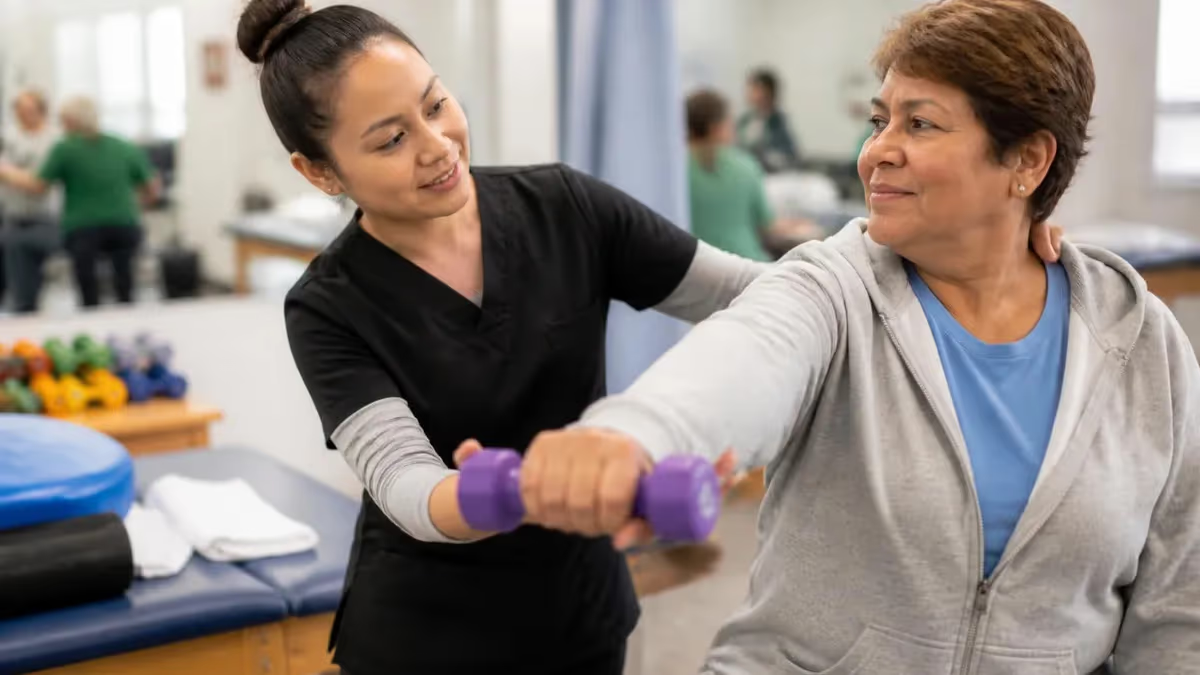
Choosing an ota program is one of the most consequential decisions you will make on the path to becoming a licensed Occupational Therapy Assistant. These accredited associate-degree programs typically span two years of full-time study and combine rigorous classroom instruction with hands-on clinical fieldwork, preparing graduates to sit for the National Board for Certification in Occupational Therapy (NBCOT) certification examination. Understanding exactly what each program demands before you enroll will save you significant time, money, and frustration down the road.
OTA programs are offered at community colleges, technical schools, and some universities across all fifty states. Because the Accreditation Council for Occupational Therapy Education (ACOTE) sets strict national standards, every approved program must cover the same core competencies — from therapeutic activity analysis and adaptive equipment to documentation, ethics, and professional communication. That consistency means your credential will be recognized and respected wherever you choose to practice after graduation.
Demand for occupational therapy assistants continues to grow at an impressive pace. The U.S. Bureau of Labor Statistics projects employment of OTAs to increase by roughly 20 percent between 2022 and 2032, far outpacing the average for all occupations. Aging baby boomers, expanded mental health services, and broader pediatric therapy coverage are all fueling that growth, creating a job market where qualified graduates rarely struggle to find their first position.
Despite strong job prospects, admission to OTA programs is competitive. Most programs have limited cohort sizes — often 20 to 30 students per year — and applicants are evaluated on prerequisite GPA, healthcare observation hours, letters of recommendation, and sometimes a personal interview. Knowing the typical admission benchmarks well in advance gives you time to strengthen your application and improve your chances of acceptance into the program of your choice.
Financial considerations matter just as much as academic ones. Tuition for an associate-level OTA program at a community college can range from roughly $8,000 to $20,000 total, while private institutions may charge significantly more. Federal financial aid, scholarships from the American Occupational Therapy Foundation, and employer tuition-assistance programs can substantially reduce out-of-pocket costs. Building a realistic budget before you enroll prevents financial stress from derailing an otherwise successful academic journey.
Once you graduate and pass the NBCOT exam, you earn the Certified Occupational Therapy Assistant (COTA) credential. From there, state licensure applications, continuing education requirements, and specialty certification opportunities open up. Pediatrics, mental health, hand therapy, and geriatrics are among the most popular practice concentrations that COTAs pursue to advance their careers and increase their earning potential over time.
This guide walks you through every stage of the OTA program pipeline — prerequisites, curriculum structure, fieldwork requirements, costs, exam preparation, and long-term career strategy — so you can make an informed decision and enter the profession fully prepared for what lies ahead.
OTA Program by the Numbers
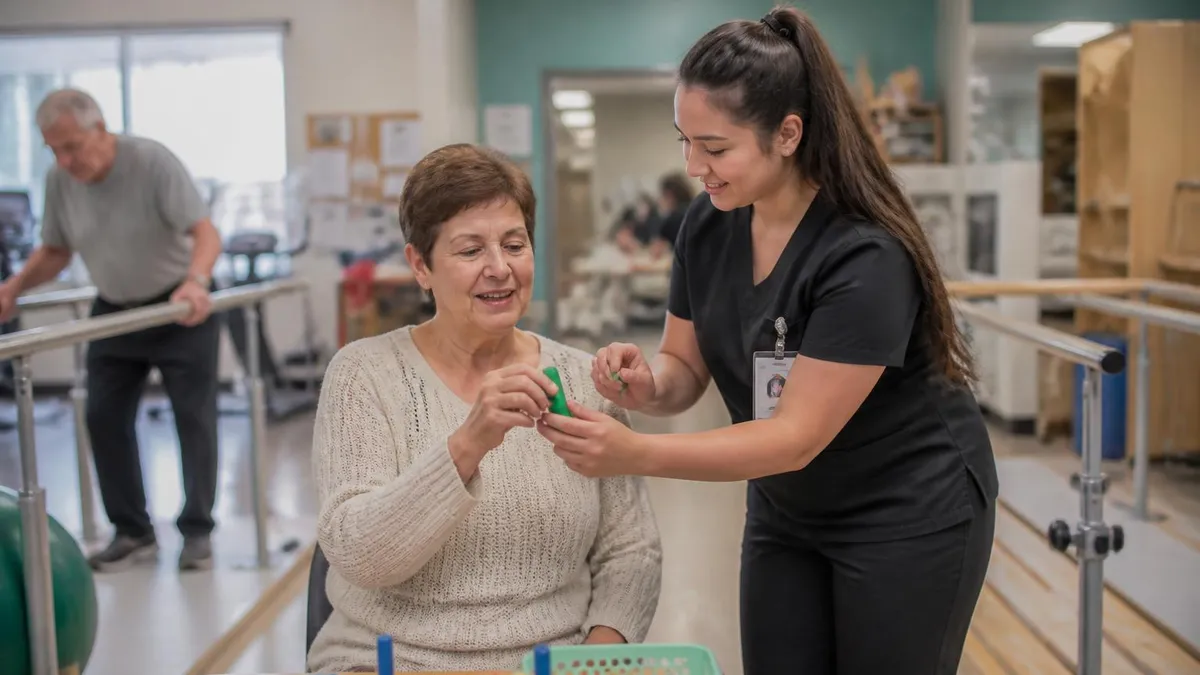
OTA Program Admission Requirements
Every accredited OTA program requires a high school diploma or GED equivalent. Strong performance in biology, chemistry, and psychology courses significantly strengthens your application and prepares you for the science-heavy prerequisites you will encounter in the program.
Most programs require completed college-level courses in anatomy and physiology, psychology, English composition, and medical terminology before enrollment. Some schools also require statistics or sociology. Earning a B or better in each prerequisite makes your application considerably more competitive.
Competitive programs typically expect a cumulative GPA of 2.5 to 3.0 or higher in prerequisite courses. Programs at high-demand community colleges may informally require 3.2 or above due to applicant volume. Always check your target school's published minimum before applying.
Most programs require 40 to 100 hours of supervised observation in an occupational therapy setting before admission. Shadowing in diverse environments — such as a hospital, school, and outpatient clinic — demonstrates genuine commitment to the profession and gives you topics to discuss in your personal statement.
Two to three letters from academic instructors, healthcare professionals, or OT supervisors who can speak to your clinical aptitude and character are typically required. A letter from a licensed OT or COTA who observed you during your shadowing hours carries particular weight with admissions committees.
The academic curriculum inside an accredited OTA program is carefully structured to build your knowledge base from foundational science to complex clinical reasoning. During the first semester, students typically focus on human anatomy and physiology, medical terminology, and an introduction to occupational therapy theory. These courses establish the conceptual framework that everything else builds upon, so instructors move quickly — expect dense reading assignments and regular written assessments from the very first week of class.
By the second semester, coursework shifts toward understanding occupation as both means and end in therapy. Students study the Occupational Therapy Practice Framework, which organizes performance areas (activities of daily living, work, leisure, and social participation), performance skills (motor, process, and social interaction skills), and client factors (body functions and structures). Mastering this framework is essential because NBCOT exam questions are built around its language and concepts, and supervising OTs will use it constantly in clinical settings.
Activity analysis is among the most skill-intensive courses in any OTA program. Students learn to systematically break down everyday tasks — dressing, cooking, handwriting, using a smartphone — into their component steps, cognitive demands, sensory requirements, and motor prerequisites. This analytical lens allows the OTA to identify precisely where a client struggles and to design targeted interventions that restore or adapt the activity to match the client's current functional level.
Therapeutic media and modalities courses introduce students to the practical tools of OT practice: therapeutic exercise, splinting and orthotics, sensory integration techniques, cognitive rehabilitation strategies, and assistive technology. Many programs dedicate entire lab sessions to hands-on practice with adaptive equipment so that students can teach clients to use devices like button hooks, rocker knives, and communication boards with genuine confidence and skill.
Documentation and professional reasoning courses address the clinical writing skills that every COTA needs on the job. Students practice writing SOAP notes, progress reports, discharge summaries, and goal statements using measurable, functional language that satisfies Medicare and insurance requirements. Poor documentation is one of the most common reasons OT services are denied reimbursement, so programs take this coursework very seriously and often require multiple drafts before a note is considered acceptable.
Mental health and psychosocial practice receives dedicated attention in accredited programs, reflecting ACOTE's recognition that occupational therapy has deep roots in psychiatric rehabilitation. Students study models like the Model of Human Occupation (MOHO) and the Cognitive Disabilities Model, and they learn group facilitation techniques, therapeutic use of self, and trauma-informed care principles that apply across all practice settings, not just mental health facilities.
Pediatric and developmental coursework covers normal developmental milestones, sensory processing disorders, autism spectrum disorder, cerebral palsy, and school-based OT services under IDEA. Students practice administering standardized assessments, writing school-based goals aligned with the IEP process, and collaborating with teachers, speech therapists, and physical therapists as part of an interdisciplinary team — skills that are immediately transferable to the school-based jobs that represent a large share of entry-level OTA employment.
OTA Program Fieldwork & Clinical Training
Level I fieldwork is integrated throughout the didactic portion of the OTA program and is designed to introduce students to real clinical environments without the pressure of independent practice. Students may spend one day per week observing and assisting at hospitals, outpatient clinics, schools, or skilled nursing facilities under direct supervision of a licensed OT or COTA. These early rotations help students connect classroom concepts to actual patient care and begin developing professional communication and therapeutic rapport skills.
ACOTE requires Level I fieldwork to be woven into academic courses so that students process their observations critically rather than simply watching. Many programs assign reflective journals, case presentations, or guided discussion posts that connect site observations to lecture material. This integration reinforces learning and helps faculty identify students who may need additional support before they advance to the more demanding Level II clinical experience in the final semesters of the program.
Is an OTA Program Right for You?
- +Shorter training pathway than becoming an OT — two years versus six or more for an entry-level OTD
- +Strong job market with 20% projected growth through 2032 and low unemployment among certified COTAs
- +Meaningful, direct patient care that produces visible functional improvements in clients' daily lives
- +Diverse practice settings — hospitals, schools, mental health, home health, geriatrics, pediatrics
- +Clear career advancement routes including COTA to OT bridge programs and specialty certifications
- +Community college tuition makes the degree affordable relative to many other healthcare credentials
- −Competitive admission with limited cohort sizes requiring strong prerequisites and observation hours
- −Physical demands of the job — lifting, transferring, and positioning patients — can cause cumulative injury
- −Salary ceiling is lower than for OTs, with median pay roughly $30K to $40K less annually
- −Supervision requirement means COTAs cannot practice independently without an OT directing the plan of care
- −Continuing education and biennial renewal fees add ongoing costs after licensure is obtained
- −Some rural areas have fewer job openings, requiring relocation or home health practice as an alternative
OTA Program Application Checklist
- ✓Complete all required prerequisite courses with a grade of B or better in each
- ✓Accumulate at least 40–100 hours of documented observation in an occupational therapy setting
- ✓Request letters of recommendation from an OT, COTA, or healthcare professional who observed your work
- ✓Write a personal statement explaining your motivation for choosing occupational therapy as a career
- ✓Confirm that your target program holds ACOTE accreditation before submitting an application
- ✓Submit official transcripts from all colleges and universities you have attended
- ✓Prepare for and attend an admissions interview if the program requires one
- ✓Apply for FAFSA and research AOTF scholarships to identify all available financial aid sources
- ✓Obtain required immunizations and background check clearances before your program start date
- ✓Purchase liability insurance if your program requires it before Level I fieldwork begins
ACOTE Accreditation Is Non-Negotiable
Graduating from a non-ACOTE-accredited program disqualifies you from sitting for the NBCOT certification exam and from obtaining state licensure in any U.S. state. Always verify accreditation status on the ACOTE website — not on the school's own marketing materials — before accepting an offer of admission or paying any enrollment deposit.
Understanding the full cost of an OTA program requires looking beyond tuition line items to factor in fees, supplies, fieldwork travel, and lost income during clinical rotations. At a public community college, total tuition for an associate-level OTA program typically runs between $8,000 and $20,000 for in-state students. Private institutions and proprietary schools can charge $30,000 to $60,000 or more for the same credential, which raises an important question about return on investment given that entry-level COTA salaries average around $55,000 to $65,000 per year in most markets.
Beyond tuition, students should budget for textbooks and supplies (approximately $800 to $1,500 per year), program fees, uniforms and clinical gear, background check and drug screening costs, liability insurance during fieldwork, and NBCOT exam registration ($555 for first-time candidates as of 2024). These ancillary expenses can easily add another $3,000 to $5,000 over the course of a two-year program, so building them into your financial plan from the outset prevents unpleasant surprises during an already demanding academic schedule.
Federal financial aid is the most accessible funding source for the majority of OTA students. Completing the FAFSA early — ideally the day it opens on October 1 for the following academic year — maximizes your eligibility window for Pell Grants, subsidized Stafford Loans, and campus-based aid programs. Students who qualify for the Pell Grant can receive up to $7,395 per academic year (2024–2025 maximum), which alone can cover a significant fraction of community college tuition costs without any repayment obligation after graduation.
The American Occupational Therapy Foundation (AOTF) administers multiple scholarship programs specifically for OTA and OT students, with awards typically ranging from $1,000 to $5,000 per recipient. State occupational therapy associations also frequently offer regional scholarships that carry less competition than national programs, making them a strategically valuable source of supplemental funding. Some hospital systems and school districts offer tuition reimbursement or forgivable loan programs in exchange for a two-year employment commitment after graduation, which can dramatically reduce net educational costs.
Students who work during their OTA program should be realistic about how much they can handle alongside a demanding curriculum. During didactic semesters, many students successfully work 20 to 30 hours per week, but Level II fieldwork rotations are full-time commitments that leave little room for outside employment. Planning for a temporary income reduction during those final clinical semesters — or securing a part-time evening position that accommodates a daytime fieldwork schedule — is essential to avoiding the financial stress that derails some otherwise capable students before graduation.
Some employers now offer OTA apprenticeship or employee-sponsored education programs that allow healthcare aides and therapy technicians to complete their OTA program while remaining on payroll at reduced hours. These arrangements are becoming more common as healthcare employers compete for a shrinking pool of qualified OT support staff. If you currently work in a hospital, rehabilitation facility, or long-term care setting, ask your human resources department whether any tuition assistance benefits are available before you apply to programs independently and pay entirely out of pocket.
Finally, consider the geographic salary variation that will affect your earning trajectory after graduation. COTAs in California, Nevada, New Jersey, and Massachusetts consistently earn above the national median — sometimes reaching $85,000 or more annually in high-cost metro areas — while rural states in the South and Midwest may offer $48,000 to $55,000 for comparable positions. If maximizing lifetime earnings is a priority, factoring regional salary data into your program selection and post-graduation relocation planning is just as important as choosing an affordable tuition rate at the outset.

NBCOT exam eligibility requires that you apply within three years of graduating from your accredited OTA program. Waiting too long after graduation — for any reason — can jeopardize your ability to sit for the exam without additional remediation. Submit your graduation verification and NBCOT application as soon as your program director confirms your completion status, ideally within the first 30 days after your final fieldwork rotation ends.
Preparing for the NBCOT Certified Occupational Therapy Assistant (COTA) examination should begin at least three months before your scheduled test date, and ideally during the final semester of your program. The exam consists of 200 scored multiple-choice questions — 170 that count toward your score and 30 unscored pilot items embedded throughout — delivered over four hours at a Prometric testing center. Questions are organized around four domains: Occupational Therapy Process, Evaluation and Intervention, Practice Context, and Professional Responsibilities, with domain weightings that shift slightly with each edition of the exam blueprint.
The most effective study strategies combine content review with intensive practice question work. Simply rereading textbooks is a passive approach that produces diminishing returns in the weeks before a high-stakes certification exam. Instead, use active recall techniques: quiz yourself with flashcards on condition-specific interventions, work through timed practice sets of 50 to 100 questions, and immediately review every wrong answer to understand the reasoning rather than just memorizing the correct choice. Identifying your weakest domains early gives you time to allocate more study hours where they will have the greatest impact on your final score.
NBCOT publishes an official study guide and practice examination that are widely considered the gold-standard preparation resources because they are written by the same team responsible for constructing the actual exam. Supplementing official materials with third-party question banks from reputable OT exam prep publishers increases your exposure to different question styles and surface-level variations of the same underlying concepts. Aim to complete at least 800 to 1,000 practice questions in the weeks before your exam date to build both competence and exam-day stamina.
Many OTA programs now build structured NBCOT preparation into their final semester curriculum, offering mock exams, group study sessions, and one-on-one tutoring for students who scored below a threshold on internal assessments. Take full advantage of every institutional resource your program offers, because your school's first-time pass rate is publicly tracked by NBCOT and programs are highly motivated to see you succeed. Students who participate in structured institutional prep consistently outperform self-study-only peers on first-attempt pass rates.
After passing the NBCOT exam, you must apply for state licensure in every state where you intend to practice. Licensure requirements vary by state but universally require proof of your COTA credential, a completed application, a background check, and payment of a licensure fee ranging from $50 to $200 depending on the jurisdiction. Most states also require completion of continuing education hours — typically 36 hours every two years — to maintain an active license, with specific content requirements around ethics, supervision, and sometimes first aid or cultural competency training.
Specialty certifications are available to COTAs who want to distinguish themselves in a particular practice area. The American Occupational Therapy Association recognizes board certifications in gerontology, mental health, pediatrics, and physical rehabilitation, each requiring documented practice hours in the specialty area plus a written examination. Earning a board certification not only validates advanced clinical knowledge but also supports salary negotiation, promotion to lead clinician roles, and transition into fieldwork educator positions within OTA academic programs.
Long-term career advancement for COTAs often involves pursuing an OT bridge program — an accelerated master's or doctoral pathway designed for COTAs with significant clinical experience. Several universities now offer online or hybrid entry-level OTD programs with advanced standing for applicants who hold a COTA credential, reducing the time to degree by accounting for clinical competencies already demonstrated. If your ultimate goal is independent practice, program leadership, or research, mapping out this bridge pathway from the beginning of your COTA career allows you to meet the experience and prerequisite requirements without unnecessary delays later on.
Succeeding in an OTA program requires more than academic aptitude — it demands time management, professional demeanor, and the kind of emotional resilience that sustains you through challenging patient interactions and difficult clinical feedback.
Students who thrive are typically those who treat their program like a full-time professional commitment from day one, showing up to every lecture, lab, and fieldwork shift with the same reliability and engagement they would bring to a paid clinical position. Instructors and fieldwork educators notice effort and consistency, and those qualities often matter as much as raw intelligence when professional references and job offers are on the table.
Building relationships with your cohort peers is one of the most underrated strategies for OTA program success. Study groups that meet regularly to quiz each other, share notes, and work through practice cases tend to outperform isolated self-study because explaining a concept to someone else cements understanding far more deeply than passive review. Your cohort also becomes your first professional network — the colleagues who will refer clients to you, advocate for you during future job searches, and share continuing education opportunities throughout your career.
Time management becomes especially critical during semesters when clinical rotations overlap with academic coursework. Many students underestimate how exhausted they will feel after a full day of supervised patient care before returning home to complete reading assignments, documentation practice, and online discussion posts. Building a realistic weekly schedule that protects dedicated study blocks — even just 90 minutes per evening — and that includes non-negotiable rest time prevents the burnout that forces some students to take medical leaves or withdraw from their programs entirely.
Seek feedback proactively from every instructor and fieldwork educator you encounter. Most students wait passively for evaluations, but the students who actively request mid-rotation check-ins, ask for annotated feedback on their documentation drafts, and follow up on specific skill gaps make visibly faster progress. Fieldwork educators in particular appreciate students who demonstrate self-awareness and a growth mindset, as these qualities predict long-term clinical excellence far better than initial skill level at the start of a rotation.
Understanding how to study for NBCOT-style questions is a distinct skill from understanding OTA clinical content. The exam tests clinical reasoning under time pressure, not encyclopedic recall of isolated facts. Practice reading questions critically: identify what the client's occupational goal is, what stage of intervention is implied by the scenario, and what the OT scope of practice boundaries require from a COTA in that situation. These analytical habits, developed consistently during your program, make NBCOT preparation feel like a natural extension of your coursework rather than a panic-inducing sprint at graduation.
If you are a working adult or have family responsibilities, look into programs that offer evening and weekend class schedules or hybrid delivery models that combine online lecture content with in-person labs. ACOTE permits a limited portion of OTA coursework to be delivered through distance education, and an increasing number of programs have redesigned their schedules to accommodate non-traditional students. Just ensure that any hybrid program you consider still meets ACOTE's requirements for in-person lab competency verification and fieldwork placement support, as these cannot be fully replaced by online formats.
Finally, stay connected to the occupational therapy professional community throughout your training by joining AOTA as a student member ($40 annually for OTA students), attending state association conferences, and following peer-reviewed OT journals. Remaining current with evidence-based practice developments, advocacy issues, and regulatory changes keeps you sharp, signals professional commitment to future employers, and positions you to contribute meaningfully to the profession from your very first day of practice as a newly certified COTA.
OTA Questions and Answers

Occupational Therapy Assistant (OTA): Role, Training & Career Guide
OTA Certification: Complete 2026 Requirements, Exam, and Career Guide

Occupational Therapy Assistant Programs: Accreditation, Cost, and Path

Occupational Therapy Assistant Test Practice Test PDF (Free Printable 2026)

Online Occupational Therapy Assistant Programs: 2026 Enrollment, Accreditation & Career Guide
About the Author

Physical Therapist & Allied Health Licensing Exam Expert
University of Pittsburgh School of Health and Rehabilitation SciencesDr. Michelle Park holds a Doctor of Physical Therapy and a PhD in Physical Therapy from the University of Pittsburgh, a top-ranked PT program in the nation. With 13 years of orthopedic and neurological rehabilitation experience, she coaches physical therapy and occupational therapy graduates through the NPTE, NBCOT, and state allied health licensing board examinations.
Join the Discussion
Connect with other students preparing for this exam. Share tips, ask questions, and get advice from people who have been there.
View discussion (8 replies)