
Online Occupational Therapy Assistant Programs: 2026 September Enrollment, Accreditation & Career Guide
Online occupational therapy assistant programs explained: ❓ accreditation, hybrid format, cost, NBCOT exam path, and how to choose the right ACOTE school.
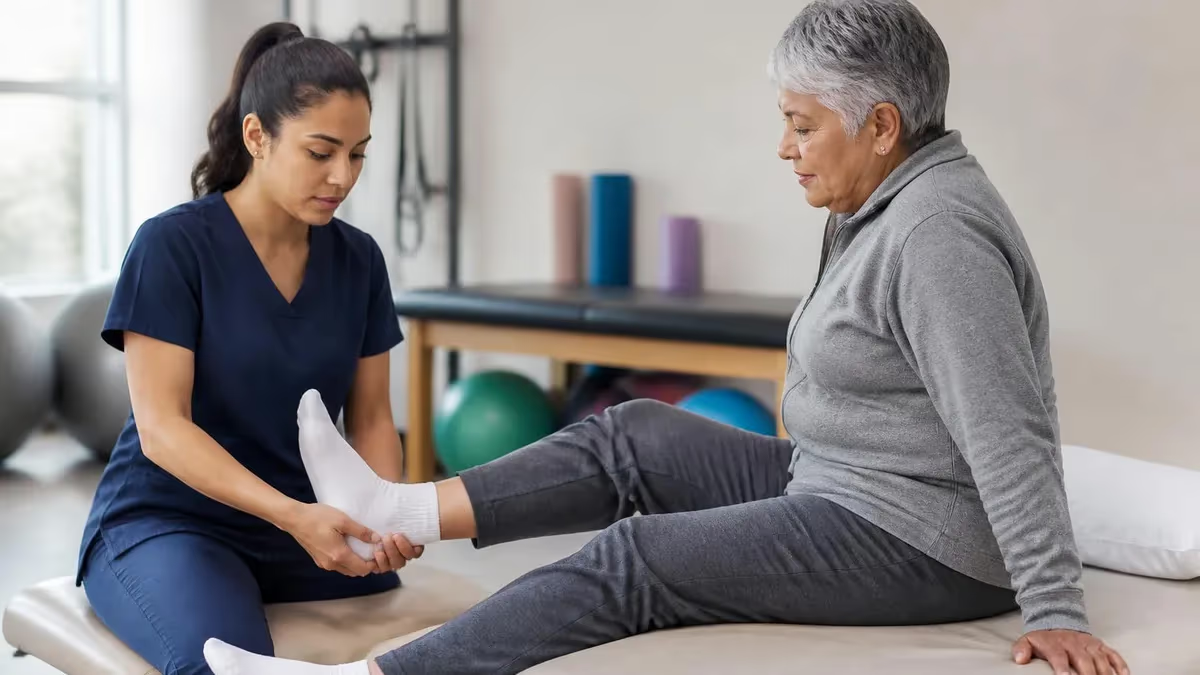
Online occupational therapy assistant programs have become one of the most practical routes into a fast-growing allied health career, letting students complete the academic portion of an associate degree from home while still meeting the hands-on requirements every accredited pathway demands. Before you enroll, it helps to understand exactly what "online" means in this field, because no fully online OTA degree exists in the United States. Every legitimate program blends remote coursework with in-person labs and supervised fieldwork, and that blend is what makes the format both flexible and rigorous.
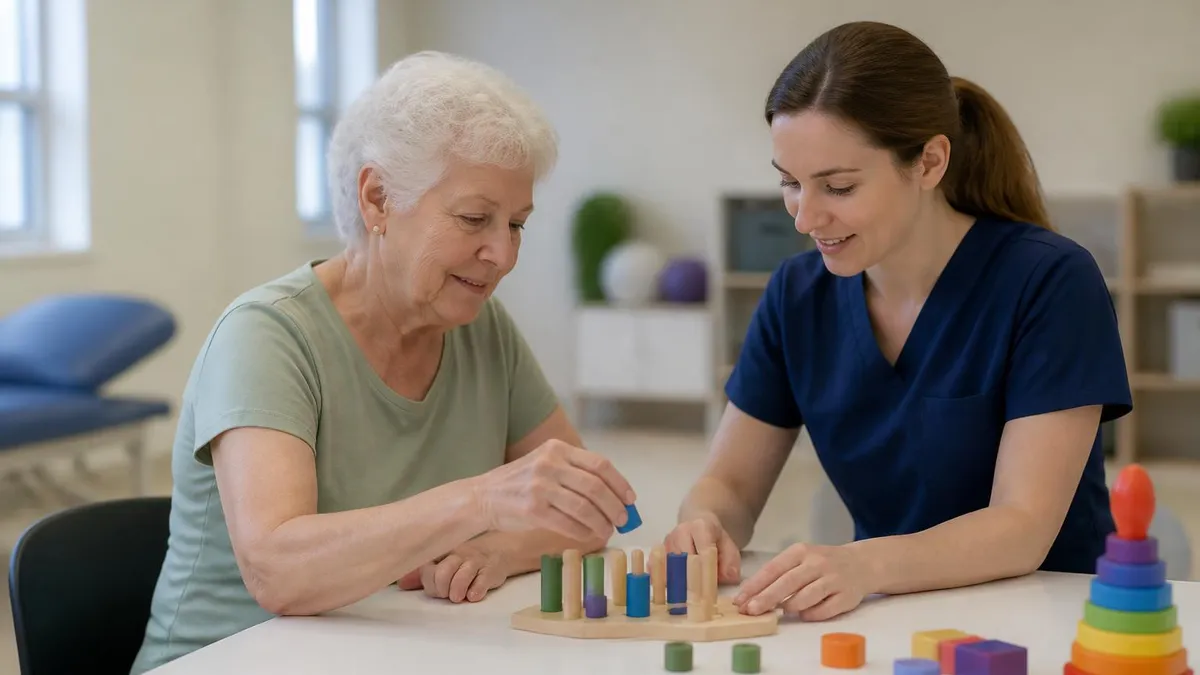
The occupational therapy assistant, or OTA, works directly under a licensed occupational therapist to help patients regain the skills they need for daily living. That might mean teaching a stroke survivor to dress independently, helping a child with sensory challenges participate in school, or guiding an injured worker back to a job. Because so much of the role is physical and interpersonal, the in-person components of any program cannot be skipped. Online programs simply move the lectures, readings, and quizzes to a screen.
Choosing a program is a serious financial and time commitment, so it pays to know the landscape. There are roughly 200 accredited OTA programs nationwide, and a growing share now offer the lecture portion in a hybrid or online-blended format. Tuition ranges widely, from under $10,000 at a community college to more than $40,000 at a private institution. Your return on that investment is strong: OTAs earn a solid median wage and enjoy excellent job security in a profession projected to grow far faster than average through the decade.
Accreditation is the single most important factor in your decision. Only programs accredited by the Accreditation Council for Occupational Therapy Education, known as ACOTE, qualify graduates to sit for the national certification exam. If a school is not ACOTE-accredited, its credits are essentially worthless for licensure, no matter how convenient the format looks. We will walk through how to verify accreditation, what the application process requires, and how the online classroom experience actually compares to traditional in-seat learning.
If you are weighing your options, it also helps to test your readiness for the field early. Reviewing sample exam content through resources like online occupational therapy assistant programs can give you a realistic preview of the clinical reasoning, documentation, and activity-analysis skills you will study. Getting familiar with that material before you apply helps you confirm the career is the right fit and gives you a head start on the certification exam that waits at the end of your training.
This guide covers everything a prospective student needs in 2026: how hybrid delivery works, the true cost breakdown, admission prerequisites, the fieldwork requirement, the NBCOT exam, state licensure, and the day-to-day realities of studying remotely. Whether you are a recent high school graduate, a career changer leaving retail or hospitality, or a current health aide looking to advance, the information here will help you compare schools intelligently and avoid the costly mistakes that trip up uninformed applicants every single year.
By the end you will understand not just where to enroll, but how to succeed once you do. Online learning rewards self-discipline, and the students who thrive are the ones who treat the flexibility as a responsibility rather than a loophole. Let us start with the data, then move into the structure of these programs, the financial picture, and the concrete steps that carry you from application to your first job as a certified occupational therapy assistant.
Online OTA Programs by the Numbers

How Online OTA Program Structure Works
Lectures, readings, discussion boards, and exams in subjects like anatomy, kinesiology, and conditions are delivered through a learning management system you access on your own schedule.
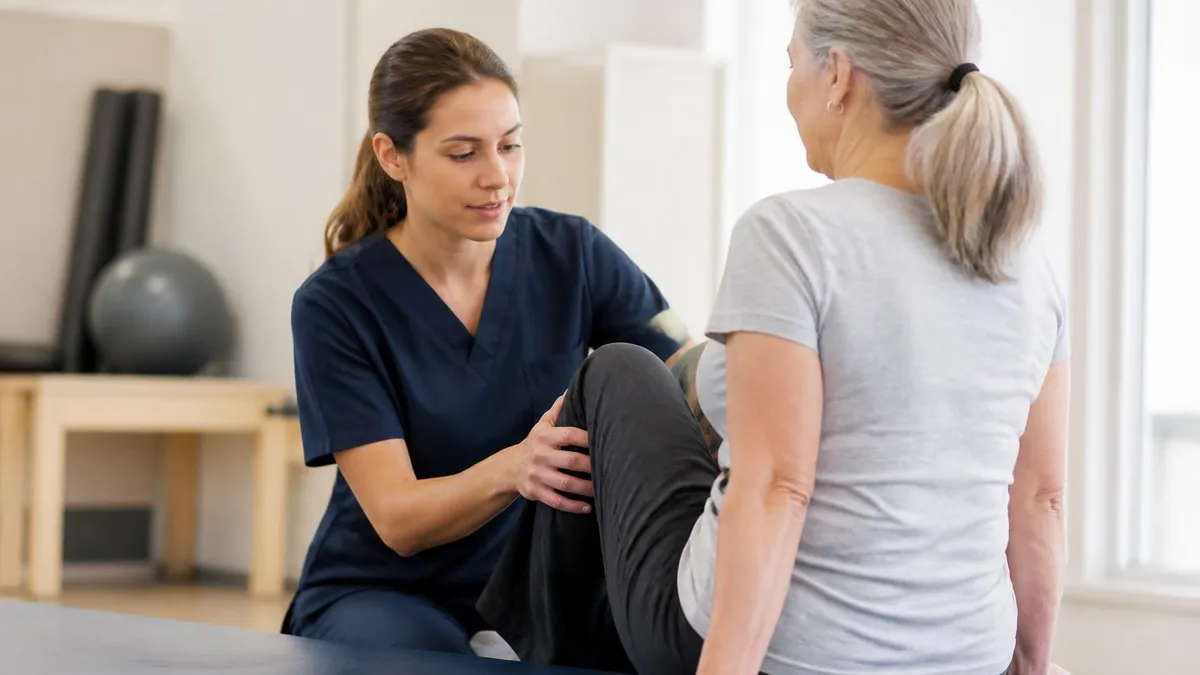
Hands-on skills such as transfers, splinting, and goniometry require in-person practice. Hybrid programs schedule intensive lab weekends or use approved local clinical sites near you.
Short observational placements introduce you to real practice settings. These are arranged at clinics, schools, or hospitals and run alongside your academic terms during the program.
Two full-time supervised placements, totaling about 16 weeks, are the capstone. You treat real patients under a supervising OT or OTA before you can graduate and test.
The final stretch focuses on certification readiness, with review of clinical reasoning, documentation, and ethics so you are ready to pass the national board exam.
Accreditation is non-negotiable, so make it the first thing you verify about any school you consider. In the United States, the Accreditation Council for Occupational Therapy Education, ACOTE, is the only body recognized to accredit OTA programs. Graduating from an ACOTE-accredited program is a hard prerequisite for sitting the national certification exam administered by the NBCOT. You can confirm a program's status directly on the ACOTE website, which lists every accredited and candidacy-status program. Never take a school's marketing claims at face value; check the official registry yourself before paying a single application fee.
Admission requirements vary by school but follow a recognizable pattern. Most programs require a high school diploma or GED, a minimum overall GPA of around 2.5 to 3.0, and completion of prerequisite courses such as anatomy and physiology, English composition, psychology, and sometimes medical terminology. Many also expect a number of documented observation hours spent shadowing a practicing occupational therapist or OTA. These hours serve a dual purpose: they prove your commitment and they confirm to you that the career matches your expectations before you invest two years.
Competitive programs often add layers beyond the minimums. Some require a personal essay, letters of recommendation, an admissions interview, or a pre-admission test that gauges reading comprehension and basic science aptitude. Because seats are limited and demand is high, meeting the bare minimum rarely guarantees a spot. Applicants who exceed prerequisite GPAs, log extra observation hours, and write thoughtful essays stand out. Treat the application as a competitive process from the start, and apply to more than one program to improve your odds of acceptance.
Prerequisite coursework deserves special attention for online applicants. Many hybrid OTA programs let you complete general-education prerequisites online through their own institution or a partnering community college. Knocking these out before you formally apply can shorten your time in the core program and strengthen your application. Be careful, though: schools have specific rules about how old prerequisite credits can be and which grades they accept. A C-minus in anatomy may not transfer even if it technically passed. Confirm every requirement with an admissions advisor in writing.
The criminal background check and health clearances are easy to overlook but absolutely critical. Because OTA students work with vulnerable populations during fieldwork, programs and clinical sites require background checks, drug screening, immunization records, CPR certification, and proof of health insurance. A past conviction does not automatically disqualify you, but it can complicate fieldwork placement and, later, state licensure. If you have any concerns about your record, raise them with the program and your state licensing board early, before you enroll and spend money.
Finally, scrutinize each program's fieldwork support, since this is where online students sometimes struggle. A strong hybrid program maintains relationships with clinical sites nationwide and has an academic fieldwork coordinator who helps place you near home. Weaker programs leave you to find your own sites, which can delay graduation by months. Ask pointed questions: How many sites do you have? What is your fieldwork pass rate? How far do students typically travel? The answers reveal whether the program's online flexibility extends to the parts that matter most for finishing on time.
If you want a deeper comparison of school options and how they stack up, the broader guide on accredited OTA program accreditation, cost, and path walks through the selection criteria in detail. Pair that research with a careful reading of each program's published outcomes data, including graduation rate, NBCOT pass rate, and employment rate. ACOTE requires programs to publish these numbers, and they are the clearest objective signal of whether a school actually delivers on the promise of preparing you for a real career.
How Online OTA Coursework Actually Works
Online OTA coursework is delivered through a learning management system such as Canvas, Blackboard, or Moodle, where you access recorded lectures, readings, slide decks, and assignments around your own schedule. Asynchronous delivery is the norm for the didactic portion, meaning you can watch a kinesiology lecture at six in the morning or ten at night. This flexibility is the main reason working adults choose the online format, since it lets them keep a job while studying for a new career.
That said, asynchronous does not mean deadline-free. Most courses set weekly due dates for discussion posts, quizzes, and assignments, and proctored exams may require a webcam and a locked browser. Successful online students build a fixed weekly routine, treating study blocks like scheduled shifts. The students who fall behind are usually the ones who assume flexibility means they can postpone work indefinitely, then find themselves cramming an entire term into the final two weeks before finals.
Are Online OTA Programs Worth It? Pros and Cons
- +Flexible asynchronous lectures let you keep working while you study
- +Lower or comparable tuition versus relocating for an on-campus program
- +Access to accredited programs even if none exist in your immediate area
- +Same ACOTE accreditation and NBCOT exam eligibility as in-seat programs
- +Self-paced review of recorded lectures improves retention of dense material
- +Builds time-management and digital skills valued by modern employers
- −No program is fully online; labs and fieldwork are always in-person
- −On-campus lab immersions can add significant travel and lodging costs
- −Requires strong self-discipline; easy to fall behind without structure
- −Fewer spontaneous peer and instructor interactions than a physical classroom
- −Fieldwork placement quality varies and can delay graduation if weak
- −Hands-on skills may feel harder to master with compressed lab schedules
Online OTA Program Enrollment Readiness Checklist
- ✓Confirm the program is listed as ACOTE-accredited on the official registry
- ✓Verify the school's published NBCOT pass rate and graduation rate
- ✓Complete prerequisite courses in anatomy, physiology, English, and psychology
- ✓Log the required observation or shadowing hours with a licensed OT or OTA
- ✓Calculate total cost including tuition, fees, travel, and lab immersions
- ✓Ask how the program places students in Level II fieldwork sites
- ✓Clear a criminal background check and required health screenings early
- ✓Obtain current CPR certification and up-to-date immunization records
- ✓Confirm your computer, webcam, and internet meet proctoring requirements
- ✓Apply to more than one accredited program to improve acceptance odds
No OTA Program Is 100% Online
Be skeptical of any school advertising a "fully online" OTA degree. ACOTE requires hands-on labs and roughly 16 weeks of in-person Level II fieldwork from every accredited program. The honest term is hybrid or blended, where lectures are online but skills training and clinical placements happen in person. If a program claims otherwise, it is either unaccredited or misrepresenting the format.
The financial picture for online OTA programs is one of the strongest arguments for entering the profession. Tuition varies enormously depending on whether you attend a community college, a public university, or a private institution. Community college programs frequently cost between $8,000 and $15,000 total for the associate degree, while private and for-profit programs can run $30,000 to $45,000 or more. Online and hybrid formats do not automatically cost less, so compare total program cost, including fees, books, and required travel for in-person components, rather than the per-credit sticker price alone.
Hidden costs catch many students off guard, and online students face a few unique ones. Beyond tuition you should budget for background checks, drug screenings, immunizations, CPR certification, professional liability insurance, uniforms or scrubs for fieldwork, the NBCOT exam fee of several hundred dollars, and state licensure application fees. For hybrid programs with campus lab immersions, travel and lodging can add thousands over two years. Build a realistic spreadsheet of every line item before you commit, so the final bill holds no surprises.
Financial aid makes these programs far more attainable than the sticker price suggests. Accredited OTA programs qualify for federal aid, so complete the FAFSA as early as possible to access Pell Grants and subsidized loans. Many states offer additional grants for allied health students entering high-demand fields, and individual schools award merit and need-based scholarships. Professional organizations and some employers also fund tuition assistance, particularly for current healthcare workers advancing their careers. Stacking these sources can dramatically reduce or even eliminate your out-of-pocket cost.
The salary and career outlook justify the investment handily. The Bureau of Labor Statistics reports a median annual wage for occupational therapy assistants in the upper $60,000s, with top earners exceeding $80,000, especially in skilled nursing facilities and home health. Geography matters: states like California, Texas, and New Jersey tend to pay more, though cost of living offsets some of that. Even at the median, an OTA salary against a community college tuition bill produces an exceptional return on investment compared with many four-year degrees.
Job security is arguably the biggest draw. Employment of occupational therapy assistants is projected to grow much faster than the average for all occupations, driven by an aging population that needs rehabilitation services and by healthcare's ongoing shift toward cost-effective care teams where OTAs deliver hands-on therapy under an OT's direction. This growth means new graduates routinely field multiple job offers, and the profession consistently ranks among the best healthcare support careers for work-life balance, advancement potential, and daily meaning.
Settings shape both pay and lifestyle, so think about where you want to work. OTAs practice in skilled nursing facilities, hospitals, outpatient rehab clinics, schools, home health agencies, and mental health settings. Skilled nursing and home health typically pay the most, while school-based roles offer a calendar that aligns with family life. Many OTAs move between settings over a career as their interests evolve, and the versatility of the credential is part of what makes it so resilient against economic downturns and shifting healthcare priorities.
To put the math in perspective, consider a graduate who finishes a $12,000 community college hybrid program and lands a starting salary near $55,000. That graduate can realistically pay off their education within the first year or two of work while building experience that pushes their wage steadily upward. Few career paths offer such a short, affordable runway to a stable, six-figure-adjacent income with strong demand in every region of the country. The numbers explain why interest in these programs keeps climbing year after year.
Nearly every state requires OTAs to be licensed, and requirements differ. Most accept NBCOT certification, but some add jurisprudence exams, fingerprinting, or continuing education rules. If you plan to relocate after graduation, confirm your target state's board accepts your credential and check whether the program is approved for licensure there before paying tuition.
Certification is the gateway between graduation and employment, and it follows a clear sequence every OTA student must complete. After finishing all coursework, labs, and both Level II fieldwork placements from your ACOTE-accredited program, you become eligible to sit for the national certification examination administered by the National Board for Certification in Occupational Therapy, the NBCOT. Passing this exam earns you the Certified Occupational Therapy Assistant credential, the COTA, which is the title employers recognize and most states require for licensure.
The NBCOT exam for assistants is a computer-based test of roughly 200 questions delivered over four hours at a testing center. It assesses your ability to acquire client information, formulate intervention plans under an OT's supervision, deliver interventions, and uphold professional standards and ethics. The questions are scenario-driven, demanding real clinical reasoning rather than rote memorization. Preparing well in advance with practice questions, content review, and timed simulations is the difference between passing on the first attempt and paying to retake it.
First-time pass rates vary by program, which is exactly why ACOTE requires schools to publish them. A program with consistently high NBCOT pass rates signals strong instruction and effective exam preparation, while low rates are a warning sign worth taking seriously. As you compare online and hybrid programs, weigh these published outcomes heavily. The whole point of your investment is to pass the exam and get licensed, so a convenient format means little if its graduates struggle on the test that gates the profession.
Building familiarity with exam-style content early pays dividends throughout your program. Working through realistic question sets like a free printable OTA practice test PDF alongside your coursework reinforces the clinical reasoning the NBCOT measures and reduces test anxiety. Students who weave practice questions into their study routine from the first term, rather than cramming at the end, consistently report feeling more confident and perform better on the actual exam. Treat exam prep as a two-year habit, not a final sprint.
State licensure is the final step before you can practice. After passing the NBCOT exam, you apply to your state's occupational therapy licensing board, submitting your exam results, transcripts, fees, and often a background check. Some states require a separate jurisprudence exam covering state-specific laws and ethics. Processing times range from days to several weeks, so apply promptly after passing your boards. Many employers will extend a conditional job offer while your license is pending, but you cannot legally treat patients until it is issued.
Maintaining your credential is an ongoing responsibility once you are working. NBCOT certification renews every three years and requires documented continuing competency activities, while state licenses typically require continuing education hours on their own cycle. Staying current is straightforward if you plan ahead, attending workshops, completing online courses, and tracking your hours throughout each renewal period. Lapsing on either requirement can suspend your ability to practice, so build continuing education into your professional routine from your very first year on the job.
Understanding this full pathway before you enroll helps you choose a program with the right end in mind. The convenience of online lectures is genuinely valuable, but it is only one piece of a journey that runs through fieldwork, a demanding national exam, and state licensure. The best applicants reverse-engineer their decision from the finish line, picking a program with proven outcomes, strong fieldwork support, and a track record of producing licensed, employed COTAs who pass the boards the first time around.
Succeeding in an online OTA program comes down to habits more than talent, and the most important habit is treating flexible coursework with the seriousness of a fixed schedule. Block out dedicated study hours every week and protect them the way you would protect work shifts. Students who pencil in specific times for lectures, reading, and assignments finish on time, while those who plan to study "whenever" fall behind fast. Use a calendar, set reminders, and review your syllabi at the start of each term to map every deadline.
Build a real study space that signals focus to your brain. A dedicated desk with reliable internet, a quality webcam for proctored exams, a second monitor if possible, and zero distractions makes remote learning far more effective than studying from bed or a noisy kitchen. Test your technology before exam day, since proctoring software can be finicky and a last-minute camera failure during a timed test is a needless source of panic. Treat your home setup as professional infrastructure, not an afterthought.
Engage actively rather than passively consuming lectures. Take handwritten or typed notes, pause recordings to look up unfamiliar terms, and rewatch difficult segments on conditions, kinesiology, and intervention planning. Form virtual study groups with classmates through video calls or group chats, because explaining concepts to peers cements your own understanding and combats the isolation that online students sometimes feel. The relationships you build with classmates also become a professional network that follows you throughout your career in the field.
Prepare for in-person components well ahead of time so they never derail your progress. Mark lab immersion dates on your calendar the moment you receive them, arrange travel and time off early, and review the relevant skills before you arrive so you maximize limited hands-on hours. For fieldwork, communicate proactively with your academic fieldwork coordinator, complete every required clearance early, and approach placements as both learning experiences and extended job interviews where supervisors are evaluating you for future hiring.
Integrate exam preparation into your routine from the beginning rather than treating it as a final-semester emergency. Work through practice questions covering documentation, adaptive equipment, activity analysis, and ethics alongside the matching coursework so the knowledge compounds. Reviewing realistic scenarios regularly builds the clinical reasoning the NBCOT demands and turns the eventual exam into a familiar challenge rather than an intimidating unknown. A little consistent practice each week beats a frantic cram every single time.
Take care of yourself across the two-year journey, because burnout derails more students than difficult material does. Online programs often attract working adults juggling jobs and families, and the workload is real. Build in rest, ask for help when you need it, use your program's tutoring and advising resources, and remember why you started. The patients you will eventually help, the stability the career offers, and the meaning of the work are worth the temporary sacrifice of these intense months.
Finally, plan your transition into the workforce before you even finish. Polish your resume, line up references from instructors and fieldwork supervisors, and start networking during your placements where many graduates receive their first offers. Research employers in your area, understand the settings you prefer, and apply for your state license the moment you pass the boards. With strong study habits, solid fieldwork performance, and early job-search preparation, you can move from enrollment to your first COTA paycheck smoothly and confidently.
OTA Questions and Answers
Occupational Therapy Assistant Practice Test Video Answers

Occupational Therapy Assistant Programs: Accreditation, Cost, and Path

Occupational Therapy Assistant Degree: Complete 2026 Training Guide

Occupational Therapy Assistant Test Practice Test PDF (Free Printable 2026)

Certified Occupational Therapy Assistant: Complete COTA Career & Certification Guide
About the Author

Physical Therapist & Allied Health Licensing Exam Expert
University of Pittsburgh School of Health and Rehabilitation SciencesDr. Michelle Park holds a Doctor of Physical Therapy and a PhD in Physical Therapy from the University of Pittsburgh, a top-ranked PT program in the nation. With 13 years of orthopedic and neurological rehabilitation experience, she coaches physical therapy and occupational therapy graduates through the NPTE, NBCOT, and state allied health licensing board examinations.
Join the Discussion
Connect with other students preparing for this exam. Share tips, ask questions, and get advice from people who have been there.
View discussion (8 replies)