
OTA Programs: Accredited Schools, Cost, and Admission Requirements
Complete guide to OTA programs covering ACOTE accreditation, top schools, cost, prerequisites, admission requirements, and the path to NBCOT certification. 💡

What OTA Programs Are
Occupational Therapy Assistant programs prepare students to work under the supervision of occupational therapists, helping patients develop, recover, and improve the skills needed for daily living and working. OTA programs award an Associate of Applied Science degree typically completed in two years of full-time study, after which graduates take the National Board for Certification in Occupational Therapy exam to earn the Certified Occupational Therapy Assistant credential.
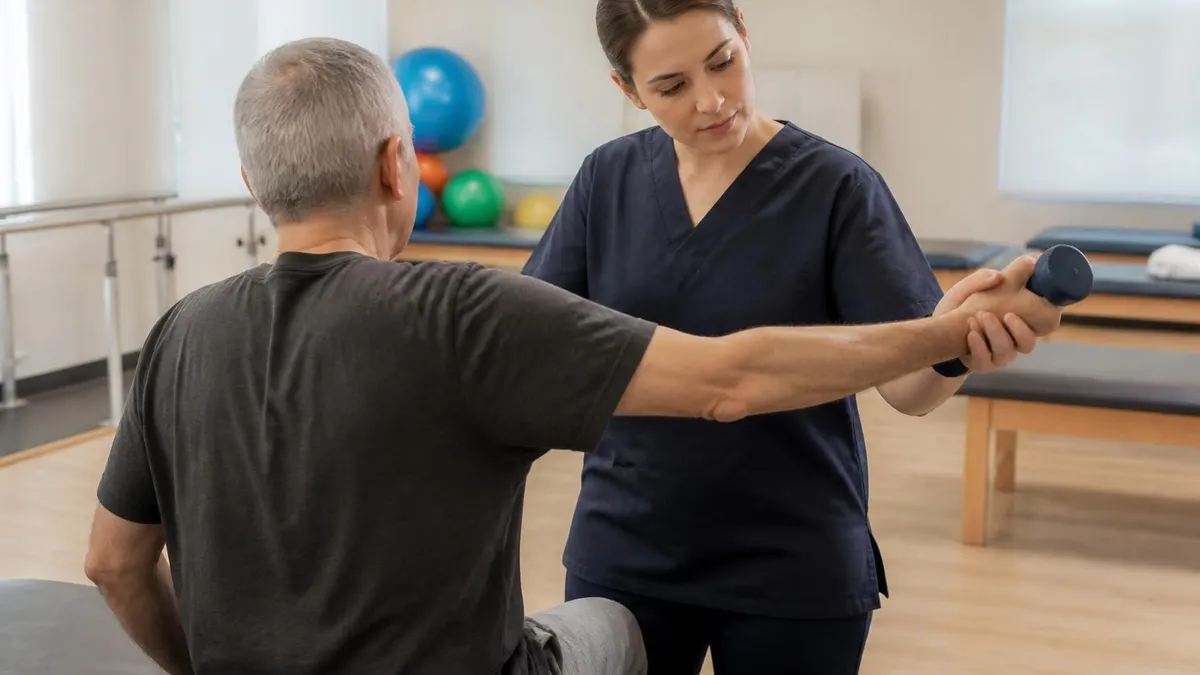
The role of an OTA combines direct patient care with documentation responsibilities, treatment plan implementation, and patient education across pediatric, adult, and geriatric populations. Common practice settings include hospitals, outpatient rehabilitation clinics, schools, skilled nursing facilities, home health agencies, mental health programs, and early intervention services for infants and toddlers with developmental delays.
OTA program graduates enter a field with strong projected job growth, competitive entry-level wages, and meaningful patient relationships that develop over months of rehabilitation work. The Bureau of Labor Statistics projects faster than average growth for occupational therapy assistant positions through the next decade, driven by aging baby boomers requiring more rehabilitation services and expansion of pediatric early intervention programs across the country.
The historical foundations of occupational therapy practice trace back to early twentieth century rehabilitation work with soldiers returning from World War One, when therapists used purposeful activity to help wounded veterans recover function and reintegrate into civilian life. The OTA role developed later in the 1960s as the profession recognized the need for paraprofessional support to extend therapist reach across growing demand for rehabilitation services in hospitals, schools, and community settings.
Contemporary OTA practice has evolved into a sophisticated allied health role with substantial autonomy under appropriate supervision. While occupational therapists evaluate patients and develop treatment plans, OTAs implement interventions, document patient response, modify activities based on patient performance, and communicate clinical observations that inform ongoing treatment decisions. The team-based model maximizes patient access to skilled rehabilitation services while ensuring appropriate clinical oversight throughout the treatment process.
OTA Program Quick Facts
Most OTA programs run two years and award an Associate of Applied Science degree. ACOTE accreditation is required for NBCOT certification eligibility. Total tuition typically ranges from ten thousand to forty thousand dollars depending on whether public or private institution. After graduation, candidates sit for the COTA national certification exam before applying for state licensure.
The Bureau of Labor Statistics projects faster than average growth for OTA positions through the next decade, driven by aging baby boomers and expansion of pediatric early intervention. State licensure requirements follow the NBCOT certification with state-specific application fees and renewal cycles.
ACOTE Accreditation Requirements
The Accreditation Council for Occupational Therapy Education accredits OTA programs in the United States, setting curriculum standards, faculty qualifications, clinical experience requirements, and student outcome benchmarks that programs must meet. Only graduates of ACOTE-accredited programs are eligible to sit for the NBCOT certification examination, making accreditation status the single most important factor in selecting an OTA program.
ACOTE accreditation involves an initial application, comprehensive self-study by the program, an on-site review by trained evaluators, and ongoing reaccreditation reviews every seven years to maintain status. Programs must demonstrate appropriate faculty credentials including occupational therapy practitioners with advanced degrees, adequate clinical placement networks, current curriculum aligned with the most recent ACOTE educational standards, and student outcomes including graduation rates and certification examination pass rates.
The ACOTE website maintains a current list of accredited OTA programs that prospective students should verify before applying. Programs occasionally lose accreditation status due to declining outcomes, faculty shortages, or curriculum gaps. Choosing a program with developing or probationary accreditation status carries significant risk because students may complete the program only to find they cannot sit for certification if accreditation is fully revoked during their enrollment.
The role of accreditation in protecting students and the public cannot be overstated. ACOTE accreditation ensures that graduates have received standardized minimum competencies, that they will be eligible for certification, and that they can practice in any state that recognizes the NBCOT credential. Employers in turn rely on accreditation status as evidence that new graduates have the foundational knowledge and skills required for entry-level practice in their facilities.
Probationary accreditation status carries specific risks for current and prospective students. Programs on probation must address identified deficiencies within a defined timeframe or face withdrawal of accreditation. Students enrolled during the probation period typically retain their certification eligibility regardless of subsequent outcomes, though new applicants face uncertainty about long-term program viability. Prospective students should request explicit written confirmation of accreditation status from any program under review before enrolling.
Types of OTA Programs
Most accessible and affordable option with tuition typically ten thousand to twenty thousand dollars total, full-time programs running twenty-one to twenty-four months from start to graduation. Comparing programs in this category through outcome data, faculty credentials, and clinical placement networks helps identify the best fit for individual goals.
Career-focused programs at technical and vocational colleges with similar tuition to community colleges and strong industry partnerships for clinical placements at local healthcare facilities. Comparing programs in this category through outcome data, faculty credentials, and clinical placement networks helps identify the best fit for individual goals.
Some universities offer OTA programs as part of larger health science colleges with tuition fifteen thousand to forty thousand dollars but stronger academic support and research exposure during training. Comparing programs in this category through outcome data, faculty credentials, and clinical placement networks helps identify the best fit for individual goals.
Several accredited programs combine online didactic coursework with in-person lab and clinical components for working adults needing schedule flexibility during the academic portions of training. Comparing programs in this category through outcome data, faculty credentials, and clinical placement networks helps identify the best fit for individual goals.
Admission Requirements for OTA Programs
OTA program admission requires completion of a high school diploma or equivalent, along with prerequisite coursework that most programs specify before applying. Typical prerequisites include English composition, college-level mathematics, anatomy and physiology, introductory psychology, sociology, and developmental psychology across the lifespan. Some programs require additional courses in medical terminology, communication, or general biology.
Beyond academic prerequisites, most OTA programs require observation hours documented at occupational therapy practice sites, typically twenty to forty hours across multiple settings such as a hospital, outpatient clinic, and school-based service. Observation hours expose applicants to the realities of OT practice and help programs identify candidates with realistic understanding of the profession before they invest in the demanding curriculum.
Competitive programs often require minimum grade point averages of three point zero or higher in prerequisite coursework, letters of recommendation from healthcare professionals or academic instructors, written essays describing motivation to enter the field, interviews with admissions faculty, and entrance examination scores such as the HESI A2 or TEAS depending on the institution. Strong applicants demonstrate clear understanding of the OT scope of practice and commitment to the supervised practice role of the OTA.
Prerequisite course completion strategies affect both admission competitiveness and program timeline. Taking prerequisites at the community college where the OTA program will be completed often produces the smoothest pathway because course content aligns with program expectations and credits transfer automatically. Taking prerequisites at four-year institutions sometimes produces stronger grades that boost competitive applications but may not transfer cleanly to all programs.
Observation hour quality matters more than quantity for application competitiveness. Spending forty hours at a single facility produces less compelling experience than thirty hours distributed across three different settings such as a pediatric clinic, an adult rehabilitation hospital, and a school-based service. Diverse observation exposes applicants to varied populations and helps articulate specific motivations in personal essays during the application process.
OTA Program Curriculum Components
Classroom learning covers occupational therapy theory, anatomy and physiology in depth, kinesiology, conditions affecting occupational performance, intervention techniques across populations, documentation and reimbursement systems, ethics and professional issues, and research literacy. Most didactic content runs through the first three semesters before clinical fieldwork begins.
Each component builds toward graduate competence required for entry-level practice as a certified occupational therapy assistant in any practice setting. Strong performance across all three components produces stronger NBCOT examination preparation and clinical readiness.
Total Cost of OTA Programs
Total program cost varies substantially by institution type and residency status. In-state tuition at community colleges ranges from ten thousand to eighteen thousand dollars for the complete two-year program. Out-of-state community college tuition can run twenty thousand to thirty thousand dollars total. Private institution tuition typically falls between twenty-five thousand and forty-five thousand dollars for the full program duration.
Beyond tuition, students should budget for textbooks at fifteen hundred to three thousand dollars across all semesters, lab supplies and uniforms at three hundred to seven hundred dollars, background check and drug screening fees at fifty to one hundred fifty dollars per cycle, immunization documentation costs, transportation to fieldwork sites that may be significant distances from the school, professional liability insurance at fifty to one hundred fifty dollars annually, and the NBCOT certification examination fee of five hundred forty dollars.
Financial aid options include federal Pell Grants for income-eligible students, federal direct student loans up to defined annual limits, state grant programs varying by state of residence, institutional scholarships offered by individual schools, professional association scholarships from the American Occupational Therapy Association and state associations, and military benefits including the GI Bill for qualifying veterans and dependents pursuing healthcare education in approved programs.
Loan repayment programs offer significant value for OTA graduates willing to practice in underserved areas after graduation. Federal programs through the Health Resources and Services Administration provide loan repayment in exchange for service commitments at qualifying facilities. State programs add similar opportunities in many jurisdictions. Veterans Affairs Education Debt Reduction Program offers up to two hundred thousand dollars over five years for clinical practice at VA facilities serving veterans.
Return on investment for OTA programs ranks among the strongest of associate-level healthcare credentials. A typical investment of twenty-five thousand dollars over two years that produces median earnings of sixty-five thousand dollars annually yields payback in less than one year of full-time employment. Career stability adds to the value calculation, with sustained demand projected through the next decade across all major geographic markets and practice settings.

All OTA programs require criminal background checks and drug screening before clinical placement begins. Felony convictions involving violence, theft, fraud, or substance abuse may prevent clinical placement, which would prevent program completion regardless of academic performance. Reviewing personal history with admissions counselors before enrolling prevents the costly discovery of placement barriers after tuition payment.
Health requirements typically include current immunizations for measles, mumps, rubella, varicella, hepatitis B, tetanus, diphtheria, and pertussis. Annual tuberculosis screening and influenza vaccination are also standard. Programs maintain specific documentation requirements that must be satisfied before clinical placement begins.
The Application Process
OTA program applications typically open in fall for the following academic year admission, with deadlines ranging from December through April depending on the institution and program start date. Applicants should plan to complete prerequisite coursework, gather observation hours, request letters of recommendation, and prepare entrance examination scores well before the application deadline to avoid rushed submissions that weaken competitive applications.
The application packet typically includes the institutional application form, official transcripts from all post-secondary institutions attended, prerequisite course completion documentation, observation hour verification forms signed by supervising therapists, letters of recommendation, personal essays addressing prompts about motivation and career goals, entrance examination scores, and application fees ranging from twenty-five to one hundred dollars per program.
Applicants are encouraged to apply to multiple programs given competitive admission rates that often range from twenty to forty percent acceptance among qualified candidates. Geographic flexibility expands acceptance chances, with many strong students attending programs in nearby states rather than waiting an additional year to reapply to the home state program. Some applicants apply to a mix of competitive programs and safety programs to maximize chances of starting within the intended academic year.
Interview preparation deserves significant attention when invited to interview by any OTA program. Common questions cover motivation to enter the field, understanding of the OTA versus OT scope difference, observations from clinical exposure, ability to handle physical and emotional demands of patient care, communication skills with diverse populations, and strategies for managing academic rigor while balancing other life responsibilities throughout the two-year program.
Waitlist management requires patience and continued effort if a program offers waitlist placement after initial admission decisions. Maintaining strong prerequisite grades through final semesters, continuing observation hours at clinical sites, attending optional program events to demonstrate interest, and submitting brief update letters to the admissions office showing ongoing engagement all support movement off the waitlist into accepted status. Many programs draw from waitlists through the summer before the academic year begins.
OTA Program Application Checklist
- ✓Verify ACOTE accreditation status for every target program before investing in application fees
- ✓Complete prerequisite coursework with the highest possible grades to support competitive admission
- ✓Document twenty to forty observation hours across multiple OT practice settings before applying
- ✓Request letters of recommendation from healthcare professionals and academic instructors early
- ✓Prepare for and complete entrance examinations such as HESI A2 or TEAS with strong scores
- ✓Write personalized essays for each program addressing specific prompts and program features
- ✓Submit applications to multiple programs to maximize chances of acceptance within the academic year
- ✓Visit campus or attend information sessions for top program choices to evaluate facilities and faculty
- ✓Connect with current students or recent graduates to understand the program experience honestly
What Students Experience During the Program
The first semester of an OTA program typically introduces foundational concepts including the history and philosophy of occupational therapy, anatomy and physiology essentials, basic intervention principles, and professional ethics. The pace accelerates quickly as students move into condition-specific coursework covering pediatric disorders, adult neurological conditions, mental health practice, and geriatric care across subsequent semesters.
Laboratory components add hands-on skill development running parallel to didactic learning. Students practice transfers between bed and wheelchair, manual muscle testing, range of motion measurement, splint fabrication, adaptive equipment training, daily living skill instruction, group facilitation for mental health and rehabilitation populations, and documentation in formats matching real practice settings.
The clinical fieldwork experiences culminating in two Level Two rotations during the final semester provide the most realistic preview of practice as a certified OTA. Students work full-time at clinical sites under supervision of an OT or experienced OTA, gradually building independent caseload responsibilities under reducing supervision as competence develops. Successful completion of both Level Two rotations is required for program graduation and certification examination eligibility.
Study group formation in the first weeks of the program produces significant benefit throughout the curriculum. Working with peers to review difficult content, practice clinical skills, prepare for examinations, and provide mutual emotional support during demanding semesters strengthens learning outcomes and builds professional relationships that often extend beyond graduation into ongoing professional networks across practice settings nationwide.
Mental health considerations during OTA programs warrant attention from students and faculty. The combination of academic rigor, clinical exposure to suffering patients, financial pressures, and personal life demands can challenge even resilient students. Most institutions offer counseling services free or at low cost to enrolled students. Reaching out for support early when struggles emerge produces better outcomes than waiting until academic performance suffers and recovery becomes more difficult.
NBCOT Certification After Graduation
The National Board for Certification in Occupational Therapy administers the certification examination that OTA program graduates must pass before applying for state licensure. The Certified Occupational Therapy Assistant examination contains two hundred questions delivered in a four-hour computer-based testing format at Prometric testing centers across the country. The passing score is set at four hundred fifty on a scaled scoring system.
Examination content covers four main areas including evaluation and assessment at twenty-five percent, intervention selection and implementation at thirty-eight percent, professional standards and competence at sixteen percent, and the impact of contextual factors on occupational performance at twenty-one percent. Within each area, content reflects current practice across pediatric, adult, and geriatric populations and varied practice settings to ensure broad clinical readiness.
Application for the examination requires verification of OTA program completion from an ACOTE-accredited program, a background check, and the examination fee of five hundred forty dollars at current pricing. Eligible candidates schedule the examination at a Prometric center after receiving authorization to test. Most candidates complete six to twelve weeks of focused study after graduation before sitting for the examination, with pass rates among first-time test takers typically exceeding eighty percent at strong programs.
Examination preparation typically requires six to twelve weeks of focused study after graduation. Most candidates use a combination of official NBCOT study guides, third-party preparation books from publishers such as TherapyEd and Pass the OT, online practice question banks that mirror the examination format, and study groups with classmates from the OTA program. Practice exams scored consistently above seventy-five percent indicate readiness for the actual certification test.
Examination retake policies allow candidates who do not pass to retake the examination after a waiting period and additional fee payment. Most candidates who do not pass on first attempt identify specific content areas where preparation was weaker than expected, focus subsequent study on those areas, and pass successfully on second or third attempts. NBCOT publishes pass rate statistics by program, which prospective students should review when comparing OTA programs.

OTA Program By the Numbers
Top Practice Settings After OTA Programs
Largest employer of OTAs serving geriatric patients in rehabilitation programs after hospital discharge for conditions including stroke, hip replacement, and other functional limitations. Comparing programs in this category through outcome data, faculty credentials, and clinical placement networks helps identify the best fit for individual goals.
Outpatient orthopedic and neurological rehabilitation clinics employ OTAs serving adults recovering from injuries, surgeries, and chronic conditions through scheduled treatment sessions. Comparing programs in this category through outcome data, faculty credentials, and clinical placement networks helps identify the best fit for individual goals.
OTAs in school-based practice support children with developmental, sensory, motor, and learning challenges through services integrated with educational programming and academic year schedules. Comparing programs in this category through outcome data, faculty credentials, and clinical placement networks helps identify the best fit for individual goals.
Home health OTAs travel to patient homes to provide rehabilitation services for adults and seniors with mobility limitations who cannot easily access outpatient clinic settings. Comparing programs in this category through outcome data, faculty credentials, and clinical placement networks helps identify the best fit for individual goals.
Career Outlook After Completing an OTA Program
Median annual wages for certified occupational therapy assistants sit around sixty-five thousand dollars nationally, with significant geographic variation. California, Texas, New York, and several other states with high concentrations of healthcare employment pay above the national median. Rural and underserved areas often offer additional compensation including sign-on bonuses, loan repayment assistance, and relocation packages to attract qualified candidates to areas with workforce shortages.
Career advancement pathways from the OTA role include specialization in pediatrics, neurological rehabilitation, hand therapy, mental health, or low vision practice through additional continuing education and supervised practice hours. Some OTAs pursue advanced certification in specialty areas administered by the American Occupational Therapy Association. Others move into supervisory roles overseeing teams of assistants or transition into educational roles teaching at OTA programs after gaining clinical experience.
The pathway from OTA to occupational therapist requires returning to school for a Master of Occupational Therapy or Doctor of Occupational Therapy degree. Some programs offer bridge programs that accept OTA credentials and clinical experience as foundation, shortening the time to OT credentials compared to entering with an unrelated bachelor degree. The financial and time investment is substantial but produces significantly higher earning potential and expanded scope of practice as a full occupational therapist.
Salary negotiations for new graduate OTAs benefit from understanding regional market conditions and total compensation components. Base salary represents only one element of the offer, with benefits including health insurance valued at six thousand to eighteen thousand dollars annually for family coverage, retirement contributions matching three to six percent of salary, paid time off accruing at one to two weeks per year initially, continuing education allowances of five hundred to fifteen hundred dollars annually, and shift differentials for evening or weekend work all affecting total compensation value.
Specialty certification opportunities emerge after several years of practice. The American Occupational Therapy Association administers specialty certifications in pediatrics, mental health, gerontology, environmental modification, low vision rehabilitation, school systems, and driving and community mobility. These credentials require documented practice hours in the specialty area, continuing education, and successful examination completion. Specialty certified OTAs typically earn salary premiums of five to fifteen percent over generalist colleagues in the same practice settings.
OTA Program Pros and Cons
- + —
- + —
- + —
- + —
- + —
- − —
- − —
- − —
- − —
- − —
OTA Questions and Answers
About the Author

Physical Therapist & Allied Health Licensing Exam Expert
University of Pittsburgh School of Health and Rehabilitation SciencesDr. Michelle Park holds a Doctor of Physical Therapy and a PhD in Physical Therapy from the University of Pittsburgh, a top-ranked PT program in the nation. With 13 years of orthopedic and neurological rehabilitation experience, she coaches physical therapy and occupational therapy graduates through the NPTE, NBCOT, and state allied health licensing board examinations.
Join the Discussion
Connect with other students preparing for this exam. Share tips, ask questions, and get advice from people who have been there.
View discussion (8 replies)