
Travel MRI Tech: Complete Guide to Salary, Assignments, Requirements, and How to Launch a Lucrative Travel Career in 2026
Travel MRI tech guide: 🏆 salary ($2,800-$3,800/week), requirements, top agencies, assignment tips, and how to launch a travel MRI career in 2026.

What changed for MRI - Magnetic Resonance Imaging in 2026
- February 1, 2025: ARRT's updated MRI exam content specifications took effect. The 200 scored questions are split into Patient Care (16), Safety (21), Image Production (106) and Procedures (57). (source)
- Under the 2026 Primary Eligibility Pathway Handbook, the ARRT MRI exam has 230 items (200 scored and 30 unscored pilot questions), 230 minutes of test time and a 250-minute appointment. (source)
- Under the 2026 Postprimary Eligibility Pathway Handbook, the MRI exam for postprimary candidates such as R.T.(R) radiographers has 220 items (200 scored and 20 pilot questions), 210 minutes of test time and a 230-minute appointment. (source)
- In 2026, the ARRT MRI application fee is $225 for both the primary and postprimary pathways, or $450 for postprimary candidates whose supporting credential is from NMTCB or ARDMS. Reapplying after a failed attempt costs $200. (source)
- In 2026, ARRT's annual renewal fee is $65, regardless of how many ARRT credentials you hold. Travel MRI techs should budget for it alongside any state license renewals. (source)
- In 2025, 75% of the 3,310 first-time ARRT MRI candidates passed, with a mean scaled score of 79.7. This was the first year of the new content specifications. (source)
- Fall 2026, Imaging Assistant (MR) credential: applications submitted Aug. 17–Oct. 14, 2026 pay a one-time $75 fee (normally $225), and the exam must be taken Oct. 15–Nov. 30, 2026. Applications after Oct. 14 pay $225 and test on or after Jan. 1, 2027. (source)
Last verified: 2026-10-13 against the American Registry of Radiologic Technologists (ARRT).
- Questions: 230 on the ARRT MRI exam for primary-pathway candidates (200 scored + 30 pilot), and 220 for postprimary candidates (200 scored + 20 pilot). (source)
- Time: 230 minutes of test time for primary-pathway candidates and 210 minutes for postprimary candidates. (source) (source)
- Cost: $225 for the ARRT MRI application (one exam attempt in a 365-day exam window, USD). Reapplication is $200, and annual renewal is $65. (source)
- Passing score: a scaled score of 75 on ARRT's 1–99 scale. In 2025 that took about 66% of MRI questions correct. (source)
- Pass rate: 75% for first-time candidates (2025, 3,310 candidates, ARRT). (source)
- Registration: there is no fixed deadline. You apply year-round and get a 365-day exam window, with 3 attempts allowed within 3 years. (source)
Source: The American Registry of Radiologic Technologists (ARRT).
Becoming a travel MRI tech is one of the most lucrative and flexible career moves a magnetic resonance imaging technologist can make in 2026. With weekly pay packages routinely landing between $2,800 and $3,800, fully covered housing stipends, and the freedom to work in every corner of the country, travel MRI tech roles have exploded in popularity over the past five years. Practice with the free MRI - Magnetic Resonance Imaging practice test on PracticeTestGeeks (200+ questions with answer explanations).
Hospitals and imaging centers across the United States face persistent staffing shortages, and they are willing to pay premium rates to qualified MRI technologists who can step into a scanner room and start producing diagnostic images on day one.
The demand is driven by several converging forces. Baby boomers are aging into the years when MRI utilization peaks, outpatient imaging centers are opening at record rates, and burnout among staff radiologic technologists continues to push experienced professionals toward agency work. At the same time, advances in 3T scanning, functional MRI, cardiac imaging, and AI-assisted reconstruction have widened the gap between facilities that need help and the pool of techs qualified to deliver it. A skilled travel MRI tech with strong scanner protocols and confident patient care can essentially write their own ticket.
Travel contracts typically run 13 weeks, though 8-week, 26-week, and even local 4-week crisis assignments are common. You choose where you go, which shift you prefer, and which scanner manufacturers you want to work on. Want to spend a winter in Florida and a summer in Colorado? That itinerary is realistic. Want to stack three back-to-back contracts in Northern California to boost your savings? Recruiters will line them up for you before your current assignment ends.
Before you book your first contract, however, you need to understand the financial math beyond the headline weekly rate. Travel pay packages are structured around taxable hourly wages plus non-taxable stipends for housing, meals, and incidentals, and the split dramatically affects your real take-home and your tax obligations. You also need to maintain a tax home, document expenses carefully, and pick agencies that handle credentialing, licensing reimbursement, and benefits the way you expect.
This guide walks through everything: salary benchmarks by region, license and certification requirements, how to vet agencies, what life on assignment really looks like, the pros and cons compared with staff positions, and the practical checklists that experienced travel MRI techs use to keep their careers running smoothly. Whether you have ten years of MRI experience and are ready to make the jump, or you are still finishing your ARRT-MRI registry exam and planning ahead, you will leave with a concrete roadmap.
We will also cover the often overlooked details: how to handle health insurance gaps between contracts, what cancellation clauses you need to scrutinize, how to negotiate when an agency lowballs you, and how to use the historical context found in the history of MRI to understand why certain modalities pay more than others. By the end, you will know exactly how to evaluate a travel MRI tech offer in under five minutes.
The bottom line: a motivated MRI technologist with two years of clinical experience can realistically earn $150,000 to $200,000 a year on the road, build skills across multiple scanner platforms, and explore the country on someone else's housing budget. The path is straightforward, but it rewards the techs who treat it like a business rather than a vacation.
Free MRI - Magnetic Resonance Imaging Study Tools
Interactive MRI - Magnetic Resonance Imaging resources on PracticeTestGeeks, free to start:
- MRI - Magnetic Resonance Imaging practice test — 200+ questions with instant scoring and answer explanations
- MRI - Magnetic Resonance Imaging flashcards — review key terms and concepts card by card
- MRI - Magnetic Resonance Imaging study guide — topic-by-topic overview of what the exam covers
- MRI - Magnetic Resonance Imaging cheat sheet — one-page printable summary for last-minute review
Travel MRI Tech by the Numbers (2026)
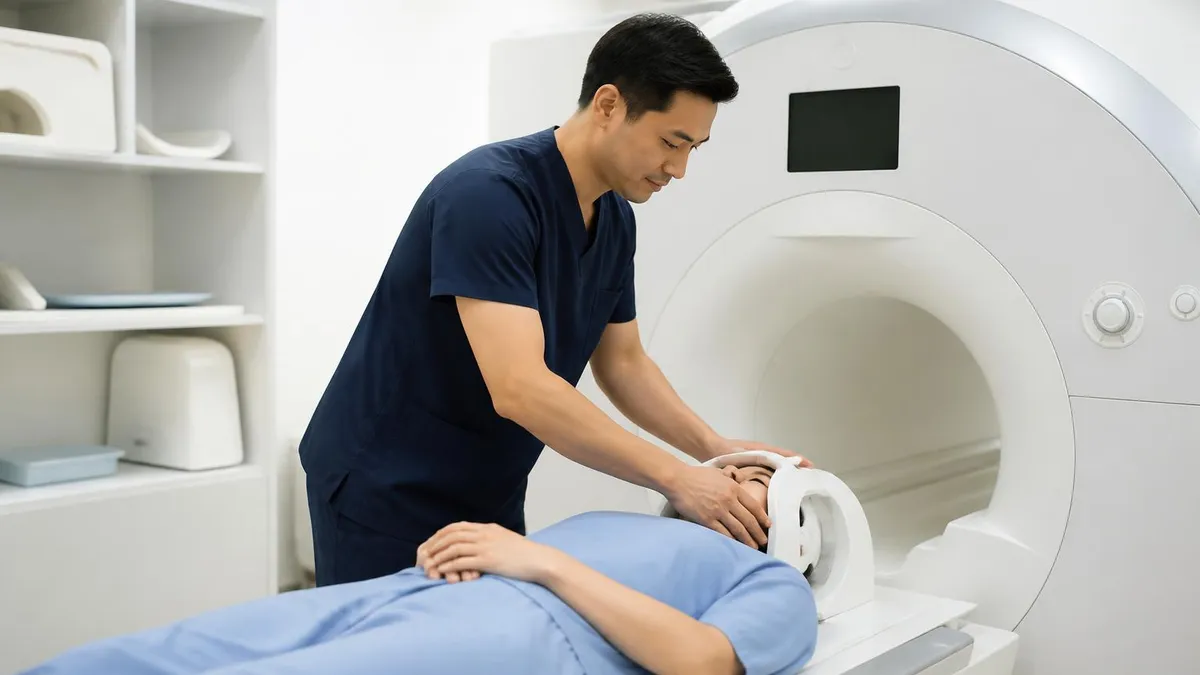
Weekly Pay Package Breakdown — What You Actually Take Home
To work as a travel MRI tech, you need a specific stack of credentials, and the bar is higher than it is for staff positions. At minimum, agencies require ARRT certification in Radiography (R) plus a post-primary certification in Magnetic Resonance Imaging (MR), or an ARRT-MRI primary pathway certification if you came in through a sonography or nuclear medicine route. Some states accept ARMRIT (American Registry of Magnetic Resonance Imaging Technologists) as a standalone credential, but most large hospital systems still want ARRT(MR).
Clinical experience expectations have tightened. In 2026, most reputable agencies require two years of full-time MRI experience before they will submit you for contracts, and trauma-1 facilities frequently want three years plus documented experience with cardiac, breast, or MR enterography protocols. If you have only one year, you are not out of luck — smaller imaging centers and rural critical-access hospitals often accept one-year techs and use the assignment as a way to build your skill base. Just expect lower pay packages and longer credentialing timelines.
State licensing is the next hurdle, and it varies wildly. Florida, Texas, California, New Mexico, and a handful of other states require their own state-issued radiologic technology license in addition to ARRT. Florida is notorious for a six-to-twelve-week processing timeline, so smart travelers apply for the Florida license months before they want to work there, even if they have no immediate plans. New York requires fingerprinting through a specific vendor and routinely takes eight weeks. Compact licensure for radiologic technologists does not yet exist the way it does for nursing, so each license is a separate application, fee, and timeline.
BLS through the American Heart Association is universal. Many MRI assignments — especially those involving sedation, contrast injection, or cardiac imaging — also require ACLS. If your assignment includes pediatric work, PALS is often mandatory. Keep a digital folder with PDFs of every card, every certificate, every continuing education credit, and every immunization record. Agencies will request the same documents repeatedly across assignments, and having them organized cuts your credentialing turnaround from weeks to days.
Drug screens, background checks, physical exams, TB screening (typically two-step or annual QuantiFERON), and a full immunization panel including MMR titers, varicella titers, hepatitis B series with titer, and an annual flu shot round out the standard requirements. Many facilities now also require COVID-19 vaccination or a documented exemption. Drug screens are typically 10-panel and must be facility-specific, meaning you cannot reuse a screen from a previous assignment.
Skills checklists are the document that determines which contracts you actually qualify for. These are 100-200 item self-assessments where you rate your proficiency on every protocol, anatomical region, sequence type, and scanner manufacturer. Be honest. Overstating your skills with cardiac MRI or MR-guided biopsies is a fast way to fail your first day on assignment and torch your relationship with the agency. Understating skills, however, costs you contracts you could have crushed.
Finally, scanner-specific experience matters more than agencies sometimes admit. A facility with a Siemens Skyra wants someone who has used syngo and knows the Skyra's coil suite. A site with a GE Signa Architect wants someone fluent in ReadyView and the GE workflow. If you have only worked on Philips, plan to be selective until you can add a second platform. The MRI medical abbreviation glossary that hospitals use also varies by region, and learning local shorthand fast is part of the job.
MRI Practice Test Questions
Prepare for the MRI - Magnetic Resonance Imaging exam with our free practice test modules. Each quiz covers key topics to help you pass on your first try.
MRI Knowledge
MRI Exam Questions covering Knowledge. Master MRI Test concepts for certification prep.
MRI Physics
Free MRI Practice Test featuring Physics. Improve your MRI Exam score with mock test prep.
MRI Anatomy and Pathology
MRI Test Prep for MRI Anatomy and Pathology. Practice MRI Quiz questions and boost your score.
MRI Anatomy and Positioning
MRI Questions and Answers on MRI Anatomy and Positioning. Free MRI practice for exam readiness.
MRI Contrast Agents
Free MRI Quiz on MRI Contrast Agents. MRI Exam prep questions with detailed explanations.
MRI Patient Care and Positioning
MRI Practice Questions for MRI Patient Care and Positioning. Build confidence for your MRI certification exam.
Top Travel MRI Tech Agencies Compared
Aya Healthcare is the largest travel allied health agency in the United States and consistently posts the highest volume of MRI tech contracts. Their pay packages are competitive though rarely the absolute top of the market, and their online portal makes it easy to compare assignments side by side. Aya offers day-one health insurance, a 401(k) with match, and a strong recruiter bench, but the sheer volume of techs they represent can mean slower responses during peak credentialing season.
Aya's strengths are transparency and scale. You can see every open contract, filter by shift, scanner, and weekly gross, and submit yourself with a click. Their licensure reimbursement is generous and they cover most state application fees. The downside: because so many techs use Aya, popular locations like San Diego, Denver, and coastal Florida are extremely competitive, and you may need to be flexible on shift or start date to win the best contracts.

Travel MRI Tech vs Staff MRI Tech — Honest Comparison
- +Weekly pay packages 50-90% higher than equivalent staff positions in most markets
- +Tax-free housing and meal stipends substantially boost take-home pay when you maintain a legitimate tax home
- +Freedom to choose location, shift, scanner manufacturer, and contract length each assignment
- +Rapid skill development across multiple scanner platforms, protocols, and clinical specialties
- +Built-in career flexibility — take eight weeks off between contracts without quitting a job
- +Exposure to leading academic medical centers and specialty imaging centers you would never reach as staff
- +Completion bonuses, referral bonuses, and loyalty programs can add $5,000-$15,000 per year
- −No paid time off — every day you do not work is a day with zero income
- −Health insurance gaps between contracts require COBRA, marketplace plans, or strategic timing
- −Constant credentialing paperwork, drug screens, fingerprinting, and immunization documentation
- −Housing logistics, utility setup, and finding short-term apartments can consume hours each contract
- −Tax complexity is real — you need a knowledgeable CPA and careful expense documentation
- −Limited retirement contributions compared with hospital systems offering pensions or rich 401(k) matches
- −Cancellation risk — facilities can cancel contracts with as little as 24 hours notice in some clauses
Pros and Cons at a Glance
| Pros | Cons |
|---|---|
| Tax-free housing and meal stipends substantially boost take-home pay when you maintain a legitimate tax home | No paid time off — every day you do not work is a day with zero income |
| Freedom to choose location, shift, scanner manufacturer, and contract length each assignment | Health insurance gaps between contracts require COBRA, marketplace plans, or strategic timing |
| Rapid skill development across multiple scanner platforms, protocols, and clinical specialties | Constant credentialing paperwork, drug screens, fingerprinting, and immunization documentation |
| Built-in career flexibility — take eight weeks off between contracts without quitting a job | Housing logistics, utility setup, and finding short-term apartments can consume hours each contract |
| Exposure to leading academic medical centers and specialty imaging centers you would never reach as staff | Tax complexity is real — you need a knowledgeable CPA and careful expense documentation |
Pre-Assignment Checklist for Every Travel MRI Tech
- ✓Confirm ARRT(MR) certification is current and pay annual renewal at least 30 days before expiration
- ✓Apply for state licenses 8-12 weeks before any planned assignment in that state
- ✓Maintain a current BLS card and add ACLS if your assignments include cardiac or contrast work
- ✓Keep digital PDFs of all immunization titers, TB screens, and physical exam documentation
- ✓Update your skills checklist quarterly and rate honestly across every scanner manufacturer
- ✓Establish and document a legitimate tax home with bills, lease, or mortgage in your name
- ✓Build a contract review checklist covering bill rate, hours guaranteed, cancellation, and overtime
- ✓Set up direct deposit, an HSA-eligible health plan option, and an emergency fund of 8-12 weeks expenses
- ✓Photograph your apartment at move-in and document any pre-existing damage in writing
- ✓Save 25-30% of taxable wages for federal and state taxes if you are a 1099 or stipend-heavy contract
Without a Legitimate Tax Home, Your Stipends Become Taxable Income
The IRS requires travel MRI techs to maintain a permanent tax home — typically a residence where you pay rent or mortgage, receive mail, and return between assignments — to qualify for non-taxable housing and meal stipends. Without one, every dollar of stipend becomes taxable wages, instantly dropping your effective hourly pay by 25-35%. Keep documented proof: lease agreement, utility bills in your name, voter registration, driver's license, and at least 30 days per year physically at that address.
Life on a travel MRI assignment is more structured than newcomers expect. A typical day starts with arriving 15-20 minutes early to review the schedule, check coil inventory, and identify any complex cases — cardiac, MRCP, MR enterography, or sedated pediatrics — that need extra preparation. You will scan an average of 12-18 patients per shift at outpatient sites and 8-14 at hospital settings where inpatients, emergency add-ons, and contrast complications stretch each exam. Productivity expectations vary widely, and a good recruiter will tell you the realistic patient load before you sign.
The first week of every assignment is the steepest learning curve. You need to learn the facility's protocols, contrast policies, PACS workflow, scanner quirks, and the personalities of the radiologists who will read your exams. Bring a small notebook and document everything — preferred sequence order, slice thickness defaults, when the radiologist wants additional sequences, which referring physicians have particular reading preferences. By week three, you should feel as productive as a staff tech. By week six, you should be the person other techs ask for help.
Housing is the second-biggest logistical lift after credentialing. Most travelers take the housing stipend and find their own short-term apartment through Furnished Finder, Travel Nurse Housing, Airbnb monthly stays, or extended-stay hotels. Aim for places within a 20-minute commute of the facility, with reliable WiFi, in-unit laundry, and a parking situation that does not require permits or fees. Always read reviews from previous travelers. The cheapest stipend-arbitrage strategies — staying in an RV, splitting an apartment with another traveler — work but require planning months in advance.
Per diem and meal management is where disciplined travelers protect their savings. Your meals and incidentals stipend is generous when you cook at home and modest when you eat every meal at restaurants. Budget travelers regularly bank $300-$500 per week from M&IE by meal prepping on Sundays and limiting restaurants to two meals per week. That is $15,000-$25,000 of additional savings per year purely from grocery discipline.
Workplace dynamics on assignment are usually positive. Staff techs are generally welcoming because you are relieving their overtime burden, not threatening their job. That said, you will occasionally encounter resentment — a tech who sees your weekly pay rate and assumes you are not pulling your weight, or a charge nurse who tests new travelers with the hardest cases. Stay humble, communicate well, ask thoughtful questions, and produce diagnostic-quality images on time. Reputation travels fast in regional MRI communities.
The social and lifestyle side of travel is what keeps experienced techs in the game for ten or twenty years. You can spend a contract exploring national parks, a contract near family on the opposite coast, a contract in a city you have always wanted to live in. Many travelers describe it as a paid extended sabbatical with a meaningful career attached. Just understand that the first six months involve real friction — paperwork, moving, learning, adapting — before the lifestyle benefits compound.
One under-discussed reality: loneliness is real, especially on your first few contracts. Plan for it. Maintain regular video calls with family and friends, join the local travel-nurse Facebook groups for your assignment city, find a gym or yoga studio on day one, and treat the assignment as a chance to build a small routine rather than constant tourism. Travelers who burn out are almost always the ones who never establish a rhythm.
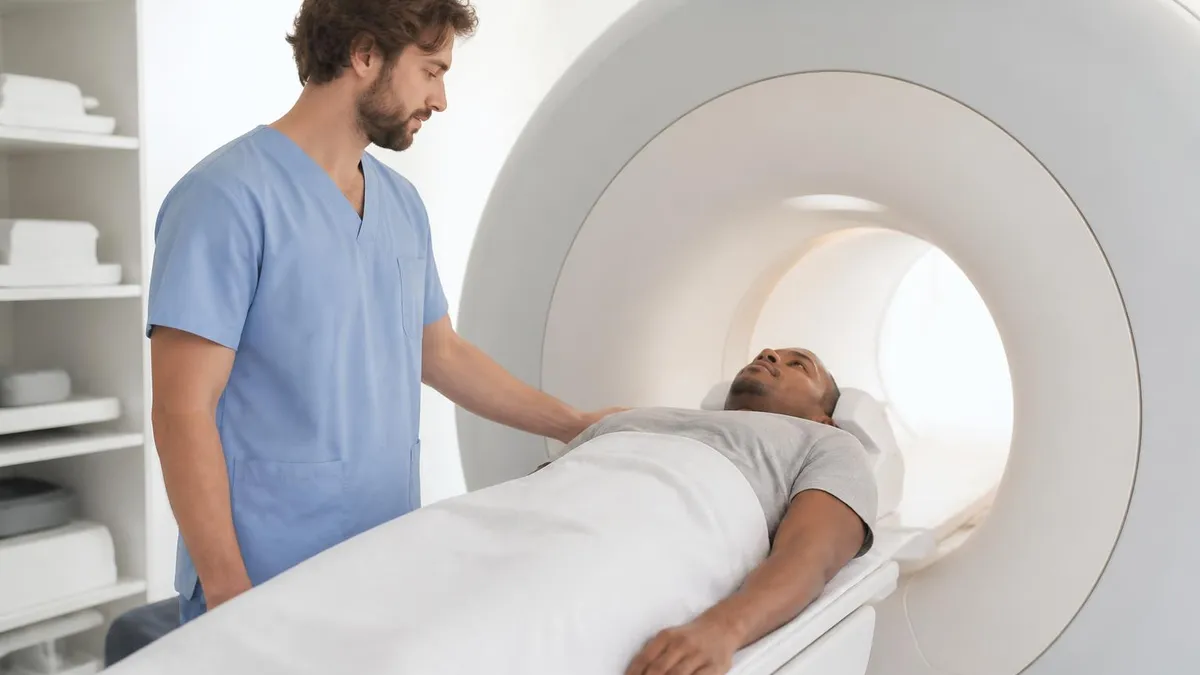
Many travel MRI contracts allow the facility to cancel with 24-48 hours notice during the first two weeks, and some allow termination without cause throughout the contract. A canceled contract before housing is secured can cost you $3,000-$5,000 in unrecoverable deposits. Always negotiate guaranteed hours, ask about the facility's historical cancellation rate, and confirm whether your agency pays a stipend during canceled days. If the answer is no, push back or walk away.
Treating your travel MRI tech career as a business — not a job — is the single biggest factor separating travelers who build wealth from those who break even. That means tracking every contract's true take-home, modeling tax obligations quarterly, optimizing benefits across agencies, and steadily growing your skills toward the highest-paying subspecialties. The travelers earning $200,000+ a year are not working more hours than everyone else; they are making smarter strategic decisions about location, scanner experience, and timing.
Location strategy matters enormously. Crisis-rate contracts in Alaska, North Dakota, and remote California regularly pay $4,200-$5,500 per week, while metro areas with high tech supply (Phoenix, Dallas, Atlanta) hover around $2,600-$2,900. New travelers often default to popular coastal cities and leave $50,000+ on the table annually. A smart rotation might be: Q1 in a high-paying rural Northeast contract, Q2 in a desirable Pacific Northwest location at moderate pay, Q3 in a Mountain West crisis assignment, Q4 in a lower-cost Southern city closer to family. This kind of intentional cadence compounds over a five-year career.
Subspecialty skills command premiums. Cardiac MRI, MR-guided biopsies, prostate multiparametric MRI, and pediatric MRI all command $200-$500 weekly premiums over general MRI. If your facility offers any of these specialties as a staff tech, learn them now. Once you go travel, formal training opportunities shrink considerably. Many travelers also pursue ARRT post-primary certifications in Breast (BS) or Vascular Sonography (VS) to broaden their marketability.
Retirement and insurance planning needs intentional structure. Most agencies offer 401(k) plans with modest or no match, so high-earning travelers should max out their contributions and consider a SEP-IRA or solo 401(k) for any 1099 income. Health insurance is the trickiest piece: agency plans often have high deductibles and limited networks, so travelers with families often go with a marketplace HSA-eligible plan or a spouse's employer coverage. Disability insurance is critical and frequently overlooked — you are your income, and a hand or wrist injury can end your scanning career.
Continuing education and license maintenance need to be tracked across every state you hold. ARRT requires 24 CE credits every two years plus structured self-assessment, and each state license has its own CE requirements that may overlap or differ. Tools like the ARRT CE Tracker and dedicated mobile apps can automate this. Never let a license lapse — reinstating is far more expensive and time-consuming than maintaining.
Finally, plan your exit. Most travelers do not travel forever. The decision to return to staff work is often driven by family events — a child entering school, an aging parent — and is much smoother if you maintained relationships with hospitals you traveled at.
Many travelers convert to staff roles at facilities they enjoyed, often at higher base salaries than they would have negotiated cold. Read up on the knee MRI images protocols and other clinical references to stay sharp, and remember that the deepest understanding of musculoskeletal scanning will serve you whether you stay on the road or eventually settle.
The travel MRI tech path rewards discipline, planning, and curiosity. It is not a fast lane to easy money — the headline weekly rates obscure real costs and complexity — but for technologists willing to treat their career like a small business, the financial and lifestyle upside is unmatched anywhere else in radiologic technology.
To finish, here are the practical tips that experienced travel MRI techs wish someone had given them before their first contract. These are the small operational habits that turn a stressful first year into a smooth, profitable career. None of them require special skills — they just require setting them up before you need them and sticking to them month after month.
Build a credentialing binder, digital and physical. Save every certificate, every titer, every CE record in a structured cloud folder organized by category and date. Use a password manager to store agency portal logins, license numbers, and state board contacts. When you submit for a contract, you should be able to send a complete credentialing packet in under 30 minutes. Travelers who fumble paperwork lose contracts to travelers who do not, even when their clinical skills are equal.
Track your income, expenses, and miles religiously. Use a dedicated travel-nurse-focused app or a simple spreadsheet to log every shift worked, every stipend received, every mile driven for work, and every receipt for tax-deductible expenses. Hire a CPA who specifically works with traveling healthcare professionals — not a general accountant. The cost is typically $400-$800 per year and saves multiples of that in proper deductions and audit protection.
Build a network of recruiters across three to four agencies, but commit to one primary relationship at a time. Rotating recruiters constantly looks like agency hopping and weakens your negotiating position. Instead, have a primary recruiter who knows your career goals and back-channel relationships at two or three other agencies for backup when a great contract appears outside your primary's reach. Always communicate honestly — recruiters talk to each other more than travelers realize.
Maintain clinical curiosity. Read at least one radiology or MRI physics article per week, follow the major MRI educators on YouTube, and pursue at least one new sequence type or anatomical specialty per year. Travel can stagnate your skills if every contract is general outpatient work. Push yourself toward cardiac, breast, or research-oriented assignments at least once every two years. Strong scanners compound returns over a career.
Take care of your body. MRI tech work is more physical than people realize — lifting patients, positioning coils, standing for hours, repetitive computer work. Stretch daily, invest in compression socks, maintain a regular gym routine on assignment, and never skip your annual physical. A wrist injury, a back strain, or untreated burnout can end your career years before you planned. The best travelers prioritize sleep, exercise, and mental health the same way they prioritize pay rate.
Finally, give yourself permission to enjoy the lifestyle. Travel MRI tech is one of the few healthcare careers where you can genuinely see the country, build savings, develop skills, and maintain flexibility simultaneously. Plan your contracts around things you want to experience — national parks, family weddings, hometown reunions — not just maximum income. The travelers who last twenty years in this career are the ones who treat it as a life design tool, not just a paycheck.
Sample MRI - Magnetic Resonance Imaging Practice Questions
Try these questions from our free MRI - Magnetic Resonance Imaging practice tests. The correct answer and an explanation follow each question.
Magnets that use liquid helium or cryogen to cool the wires after applying direct current to a coil of wire.
- A. Superconducting
- B. Selenoid magnet
- C. Resistive magnet
- D. Permanent magnet
Answer: A. Superconducting
Superconducting magnets utilize special alloys that, when cooled to extremely low temperatures (near absolute zero) using cryogens like liquid helium, lose all electrical resistance. This allows a large current to flow indefinitely without power, creating very strong and stable magnetic fields. These magnets are essential for high-field MRI systems, typically operating at 1.5 Tesla and above.
Gibbs ringing artifact is caused by:
- A. Truncation of k-space data at high spatial frequencies
- B. Motion during phase encoding
- C. Chemical shift between fat and water
- D. RF pulse imperfections
Answer: A. Truncation of k-space data at high spatial frequencies
Gibbs ringing (truncation artifact) occurs when k-space is sampled with insufficient high-frequency data, causing oscillating bands near sharp tissue interfaces.
Which MRI artifact is caused by periodic patient motion such as cardiac or respiratory movement?
- A. Chemical shift artifact
- B. Gibbs ringing artifact
- C. Ghosting (motion) artifact
- D. Magnetic susceptibility artifact
Answer: C. Ghosting (motion) artifact
Ghosting artifacts appear as repeated copies of moving structures along the phase-encoding direction due to periodic physiologic motion.
Which ARRT ethics requirement must be fulfilled as part of the MRI registry application process?
- A. CPR certification
- B. Pre-application ethics review if applicable
- C. Magnetic field safety officer training
- D. Advanced cardiac life support (ACLS)
Answer: B. Pre-application ethics review if applicable
Applicants with certain violations must complete a pre-application review, and all applicants must attest to meeting ARRT's Standards of Ethics.
Take the full MRI - Magnetic Resonance Imaging practice test
MRI Questions and Answers

MRI Medical Abbreviation: What MRI Stands For and Why It Matters

The History of MRI: From Discovery to Modern Medicine
Knee MRI Images: A Complete Guide to Reading, Understanding, and Interpreting Knee Scans
Noise of MRI Machine: Why MRI Scanners Are So Loud and What to Expect

Full Body MRI Cost: What You'll Pay in 2026 and Why
About the Author

Medical Laboratory Scientist & Clinical Certification Expert
Johns Hopkins UniversityDr. Sandra Kim holds a PhD in Clinical Laboratory Science from Johns Hopkins University and is certified as a Medical Technologist (MT) and Medical Laboratory Scientist (MLS) through ASCP. With 16 years of clinical laboratory experience spanning hematology, microbiology, and molecular diagnostics, she prepares candidates for ASCP board exams, MLT, MLS, and specialist certification tests.
Join the Discussion
Connect with other students preparing for this exam. Share tips, ask questions, and get advice from people who have been there.
View discussion (8 replies)