
MRI of Short- and Ultrashort-T2 Tissues: Sequences, Protocols, and Clinical Applications
MRI of short- and ultrashort-T2 tissues explained: 🔎 UTE, ZTE, and SWIFT sequences, protocols, contrast mechanisms, and clinical applications for
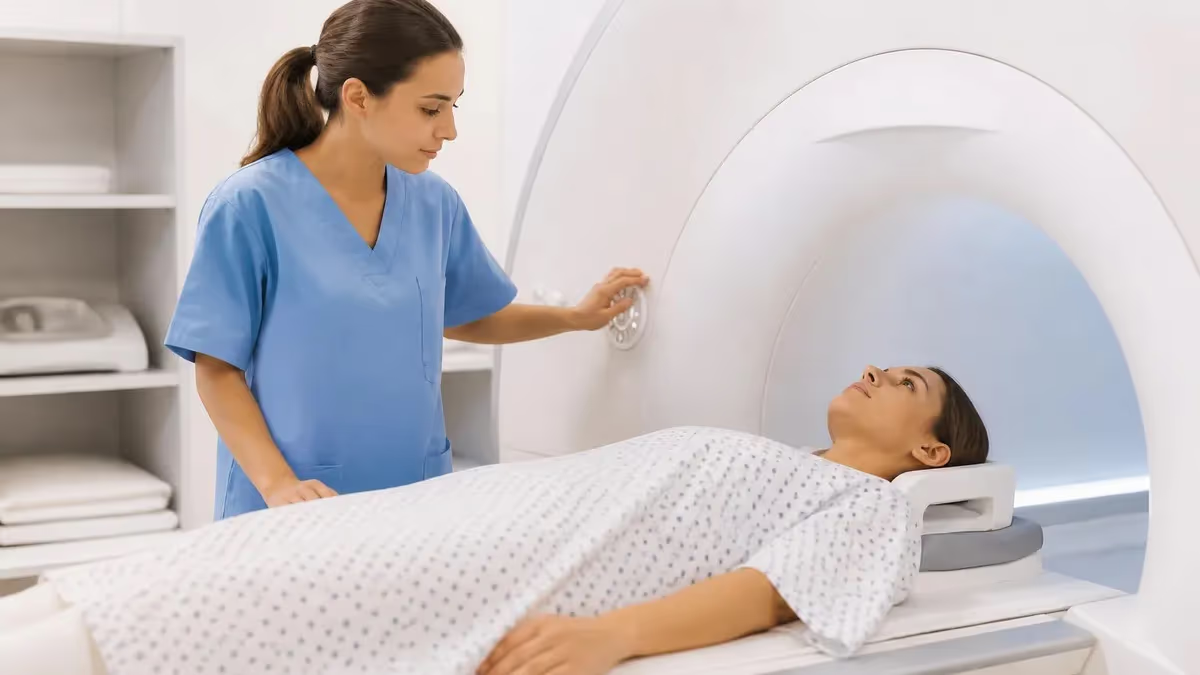
MRI of short- and ultrashort-T2 tissues represents one of the most rapidly evolving frontiers in clinical magnetic resonance imaging, opening windows into structures that conventional pulse sequences cannot visualize. Tissues such as cortical bone, calcified cartilage, tendons, ligaments, menisci, dental enamel, lung parenchyma, and myelin contain protons with transverse relaxation times measured in microseconds rather than milliseconds. Standard spin-echo and gradient-echo techniques, which use echo times of several milliseconds, capture these tissues only as signal voids, leaving radiologists blind to a vast component of musculoskeletal and pulmonary anatomy.
Ultrashort echo time (UTE) and zero echo time (ZTE) sequences address this limitation by acquiring data within hundreds of microseconds after radiofrequency excitation. The clinical implications are profound: orthopedic surgeons can now assess Achilles tendon microstructure noninvasively, pulmonologists can evaluate lung parenchyma without ionizing radiation, and neurologists can map myelin water fraction directly. Understanding these sequences requires solid grounding in MRI physics, k-space sampling strategies, and the biophysical origins of T2 relaxation in solid and semi-solid tissues.
The historical trajectory begins in the 1980s with early projection reconstruction efforts, accelerates through the 1990s with hardware advances enabling sub-millisecond echo times, and matures in the 2010s as commercial scanners began offering vendor-supported UTE and ZTE protocols. Today, every major manufacturer provides workable short-T2 imaging packages, though parameter optimization and clinical interpretation remain specialized skills. Technologists pursuing advanced certification need familiarity with these techniques, and reviewing Common MRI Findings: Brain, Spine and Joints Guide alongside short-T2 protocols deepens diagnostic understanding.
From a physics standpoint, short-T2 tissues exhibit dipolar coupling and restricted molecular motion that drives rapid signal decay. Free water in a ventricle has a T2 of roughly 2,000 milliseconds at 3 Tesla, while protons bound to collagen fibrils in tendon may have T2 values of 1 to 2 milliseconds. Cortical bone water sits between 200 and 500 microseconds, and the methylene protons of bone matrix decay even faster. Visualizing these compartments demands engineering compromises: short hard pulses, radial or spiral k-space trajectories, and aggressive long-T2 suppression schemes.
Clinically, these sequences fill diagnostic gaps that have persisted for decades. Tendinopathy grading once relied on indirect signs—thickening, peritendinous edema, intrasubstance hyperintensity on long-TE images. UTE imaging now quantifies bound versus free water pools within the tendon itself, providing a biochemical fingerprint of degeneration. Similarly, lung MRI using UTE rivals low-dose CT for nodule detection in many cohorts, an enormous advantage for pediatric, pregnant, and cystic fibrosis populations who face cumulative radiation concerns.
This article surveys the physics, hardware demands, sequence variants, contrast mechanisms, protocol design, and clinical use cases for short- and ultrashort-T2 imaging. It is written for MRI technologists, radiology residents, physicists, and engineers preparing for advanced credentialing examinations or seeking to expand institutional protocol libraries. Expect detailed discussion of UTE versus ZTE versus SWIFT, practical scan parameters at 1.5T and 3T, common artifacts, and the interpretive pitfalls that catch even experienced readers off guard.
By the end you should be able to explain why a 32-microsecond echo time matters, when to choose dual-echo subtraction over T1-rho preparation, how to position coils for high-fidelity cortical bone imaging, and what numbers to quote when a referring orthopedist asks about quantitative tendon assessment. The learning curve is steep but the diagnostic payoff is substantial across musculoskeletal, pulmonary, neurological, and dental applications.
Short- and Ultrashort-T2 MRI by the Numbers
Sequence Families at a Glance
Uses a hard or shaped half-pulse for excitation followed by radial center-out k-space readout. Echo times as low as 8-50 microseconds. The workhorse for clinical short-T2 imaging in tendon, bone, and lung applications.
Encoding gradient ramped on before RF excitation, allowing readout to begin essentially at TE=0. Produces silent acquisitions and is well suited for cortical bone visualization that resembles CT.
Sweep Imaging with Fourier Transformation interleaves excitation and acquisition using frequency-swept pulses. Captures signal from extremely short-T2 species with minimal dead time and reduced acoustic noise.
Pointwise Encoding Time Reduction with Radial Acquisition combines ZTE with single-point imaging to fill the dead-time gap in central k-space. Common GE and Siemens implementation for skull and bone imaging.
Acquires one ultrashort TE image and one later TE image, then subtracts. The difference image isolates short-T2 signal because long-T2 tissues cancel between echoes. Critical for tendon visualization.
The biophysical basis for short-T2 signal decay involves restricted molecular mobility, dipolar coupling, and exchange between water compartments. In tissues like cortical bone, tendon, and ligament, water exists in distinct pools: bulk free water with relatively long T2, collagen-bound water with intermediate T2 in the 1 to 10 millisecond range, and protons covalently associated with macromolecules that show T2 values below 100 microseconds. Each pool contributes differently to the observed signal depending on echo time, repetition time, and any magnetization preparation applied before readout.
Dipolar coupling between protons fixed in semi-crystalline matrices produces rapid dephasing because the local magnetic field varies on a sub-nanometer scale. Unlike free water, where molecular tumbling averages these dipolar interactions to zero, bound water experiences strong residual coupling. This is why T2 in collagen-rich tissue is so much shorter than T2 in muscle or cerebrospinal fluid. Field strength also matters: T2 generally decreases as B0 increases, though the relationship is nonlinear and tissue-dependent, complicating direct comparison between 1.5T and 3T results.
Magnetization transfer plays a significant role in short-T2 imaging. Macromolecular protons exchange energy with adjacent free water, creating an indirect pathway by which short-T2 species influence the visible long-T2 signal. Sequences that exploit this exchange—through off-resonance saturation or selective inversion—can quantify the bound pool fraction without requiring direct visualization. This complements UTE methods that detect bound water signal directly, allowing radiologists to cross-validate findings using independent biophysical mechanisms. Reviewing What MRI Can Detect: Conditions & Diagnostic Capabilities helps frame how these contrast mechanisms fit broader imaging strategy.
Temperature dependence of T2 deserves attention in cadaveric and ex vivo studies. T2 lengthens by roughly 2 to 3 percent per degree Celsius for free water, but bound water in collagen behaves differently because dipolar coupling is less temperature sensitive. Researchers comparing room-temperature specimens to in vivo measurements must apply correction factors or risk misinterpreting differences as pathology. This becomes particularly important when validating new UTE biomarkers against histology obtained from refrigerated samples.
Iron content and paramagnetic species shorten T2 dramatically through susceptibility effects. Hemosiderin deposits, iron-laden macrophages, and ferritin in liver parenchyma can mimic short-T2 collagen behavior. Conversely, calcification produces signal voids through both proton density reduction and susceptibility gradients. Distinguishing collagen short-T2 signal from iron-induced short-T2 signal requires dual-echo subtraction, susceptibility-weighted comparison, or quantitative T2-star mapping rather than relying on a single UTE acquisition.
Fat protons contribute another complication. Methylene chains in adipose tissue have multiple T2 components, some quite short due to restricted motion within lipid droplets. UTE imaging often picks up bone marrow fat signal that obscures cortical bone visualization unless strong fat suppression is applied. Spectrally selective suppression works at 3T but can degrade at 1.5T due to narrower chemical shift, prompting many sites to use STIR-based or water-only excitation strategies for high-quality musculoskeletal short-T2 imaging.
Finally, motion sensitivity differs from conventional sequences. Radial k-space trajectories oversample the center, making UTE relatively strong to bulk motion but vulnerable to subtle pulsatile or respiratory motion that smears signal across all spatial frequencies. Respiratory gating, prospective motion correction, and self-navigated reconstructions are increasingly common in lung and abdominal UTE protocols. Understanding these tradeoffs separates competent operators from those who simply press the protocol button and hope for the best.
MRI Practice Test Questions
Prepare for the MRI - Magnetic Resonance Imaging exam with our free practice test modules. Each quiz covers key topics to help you pass on your first try.
MRI Knowledge
MRI Exam Questions covering Knowledge. Master MRI Test concepts for certification prep.
MRI Physics
Free MRI Practice Test featuring Physics. Improve your MRI Exam score with mock test prep.
MRI Anatomy and Pathology
MRI Test Prep for MRI Anatomy and Pathology. Practice MRI Quiz questions and boost your score.
MRI Anatomy and Positioning
MRI Questions and Answers on MRI Anatomy and Positioning. Free MRI practice for exam readiness.
MRI Contrast Agents
Free MRI Quiz on MRI Contrast Agents. MRI Exam prep questions with detailed explanations.
MRI Patient Care and Positioning
MRI Practice Questions for MRI Patient Care and Positioning. Build confidence for your MRI certification exam.
UTE, ZTE, and SWIFT Compared
Ultrashort echo time imaging uses a short hard pulse or half-sinc pulse for excitation followed immediately by a center-out radial readout. The minimum achievable TE depends on hardware: high-end clinical scanners reach 8 to 50 microseconds. Two half-pulse excitations with opposite slice-select gradient polarity are summed to produce a clean slice profile, which is critical for 2D UTE work.
UTE's strengths include compatibility with most existing gradient systems, mature vendor implementations, and flexible contrast preparation. Dual-echo and triple-echo variants allow subtraction images that isolate the short-T2 signal from background long-T2 tissue. Limitations include eddy-current sensitivity, B0 inhomogeneity blurring at long readouts, and acoustic noise that remains substantial despite the radial trajectory's gentler gradient ramps.
Short-T2 MRI vs Conventional Approaches: Pros and Cons
- +Visualizes tissues invisible to conventional spin-echo and gradient-echo sequences
- +Provides quantitative biomarkers for tendon, bone, and cartilage health
- +Enables radiation-free lung imaging suitable for pediatric and pregnant patients
- +ZTE and SWIFT produce dramatically reduced acoustic noise during scanning
- +Dual-echo subtraction isolates short-T2 signal with excellent specificity
- +Compatible with existing 1.5T and 3T clinical scanner platforms
- +Supports advanced biomarkers like bound water fraction and T2-star mapping
- −Longer scan times than equivalent conventional protocols at matched resolution
- −Requires specialized coil setups and high-performance gradient hardware
- −Reconstruction can be vendor-specific and not always shareable across platforms
- −Interpretation requires additional training beyond standard radiology curricula
- −Artifacts from B0 inhomogeneity and gradient timing errors are sequence-specific
- −Quantitative biomarkers lack universal normative reference ranges across vendors
Pros and Cons at a Glance
| Pros | Cons |
|---|---|
| Visualizes tissues invisible to conventional spin-echo and gradient-echo sequences | Longer scan times than equivalent conventional protocols at matched resolution |
| Provides quantitative biomarkers for tendon, bone, and cartilage health | Requires specialized coil setups and high-performance gradient hardware |
| Enables radiation-free lung imaging suitable for pediatric and pregnant patients | Reconstruction can be vendor-specific and not always shareable across platforms |
| ZTE and SWIFT produce dramatically reduced acoustic noise during scanning | Interpretation requires additional training beyond standard radiology curricula |
Protocol Optimization Checklist for Short-T2 MRI
- ✓Confirm gradient performance meets minimum slew rate and amplitude requirements for sub-100 microsecond TE
- ✓Use multi-channel surface coils positioned closely over the target tissue for SNR optimization
- ✓Apply strong fat suppression using either spectral selection, STIR, or water-only excitation
- ✓Set readout bandwidth high enough to minimize off-resonance blurring along radial spokes
- ✓Calibrate transmit gain carefully to achieve the intended flip angle with hard pulse excitation
- ✓Implement dual-echo subtraction when isolating cortical bone or tendon short-T2 signal
- ✓Use respiratory gating or self-navigation for lung and abdominal short-T2 acquisitions
- ✓Verify k-space center sampling density to avoid central artifacts in 3D radial reconstructions
- ✓Document T2 and T2-star values against vendor-specific phantoms for quantitative reproducibility
- ✓Review reconstructed images for streak artifacts, off-resonance blurring, and incomplete fat suppression
Subtraction Is the Secret
The single most powerful trick in short-T2 imaging is dual-echo subtraction. By acquiring one image at TE near zero and a second at 4-8 milliseconds, then subtracting, you cancel long-T2 background and leave a clean depiction of cortical bone, tendon, and ligament. This dramatically improves conspicuity for clinical reading.
Clinical applications of short- and ultrashort-T2 MRI span musculoskeletal, pulmonary, neurological, dental, and oncologic imaging. In musculoskeletal practice, the Achilles tendon, patellar tendon, supraspinatus, and triangular fibrocartilage complex are the most studied targets. UTE allows direct visualization of tendinopathy by detecting increases in free water and concurrent changes in bound water pool size. Quantitative metrics such as T2-star values and bound water fraction track with histological evidence of collagen disorganization, providing earlier disease detection than conventional T2 hyperintensity.
Cortical bone imaging has emerged as a powerful application because UTE and ZTE produce CT-like depictions without ionizing radiation. Pediatric craniosynostosis, skull base tumors, and dental implant planning all benefit from MRI-only workflows. Surgeons increasingly request ZTE bone reconstructions alongside soft tissue MRI for surgical planning, reducing the need for separate CT studies. The reconstructed bone images can be inverted to mimic radiographic contrast, enabling familiar interpretation for surgical colleagues.
Pulmonary applications represent perhaps the most clinically significant use. Lung parenchyma has extremely short T2-star due to multiple air-tissue interfaces creating susceptibility gradients. UTE sequences with echo times below 200 microseconds capture parenchymal signal, allowing nodule detection, ground-glass assessment, and fibrosis characterization. Cystic fibrosis surveillance protocols now incorporate UTE lung MRI to reduce cumulative CT radiation dose in young patients facing decades of follow-up imaging. The diagnostic utility extends to mucus plugging, bronchiectasis grading, and air trapping.
Neurological applications include myelin imaging and brain calcification detection. Myelin water has T2 values around 10 to 20 milliseconds, accessible with shorter TE conventional sequences, but the myelin lipid bilayer protons themselves are ultrashort-T2 species detectable only with UTE or ZTE. Direct myelin imaging promises better assessment of demyelinating disease, though clinical adoption remains limited by reconstruction complexity. Brain calcifications, by contrast, appear as low signal on conventional sequences and as positive signal on ZTE, providing useful localization for surgical planning.
Dental and maxillofacial imaging benefits enormously from short-T2 techniques. Enamel and dentin contain almost no free water, and conventional MRI shows them as voids. UTE and SWIFT depict enamel surfaces, root canals, and periodontal structures with sufficient detail to evaluate caries, fractures, and periapical disease. This is particularly valuable for evaluating temporomandibular joint pathology where adjacent bony detail and soft tissue must be visualized in the same exam.
Oncologic applications include detection of bone metastases, assessment of pulmonary nodules in cancer surveillance, and evaluation of post-treatment fibrosis. The radiation-free nature of MRI makes repeated UTE lung imaging attractive for long-term cancer survivors. Cortical bone integrity in metastatic disease can be assessed alongside marrow infiltration using a single comprehensive MRI examination, simplifying workflow and reducing patient exposure across multiple modalities.
Translational research continues to expand the menu. Cartilage compositional imaging using UTE-T1-rho and UTE-T2-star, vascular wall imaging in carotid and intracranial vessels, and assessment of fibrocartilaginous structures like the labrum all show promise. As vendors expand product offerings and reconstruction toolchains mature, expect short-T2 MRI to migrate from research protocols into routine clinical use across an expanding range of applications.
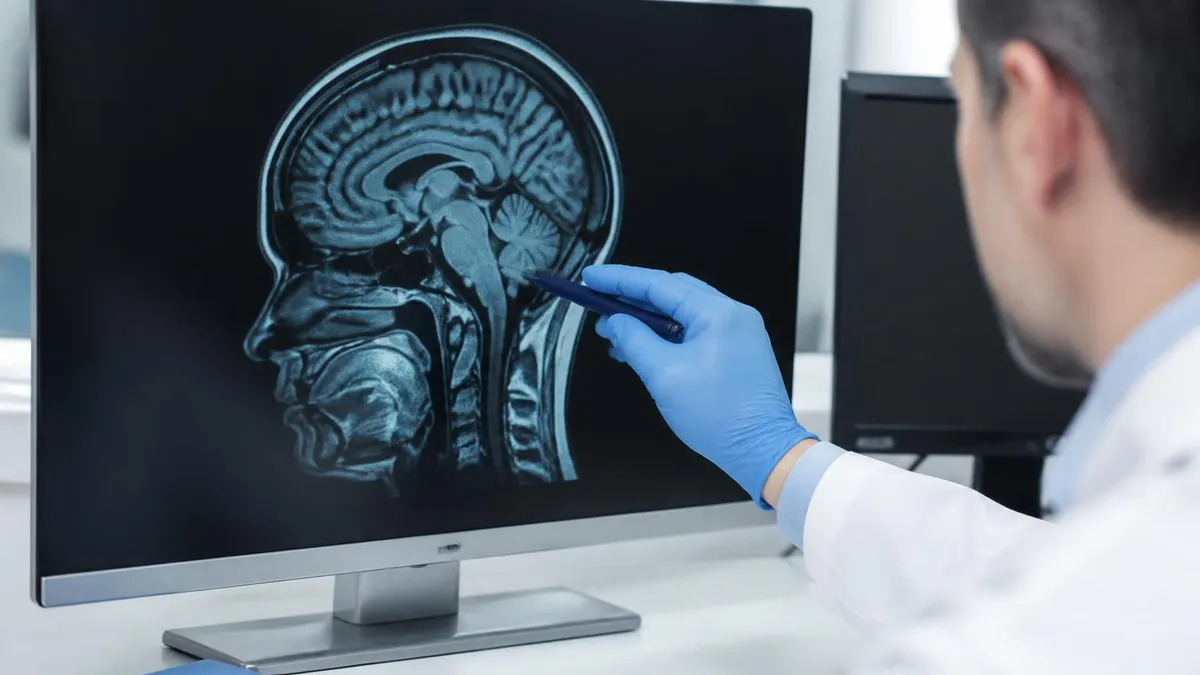
UTE and ZTE sequences are exquisitely sensitive to gradient timing errors and eddy currents. Even sub-microsecond mismatches between expected and actual gradient waveforms produce streak artifacts and image blurring. Always verify gradient calibration after hardware service, and run vendor-provided phantom QA before clinical short-T2 scanning to catch subtle degradation early.
Artifacts in short-T2 imaging differ qualitatively from those familiar in conventional MRI, and recognizing them is essential for safe interpretation. Streak artifacts radiating from the center of the field of view are characteristic of radial k-space undersampling. They appear as low-amplitude lines crossing the image and can be misread as pathological structures by inexperienced readers. Increasing the number of radial spokes reduces streaking but at the cost of scan time, so protocols balance these tradeoffs deliberately. Reviewing What a Normal MRI Looks Like: Brain, Spine & Knee helps calibrate expectations for normal short-T2 appearance.
Off-resonance blurring is another major concern. Because radial trajectories sample k-space along curved paths, off-resonance frequencies cause spatial blurring rather than the discrete pixel shifts seen in Cartesian imaging. This is particularly problematic near air-tissue interfaces such as paranasal sinuses, lung apex, and the temporal bone. B0 shimming becomes more critical than in conventional protocols, and high readout bandwidth helps mitigate the effect at some SNR cost.
Fat suppression failure produces particularly confusing artifacts in UTE imaging. Residual fat signal can mimic short-T2 tissue, especially in dual-echo subtraction images where uncanceled fat appears identical to genuine short-T2 contrast. Always confirm fat suppression quality on a long-TE image before trusting the subtraction. STIR-based suppression is more strong at 1.5T while spectral selection performs better at 3T provided shimming is adequate.
Susceptibility artifacts from metallic implants, surgical clips, or air bubbles are magnified in short-T2 imaging because the long radial readouts accumulate phase errors over the entire trajectory. Even small metal fragments can produce dramatic signal voids and surrounding blurring. Patients with extensive metallic hardware are generally poor candidates for UTE protocols, and prescreening should include explicit questions about implants, dental work, and prior surgeries.
Motion artifacts manifest differently than in Cartesian acquisitions. Bulk motion during a radial scan typically produces diffuse blurring rather than discrete ghosts, because each spoke contains information from the full image but at different times. This makes some motion forgivable but also harder to recognize on the final image. Respiratory motion in lung UTE is particularly insidious, and most clinical protocols incorporate either breath-hold strategies or self-navigated reconstructions that detect and correct for motion retrospectively.
Gradient delay errors are a unique short-T2 problem because k-space sampling begins essentially at the trajectory origin. Even nanosecond mismatches between programmed and actual gradient start times shift the apparent center of k-space, producing pinwheel artifacts and intensity gradients across the image. Modern scanners include automatic gradient delay calibration routines, but operators should know how to invoke them and how to recognize their absence in suboptimal images.
Finally, interpretation pitfalls require ongoing education. The short-T2 signal from cortical bone superficially resembles the signal void on conventional sequences when window-level settings are wrong. Inverted bone images can mimic CT but should never be confused with true CT density values. Quantitative biomarkers like T2-star and bound water fraction require careful comparison to scanner-specific normative data because absolute values vary with field strength, coil design, and acquisition parameters. Educated skepticism remains the radiologist's best tool.
Practical implementation of short- and ultrashort-T2 MRI in a clinical practice begins with stakeholder alignment. Radiologists must champion the indication, technologists need training on sequence selection and parameter adjustment, and physicists or vendor applications specialists should validate quality on scanner-specific phantoms before patient scanning.
A common pitfall is assuming that vendor-supplied protocols are turn-key; in reality, every site needs to tune flip angles, fat suppression methods, and readout bandwidth to match local hardware and patient population. Reviewing Full Body MRI: What It Scans, How Long It Takes, Cost, and What to Expect can help frame how short-T2 sequences integrate into broader exam workflows.
Coil selection deserves careful attention. For Achilles or patellar tendon imaging, small surface coils placed directly over the structure produce dramatically better SNR than knee or ankle array coils alone. Combining a small surface coil with a larger array provides both local SNR and uniform coverage for anatomical reference. For lung UTE, large multi-channel torso arrays with respiratory gating capability are essential. Skull and dental applications benefit from dedicated head and neck coils with high channel counts, and some sites are now deploying coils specifically designed for ZTE bone imaging.
Patient preparation matters more than for conventional MRI. Because acquisition times tend to be longer and motion sensitivity differs, patients should be coached on the importance of stillness and given comfortable positioning. For musculoskeletal short-T2 imaging, the joint or tendon should be immobilized with cushions or straps appropriate to the anatomy. For lung imaging, breath-holding capacity should be assessed beforehand—some protocols require multiple 15- to 20-second breath holds, while free-breathing self-navigated alternatives extend scan time but tolerate respiratory motion.
Scan time management requires honest communication. A high-resolution 3D UTE knee study can take 8 to 12 minutes, on top of conventional sequences that comprise the rest of the protocol. Adding 10 minutes to a 30-minute exam is a 33 percent increase, which has real implications for daily throughput and patient comfort. Some sites reserve dedicated time slots for short-T2 examinations, while others incorporate selected short-T2 sequences only when specific clinical questions arise. Workflow planning should reflect institutional priorities and case mix.
Reading room workflow must account for the additional images generated. Dual-echo subtraction protocols produce at least three image series: short-TE, long-TE, and difference. Quantitative protocols add T2-star maps, bound water fraction maps, and other parametric series. PACS templates should be configured to display these intuitively, with hanging protocols that bring the relevant series side-by-side. Reporting templates should include space for quantitative metrics when applicable, and reference ranges from local validation studies improve consistency across radiologists.
Education is an ongoing investment. Initial training should cover physics, common artifacts, and key clinical applications. Refresher sessions every 6 to 12 months help maintain expertise, particularly when new vendor software releases change reconstruction pipelines or add new biomarkers. Journal clubs focused on emerging short-T2 literature, case conferences highlighting interesting findings, and participation in multi-institutional research consortia all accelerate institutional learning. Pursuing certification refreshers and reviewing pathways like How to Become an MRI Technician: Schools, Certification, Salary rounds out professional development for technologists.
Finally, plan for continuous improvement. Quarterly reviews of scan failure rates, artifact frequency, and clinician satisfaction help identify protocol issues before they become endemic. Comparing institutional results against published norms validates quantitative biomarker pipelines. Engaging with vendor application specialists when new firmware releases drop ensures that protocol gains from updates are captured rather than missed. Short-T2 MRI is a rapidly evolving area, and the institutions extracting the most clinical value are those treating it as a living program rather than a static menu of canned sequences.
Sample MRI - Magnetic Resonance Imaging Practice Questions
Try these questions from our free MRI - Magnetic Resonance Imaging practice tests. The correct answer and an explanation follow each question.
In a spin echo (SE) sequence, increasing the repetition time (TR) while keeping TE short primarily results in:
- A. Increased T2 weighting
- B. Increased T1 weighting
- C. Decreased T1 weighting (more proton density/T2-like contrast)
- D. Increased SNR only with no contrast change
Answer: C. Decreased T1 weighting (more proton density/T2-like contrast)
A long TR allows full T1 recovery of all tissues, reducing T1 contrast differences; combined with short TE, this produces proton density weighting.
Gradient echo (GRE) sequences differ from spin echo sequences primarily because GRE:
- A. Uses a 180° refocusing pulse to eliminate field inhomogeneity effects
- B. Uses a gradient reversal to form an echo, making it sensitive to magnetic susceptibility (T2*)
- C. Always requires longer scan times
- D. Cannot be used for dynamic contrast imaging
Answer: B. Uses a gradient reversal to form an echo, making it sensitive to magnetic susceptibility (T2*)
GRE uses gradient reversal without a 180° refocusing pulse, making it sensitive to susceptibility effects (T2*) and allowing faster acquisition.
Balanced steady-state free precession (SSFP) sequences have an advantage over conventional GRE sequences.
- A. Employ gradient spoilers to lessen transverse magnetization
- B. To navigate k-space, use gradients of alternating magnetic fields.
- C. To create spin echoes, hold onto your transverse magnetization.
- D. To create spin echoes, use 180-degree pulses.
Answer: C. To create spin echoes, hold onto your transverse magnetization.
Balanced steady-state free precession (bSSFP) sequences have a key advantage over conventional spoiled GRE sequences by actively preserving transverse magnetization from previous excitations. Unlike spoiled GREs that use spoiler gradients to eliminate residual transverse magnetization, bSSFP sequences are designed to maintain both longitudinal and transverse magnetization in a steady state. This allows for the formation of both FID and echo signals, leading to high signal-to-noise ratio and characteristic T2/T1 contrast.
In MRI, the term 'flip angle' refers to:
- A. The angle by which the net magnetization is rotated from B0 by the RF pulse
- B. The angle of the gradient coils relative to the main magnet
- C. The phase angle accumulated during readout
- D. The angular difference between excitation and reception coils
Answer: A. The angle by which the net magnetization is rotated from B0 by the RF pulse
The flip angle is the degree of rotation of the net magnetization vector away from the longitudinal axis produced by an RF pulse.
Take the full MRI - Magnetic Resonance Imaging practice test
MRI Questions and Answers
About the Author

Medical Laboratory Scientist & Clinical Certification Expert
Johns Hopkins UniversityDr. Sandra Kim holds a PhD in Clinical Laboratory Science from Johns Hopkins University and is certified as a Medical Technologist (MT) and Medical Laboratory Scientist (MLS) through ASCP. With 16 years of clinical laboratory experience spanning hematology, microbiology, and molecular diagnostics, she prepares candidates for ASCP board exams, MLT, MLS, and specialist certification tests.
Join the Discussion
Connect with other students preparing for this exam. Share tips, ask questions, and get advice from people who have been there.
View discussion (8 replies)