
MRI of Cervical Spine: Complete Guide to Imaging, Anatomy, Pathology, and Patient Preparation
MRI of cervical spine guide covering protocols, anatomy, pathology, contrast use, patient prep, and what radiologists look for on every scan. 🔎
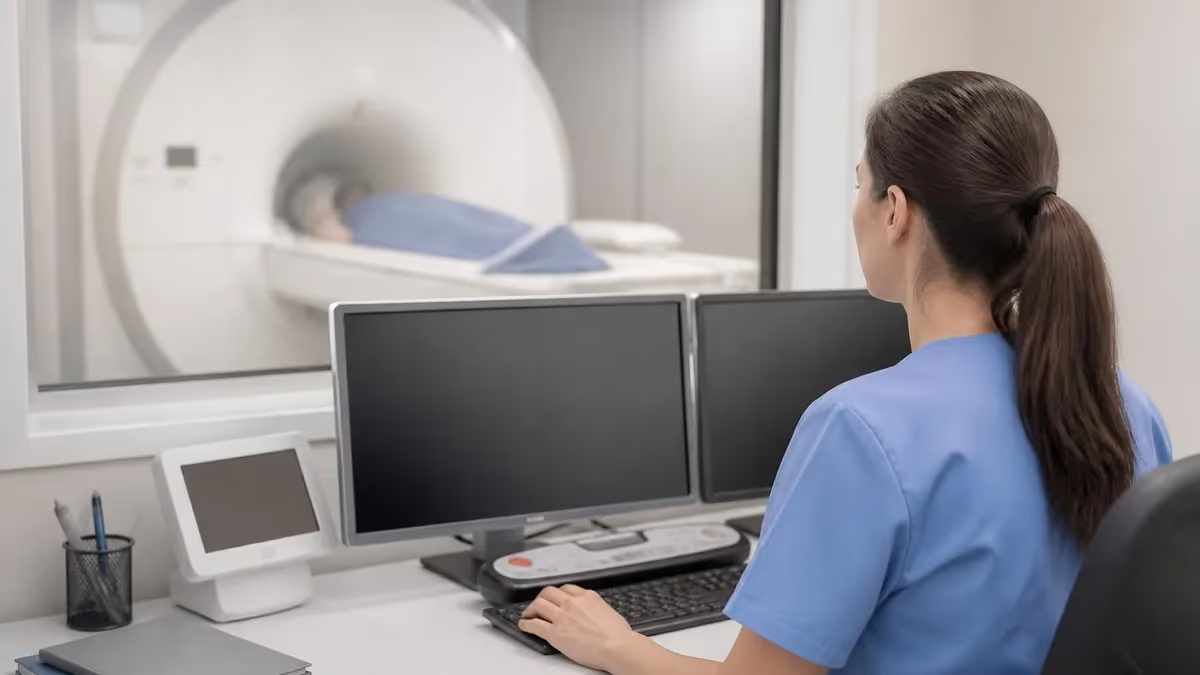
An MRI of cervical spine is the gold-standard imaging study for evaluating the seven vertebrae between the skull base and the upper thoracic region, along with the spinal cord, nerve roots, intervertebral discs, and surrounding soft tissues. Unlike CT, which excels at depicting bony anatomy, MRI provides unmatched soft-tissue contrast, making it the preferred test for radiculopathy, myelopathy, trauma follow-up, suspected tumors, demyelinating disease, and post-surgical evaluation. Most exams take 20 to 45 minutes and produce hundreds of images.
Radiologists and technologists rely on a standardized protocol that almost always includes sagittal T1, sagittal T2, sagittal STIR, and axial T2 sequences from C1 through T1. Many facilities add axial T2* gradient echo to detect blood products, axial T1 for foraminal anatomy, and post-contrast sequences when infection, tumor, or active demyelination is suspected. The result is a multi-plane, multi-contrast dataset that lets clinicians correlate symptoms with precise anatomic findings down to a single nerve root level.
Patients are typically referred for cervical MRI when conservative care for neck pain has failed, when arm pain follows a dermatomal pattern, when reflexes become hyperactive, or when there are signs of cord compression such as gait imbalance, clumsiness in the hands, or bladder changes. Trauma patients with persistent symptoms after a normal CT, athletes with stinger injuries, and patients with rheumatoid arthritis being evaluated for atlantoaxial instability also commonly need this study. For broader context on contrast use, see our overview of MRI With and Without Contrast.
The cervical spine is a uniquely challenging area to image. It moves with every swallow and breath, sits adjacent to flowing CSF and pulsating vessels, and contains the smallest neural foramina in the spine. Modern scanners overcome these issues with phased-array surface coils, parallel imaging, and motion-compensation techniques. A 1.5T or 3T magnet with a dedicated neurovascular or cervical spine coil provides the spatial resolution needed to distinguish a small disc protrusion from a normal uncovertebral spur.
For radiologic technologists and MRI students, mastering the cervical spine protocol is essential. It is one of the highest-volume outpatient MRI exams in the United States, accounting for roughly 15 to 20 percent of all neuro-MRI studies at most imaging centers. Understanding why each sequence is acquired, what artifacts to expect, and how to recognize emergent findings like cord edema or epidural hematoma turns a routine scan into a diagnostic study that genuinely changes patient management.
This guide walks through the full landscape of cervical spine MRI: indications, protocol design, normal anatomy, the most common pathologies, safety screening, contrast considerations, and side effects of mri should expect on the day of their scan. Whether you are a technologist studying for the ARRT MRI registry, a clinician ordering the study, or a patient about to lie in the magnet, the goal is to leave you with a clear picture of how this exam actually works and what makes it diagnostically powerful.
Cervical MRI by the Numbers
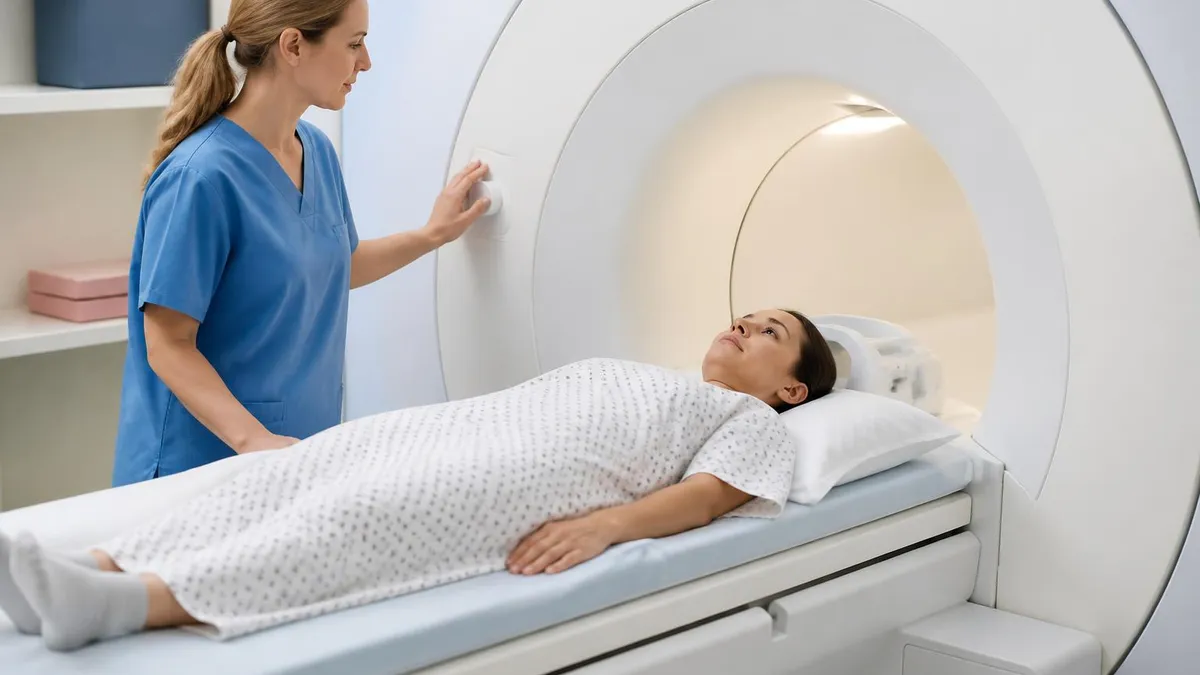
Top Clinical Indications for Cervical Spine MRI
Arm pain, numbness, or weakness following a dermatomal pattern, especially when symptoms persist beyond six weeks of conservative care or progress despite physical therapy and medication.
Signs of spinal cord dysfunction including hyperreflexia, gait instability, hand clumsiness, Lhermitte sign, or bowel and bladder changes that suggest cord compression or intrinsic cord pathology.
Persistent neurologic deficit after cervical injury, suspected ligamentous injury with a normal CT, or evaluation of cord contusion, epidural hematoma, and post-traumatic syrinx formation.
Unexplained weight loss, night pain, fever, IV drug use history, or known primary malignancy with new neck pain. Contrast is essential to characterize lesions and detect meningeal disease.
Initial workup or surveillance for demyelinating disease. Cervical cord plaques are common in MS and may be the only finding when brain MRI appears stable or unrevealing.
A standard cervical spine MRI protocol is built around a small number of complementary sequences, each designed to highlight different tissue characteristics. The exam usually opens with a three-plane localizer to confirm coil placement and patient position, followed by sagittal T1, sagittal T2, sagittal STIR, axial T2, and often axial T2* gradient echo. The total acquisition time is generally 20 to 30 minutes for a non-contrast study and 35 to 45 minutes when gadolinium is administered.
Sagittal T1 imaging provides the anatomic roadmap. Vertebral marrow appears bright due to fat content, CSF appears dark, and the spinal cord shows intermediate signal. This sequence is exceptional for detecting marrow replacement from metastatic disease, multiple myeloma, or infiltration by leukemia and lymphoma. It also clearly delineates the epidural fat surrounding the thecal sac, which becomes obliterated in epidural masses or large disc extrusions causing compression.
Sagittal T2 is the workhorse sequence for the cervical cord and disc spaces. CSF becomes bright, allowing the cord to be silhouetted against high-signal fluid and any disc protrusion, herniation, or osteophyte to be clearly seen indenting the thecal sac. Intrinsic cord signal abnormality, whether from edema, demyelination, ischemia, or chronic compression-related myelomalacia, stands out against the otherwise uniform intermediate signal of healthy spinal cord tissue.
mri stir sequences add fat suppression to a heavily T2-weighted acquisition, making bone marrow edema, ligamentous injury, and inflammatory changes much more conspicuous. In trauma, STIR is the single most sensitive sequence for detecting occult vertebral fractures, interspinous ligament disruption, and prevertebral soft tissue edema. For a deeper look at the role of contrast in spinal imaging, our article on mri medical abbreviation explains many of the acronyms you will see on protocol cards.
Axial T2 images are acquired through each disc space from C2-3 through C7-T1, sometimes extending to T1-T2. These thin sections, typically 3 to 4 millimeters, are critical for assessing the lateral recesses, neural foramina, and the relationship of the cord to any compressive structure. Foraminal stenosis grading, central canal measurement, and cord cross-sectional shape all depend on high-quality axial T2 data.
Axial T2* gradient echo is a blood-sensitive sequence that exploits magnetic susceptibility to highlight hemosiderin, calcification, and small amounts of acute blood. It is particularly useful in trauma, suspected cavernous malformations, and post-surgical patients where small foci of hemorrhage might otherwise be missed. Some facilities now substitute susceptibility-weighted imaging, which offers even greater sensitivity but adds acquisition time.
When contrast is indicated, post-gadolinium sagittal and axial T1 sequences with fat saturation are added. Active inflammation, infection, tumor, and breakdown of the blood-cord barrier in acute demyelinating plaques all enhance. Comparing pre- and post-contrast images side by side is essential, because subtle enhancement can otherwise be mistaken for normal marrow fat or epidural venous plexus signal.
MRI Practice Test Questions
Prepare for the MRI - Magnetic Resonance Imaging exam with our free practice test modules. Each quiz covers key topics to help you pass on your first try.
MRI Knowledge
MRI Exam Questions covering Knowledge. Master MRI Test concepts for certification prep.
MRI Physics
Free MRI Practice Test featuring Physics. Improve your MRI Exam score with mock test prep.
MRI Anatomy and Pathology
MRI Test Prep for MRI Anatomy and Pathology. Practice MRI Quiz questions and boost your score.
MRI Anatomy and Positioning
MRI Questions and Answers on MRI Anatomy and Positioning. Free MRI practice for exam readiness.
MRI Contrast Agents
Free MRI Quiz on MRI Contrast Agents. MRI Exam prep questions with detailed explanations.
MRI Patient Care and Positioning
MRI Practice Questions for MRI Patient Care and Positioning. Build confidence for your MRI certification exam.
Sequences Used in MRI of Cervical Spine
T1-weighted sagittal images are the cornerstone of anatomic evaluation in cervical spine MRI. Fat appears bright, fluid appears dark, and the spinal cord sits at intermediate signal intensity. This contrast makes T1 ideal for assessing vertebral marrow integrity, detecting metastatic disease, and outlining the epidural fat that normally cushions the thecal sac at every level from C2 through the cervicothoracic junction.
On axial T1 images, the nerve roots are visible as small dark structures surrounded by bright foraminal fat, which makes foraminal narrowing easier to grade. After gadolinium administration, T1 with fat suppression becomes the sequence of choice for detecting enhancing tumors, abscesses, discitis-osteomyelitis, leptomeningeal disease, and active demyelinating plaques in patients with suspected or established multiple sclerosis.
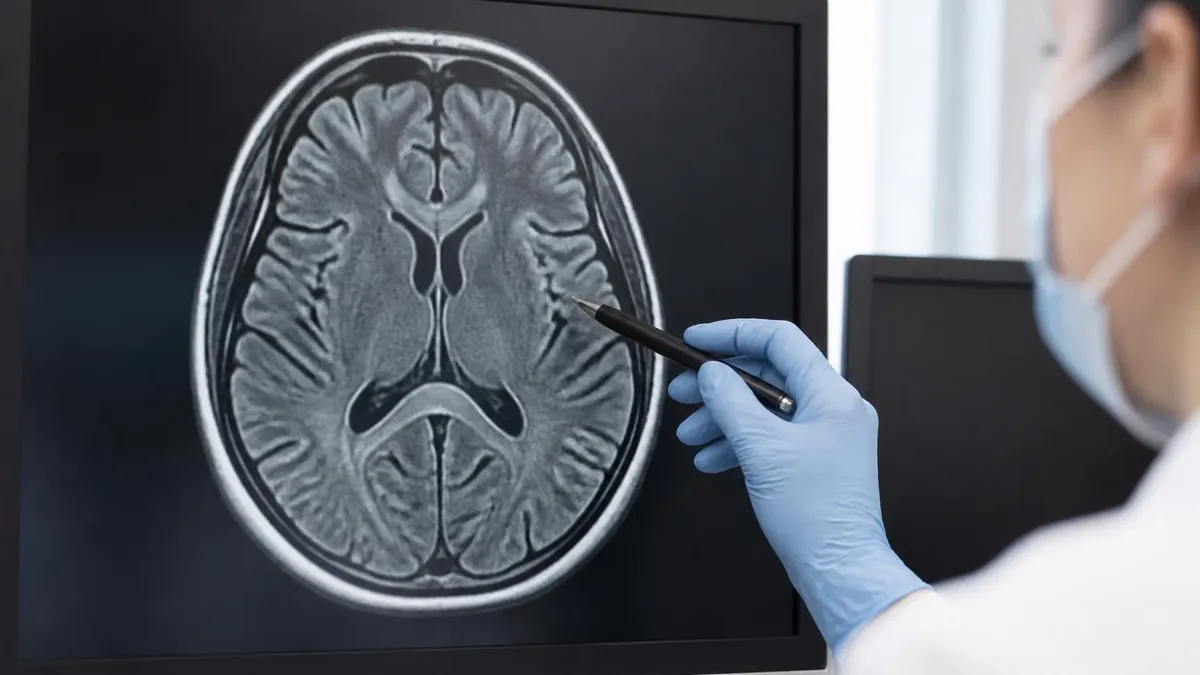
MRI vs CT for Cervical Spine Evaluation
- +Superior soft-tissue contrast for spinal cord, discs, and ligaments
- +No ionizing radiation, ideal for young or pregnant patients
- +Detects bone marrow edema and occult fractures invisible on CT
- +Identifies cord lesions from MS, ischemia, tumor, or contusion
- +Evaluates nerve roots within foramina with high spatial resolution
- +Multi-planar acquisition without repositioning the patient
- −Longer scan time, typically 20 to 45 minutes versus 1 to 2 minutes for CT
- −Contraindicated or limited by certain pacemakers and metallic implants
- −More motion-sensitive, problematic for trauma or claustrophobic patients
- −Higher cost, often 3 to 5 times the price of cervical CT
- −Limited availability in rural and emergency settings
- −Cortical bone detail and acute fracture lines less crisp than CT
Pros and Cons at a Glance
| Pros | Cons |
|---|---|
| Superior soft-tissue contrast for spinal cord, discs, and ligaments | Contraindicated or limited by certain pacemakers and metallic implants |
| No ionizing radiation, ideal for young or pregnant patients | More motion-sensitive, problematic for trauma or claustrophobic patients |
| Detects bone marrow edema and occult fractures invisible on CT | Limited availability in rural and emergency settings |
| Identifies cord lesions from MS, ischemia, tumor, or contusion | Cortical bone detail and acute fracture lines less crisp than CT |
Patient Preparation Checklist for MRI of Cervical Spine
- ✓Complete a thorough MRI safety screening form covering implants, metal fragments, and prior surgeries
- ✓Remove all jewelry, hairpins, hearing aids, dentures, and metallic clothing items before scanning
- ✓Notify the technologist of any pacemaker, defibrillator, neurostimulator, or cochlear implant
- ✓Disclose any history of metal fragments in the eyes and request orbital radiographs if needed
- ✓Confirm renal function with a recent eGFR if gadolinium contrast is planned
- ✓Empty your bladder and dress in scrubs or a hospital gown without metallic snaps
- ✓Discuss claustrophobia in advance so oral anxiolytics or open-bore options can be arranged
- ✓Bring a list of current medications, allergies, and prior imaging reports for comparison
- ✓Plan to lie still for 20 to 45 minutes and use earplugs for noise protection
- ✓Arrive 15 to 30 minutes early to complete paperwork and IV placement if contrast is needed
Hyperintense cord signal on T2 is never normal.
Any focal area of increased T2 signal within the cervical cord deserves careful attention. The differential includes demyelination, ischemia, contusion, tumor, transverse myelitis, and chronic compressive myelomalacia. Correlation with clinical findings, lesion shape, contrast enhancement pattern, and brain MRI is essential to narrow the diagnosis and guide treatment.
Cervical spine anatomy on MRI is best understood by walking through the sagittal T2 image from top to bottom. The craniocervical junction shows the clivus, dens, anterior arch of C1, and the cervicomedullary junction where the medulla transitions into the cervical cord. The tectorial membrane, transverse ligament, and alar ligaments stabilize this region, and any disruption suggests significant trauma or inflammatory disease such as rheumatoid pannus.
From C2 through C7, the typical vertebral body has a uniform marrow signal that is bright on T1 and intermediate on T2. The intervertebral discs show high T2 signal in healthy young adults and progressively lose water content with age, becoming darker and thinner. The uncovertebral joints, unique to the cervical spine, form along the lateral margins of the disc spaces and frequently develop osteophytes that narrow the neural foramina in patients over fifty.
The spinal cord itself tapers gradually as it descends, with a slight enlargement at C5-C6 corresponding to the cervical enlargement that supplies the upper extremities. CSF surrounds the cord in the subarachnoid space, and the dura forms the outer boundary of the thecal sac. Anterior to the cord, the posterior longitudinal ligament runs along the back of the vertebral bodies; posteriorly, the ligamentum flavum spans between adjacent laminae and can become thickened and contribute to canal stenosis.
Degenerative disc disease is the most common pathology encountered. Findings include disc desiccation seen as low T2 signal, disc height loss, posterior disc bulges, focal protrusions, and frank extrusions that may migrate cranially or caudally. The radiologist describes the location (central, paracentral, foraminal, or far lateral), the size, and whether the disc indents the cord, deforms it, or causes intrinsic cord signal change.
Cervical spondylotic myelopathy develops when chronic compression from disc-osteophyte complexes, ligamentum flavum hypertrophy, and congenital canal narrowing combine to compromise the cord. On MRI, the canal diameter falls below 10 to 12 millimeters, the cord appears flattened, and T2 hyperintensity within the cord signals myelomalacia. Surgical decompression is often considered when these findings correlate with progressive clinical symptoms such as hand weakness or gait imbalance.
Multiple sclerosis frequently involves the cervical cord, producing oval or wedge-shaped T2-hyperintense lesions that typically occupy less than half the cord cross-section and are less than two vertebral segments in length. Active lesions enhance with gadolinium. Cord MS lesions can be the presenting finding in clinically isolated syndromes and influence diagnosis under the McDonald criteria. Surveillance MRI tracks lesion burden and treatment response.
Less common but critical findings include intramedullary tumors such as ependymoma and astrocytoma, intradural extramedullary lesions including meningiomas and schwannomas, epidural abscesses, vertebral metastases, and traumatic injuries ranging from cord contusion to complete transection. Recognizing these patterns quickly is essential because management often involves urgent surgical or oncologic intervention.
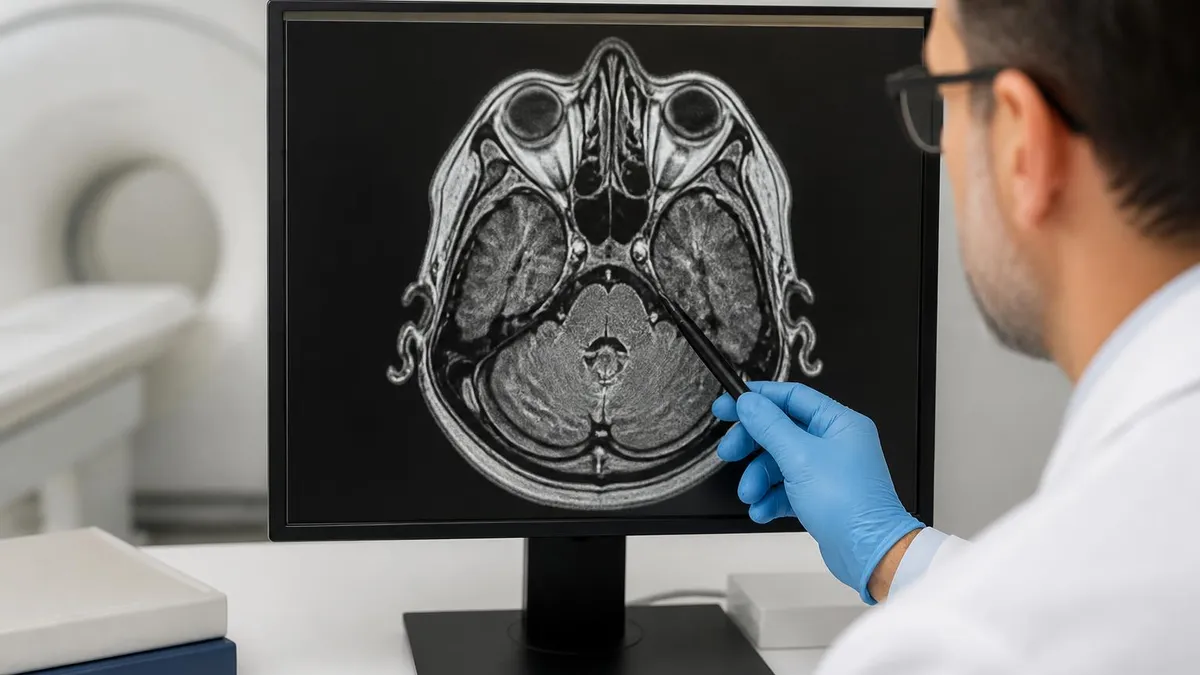
Always confirm MRI compatibility for cardiac devices, neurostimulators, cochlear implants, and aneurysm clips before bringing a patient into Zone IV. Non-compatible devices can heat, malfunction, or move within the magnetic field. When in doubt, contact the device manufacturer and consult institutional MRI safety policies before proceeding.
MRI safety is the single most important responsibility of the technologist performing a cervical spine study. The American College of Radiology Zone system organizes the MRI suite into four areas, with the magnet room itself classified as Zone IV. Anyone entering Zone IV, including patients, family members, transporters, and cleaning staff, must complete a ferromagnetic screening process and remove all metallic objects. Failure to do so has resulted in projectile injuries, burns, and device malfunctions.
Cervical spine MRI presents specific safety considerations because the coil is placed directly around the neck and upper chest, an area where pacemaker pockets, port catheters, and surgical hardware are common. The technologist must verify implant compatibility, document model and serial numbers when possible, and follow conditional scanning parameters such as specific SAR limits, scan duration, and patient positioning requirements. For a deeper look at device-specific guidance, see our article on MRI safety and compatibility.
Gadolinium-based contrast agents are used selectively in cervical spine MRI, typically for suspected tumor, infection, demyelinating disease, or postoperative evaluation when distinguishing scar from recurrent disc is needed. Group II macrocyclic agents have the lowest risk of nephrogenic systemic fibrosis and are now preferred at most institutions. Patients with severely reduced eGFR, typically below 30 mL/min, require a risk-benefit discussion before contrast administration.
Common artifacts on cervical spine MRI include CSF pulsation artifact on sagittal T2, motion artifact from swallowing or breathing, susceptibility artifact from dental work or surgical hardware, and truncation artifact that can mimic a syrinx within the cord. Recognizing these artifacts prevents misinterpretation. Strategies include flow compensation, saturation bands placed anterior to the neck, increased phase-encoding steps, and switching the phase direction when needed.
Patients with claustrophobia represent a significant minority of cervical MRI candidates. Strategies that help include detailed pre-scan education, prone positioning when possible, mirror systems that allow patients to see out of the bore, oral anxiolytics like lorazepam, and referral to wide-bore or open MRI scanners. While open scanners offer comfort, the lower field strength can compromise cord detail, and many radiologists prefer closed-bore 1.5T or 3T systems when image quality is critical.
Pediatric cervical MRI deserves special attention because the developing spine looks different from the adult. Vertebral bodies have ossification centers that can mimic fractures, the cord is relatively larger compared to the canal, and motion is harder to control. Sedation or general anesthesia may be required for younger children, which adds complexity, risk, and cost. Child-life specialists, mock scanners, and feed-and-wrap techniques for infants can reduce sedation needs.
Finally, communication between the ordering clinician, the radiologist, and the technologist drives study quality. A clear clinical history pointing to the suspected diagnosis allows the protocol to be tailored, the right sequences to be added, and contrast to be used when truly needed. A cervical MRI ordered for radiculopathy is a different study from one ordered for suspected metastatic disease, and getting that distinction right at the front desk improves both efficiency and diagnostic yield.
For technologists preparing to perform cervical spine MRI, the most useful preparation is repetition under different conditions. Scanning a cooperative, slim patient with a routine degenerative disc is easy; the real skill comes from optimizing a study on a large patient, a trauma patient in a collar, or a patient who cannot lie still. Practicing coil placement, saturation band positioning, and slice angulation across many body habitus types builds the muscle memory needed for consistent, diagnostic images.
Slice angulation is one of the most common technical mistakes. Sagittal images should be aligned along the long axis of the cervical cord, not strictly along the table. Axial images should be angled to match each disc space, which is especially important at the cervicothoracic junction where the disc orientation changes substantially. Many scanners now offer auto-alignment based on a 3D localizer, but the technologist must still verify that the prescribed angles look anatomically correct before starting the long acquisitions.
For patients, the day-of-scan experience matters as much as the technical quality. Wearing comfortable clothing without metal, arriving hydrated if contrast is planned, and discussing any anxiety with the technologist ahead of time make the exam much smoother. Earplugs and headphones are provided to reduce the loud knocking sounds caused by gradient switching, and a call button allows the patient to communicate with the technologist throughout the study. Most facilities offer music to help patients relax during longer sequences.
Interpreting radiologists develop a search pattern that prevents missed findings. A common approach is to start with the sagittal T2 to assess overall alignment, disc levels, and cord signal; then sagittal T1 for marrow; then STIR for edema; then axial sequences level by level. Each level is graded for central canal stenosis, foraminal stenosis, disc morphology, and any cord or paraspinal abnormality. Templates and structured reports help ensure nothing is overlooked, especially in long, complex degenerative cases.
For students preparing for the ARRT MRI registry, cervical spine cases are common on the exam. Expect questions about sequence selection, slice thickness, coil choice, contrast indications, safety screening, and recognition of common pathologies. Reviewing real case examples with side-by-side images is far more effective than reading text alone. Many programs supplement textbook learning with online question banks, simulated cases, and shadowing experienced technologists at high-volume neuro-imaging centers. Active learning consistently outperforms passive review.
Continuing education in MRI of the cervical spine is increasingly important as new technologies emerge. Diffusion tensor imaging, magnetization transfer, and quantitative cord cross-sectional area measurements are entering routine practice at academic centers. Artificial intelligence-assisted reconstruction is shortening scan times while preserving image quality. Staying current with these developments through professional society courses, journal articles, and vendor training is essential for technologists who want to remain competitive and provide the best possible patient care.
Ultimately, a well-performed cervical spine MRI is a collaboration between the patient, the technologist, and the radiologist. Each plays a critical role in producing a study that actually answers the clinical question. When that collaboration works, the result is one of the most powerful diagnostic tools in modern medicine, capable of guiding everything from conservative therapy decisions to complex spinal surgery with millimeter precision and minimal risk to the patient.
Sample MRI - Magnetic Resonance Imaging Practice Questions
Try these questions from our free MRI - Magnetic Resonance Imaging practice tests. The correct answer and an explanation follow each question.
When positioning a patient for a lumbar spine MRI, the technologist should place the patient in which position to reduce lumbar lordosis and improve image quality?
- A. Prone with legs flat
- B. Supine with knees flexed and supported by a foam wedge
- C. Lateral decubitus position
- D. Seated upright
Answer: B. Supine with knees flexed and supported by a foam wedge
Flexing the knees with a foam wedge support flattens lumbar lordosis, reducing the curvature and aligning disc spaces parallel to axial slices for optimal visualization.
Which coil type provides the best signal-to-noise ratio (SNR) for a specific small anatomy because it is placed closest to the structure?
- A. Body coil
- B. Head coil
- C. Surface coil
- D. Volume coil
Answer: C. Surface coil
Surface coils are placed directly over the anatomy of interest; their proximity maximizes SNR for superficial or small structures compared to larger volume coils.
A technologist who holds an RT(MR)(ARRT) credential and allows it to lapse must complete which process to reinstate it?
- A. Retake the full MRI registry examination
- B. Apply for reinstatement and fulfill CE requirements
- C. Resubmit all original application materials and retake the exam
- D. Complete only a practical competency evaluation
Answer: B. Apply for reinstatement and fulfill CE requirements
ARRT allows lapsed credential holders to reinstate by applying for reinstatement and meeting outstanding CE obligations.
Which MRI artifact is caused by periodic patient motion such as cardiac or respiratory movement?
- A. Chemical shift artifact
- B. Gibbs ringing artifact
- C. Ghosting (motion) artifact
- D. Magnetic susceptibility artifact
Answer: C. Ghosting (motion) artifact
Ghosting artifacts appear as repeated copies of moving structures along the phase-encoding direction due to periodic physiologic motion.
Take the full MRI - Magnetic Resonance Imaging practice test
MRI Questions and Answers
The History of MRI: From Discovery to Modern Medicine
MRI With and Without Contrast: How It Works, What to Expect
MRI Medical Abbreviation: What MRI Stands For and Why It Matters
MRI Imaging Centers: Complete Guide to Independent Outpatient MRI Facilities
St Jude Pacemaker MRI Compatibility List: A Complete Safety and Scanning Guide
About the Author

Medical Laboratory Scientist & Clinical Certification Expert
Johns Hopkins UniversityDr. Sandra Kim holds a PhD in Clinical Laboratory Science from Johns Hopkins University and is certified as a Medical Technologist (MT) and Medical Laboratory Scientist (MLS) through ASCP. With 16 years of clinical laboratory experience spanning hematology, microbiology, and molecular diagnostics, she prepares candidates for ASCP board exams, MLT, MLS, and specialist certification tests.
Join the Discussion
Connect with other students preparing for this exam. Share tips, ask questions, and get advice from people who have been there.
View discussion (8 replies)