
MRI of Pregnant Woman: A Complete Guide to Safety, Indications, and Imaging Protocols During Pregnancy
MRI of pregnant woman: ✏️ learn safety guidelines, gadolinium risks, indications, trimester rules, and what to expect during prenatal magnetic resonance
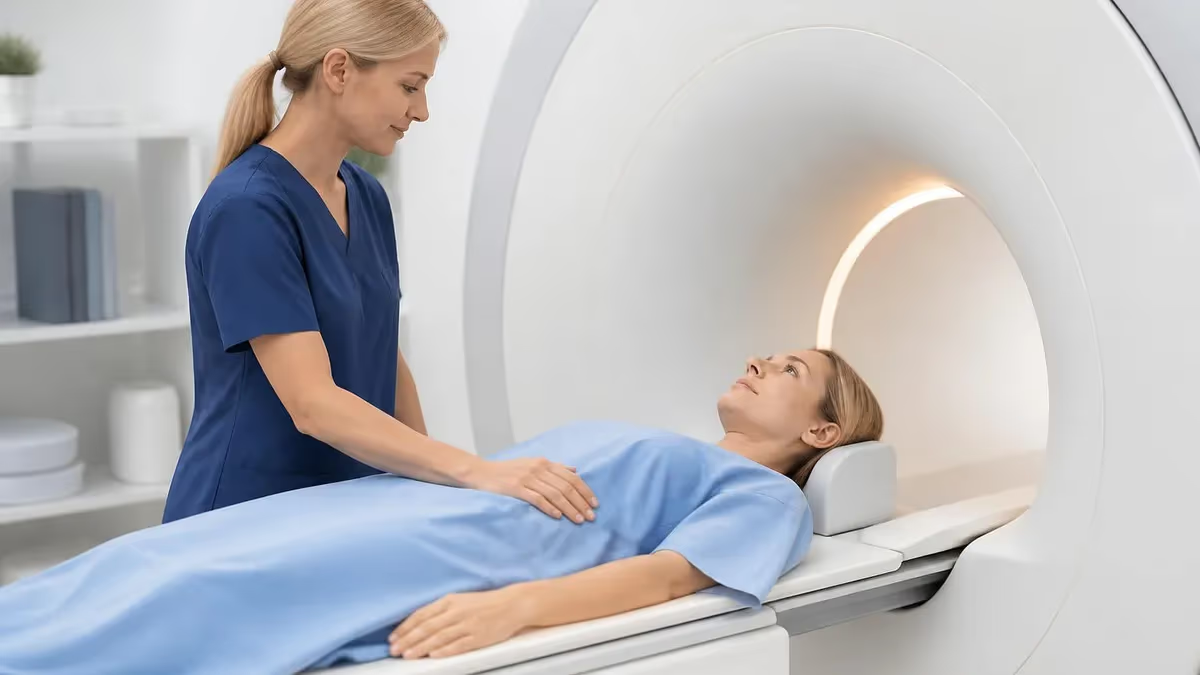
An MRI of pregnant woman is one of the most clinically valuable imaging tools available in modern obstetrics, offering exceptional soft-tissue contrast without exposing the fetus to ionizing radiation. When ultrasound findings are inconclusive or when complex maternal pathology demands a closer look, magnetic resonance imaging steps in to provide cross-sectional detail of both the mother and the developing fetus. Radiologists, obstetricians, and MRI technologists must understand the unique safety considerations, contrast agent restrictions, and protocol modifications that apply during pregnancy.
The American College of Radiology (ACR) and the Society for Maternal-Fetal Medicine have both issued detailed guidance affirming that MRI can be performed at any stage of pregnancy when clinically indicated. Unlike CT, which delivers measurable radiation dose to the fetus, MRI relies on strong magnetic fields and radiofrequency pulses to generate images. This fundamental physical difference makes MRI the preferred cross-sectional modality when a pregnant patient presents with appendicitis, suspected placenta accreta, neurologic symptoms, or fetal anomalies that ultrasound cannot fully characterize.
Despite the favorable safety profile, MRI of pregnant woman is not entirely without considerations. Specific absorption rate (SAR), acoustic noise levels, magnetic field strength, and contrast agent selection all require careful protocol management. Most major institutions in the United States now perform pregnancy MRI on 1.5T scanners as the default, reserving 3T imaging for select indications where the higher signal-to-noise ratio outweighs theoretical concerns about tissue heating and field interactions with fetal tissues.
For technologists preparing to image a pregnant patient, the workflow differs meaningfully from a standard scan. Patient positioning may need to accommodate a gravid abdomen, especially after 20 weeks gestation, when left lateral decubitus positioning becomes essential to prevent inferior vena cava compression and supine hypotensive syndrome. Coil selection, breath-hold instructions, and sequence timing all must adapt to maternal physiology and fetal motion. To master these technical foundations, review What Is an MRI Test? How Magnetic Resonance Imaging Scans Diagnose Disease in 2026 before diving deeper into obstetric protocols.
Gadolinium-based contrast agents represent the single most important pharmacologic decision in pregnancy imaging. Multiple large cohort studies, including a landmark 2016 JAMA paper analyzing more than 1.4 million Ontario births, have linked first-trimester gadolinium exposure to a small but measurable increase in rheumatologic, inflammatory, and infiltrative skin conditions in offspring. As a result, gadolinium should be avoided unless its diagnostic benefit clearly outweighs the potential fetal risk, a decision typically made jointly by the radiologist, obstetrician, and patient after thorough informed consent.
Clinical indications for prenatal MRI continue to expand as scanner technology improves and fast imaging sequences reduce motion artifact. Fetal central nervous system anomalies remain the most common indication, particularly ventriculomegaly, agenesis of the corpus callosum, posterior fossa malformations, and cortical development abnormalities. Maternal indications include suspected appendicitis, pelvic masses, placental disorders, and stroke workup. Each indication carries a specific protocol designed to maximize diagnostic yield while minimizing scan time and energy deposition.
This comprehensive guide walks through every dimension of MRI of pregnant woman, from physics and safety principles through clinical indications, protocol design, contrast considerations, and patient communication. Whether you are a student preparing for registry exams, a working technologist refining your obstetric scanning skills, or a clinician seeking to better understand when to order a prenatal MRI, the following sections will equip you with the practical knowledge you need to deliver safe, high-quality imaging for both mother and baby.
MRI of Pregnant Woman by the Numbers
Common Indications for MRI in Pregnancy
Ventriculomegaly, agenesis of the corpus callosum, posterior fossa malformations, and neural tube defects are the leading indications. MRI provides superior parenchymal detail compared with ultrasound after 18 weeks gestation.
When ultrasound is non-diagnostic, MRI is the modality of choice for suspected appendicitis in pregnancy. Sensitivity exceeds 90% and avoids the radiation burden of CT, making it the preferred next step.
Suspected placenta accreta, increta, or percreta benefit from MRI characterization, especially in patients with prior cesarean delivery. MRI helps surgical planning and identifies myometrial invasion ultrasound may miss.
Adnexal masses discovered during pregnancy require characterization without radiation. MRI distinguishes benign cysts, dermoids, and fibroids from concerning solid lesions that may require intervention before delivery.
Headaches, seizures, or focal deficits in pregnancy may signal cerebral venous sinus thrombosis, posterior reversible encephalopathy syndrome (PRES), or pituitary apoplexy. Non-contrast MRI is the workhorse evaluation.
The safety framework for MRI of pregnant woman rests on three pillars: the magnetic field itself, the radiofrequency energy deposited as specific absorption rate (SAR), and the acoustic noise produced by gradient switching. Each of these factors has been studied extensively, and current evidence supports the safe use of MRI at 1.5T throughout pregnancy, with 3T imaging considered acceptable when clinically necessary. No published study has demonstrated harm to the human fetus from diagnostic MRI exposure at clinical field strengths.
Static magnetic field exposure has been investigated since the 1980s. Theoretical concerns about effects on cell division and embryonic development have not been borne out in long-term follow-up studies of children scanned in utero. Even so, many institutions historically avoided first-trimester imaging out of an abundance of caution. The 2020 ACR Manual on MR Safety formally rescinded this restriction, stating that MRI may be performed at any gestational age when the information sought cannot be obtained by non-ionizing means such as ultrasound.
Specific absorption rate, measured in watts per kilogram, quantifies how much radiofrequency energy is absorbed by tissue and converted to heat. The FDA limits whole-body SAR to 2 W/kg in normal operating mode and 4 W/kg in first-level controlled mode. For pregnant patients, normal mode is standard practice to minimize any theoretical thermal effect on the fetus. Sequence selection, flip angle reduction, and parallel imaging techniques all help keep SAR within conservative limits during obstetric scans.
Acoustic noise represents another consideration. Gradient coils can generate sound pressure levels exceeding 110 decibels during fast sequences, and the gravid uterus transmits attenuated sound to the fetus. While the amniotic fluid and maternal tissues provide approximately 30 dB of attenuation, exposure remains a topic of ongoing research. No causal link has been established between MRI acoustic exposure and pediatric hearing impairment, but technologists should still favor quieter sequences when diagnostic quality permits.
Field strength selection deserves careful consideration. At 1.5T, the body of safety evidence is strong and most institutions consider it the default for pregnancy imaging. At 3T, SAR scales with the square of field strength, potentially doubling tissue heating for identical sequences. Standing-wave and dielectric effects also become more pronounced in the gravid abdomen, occasionally producing signal voids that compromise image quality. For more on field strength fundamentals, review the The History of MRI: From Discovery to Modern Medicine.
Patient positioning is a practical safety concern that often gets overlooked in textbooks. After approximately 20 weeks gestation, the gravid uterus can compress the inferior vena cava when the patient lies supine, producing supine hypotensive syndrome with maternal lightheadedness, nausea, and reduced uteroplacental perfusion. Left lateral decubitus positioning with a wedge under the right hip preserves venous return and patient comfort. Technologists should monitor the patient closely and respond promptly to any distress signal from the call button.
Finally, informed consent must reflect the limits of current knowledge. While MRI has an excellent safety track record, no long-term randomized study can absolutely guarantee zero risk to the developing fetus. The conversation with the patient should frame MRI as a diagnostic tool whose benefits in the specific clinical scenario outweigh the small theoretical uncertainties. Documentation of this discussion in the medical record protects both the patient and the imaging team.
MRI Practice Test Questions
Prepare for the MRI - Magnetic Resonance Imaging exam with our free practice test modules. Each quiz covers key topics to help you pass on your first try.
MRI Knowledge
MRI Exam Questions covering Knowledge. Master MRI Test concepts for certification prep.
MRI Physics
Free MRI Practice Test featuring Physics. Improve your MRI Exam score with mock test prep.
MRI Anatomy and Pathology
MRI Test Prep for MRI Anatomy and Pathology. Practice MRI Quiz questions and boost your score.
MRI Anatomy and Positioning
MRI Questions and Answers on MRI Anatomy and Positioning. Free MRI practice for exam readiness.
MRI Contrast Agents
Free MRI Quiz on MRI Contrast Agents. MRI Exam prep questions with detailed explanations.
MRI Patient Care and Positioning
MRI Practice Questions for MRI Patient Care and Positioning. Build confidence for your MRI certification exam.
Gadolinium, SAR, and Trimester Considerations
Gadolinium-based contrast agents (GBCAs) cross the placenta, enter the fetal circulation, and are excreted into the amniotic fluid where they may be reabsorbed by the fetus. The retention time and any tissue deposition during this period remain incompletely characterized, which is why the ACR recommends avoiding gadolinium during pregnancy unless absolutely necessary.
The 2016 JAMA cohort study by Ray and colleagues, which analyzed 1.4 million Ontario births, found a small but statistically significant increase in rheumatologic, inflammatory, and infiltrative skin conditions in children exposed to gadolinium in utero. Stillbirth and neonatal death rates were also marginally improved. Decisions must be made case by case with maternal-fetal medicine input.
Should You Order an MRI During Pregnancy?
- +No ionizing radiation exposure to the developing fetus
- +Superior soft-tissue contrast compared with ultrasound
- +Excellent visualization of fetal brain and posterior fossa
- +Reliable evaluation of maternal appendicitis and pelvic pathology
- +Helps surgical planning for placenta accreta spectrum disorders
- +Repeatable when clinical questions evolve during pregnancy
- −Loud acoustic environment may cause maternal anxiety
- −Limited spatial resolution compared with postnatal imaging
- −Fetal motion can degrade image quality despite fast sequences
- −Gadolinium contrast generally contraindicated in pregnancy
- −Long supine positioning can trigger hypotensive syndrome
- −Cost and availability may delay scanning at some centers
Pros and Cons at a Glance
| Pros | Cons |
|---|---|
| No ionizing radiation exposure to the developing fetus | Loud acoustic environment may cause maternal anxiety |
| Superior soft-tissue contrast compared with ultrasound | Limited spatial resolution compared with postnatal imaging |
| Excellent visualization of fetal brain and posterior fossa | Fetal motion can degrade image quality despite fast sequences |
| Reliable evaluation of maternal appendicitis and pelvic pathology | Gadolinium contrast generally contraindicated in pregnancy |
| Helps surgical planning for placenta accreta spectrum disorders | Long supine positioning can trigger hypotensive syndrome |
| Repeatable when clinical questions evolve during pregnancy | Cost and availability may delay scanning at some centers |
Pre-Scan Checklist for MRI of Pregnant Woman
- ✓Confirm gestational age and last menstrual period before scanning
- ✓Document the specific clinical question driving the MRI request
- ✓Verify the patient screening form for implants, devices, and prior surgeries
- ✓Discuss gadolinium risks if contrast is being considered and obtain consent
- ✓Set the scanner to normal operating mode to cap SAR at 2 W/kg
- ✓Use 1.5T field strength as the default unless 3T is clinically required
- ✓Position the patient in left lateral decubitus after 20 weeks gestation
- ✓Provide ear protection rated for sustained gradient noise exposure
- ✓Use breath-hold sequences strategically to minimize fetal motion artifact
- ✓Have a call button within reach and check on the patient between sequences
Always rule out ultrasound first
The ACR Appropriateness Criteria emphasize that MRI of pregnant woman should be reserved for cases where ultrasound is non-diagnostic or where the additional information will change management. Documenting this stepwise approach in the imaging request protects the patient, the radiologist, and the ordering clinician, and ensures that MRI is used judiciously rather than reflexively.
Designing an MRI protocol for pregnancy requires balancing speed, contrast, and SAR. The single most useful sequence for fetal imaging is single-shot fast spin echo (SSFSE), known as HASTE on Siemens systems, SSFSE on GE, and SSh-TSE on Philips. This sequence acquires each slice in under a second, effectively freezing fetal motion and producing exquisite T2-weighted contrast that highlights amniotic fluid, cerebrospinal fluid, and parenchymal structures. Most obstetric protocols begin with multiplanar SSFSE through the uterus and fetus.
For fetal mri for migraines the protocol typically includes axial, coronal, and sagittal SSFSE planes oriented to the fetal head rather than the maternal pelvis. Slice thickness is generally 3 to 4 millimeters with no gap, providing isotropic-like coverage across the entire cranium. Echo planar imaging (EPI) adds susceptibility-weighted information that can detect hemorrhage, while diffusion-weighted imaging helps identify ischemic injury and certain malformations. T1-weighted sequences contribute when fat, blood products, or myelination details are clinically relevant.
Maternal imaging protocols vary by indication. For suspected appendicitis, axial and coronal SSFSE through the right lower quadrant is the cornerstone, supplemented by axial T2 fat-saturated and DWI to identify periappendiceal inflammation. A normal-appearing, fluid-filled appendix measuring less than 7 millimeters effectively rules out appendicitis, while wall thickening, periappendiceal fat stranding, and restricted diffusion confirm the diagnosis. Total scan time should be kept under 25 minutes when possible.
Placental imaging follows a different template. Suspected placenta accreta spectrum requires high-resolution T2-weighted sequences in three planes to evaluate the uteroplacental interface, identify intraplacental dark bands, and assess myometrial thinning. Bladder wall integrity must be scrutinized carefully when the placenta is anterior. Dynamic balanced steady-state free precession can supplement static imaging when bladder or parametrial invasion is suspected, guiding multidisciplinary surgical planning for delivery.
Coil selection plays an underappreciated role in image quality. A surface phased-array body coil wrapped around the gravid abdomen maximizes signal from the fetus and placenta while supporting parallel imaging acceleration. For very large patients, a combination of body and spine array elements may be needed to maintain uniform signal coverage. Coil positioning should be verified before each sequence, especially after patient repositioning between supine and lateral decubitus orientations.
Parameter optimization matters as much as sequence choice. Reducing the refocusing flip angle on SSFSE from 180 degrees to 120 degrees cuts SAR substantially without major contrast penalty. Parallel imaging factors of 2 to 3 shorten acquisition time and further reduce energy deposition. Half-Fourier acquisition is intrinsic to SSFSE and contributes additional speed. Each vendor offers proprietary fast imaging options worth mastering for a smooth, efficient obstetric workflow.
Documentation closes the loop. Every prenatal MRI report should specify the indication, gestational age at scanning, sequences performed, contrast use (if any), key findings, and recommendations for follow-up. When fetal anomalies are detected, communication with the maternal-fetal medicine team and prompt counseling support are essential. The MRI is not just a set of images; it is a clinical decision point that often changes the trajectory of pregnancy management.
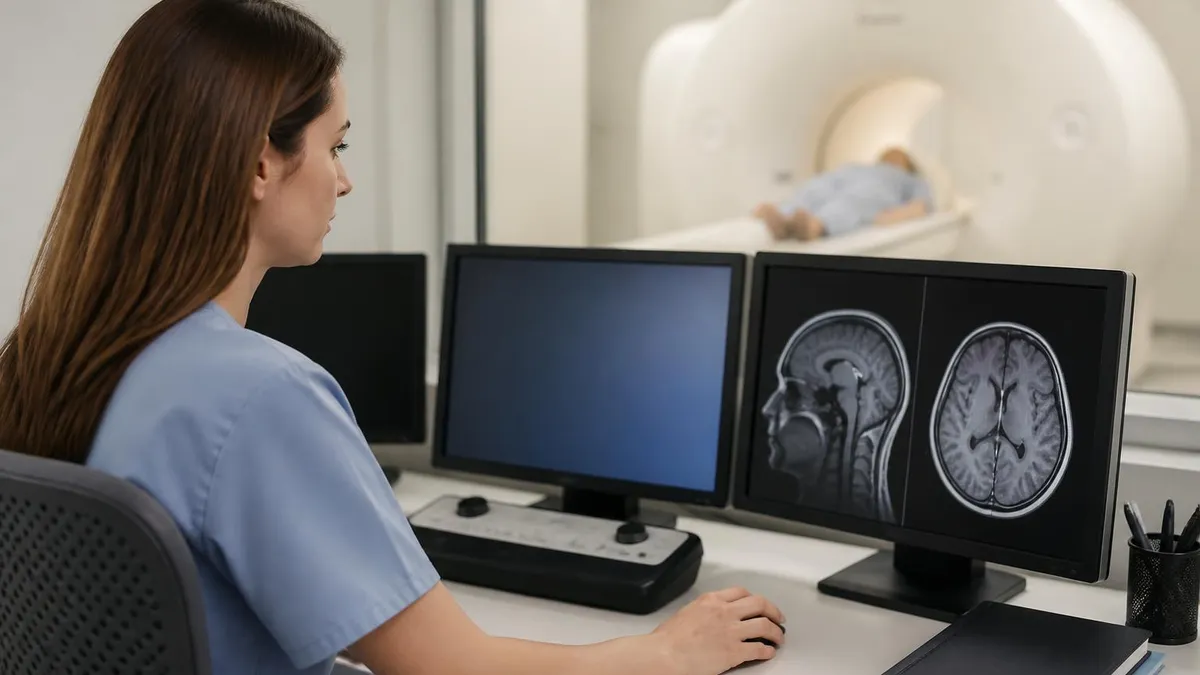
The ACR and FDA recommend avoiding gadolinium-based contrast agents in pregnant patients unless the diagnostic benefit clearly outweighs the potential fetal risk. The 2016 JAMA study showed a small but real increase in adverse fetal outcomes. Always document the multidisciplinary discussion and informed consent before administering gadolinium during pregnancy.
Effective communication transforms the MRI of pregnant woman experience from a source of anxiety into a collaborative clinical encounter. Before the patient even arrives, the imaging center should provide written materials explaining what MRI is, why it is being performed, how long it will take, and what sensations to expect. Acknowledging the loud noise, the enclosed environment, and the need to lie still helps the patient prepare mentally and reduces last-minute requests to cancel or sedate.
On the day of the scan, the technologist plays a central role. A warm introduction, a clear walk-through of the screening form, and a few minutes of conversation about the pregnancy build trust quickly. Pregnant patients often have specific questions about safety: Will the magnet hurt the baby? Why no contrast?
Why must I lie on my side? Confident, evidence-based answers reinforce that the imaging team has the patient's and the baby's well-being firmly in mind. For deeper context on mri breast scan experience, the resource Noise of MRI Machine: Why MRI Scanners Are So Loud and What to Expect is worth sharing.
Inside the scan room, comfort measures matter more than ever. A wedge pillow under the right hip preserves venous return, while a smaller pillow under the knees relieves lumbar strain. Ear protection should include both foam plugs and headphones, ideally with music selected by the patient. Some centers offer a mirror system so the patient can see her partner or technologist during the scan, which substantially reduces claustrophobia in late pregnancy when the abdomen approaches the bore wall.
Breath-holding instructions should be simple, well-rehearsed, and adapted to the patient's stamina. Late-pregnancy patients often cannot hold a breath for the 20-second intervals required by certain sequences, so the technologist may need to switch to free-breathing alternatives or shorter breath-holds. A practice run before image acquisition confirms that the patient understands the cue and is able to comply. Monitoring oxygen saturation and heart rate during longer scans adds a layer of safety, especially for patients with comorbidities.
If the patient experiences distress, the imaging team must respond immediately. Lightheadedness, nausea, or shortness of breath while supine is the classic presentation of supine hypotensive syndrome and resolves quickly with left lateral decubitus repositioning. Severe anxiety may warrant pausing the scan, stepping into the bore briefly to reassure the patient, or rescheduling for an open MRI system. The threshold for accommodation should be low, particularly in the third trimester.
After the scan, communication continues. The patient should be told when results will be available, who will discuss them, and what next steps to expect. Many centers now provide patient portals where preliminary findings can be reviewed alongside the obstetrician. When findings raise serious concerns, the radiologist should call the referring physician directly so that counseling can begin without delay. Closed-loop communication is the hallmark of a mature obstetric imaging program.
Finally, the imaging team should debrief after challenging cases. Whether the scan revealed a major fetal anomaly, required protocol adaptation for maternal anxiety, or simply ran longer than expected, structured reflection improves future performance. Building a culture of continuous improvement around pregnancy MRI ensures that each subsequent patient benefits from the lessons of those who came before.
Practical preparation for performing or interpreting an MRI of pregnant woman starts with mastering the fundamentals of the modality before pregnancy ever enters the picture. Technologists should be fluent in SAR mathematics, gradient performance characteristics, and the relationship between flip angle and energy deposition. Radiologists should be comfortable recognizing normal fetal anatomy across gestational ages, from the immature gyral pattern of a 22-week brain to the well-myelinated posterior limb of the internal capsule near term. Investing in baseline literacy pays dividends when complex cases arrive.
Continuing education is essential because guidelines evolve. The 2020 ACR Manual on MR Safety substantially revised earlier conservative recommendations, and subsequent papers continue to refine our understanding of gadolinium kinetics, acoustic exposure, and 3T imaging in pregnancy. Attending annual safety reviews, subscribing to society newsletters, and reviewing case logs at departmental conferences keeps the entire team current. Knowledge that was state-of-the-art five years ago may be outdated today.
Simulation is a powerful but underused tool. Practicing patient positioning with a non-pregnant volunteer wearing a weighted vest helps technologists anticipate the physical demands on a late-pregnancy patient. Walking through a full protocol on a phantom familiarizes the team with sequence transitions, coil reconfiguration, and SAR monitoring. When a real pregnant patient finally arrives, the workflow feels rehearsed rather than improvised, and confidence shows in the patient interaction.
Quality assurance deserves dedicated attention. Each obstetric MRI report should be audited periodically against published reporting standards. Are gestational age, sequences, and findings clearly documented? Are recommendations actionable? Are critical results communicated in a timely fashion? Audit feedback loops drive measurable improvement and surface systemic gaps that informal observation may miss. Linking audit findings to specific educational interventions closes the improvement cycle.
Multidisciplinary engagement amplifies the impact of every prenatal MRI. Joint conferences with maternal-fetal medicine, pediatric neurology, neurosurgery, and genetics translate imaging findings into integrated care plans. Cases discussed together produce better counseling for families, more appropriate antenatal interventions, and smoother transitions to postnatal management. Radiologists who participate actively in these conferences gain clinical context that sharpens future interpretations.
Patient advocacy is the final piece. A pregnant patient who feels heard, respected, and informed will tolerate even a difficult mri with braces dental composure, while one who feels rushed or dismissed may leave with lasting anxiety about future imaging. Small gestures, a warm blanket, a quick check-in between sequences, an explanation of an unfamiliar sound, can transform the encounter. The technical excellence of the scan matters less to the patient than the human quality of the team performing it.
Putting it all together, MRI of pregnant woman represents a high-stakes intersection of physics, physiology, and compassion. When the technical fundamentals are mastered, when safety guidelines are followed without shortcuts, and when patient communication is woven through every step, MRI becomes one of the most valuable tools in modern obstetric imaging. The investment required to perform it well is substantial, but the diagnostic clarity it brings to expectant families is genuinely irreplaceable.
Sample MRI - Magnetic Resonance Imaging Practice Questions
Try these questions from our free MRI - Magnetic Resonance Imaging practice tests. The correct answer and an explanation follow each question.
Which patient condition requires consultation with the ordering physician regarding MRI safety due to potential risks during the first trimester?
- A. Known diabetes mellitus
- B. Known pregnancy, especially first trimester
- C. Mild hypertension controlled with oral medication
- D. Prior abdominal surgery more than 1 year ago
Answer: B. Known pregnancy, especially first trimester
MRI in the first trimester is performed with caution; although no confirmed harm is established, ACR guidelines recommend physician consultation and clinical justification for first-trimester MRI.
When imaging the lumbar spine, which position best opens the intervertebral foramina and reduces lumbar lordosis for improved visualization?
- A. Prone with legs extended
- B. Supine with legs elevated on a cushion (knees and hips flexed)
- C. Lateral decubitus
- D. Prone with pillow under abdomen
Answer: B. Supine with legs elevated on a cushion (knees and hips flexed)
Flexing the hips and knees while supine flattens lumbar lordosis, opens intervertebral foramina, and improves disc and nerve root visualization.
The range of frequencies sampled during the process is represented by the receiver bandwidth.
- A. gradient of frequency encoding
- B. gradient coils
- C. phase difference
- D. gradient for slice selection
Answer: A. gradient of frequency encoding
The receiver bandwidth in MRI represents the range of frequencies sampled during the signal acquisition process. This range of frequencies is directly linked to the frequency encoding gradient, which spatially encodes information along one dimension of the image. A wider bandwidth allows for faster acquisition but can lead to a reduction in signal-to-noise ratio (SNR).
Which safety zone in an MRI facility is defined as the area that requires screening and controlled access due to the fringe magnetic field?
- A. Zone I
- B. Zone II
- C. Zone III
- D. Zone IV
Answer: C. Zone III
Zone III is the area where the fringe field poses risk and requires restricted access; only screened individuals may enter.
Take the full MRI - Magnetic Resonance Imaging practice test
MRI Questions and Answers
What Is an MRI Test? How Magnetic Resonance Imaging Scans Diagnose Disease in 2026
MRI Medical Abbreviation: What MRI Stands For and Why It Matters
The History of MRI: From Discovery to Modern Medicine
Knee MRI Images: A Complete Guide to Reading, Understanding, and Interpreting Knee Scans
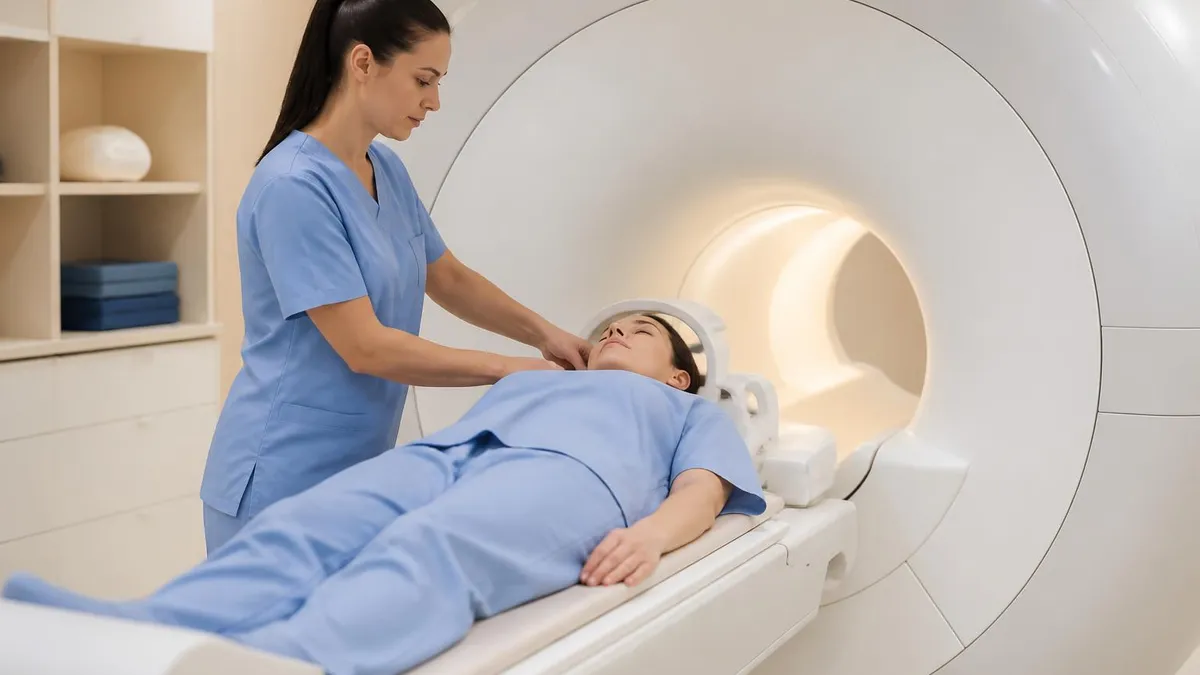
Noise of MRI Machine: Why MRI Scanners Are So Loud and What to Expect
About the Author

Medical Laboratory Scientist & Clinical Certification Expert
Johns Hopkins UniversityDr. Sandra Kim holds a PhD in Clinical Laboratory Science from Johns Hopkins University and is certified as a Medical Technologist (MT) and Medical Laboratory Scientist (MLS) through ASCP. With 16 years of clinical laboratory experience spanning hematology, microbiology, and molecular diagnostics, she prepares candidates for ASCP board exams, MLT, MLS, and specialist certification tests.
Join the Discussion
Connect with other students preparing for this exam. Share tips, ask questions, and get advice from people who have been there.
View discussion (8 replies)