
Dangers of MRI: Risks, Side Effects, and Safety Concerns Every Patient Should Know
Explore the dangers of MRI including magnetic field risks, contrast reactions, implant hazards, hearing damage, and safety screening every patient 🎓
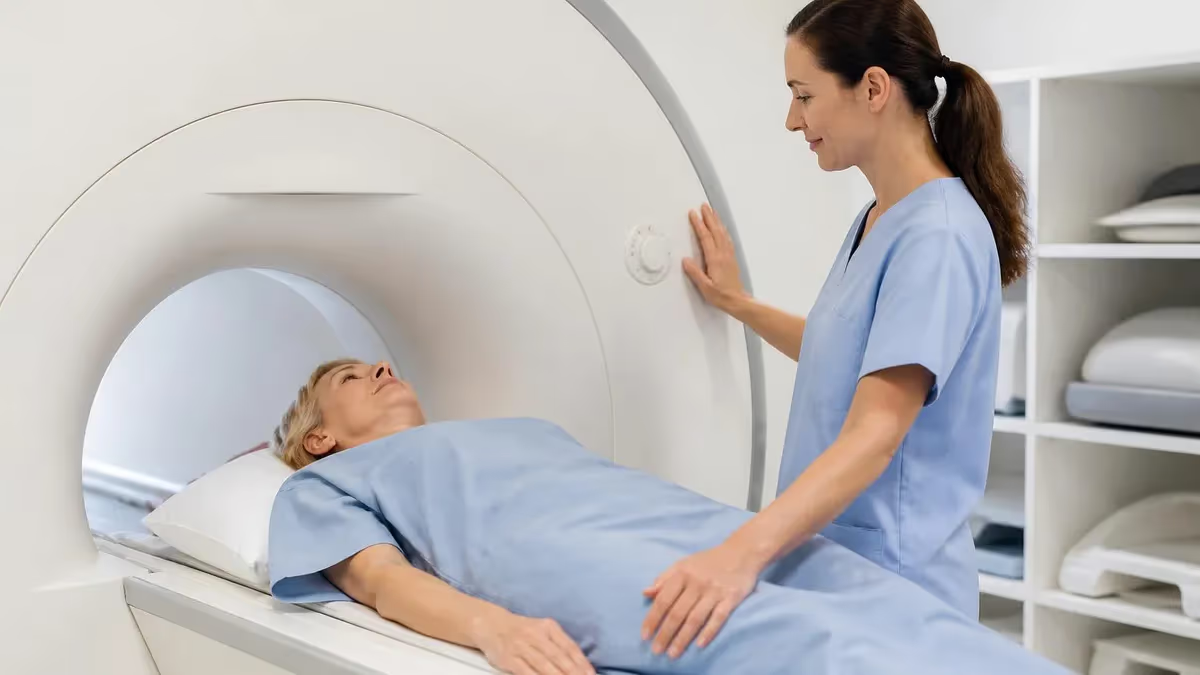
The dangers of MRI are often misunderstood because magnetic resonance imaging does not use ionizing radiation, which leads many patients and even some clinicians to assume the procedure carries no risk at all. While MRI is one of the safest advanced imaging modalities available, the technology relies on extremely powerful magnetic fields, rapidly switching gradients, and pulses of radiofrequency energy that interact with the human body in ways that can produce real harm when safety screening fails or when a patient has an undisclosed implant or condition.
Every modern MRI scanner generates a static magnetic field measured in Tesla, with most clinical systems operating at 1.5T or 3T and research units reaching 7T or higher. To put that into context, a 3T magnet is roughly 60,000 times stronger than the Earth's natural magnetic field. This is strong enough to turn an oxygen tank, scissors, or a steel chair into a projectile capable of crushing a skull, fracturing bone, or destroying the scanner itself.
The risks extend well beyond projectile incidents. Patients with pacemakers, cochlear implants, aneurysm clips, insulin pumps, neurostimulators, and certain metallic foreign bodies can suffer device malfunction, tissue heating, or movement of the implant during a scan. Gadolinium-based contrast agents, while generally safe, have been linked to nephrogenic systemic fibrosis in patients with severe kidney disease and to long-term deposition in brain tissue even in patients with normal renal function.
Other hazards are less dramatic but more common, including significant hearing damage from acoustic noise that can exceed 110 decibels, severe claustrophobia and panic attacks inside the bore, peripheral nerve stimulation from gradient switching, and burns from improperly routed cables or surface coils. Pregnant patients, children, and individuals with tattoos containing iron oxide pigments face additional considerations that radiologists and technologists must evaluate before scanning.
Understanding these hazards matters because MRI safety incidents are almost entirely preventable. The American College of Radiology and the Joint Commission have published exhaustive screening protocols, zoning requirements, and equipment labeling standards designed to keep ferromagnetic objects, unscreened personnel, and incompatible implants out of Zone IV, the scanner room itself. When those protocols are followed rigorously, the risk of a serious adverse event drops to near zero.
This guide explains every major category of MRI danger in detail, from projectile incidents and contrast reactions to thermal injuries and psychological distress. It also covers patient screening, contraindications, the difference between MR safe and MR conditional implants, and the practical steps technologists and radiologists take to keep patients safe. Whether you are preparing for your first scan, studying for a registry exam, or working in a clinical imaging department, the information below will help you recognize and prevent the most common safety failures.
By the end of this article you will understand why MRI suites are designed with four distinct safety zones, how gadolinium contrast is dosed and monitored, what symptoms to report during a scan, and how facilities respond when an adverse event does occur. The goal is informed consent and informed practice, not fear, because for the vast majority of patients an MRI is still safer than the diagnostic alternatives.
Dangers of MRI by the Numbers
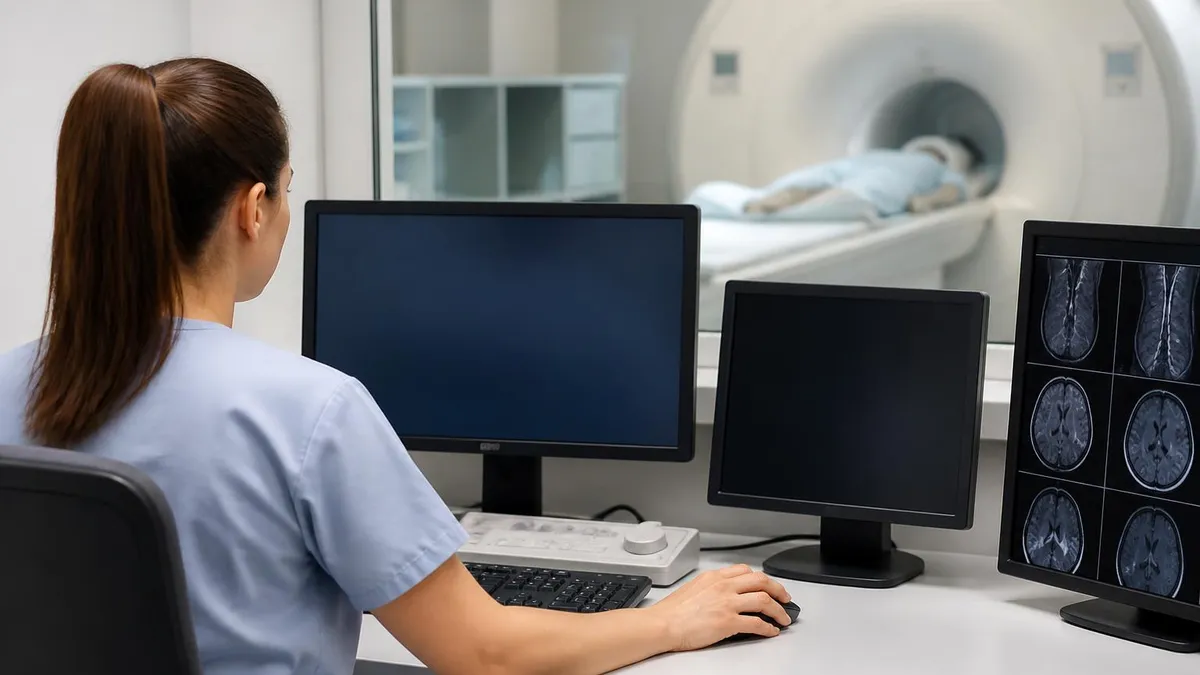
The Five Main Categories of MRI Risk
Any iron-containing object brought into Zone IV can become a deadly missile, accelerating toward the magnet bore at speeds capable of fatal blunt-force trauma to anyone in its path.
Pacemakers, neurostimulators, cochlear implants, and certain aneurysm clips may malfunction, heat up, or move when exposed to the static field, gradients, or radiofrequency energy of an MRI scan.
Gadolinium-based contrast agents can cause allergic-type reactions, nephrogenic systemic fibrosis in severe renal impairment, and long-term retention in brain, bone, and skin tissues.
Radiofrequency heating, looped cables, and surface coils can produce serious skin burns, while gradient noise routinely exceeds 100 dB and can cause permanent hearing loss without proper protection.
Claustrophobia, panic attacks, vasovagal episodes, peripheral nerve stimulation, and dizziness from rapid head motion in high-field magnets are common patient complaints that can lead to aborted exams.
The static magnetic field of an MRI scanner is the single most dangerous element in the room, and unlike X-ray radiation it is always on, even when the scanner is not actively imaging. This is the source of the famous projectile effect, in which any object containing iron, nickel, cobalt, or certain steel alloys is violently pulled toward the bore. Documented projectile incidents have involved oxygen cylinders, wheelchairs, IV poles, hair pins, hearing aids, gun magazines worn by police officers, and even floor polishers brought in by unscreened cleaning staff.
The force on a ferromagnetic object increases dramatically as it approaches the magnet, following an inverse cube relationship with distance. A small steel paperclip that feels merely attracted at two meters from the bore can be ripped from a pocket and fired into the scanner at over 40 miles per hour from just one meter away. In 2001 a six-year-old boy named Michael Colombini was killed at a New York hospital when an oxygen tank was carried into the scanner room during his anesthesia, striking him in the head.
Beyond projectiles, the static field can directly affect medical devices implanted in the body. Older aneurysm clips made of martensitic stainless steel can rotate inside the brain and tear vessels. Cardiac pacemakers may be reprogrammed, inhibited, or driven into asynchronous pacing modes, and the leads themselves can heat at their tips. Cochlear implant magnets can flip polarity, requiring surgical correction, and metallic foreign bodies in the eye from old grinding or welding accidents can shift and cause retinal hemorrhage.
Time-varying gradient magnetic fields, which switch on and off thousands of times per second during imaging, create their own hazards. They are the primary source of the scanner's loud knocking and buzzing noise, and they can induce electrical currents in the body strong enough to cause peripheral nerve stimulation, perceived as tingling, twitching, or involuntary muscle contractions. In rare cases, gradient pulses have triggered cardiac arrhythmias in susceptible patients, though FDA limits on slew rate have made this extremely uncommon in clinical scanners.
Radiofrequency energy, the third magnetic component of an MRI exam, deposits heat in tissue through a process measured as the specific absorption rate or SAR. Most of this energy is harmlessly dissipated, but in patients with implants, tattoos containing iron oxide, or even certain types of medication patches, RF energy can concentrate locally and produce thermal injuries ranging from mild erythema to full-thickness burns. Long, looped cables left in contact with skin are a particularly common cause of patient burns reported in the literature.
Quench events, while exceptionally rare, represent another magnet-related danger. A quench occurs when the superconducting coils that maintain the magnetic field lose their superconducting state, rapidly boiling off the liquid helium that cools them. If the quench pipe fails or the room is improperly vented, escaping helium gas can displace oxygen, suffocating anyone inside. A quench also collapses the magnetic field within seconds, which can be deliberately triggered in an emergency to free a person trapped against the bore by a large ferromagnetic object.
Understanding these field-related risks is essential context for any patient or technologist. To appreciate why MRI noise is such a persistent issue, it helps to read more about the mri machine noise and the engineering trade-offs that make quiet scanning so difficult to achieve without sacrificing image quality. The mechanical forces required to switch gradients quickly are inseparable from the loud knocking patients hear.
MRI Practice Test Questions
Prepare for the MRI - Magnetic Resonance Imaging exam with our free practice test modules. Each quiz covers key topics to help you pass on your first try.
MRI Knowledge
MRI Exam Questions covering Knowledge. Master MRI Test concepts for certification prep.
MRI Physics
Free MRI Practice Test featuring Physics. Improve your MRI Exam score with mock test prep.
MRI Anatomy and Pathology
MRI Test Prep for MRI Anatomy and Pathology. Practice MRI Quiz questions and boost your score.
MRI Anatomy and Positioning
MRI Questions and Answers on MRI Anatomy and Positioning. Free MRI practice for exam readiness.
MRI Contrast Agents
Free MRI Quiz on MRI Contrast Agents. MRI Exam prep questions with detailed explanations.
MRI Patient Care and Positioning
MRI Practice Questions for MRI Patient Care and Positioning. Build confidence for your MRI certification exam.
Gadolinium Contrast and MRI Side Effects
Gadolinium-based contrast agents trigger allergic-type reactions far less often than iodinated CT contrast, but they still occur in roughly one in 10,000 to one in 40,000 administrations. Mild reactions include hives, itching, nausea, and a metallic taste, while moderate reactions can involve bronchospasm, facial swelling, and tachycardia. Severe anaphylactoid reactions with hypotension and airway compromise are rare but life-threatening, which is why every MRI suite must keep emergency medications, oxygen, and resuscitation equipment immediately available throughout the duration of every contrast-enhanced examination.
Risk factors for contrast reaction include a prior reaction to gadolinium, asthma, multiple drug allergies, and certain mast-cell disorders. Patients with a documented mild reaction may be premedicated with corticosteroids and antihistamines before subsequent scans, while patients with prior moderate or severe reactions are typically switched to a different gadolinium agent class or imaged without contrast whenever clinically feasible. Pretest screening questionnaires and direct conversation with the patient before injection remain the single most important safeguards against unexpected reactions.
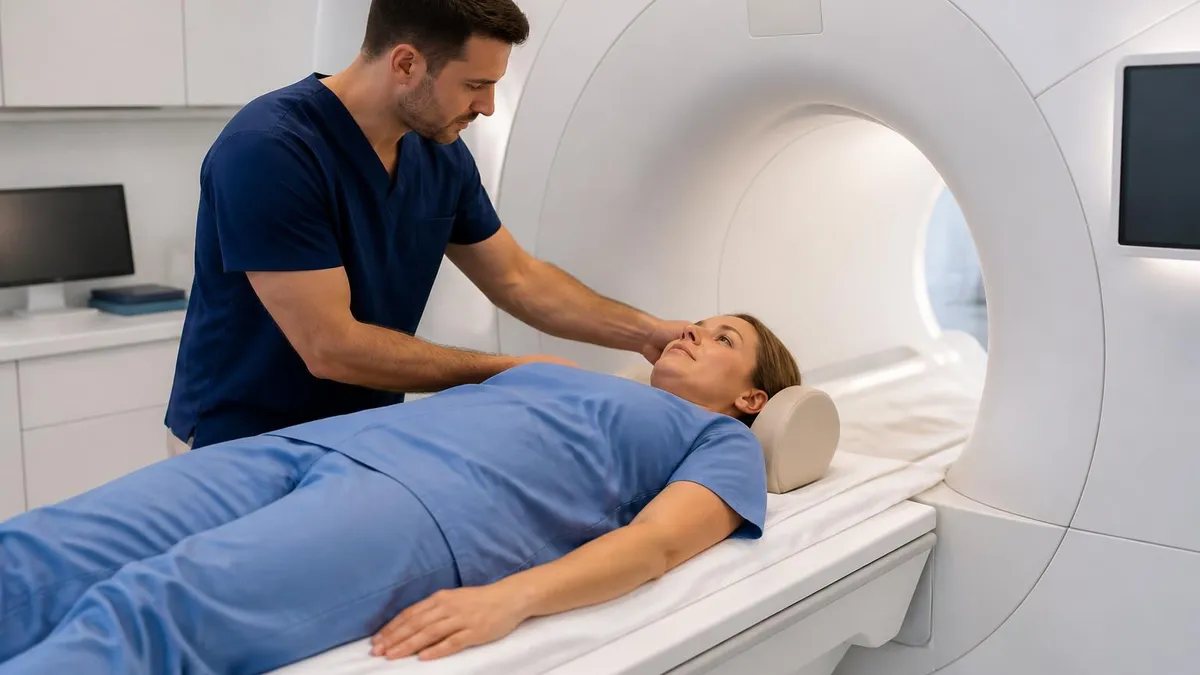
Is MRI Safer Than Other Imaging Modalities?
- +No ionizing radiation exposure, unlike CT or X-ray
- +Superior soft tissue contrast for brain, spine, and joints
- +Functional imaging possible without radioactive tracers
- +Safe for repeated follow-up imaging in most patients
- +No documented long-term cancer risk from magnetic fields
- +Contrast agents far less nephrotoxic than iodinated CT contrast
- −Powerful magnet creates projectile and implant hazards
- −Loud acoustic noise can cause permanent hearing damage
- −Claustrophobia and panic affect roughly 5-10% of patients
- −Gadolinium contrast carries NSF and retention concerns
- −Long scan times reduce throughput and increase motion artifact
- −Many implanted devices remain absolute contraindications
Pre-Scan Safety Screening Checklist
- ✓Complete a thorough metal and implant screening questionnaire signed and dated by the patient.
- ✓Verify implant model numbers against the MR safety database and manufacturer documentation.
- ✓Confirm and document recent eGFR for any contrast-enhanced examination.
- ✓Ask female patients of childbearing age about possible pregnancy before scanning.
- ✓Remove all jewelry, hairpins, hearing aids, dentures, and clothing with metal fasteners.
- ✓Screen all accompanying family members and staff before they enter Zone IV.
- ✓Provide hearing protection rated for at least 28 dB noise reduction.
- ✓Position cables and surface coils to avoid skin-to-skin contact loops.
- ✓Place the patient call ball or squeeze bulb in the dominant hand and confirm function.
- ✓Review the imaging request with the radiologist for any safety concerns before scanning.
The magnet is always on
Unlike X-ray or CT, an MRI scanner's static magnetic field cannot be switched off between patients. Every person entering Zone IV, including housekeeping, security, anesthesia teams, and family members, must be screened for ferromagnetic objects and implants exactly the same way the patient is screened. Most fatal MRI incidents have involved unscreened personnel who assumed the magnet was off.
Thermal injuries are among the most common MRI adverse events reported to the FDA, and almost all of them are preventable. Radiofrequency energy deposited during imaging is absorbed by tissue and converted to heat, with the rate of deposition expressed as specific absorption rate, or SAR, measured in watts per kilogram. Modern scanners limit whole-body SAR to four watts per kilogram in normal operating mode and continuously monitor patient core temperature estimates, automatically pausing or reducing sequences if predicted heating exceeds safe thresholds.
Despite these safeguards, focal heating still occurs when RF energy concentrates around conductive objects in or on the body. Long, straight cables can act as antennas, and any loop formed by a cable or by the patient's own crossed limbs can develop induced currents large enough to burn skin within seconds. Technologists are trained to insulate cables from skin with foam pads, run them straight down the bore, and never let the patient's hands touch each other or the bore wall during a scan.
Tattoos and permanent makeup containing iron oxide pigment can also heat during imaging. Most modern inks are non-ferromagnetic and pose no problem, but older tattoos, especially large dark ones placed before 2000, occasionally produce burning sensations, localized swelling, or even small blisters. Patients should be asked about tattoos during screening and instructed to report any burning or warming sensation immediately so the sequence can be aborted before injury occurs.
Medication patches present a similar concern. Transdermal patches for fentanyl, nicotine, nitroglycerin, and certain hormone therapies often contain a thin metallic backing layer that can heat under RF exposure or interfere with drug delivery. Standard practice is to remove and replace all medication patches before scanning, then reapply a new patch immediately after the examination if the medication is essential. Failure to do this has resulted in second-degree burns and one well-documented fatality from a fentanyl patch.
Peripheral nerve stimulation from rapidly switching gradients is a separate physiological hazard. Patients describe it as a tingling, twitching, or tapping sensation, usually along the trunk, shoulders, or hips where gradient field changes are largest. The FDA limits gradient slew rates so that PNS remains uncomfortable rather than painful, but echo planar imaging sequences used for diffusion and functional MRI push closest to those limits. Patients with low PNS thresholds may need slower sequences or reduced field of view.
Cardiac stimulation is theoretically possible at gradient strengths well above clinical limits, and to date no clinical scanner has been shown to induce arrhythmia in healthy patients. Pregnant patients are generally considered safe to scan after the first trimester when clinically indicated, although gadolinium contrast is avoided unless absolutely necessary because it crosses the placenta and the long-term effects on the fetus are unknown. Pediatric patients require additional attention to thermoregulation and sedation protocols.
Finally, vasovagal episodes, anxiety attacks, and motion sickness from rapid table movement or strong static field exposure during head motion in 3T and 7T magnets can all cause patient distress. Most resolve quickly once the patient is out of the bore, but they can also signal more serious adverse reactions, so technologists should always investigate any complaint promptly rather than dismissing it as nerves.
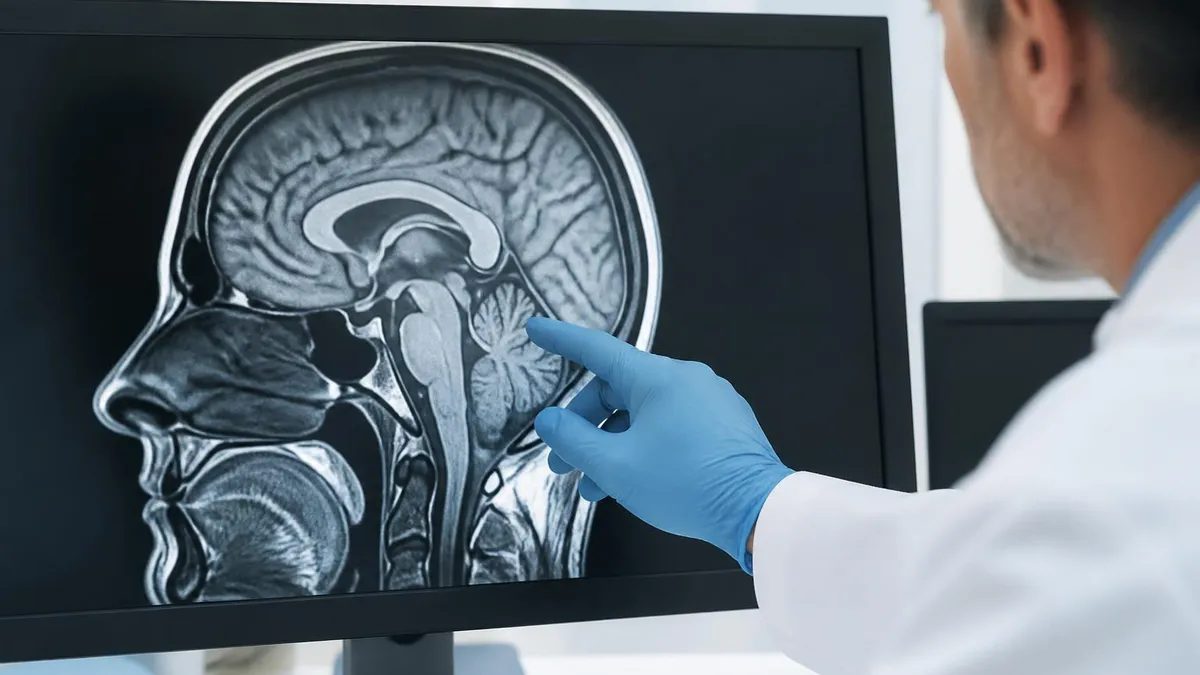
Certain implants and conditions remain absolute contraindications to MRI in most facilities, including non-MR-conditional cardiac pacemakers, certain neurostimulators, cochlear implants without confirmed MR labeling, metallic intraocular foreign bodies, and most ferromagnetic aneurysm clips. Never proceed with imaging until every implant has been verified against the manufacturer's MR conditional labeling and the specific scanner's field strength.
The American College of Radiology's four-zone safety model is the foundation of every well-run MRI department, and understanding it is essential for anyone who works in or visits the imaging suite. Zone I is the public area outside the controlled environment, accessible to anyone. Zone II is the patient reception, dressing, and screening area where formal MRI screening begins. Zone III is the control room and surrounding corridors, restricted to screened patients and trained MR personnel. Zone IV is the magnet room itself, the highest-risk area where the static field is always on.
Movement between zones must be tightly controlled by physical barriers, locked doors, and clear signage warning of the magnetic field. Ferrous metal detectors and handheld magnets are increasingly used in Zone III to catch objects missed during verbal screening. Every entry into Zone IV by anyone, including the patient, technologist, anesthesia team, environmental services, vendors, and emergency responders, requires re-screening every time because pockets, badges, and equipment change throughout the day.
Patient screening begins with a written questionnaire and an interview conducted by a trained technologist or nurse, ideally before the patient is even gowned. The interview asks about prior surgeries, implants, foreign bodies, occupational metal exposure, tattoos, pregnancy, kidney function, claustrophobia, and prior contrast reactions. Many facilities use a level-two screening for any patient with a complex implant history, requiring documentation from the implanting surgeon or device manufacturer before clearance.
Implants are classified by the ASTM standard as MR Safe, MR Conditional, or MR Unsafe. MR Safe items pose no known hazard in any MR environment and are typically made of non-conducting, non-metallic materials. MR Conditional items are safe only under specified conditions of field strength, gradient slew rate, SAR limit, and sometimes scan duration. MR Unsafe items, marked with a red circle and slash, must never enter Zone IV. The labels are usually on the device packaging, the implant card the patient carries, or the manufacturer's website.
Emergency procedures in the MRI suite differ from those in the rest of the hospital because standard resuscitation equipment is ferromagnetic. Patients in cardiac arrest are immediately removed from Zone IV before code teams enter, then resuscitated in a non-magnetic environment. Every MRI department should rehearse this evacuation drill regularly, and every staff member should know how to trigger a controlled magnet quench if a person is pinned against the bore by a large ferromagnetic object that cannot be removed manually.
Documentation closes the safety loop. Every screening form, contrast administration, implant verification, and adverse event must be recorded in the patient's chart and, when appropriate, reported to the FDA MAUDE database. Departments that track near-misses as carefully as actual incidents typically see far fewer serious events over time because they identify weak points in their screening process before harm occurs. A strong safety culture, not the absence of risk, is what makes modern MRI as safe as it is.
For readers who want a broader perspective on imaging trade-offs, the article on MRI alternatives walks through when CT, ultrasound, X-ray, and PET may offer a safer or more appropriate answer to a specific clinical question. Choosing the right modality is itself a critical safety decision that begins before the patient ever reaches the MRI suite.
If you are scheduled for an MRI, the most important thing you can do for your own safety is to be completely honest and thorough during screening. Mention every implant, every prior surgery, every piece of metal you might still have in your body from an old injury, and every medication patch you are wearing. Bring implant cards, device interrogation reports, and prior imaging reports if you have them. If you are unsure whether something counts, mention it anyway and let the technologist decide.
Arrive early so you have time to change into provided clothing, lock up your belongings, and complete screening without rushing. Wear loose, comfortable clothes free of metal zippers, snaps, underwire, and decorative studs, or plan to change into a gown. Remove makeup containing metallic pigments, because some eyeshadows and mascaras can cause artifact or mild heating around the eyes. Leave watches, jewelry, hearing aids, and electronics in a locker outside Zone III.
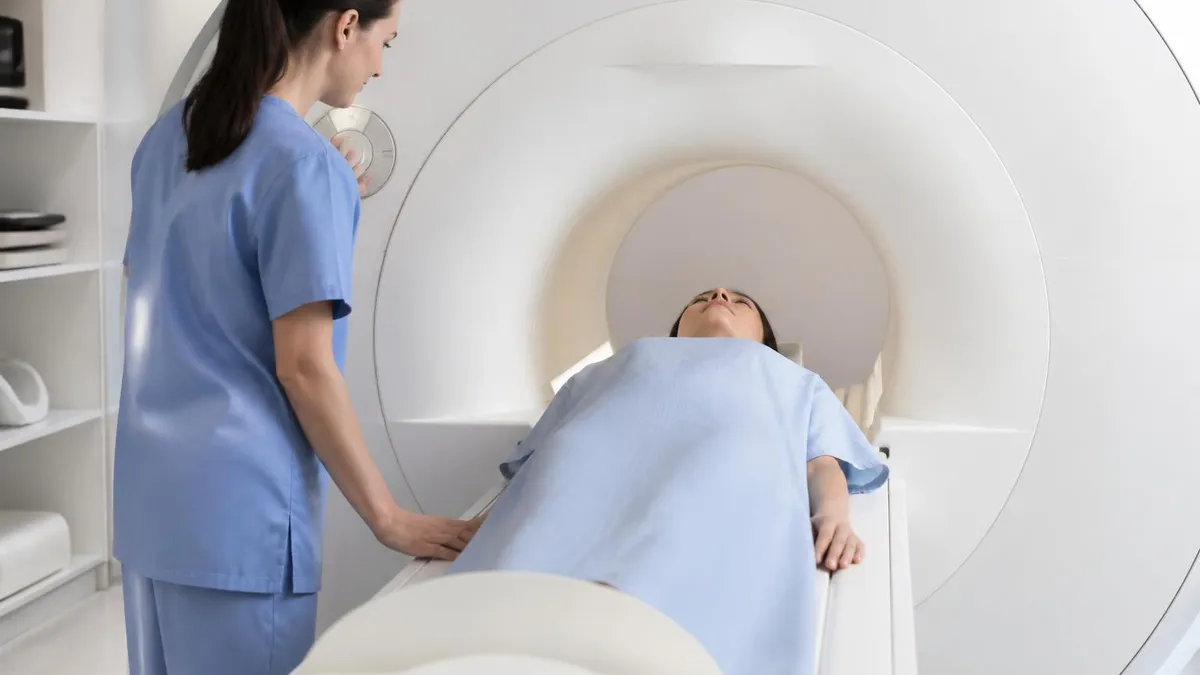
Tell the technologist if you are claustrophobic before you go in, not after the scan starts. Many facilities can offer wide-bore or open MRI systems, mild oral anxiolytics with a physician's prescription, music through MR-compatible headphones, prism glasses that let you see out of the bore, or a family member's hand to hold from the side of the table. Knowing your options ahead of time makes panic far less likely and reduces the chance of an aborted exam.
During the scan, use the squeeze ball or call button at the first sign of any unusual sensation. Burning, sharp localized warmth, pinching, tingling that becomes painful, sudden shortness of breath, chest pain, or rising panic are all reasons to pause the sequence immediately. Technologists would always rather pause and check than discover an injury after the patient is back in the waiting room. Speaking up during the exam is not an inconvenience, it is part of the safety system.
After a contrast-enhanced scan, drink plenty of fluids for the next day to help your kidneys clear the gadolinium more quickly. Watch for delayed allergic reactions such as widespread hives, swelling, or breathing difficulty in the hours following the scan, and seek emergency care if they occur. Most contrast reactions develop within minutes, but a small percentage appear hours or even a day later, especially in patients with multiple drug allergies or autoimmune disease.
For staff and students, the most important habit is treating every entry into Zone IV as a fresh screening event. Pat your own pockets, look at your badge, check your shoes, and verify every patient and visitor each time. The most experienced technologists in the world still make screening mistakes when fatigue or production pressure tempts them to skip steps, which is why checklists, paired screening, and ferrous metal detectors exist. Safety culture is built one screening at a time.
Finally, never stop learning. The list of implants, devices, and medications interacting with MRI grows every year as new technologies enter clinical use. Subscribe to MR safety updates from the ACR and ISMRM, attend annual safety in-services, and review FDA MAUDE reports to learn from the mistakes of other facilities. Patients trust you with one of the most powerful machines in medicine, and that trust is earned by relentless attention to the dangers of MRI and the protocols that keep them in check.
MRI Questions and Answers
MRI Medical Abbreviation: What MRI Stands For and Why It Matters
The History of MRI: From Discovery to Modern Medicine
Knee MRI Images: A Complete Guide to Reading, Understanding, and Interpreting Knee Scans
Noise of MRI Machine: Why MRI Scanners Are So Loud and What to Expect
MRI Alternatives: When CT, Ultrasound, X-Ray, and PET Make More Sense Than an MRI
About the Author

Medical Laboratory Scientist & Clinical Certification Expert
Johns Hopkins UniversityDr. Sandra Kim holds a PhD in Clinical Laboratory Science from Johns Hopkins University and is certified as a Medical Technologist (MT) and Medical Laboratory Scientist (MLS) through ASCP. With 16 years of clinical laboratory experience spanning hematology, microbiology, and molecular diagnostics, she prepares candidates for ASCP board exams, MLT, MLS, and specialist certification tests.
Join the Discussion
Connect with other students preparing for this exam. Share tips, ask questions, and get advice from people who have been there.
View discussion (8 replies)