
MRI of Pancreas: What It Shows, How to Prepare, and What Results Mean
Learn what an MRI of pancreas reveals, how to prepare, what sequences are used, and how to interpret your results. Complete 2026 October guide. 🗨️
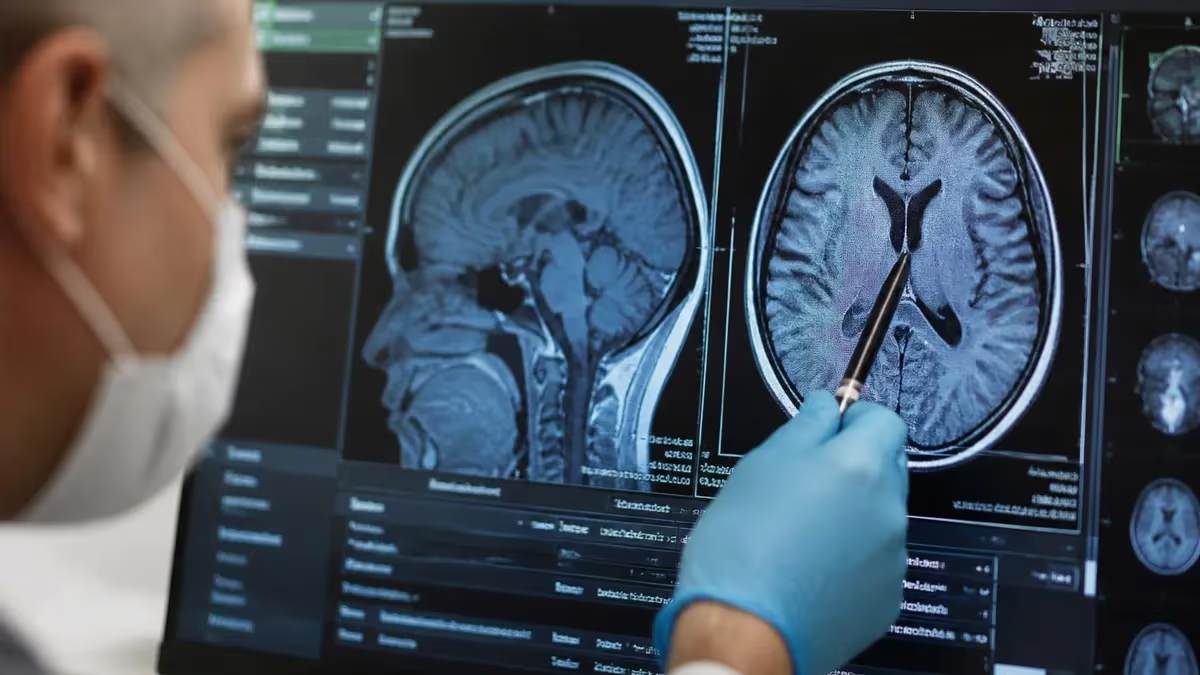
An mri of pancreas is one of the most diagnostically powerful tools available for evaluating this complex abdominal organ, offering unmatched soft-tissue contrast without the ionizing radiation associated with CT scanning. The pancreas sits deep in the retroperitoneum, tucked behind the stomach and in front of the spine, making it notoriously difficult to visualize with ultrasound or plain X-ray. MRI overcomes these anatomical challenges by using strong magnetic fields and radiofrequency pulses to generate detailed cross-sectional images of pancreatic tissue, ducts, vessels, and surrounding structures.
Physicians order pancreatic MRI for a wide range of clinical indications, from characterizing a cystic lesion found incidentally on another scan to staging a suspected adenocarcinoma, evaluating chronic pancreatitis, or monitoring a patient with hereditary pancreatic cancer risk. The exam is particularly valuable when iodinated contrast is contraindicated, such as in patients with renal insufficiency or documented contrast allergy, because MRI can use gadolinium-based agents or even be performed without any contrast at all when MRCP sequences are employed.
MRCP — magnetic resonance cholangiopancreatography — is a specialized non-contrast MRI technique that produces heavily T2-weighted images of fluid-filled structures, making the pancreatic duct and bile ducts appear bright against the darker surrounding tissue. This technique has largely replaced diagnostic ERCP for many indications because it carries no procedural risk, requires no sedation, and can be performed in under 20 minutes as part of a broader pancreatic MRI protocol. Radiologists often combine MRCP with contrast-enhanced sequences to gain both ductal anatomy and parenchymal perfusion information in a single exam.
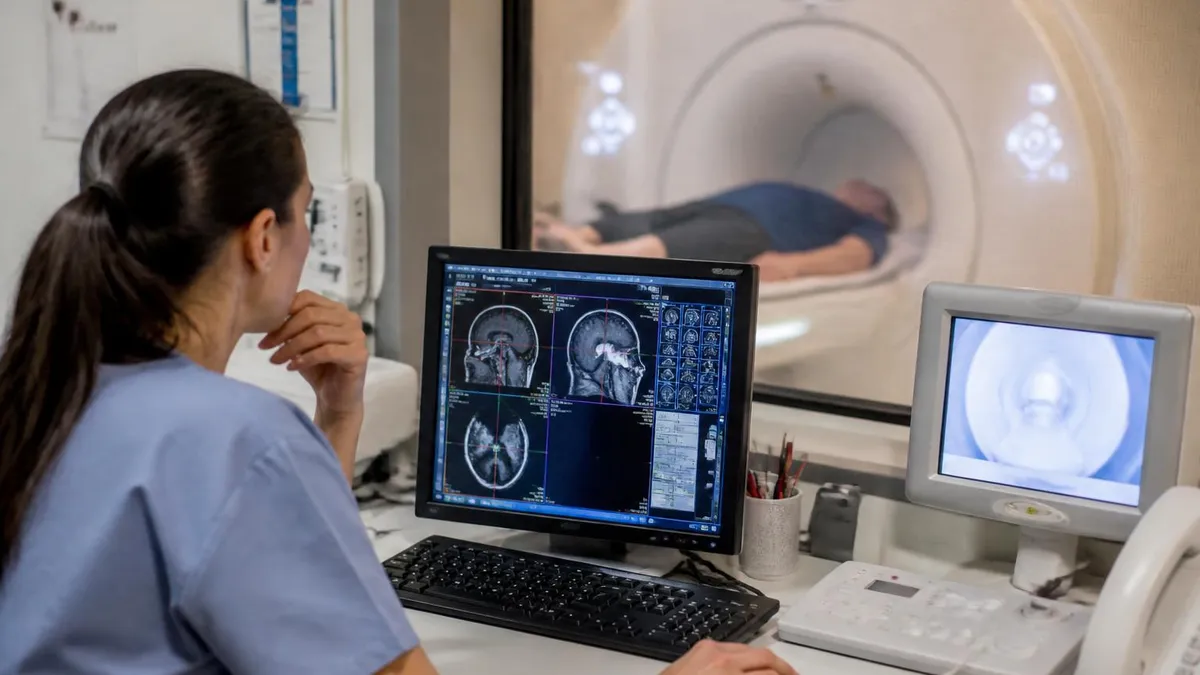
The technical demands of pancreatic MRI are significant. The organ is susceptible to motion artifact from respiration and bowel peristalsis, so modern protocols use breath-hold sequences, navigator-triggered acquisitions, and parallel imaging techniques to freeze motion and maintain sharp margins. Field strengths of 1.5 Tesla and 3 Tesla are both used clinically, with 3T offering higher signal-to-noise ratio but also introducing challenges such as greater B1 field inhomogeneity and increased susceptibility artifacts near air-tissue interfaces in the upper abdomen.
Gadolinium-based contrast agents play a central role in most diagnostic pancreatic MRI protocols. After intravenous injection, dynamic multiphasic imaging captures the pancreas during the arterial, portal venous, and delayed phases, mimicking the approach used in multiphase CT. Adenocarcinoma typically appears hypovascular — darker than the brightly enhancing surrounding normal parenchyma — during the pancreatic parenchymal phase, which occurs approximately 40 to 50 seconds after contrast injection. Neuroendocrine tumors, by contrast, tend to be hypervascular and light up intensely during the arterial phase, a characteristic that aids differential diagnosis.
Patient preparation matters enormously for pancreatic MRI quality. Most protocols require fasting for four to six hours to reduce gastric and bowel fluid, which can cause susceptibility artifacts and degrade MRCP image quality. Some centers administer negative oral contrast agents such as pineapple juice, which contains manganese and appears dark on T2-weighted images, suppressing overlying bowel signal and improving visualization of the pancreatic head and uncinate process. Antiperistaltic agents like glucagon may be given intramuscularly just before the scan to reduce bowel motion artifact.
Understanding what a pancreatic MRI can and cannot show helps patients and clinicians set realistic expectations. While MRI excels at soft-tissue characterization, it may be less sensitive than CT for detecting small calcifications associated with chronic pancreatitis. For staging vascular involvement in pancreatic cancer, CT angiography often provides more reliable assessment of arterial encasement. The two modalities are therefore frequently used together, and radiologists should interpret pancreatic MRI findings in the context of the full clinical picture, laboratory values, and any prior imaging available for comparison.
Pancreatic MRI by the Numbers
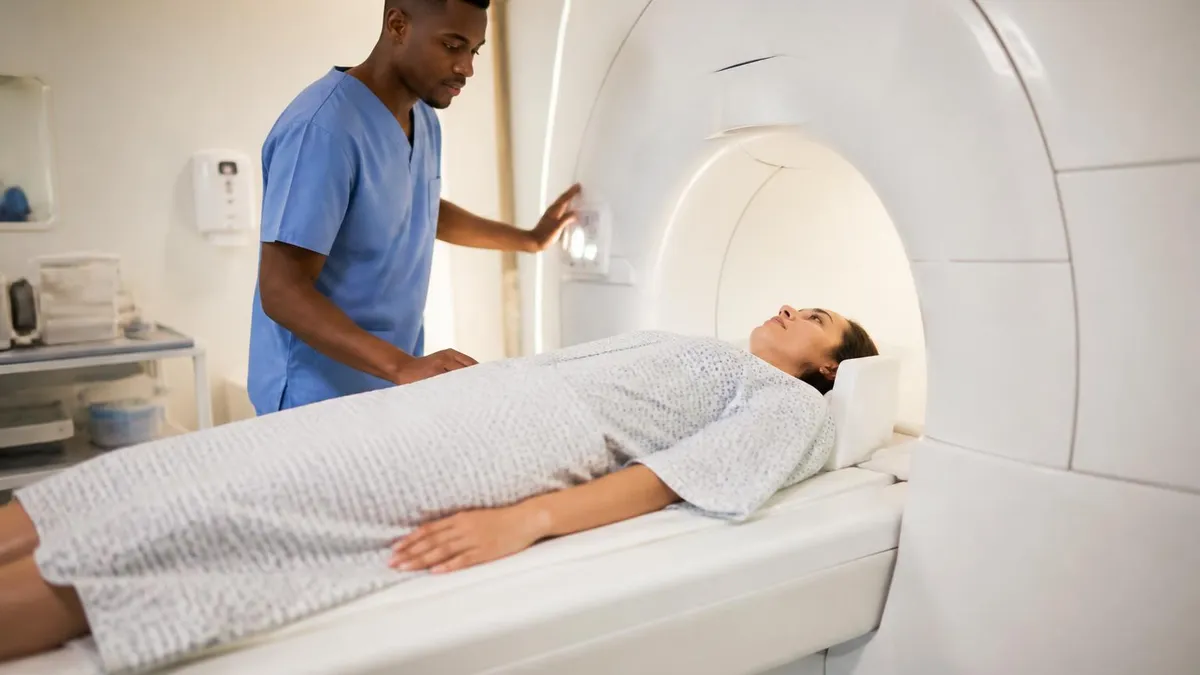
When Is an MRI of the Pancreas Ordered?
MRI with MRCP is the preferred modality for characterizing incidentally discovered pancreatic cysts, distinguishing serous from mucinous lesions, and detecting communication with the main pancreatic duct — a key feature of IPMN that alters management.
When CT findings are equivocal or a mass is suspected in a patient who cannot receive iodinated contrast, MRI provides excellent soft-tissue contrast for detecting, characterizing, and locally staging pancreatic ductal adenocarcinoma and assessing resectability.
MRCP visualizes ductal dilation, strictures, filling defects, and side-branch changes that indicate chronic pancreatitis, often eliminating the need for invasive diagnostic ERCP and guiding decisions about endoscopic or surgical drainage procedures.
Pancreatic neuroendocrine tumors are often small and isoattenuating on CT. MRI with dynamic contrast enhancement and diffusion-weighted imaging improves detection of these hypervascular lesions, which appear bright on arterial phase and restrict diffusion.
Individuals with BRCA2, STK11, PRSS1 mutations, or a strong family history of pancreatic cancer are enrolled in annual MRI or EUS surveillance programs, since MRI avoids cumulative radiation exposure over years of monitoring.
The technical backbone of any pancreatic MRI protocol is a carefully selected set of pulse sequences, each designed to highlight specific tissue properties. The workhorse sequences include T1-weighted gradient echo (GRE) images acquired in and out of phase, T2-weighted fast spin echo sequences, and diffusion-weighted imaging (DWI). Each provides complementary information, and no single sequence alone is sufficient for a complete diagnostic evaluation. Understanding what each sequence does helps technologists optimize parameters and radiologists recognize artifacts that could mimic pathology.
T1-weighted in-phase and out-of-phase imaging exploits the chemical shift between water and fat protons. When fat and water coexist within the same voxel — as in fatty infiltration of the pancreas — signal drops on out-of-phase images compared to in-phase images. Normal pancreatic parenchyma is intrinsically bright on T1 due to its protein-rich acinar secretions. Any process that destroys acinar tissue — including adenocarcinoma, chronic pancreatitis, or autoimmune pancreatitis — causes T1 signal loss in the affected region, making this sequence highly sensitive for parenchymal disease even before contrast is administered.
T2-weighted sequences, particularly those using fat suppression, make fluid-containing structures appear bright. Simple cysts, the pancreatic duct, and the bile duct all appear hyperintense on T2, while solid tumor tissue is typically intermediate in signal. MRCP exploits T2 weighting to its extreme, using very long echo times to suppress signal from solid tissue entirely and display only fluid-filled structures. The result is a noninvasive "roadmap" of the biliary and pancreatic ductal systems that can be rotated and viewed in three dimensions, much like a conventional contrast cholangiogram.
Diffusion-weighted imaging measures the random Brownian motion of water molecules within tissue. Highly cellular tumors restrict the free diffusion of water, appearing bright on high-b-value DWI images and dark on corresponding apparent diffusion coefficient (ADC) maps. Pancreatic adenocarcinoma, autoimmune pancreatitis, and lymphoma all show restricted diffusion, though their overall enhancement patterns and clinical contexts differ. DWI has become increasingly important for detecting small lesions that might be missed on anatomic sequences alone, and some centers report improved sensitivity for tumors smaller than 2 centimeters when DWI is added to the standard protocol.
Dynamic contrast-enhanced MRI using gadolinium-based agents adds perfusion information to the anatomic detail provided by unenhanced sequences. After a bolus injection of 0.1 mmol/kg gadolinium chelate, rapid T1-weighted GRE images are acquired during multiple phases. The pancreatic parenchymal phase, captured at roughly 40 to 50 seconds post-injection, is critical for detecting hypovascular adenocarcinoma as a hypointense lesion against brightly enhancing normal parenchyma. The portal venous phase at 70 to 80 seconds and delayed phase at 3 to 5 minutes help assess vascular involvement, lymph nodes, liver metastases, and peritoneal disease.
Secretin-enhanced MRCP is a specialized technique in which synthetic secretin is injected intravenously to stimulate pancreatic exocrine secretion, transiently distending the ductal system and improving visualization of subtle strictures or side-branch abnormalities. The technique is particularly useful for evaluating pancreatic duct sphincter dysfunction, minor duct disease in chronic pancreatitis, and assessing exocrine reserve after pancreatic surgery. Quantitative assessment of duodenal filling with secretin can provide a functional estimate of exocrine output, information that cannot be obtained from standard anatomic imaging.
At 3 Tesla, additional sequences such as magnetic resonance elastography (MRE) and arterial spin labeling (ASL) are entering clinical use in academic centers. MRE measures tissue stiffness and may help differentiate fibrotic chronic pancreatitis from normal pancreas or malignancy. ASL provides blood flow maps without contrast, potentially useful in patients with gadolinium contraindications. These advanced techniques represent the frontier of pancreatic MRI and are likely to enter routine clinical protocols as hardware and software improve over the next decade.
What Can an MRI of the Pancreas Detect?
Pancreatic ductal adenocarcinoma (PDAC) accounts for more than 90 percent of pancreatic malignancies and is notoriously difficult to detect at an early stage. On MRI, PDAC typically appears as a hypovascular mass — dark relative to surrounding parenchyma during the pancreatic phase — often associated with upstream ductal dilation, parenchymal atrophy, and vascular encasement. MRI is particularly valuable for detecting liver metastases and peritoneal spread in the same examination, enabling comprehensive staging without additional radiation.
Pancreatic neuroendocrine tumors (PNETs) present a very different MRI appearance: most are hypervascular and appear bright during the arterial phase, then wash out on portal venous phase images. Nonfunctional PNETs may grow large before diagnosis, while functional tumors such as insulinomas are often under 1 centimeter at presentation. Diffusion-weighted imaging significantly improves detection of small PNETs, with studies reporting sensitivity improvements of 15 to 20 percent compared to contrast-enhanced sequences alone. Solid pseudopapillary tumors and acinar cell carcinomas also have distinctive MRI features that aid differentiation from PDAC.
MRI of the Pancreas: Benefits and Limitations
- +No ionizing radiation — safe for repeated surveillance in high-risk patients and appropriate for pregnant women
- +Superior soft-tissue contrast compared to CT, enabling better characterization of cystic lesions and ductal anatomy
- +MRCP provides non-invasive ductal imaging, replacing diagnostic ERCP in most cases and eliminating procedural complications
- +Gadolinium contrast carries lower risk of acute reactions than iodinated CT contrast and can be used in most renal patients at standard doses
- +DWI adds functional information about cellular density, improving detection of small tumors and characterizing lesion biology
- +Single examination can evaluate pancreas, liver, bile ducts, vessels, lymph nodes, and peritoneum simultaneously
- −Longer scan time (30–60 minutes) compared to CT (seconds), increasing motion artifact risk and patient discomfort
- −MRI is less sensitive than CT for detecting pancreatic calcifications, an important finding in chronic pancreatitis
- −High cost and limited availability, particularly in rural areas and low-resource settings
- −Absolute contraindications include non-MRI-compatible pacemakers, cochlear implants, and certain metallic implants
- −Claustrophobia affects 5–10% of patients and may require anxiolytic premedication or open-bore MRI with reduced image quality
- −Image quality is highly dependent on patient cooperation with breath-hold instructions and motion during acquisition
Pros and Cons at a Glance
| Pros | Cons |
|---|---|
| No ionizing radiation — safe for repeated surveillance in high-risk patients and appropriate for pregnant women | MRI is less sensitive than CT for detecting pancreatic calcifications, an important finding in chronic pancreatitis |
| Superior soft-tissue contrast compared to CT, enabling better characterization of cystic lesions and ductal anatomy | High cost and limited availability, particularly in rural areas and low-resource settings |
| MRCP provides non-invasive ductal imaging, replacing diagnostic ERCP in most cases and eliminating procedural complications | Absolute contraindications include non-MRI-compatible pacemakers, cochlear implants, and certain metallic implants |
| Gadolinium contrast carries lower risk of acute reactions than iodinated CT contrast and can be used in most renal patients at standard doses | Image quality is highly dependent on patient cooperation with breath-hold instructions and motion during acquisition |
How to Prepare for a Pancreatic MRI: Complete Checklist
- ✓Fast for 4 to 6 hours before your appointment to reduce bowel gas and improve MRCP image quality.
- ✓Inform your ordering physician and the MRI center about any metallic implants, pacemakers, or neurostimulators.
- ✓Disclose all medications — metformin may need to be held if gadolinium contrast is planned and renal function is borderline.
- ✓Tell the technologist about any prior allergic reactions to MRI contrast agents or iodinated CT contrast materials.
- ✓Bring prior imaging (CT, ultrasound, prior MRI) and lab results (lipase, CA 19-9, IgG4) on the day of the scan.
- ✓Wear loose, metal-free clothing or expect to change into a hospital gown before entering the magnet room.
- ✓Practice slow, controlled breath-holding; the technologist will guide you with instructions during the scan to reduce motion artifact.
- ✓If you experience claustrophobia, ask your physician in advance about anxiolytic medication or request a wide-bore 1.5T magnet.
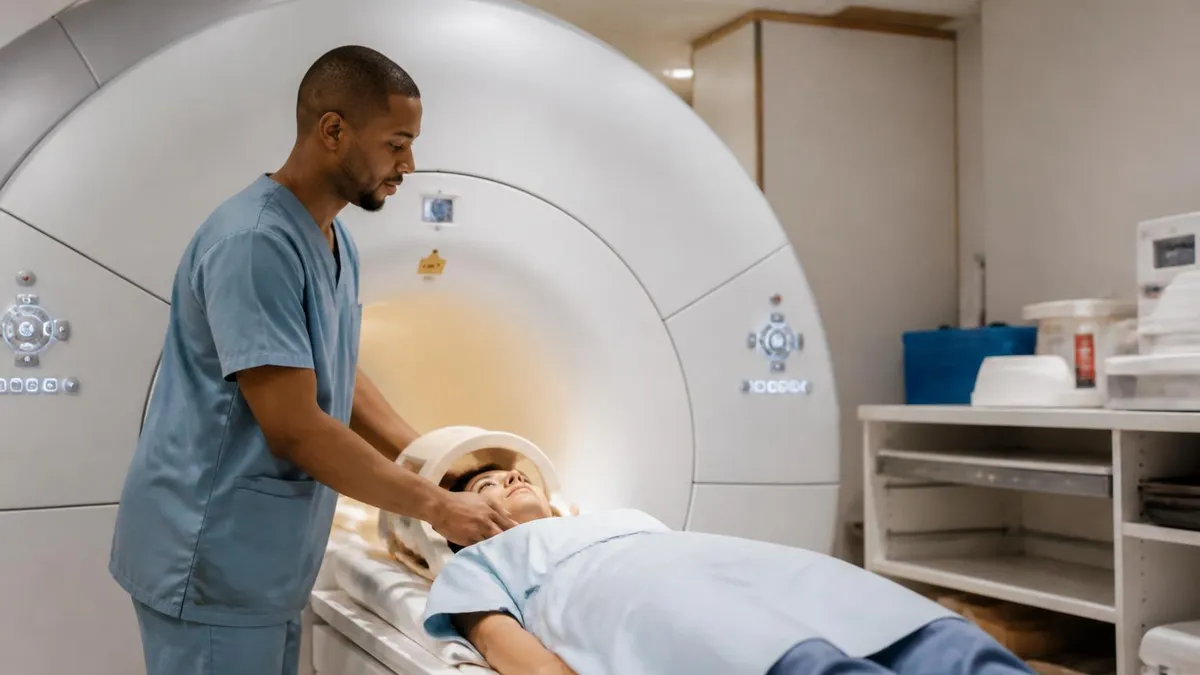
- ✓Arrive 15 to 30 minutes early to complete metal safety screening paperwork and IV placement for contrast injection.
- ✓Arrange a driver if you will be receiving sedation or anxiolytic medication for claustrophobia management.
The Pancreatic Parenchymal Phase Is the Most Important
When reviewing a contrast-enhanced pancreatic MRI, the pancreatic parenchymal phase — captured 40 to 50 seconds after contrast injection — is the single most critical acquisition for detecting adenocarcinoma. Normal pancreas enhances brilliantly at this time point, making hypovascular tumor stand out sharply. If this phase is mistimed or motion-degraded, small cancers can be invisible. Always confirm that the parenchymal phase was adequately captured before reporting a study as negative for mass.
Interpreting a pancreatic MRI report requires understanding the structured language radiologists use to communicate findings and their clinical significance. Most reports follow a template that addresses gland size and morphology, parenchymal signal characteristics, the main pancreatic duct, peripancreatic soft tissues, vasculature, lymph nodes, and liver. Familiarity with this structure helps clinicians extract the information most relevant to their patient's management without becoming lost in technical description.
Normal pancreatic parenchyma on T1-weighted fat-suppressed images is uniformly bright — brighter than the liver and spleen — reflecting the high concentration of protein in zymogen granules within acinar cells. Any focal or diffuse reduction in this intrinsic T1 brightness is abnormal and warrants careful attention.
Diffuse T1 signal loss accompanied by atrophy suggests chronic pancreatitis or prior severe acute pancreatitis that has destroyed normal parenchyma. Focal T1 signal loss at the head in an older patient with biliary dilation and upstream pancreatic duct dilation — the classic double duct sign — raises strong suspicion for pancreatic head adenocarcinoma until proven otherwise.
Pancreatic duct measurements are critical. A normal main pancreatic duct measures 3 millimeters or less in the head, 2 mm in the body, and 1 mm in the tail. Dilation beyond these thresholds requires explanation. Smooth, gradual dilation from a focal point of obstruction suggests a mass or stricture at that location. Irregular, beaded dilation with side-branch involvement characterizes main-duct IPMN. Diffuse dilation with parenchymal atrophy and calcifications points toward chronic pancreatitis with ductal hypertension. Subtle focal dilation in the neck or body should prompt careful search for a small mass or stricture at the transition point.
Cystic lesions are reported with their location, size, morphology, and relationship to the ductal system. A simple, thin-walled unilocular cyst without internal components in the tail of a 70-year-old patient is almost certainly a benign retention cyst or pseudocyst. A multilocular cystic lesion with mural nodularity, thick septa, and communication with the main pancreatic duct in the head of a 65-year-old patient is a high-risk IPMN that likely warrants surgical consultation. The Fukuoka guidelines — updated in 2017 — stratify IPMN management based on size, presence of worrisome features, and high-risk stigmata identified on MRI and EUS.
Vascular involvement is assessed on contrast-enhanced sequences and reported using standardized terminology adopted by the National Comprehensive Cancer Network (NCCN). Abutment means tumor contact with a vessel over 180 degrees or less of its circumference without loss of fat plane. Encasement means contact over more than 180 degrees or greater. Involvement of the superior mesenteric artery or celiac axis typically renders a pancreatic cancer unresectable, while involvement of the portal vein or superior mesenteric vein may still allow resection with venous reconstruction at high-volume centers. These nuances directly determine surgical candidacy and must be communicated precisely in the radiology report.
Liver metastases from pancreatic adenocarcinoma are almost invariably hypovascular, appearing dark on arterial phase images and isointense to slightly hypointense on portal venous phase. Their appearance on DWI — bright on high-b-value images with restricted ADC — often improves detection compared to CT alone.
By contrast, hemangiomas — the most common benign liver lesion — show peripheral nodular enhancement that fills in centripetally on delayed images, a pattern that should not be confused with metastasis. When the liver shows multiple tiny hypovascular lesions in a patient with known pancreatic head mass and biliary obstruction, the clinical picture is typically one of metastatic disease even if individual lesions are too small to characterize definitively.
Incidental findings outside the pancreas are common on abdominal MRI and can be clinically important. Adrenal adenomas — often detected as incidentalomas — show signal dropout on out-of-phase T1 sequences due to their intracellular lipid content, distinguishing them from metastases. Renal cysts, splenic lesions, and gallstones are frequently noted. Thorough review of all visualized structures, including the lung bases, bowel, and retroperitoneal lymph nodes, is essential before finalizing a pancreatic MRI report, as incidental findings sometimes prove more clinically urgent than the primary indication for the scan.
Small amounts of gadolinium from MRI contrast agents can be retained in brain tissue and other organs for months to years after administration, particularly with linear (non-macrocyclic) chelate formulations. While no neurological harm has been definitively proven in patients with normal renal function, the FDA recommends that providers consider the clinical necessity of contrast before ordering repeated gadolinium-enhanced MRI studies. Patients with chronic kidney disease (GFR below 30) face risk of nephrogenic systemic fibrosis (NSF) with certain gadolinium agents — always verify renal function before contrast administration.
Comparing MRI to other pancreatic imaging modalities helps clinicians select the right test for each clinical question. Transabdominal ultrasound is often the first-line examination ordered when a patient presents with jaundice or abdominal pain, primarily because it is inexpensive, widely available, and excellent for detecting biliary dilation and gallstones. However, the pancreas is poorly visualized in most adult patients due to overlying bowel gas, and ultrasound misses the majority of pancreatic masses. A normal ultrasound in a symptomatic patient with elevated CA 19-9 or unexplained weight loss should not be reassuring, and cross-sectional imaging with CT or MRI is mandatory.
Multidetector CT with pancreatic protocol remains the most widely used modality for pancreatic cancer staging because of its speed, widespread availability, and excellent spatial resolution for vascular anatomy. However, MRI consistently outperforms CT for liver metastasis detection, cyst characterization, and ductal anatomy assessment. In practical terms, most patients with suspected pancreatic malignancy undergo CT first because it is faster and more available, then MRI is added for problem-solving — characterizing an equivocal liver lesion, evaluating a cyst, or better delineating ductal involvement when CT findings are inconclusive.
Endoscopic ultrasound (EUS) occupies a unique complementary role. EUS provides the highest spatial resolution of any imaging modality for the pancreatic head and uncinate process, easily detecting lesions under 5 millimeters that are invisible on CT and sometimes on MRI. Crucially, EUS allows simultaneous fine-needle aspiration (FNA) or fine-needle biopsy (FNB) for tissue diagnosis, which no cross-sectional imaging modality can provide. For a patient with a potentially resectable pancreatic mass on CT or MRI, EUS-FNA is typically the next step to obtain cytologic confirmation before surgical planning or oncologic consultation.
Positron emission tomography combined with CT (PET/CT) using fluorodeoxyglucose (FDG) plays a selective role in pancreatic oncology. Most pancreatic adenocarcinomas are FDG-avid and show intense uptake, making PET/CT valuable for detecting occult distant metastases that would render surgery futile.
However, PET/CT has lower sensitivity for detecting the primary pancreatic tumor itself compared to contrast-enhanced CT or MRI, and false-positive uptake can occur in autoimmune pancreatitis and acute inflammation. Integrated PET/MRI systems now available at major academic centers can combine the metabolic information of PET with the superior soft-tissue contrast of MRI in a single examination, though their clinical role in pancreatic disease continues to evolve.
For surveillance of pancreatic cysts, the choice between MRI and CT has important long-term implications. Current guidelines from the American College of Gastroenterology and American Gastroenterological Association generally favor MRI with MRCP for cyst surveillance because of superior characterization of internal features and the elimination of cumulative radiation exposure over potentially many years of follow-up. A 50-year-old patient with a 15-millimeter branch-duct IPMN who undergoes annual imaging for 20 years would receive no radiation dose on MRI surveillance compared to approximately 140 millisieverts from 20 annual CT scans — a meaningful difference in lifetime radiation risk.
Artificial intelligence and machine learning tools are being integrated into pancreatic MRI workflows at increasing speed. Deep learning algorithms trained on thousands of annotated studies can automatically segment the pancreas, measure gland volume, detect ductal dilation, and flag suspicious lesions for radiologist review. Several FDA-cleared AI tools now assist with pancreatic cancer detection on CT, and MRI applications are in development and early clinical validation. These tools are particularly promising for improving detection of small tumors in screening populations where radiologist eye fatigue and volume pressure may contribute to missed findings.
The clinical pathway after a pancreatic MRI depends critically on what the scan shows and the clinical context. A patient with a confirmed pancreatic adenocarcinoma undergoes multidisciplinary tumor board review at a high-volume center before any treatment decision is finalized. A patient with a low-risk branch-duct IPMN under 2 centimeters without worrisome features is placed on surveillance MRI in 1 to 2 years per current guidelines.
A patient with findings consistent with autoimmune pancreatitis type 1 receives empirical steroid therapy, with repeat imaging in 4 to 6 weeks to document the dramatic response that confirms the diagnosis and avoids unnecessary surgery. In each scenario, MRI findings translate directly into specific management decisions that affect patient outcomes.
For MRI technologists and radiologic technologists preparing for registry examinations, understanding pancreatic MRI protocols is an essential competency. The ARRT MRI advanced certification examination tests candidates on patient positioning, sequence selection, coil choice, contrast administration, and artifact recognition — all of which are directly applicable to pancreatic imaging. A surface phased-array body coil centered over the upper abdomen is standard, providing the signal-to-noise ratio needed for high-resolution breath-hold sequences. Proper patient positioning with arms above the head reduces susceptibility artifacts from the arm soft tissues and allows smaller field-of-view acquisitions centered tightly on the pancreas.
Slice orientation is carefully chosen for pancreatic MRI. Axial slices are the workhorse for parenchymal and vascular assessment, while coronal oblique slices oriented along the long axis of the pancreatic duct are used for MRCP source images. Thick-slab MRCP projections — single-shot fast spin echo acquisitions 40 to 60 millimeters thick — provide the panoramic ductal view used for clinical interpretation, while thin-slice source images allow review of individual ductal segments and detection of small filling defects. Rotating maximum-intensity projection (MIP) reconstructions further improve visualization of complex ductal anatomy, particularly in the setting of pancreas divisum or other anatomic variants.
Common artifacts in pancreatic MRI include motion artifact from inadequate breath-holding, susceptibility artifact from surgical clips or intestinal gas, and phase wrap from the large FOV required to cover the abdomen. Chemical shift artifact at fat-water interfaces can obscure the pancreatic margin, particularly at 3 Tesla where the bandwidth between fat and water resonance frequencies is greater. Parallel imaging techniques such as GRAPPA and SENSE reduce breath-hold duration by acquiring fewer phase-encoding steps and reconstructing missing data mathematically, enabling higher spatial resolution within a single breath-hold of 15 to 20 seconds that most patients can reliably achieve.
Field strength selection involves real trade-offs for pancreatic imaging. At 3 Tesla, increased signal-to-noise ratio allows thinner slices, higher spatial resolution, and shorter acquisition times compared to 1.5 Tesla. DWI quality improves significantly at 3T, with higher b-values achievable and better lesion conspicuity on ADC maps.
However, 3T is more susceptible to B1 inhomogeneity in the upper abdomen, sometimes causing signal voids in the pancreatic tail due to dielectric effects. Radiofrequency shimming and the use of dielectric padding materials placed against the patient's flanks can partially compensate for this inhomogeneity, and most experienced abdominal MRI centers have standardized approaches for managing this challenge.
Gadolinium dose and injection parameters matter for optimal pancreatic phase timing. Standard dose is 0.1 mmol/kg administered at 2 mL/second through an 18- or 20-gauge antecubital IV catheter, followed by a 20 mL saline flush at the same rate. Automatic bolus detection using a test bolus or fluoroscopic triggering monitors contrast arrival in the aorta and triggers acquisition of the pancreatic phase at the precise moment of peak parenchymal enhancement.
Manual timing using empiric delays is less reliable and more often results in suboptimal pancreatic phase imaging. Many vendors offer automated bolus detection tools that significantly improve timing reproducibility across different patients and cardiac output states.
Post-processing and image review are integral parts of the pancreatic MRI workflow. Multiplanar reconstructions in coronal and sagittal planes from volumetric gradient echo acquisitions allow three-dimensional assessment of the pancreatic contour and relationship to adjacent vessels. Curved planar reformats along the axis of the pancreatic duct produce pseudostraightened images that display the entire duct in a single plane, facilitating measurement of dilation and detection of strictures.
Maximum-intensity projection images of the arterial and portal venous phases display the celiac axis, superior mesenteric artery, portal vein, and splenic vein anatomy in a format that surgeons find useful for operative planning prior to Whipple procedure or distal pancreatectomy.
For students and early-career technologists, building pattern recognition for pancreatic MRI requires systematic review of normal cases before attempting to identify abnormalities. The normal pancreas tapers smoothly from head to tail, with the head measuring approximately 3 centimeters in AP dimension, the body 2 centimeters, and the tail 1 to 2 centimeters.
The uncinate process extends medially behind the superior mesenteric vein and should not be confused with lymphadenopathy. The main pancreatic duct is visible as a thin line of T2 signal running through the center of the gland, joining the common bile duct at the ampulla of Vater. Familiarity with these normal landmarks makes deviations immediately apparent and builds the diagnostic confidence needed for independent practice.
Sample MRI - Magnetic Resonance Imaging Practice Questions
Try these questions from our free MRI - Magnetic Resonance Imaging practice tests. The correct answer and an explanation follow each question.
In diffusion-weighted imaging (DWI), a high b-value results in:
- A. Greater diffusion weighting and lower overall signal
- B. Less diffusion weighting and higher signal
- C. Reduced T2 contribution to signal
- D. Increased signal from rapidly diffusing molecules
Answer: A. Greater diffusion weighting and lower overall signal
Higher b-values apply stronger diffusion-sensitizing gradients, so freely diffusing water loses more signal, increasing lesion conspicuity for restricted diffusion.
Which breathing technique is recommended for upper abdominal MRI (liver, pancreas) to minimize respiratory motion artifact?
- A. Free breathing throughout all sequences
- B. Breath-hold acquisitions combined with respiratory-triggered sequences for longer scans
- C. Hyperventilation before each sequence
- D. Continuous shallow breathing
Answer: B. Breath-hold acquisitions combined with respiratory-triggered sequences for longer scans
Breath-hold sequences minimize diaphragmatic motion for dynamic contrast imaging; respiratory triggering or navigator gating is used for longer acquisitions that cannot be completed in a single breath-hold.
In a spin echo (SE) sequence, increasing the repetition time (TR) while keeping TE short primarily results in:
- A. Increased T2 weighting
- B. Increased T1 weighting
- C. Decreased T1 weighting (more proton density/T2-like contrast)
- D. Increased SNR only with no contrast change
Answer: C. Decreased T1 weighting (more proton density/T2-like contrast)
A long TR allows full T1 recovery of all tissues, reducing T1 contrast differences; combined with short TE, this produces proton density weighting.
On diffusion-weighted MRI (DWI), an acute ischemic infarct typically shows:
- A. Low signal on DWI and high ADC values
- B. High signal on DWI and low ADC values
- C. High signal on DWI and high ADC values
- D. Low signal on both DWI and ADC maps
Answer: B. High signal on DWI and low ADC values
Cytotoxic edema in acute infarction restricts water diffusion, producing high signal on DWI and low apparent diffusion coefficient (ADC) values.
Take the full MRI - Magnetic Resonance Imaging practice test
MRI Questions and Answers
About the Author

Medical Laboratory Scientist & Clinical Certification Expert
Johns Hopkins UniversityDr. Sandra Kim holds a PhD in Clinical Laboratory Science from Johns Hopkins University and is certified as a Medical Technologist (MT) and Medical Laboratory Scientist (MLS) through ASCP. With 16 years of clinical laboratory experience spanning hematology, microbiology, and molecular diagnostics, she prepares candidates for ASCP board exams, MLT, MLS, and specialist certification tests.
Join the Discussion
Connect with other students preparing for this exam. Share tips, ask questions, and get advice from people who have been there.
View discussion (8 replies)