
MRI Jobs: Salary, Education, Career Paths, and How to Become an MRI Technologist
MRI jobs: $80K-$110K typical salary, education paths (associate vs bachelor degree), ARRT MRI certification, career advancement, and how to break 🏆
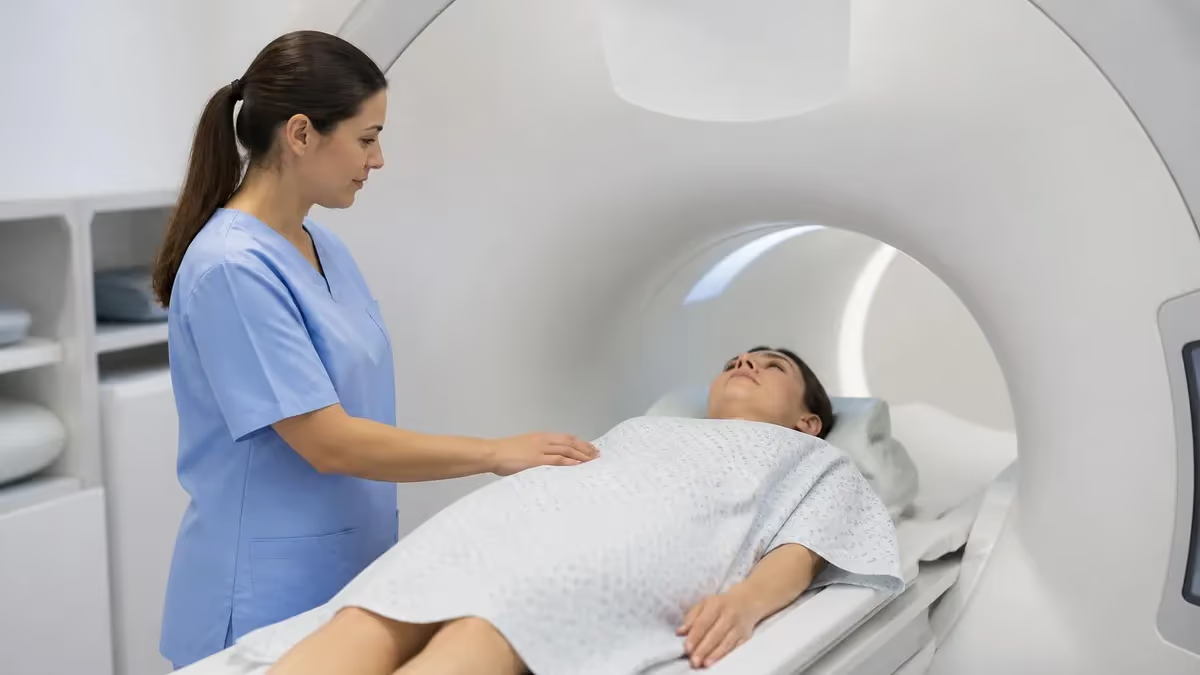
MRI technologist is one of the better-paying healthcare jobs that doesn't require a four-year degree or medical school. Typical salaries run $80,000-$110,000 in most U.S. markets, with senior MRI techs at major hospitals or specialized imaging centers earning $115,000+. The field has been growing steadily for the past decade, driven by both an aging population needing more diagnostic imaging and the expansion of outpatient imaging centers competing with traditional hospital radiology.
Becoming an MRI technologist requires education plus certification. The most common path: an associate's degree in radiologic technology (2 years) followed by MRI-specific cross-training and certification. Less common but increasingly available: bachelor's degree programs that include MRI as a primary specialty. Both paths require passing the American Registry of Radiologic Technologists (ARRT) MRI certification exam to be eligible for most professional positions.
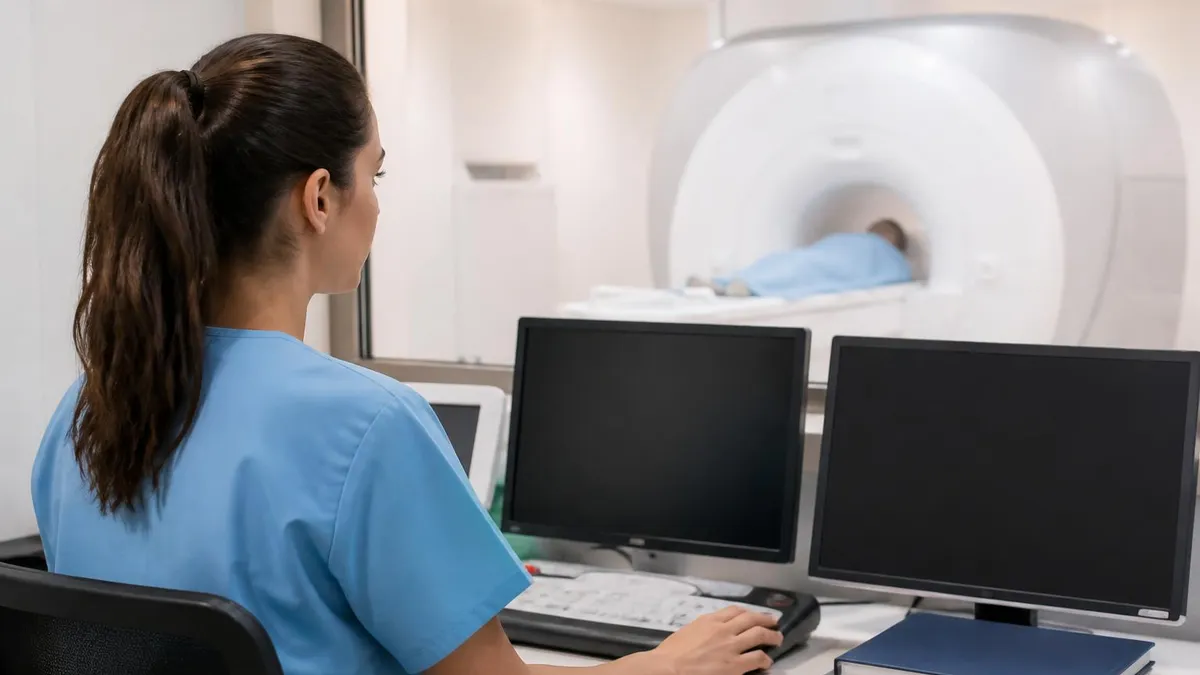
The work itself involves operating MRI scanners, positioning patients, monitoring scan progress, managing patient anxiety (claustrophobia is common), and ensuring image quality. MRI technologists work closely with radiologists who interpret the images. The role is technical and patient-facing — you need both equipment expertise and the interpersonal skills to manage sometimes-anxious patients in confined spaces.
The job market for MRI techs is generally strong. Bureau of Labor Statistics data shows projected growth of about 6% over the next decade for MRI technologists, faster than the average for all occupations. Demand is particularly strong in metropolitan areas with multiple hospital systems and outpatient imaging centers. Rural areas often have fewer openings and lower pay, but also less competition for the positions available.
For people considering this career, the typical reality: 2-3 years of training + certification, then entry-level positions starting around $65,000-$75,000 with growth to $85,000-$110,000 within 3-5 years. Senior positions ($110K+) typically require either specialization (cardiac MRI, neuro MRI, MR safety officer roles) or moving into supervisor/manager track. Travel MRI positions can pay $130,000+ but require willingness to work 13-week contracts in different cities.
This guide covers the education and certification pathway in detail, salary ranges by region and experience, career advancement options, what the day-to-day work looks like, and how to evaluate whether MRI tech is the right career choice. It's intended for high school students exploring healthcare careers, career changers considering healthcare, and current radiologic technologists thinking about MRI specialization.
Free MRI - Magnetic Resonance Imaging Study Tools
Interactive MRI - Magnetic Resonance Imaging resources on PracticeTestGeeks, free to start:
- Free MRI Knowledge Questions and Answers — 11 questions with instant scoring and answer explanations
- MRI - Magnetic Resonance Imaging flashcards — review key terms and concepts card by card
- MRI - Magnetic Resonance Imaging study guide — topic-by-topic overview of what the exam covers
- MRI - Magnetic Resonance Imaging cheat sheet — one-page printable summary for last-minute review
MRI: upcoming dates and official changes
- Aug 17, 2026: ARRT launched a separate entry-level Imaging Assistant, Magnetic Resonance (I.A.) credential. A reduced $75 fee applied to applications made Aug. 17–Oct. 14, 2026, for testing Oct. 15–Nov. 30, 2026. Later applicants pay $225 and can test on or after Jan. 1, 2027.[3]
- The ARRT MRI exam for postprimary-pathway candidates has 220 questions: 200 scored and 20 unscored pilot items.[1]
- Postprimary-pathway candidates get 210 minutes for the ARRT MRI exam, inside a 230-minute (3 hours, 50 minutes) appointment.[1]
- To pass the ARRT MRI exam you need a total scaled score of 75 on ARRT's 1–99 scale. This is not a percentage.[2]
- The ARRT MRI exam through the postprimary pathway costs $225, or $450 for candidates whose supporting credential is from NMTCB or ARDMS.[3]
All verified MRI facts and sources
Numbers in brackets link to the official sources listed under Sources & last verified. Dates that have passed are removed automatically.
MRI Jobs Quick Facts
- Median pay (BLS): ~$80,000 (entry to mid-career typical). Senior positions $100K+.
- Education: Associate's degree in radiologic technology (2 years) + MRI cross-training (6-12 months)
- Certification: ARRT MRI certification required for most positions
- Job growth: ~6% projected over next decade (BLS) — faster than average
- Typical hours: Full-time, often including some evening or weekend shifts
- Work setting: Hospitals (largest segment), outpatient imaging centers, mobile imaging units
- Travel MRI: Premium pay ($130K+) for 13-week contracts in different cities. High-demand specialty.
- Advancement: Specialization (cardiac/neuro), supervisor/manager, MR safety officer, sales/applications specialist
Education pathway in detail. The most common starting point is an Associate of Science in Radiologic Technology (or similar title) from an accredited community college or technical institute. The program is 2 years (4 academic semesters) and includes anatomy, patient care, radiation physics, equipment operation, and clinical rotations. Cost varies — community college programs run $5,000-$15,000 total; private technical schools $20,000-$40,000.
After graduating, you take the ARRT Radiography certification exam (the primary RT credential). With this credential, you can work as an X-ray technologist. To specialize in MRI, you complete additional training — either employer-sponsored on-the-job training (6-12 months) or a structured MRI cross-training program at a community college (~6-9 months).
After MRI training, you take the ARRT MRI certification exam. This is the credential that qualifies you for MRI-specific positions. Many employers list this as a hiring requirement. Some employers will hire RT-certified candidates and provide MRI training in exchange for a commitment to stay 1-2 years post-certification.
An alternative path: bachelor's degree programs in Radiologic Sciences or Medical Imaging Technology that include MRI as a primary specialty. These 4-year programs cover broader medical imaging knowledge and often include cross-modality training (MRI + CT + other specialties). Cost: $40,000-$80,000+ for in-state public universities; substantially more for private. The bachelor's path can lead to faster advancement into supervisor/manager roles but adds 2 years and significant cost compared to the associate's path.
For experienced X-ray technologists already working, MRI cross-training is the typical path. Hospital employers often sponsor the additional training as part of internal advancement. The cross-training is shorter (3-6 months in some accelerated programs) because you already have the foundational radiology knowledge. After cross-training, you take ARRT MRI certification.
For career changers without prior healthcare experience, the associate's degree path is the most accessible. Community colleges have rolling admissions and the 2-year timeline is manageable while working part-time. Career change to MRI tech is possible at most ages — many programs report substantial enrollment from people in their 30s and 40s entering the field as a second career.
MRI Tech Education Paths
2-year Radiologic Technology program. ARRT RT exam. Then MRI cross-training + ARRT MRI exam. Total: 2.5-3 years.
4-year Medical Imaging or Radiologic Sciences. Includes MRI specialty. Broader curriculum. Better for management track.
Already RT-certified? MRI cross-training is 3-12 months. Employer-sponsored is common. ARRT MRI exam after.
Some schools offer MRI-specific 1-2 year programs without general RT first. Limited availability but faster than RT+cross-train.
Some RT-to-MRI bridge programs accommodate working technologists. Online theory + clinical rotations at hospitals. Flexible scheduling.
Navy, Air Force have MRI tech roles with paid training. Service commitment required. Civilian transition supported after.
Salary ranges depend on geography, experience, and setting. National median for MRI technologists is approximately $80,000 (BLS 2023 data). Entry-level positions (0-2 years experience) typically start at $65,000-$75,000. Mid-career (5-10 years) earns $85,000-$105,000. Senior specialists or technologists with 15+ years experience: $100,000-$130,000.
Geographic variation is significant. California, New York, Massachusetts, and parts of Washington state pay highest — $95,000-$130,000 typical. Texas, Florida, North Carolina pay mid-range — $75,000-$95,000. Lower cost-of-living states (Mississippi, Arkansas, Kansas) pay $65,000-$80,000. The cost of living often correlates with pay; high-pay states have correspondingly higher housing costs.
Setting matters too. Hospitals (the largest employer segment) typically pay slightly less than outpatient imaging centers but offer better benefits, more job security, and clearer advancement paths. Outpatient centers pay 10-15% more but with less strong benefits and more variable hours. Mobile imaging (driving to nursing homes, rural hospitals) often pays similar to hospital rates plus mileage.
Travel MRI tech positions are a specialized segment. Travelers work 13-week contracts in different cities, typically at hospital locations needing temporary MRI coverage. Travel positions pay $130,000-$160,000 annualized including housing stipend and per-diem. Suits people who like variety and don't have geographic ties; less appealing for those with families and roots.
Per diem (PRN) work is part-time on-call MRI work. Pay per hour is high ($55-$85) but hours are unpredictable. Some technologists supplement full-time hospital positions with per diem work at outpatient centers for additional income. The combined income can reach $130K-$160K but the schedule is demanding.
Specialization premiums: cardiac MRI specialists earn 10-15% above general MRI tech pay. Neurology MRI specialists similar. MR safety officer roles (responsible for the safety protocols around the magnetic field) pay $110K-$130K and require additional certification beyond the standard ARRT MRI credential. Research MRI techs at academic medical centers may earn less than clinical roles but offer interesting work and potential graduate school sponsorship.
MRI Tech Pay Details
- California (Bay Area, LA): $95K-$130K. High cost of living offsets some.
- New York City: $90K-$120K. Hospital-heavy market.
- Boston: $90K-$120K. Strong academic medical centers.
- Seattle: $85K-$115K. Tech-adjacent healthcare growth.
- Texas (Dallas, Houston): $75K-$95K. Lower COL, more competitive market.
- Florida: $75K-$95K. Large outpatient imaging sector.
- Midwest cities: $70K-$90K typical.
- Rural areas: $60K-$80K. Fewer openings but less competition.
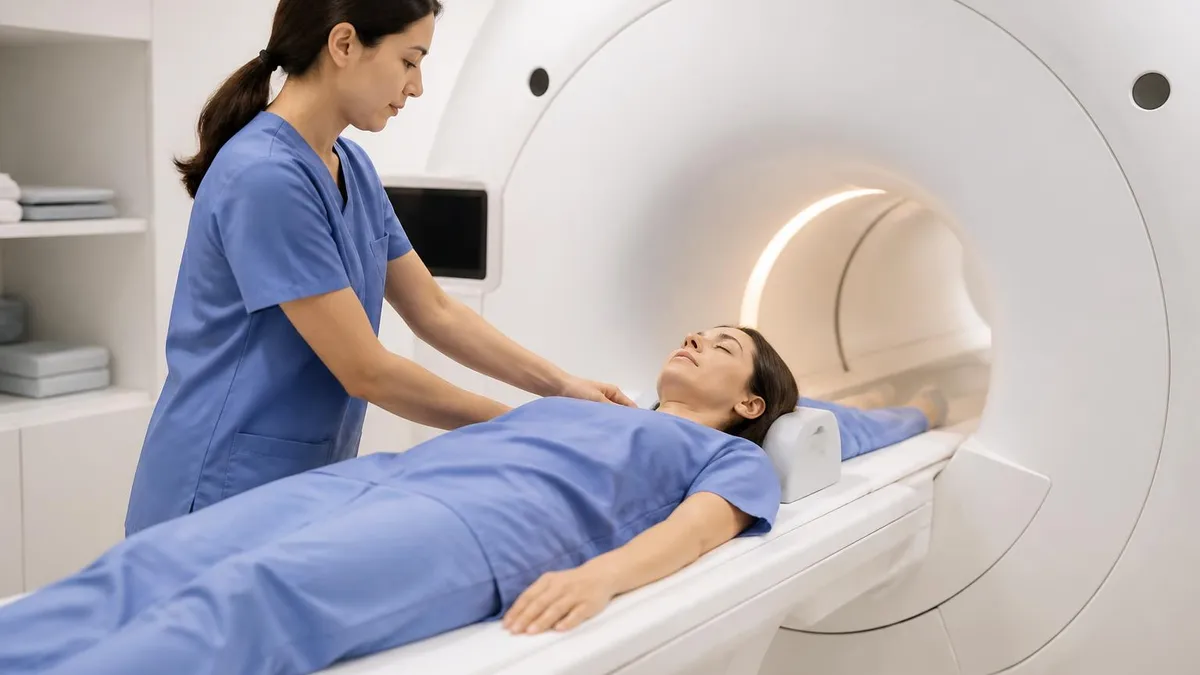
The day-to-day work of an MRI technologist is more nuanced than people expect. The core technical work — operating the MRI scanner, positioning patients, monitoring scans — is straightforward once trained. But the patient-facing side is where the job gets complex. MRI scans can be claustrophobic, loud, and lengthy. Patients are often anxious about why they're being scanned. Some need accommodation for medical devices (pacemakers, implants) that affect safety protocols.
A typical shift involves 8-15 patients depending on scan types. Brain MRI is 25-40 minutes. Spine MRI 30-45 minutes. Cardiac MRI 45-75 minutes. Some specialized scans (functional MRI, MRA with contrast, body imaging) can exceed an hour. Between patients: review the next patient's chart, ensure no contraindications, prepare the scanner with appropriate coils and protocols, position the new patient, run the scan, transfer images to the radiologist.
Screening patients for MRI safety is one of the most consequential parts of the job. The screening protocol catches metallic implants, pacemakers, surgical clips, embedded metal fragments (especially in eyes for people who've worked with metal), tattoo concerns, and pregnancy status. A miss during screening can cause serious patient injury — burns, displaced implants, or worst-case, projectile incidents. Most experienced MRI techs internalize this responsibility deeply.
Working with patients who panic in the scanner requires patience and skill. Claustrophobia is common; about 5-10% of patients experience significant anxiety during scans. Techniques include: thorough pre-scan explanation, allowing brief breaks during long scans, using a mirror that lets patients see outside the bore, music through headphones, and (for severe cases) coordinating with the ordering physician for mild sedation. Helping anxious patients complete their scans is genuinely satisfying work for many techs.
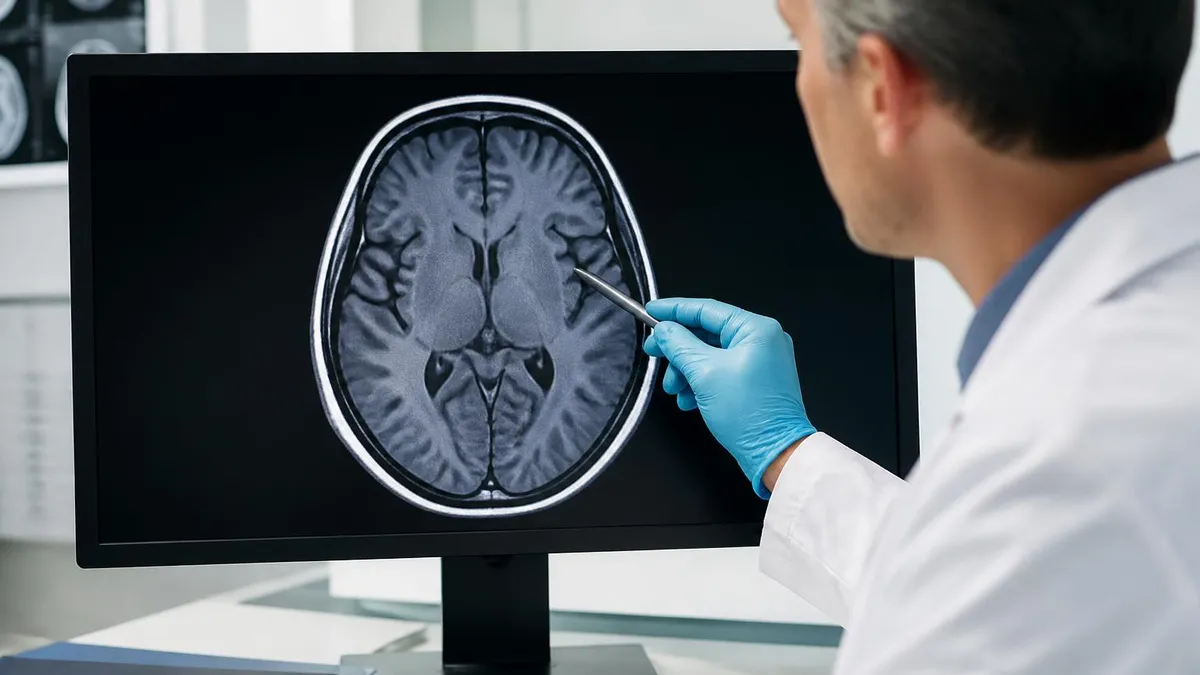
The interaction with radiologists is collaborative. Radiologists interpret the images and write reports; MRI techs ensure the images they're given are diagnostic quality. Good techs anticipate the radiologist's needs — taking additional views when something looks unusual, optimizing protocols for specific clinical questions, knowing when to extend a scan to capture additional sequences. The radiologist-tech relationship is often more partnership than supervision.
MRI Tech Daily Tasks
Screen for metallic implants, pacemakers, surgical history, embedded fragments. The safety gate-keeper role. Most consequential daily task.
Operate the MRI machine: select protocols, optimize parameters, monitor scan quality, troubleshoot artifacts. Technical core of the job.
Position patient in scanner with appropriate coils. Comfort positioning. Ensure proper anatomy coverage for the clinical question.
When ordered, prepare and administer IV gadolinium contrast. Monitor for adverse reactions. Follow safety protocols for contrast.
Review images before patient leaves. Take additional sequences if needed. Send to radiologist with technical notes if relevant.
Routine cleaning, basic troubleshooting, coil management, daily QA checks. Coordinate with biomedical engineering for major issues.
Career advancement opportunities. The clearest path: senior tech → lead tech → supervisor → manager. Each step adds responsibility (training newer techs, scheduling, quality assurance) and 5-15% pay increases. Most MRI techs stay in clinical roles their entire career; management is one option but not required for good income.
Specialization is another advancement path. Cardiac MRI requires additional training (often hospital-sponsored) and is a high-demand specialty. Neuroimaging MRI similarly. Functional MRI (fMRI) for research is more niche but lets you work at academic medical centers. Pediatric MRI requires patience with children and is most common at children's hospitals.
MR Safety Officer (MRSO) is a specific certification (Level II from ABMP — American Board of MR Safety) that authorizes you to act as the safety expert for an MRI facility. The role involves reviewing implant compatibility, developing safety protocols, training other staff on safety, and responding to safety incidents. MRSO-certified techs earn $110K-$140K typically and command authority on safety questions. The certification requires significant additional study and exam preparation beyond standard ARRT MRI.
Applications specialist roles at MRI equipment vendors (GE, Siemens, Philips, Canon) involve training customers (hospitals, imaging centers) on new MRI equipment. The work is travel-heavy but rewarding for techs who enjoy teaching and want to escape clinical work. Pay: $90K-$160K with commission/bonus structure. The transition from clinical to applications is common but requires the equipment vendor to be hiring.
Cross-training to additional modalities (CT, ultrasound, nuclear medicine, mammography) makes you more valuable and flexible. Cross-trained techs (MRI + CT is common) command 5-10% premium and have better job security during economic downturns. Some hospital systems specifically seek cross-trained techs for smaller imaging departments where one person covers multiple modalities.
For tech-savvy MRI technologists, transitioning into healthcare IT (PACS administration, RIS management) opens additional career options. The clinical knowledge plus IT skills is a valuable combination. Pay can reach $100K-$140K and the work-life balance is generally better than clinical shift work. The transition requires acquiring IT-specific skills (certifications, database knowledge) but builds on healthcare experience.
The American Registry of Radiologic Technologists (ARRT) MRI certification is the credential that most employers require for MRI tech positions. Without it, you can be limited to entry-level or trainee positions. The certification exam is rigorous — covering MRI physics, safety protocols, patient care, scanning procedures, and image quality concepts. Pass rates run around 75-80% on first attempt for prepared candidates. The certification is valid for 10 years with continuing education requirements; renewals require evidence of ongoing professional development. Maintain your certification — letting it lapse requires re-examination, which is more difficult than the renewal process.
Job search strategies for MRI tech positions. The largest job boards (Indeed, Glassdoor, LinkedIn) all post MRI tech positions extensively. Specialized healthcare job sites — Health eCareers, JuneCloud, AAMI Careers — have higher concentrations of imaging-specific roles. For travel MRI specifically, agencies like Aya Healthcare, Medical Solutions, and Cross Country Healthcare are the major players.
For new graduates, hospital systems often have new-grad programs or training tracks. These provide structured mentorship and the experience needed for ARRT certification. New-grad pay is usually 5-10% below experienced rates but the structured training is valuable. After 1-2 years in a new-grad role, transitioning to a higher-paying position is straightforward.
For experienced techs, networking matters. Many MRI tech positions aren't widely advertised — they're filled through referrals from current employees or through recruiter relationships. Maintain connections with techs at other facilities. Attend regional radiology meetings. Join the American Society of Radiologic Technologists (ASRT) for networking and continuing education.
Interview preparation for MRI tech positions. Expect questions about: safety scenarios (a patient with a pacemaker arrives — what do you do?), specific scan protocols (how do you set up a routine brain MRI?), claustrophobia management, contrast administration safety, equipment troubleshooting, and patient communication. Hands-on tests at the actual scanner are common for experienced-tech positions; new grads usually have less hands-on testing.
For career changers without healthcare background, the path is longer but achievable. Start with the 2-year associate degree. Most programs admit students 21+ as readily as recent high school graduates. Some programs specifically support older students with evening and weekend class schedules. Cost is manageable at community colleges; the ROI is good (associate degree investment of $10K-$20K leading to $65K+ starting salary).
For people considering MRI tech vs. other healthcare careers (nursing, sonography, X-ray tech alone, RT specializations): MRI tech generally pays better than nursing for the same total education time, comparable to sonography, and 10-15% better than X-ray-only RT. Career options are diverse, schedules are predictable in clinical settings, and the work itself is technically interesting. The downsides: 12-hour shifts in some hospital roles, physical demands of patient positioning, occasional stress from emergency cases.
Becoming an MRI Tech
Research Programs (Pre-Education)
Complete Associate's Degree (2 years)
Pass ARRT Radiography Exam
Complete MRI Cross-Training
Pass ARRT MRI Certification
Entry-Level MRI Tech Role
MRI Tech Career Stats
Travel MRI tech positions pay 30-50% premium over staff positions ($130K-$160K annualized including housing stipend and per-diem). The trade-off: 13-week contracts in different cities, often with short notice. Suits single professionals or partners who can travel together; doesn't suit those with school-age children or geographic ties. Travel positions also lack employer-sponsored benefits in the same way (you typically buy your own health insurance with the higher pay) and don't build retirement savings the same way as staff positions. For people who want the variety and have the flexibility, travel MRI is a legitimate way to maximize earnings during a few years before settling into a staff role.
Pros and Cons of MRI Tech
$80K+ typical with 2-3 years of education. Higher pay-to-education ratio than nursing or many other healthcare paths.
Imaging demand continues to grow. ARRT-certified techs are consistently needed across hospital systems and outpatient centers.
Mix of equipment operation, problem-solving, and direct patient interaction. Variety in daily work.
Hospital roles often include evenings, weekends, on-call. Outpatient centers have better hours but less stability.
Claustrophobic patients, pediatric patients, anxious adults. Patient management can be emotionally demanding.
Lifting and positioning patients (some require transfer from wheelchair or stretcher). Standing and walking throughout shifts.
MRI Pros and Cons
- +MRI has a publicly available content blueprint — you know exactly what to prepare for
- +Multiple preparation pathways accommodate different schedules and budgets
- +Clear score reporting shows specific strengths and weaknesses
- +Study communities share current insights from recent test-takers
- +Retake policies allow recovery from a difficult first attempt
- −Tested content scope requires substantial preparation time
- −No single resource covers everything optimally
- −Exam-day performance can differ from practice test performance
- −Registration, prep, and retake costs accumulate significantly
- −Content changes between versions can make older materials less reliable
Pros and Cons at a Glance
| Pros | Cons |
|---|---|
| MRI has a publicly available content blueprint — you know exactly what to prepare for | Tested content scope requires substantial preparation time |
| Multiple preparation pathways accommodate different schedules and budgets | No single resource covers everything optimally |
| Clear score reporting shows specific strengths and weaknesses | Exam-day performance can differ from practice test performance |
| Study communities share current insights from recent test-takers | Registration, prep, and retake costs accumulate significantly |
| Retake policies allow recovery from a difficult first attempt | Content changes between versions can make older materials less reliable |
Sample MRI - Magnetic Resonance Imaging Practice Questions
Try these questions from our free MRI - Magnetic Resonance Imaging practice tests. The correct answer and an explanation follow each question.
A technologist who holds an RT(MR)(ARRT) credential and allows it to lapse must complete which process to reinstate it?
- A. Retake the full MRI registry examination
- B. Apply for reinstatement and fulfill CE requirements
- C. Resubmit all original application materials and retake the exam
- D. Complete only a practical competency evaluation
Answer: B. Apply for reinstatement and fulfill CE requirements
ARRT allows lapsed credential holders to reinstate by applying for reinstatement and meeting outstanding CE obligations.
Under ARRT policy, which of the following must a registered MRI technologist report within 30 days?
- A. Change of mailing address
- B. A felony conviction or guilty plea
- C. Obtaining an additional college degree
- D. Purchasing new MRI accessories
Answer: B. A felony conviction or guilty plea
ARRT's Standards of Ethics require technologists to report criminal convictions or guilty pleas within 30 days.
Which MRI registry credential is awarded by the American Registry of Radiologic Technologists (ARRT) for MRI technologists?
- A. MR(ARRT)
- B. RT(MR)(ARRT)
- C. MRI(ARRT)
- D. RMT(ARRT)
Answer: B. RT(MR)(ARRT)
The ARRT awards the RT(MR)(ARRT) credential to registered technologists who pass the MRI examination.
Which MRI-specific safety topic is explicitly listed under the ARRT exam content specifications within Patient Care and Education?
- A. Radiofrequency power amplifier maintenance
- B. Screening for implants and metallic foreign bodies
- C. Cryogen manufacturing standards
- D. Gradient coil winding techniques
Answer: B. Screening for implants and metallic foreign bodies
Screening patients for implants and metallic foreign bodies is a core patient safety responsibility explicitly included in the content specifications.
Take the full MRI - Magnetic Resonance Imaging practice test
MRI Questions and Answers
MRI technology is one of the better-paying healthcare careers that doesn't require medical school or a bachelor's degree. The 2-3 year education investment, ARRT MRI certification, and strong job demand combine to produce solid mid-career earnings ($85K-$110K) with reasonable advancement opportunities to $130K+ for specialists and travelers. The work is technically interesting and patient-facing, which suits people who want variety beyond pure technical or pure clinical roles.
For people considering the career, the practical recommendation is: start with the associate's degree path (lowest cost, fastest entry), pursue ARRT RT certification right away, complete MRI cross-training within 1-2 years of starting work, and pass ARRT MRI certification as soon as feasible. From there, the career develops based on your interests — specialization, supervisor track, travel work, or eventually transitioning into applications/sales or healthcare IT. The base certification and clinical experience are the foundation; how you build on them is flexible and based on what kind of work you want to do.
Sources & last verified
- assets-us-01.kc-usercontent.com — number of questions, time limit (official source). “MRI Scored Items 200 Pilot Items 20 Total Items 220 Test Time 210 min” Verified Oct 15, 2026.
- The American Registry of Radiologic Technologists — passing score (official source). “Our exam scoring scale ranges from 1 to 99, and you’ll need a total score of 75 to pass the exam.” Verified Oct 15, 2026.
- The American Registry of Radiologic Technologists — exam fee, other (official source). “Postprimary (M, CT, MR, BD, CI, VI, VS, BS, R.R.A.): $225 Postprimary (CT, MR, BD, or VS—using NMTCB as supporting category): $450 Postprimary (MR, VS,…” Verified Oct 15, 2026.
How we verify: editorial & fact-checking policy. Report an error: contact us.
How this page was made: written with AI tools. Exam facts are checked against the official sources listed below. Not reviewed by a subject-matter expert. Editorial policy
Sources & references
Exam facts on this page (fees, format, dates, passing scores) are checked against these official sources; the date is our last check. Editorial policy
- arrt.org — Passing score, score release, fees, exam information · verified Oct 2026
- assets-us-01.kc-usercontent.com — Renewal, score validity, test delivery, eligibility, exam format, test dates, time limit · verified Oct 2026