
Knee MRI Cost: What You'll Actually Pay in 2026 September
Knee MRI cost ranges from $400 to $3,500. See average prices with insurance, cash-pay deals, contrast fees, and where to save up to 60% in 2026 September. 📚
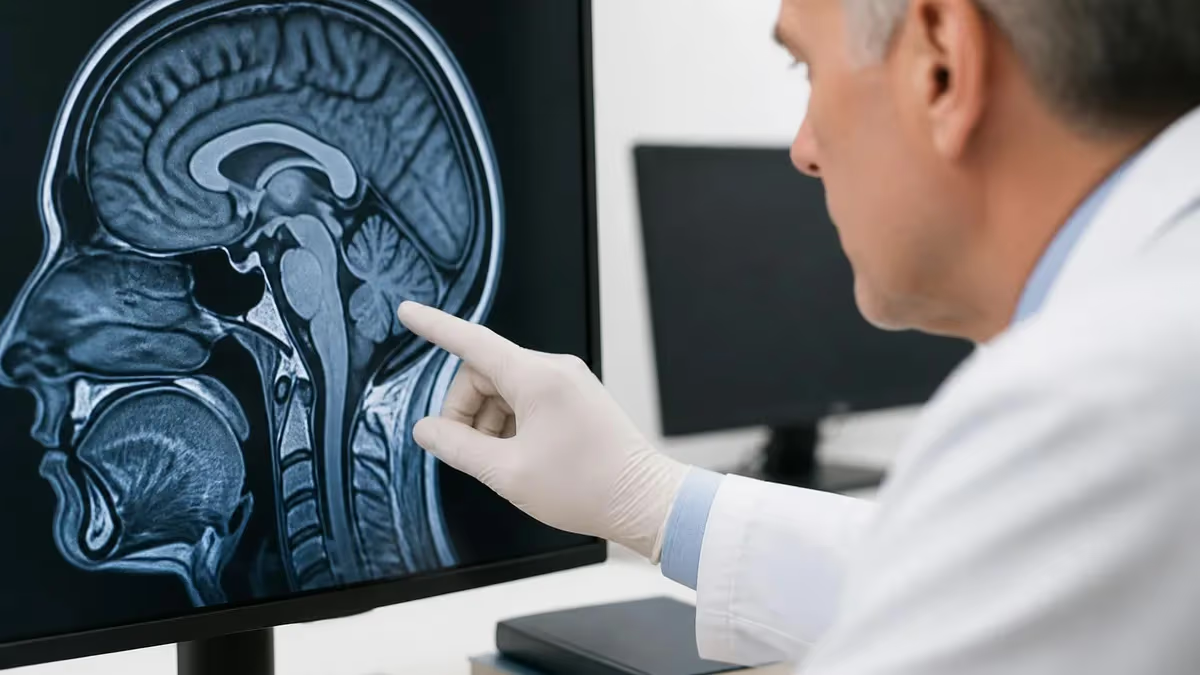
Knee MRI Cost in 2026: The Honest Price Range
Here's the short answer: a knee MRI in the United States costs anywhere from $400 to $3,500 in 2026, and where you fall in that range depends almost entirely on three things — where you get scanned, whether you have insurance, and whether contrast dye gets added to the order. Hospital outpatient departments charge the most. Standalone imaging centers charge the least. The gap between them is huge.
If you have decent insurance and you've already hit your deductible, you'll probably pay $200 to $1,000 out of pocket. If you're paying cash, expect $400 to $1,200 at an imaging center and $1,500 to $3,500 if you walk into a hospital. The same scan. Same machine quality. Wildly different prices. That's the part nobody tells you upfront.
This guide breaks down the real numbers — what you'll see on the bill, what to ask before booking, and how to cut the price by 40 to 60 percent without sacrificing image quality. We'll cover insurance coverage, cash-pay tactics, contrast pricing, and the cheaper alternatives your doctor might consider first. For background on the scan itself, see the MRI scan guide.
Average prices have crept up about 4 percent year over year since 2022, mostly driven by hospital facility fee inflation rather than imaging center increases. Standalone centers have actually gotten cheaper in some markets thanks to chains expanding into suburban locations and competing on price. If you got a knee MRI four years ago, the cash quote you'll get today might surprise you in either direction depending on which type of facility you used last time.
One more thing worth knowing upfront: your insurance card doesn't determine your price. Two people with identical Blue Cross plans can pay $200 and $1,800 for the same scan based purely on which facility they chose. The plan covers the same percentage either way — but if the facility charges $1,000 more, your coinsurance share is bigger too. Choosing the right place is the single most important price decision you'll make, more than your plan, more than your deductible, more than anything.
Knee MRI Cost by the Numbers
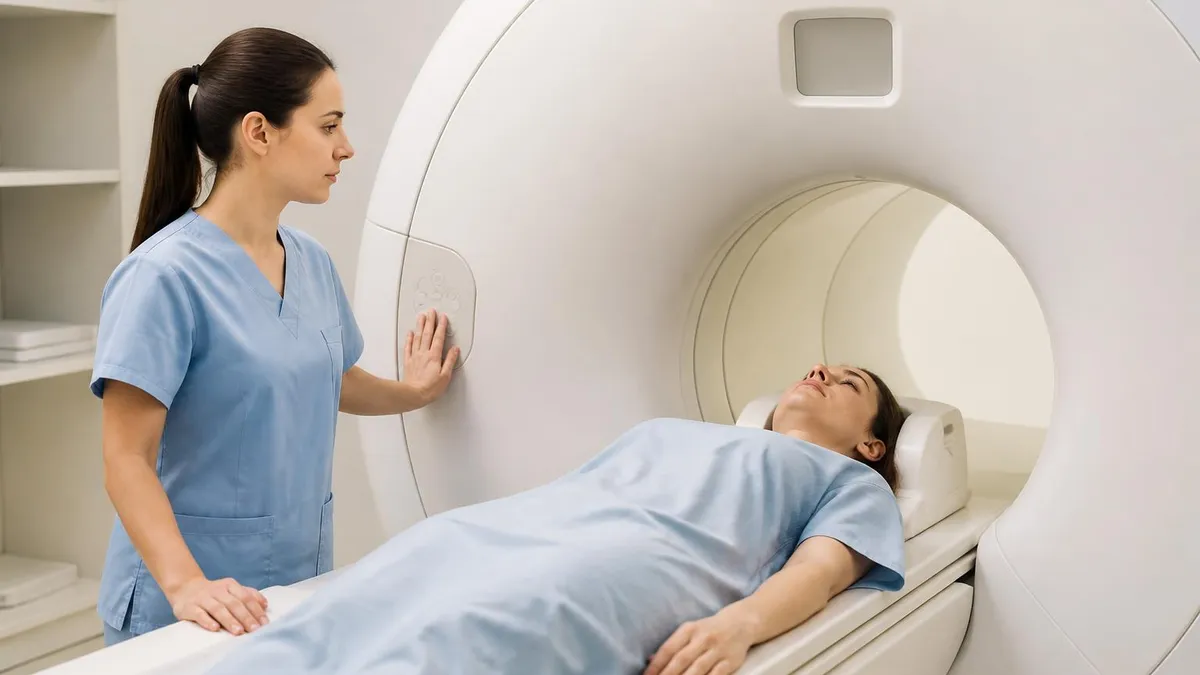
Knee MRI Cost With Insurance
With commercial health insurance, your out-of-pocket cost for a knee MRI usually lands between $200 and $1,000. The variance comes from your plan structure. If you haven't hit your annual deductible yet, you'll pay the negotiated rate in full — that's typically $400 to $1,200 at an in-network imaging center. After the deductible, coinsurance kicks in, usually 10 to 30 percent. So a $1,000 scan becomes a $100–$300 bill.
High-deductible health plans (HDHPs) are the worst case. If your deductible is $3,000 and you haven't touched it, you pay full freight. The flip side: your insurer's negotiated rate is still lower than the cash price most people get quoted, so you're not getting destroyed — just hit harder. PPO and HMO plans with low deductibles see far smaller bills. Always check your benefits portal first.
Medicare Part B covers a medically necessary knee MRI at 80 percent of the approved amount after you meet the $240 deductible. You pay the remaining 20 percent — usually $50 to $200 depending on where you're scanned. Medicaid covers MRIs in most states but rules vary; prior authorization is almost always required. For prep tips, check what to expect during an MRI with contrast.
Almost every insurer requires prior authorization before paying for a knee MRI. Your doctor's office handles the paperwork — but if they skip it or get denied, you're on the hook for the entire bill. Call your insurer's number on the back of your card and confirm pre-auth was approved before you show up for the appointment. Don't trust the imaging center to verify; verify it yourself.
Network status matters more than people realize. An in-network imaging center applies your normal coinsurance and deductible math. An out-of-network center can charge you the full billed rate plus balance-bill the difference between what your insurer pays and what they charge. We've seen patients receive $4,000 surprise bills from out-of-network MRI providers their doctor referred them to. Verify network status with your insurer's online directory the day before your appointment, not the day of.
If you're between insurance plans or have a high deductible you won't hit, sometimes the cash price beats the insurance price. This sounds backwards but it's real. A negotiated insurance rate might be $950 while the same facility's cash discount is $499. Ask both numbers before booking. If cash is lower than your deductible payment would be, pay cash and don't run it through insurance — just make sure you keep the receipt because it still counts toward your annual out-of-pocket maximum in many plans.
Knee MRI Cost Without Insurance
No insurance? You're looking at $1,000 to $3,500 for a standard knee MRI at the list price — but almost nobody actually pays list. The cash-pay negotiated rate is typically 40 to 60 percent off. Most imaging centers will quote you $400 to $800 if you ask for their cash price. Hospitals will sometimes match or get close, but you have to push. Call ahead. Get the quote in writing if you can.
The trick is asking the right question. "How much is a knee MRI?" gets you the chargemaster price — useless and inflated. Ask: "What's your cash-pay or self-pay discount price for CPT 73721, knee MRI without contrast?" That's the code billers actually use. You'll get a different, much lower number. Some centers run promotional pricing as low as $349 in major metros. Worth shopping around for.
Comparison tools speed this up. NewChoiceHealth.com and MDsave.com let you compare cash prices across nearby imaging centers — sometimes you'll see the same MRI priced from $399 to $1,800 within a 15-mile radius. MDsave lets you prepay online and bring a voucher to the appointment, locking in the lower price. SaveOnMedical and Healthcare Bluebook offer similar pricing transparency. Use at least two of these before booking.
Don't ignore mobile imaging units either. Some companies run trailer-mounted MRI scanners that park at clinics, smaller hospitals, and rural locations. Mobile units charge 30 to 50 percent less than fixed hospital scanners and use the same magnet strength (typically 1.5T). The trade-off is scheduling — mobile units only visit certain locations on certain days. If you're flexible on timing and not in a rush, mobile MRI is often the cheapest legitimate option for cash payers.
One thing to avoid: medical loan companies advertising MRI financing at facilities you've never heard of. The interest rates run 20 to 30 percent APR, and the underlying scan price is often inflated to begin with. If you genuinely can't afford the scan upfront, ask the imaging center about an interest-free payment plan instead. Many ACR-accredited centers offer 6-month or 12-month interest-free splits to self-pay patients. The total cost stays the same; you just spread it across months without paying loan interest.
Knee MRI Cost by Setting
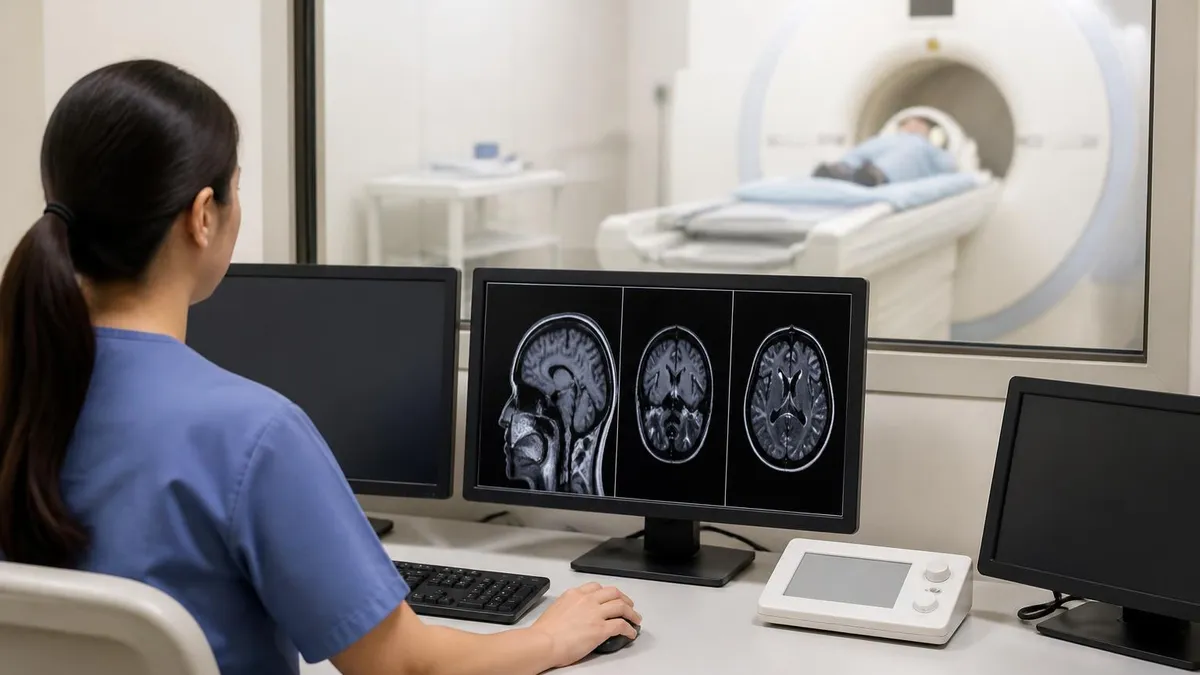
With vs Without Contrast: The Pricing Difference
A standard knee MRI runs without contrast for most injuries — ACL tears, meniscus damage, simple cartilage problems. The radiologist gets enough detail from the magnetic resonance alone. But if your doctor needs to evaluate post-surgical tissue, suspected infection, tumors, or vascular issues, contrast dye gets added. The contrast agent is gadolinium, injected through an IV before the scan. It lights up specific tissues so the radiologist can see them more clearly.
Adding contrast bumps the cost by $200 to $400. At an imaging center, that turns a $500 scan into a $700–$900 bill. At a hospital, contrast can add even more — sometimes $500 or more depending on the facility's drug markup. The dye itself costs the facility about $50, but the markup for administration, monitoring, and disposal accounts for the rest. Worth asking if contrast is truly needed before scheduling.
Some doctors order "with and without contrast," which means two scans back-to-back — once before the dye, once after. That doubles the time on the table to about 60–75 minutes and adds the full contrast premium on top of the base scan. If your bill seems shockingly high, check if you got the dual protocol when a single-phase scan would have worked. Ask your ordering physician.
Contrast also adds a kidney-function check. Before the dye gets injected, you'll usually get a blood test (eGFR) to confirm your kidneys can clear gadolinium safely. The bloodwork itself is cheap — $30 to $80 — but it adds an extra appointment if your last lab was more than 30 days old. People with chronic kidney disease may not be candidates for contrast at all; in those cases the radiologist works with the non-contrast images alone, which sometimes means a slightly less detailed read but no health risk.
Settings Compared: Where to Get Scanned
Hospitals charge $1,500 to $3,500 cash for a knee MRI — the highest prices in the market. The reason is facility fees, which can add $800 to $2,000 on top of the technical and professional charges. You're paying for hospital overhead, not better imaging.
When does the hospital make sense? If you're already an inpatient, recovering from surgery, or if the same hospital system is handling your orthopedic care, the convenience and integrated records may justify the cost. For an outpatient knee MRI with no other connections, hospitals are almost always the wrong choice.
How to Save 40–60% on a Knee MRI
The single biggest cost lever is choosing the right facility. Don't accept the first referral your doctor's office gives you — they refer based on relationships, not your price. Ask the scheduler if they can order it without specifying the facility, then shop. The cash-pay difference between the nearest hospital and the cheapest local imaging center is often $1,500 or more for the exact same scan.
HSA and FSA accounts make MRIs tax-advantaged. If you have a high-deductible plan with an HSA, every dollar you spend on a knee MRI from that account is pre-tax — effectively a 20 to 30 percent discount depending on your tax bracket. FSAs work similarly but have use-it-or-lose-it deadlines. If you've got money sitting in either account, this is exactly what they're for. For more pricing context, see the full MRI cost breakdown.
Always request an itemized bill after the scan, even if you've already paid. Hospitals routinely include duplicate charges, unbundled line items, and "observation" fees that don't apply to outpatient imaging. Reviewing your itemized statement against the CPT codes you authorized has saved patients hundreds of dollars in retroactive corrections. The billing department will fix obvious errors if you call within 30 days.
Negotiate before the scan, not after. Once your card is charged or the insurance claim is filed, you've lost most of your leverage. Before booking, tell the billing office you're considering three facilities and ask them to match the lowest quote. Roughly half the time they'll come down 10 to 20 percent on the spot. It feels awkward — but billing staff negotiate quotes constantly with cash patients. You're not being rude; you're using the same playbook everyone else uses.
One last savings tactic worth knowing: financial assistance programs. Most non-profit hospitals offer charity care or sliding-scale discounts to patients below 300 to 400 percent of the federal poverty line. The applications are simple, take about a week to process, and can cut your bill by 50 to 100 percent. Ask the billing office about their financial assistance policy before you pay anything — even insured patients sometimes qualify.
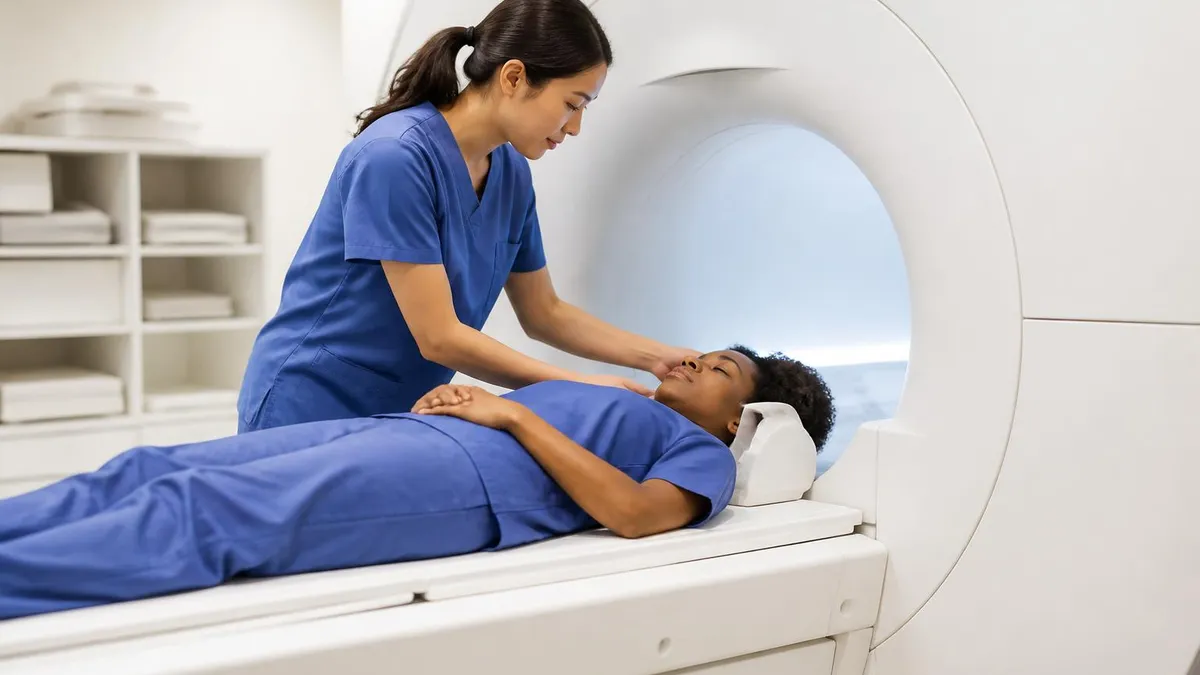
Money-Saving Checklist Before Your Knee MRI
- ✓Call insurance and confirm pre-authorization is approved
- ✓Ask your doctor's office if they can order MRI without specifying facility
- ✓Get cash-pay quotes from at least 3 imaging centers — use CPT 73721
- ✓Compare prices on NewChoiceHealth.com and MDsave.com
- ✓Confirm whether contrast is medically required or optional
- ✓Verify the facility is ACR-accredited
- ✓Use HSA or FSA funds if available
- ✓Avoid hospital outpatient unless integrated with your care team
- ✓Request an itemized bill within 30 days of the scan
- ✓Negotiate any surprise charges before paying
When MRI Is Ordered and What Else Could Work
Doctors order knee MRIs for specific reasons: suspected ACL, PCL, or MCL ligament tears, meniscus injuries, cartilage damage, persistent pain that hasn't responded to treatment, and post-surgical evaluation. The MRI shows soft tissue — ligaments, tendons, cartilage, menisci — that X-rays simply can't capture. If your orthopedist suspects a soft-tissue problem, MRI is the right call.
But MRI isn't always the first step. For acute trauma or to rule out fractures, an X-ray ($50 to $200) is usually ordered first. X-rays don't show soft tissue, but they're cheap and fast and they confirm whether bone damage is present. If the X-ray comes back clean and pain continues, that's typically when the MRI gets ordered. Skipping straight to MRI without an X-ray often triggers insurance denial.
Ultrasound ($50 to $300) can visualize some superficial tendon and ligament problems but can't see deep into the joint or behind bone. CT scans ($300 to $700) show bone detail in 3D and are useful for complex fractures but again can't show soft tissue the way MRI does. The decision tree depends on what your doctor suspects. For deeper background, read the MRI vs CT scan comparison.
What to expect on scan day: arrive 15 minutes early, remove all metal (jewelry, watches, hairpins), and confirm any implants you have. The scan itself takes 30 to 45 minutes — closed MRI requires lying still inside the bore. Open MRI is an option if you're claustrophobic, though image quality on older open units can lag. The radiologist reads the images within 1 to 3 business days, and your ordering doctor will share results. For people who can't tolerate the tube, the open MRI alternative is worth asking about.
One question patients rarely think to ask: how strong is the magnet? Knee MRI machines come in 1.5 Tesla (1.5T) and 3 Tesla (3T) varieties. A 3T scanner produces sharper images and can sometimes catch subtle cartilage damage a 1.5T magnet misses.
The cost difference is usually small at imaging centers — often $50 to $150 — but the image quality difference matters for borderline cases like early arthritis or small meniscal tears. If your orthopedist is on the fence about surgery, the 3T scan is worth asking for. For straightforward injuries, 1.5T is perfectly adequate and you don't need to pay extra.
Why Knee MRI Gets Ordered
Sudden twisting or pivoting injury with a pop, swelling, and instability. MRI confirms the tear, locates it, and grades severity (Grade I–III) to guide surgical or conservative treatment.
- Common Sport: Soccer, basketball, skiing
- Surgery Rate: ~50% for full tears
Cartilage damage causing locking, clicking, or pain during twisting. MRI distinguishes between traumatic tears (often surgical) and degenerative wear (often conservative care).
- Age Range: Acute: 20s–30s; degenerative: 50+
- Treatment: PT first, surgery if locking
Articular cartilage defects from impact, repetitive stress, or osteoarthritis. MRI grades cartilage health on a 0–4 scale and identifies bone marrow edema underneath.
- Detection: MRI 3T optimal
- Treatment: Conservative, microfracture, transplant
Checking healing after ACL reconstruction, meniscectomy, or cartilage repair. Contrast may be needed to distinguish scar tissue from re-injury or graft failure.
- Timing: Usually 6–12 months post-op
- Contrast: Often required
Imaging Center vs Hospital — Which Wins on Cost?
- +Imaging centers cost 40–70% less for cash payers
- +Same Siemens/GE/Philips machines as hospitals
- +ACR-accredited centers meet identical quality standards
- +Faster scheduling — often same-week appointments
- +Posted cash prices remove negotiation guesswork
- +Lower facility fees mean smaller insurance copays too
- −Limited evening and weekend hours at smaller centers
- −Radiologist read times can be longer (1–3 days)
- −Complex post-surgical cases may need hospital reads
- −Some centers don't accept all Medicare Advantage plans
- −Older open MRI units can produce lower-resolution images
- −Independent centers may lack on-site emergency support
MRI Practice Test Questions
Prepare for the MRI - Magnetic Resonance Imaging exam with our free practice test modules. Each quiz covers key topics to help you pass on your first try.
MRI Knowledge
MRI Exam Questions covering Knowledge. Master MRI Test concepts for certification prep.
MRI Physics
Free MRI Practice Test featuring Physics. Improve your MRI Exam score with mock test prep.
MRI Anatomy and Pathology
MRI Test Prep for MRI Anatomy and Pathology. Practice MRI Quiz questions and boost your score.
MRI Anatomy and Positioning
MRI Questions and Answers on MRI Anatomy and Positioning. Free MRI practice for exam readiness.
MRI Contrast Agents
Free MRI Quiz on MRI Contrast Agents. MRI Exam prep questions with detailed explanations.
MRI Patient Care and Positioning
MRI Practice Questions for MRI Patient Care and Positioning. Build confidence for your MRI certification exam.
What to Say When Calling Imaging Centers
"Hi, I'm getting a knee MRI without contrast — CPT 73721. I'm paying cash. What's your self-pay discounted price, and do you require prepayment? I'm comparing three centers in the area."
That one script saves people $500–$1,500. Mentioning that you're shopping makes schedulers transparent. Asking for the discount price (not the chargemaster rate) gets you the real number. Always confirm whether the price includes the radiologist read fee — sometimes it's billed separately and shows up as a surprise charge later.
Hospital-affiliated imaging centers — even ones that look like standalone facilities — can charge hospital-level facility fees that double or triple your bill. Before booking, ask: "Are you billed as a hospital outpatient department or as an independent imaging center?" The difference can be $1,500 or more on the same scan.
MRI Questions and Answers
About the Author

Medical Laboratory Scientist & Clinical Certification Expert
Johns Hopkins UniversityDr. Sandra Kim holds a PhD in Clinical Laboratory Science from Johns Hopkins University and is certified as a Medical Technologist (MT) and Medical Laboratory Scientist (MLS) through ASCP. With 16 years of clinical laboratory experience spanning hematology, microbiology, and molecular diagnostics, she prepares candidates for ASCP board exams, MLT, MLS, and specialist certification tests.
Join the Discussion
Connect with other students preparing for this exam. Share tips, ask questions, and get advice from people who have been there.
View discussion (8 replies)