
MEPS Duck Walk: What to Expect at Your MEPS Physical 2026 September
Prepare for the MEPS Duck Walk: 📗 What to Expect at Your certification. Practice questions with answer explanations covering all exam domains.
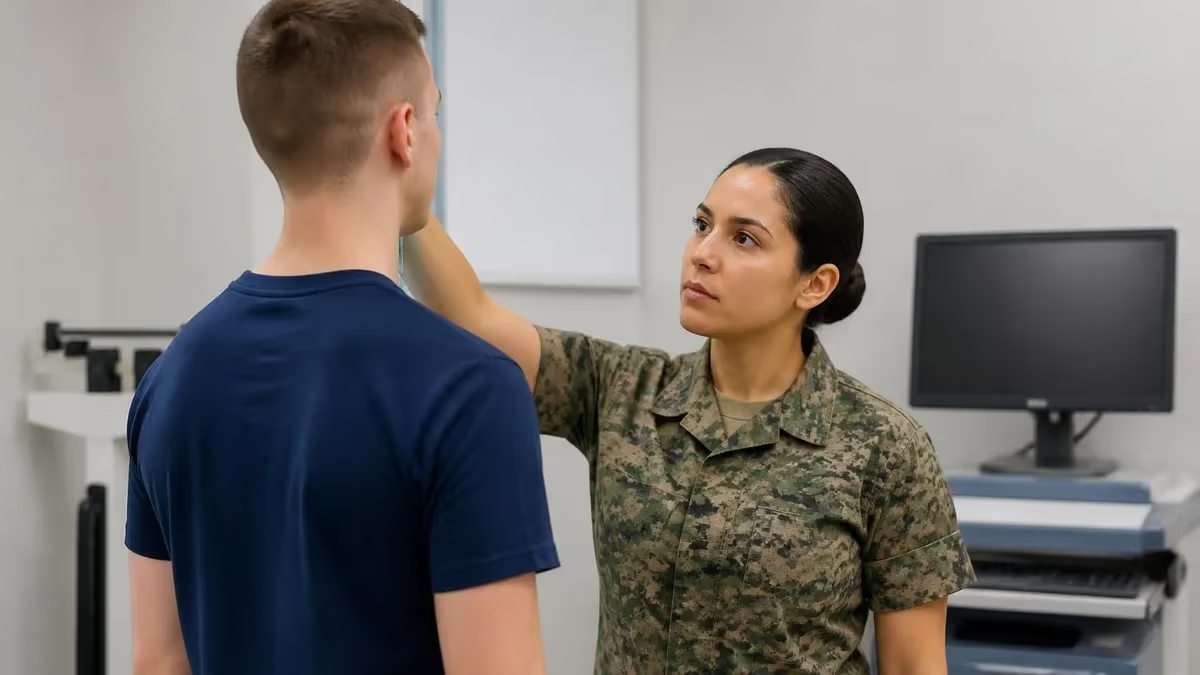
The MEPS duck walk is one of the most talked-about and misunderstood components of the Military Entrance Processing Station physical examination. Candidates who have heard about the duck walk often imagine something more extreme than it actually is — while it can be uncomfortable, particularly for individuals with limited hip or knee flexibility, the duck walk is a standard orthopedic screening exercise performed in a few minutes as part of the comprehensive MEPS physical exam.
The duck walk involves walking in a full squat position — thighs approximately parallel to the floor, knees bent to approximately 90 degrees or more, body weight on the balls of the feet — for a distance of roughly 10-15 feet. Candidates are typically asked to perform the duck walk across a room while medical staff observe their movement, balance, and ability to maintain the squatting position. The exercise is not timed or scored numerically — the MEPS physician or medical technician is observing whether the candidate can perform the movement without evidence of significant orthopedic limitation, pain, or instability.
Why is the duck walk done at MEPS? The duck walk tests the functional mobility of the hips, knees, and ankles in a way that reveals conditions not easily detected by static examination alone. Candidates with significant knee problems — torn menisci, ACL instability, patella disorders, severe chondromalacia — often cannot perform the duck walk comfortably or at all.
Candidates with hip dysplasia, hip impingement, or significant ankle stiffness will also struggle. The duck walk effectively screens for these conditions, which could limit a service member ability to perform military duties including running, carrying loads over uneven terrain, and operating in confined spaces requiring squatting or crouching positions.
Failing the duck walk at MEPS typically results in a referral to a MEPS orthopaedic physician for further evaluation. A candidate who cannot complete the duck walk or who demonstrates obvious orthopedic difficulty will receive additional examination and documentation of the condition.
Depending on the severity and nature of the finding, the outcome may be a temporary deferral pending civilian medical records, a medical disqualification, or a waiver recommendation if the condition is well-documented and the candidate demonstrates adequate functional ability for their intended military occupational specialty. Minor discomfort or awkwardness during the duck walk — without evidence of a specific medical condition — does not automatically disqualify a candidate.
The duck walk is just one component of the MEPS physical examination. The full physical exam includes height and weight measurement, vision testing (distance acuity, near vision, colour vision, depth perception), hearing testing using audiometry, blood pressure and pulse measurement, a blood draw, the urine sample collection for the drug test, an orthopaedic examination that includes the duck walk along with range-of-motion tests for major joints, a review of the medical history form with a physician, and — for male candidates — a hernia check and genital examination.
Female candidates have a pelvic examination and breast examination in addition to the shared examination components. All examinations are conducted by or under the supervision of licensed MEPS medical staff.
Practice a deep bodyweight squat and walk in that position for 15 feet. If you can do this comfortably, you are prepared. Work on hip flexor and ankle mobility in the weeks before MEPS. Candidates with known orthopaedic limitations should disclose them — attempting to hide a condition by forcing the movement can make the situation worse.
The PULHES rating system is the standard framework for summarising the results of the MEPS physical examination. Each letter represents a body system: P for Physical capacity and stamina, U for Upper extremities, L for Lower extremities, H for Hearing and ear function, E for Eyes and vision, and S for psychiatric and neurological status.
Each category is rated on a 1-4 scale with 1 indicating no disqualifying findings, 2 indicating a condition that may limit some duties, 3 indicating a condition that significantly limits duty assignment, and 4 indicating a condition that is disqualifying for general military service. A PULHES profile of 1-1-1-1-1-1 (all ones) represents a candidate with no identified limitations. A candidate with a chronic knee condition might receive a PULHES rating of 1-1-2-1-1-1, which could require a waiver for some military occupational specialties with demanding physical requirements.
Preparing for the MEPS physical examination means being in the best possible physical condition on the day of processing. Get a full night of sleep before MEPS. Eat a nutritious meal. Wear comfortable clothing with slip-on shoes. Most importantly, be completely honest on the medical history form that you complete before the physical examination.
Conditions you attempt to conceal may be discovered during the exam, and failing to disclose known conditions on the medical history form constitutes fraudulent enlistment — a federal offence. Recruiters sometimes advise candidates not to mention minor past injuries or conditions, but the legal and ethical obligation to disclose known medical history rests with the candidate, not the recruiter.
The medical history form (DD Form 2807-2 for pre-accession medical history) asks about a comprehensive list of past and current medical conditions, surgeries, hospitalizations, mental health treatment, medications, and physical limitations. Many candidates wonder whether disclosing past medical history will automatically disqualify them.
The answer is that disclosure is always the right choice — the specific impact depends on the nature of the condition, how it was treated, its current status, and whether documentation supports the conclusion that the condition will not interfere with military service. A broken arm that healed completely three years ago is unlikely to be disqualifying; an ongoing condition requiring daily medication may require more evaluation and documentation.
Understanding what the MEPS physician is evaluating during the duck walk helps candidates approach it with the right mindset. The examiner is not looking for perfect athletic form or exceptional flexibility — they are screening for significant orthopaedic limitation. A candidate who completes the duck walk with mild discomfort or an imperfect technique but demonstrates adequate functional mobility is unlikely to be flagged. A candidate who is unable to achieve the squatting position at all, or who shows obvious pain, instability, or a compensatory movement pattern that suggests an underlying joint problem, will be referred for additional orthopaedic evaluation.
Recruits often prepare for the duck walk by practising it in the weeks before their MEPS date. If you can perform a bodyweight squat and walk in that position for 15 feet without pain, you will likely complete the duck walk without issue. Candidates who find the deep squat uncomfortable may benefit from mobility work targeting hip flexors, hip external rotators, and ankle dorsiflexion.
Exercises such as goblet squats, hip 90/90 stretches, calf stretches, and ankle circles can improve the squat position over several weeks of consistent practice. However, candidates with a known orthopaedic condition that limits their squatting ability should discuss that condition with their recruiter and be prepared to disclose it on the medical history form, rather than attempting to hide it by forcing the movement on the day of MEPS.
It is worth noting that the duck walk procedure is not completely standardised across every MEPS location. The distance, supervision intensity, and specific instructions given to candidates can vary somewhat between MEPS stations. Some stations conduct the duck walk in groups; others evaluate candidates individually. Some examiners give detailed instructions before the movement; others simply demonstrate and ask candidates to replicate. If you are uncertain about how to perform the duck walk correctly, ask the medical technician to demonstrate or clarify before beginning. Attempting the movement with a misunderstanding of the technique is unnecessary when clear instructions are available.

| Section | Questions | Time | Notes |
|---|---|---|---|
| Height, Weight, and BMI | ~5 min | All candidates | BMI must fall within service-specific ranges; measured multiple times if borderline |
| Vision Testing | ~15 min | All candidates | Distance acuity, near vision, colour vision, depth perception — correctable and uncorrected |
| Hearing Testing | ~10 min | All candidates | Audiometry booth testing; thresholds must meet DOD standards by frequency |
| Orthopaedic Examination | ~20-30 min | All candidates | Duck walk, range of motion, joint stability, spine, flat feet, scoliosis screening |
| Blood Draw and Urinalysis | ~15 min | All candidates | Blood type, CBC, drug test urine collection, STI screening |
| Physician Examination | ~20-30 min | All candidates | Medical history review, systems examination, PULHES rating, waiver discussion |
MEPS physical disqualifications are more common than many candidates expect, but they are not uniformly permanent. Understanding which conditions are disqualifying and which are waiverable is important for setting realistic expectations and planning your path to enlistment if you have a known medical history.
Vision is one of the most common sources of MEPS physical concerns. Most branches require correctable vision to certain standards — uncorrected vision is less critical than corrected acuity in most cases. Colour vision deficiency (colour blindness) is disqualifying for some specific military occupational specialties that require colour discrimination (aviation, explosive ordnance disposal, some intelligence roles) but does not disqualify candidates from all military service.
Candidates with severe uncorrectable vision impairment may face disqualification for roles with higher visual demands. Laser eye surgery (LASIK, PRK) is generally accepted after a sufficient healing period has elapsed, though aviation-specific requirements are more stringent.
Weight and BMI are evaluated at MEPS against service-specific standards that include both maximum weight for height tables and tape test measurements if the candidate exceeds the maximum weight. Candidates who exceed the maximum weight for height are measured using neck and abdomen (males) or neck, waist, and hip (females) circumference to calculate estimated body fat percentage.
Candidates above the body fat standard for their age and gender are medically deferred until they meet the standard — they are not permanently disqualified but must reduce body fat before returning to MEPS to complete processing. Many candidates are deferred for this reason and successfully return to MEPS after a period of weight loss and fitness training.
Orthopaedic conditions are the most varied category of MEPS physical findings. Conditions that were surgically repaired — anterior cruciate ligament (ACL) reconstruction, meniscus repair, labral repair — may require documentation showing successful completion of rehabilitation and return to full function. Flat feet (pes planus) are evaluated for whether they cause symptoms during physical activity; asymptomatic flat feet are generally not disqualifying.
Scoliosis is evaluated based on the degree of curvature; mild scoliosis is generally not disqualifying while significant curvature may be. Conditions related to the spine — herniated discs, history of spinal surgery, chronic back pain — are evaluated based on current functional status and severity.
Mental health history is a significant area of evaluation at MEPS and one where candidates frequently experience anxiety about disclosure. The DOD has worked to reduce stigma around mental health treatment, and the current standards distinguish between temporary or resolved conditions and chronic conditions that would affect military service. A history of treatment for mild to moderate depression or anxiety that has resolved, with no ongoing medication and no recent treatment, is often waiverable with documentation from the treating provider.
A current diagnosis requiring ongoing medication or a history of hospitalisation for psychiatric reasons requires more detailed evaluation. Suicide attempts are a particularly sensitive area with specific evaluation criteria. Candidates should disclose their mental health history honestly and allow the MEPS physician to make an informed determination with complete information.

A MEPS disqualification is not always the end of your path to military service. Many conditions that result in an initial disqualification are waiverable through the recruiting command. Ask your recruiter specifically whether a waiver applies to your situation before assuming your enlistment path is closed. Documentation of treatment, recovery, and current functional status is key to a successful waiver request.
The MEPS physical exam for males includes a genital examination to check for hernias, varicoceles, and undescended testicles. This examination is conducted by a physician in a private examination room. Male candidates should not be embarrassed by this portion of the exam — it is a standard medical procedure performed by licensed medical staff. The examination takes approximately 1-2 minutes and is a non-negotiable component of the male MEPS physical.
The MEPS physical exam for females includes a pelvic examination and breast examination conducted by a female physician in a private examination room. Female candidates should disclose any relevant gynaecological history on their medical history form, including surgeries, chronic conditions, and current medications related to reproductive health. Pregnancy is a temporary medical deferral — candidates who are pregnant at the time of MEPS are deferred until after delivery and a recovery period, at which point they may return to complete MEPS processing.
How long does the MEPS physical take? The examination components collectively take 3-4 hours, but with waiting time between stations and administrative processing, the medical portion of MEPS typically occupies 4-6 hours of the processing day. Candidates should plan for a full day at MEPS — the medical examination, administrative processing, career counseling, and any branch-specific enlistment steps together account for the 8-12 hour total MEPS processing day.
Career counsellors and military occupational specialty (MOS/rate/AFSC) selection at MEPS is informed in part by the PULHES profile generated during the physical examination. Certain military jobs have specific physical profile requirements — for example, special operations careers may require a PULHES of 1-1-1-1-1-1 (no limitations in any category), while many administrative or technical roles accept profiles with minor limitations in one category.
If you receive a PULHES score that limits your eligibility for a particular military occupational specialty, the career counsellor will discuss what roles remain available to you. Understanding your PULHES profile can help you prepare realistic expectations for the job selection portion of MEPS processing.
Waivers are a significant part of the MEPS disqualification process that many candidates are unaware of until they face a potential disqualification. A medical waiver is a request from the recruiting command to the branch's medical review authority asking that a candidate's disqualifying condition be set aside in consideration of the candidate's overall qualifications, the nature of the condition, and the needs of the service.
Not all disqualifying conditions are waiverable — certain permanent conditions with clear safety implications for military service are non-waiverable by regulation. However, many conditions that result in an initial MEPS disqualification are waiverable with appropriate documentation. If you receive a disqualification at MEPS, ask specifically whether a waiver is possible for your condition and branch before assuming your military service path is permanently closed.
Veterans returning to MEPS for reserve or guard enlistment after prior active duty service follow a modified physical process. Prior service candidates typically have existing medical records on file in the military health system, which can simplify documentation requirements for previously evaluated conditions. The physical examination scope for prior service candidates may be less comprehensive if recent records are available. Prior service candidates should bring their DD-214 discharge paperwork and any separation physical documentation to MEPS when reporting for reserve or guard enlistment physical processing.

Failing to disclose known medical conditions on the MEPS medical history form is fraudulent enlistment — a federal offence. If an undisclosed condition is later discovered during service, the service member can be discharged and may face legal consequences. MEPS physicians review your history with the goal of finding a medically qualified pathway, not to disqualify you. Honesty is always the correct approach.
- ✓Practice the duck walk: deep squat, thighs parallel, walk 10-15 feet — assess your own mobility
- ✓Get adequate sleep the night before MEPS — fatigue affects physical performance
- ✓Eat a nutritious meal and stay normally hydrated (do not over-hydrate)
- ✓Disclose all medical history honestly on the DD Form 2807-2
- ✓Bring complete list of current medications with names, dosages, and prescribing physicians
- ✓Bring prescription eyeglasses (even if you normally wear contacts)
- ✓Bring documentation for any previously surgically-repaired orthopedic conditions
- ✓Wear comfortable, modest clothing with easy-to-remove shoes
- ✓Do not wear nail polish — feet and hands are examined
- ✓Avoid excessive caffeine the morning of MEPS — elevated blood pressure can require recheck
MEPS Pros and Cons
- +MEPS has a publicly available content blueprint — you know exactly what to prepare for
- +Multiple preparation pathways accommodate different schedules and budgets
- +Clear score reporting shows specific strengths and weaknesses
- +Study communities share current insights from recent test-takers
- +Retake policies allow recovery from a difficult first attempt
- −Tested content scope requires substantial preparation time
- −No single resource covers everything optimally
- −Exam-day performance can differ from practice test performance
- −Registration, prep, and retake costs accumulate significantly
- −Content changes between versions can make older materials less reliable
MEPS Questions and Answers
About the Author

Retired Military Officer & Armed Forces Test Preparation Specialist
United States Army War CollegeColonel Steven Harris (Ret.) served 28 years in the US Army, earning a Master of Arts in Military Science from the Army War College and a Bachelor of Science in Criminal Justice. He has coached thousands of military enlistment and officer candidate program applicants through the ASVAB, AFQT, AFCT, OAR, and officer selection assessment processes across all military branches.
Join the Discussion
Connect with other students preparing for this exam. Share tips, ask questions, and get advice from people who have been there.
View discussion (8 replies)