
Dallas MEPS: Location, Processing Day Guide & What to Expect 2026 September
Prepare for the Dallas MEPS: 🎓 Location, Processing Day certification. Practice questions with answer explanations covering all exam domains.
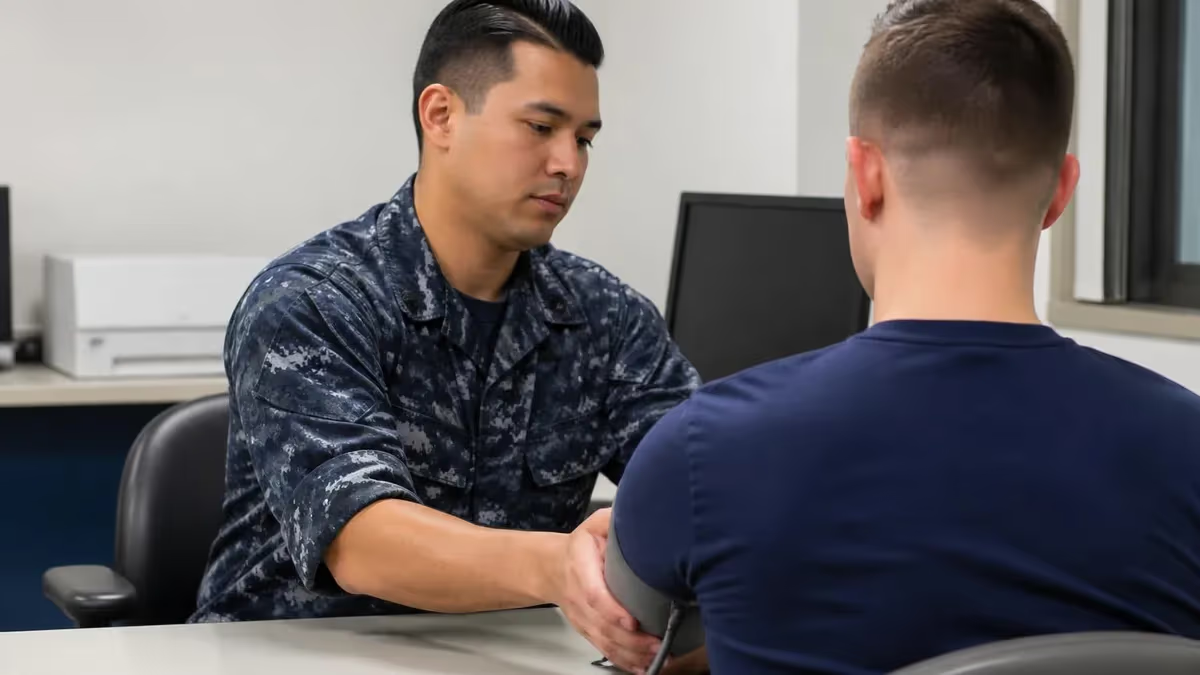
Dallas MEPS: Overview
The Dallas Military Entrance Processing Station (MEPS) is the official processing facility for military recruits in the Dallas/Fort Worth metropolitan area and surrounding regions of North Texas. Every person enlisting in the United States Army, Navy, Marine Corps, Air Force, Coast Guard, or Space Force from the DFW region will process through Dallas MEPS before they can officially enter military service. MEPS is where your enlistment becomes official — it's where you take your ASVAB test (if you haven't already), complete your medical examination, pass moral and character screening, select your job, and take the Oath of Enlistment.
Dallas MEPS operates as part of the Military Entrance Processing Command (MEPCOM), which oversees 65 MEPS locations across the United States. All MEPS locations follow the same standard procedures and conduct the same evaluations, so your experience at Dallas MEPS will closely mirror what recruits at other MEPS locations go through. The primary differences between MEPS locations are geographic — which areas they serve, how many recruits they process each day, and local logistics like hotel accommodations and transportation arrangements.
For most recruits processing through Dallas MEPS, the experience spans either one long day or an overnight two-day process depending on your branch of service and the complexity of your medical evaluation. Your military recruiter will coordinate all the logistics — transportation, hotel accommodation if needed, meals, and the appointment scheduling. You don't need to arrange anything yourself; your job at this point is to show up prepared, well-rested, and ready to complete each phase of the evaluation honestly and thoroughly.
Understanding what Dallas MEPS does before you arrive takes away a significant source of anxiety for most recruits. The process is standardized, predictable, and designed to determine whether you meet the physical, mental, and moral standards for military service. Thousands of recruits have successfully processed through Dallas MEPS — thorough preparation is the most reliable path to a smooth processing day. Review the complete MEPS guide alongside this Dallas-specific overview to get the full picture.
The Dallas MEPS facility processes recruits from the entire DFW metropolitan area, which spans multiple counties in North Texas and includes one of the largest military-age populations in the country. Texas consistently ranks among the top states for military enlistment nationally, and the Dallas MEPS handles a significant share of that volume. The facility is staffed by both military and civilian personnel — uniformed officers and enlisted staff coordinate with civilian medical technicians, physicians, and administrative workers to move recruits through the processing pipeline efficiently.
If you are enlisting in a branch that ships to basic training relatively soon, your MEPS processing date is a milestone that sets the clock on the rest of your military entry timeline. Once you pass MEPS and take the Oath of Enlistment, you are officially in the Delayed Entry Program (DEP) if your ship date is in the future. DEP members remain civilians but are contractually committed to report to basic training on their assigned date. Your recruiter will stay in contact with you during the DEP period to ensure you remain eligible and physically prepared.
Dallas MEPS also handles re-entry processing for prior service military members who are seeking to return to active duty, join the Reserve or National Guard, or transfer between branches. Prior service applicants have a slightly different processing flow than first-time enlistees — their previous service records, discharge characterization, and any prior medical documentation are reviewed as part of the eligibility determination. Prior service applicants should work closely with their recruiter to understand what additional documentation they need to bring compared to a first-time enlistment package.
North Texas also has multiple military installations that Dallas MEPS feeds — including Naval Air Station Fort Worth Joint Reserve Base and various Army Reserve and National Guard installations across the DFW area. Recruits heading to these installations after completing their enlistment still process through Dallas MEPS before reporting for duty, making MEPS the universal entry point regardless of which installation you are ultimately assigned to.
Texas Guard and Reserve components also process through Dallas MEPS. The Texas Army National Guard, Texas Air National Guard, and various Army Reserve and Naval Reserve units in the DFW area all route their new enlistees through MEPS for initial processing.
If you are enlisting in a Reserve or Guard unit rather than active duty, your MEPS experience is essentially the same — same medical evaluation, same ASVAB if needed, same background review, same Oath of Enlistment. The distinction is that your ship date to basic training may be months or even a year or more in the future if you are joining a Guard or Reserve unit with a specific training window.
Dallas MEPS processes both male and female recruits for all branches that accept them. The facility has separate examination areas for male and female recruits during the physical examination phases. Female recruits additionally complete a pregnancy test as part of their medical screening — a positive result results in a temporary disqualification pending delivery and medical clearance. All other aspects of the MEPS process are identical regardless of gender. MEPS staff are trained in professional conduct standards and recruits who experience any inappropriate behavior are encouraged to report it through their recruiter or the MEPS Inspector General channel.
MEPS does not determine your final assignment or duty station — that comes after basic training and any follow-on school. What MEPS does is establish your baseline eligibility and match you to a job based on your aptitude and medical qualification.
The decisions made at Dallas MEPS on your processing day shape the trajectory of your entire military career, from the job you are assigned to the training pipeline you enter. Taking it seriously — preparing your documents, getting a good night of sleep, arriving on time, and answering every question honestly — is the single most impactful thing you can do on this day.

What to Expect on Processing Day at Dallas MEPS
Dallas MEPS typically requires recruits to arrive early — often between 4:30 and 6:00 AM depending on your reporting instructions. Your recruiter will tell you the exact time. If you're staying in the MEPS-arranged hotel the night before (which most out-of-area recruits do), transportation from the hotel to the MEPS facility is coordinated by MEPS staff. If you're local and driving yourself, your recruiter will provide the facility address and parking guidance.
When you arrive at Dallas MEPS, you'll check in at the reception desk and receive a folder containing your medical and enlistment paperwork. You'll be directed to waiting areas between each phase of processing. The waiting is often the most patience-testing part of the day — dozens of recruits from different branches cycle through the facility simultaneously, and the schedule moves based on medical staff availability, the number of recruits being processed, and how quickly each individual moves through the phases.
Breakfast is provided at the MEPS facility. Don't skip it — the processing day is physically and mentally demanding, often lasting 8-12 hours. Wear comfortable, loose-fitting clothing that allows for easy medical examination (no belts, no tight clothing, nothing with excessive hardware or metal). Women should avoid underwire bras because the metal triggers the security equipment at the facility entrance. Remove all jewelry, piercings, and accessories before you arrive.
You will spend significant time in your underwear during the medical examination — this is standard at all MEPS locations and is conducted by licensed medical professionals in a clinical setting. The physical examination is thorough: the physicians and medical technicians check you more carefully than any routine sports physical or annual checkup. Disclose all medical history honestly. If you attempt to conceal a medical condition and it's discovered after enlistment — during training or deployment — the consequences can be severe.
The behavioral standards at Dallas MEPS are strict and deliberately so. You should be respectful, attentive, and responsive to all MEPS staff instructions. Do not bring a cell phone into restricted areas — phone use is restricted in medical examination areas. Follow the dress code.
Don't try to be funny or make light of the process in front of MEPS staff; the examiners take their role seriously and appreciate recruits who do the same. Being cooperative and professional throughout the day makes the process move faster for you and creates a better impression with the staff who write notes in your file.
One practical tip for the waiting periods: bring a small book or reading material if your recruiter allows it. Some MEPS locations restrict electronics in waiting areas. The waiting is real and unavoidable — particularly if you are processed at the same time as a large group of recruits from a single service branch.
Use the time to review your paperwork, think through your answers to background questions, and mentally prepare for the interview portions of the day. Recruits who arrive mentally prepared for a long day rather than expecting a quick in-and-out experience are consistently less stressed by the process.
After the physical examination phase, recruits with no medical holds proceed to the background and character interview. A MEPS liaison officer or clerk will ask you to verify your answers to the background questions on your enlistment forms. These questions cover your family history, prior residences, employment history, references, education, and any legal, financial, or drug use history you disclosed.
Answer consistently with what you wrote on your forms. If you need to add information you forgot to disclose on the forms, flag it before the interview rather than hoping it won't come up — proactive disclosure is treated far more leniently than a discrepancy discovered during the interview or background check.
- ✓Social Security card (original — not a photocopy)
- ✓Birth certificate (certified copy with raised seal or government-issued copy)
- ✓Valid government-issued photo ID (driver's license, state ID, or passport)
- ✓Selective Service registration card or number (males aged 18-25)
- ✓High school diploma or transcripts showing graduation date
- ✓College transcripts if applicable
- ✓Medical records for any disclosed conditions (surgeries, injuries, chronic conditions)
- ✓List of all prescription medications (bring bottles if possible)
- ✓Eyeglasses or contact lenses (and glasses case/solution if applicable)
- ✓Social Security numbers for immediate family members
- ✓Marriage certificate or divorce decree if applicable
- ✓Any court documents related to prior arrests, charges, or convictions
- ✓Comfortable, loose-fitting clothing — nothing with excessive metal
- ✓Cash or debit card for vending machines (optional, meals are provided)

Dallas MEPS Medical Exam and ASVAB
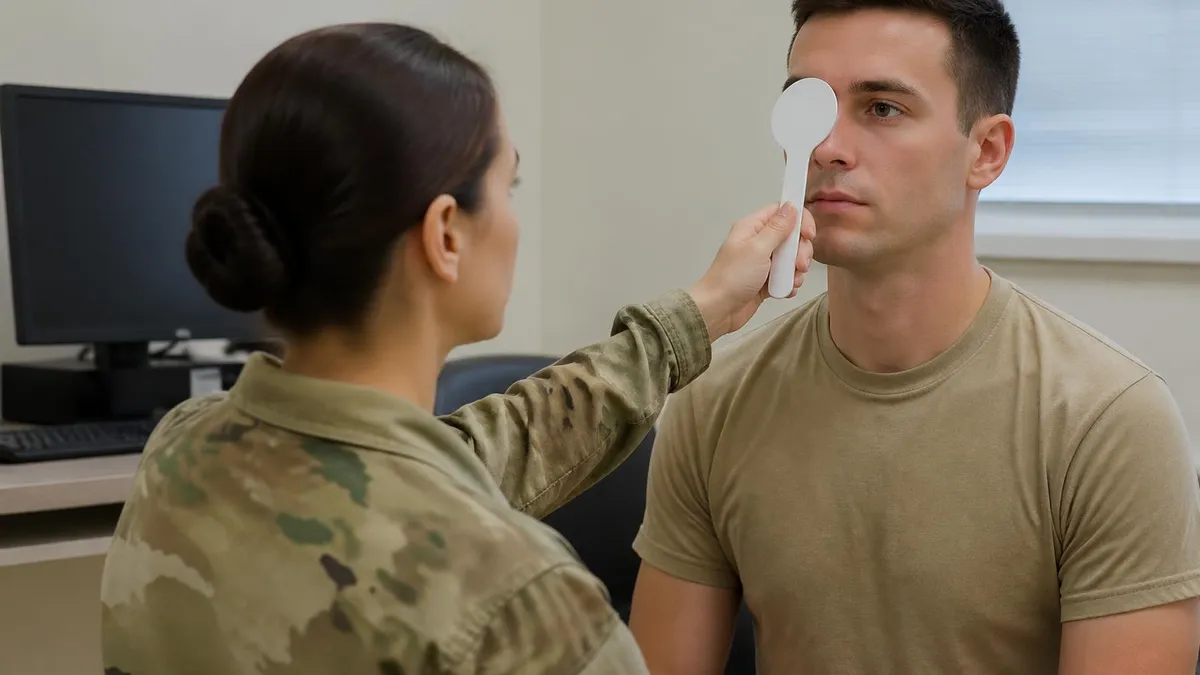
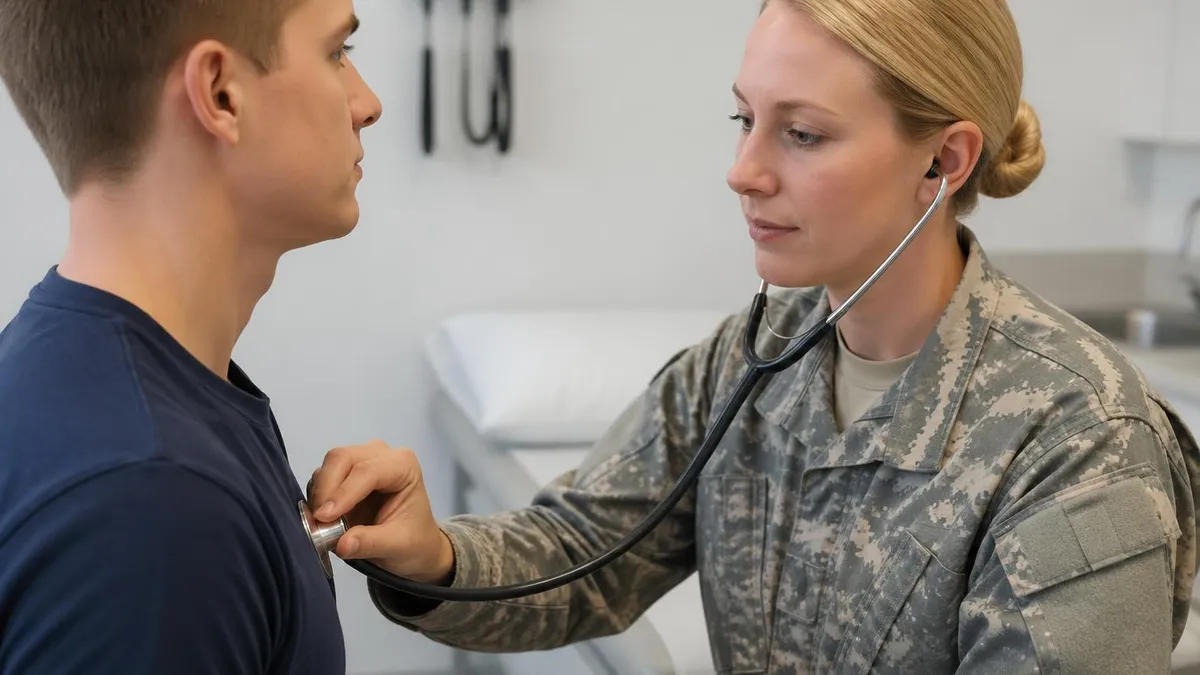
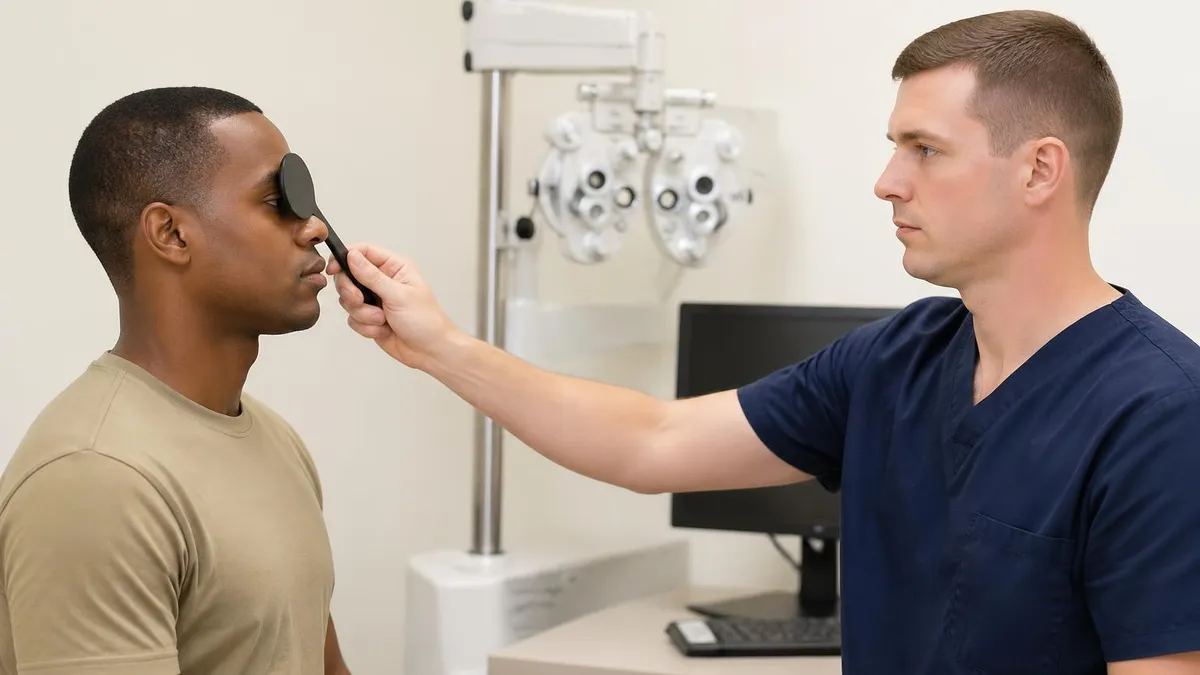
The medical examination at Dallas MEPS is the most rigorous part of the processing day for most recruits. MEPS medical staff are trained to identify disqualifying conditions specified in Department of Defense accession standards — conditions that would prevent you from completing military training or performing your duties safely. Common disqualifying findings include vision below correctable standards, hearing loss above threshold levels, blood pressure outside acceptable ranges, certain orthopedic conditions, and mental health history that falls within exclusionary categories.
If a disqualifying condition is found, the MEPS physician may issue a temporary disqualification pending additional documentation (such as a specialist's report showing that a past injury has fully healed), or a permanent disqualification. Many initial medical holds are resolved through waiver processes — your recruiter can file a waiver request with the relevant branch's medical review authority. Waivers take time and aren't guaranteed, but they resolve many borderline medical issues that would otherwise prevent enlistment. Don't assume an initial hold means your military career is over.
The ASVAB at Dallas MEPS is the computerized version (CAT-ASVAB), which adapts the difficulty of questions based on your answers in real time. This version is generally considered more time-efficient than the paper version. You cannot study for it the night before and dramatically improve your score — the ASVAB reflects reasoning and verbal/mathematical abilities developed over years of education.
However, reviewing ASVAB aptitude testing questions for practice before your MEPS date helps you become familiar with question formats and reduces test anxiety. Most recruits take the ASVAB at their recruiter's office or a Military Testing Center before their MEPS date, but if you haven't, you'll take it at Dallas MEPS on your processing day.
For recruits who have prior ASVAB scores from a different testing center or recruiter office, Dallas MEPS will use those scores as long as they are valid (scores are valid for 2 years). If your scores are expiring or you want to improve them, you can retake the ASVAB — but confirm with your recruiter whether a retest is in your interest, since the most recent score is the one used regardless of whether it is higher or lower than a previous attempt.
Most branches allow one ASVAB retest after a one-month waiting period, with a second retest possible after another month.
After completing medical and background phases, recruits proceed to job counseling with a military liaison for their specific branch. At this point, the ASVAB scores you earned — whether at Dallas MEPS or a previous testing site — become the primary determinant of which jobs are available to you. High-demand technical jobs in fields like intelligence, cryptology, linguistics, aviation maintenance, and information technology typically require high ASVAB composite scores. Your counselor will present available jobs and their associated bonuses, training timelines, and duty station options based on what is currently open in the enlistment pipeline.
The MEPS process culminates in the Oath of Enlistment. At Dallas MEPS, the oath is administered in a formal setting, often with a military officer present. Many families drive to Dallas to observe the oath ceremony — check with your recruiter about whether family observers are permitted on your specific processing date, as policies can vary. The ceremony is brief but significant: the words of the oath commit you to the defense of the Constitution and to the orders of your military superiors during your service.
Your recruiter is always your best resource for Dallas MEPS questions specific to your branch and situation.
MEPS Practice Test Questions
Prepare for the MEPS - Military Entrance Processing Stations exam with our free practice test modules. Each quiz covers key topics to help you pass on your first try.
MEPS Introduction to MEPS
MEPS Exam Questions covering Introduction to MEPS. Master MEPS Test concepts for certification prep.
MEPS ASVAB
Free MEPS Practice Test featuring ASVAB. Improve your MEPS Exam score with mock test prep.
MEPS Paragraph Comprehension
MEPS Mock Exam on Paragraph Comprehension. MEPS Study Guide questions to pass on your first try.
MEPS Military Entrance Processing Stations...
MEPS Test Prep for Military Entrance Processing Stations (MEPS) Applicant Processing and Standards. Practice MEPS Quiz questions and boost your score.
MEPS Military Entrance Processing Stations...
MEPS Questions and Answers on Military Entrance Processing Stations (MEPS) ASVAB Aptitude Testing. Free MEPS practice for exam readiness.
MEPS Military Entrance Processing Stations...
MEPS Mock Test covering Military Entrance Processing Stations (MEPS) Enlistment and Oath Ceremony. Online MEPS Test practice with instant feedback.
MEPS Military Entrance Processing Stations...
Free MEPS Quiz on Military Entrance Processing Stations (MEPS) Job Counseling and Contracts. MEPS Exam prep questions with detailed explanations.
MEPS Military Entrance Processing Stations...
MEPS Practice Questions for Military Entrance Processing Stations (MEPS) MEPS Medical Examinations. Build confidence for your MEPS certification exam.
MEPS Military Entrance Processing Stations...
MEPS Test Online for Military Entrance Processing Stations (MEPS) Moral and Background Screening. Free practice with instant results and feedback.
MEPS Applicant Pre-Screening Process
MEPS Study Material on Applicant Pre-Screening Process. Prepare effectively with real exam-style questions.
MEPS Applicant Processing and Conduct
Free MEPS Test covering Applicant Processing and Conduct. Practice and track your MEPS exam readiness.
MEPS ASVAB Administration and Purpose
MEPS Exam Questions covering ASVAB Administration and Purpose. Master MEPS Test concepts for certification prep.
MEPS ASVAB Aptitude Testing
Free MEPS Practice Test featuring ASVAB Aptitude Testing. Improve your MEPS Exam score with mock test prep.
MEPS Enlistment Contracts and Oaths
MEPS Mock Exam on Enlistment Contracts and Oaths. MEPS Study Guide questions to pass on your first try.
MEPS Job Selection and Counseling
MEPS Test Prep for Job Selection and Counseling. Practice MEPS Quiz questions and boost your score.
MEPS Job Selection and Enlistment
MEPS Questions and Answers on Job Selection and Enlistment. Free MEPS practice for exam readiness.
MEPS Medical Examination Procedures
MEPS Mock Test covering Medical Examination Procedures. Online MEPS Test practice with instant feedback.
MEPS Medical Examination Process
Free MEPS Quiz on MEPS Medical Examination Process. MEPS Exam prep questions with detailed explanations.
MEPS Moral and Background Standards
MEPS Practice Questions for Moral and Background Standards. Build confidence for your MEPS certification exam.
Dallas MEPS by Branch of Service
Army Processing at Dallas MEPS
Army recruits processing at Dallas MEPS follow the same four-phase process as other branches but meet with an Army Career Counselor during the job selection phase to discuss MOS (Military Occupational Specialty) options. Army jobs are assigned based on ASVAB line scores — the Army uses composite scores from specific ASVAB subtests to determine which MOS fields you qualify for. Army recruits are typically processed for either Active Duty or Reserve/National Guard service.
- MOS selection based on ASVAB line scores
- Active Duty, Army Reserve, and Texas National Guard options
- DEP (Delayed Entry Program) for future ship dates
- Army BONUS offers presented by counselor for high-demand MOS
- Physical fitness standards reviewed during screening

Overnight Hotel vs. Same-Day Processing
- +Overnight hotel means you arrive rested and not stressed from a long early morning drive
- +Hotel transport to Dallas MEPS is pre-arranged — no parking or navigation stress
- +Two-day schedule gives more time for thorough medical evaluations if needed
- +Evening before allows recruits to review paperwork and ask recruiters last-minute questions
- +Hotel stay includes dinner and breakfast — you're properly fueled for processing day
- −Overnight stay means being away from home an extra day
- −Recruits share hotel rooms — sleep quality varies
- −Some recruits are anxious in unfamiliar hotel environments the night before
- −Same-day processing is faster if you're local and fully prepared
- −Hotel MEPS schedule sometimes means earlier wake-up times than driving yourself
Dallas MEPS Questions and Answers


About the Author

Retired Military Officer & Armed Forces Test Preparation Specialist
United States Army War CollegeColonel Steven Harris (Ret.) served 28 years in the US Army, earning a Master of Arts in Military Science from the Army War College and a Bachelor of Science in Criminal Justice. He has coached thousands of military enlistment and officer candidate program applicants through the ASVAB, AFQT, AFCT, OAR, and officer selection assessment processes across all military branches.
Join the Discussion
Connect with other students preparing for this exam. Share tips, ask questions, and get advice from people who have been there.
View discussion (8 replies)