
12 Month LPN Program Online: How Hybrid Programs Work, What LPNs Do, and What to Expect
🎓 Is a 12 month LPN program online real? Learn how hybrid programs work, costs, clinical hours, admission steps, NCLEX-PN prep, and career duties.
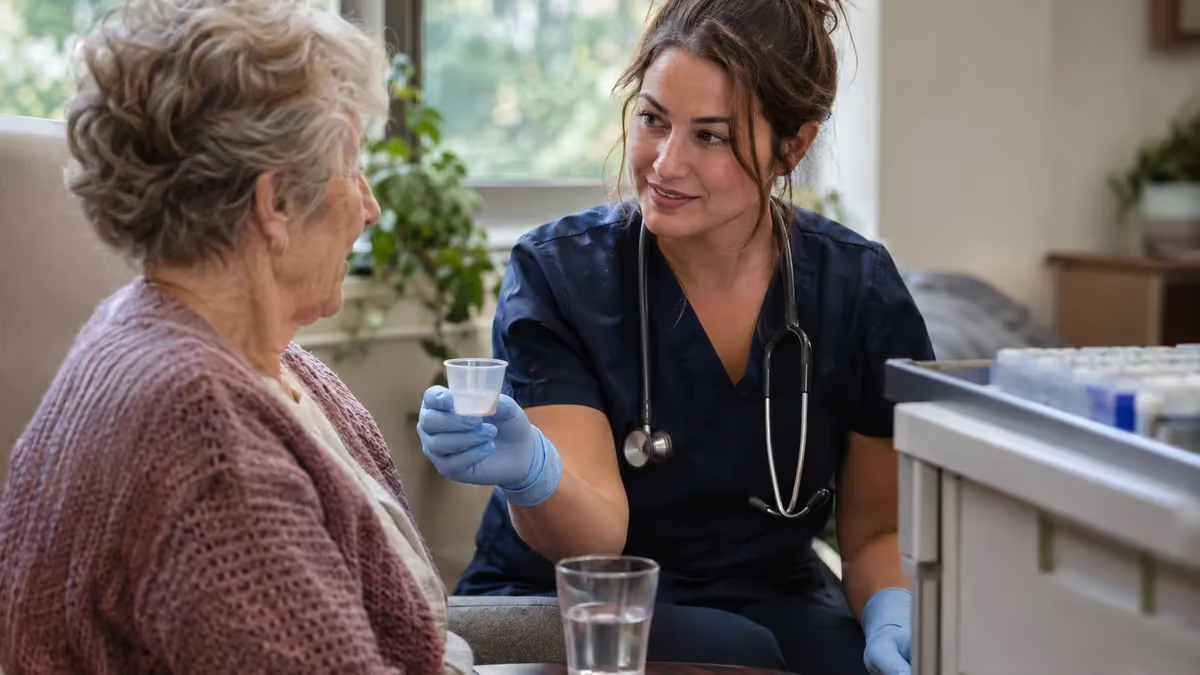
A 12 month LPN program online sounds almost too convenient: finish nursing school in one year, study from your kitchen table, and sit for the licensing exam before the next holiday season. The reality is more nuanced, and also more encouraging than many shoppers expect. No state board approves a nursing program that is entirely virtual, but approved hybrid programs deliver classroom content online and place you in real clinical settings for hands-on training. Practice with the free Certified Practical Nurse practice test on PracticeTestGeeks (72 questions with answer explanations).
That hybrid model is what people usually mean when they search for an online LPN pathway. Lectures, readings, quizzes, and discussion boards happen on your schedule, while skills labs and supervised clinical rotations happen in person at campuses, hospitals, nursing homes, and clinics near you. The result is flexibility without skipping the competencies that protect patients, and it is why employers treat graduates of approved hybrid programs the same as graduates of traditional ones.
Licensed practical nurses, called licensed vocational nurses in California and Texas, provide basic bedside care under the direction of registered nurses and physicians. They take vital signs, change dressings, administer many medications, document observations, and notice when a patient looks wrong. The work is practical, human, and in steady demand, especially in long-term care, home health, rehabilitation, and physician offices across the country, which is why a short program with a clear finish line appeals to career changers.
Before you enroll, it helps to understand the whole path: prerequisites, entrance testing, program length, clinical hour requirements, tuition, and the NCLEX-PN licensing exam. It also helps to know what an LPN actually does all day, because the career you are buying matters more than the format you study in. This article covers both sides so you can compare programs with confidence rather than marketing copy.
If you already hold the license, the options widen quickly. Many nurses use the credential as a launchpad into flexible assignments, and an online lpn program graduate who builds a year or two of experience can explore the pay and requirements covered in our travel nursing guide. That is a long-term goal, though; the first job priority is simply to graduate, pass, and gain solid fundamentals.
Throughout this guide, we use plain numbers wherever possible. Program length, clinical hours, cost, and pass rates vary by state and school, so treat every figure as a planning range and verify it with your state board of nursing and the school's admissions office. Accreditation and board approval are the two checks that matter most, and we will explain exactly how to confirm them before you pay a deposit.
By the end, you should know whether a twelve-month hybrid path fits your life, what a realistic weekly workload looks like, and how to prepare for the exam that follows. Use the practice questions linked throughout to test yourself early, because the habit of answering nursing-style questions is the single most useful skill you can build while you are still deciding where to enroll.
Free Certified Practical Nurse Study Tools
Interactive Certified Practical Nurse resources on PracticeTestGeeks, free to start:
- LPN Medical-Surgical Nursing: Cardiovascular Disorders 1 — 72 questions with instant scoring and answer explanations
- Certified Practical Nurse flashcards — review key terms and concepts card by card
- Certified Practical Nurse study guide — topic-by-topic overview of what the exam covers
- Certified Practical Nurse cheat sheet — one-page printable summary for last-minute review
LPN Careers and Programs by the Numbers
How a 12 Month LPN Program Online Actually Works
Anatomy, pharmacology, fundamentals, and nursing theory are delivered through a learning management system with lectures, readings, simulations, and timed exams. You study on your own schedule but must meet firm weekly deadlines throughout the twelve months.
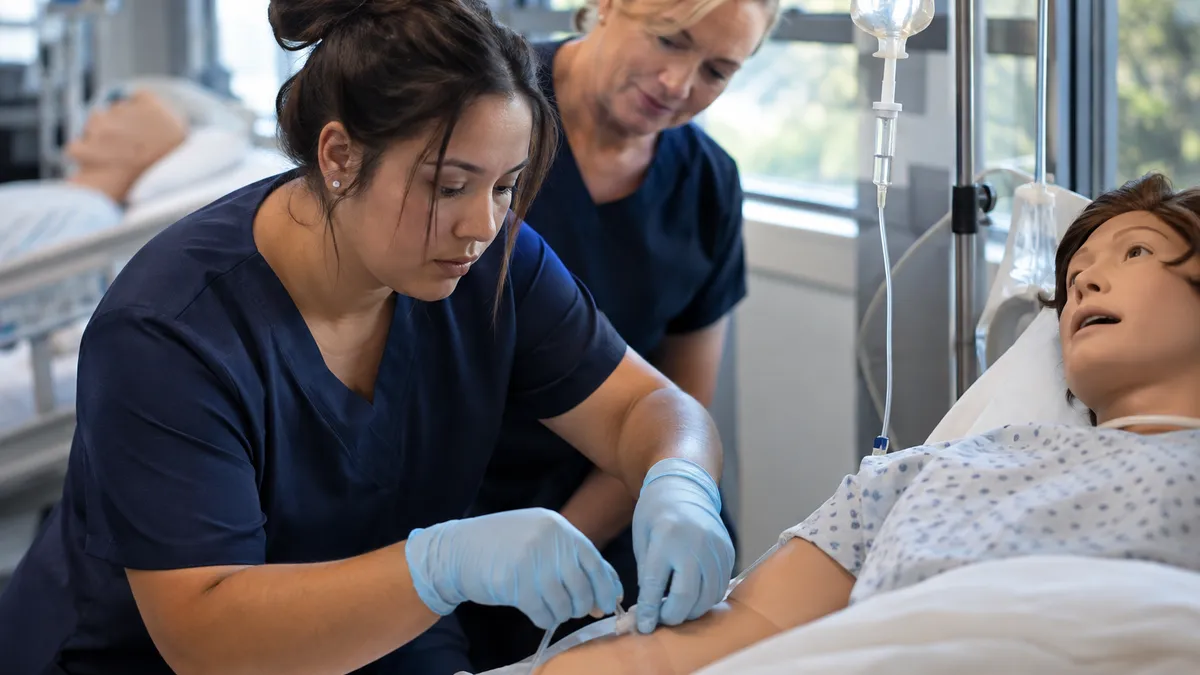
Hands-on competencies such as injections, catheter care, sterile dressing changes, and vital signs are practiced in person on mannequins and lab partners. Instructors check off each skill before you are allowed to perform it on real patients.
State boards require hundreds of in-person clinical hours in settings like nursing homes, hospitals, and clinics. A clinical instructor supervises you while you care for real patients, building confidence, judgment, and professional habits.
Programs build in review courses, practice exams, and remediation so you can pass the national licensing exam soon after graduation. Passing earns your license and the legal right to practice as a practical nurse in your state.
What Does an LPN Do? Daily Duties and Responsibilities
The best way to judge any LPN program is to picture the job it prepares you for. A typical shift begins with report, where the outgoing nurse summarizes each patient's condition, pending orders, and concerns. LPNs then review assignments, gather supplies, and begin rounds. In a nursing home that might mean eight to twelve residents; in a hospital step-down unit or clinic the count and acuity differ, but the rhythm of assess, act, and document stays similar.
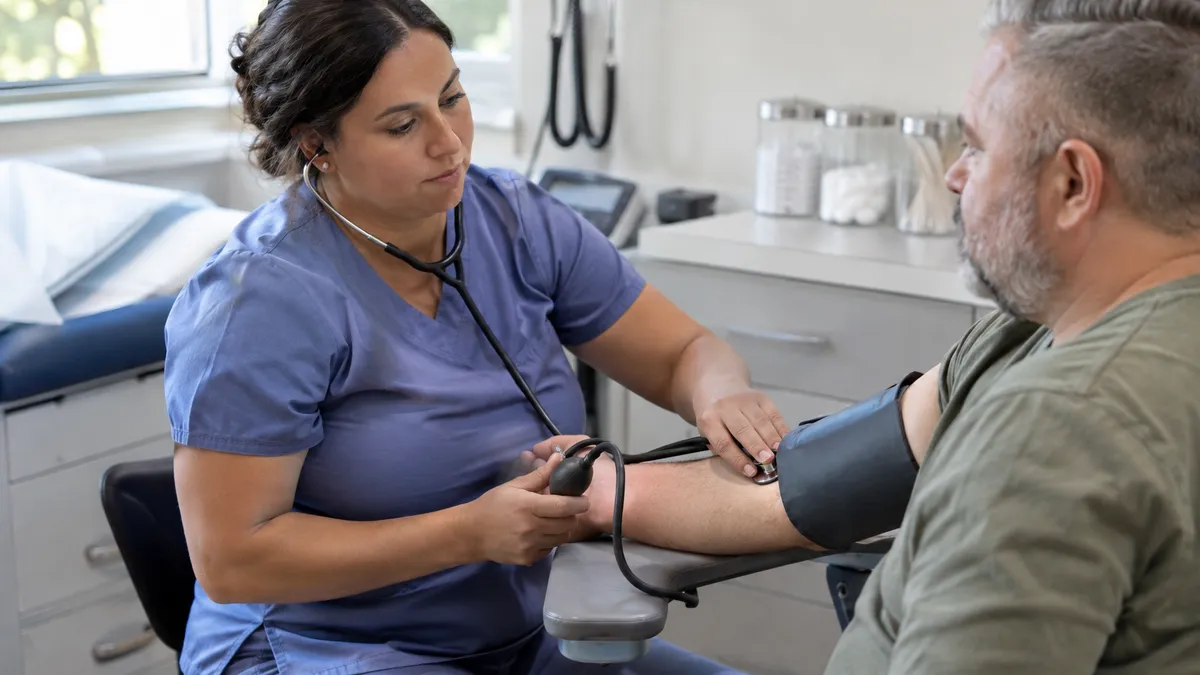
Core clinical duties include measuring temperature, pulse, respiration, blood pressure, and oxygen saturation, then recognizing readings that fall outside normal ranges. LPNs also collect specimens, monitor intake and output, perform blood glucose checks, and report changes to the registered nurse or provider. Noticing that a resident who usually eats well pushed away breakfast, or that a patient's breathing looks labored, is often the observation that triggers earlier treatment and prevents a hospital transfer.
Medication administration is a major responsibility, though scope depends on state law and employer policy. Most LPNs give oral, topical, subcutaneous, and intramuscular medications after verifying the five rights: right patient, drug, dose, route, and time. Many states allow some IV therapy after additional certification, while others restrict it. You will learn dosage calculations, common drug classes, side effects, and documentation rules, and you will practice them repeatedly in the skills lab before touching a real patient.
Wound and basic procedural care fills much of the day. LPNs change sterile and clean dressings, insert and care for urinary catheters, give enemas, apply compression stockings, assist with ostomy care, and help with range-of-motion exercises. They also help patients with bathing, feeding, repositioning, and mobility when needed. These tasks may seem simple, but doing them safely requires infection control discipline, clear communication, and respect for a patient's dignity during vulnerable moments.
Documentation and communication consume more time than most students expect. Every medication, vital sign, intervention, and patient response must be recorded accurately in the electronic health record, often within minutes. LPNs also teach patients and families about medications, diet, wound care, and warning signs, reinforcing the care plan that the registered nurse or provider created. Clear, timely charting protects patients and also protects you legally if care is ever questioned.
Scope of practice marks the line between LPN and RN work. In general, LPNs contribute to the care plan rather than writing it, perform focused assessments rather than comprehensive initial ones, and work under supervision. In many long-term care facilities, however, an LPN may be the charge nurse, supervising nursing assistants and coordinating care for an entire wing. Always check your state's nurse practice act, since delegation and IV rules differ meaningfully across state lines.
The soft skills matter as much as the technical ones. Patience with confused residents, calm during emergencies, physical stamina for twelve-hour shifts, and the humility to ask questions all define strong practical nurses. A 12 month program compresses a great deal of learning, so developing those habits early, including time management and teamwork, will serve you both in clinicals and in the first job that follows graduation.
Online LPN Program Options: Hybrid, Part-Time, and Accelerated Paths
A twelve-month hybrid track is usually full-time and cohort-based. You complete theory courses online, often through recorded lectures, simulations, and weekly deadlines, then report to campus for skills labs and to partner facilities for clinical rotations. Expect roughly 25 to 40 hours per week once labs, clinicals, and study time are combined. The schedule is intense but predictable, and finishing in one year means earning a nurse's wage sooner.
This format suits people who can reduce work hours or have family support for a year. It also rewards organized self-starters who are comfortable with technology. Ask whether clinical days are fixed or assigned late, since last-minute schedules can clash with childcare or jobs. Confirm too whether the program holds one start date annually, because missing it could push your plans back by an entire year.
Is a 12 Month LPN Program Online Right for You?
- +Fastest realistic path to a nursing license and a paycheck
- +Online lectures fit around family and part-time work
- +Lower total tuition than most associate degree nursing programs
- +Strong demand for LPNs in long-term care and home health
- +Clinical rotations often lead directly to job offers
- +Credits and experience can later shorten an LPN-to-RN bridge
- −Accelerated pace leaves little room to fall behind
- −Clinicals and labs still require in-person attendance
- −Seats are limited and many cohorts start only once a year
- −Self-discipline is essential since no one enforces study time
- −Working full-time while enrolled is difficult or impossible
- −LPN scope and pay are narrower than those of registered nurses
Pros and Cons at a Glance
| Pros | Cons |
|---|---|
| Fastest realistic path to a nursing license and a paycheck | Accelerated pace leaves little room to fall behind |
| Online lectures fit around family and part-time work | Clinicals and labs still require in-person attendance |
| Lower total tuition than most associate degree nursing programs | Seats are limited and many cohorts start only once a year |
| Strong demand for LPNs in long-term care and home health | Self-discipline is essential since no one enforces study time |
| Clinical rotations often lead directly to job offers | Working full-time while enrolled is difficult or impossible |
| Credits and experience can later shorten an LPN-to-RN bridge | LPN scope and pay are narrower than those of registered nurses |
12 Month LPN Program Online Enrollment Checklist
- ✓Confirm the program is approved by your state board of nursing.
- ✓Check for ACEN or comparable national accreditation.
- ✓Request three years of first-time NCLEX-PN pass rates.
- ✓Ask how many clinical hours are required and who arranges them.
- ✓Verify start dates and application deadlines for the next cohort.
- ✓Schedule and prepare for the TEAS or required entrance exam.
- ✓Gather immunization records, CPR card, and background check paperwork.
- ✓Complete the FAFSA and ask about scholarships and employer aid.
- ✓Get a written total cost sheet including fees and supplies.
- ✓Set up a quiet study space and a weekly study schedule.
Hybrid, Not 100% Online
Every board-approved LPN program includes in-person clinical training, so a fully online nursing program cannot lead to licensure. Think of a 12 month LPN program online as online theory plus mandatory hands-on labs and rotations, and verify approval with your state board before paying any deposit.
Admission Requirements, Costs, and Accreditation
Most programs require a high school diploma or GED, a minimum GPA, and completion of the TEAS or a similar entrance exam. Many also ask for a background check, drug screening, immunization records, CPR certification, and a physical exam, because clinical sites demand them. Some schools add prerequisite courses such as anatomy and physiology or introductory psychology. Gather these documents early, since immunization titers and background checks can take several weeks to complete.
Entrance testing deserves real preparation. Seats in a twelve-month track are limited, and admissions teams rank applicants by test score, GPA, and sometimes an interview or essay. Learn the TEAS format, timing, and scoring before you register. A strong score can move you from the waitlist into the cohort, and it saves the cost and delay of retaking the exam, which usually involves a fee and a mandatory waiting period.
Tuition varies widely. Community college programs often run roughly $5,000 to $15,000 for the full certificate, while private career schools and technical colleges can charge $15,000 to $30,000 or more. Add uniforms, textbooks, a stethoscope, background checks, liability insurance, and the NCLEX-PN registration fee, which is currently $200, plus state licensing fees. Request a written total cost sheet so nothing surprises you in month nine.
Financial aid can reduce the burden considerably. Complete the FAFSA to check eligibility for Pell Grants and federal loans, and ask about institutional scholarships, employer tuition assistance, and workforce programs such as WIOA funding in your state. Many nursing homes and hospitals sponsor aspiring nurses in exchange for a work commitment after licensure. Read any such agreement carefully, including repayment terms if you leave early, before signing.
Accreditation and approval are non-negotiable. The program must be approved by your state board of nursing, and national accreditation from ACEN or similar bodies strengthens the credential, especially if you plan to bridge to an RN program later. Without board approval, you may be unable to sit for the NCLEX-PN at all. Verify status directly on the board's website rather than trusting a school brochure or an enrollment advisor's promise.
Ask pointed questions about outcomes. What percentage of students complete the program on time? What is the first-time NCLEX-PN pass rate for the last three years? Who arranges clinical placements, and how far might you travel? Programs that cannot answer clearly, or that guarantee placement and licensure, deserve skepticism. Strong schools publish this data and gladly connect you with recent graduates who can describe the workload honestly.
Finally, compare the calendar. A genuine twelve-month track usually means three or four consecutive terms with few breaks, and clinicals may run on weekdays, evenings, or weekends depending on site availability. Confirm start dates, because many cohorts begin only once or twice a year. If your life cannot absorb a full-time load, an eighteen-month part-time option may prove the more reliable route to the same license.
Graduating from an unapproved program can make you ineligible for the NCLEX-PN and for licensure in your state. Look up the school on your state board of nursing website, and be cautious of any program promising guaranteed licensure or no in-person clinicals.
LPN Career Outlook, Work Settings, and Advancement
Once licensed, LPNs work in a surprisingly broad set of settings. Nursing and residential care facilities employ the largest share, followed by hospitals, physician offices, home health agencies, and outpatient clinics. Correctional facilities, schools, rehabilitation centers, and hospice programs also hire practical nurses. Each environment shapes your day differently, so shadowing or volunteering before you enroll can help you decide where your strengths and temperament fit best.
Pay depends on location, setting, shift, and experience. The Bureau of Labor Statistics reported a median annual wage of roughly $62,000 for LPNs and LVNs in May 2024, with the top earners in high-cost states and in specialty or government roles earning notably more. Night, weekend, and agency shifts often carry differentials. Compare offers by total compensation, including benefits, tuition assistance, and schedule flexibility, not hourly rate alone.
Demand remains healthy. An aging population needs more long-term care, chronic disease management, and home-based services, and LPNs are a cost-effective way for employers to deliver bedside care. The Bureau of Labor Statistics projects steady growth over the decade, along with thousands of openings each year from retirements and turnover. Local conditions vary, so check job postings in your county before assuming the national outlook applies to your commute.
Specialization adds options. LPNs can pursue certifications in areas like gerontology, wound care, IV therapy, pharmacology, and hospice and palliative care, depending on state rules and employer support. Those credentials signal expertise, sometimes raise pay, and can open doors to roles such as unit manager in long-term care. Even without formal certification, deep experience with a particular patient population makes you more valuable and more likely to be promoted.
Many practical nurses eventually bridge to registered nursing. LPN-to-RN and LPN-to-BSN pathways give credit for prior coursework and clinical experience, shortening the time to an associate or bachelor's degree. Working as an LPN while you study lets you earn income, confirm that nursing suits you, and sometimes qualify for employer tuition reimbursement. If an RN license is your long-term goal, ask each school which credits transfer before you enroll.
Flexible work is another advantage. Per diem shifts, home health visits, and agency assignments let LPNs control their schedules more than many professions allow, and some experienced nurses travel for contract roles. These paths typically require a year or more of solid experience and an active license, plus compact-state considerations if you cross state lines. Build a reliable foundation first, then use flexibility as a reward rather than a shortcut.
Realistic expectations help you stay in the field. The work can be physically demanding, emotionally heavy, and understaffed at times, yet it offers meaningful relationships and visible impact. Graduates who thrive usually choose a supportive first employer, ask for orientation and a preceptor, and protect their own health through sleep, ergonomics, and boundaries. A good first year sets the tone for a career that can last decades.
Practical Tips to Succeed in a 12 Month LPN Program
Treat the program like a full-time job. Twelve months leaves little slack, so block study time on your calendar the same way you would a shift: two to three hours for each hour of class is a common rule of thumb. Protect those blocks from social obligations, and tell family and employers early so they understand your temporary schedule. Consistency beats cramming, especially in pharmacology and fundamentals where concepts build on one another.
Build a reliable study system. Use active recall: close the book and write what you remember, then check your notes. Make flashcards for drug classes, lab values, and normal vital sign ranges, and review them in short daily sessions with spaced repetition. Join or form a small study group that meets weekly to quiz each other on scenarios. Explaining a concept aloud exposes gaps that quiet rereading hides.
Practice nursing-style questions from week one. NCLEX-PN items test judgment, not memorization alone: which patient to see first, which finding to report, which action is safe. Work through priority, delegation, and safety questions regularly and read every rationale, including those for answers you got right. Over a year, hundreds of questions train the pattern recognition that makes exam day feel familiar instead of frightening.
Prepare for clinicals like a professional. Arrive early, dress to policy, and bring your supplies, a notebook, and a short list of skills you want to practice. Ask your preceptor for feedback and accept corrections gracefully. Review each assigned patient's diagnoses and medications the night before so you can ask smart questions. Clinical sites often become employers, so your reliability and attitude are effectively a months-long job interview.
Manage technology and online logistics. Test your internet connection, learn the learning management system, and keep backups of assignments. Attend live virtual sessions when offered, and keep a quiet, consistent study space. Hybrid learning rewards self-discipline, so set weekly goals, check deadlines every Sunday, and contact instructors promptly when something goes wrong. Waiting until a unit exam to ask for help is the most common reason online students fall behind.
Plan your NCLEX-PN timeline before graduation. Apply to your state board for licensure, register with Pearson VUE, pay the fees, and receive your Authorization to Test. Most graduates test within four to eight weeks of finishing, while knowledge is fresh. The exam is adaptive, from 85 to 150 questions with up to five hours allowed, so practice stamina through full-length mixed sets and simulate the testing environment.
Protect your well-being along the way. Sleep, regular meals, movement, and time with people you love are not luxuries; they are what keep memory and judgment sharp. If you hit a rough exam, meet your instructor, adjust your method, and keep going. Many successful nurses stumbled at some point in school. Persistence, honest self-assessment, and steady practice carry far more weight than a perfect record.
Sample Certified Practical Nurse Practice Questions
Try these questions from our free Certified Practical Nurse practice tests. The correct answer and an explanation follow each question.
A 9-month-old infant is brought in for a well-child visit. Which developmental milestone would the LPN expect this infant to demonstrate?
- A. Walking independently
- B. Speaking 2–3 word sentences
- C. Sitting without support and pulling to stand
- D. Building a tower of 4 blocks
Answer: C. Sitting without support and pulling to stand
By 9 months, infants should be able to sit without support (achieved by 6–7 months) and begin pulling to a standing position using furniture.
A 7-month-old infant is brought to the emergency department. The parent reports the infant 'won't stop crying and is pulling at the right ear.' The infant has a temperature of 38.8°C (101.8°F). The LPN should expect the provider to order:
- A. Ear drops with hydrocortisone for external otitis
- B. Assessment for otitis media and likely antibiotic therapy
- C. Immediate CT scan of the head
- D. Lumbar puncture to rule out meningitis
Answer: B. Assessment for otitis media and likely antibiotic therapy
Ear pulling combined with fever, irritability, and age less than 2 years are classic signs of acute otitis media (middle ear infection), treated with antibiotics in infants under 2 years.
A newborn has Apgar scores of 5 at 1 minute and 7 at 5 minutes. Based on these findings, the LPN should expect:
- A. Emergency intubation and resuscitation
- B. Routine newborn care — both scores indicate a normal healthy infant
- C. Some initial intervention at birth followed by continued monitoring as the infant improves
- D. Immediate transfer to the NICU for respiratory support
Answer: C. Some initial intervention at birth followed by continued monitoring as the infant improves
An Apgar of 5 at 1 minute indicates some compromise requiring intervention; improvement to 7 at 5 minutes shows response to resuscitation measures. Continued monitoring is appropriate.
A 9-month-old infant is being discharged after treatment for bronchiolitis. The LPN provides discharge teaching. Which instruction is the MOST important for the parents?
- A. Give cough syrup as needed when the infant has difficulty breathing at night
- B. Administer a decongestant twice daily to reduce nasal congestion
- C. Return immediately if the infant shows increased work of breathing, poor feeding, or worsening color
- D. Keep the infant indoors for 6 weeks to prevent re-infection
Answer: C. Return immediately if the infant shows increased work of breathing, poor feeding, or worsening color
Bronchiolitis can worsen suddenly in infants. Parents must know the warning signs of respiratory deterioration (retractions, grunting, cyanosis, poor feeding) requiring immediate emergency care.
LPN Questions and Answers

LPN Travel Nursing Jobs: Complete 2026 Guide to Pay, Requirements & Top Specialties

TEAS Test for LPN: Complete 2026 Guide to Passing the ATI TEAS Exam

LPN Program in Broward County: Complete Guide to Schools, Requirements & Licensure

LPN Programs NYC: Best Schools, Cost, and How to Apply

LPN Salary Wisconsin 2026: Average Pay, Top Cities, and How to Earn More
How this page was made: written with AI tools and published by Nathan Beja, founder of Practice Test Geeks, who is responsible for its content. Exam facts are checked against the official sources listed below. Not reviewed by a subject-matter expert. Editorial policy
Sources & references
Exam facts on this page (fees, format, dates, passing scores) are checked against these official sources; the date is our last check. Editorial policy
- op.nysed.gov — Fees, renewal, score validity · verified Nov 2026
- nclex.com — Eligibility, test dates, retake policy, score release, registration deadline, passing score, time limit, exam format, test delivery, exam information · verified Nov 2026