
LPN Program Without Prerequisites: What You Really Need to Get In 2026
Looking for an LPN program without prerequisites? See which entry requirements are real, what to expect, and how to start nursing school faster.
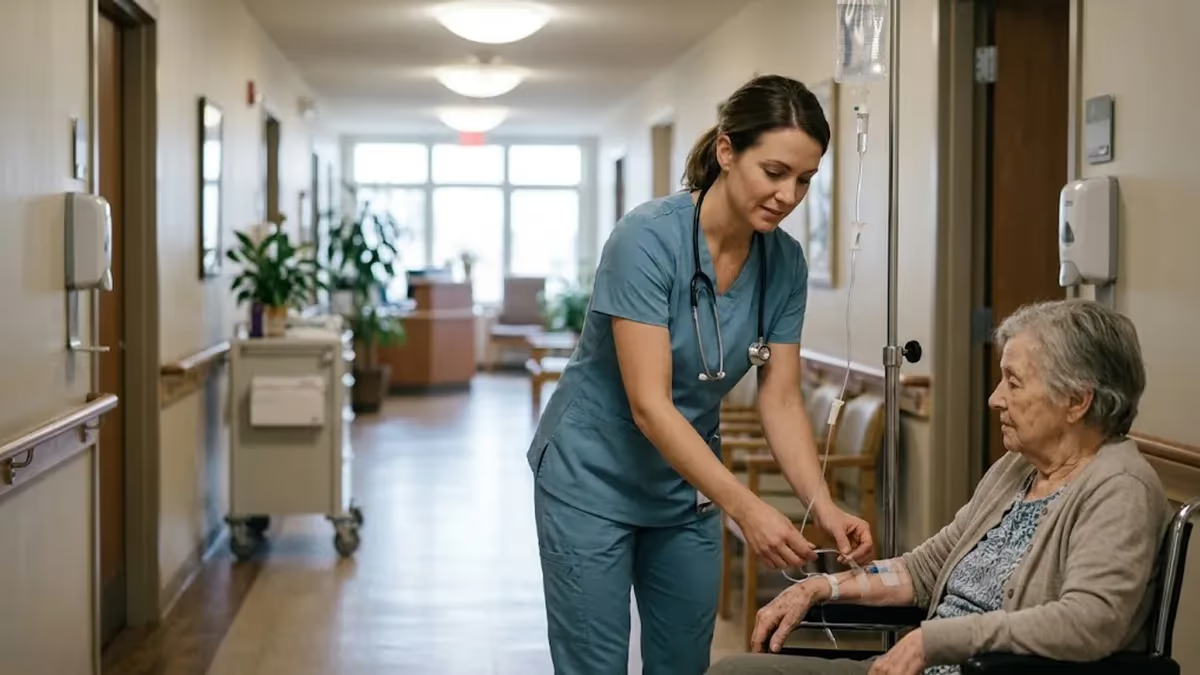
Searching for an LPN program without prerequisites usually means one thing: you want to start nursing school without spending a year or more on science courses first. The good news is that many practical nursing programs have light entry rules. The honest news is that almost none have zero requirements. Nearly every approved program asks for proof of education, a background check, and health records, because clinical sites require them before a student ever touches a patient. Practice with the free Certified Practical Nurse practice test on PracticeTestGeeks (72 questions with answer explanations).
Understanding the difference between prerequisite courses and admission requirements is the key to reading program websites. A prerequisite course is a class, such as anatomy and physiology or college algebra, that you must finish before you can apply or enroll. An admission requirement is a document or test, such as a high school diploma, an entrance exam score, or a vaccination record. Many programs marketed as having no prerequisites mean only that they skip the first category.
Licensed practical nurses, called licensed vocational nurses in California and Texas, provide basic bedside care under the direction of registered nurses and physicians. They take vital signs, change dressings, administer many medications, collect samples, and document changes in patient condition. Because the role is focused and the training is short, usually 12 to 18 months, practical nursing is one of the fastest routes into licensed healthcare work. That speed is why so many career changers search for the easiest possible entry path.
Most LPN programs are offered by community colleges, technical schools, and career centers. Public programs often build the science content into the curriculum itself, so you learn anatomy, pharmacology, and nursing fundamentals as part of the diploma rather than before it. Private career schools frequently run rolling start dates and accept students with only a diploma or GED and a passing entrance test score. Both models can lead to the same outcome: eligibility to sit for the NCLEX-PN licensing exam.
This guide walks through what typical programs actually require, which items can be completed during enrollment, and how to compare schools honestly. You will also see a realistic timeline, the costs to expect beyond tuition, and the warning signs of a program that may not lead to licensure. For a broader look at schedules and clinical placements, our guide to lpn program prerequisites and online options explains how formats differ.
A word of caution before you apply anywhere: accreditation and state board approval matter far more than how short the requirements list is. Graduating from a program that your state board of nursing does not approve can leave you ineligible to take the NCLEX-PN, which means no license and no job as an LPN. Always verify approval on your state board website before paying an application fee, deposit, or tuition installment, and keep screenshots of what you find.
Think of requirements as a ladder rather than a wall. Some steps, such as a diploma, are fixed. Others, such as CPR certification, immunizations, or a nursing assistant certificate, can often be finished in a few weeks. A smart applicant lists every item a target school wants, sorts them by how long each takes, and starts the slowest first. Done this way, a program with modest prerequisites can be started within a few months instead of a year.
LPN: upcoming dates and official changes
- Apr 1, 2026: The 2026 NCLEX-PN Test Plan took effect April 1, 2026, and runs through March 31, 2029. (National Council of State Boards of Nursing (NCSBN), which owns the NCLEX. Pearson VUE delivers the exam. Each state nur)
- Updated Nov 8, 2026: Delivery is now Pearson test centers (domestic and international) (previously Domestic and international Pearson VUE test centers).
- Updated Nov 8, 2026: Delivery is now Pearson test centers (domestic and international) (previously Pearson test centers, U.S. and international).
- Updated Nov 8, 2026: Delivery is now Pearson test centers (domestic and international) (previously Pearson test centers (domestic and international)).
Facts verified Nov 8, 2026 against National Council of State Boards of Nursing (NCSBN), which owns the NCLEX. Pearson VUE delivers the exam. Each state nur. Dates that have passed are removed automatically.
- The NCLEX-PN can be anywhere from 85 to 150 items. (National Council of State Boards of Nursing (NCSBN), which owns the NCLEX. Pearson VUE delivers the exam. Each state nur)
- Candidates have five hours to complete the NCLEX, including breaks. (National Council of State Boards of Nursing (NCSBN), which owns the NCLEX. Pearson VUE delivers the exam. Each state nur)
- The NCLEX-PN passing standard is -0.18 logits, effective through March 31, 2029. (National Council of State Boards of Nursing (NCSBN), which owns the NCLEX. Pearson VUE delivers the exam. Each state nur)
- The NCLEX registration fee is $200 USD for candidates seeking U.S. licensure, with no refund of registration fees. (National Council of State Boards of Nursing (NCSBN), which owns the NCLEX. Pearson VUE delivers the exam. Each state nur)
- NCLEX candidates with a participating NRB can test up to eight times a year, with 45 test-free days between exams; some jurisdictions set stricter limits. (National Council of State Boards of Nursing (NCSBN), which owns the NCLEX. Pearson VUE delivers the exam. Each state nur)
- The NCLEX-PN is delivered at domestic and international Pearson test centers. (National Council of State Boards of Nursing (NCSBN), which owns the NCLEX. Pearson VUE delivers the exam. Each state nur)
- Eligibility to take the NCLEX-PN is set by the nursing regulatory body where you seek licensure, not by NCSBN. (National Council of State Boards of Nursing (NCSBN), which owns the NCLEX. Pearson VUE delivers the exam. Each state nur)
- Official NCLEX results come only from the NRB, within six weeks of the exam; unofficial Quick Results are available two business days after the exam in participating jurisdictions. (National Council of State Boards of Nursing (NCSBN), which owns the NCLEX. Pearson VUE delivers the exam. Each state nur)
Facts verified Nov 8, 2026 against National Council of State Boards of Nursing (NCSBN), which owns the NCLEX. Pearson VUE delivers the exam. Each state nur. Dates that have passed are removed automatically.
LPN Exam at a Glance
Facts verified Nov 8, 2026 against National Council of State Boards of Nursing (NCSBN), which owns the NCLEX. Pearson VUE delivers the exam. Each state nur. Dates that have passed are removed automatically.
Free Certified Practical Nurse Study Tools
Interactive Certified Practical Nurse resources on PracticeTestGeeks, free to start:
- LPN Medical-Surgical Nursing: Cardiovascular Disorders 1 — 72 questions with instant scoring and answer explanations
- Certified Practical Nurse flashcards — review key terms and concepts card by card
- Certified Practical Nurse study guide — topic-by-topic overview of what the exam covers
- Certified Practical Nurse cheat sheet — one-page printable summary for last-minute review
LPN Program Entry by the Numbers
Core Requirements for an LPN Program Without Prerequisites
Nearly every approved practical nursing program requires a high school diploma, GED, or HiSET. State boards and federal financial aid rules both expect it, so finishing this step first is the most reliable way to keep your options open.
Many schools use the TEAS, HESI A2, NLN PAX, or their own placement test covering reading, math, and basic science. It is not a course prerequisite, but a strong score can offset a lower GPA and speed admission.
Expect proof of immunity for measles, mumps, rubella, varicella, and hepatitis B, plus a tuberculosis screen and often a flu shot. Clinical sites require these records before students may work with patients on the unit.
Hospitals and nursing homes can refuse placements for students who fail a criminal background check or urine drug screen. Certain convictions also affect licensure, so ask your state board about your record before applying.
Most programs ask for a current Basic Life Support card, which takes about four hours to earn. A few also prefer a nursing assistant certificate, though many accept applicants who have neither before the first day.
What Admission Requirements Do LPN Programs Really Have?
Almost every state-approved practical nursing program asks for a high school diploma or GED. This is the single most universal rule, because federal financial aid and state boards both expect it. Some career centers accept students still finishing high school through dual enrollment, but they typically cannot award the diploma until graduation. If you left school early, completing a GED or HiSET before applying is usually the fastest fix, often achievable in two to three months of focused study.
Minimum age is the next common filter. Most programs require applicants to be 18 by the first day of class, although a handful enroll 17-year-olds with parental consent and delayed clinical placement. Programs also commonly require a minimum GPA, often between 2.0 and 2.5 on a 4.0 scale, from your most recent transcript. If your grades are lower, retaking a single course or earning a strong entrance exam score can offset the gap.
Entrance exams are where many applicants get surprised. Schools may use the TEAS, HESI A2, NLN PAX, or a homegrown placement test covering reading, math, and basic science. These are not prerequisites in the course sense, but they still require preparation. Cutoff scores vary widely between schools, and most allow one or two retakes per application cycle after a waiting period that commonly runs from 30 to 90 days.
Health and safety paperwork follows. Expect to submit proof of immunity or vaccination for measles, mumps, rubella, varicella, and hepatitis B, plus a negative tuberculosis screening and often an annual flu shot. Programs also require a criminal background check and a urine drug screen, because hospitals and nursing homes can refuse clinical placements for students who fail either one. Some convictions can also block licensure, so ask your state board early if you have a record.
Basic life support certification is another typical item. Most schools want a current American Heart Association BLS Provider card, which takes about four hours in a classroom and costs roughly $50 to $90. Some programs also ask for a nursing assistant certificate or at least a CPR card before the first clinical day. Programs that require CNA status list it plainly, so read the admissions checklist closely before assuming you qualify.
Prerequisite courses do exist, but they vary. Some community college programs require anatomy and physiology I, English composition, or intro psychology before the nursing sequence begins, which can add two semesters. Other schools fold those subjects into a single integrated curriculum, so you need none beforehand. When a school says it has no prerequisites, ask directly: do I need any college credits, and will the program teach A&P within the 12 to 18 months?
Finally, expect an interview, an essay, or an information session at some schools. Admissions staff use these to confirm you understand the shift work, physical demands, and clinical hours the job involves. Bring your transcripts, ID, immunization records, and a short list of questions about pass rates, clinical sites, and start dates. Schools that are proud of their outcomes will share first-time NCLEX-PN pass rates openly, and those numbers tell you more than any marketing page.
LPN Program Without Prerequisites: Three Low-Barrier Entry Paths
Private career and technical schools are the most common answer to the search for an LPN program without prerequisites. Many accept applicants with a diploma or GED, a passing entrance score, and completed health paperwork, then teach anatomy, pharmacology, and fundamentals inside the program. Start dates often come every few months, so waiting time is short and you can enroll without a prior college semester.
The trade-off is cost and pace. Tuition is usually higher than at public schools, and the schedule can be fast, sometimes 12 months full time. Confirm state board approval, ask for first-time NCLEX-PN pass rates, and request a written total cost. A reputable school will answer all three questions clearly and without pressure to sign the same day.
Is a Low-Prerequisite LPN Program Right for You?
- +You can start nursing coursework sooner without completing a year of science classes first.
- +Rolling or frequent start dates reduce waiting time between applying and enrolling.
- +Total time to licensure is often only 12 to 18 months of training.
- +Integrated curriculum teaches anatomy and pharmacology exactly as nursing uses them.
- +Lower barrier to entry helps career changers and adults returning to school.
- +Licensed practical nurses can begin earning a solid wage soon after passing the NCLEX-PN.
- −Few programs truly have zero requirements, so expect exams, records, and screenings.
- −Private career schools can cost far more than community college programs.
- −Students without a science background may find the early pace demanding.
- −Open enrollment sometimes means larger cohorts and higher attrition.
- −Credits may transfer less smoothly to RN programs than community college credits.
- −Unapproved programs can leave graduates ineligible for the NCLEX-PN exam.
Pros and Cons at a Glance
| Pros | Cons |
|---|---|
| You can start nursing coursework sooner without completing a year of science classes first. | Few programs truly have zero requirements, so expect exams, records, and screenings. |
| Rolling or frequent start dates reduce waiting time between applying and enrolling. | Private career schools can cost far more than community college programs. |
| Integrated curriculum teaches anatomy and pharmacology exactly as nursing uses them. | Students without a science background may find the early pace demanding. |
| Lower barrier to entry helps career changers and adults returning to school. | Open enrollment sometimes means larger cohorts and higher attrition. |
| Licensed practical nurses can begin earning a solid wage soon after passing the NCLEX-PN. | Credits may transfer less smoothly to RN programs than community college credits. |
Your LPN Program Without Prerequisites Application Checklist
- ✓Confirm the program is approved by your state board of nursing.
- ✓Locate your high school diploma, GED, or HiSET transcript.
- ✓Request official transcripts from every school you attended.
- ✓Book your TEAS, HESI A2, or school placement test.
- ✓Gather immunization and tuberculosis screening records.
- ✓Schedule a background check and drug screen as instructed.
- ✓Complete a Basic Life Support certification course.
- ✓Ask each school for first-time NCLEX-PN pass rates.
- ✓File the FAFSA and research state or employer tuition aid.
- ✓Request a written total cost sheet before paying any deposit.
State Approval Beats a Short Requirements List
A program that asks for almost nothing is worthless if your state board of nursing does not approve it. Before you pay any fee, search the board website for the school by name and confirm its status. Approval decides whether you can sit for the NCLEX-PN.
Timeline, Costs and Red Flags Before You Enroll
Even with minimal prerequisites, plan on three stages: preparation, admission, and the program itself. Preparation, which covers a GED if needed, an entrance exam, immunizations, and CPR, commonly takes four to twelve weeks. Admission decisions often arrive two to six weeks after you apply. The nursing program then runs about 12 months full time or 18 to 24 months part time, followed by roughly six to ten weeks to schedule and pass the NCLEX-PN.
Tuition varies widely. Public community college programs may total roughly $5,000 to $15,000 for in-district students, while private career schools can run $15,000 to $35,000 or more. Those ranges are broad estimates, so always request a written cost sheet. Ask whether it includes textbooks, uniforms, a stethoscope, lab fees, liability insurance, and the NCLEX-PN registration fee of $200. Hidden extras often add $1,000 to $2,500.
Financial aid can reduce the burden considerably. Accredited programs that participate in federal student aid let eligible students file the FAFSA for Pell Grants and loans. Many states, workforce boards, and hospital employers also pay for practical nursing tuition through WIOA funds or tuition assistance in exchange for a work commitment. Applying for aid early matters, since some grants are first come, first served and verification can take weeks.
A lighter entry process involves trade-offs worth weighing. Programs with open enrollment can have larger cohorts, faster pacing in early weeks, and higher attrition, since students arrive with differing science backgrounds. If you lack a science foundation, spend a few weeks before day one reviewing basic anatomy, medical terminology, and dosage math. Even 30 minutes daily makes the first pharmacology unit far less stressful.
Watch for red flags. A legitimate program is approved by your state board of nursing and, ideally, accredited by ACEN or CNEA. Be wary of any school that guarantees NCLEX-PN success, promises licensure in a few weeks, accepts payment before explaining requirements, or cannot name its clinical partners. Search your state board website for the program name, and check first-time pass rates, which many boards publish annually.
Clinical hours are another cost in time. Most states require a minimum number of supervised clinical hours, and many programs deliver around 500 or more, spread across hospitals, long-term care, and community settings. Placement schedules can include early mornings, evenings, and weekends. If you work or have children, ask how clinical schedules are assigned and whether you will receive weeks of notice, because last-minute childcare and shift changes derail many students.
Plan your finances for the full length of study. Many students work part time as nursing assistants, medical assistants, or in hospitality while enrolled, but full-time work is hard during a 12-month accelerated program. Build a budget covering rent, transportation to clinical sites, and a cushion for the exam fee. A realistic plan prevents the most common reason students leave nursing school, which is financial strain rather than academic difficulty.
Requirements, fees, and licensing rules differ by state and by school, and they change often. Confirm every detail with your state board of nursing and the admissions office in writing before submitting a deposit or signing an enrollment agreement.
What LPNs Do After Graduation: Duties and Career Outlook
Once you meet the entry requirements and finish the program, the work itself is hands-on and varied. Licensed practical nurses measure vital signs, observe and report changes in patient condition, help with bathing, feeding, and mobility, and keep accurate charts. They also insert and care for urinary catheters, change wound dressings, collect specimens, and give oral and injectable medications. Daily tasks depend on the setting, but patient contact is constant and communication skills matter as much as clinical ones.
LPNs work in nursing homes, hospitals, physician offices, home health agencies, rehabilitation centers, and correctional facilities. Long-term care employs the largest share in many states, and those jobs often offer the quickest hiring because demand is steady. Outpatient clinics tend to offer weekday hours, while hospitals and skilled nursing facilities run around the clock with twelve-hour or eight-hour shifts. Your preferences about schedule and patient type should guide where you apply first.
Pay is competitive for a career that requires about a year of training. The Bureau of Labor Statistics reported a median annual wage of roughly $62,000 for licensed practical and licensed vocational nurses in May 2024, with higher pay in states such as California and Massachusetts and in larger metropolitan areas. Shift differentials, overtime, and sign-on bonuses can add meaningfully to income. Federal projections also show steady demand because an aging population needs more long-term and home-based care.
Licensure is the gate to every one of those jobs. After graduating from an approved program, you apply to your state board of nursing, pass a background check where required, and register for the NCLEX-PN through Pearson VUE. The exam is a computer adaptive test with between 85 and 150 questions and up to five hours of testing time. First-time pass rates for graduates of US programs have generally been in the high 80s percent range.
Scope of practice depends on state law. In some states LPNs may start intravenous therapy after additional certification, while in others they may not. Some states let LPNs supervise nursing assistants, and others limit that role to registered nurses. Before taking a job, read your state nurse practice act and ask the employer what tasks LPNs perform at that facility, since policy can be stricter than state law allows.
Many LPNs treat the license as a first rung rather than a final destination. LPN-to-RN bridge programs let working nurses earn an associate degree in about one to two years, often with credit for prior coursework and some online classes. Others add certifications in gerontology, wound care, or IV therapy to stand out. Because the entry cost is low, practical nursing works well for people who want income quickly while keeping higher education open.
A typical shift starts with a report from the outgoing nurse, followed by medication passes, vitals rounds, and charting. You will answer call lights, help residents with meals, and escalate concerns to the supervising RN or physician. The role is physically demanding, with lifting, standing, and emotionally difficult moments. Candidates who thrive tend to be organized, calm under pressure, and genuinely interested in helping people, which is why schools screen for motivation during admissions. For deeper detail, read our guide to LPN responsibilities.
Practical Tips to Get Admitted and Succeed
Start by building a one-page tracker for every school on your shortlist. List the application deadline, start date, entrance exam, required documents, tuition, and contact person. Programs can differ on small but important details, such as whether the test must be taken within two years or whether CPR must be from the American Heart Association. A simple spreadsheet prevents missed deadlines and makes it easy to compare real costs side by side.
Prepare for the entrance exam like a course, not a quiz. Most students need three to six weeks of regular study, ideally five days per week for about an hour. Focus first on your weakest area, which for many adults is fractions, ratios, and unit conversions. Use official practice tests when available, review every wrong answer, and take a timed full-length practice exam a week before test day to build stamina.
Contact the admissions office early and ask pointed questions. How many applicants did you accept last year? What percentage of students graduate on time? What is the first-time NCLEX-PN pass rate for the last three years? Where do students complete clinicals? Clear, specific answers signal a well-run program. Vague answers or pressure to enroll quickly are signs to keep looking, even when the requirements list seems wonderfully short.
Get your paperwork done in parallel rather than one item at a time. Immunization titers and vaccine series can take several weeks, and some require multiple visits. Local health departments and pharmacies often provide lower-cost options than a private doctor. Keep digital and paper copies of every record, because clinical sites may request them again. Having everything ready also lets you accept a last-minute seat if another applicant drops out.
Protect your schedule before classes start. Arrange reliable childcare, transportation, and backup plans, because attendance rules in nursing programs are strict and missed clinical days can be hard to make up. Talk with your employer about flexible hours, and tell family members what the next year will look like. Students with a support plan are far more likely to finish, and finishing is the only way to reach the licensing exam.
Once enrolled, study in short, frequent sessions and practice questions weekly rather than cramming before exams. Nursing tests emphasize judgment, so learn why an answer is correct, not just what it is. Form a study group, use campus tutoring, and visit instructors during office hours at the first sign of trouble. Free practice sets on PracticeTestGeeks help you build the question-answering habits that the NCLEX-PN rewards.
As graduation approaches, begin planning for the NCLEX-PN. Apply to your state board, register with Pearson VUE, and schedule the exam within a few weeks of finishing, while the material is fresh. Use a structured plan of daily practice questions and content review. Read our LPN certification guide for the full licensing process, and keep working steadily, because the first year of practice rewards persistence far more than perfection.
Sample Certified Practical Nurse Practice Questions
Try these questions from our free Certified Practical Nurse practice tests. The correct answer and an explanation follow each question.
An LPN is caring for an elderly client who is confused and has been trying to get out of bed without assistance. After attempting alternative measures without success, the provider orders soft wrist restraints. Which of the following actions is a critical safety measure for the nurse to implement?
- A. Secure the restraint ties to the side rails of the bed.
- B. Ensure the restraints are applied tightly to prevent any movement.
- C. Check the client's circulation and skin integrity every 4 hours.
- D. Use a quick-release knot to secure the restraints to the bed frame.
Answer: D. Use a quick-release knot to secure the restraints to the bed frame.
When using restraints, it is crucial to secure them to a part of the bed frame that moves with the client to avoid injury. A quick-release knot must be used to allow for rapid removal in an emergency. Restraints should never be tied to side rails. Circulation and skin checks should be performed much more frequently, typically every 1-2 hours, and the restraint should be snug but not tight.
A patient with limited English proficiency needs to consent to a procedure. What is the most appropriate action?
- A. Ask the patient's adult family member to translate
- B. Proceed with visual aids only
- C. Use a trained medical interpreter
- D. Postpone the procedure indefinitely
Answer: C. Use a trained medical interpreter
A trained medical interpreter must be used to ensure accurate communication of medical information and valid informed consent for patients with limited English proficiency.
A client at 40 weeks gestation is being evaluated for prolonged labor. She has been in active labor for 18 hours without delivery and an oxytocin infusion is running. The fetal heart rate suddenly drops to 60 bpm for 30 seconds. The LPN's FIRST action is to:
- A. Increase the oxytocin infusion to speed delivery
- B. Turn the Pitocin off and call the charge nurse
- C. Apply fundal pressure to expedite delivery
- D. Perform an internal vaginal exam to check for cord prolapse
Answer: B. Turn the Pitocin off and call the charge nurse
A prolonged fetal bradycardia (60 bpm for 30 seconds) while receiving oxytocin indicates uterine hyperstimulation or cord compromise. The first action is to stop the Pitocin and call the charge nurse.
A patient is prescribed warfarin, an oral anticoagulant. Which of the following statements by the patient indicates a need for further teaching by the LPN?
- A. "I should use a soft-bristle toothbrush to clean my teeth."
- B. "I will start taking ibuprofen for my occasional headaches."
- C. "I need to have my blood tested regularly to check my INR levels."
- D. "I will report any unusual bleeding or bruising to my doctor immediately."
Answer: B. "I will start taking ibuprofen for my occasional headaches."
Ibuprofen is a nonsteroidal anti-inflammatory drug (NSAID) that can increase the risk of bleeding when taken with warfarin. This statement indicates a lack of understanding of potential drug interactions and requires further education to prevent a serious adverse event. The other options are correct and demonstrate proper understanding of warfarin therapy.
LPN Questions and Answers
LPN Program Online: Complete 2026 Guide to Accredited Online LPN Programs

LPN Responsibilities: A Complete Guide to What Licensed Practical Nurses Do

LPN Jobs Atlanta: Complete 2026 Guide to Salaries, Top Employers & Career Paths in Georgia
LPN Certification: NCLEX-PN, Programs and State Licensure Guide

Lincoln Tech LPN Program: Start Dates, Requirements & What to Expect
How this page was made: written with AI tools and published by Nathan Beja, founder of Practice Test Geeks, who is responsible for its content. Exam facts are checked against the official sources listed below. Not reviewed by a subject-matter expert. Editorial policy
Sources & references
Exam facts on this page (fees, format, dates, passing scores) are checked against these official sources; the date is our last check. Editorial policy
- op.nysed.gov — Fees, renewal, score validity · verified Nov 2026
- nclex.com — Eligibility, test dates, retake policy, score release, registration deadline, passing score, time limit, exam format, test delivery, exam information · verified Nov 2026