
LPN Accelerated Program: Complete 2026 September Guide to Fast-Track Your Nursing Career
Learn how an LPN accelerated program works, what it costs, how long it takes, and how to qualify. Complete 2026 September guide for aspiring practical nurses. ⏳
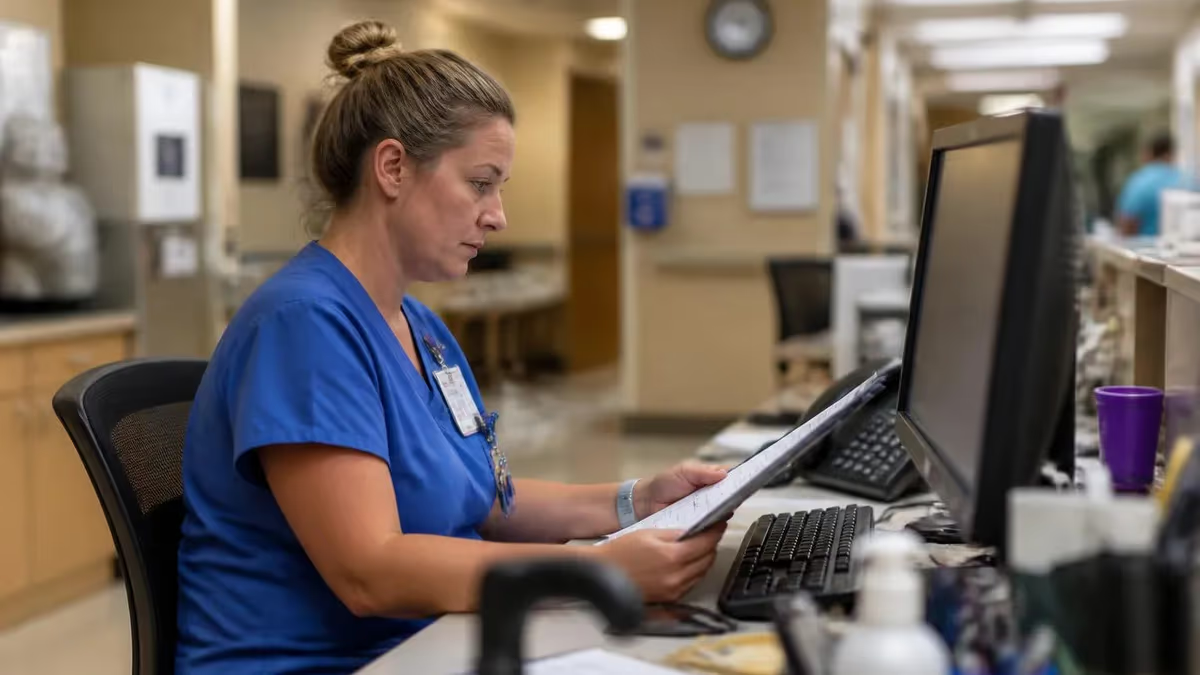
An lpn accelerated program is designed for students who want to enter the nursing workforce as quickly as possible without sacrificing the clinical competencies required for safe, effective patient care. Unlike traditional LPN programs that spread coursework over two years, accelerated formats compress the same curriculum into as few as 12 to 18 months through intensive scheduling, summer sessions, and hybrid delivery. This makes them especially appealing to career changers, healthcare workers seeking upward mobility, and recent graduates who want to start earning sooner.
The demand for licensed practical nurses in the United States continues to grow faster than average. The Bureau of Labor Statistics projects a 5 percent increase in LPN employment through 2032, driven by an aging Baby Boomer population, expanded outpatient services, and persistent nursing shortages in rural and underserved communities. Accelerated LPN programs directly address this gap by producing qualified, NCLEX-ready graduates in a fraction of the time traditional pathways require, benefiting both students and healthcare facilities desperately seeking bedside staff.
Accelerated LPN programs exist in multiple formats: full-time campus programs, hybrid models that blend online theory with in-person clinical rotations, and bridge tracks designed for workers already in healthcare roles such as certified nursing assistants or medical assistants. Each format has specific prerequisites, cost structures, and time commitments, so understanding your options before applying is essential. The right program depends on your current credentials, your schedule flexibility, and your geographic access to approved clinical sites.
Admission to most accelerated programs is competitive. Schools typically require a high school diploma or GED, a minimum GPA (often 2.5 or higher), prerequisite coursework in anatomy, physiology, and math, and standardized entrance exam scores such as the TEAS or HESI. Some programs require documented healthcare work experience, CPR certification, and a clean background check before orientation begins. Gathering these materials early can save weeks and prevent missed application deadlines.
Tuition for accelerated LPN programs varies significantly by state and institution type. Community college programs may cost as little as $5,000 to $10,000 for the full credential, while private vocational schools can charge $20,000 to $35,000. Federal financial aid, including Pell Grants and subsidized loans, is available at accredited institutions. Many healthcare employers also offer tuition reimbursement or sponsorship agreements in exchange for a commitment to work at their facility upon graduation, which can dramatically reduce your out-of-pocket costs.
Once you complete an approved LPN program — accelerated or traditional — you must pass the NCLEX-PN exam to obtain your license. The NCLEX-PN tests clinical judgment, pharmacology, patient safety, coordinated care, and health promotion across a computer-adaptive format. Your accelerated program will prepare you for this exam through integrated testing strategies, practice question banks, and simulated clinical scenarios. Many schools report first-time NCLEX-PN pass rates above 85 percent, comparable to or exceeding those of longer traditional programs.
This guide walks you through every stage of the accelerated LPN pathway: program formats and timelines, admission requirements, costs, the NCLEX-PN exam, and practical strategies to succeed in a fast-paced curriculum. Whether you are considering your first step into healthcare or looking to upgrade from a support role, the information here will help you make a confident, informed decision about the fastest and most affordable route to your LPN license.
LPN Accelerated Program by the Numbers
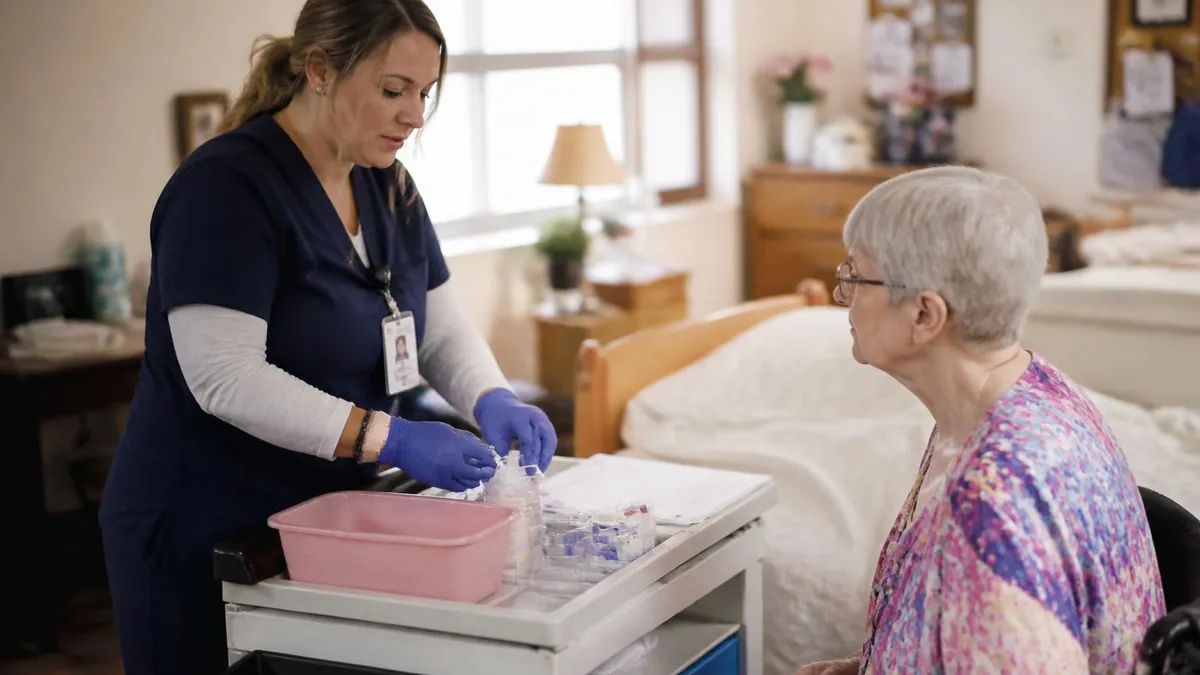
How an LPN Accelerated Program Works: Step-by-Step
Research & Choose a Program
Complete Prerequisites & Gather Documents
Submit Application & Attend Interview
Complete Didactic Coursework
Fulfill Clinical Rotation Hours
Pass NCLEX-PN & Apply for Licensure
Understanding the admission requirements for an accelerated LPN program is the single most important step you can take before investing time or money in your application. Requirements differ between community colleges, vocational schools, and hospital-based programs, but a consistent baseline applies across most accredited options in the United States. Knowing exactly what is expected allows you to close gaps in your qualifications months before applications open, giving you a competitive edge in cohorts that may accept only 20 to 40 students per cycle.
Academic prerequisites are the foundation of every LPN program application. Most accelerated programs require completed coursework in high school or college-level biology, anatomy and physiology, English composition, and basic mathematics or algebra. Some programs — particularly those affiliated with community colleges — require you to complete a certified nursing assistant (CNA) course before enrollment, as CNA experience provides foundational clinical exposure that makes the accelerated pace manageable. Programs designed as bridge tracks for existing healthcare workers may waive some prerequisites in recognition of equivalent on-the-job experience.
Entrance exams are widely required and used to predict academic success in nursing programs. The most common tests are the Test of Essential Academic Skills (TEAS) published by ATI and the Health Education Systems Incorporated (HESI) exam. Competitive programs often require a minimum composite score in the 60th to 75th percentile. Preparing for these exams with official practice tests is essential. Many community colleges offer free or low-cost TEAS preparation workshops, and commercial prep books are available at most libraries. Budget four to eight weeks of focused study if your test-taking skills need refreshing.
Health and background screening requirements exist to protect patient safety and comply with clinical facility contracts. Before the first clinical day — often as early as orientation week — students must provide documentation of required immunizations including hepatitis B, MMR, varicella, tuberculosis screening, and the annual influenza vaccine. A national criminal background check is standard, and some states require fingerprinting. Students with prior felony convictions should consult their state board of nursing before enrolling, as certain convictions may create barriers to licensure regardless of academic completion.
Physical and technical standards are also part of the admission process. LPN programs require students to demonstrate the ability to perform tasks such as lifting, transferring, and repositioning patients, standing for extended periods, using fine motor skills for medication administration, and communicating clearly in both written and spoken English. Schools typically require students to sign a technical standards acknowledgment. Students with disabilities may request reasonable accommodations, but must still be able to perform essential nursing functions safely with or without support.
References and personal statements round out the application for many programs. A personal statement of 300 to 500 words explaining your motivation for nursing, your relevant experience, and your plan to manage the program's demands can distinguish an average application from an outstanding one. Choose references who can speak to your reliability, work ethic, and compassion — ideally a healthcare supervisor, an instructor, or a professional mentor. Generic character references from friends or family members rarely carry weight in competitive healthcare program applications.
Deadlines for accelerated LPN programs often fall much earlier than general college admission deadlines. Programs that start in January may close applications as early as October, and summer-start cohorts may stop accepting materials in February or March. Missing a deadline by even one day typically means waiting for the next cycle — a 6- to 12-month delay. Set calendar alerts for each program's deadline, and plan to submit your full application package at least two weeks early to allow time for processing and any missing document requests.
LPN Accelerated Program Curriculum: What You Will Study
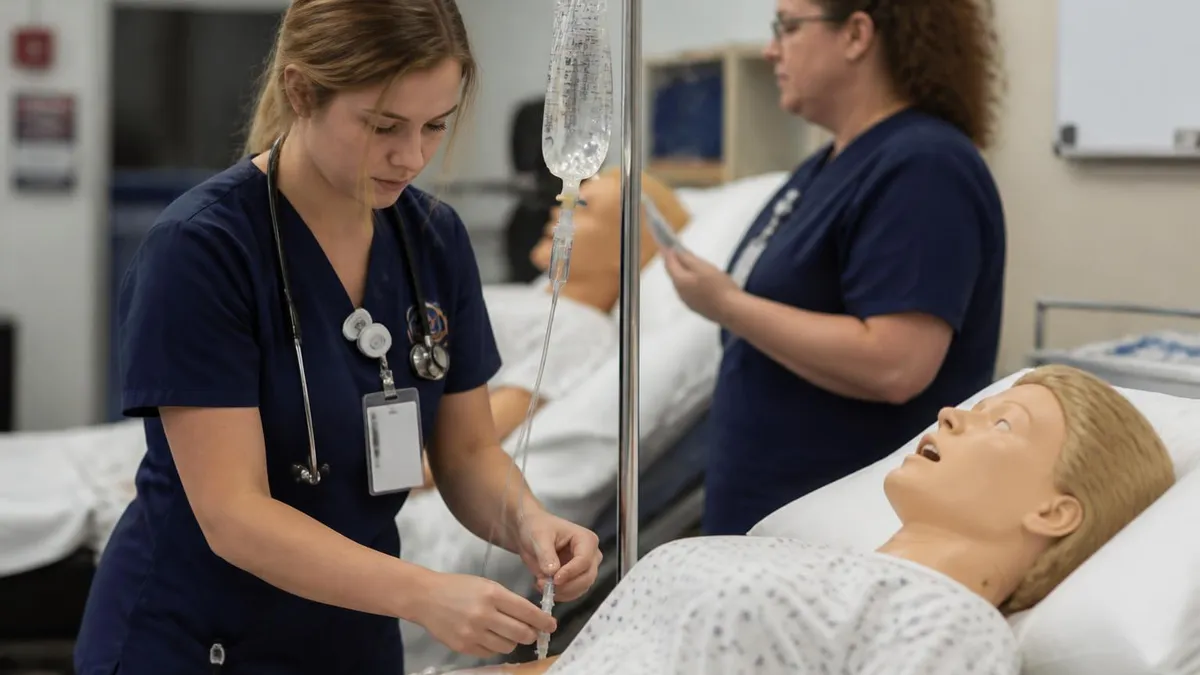
The first phase of any accelerated LPN program focuses on nursing fundamentals: basic patient assessment, vital signs, wound care, infection control, documentation, and the nursing process. Students practice these skills in simulation labs using high-fidelity mannequins before applying them in clinical settings. The fundamentals phase typically spans 8 to 12 weeks and sets the cognitive and psychomotor foundation for all subsequent coursework.
Theory content covers Maslow's hierarchy of needs, ethical principles in nursing, HIPAA compliance, and communication techniques for diverse patient populations. Students learn to write nursing notes using SOAP and DAR formats, interpret basic lab values, and perform head-to-toe assessments. Passing fundamentals with a grade of 75 or above is typically required before advancing to medical-surgical content, and students who fall below this threshold may be dismissed from the accelerated track.
Accelerated LPN Program: Advantages and Challenges
- +Enter the workforce and begin earning a nursing salary 6–12 months sooner than traditional programs
- +Lower overall tuition cost because you spend less time enrolled
- +Highly structured schedule reduces decision fatigue and keeps students on track
- +Early clinical exposure builds confidence and real-world skills from the start
- +Many employers offer tuition reimbursement or sponsorship specifically for accelerated cohorts
- +NCLEX-PN pass rates at top programs match or exceed those of longer traditional programs
- −Intensive pace leaves little margin for personal emergencies, illness, or work obligations
- −Limited time for deep review of difficult material before advancing to the next topic
- −Higher academic pressure increases risk of burnout for students without strong study habits
- −Competitive admissions mean prerequisite gaps can delay entry by a full year
- −Limited flexibility — missing clinical days often has serious consequences for progression
- −Some employers or states may not distinguish between accelerated and traditional LPN credentials, though NCLEX-PN licensure is the same
Pros and Cons at a Glance
| Pros | Cons |
|---|---|
| Lower overall tuition cost because you spend less time enrolled | Intensive pace leaves little margin for personal emergencies, illness, or work obligations |
| Highly structured schedule reduces decision fatigue and keeps students on track | Limited time for deep review of difficult material before advancing to the next topic |
| Early clinical exposure builds confidence and real-world skills from the start | Higher academic pressure increases risk of burnout for students without strong study habits |
| Many employers offer tuition reimbursement or sponsorship specifically for accelerated cohorts | Competitive admissions mean prerequisite gaps can delay entry by a full year |
| NCLEX-PN pass rates at top programs match or exceed those of longer traditional programs | Limited flexibility — missing clinical days often has serious consequences for progression |
LPN Accelerated Program Application Checklist
- ✓Verify program accreditation status with your state board of nursing before applying
- ✓Complete all required prerequisite courses with a grade of C or higher
- ✓Register and sit for the TEAS or HESI entrance exam at least 6 weeks before the deadline
- ✓Request official transcripts from all previously attended institutions
- ✓Obtain two or three professional or academic reference letters from qualified sources
- ✓Schedule and complete all required immunizations including hepatitis B, MMR, varicella, and TB screening
- ✓Complete a national background check and gather fingerprinting documentation if required
- ✓Obtain current American Heart Association BLS/CPR certification (not Red Cross for most programs)
- ✓Write a focused personal statement addressing your nursing motivation and readiness for the accelerated pace
- ✓Confirm financial aid eligibility and explore employer tuition reimbursement or sponsorship options
Bridge Programs Can Cut Your Timeline Even Further
If you are already working as a CNA, medical assistant, or EMT, a healthcare bridge track may allow you to complete an accelerated LPN program in as few as 10 to 12 months by recognizing your existing clinical experience. Ask each program's admissions office whether prior healthcare experience translates to credit or waived prerequisites before you apply.
Understanding the full cost of an accelerated LPN program requires looking beyond tuition to include fees, supplies, clinical expenses, and opportunity costs. Community colleges typically offer the lowest tuition rates, often between $5,000 and $12,000 for the complete program, thanks to state subsidies and articulation agreements with local healthcare systems.
However, community college programs may have longer waitlists and may not be available in every region. Private vocational schools and career colleges fill this gap with faster enrollment timelines but charge significantly more — often $18,000 to $35,000 — and may also tack on mandatory fees for books, uniforms, simulation lab access, and skills kits that add another $1,000 to $3,000 to the total bill.
Federal financial aid is the most accessible funding source for most LPN students at accredited institutions. Completing the Free Application for Federal Student Aid (FAFSA) is the first and most important financial step. Depending on your income and dependency status, you may qualify for a Pell Grant of up to $7,395 per award year (2024–2025 figure), which does not need to be repaid. Federal Direct Subsidized Loans are available for students who demonstrate financial need, with interest deferred while you are enrolled at least half-time. Unsubsidized loans are available regardless of financial need, though interest accrues from disbursement.
Employer sponsorship is an underutilized funding channel that can cover the entire cost of your program in exchange for a service commitment. Many long-term care facilities, home health agencies, and hospital systems face chronic LPN shortages and actively recruit students who agree to work for their organization for one to three years after graduation. These agreements are usually called tuition assistance, loan forgiveness, or scholarship programs, and some include a modest stipend during enrollment. Approach employers directly and ask about their educational support programs — these opportunities are rarely advertised broadly.
State workforce development funds and nursing scholarships represent additional funding streams worth pursuing. The Health Resources and Services Administration (HRSA) administers multiple nursing workforce programs that provide scholarships and loan repayment to students and graduates who commit to working in health professional shortage areas (HPSAs). Individual states also operate their own nursing scholarship programs, and many professional nursing organizations — including the National Association for Practical Nurse Education and Service (NAPNES) — offer merit-based awards specifically for LPN students. Applying to multiple smaller scholarships of $500 to $2,500 each can accumulate into meaningful financial relief.
Opportunity cost deserves serious consideration when planning your budget. Even though accelerated programs save you months compared to traditional options, most full-time accelerated programs are difficult to combine with more than 20 hours of paid work per week. Students who currently earn $15 to $20 per hour in healthcare support roles should model the income they will forgo during enrollment against the salary increase they will receive as a licensed LPN. Based on median wages, most LPN graduates recover the opportunity cost within 12 to 18 months of licensure — a compelling return on a 12-month educational investment.
Monthly living expenses during enrollment are a practical concern that catches some students off guard. Rent, transportation to clinical sites, childcare, and food costs continue whether or not you are earning a full salary. Building a three- to four-month emergency fund before program start — even a modest $3,000 to $5,000 — provides a crucial buffer if unexpected costs arise mid-program. Some students time their program start to overlap with annual bonus payments or tax refunds specifically to shore up this financial cushion before the demanding months begin.
After graduation and NCLEX-PN passage, your starting salary as an LPN will reflect your location, specialty, and employer. The Bureau of Labor Statistics reports a national median annual wage of $54,620 for LPNs as of 2024, but geographic variation is substantial.
LPNs in California, Massachusetts, and Alaska earn median wages above $65,000, while those in the Southeast and Midwest may start closer to $42,000 to $48,000. Specialty areas such as IV therapy, wound care, and long-term acute care often carry pay differentials that can add $2 to $5 per hour above the standard rate, incentivizing continued skill development from day one of your career.
State boards of nursing set their own requirements for LPN program approval, clinical hour minimums, and licensure eligibility. A program that is approved in one state may not meet another state's standards. If you plan to work in a different state than where you attended school, verify reciprocity and endorsement requirements with your destination state's nursing board before enrolling in any program.
Preparing for the NCLEX-PN is the final and most critical milestone of your journey through an accelerated LPN program. The exam is administered by the National Council of State Boards of Nursing (NCSBN) and uses a computer-adaptive testing (CAT) format, meaning the difficulty of each question adjusts in real time based on your previous answers.
The minimum number of questions is 85 and the maximum is 150, with a time limit of 5 hours. Since 2023, the NCLEX-PN has incorporated Next Generation NCLEX (NGN) item types designed to measure clinical judgment — not just knowledge recall — through extended multiple-response, bow-tie, and trend analysis question formats.
The NCLEX-PN content is organized around four major client needs categories: Safe and Effective Care Environment (Coordinated Care and Safety and Infection Control), Health Promotion and Maintenance, Psychosocial Integrity, and Physiological Integrity (Basic Care and Comfort, Pharmacological Therapies, Reduction of Risk Potential, and Physiological Adaptation). These categories are weighted differently on the exam, with Physiological Integrity carrying the largest proportion — approximately 38 to 62 percent of questions depending on your adaptive path. Understanding which categories carry the most weight helps you allocate study time intelligently.
Most accelerated programs integrate NCLEX-PN preparation throughout the curriculum rather than treating it as a separate post-graduation activity. Unit exams are typically written to mirror NCLEX-PN style questions, and many programs require students to use ATI or Kaplan question banks as part of their coursework grade. Students who consistently score at or above the proficiency benchmark on these formative assessments are statistically more likely to pass the NCLEX-PN on their first attempt. Pay close attention to your program's predicted scores and use your instructor's feedback to identify and close content gaps before graduation.
After graduation, dedicate four to six weeks of structured review before your NCLEX-PN test date. A high-quality review course — whether ATI, Kaplan, UWorld, or NCSBN's own Learning Extension — is worth the investment. UWorld's LPN question bank, for example, is widely regarded as one of the most rigorous and explanatory resources available, with detailed rationales for both correct and incorrect answers. Aim to answer 75 to 100 practice questions per day during your review period, focusing on understanding the reasoning behind each answer rather than simply memorizing correct responses.
Test-day strategy matters as much as content knowledge. Arrive at the Pearson VUE testing center with two valid forms of ID, your Authorization to Test (ATT) number, and a plan to manage anxiety. The CAT format means that the exam will always feel difficult — you are intended to answer questions near the edge of your ability level throughout.
If your exam stops at 85 questions, that does not mean you failed; it means the computer reached statistical confidence that you have either clearly passed or clearly failed the minimum competency standard. Most candidates who pass do so within the first 85 to 100 questions.
State licensure applications typically require submission of your nursing school transcripts, NCLEX-PN results, a completed application form, and applicable fees ranging from $60 to $200 depending on your state. Some states use a temporary practice permit system that allows new graduates to work under supervision while awaiting full licensure — check whether your state offers this option so you can begin working immediately after passing the exam. Processing times range from one week to several weeks depending on the state and the completeness of your application materials.
Once licensed, most new LPNs find employment quickly. Long-term care facilities, physician offices, home health agencies, and correctional healthcare settings are the top employers of LPNs nationwide. Starting in a long-term care role is common and provides an excellent foundation — daily medication administration, wound care, and resident assessment across a broad patient population build the clinical confidence needed for higher-acuity settings. Many LPNs use their initial years to gain experience and then pursue RN bridge programs, completing an LPN-to-RN or LPN-to-BSN pathway to advance their career and earning potential further.
Succeeding in an accelerated LPN program requires more than academic preparation — it demands deliberate time management, proactive communication with faculty, and a support network that can absorb the demands of an intensive schedule. Students who treat their accelerated program like a full-time job, committing 40 to 50 hours per week to studying, attending class, and completing clinical hours, consistently outperform those who underestimate the time commitment. The first two weeks of the program typically set the tone: students who establish consistent study routines early maintain them through the hardest stretches of the curriculum.
Active recall and spaced repetition are the most evidence-supported study techniques for nursing content. Rather than re-reading chapters or highlighting passages, test yourself on key concepts by writing out definitions, drawing pathophysiology diagrams from memory, or answering practice questions without looking at notes. Spaced repetition software like Anki allows you to review high-yield pharmacology and lab values at optimally timed intervals, embedding them in long-term memory efficiently. Aim to review each topic within 24 hours of the initial lecture, then again at 48 hours, one week, and one month to achieve lasting retention.
Study groups can be powerful accelerants or significant time sinks depending on how they are structured. Effective groups cap membership at four to five students, meet for no more than two hours at a time, and arrive with specific content goals — for example, teaching each other the mechanism of action for five drug classes. Avoid groups that spend more time venting about coursework than reviewing it. If your group's sessions feel unproductive after two meetings, restructure the format or find a new group rather than persisting with an approach that is not working.
Clinical preparation is non-negotiable in accelerated programs, where you will frequently meet patients with diagnoses you have not yet covered formally in class. Develop a pre-clinical routine: the night before each clinical day, look up each assigned patient's primary diagnosis, review the mechanism of the condition, identify the top three nursing priorities, and check all scheduled medications including classification, therapeutic use, and major adverse effects. Students who arrive at clinical having completed this preparation answer preceptor questions confidently and learn exponentially more from each patient encounter than students who arrive unprepared.
Mental health and physical wellbeing require intentional protection during an accelerated program. Chronic sleep deprivation impairs clinical judgment and memory consolidation — both essential for nursing school success. Protect seven to eight hours of sleep as a non-negotiable minimum rather than a reward for finishing studying. Brief daily exercise — even a 20-minute walk — reduces cortisol, improves mood, and enhances the cognitive flexibility needed to navigate complex patient care scenarios. Students who maintain their health throughout the program perform better academically and make safer clinical decisions than those who sacrifice wellbeing for extra study hours.
Communicate proactively with faculty when you encounter difficulties. Accelerated programs move too quickly for a struggling student to hope the pace slows down before the next exam. Most nursing faculty have seen students at every skill level and can point you toward targeted resources, tutoring centers, or supplemental practice tools. Visiting office hours before you fail an exam — not after — positions you as a motivated student seeking support, and faculty often go out of their way to help students who demonstrate initiative. Waiting until after a failing grade to ask for help limits the options available to you.
Finally, remember that the accelerated format is designed to challenge you, not defeat you. The intensity reflects the real conditions of nursing practice, where quick thinking, efficient prioritization, and sound clinical judgment under pressure are daily expectations. Every difficult exam, every uncomfortable clinical scenario, and every late-night study session is building the resilience and competence that will define your practice as a licensed practical nurse. Students who lean into the challenge and seek support when needed consistently emerge from accelerated programs as confident, capable nurses ready to make an immediate difference in their patients' lives.
LPN Questions and Answers

MA to LPN Bridge Program: Complete 2026 Guide to Transition from Medical Assistant to Licensed Practical Nurse

LPN Requirements 2026: Complete Guide to Becoming a Licensed Practical Nurse

What Does LPN Stand For? Meaning, Role & Career Guide

NCLEX LPN Exam Guide 2026: Pass Rates, Format, Study Plan & Practice Questions

LPN IV Certification: Complete 2026 Guide to Training, Requirements & Cost
About the Author

Registered Nurse & Healthcare Educator
Johns Hopkins University School of NursingDr. Sarah Mitchell is a board-certified registered nurse with over 15 years of clinical and academic experience. She completed her PhD in Nursing Science at Johns Hopkins University and has taught NCLEX preparation and clinical skills courses for nursing students across the United States. Her research focuses on evidence-based exam preparation strategies for healthcare certification candidates.
Join the Discussion
Connect with other students preparing for this exam. Share tips, ask questions, and get advice from people who have been there.
View discussion (7 replies)