

Local SEO Practice Test
Updated for September 2026Local SEO Questions and Answers
Local search engine optimization is like SEO in that it affects how visible a website or web page is in a web search engine’s unpaid results, which are also called “natural,” “organic,” or “earned” results.
- Optimize for Google My Business.
- Engage on social media and add posts to Google My Business.
- Ensure your name, address, and phone number are consistently online.
- Optimize online directories and citations.
- Perform a local SEO audit.
- Improve your internal linking structure.
- Optimize URL, title tags, headers, meta description, and content.
- Add location pages to your website.
- Create local content.
- Ensure your website is mobile-friendl.
- Get inbound links with relevance and authority.
- Participate in your local community.
Your online visibility rises due to local SEO activities like citation and link building. This makes it simpler for potential customers to find your company.
- Open a Google My Business account.
- Obtain Regular Positive Feedback from Satisfied Customers
- Voice Search Optimization
- Produce content based on regional news or events
- Make Your Website Mobile-Friendly
- Focus on Local Keywords
- Use location pages or an “About Us” page for each location.
- Use online business directories to your advantage
- Put Link Signals First (Get High-Quality Backlinks)
- Establish a Specific Web Page for Each
Local SEO functions on a high level like “normal” Google search. Google searches its index when someone searches to deliver the most relevant results.
The average cost of a Local SEO project would be between $300 and $1500 for a one-time project that concentrated on analysis, research, clean-up, and optimization, with an average cost of around $700.
- Start Conversations With Local Business Owners.
- Identify Businesses Investing In Marketing.
- Attend Speaking Events, Webinars, And Networking Meetups.
- Connect With Business Owners On LinkedIn.
- Keep Your Business Card On Hand.
Local SEO is an approach to search engine optimization (SEO) that makes your company appear more prominently in Google’s local search results.
- Target Local Keywords.
- Claim Your Google My Business Listing.
- Optimize Your Presence On Local Directories.
- Make Sure Your Site Is Mobile-Friendly.
- Manage Reviews.
- Optimize For Voice Search.
Citations are references to your company’s name, address, and phone number (commonly referred to as NAP) on a website that isn’t your own in the context of local search engine optimization (SEO).
Local SEO (Search Engine Optimization) enhances local businesses’ visibility on search engines, particularly for those with physical locations.
If you already have a claimed Google listing, your website has some inherent authority, and you have the right categories selected, results could theoretically start to show in as little as 4 to 8 weeks with a few minor adjustments.
- Think about the main business keywords.
- Include the service in locations.
- Use Google Autocomplete.
- Spy on your competitors.
SEO is still very much in existence. It still has the same meaning today as it did then. In fact, it might even be more significant.
- NP Digital – Best for Conversion-Driven Local SEO
- Searchbloom – Best for Local and Technical SEO
- BrightLocal – Best for Assessing Local Search Performance
- Digital Marketing Agency – Best for Worldwide Local Search
- HigherVisibility – Best for Franchise / Multi-Location
- Instaboost Media – Best for Low Budget
Local search engine optimization is useful for any company with a brick-and-mortar storefront or a local customer base.
Particularly, having solid basic citations can help you rank correctly on Google’s local search interfaces.
Results from SEO typically take three to six months to manifest.
- Create a topic list.
- Create a list of long-tail keywords using these subjects as a base.
- Create pages for each topic.
- Create a blog.
- Establish a regular blogging schedule.
- Make a plan for constructing links.
- Before uploading media files to your website, compress them.
- Remain current with SEO news and best practices.
- Track and evaluate the performance of your content.
You can use Google or the website’s search function (Command+F). You can simply update the HTML on your website’s backend to reflect your new address.
- Add a page for contacts.
- Enable clickable phone numbers on mobile devices.
- Include a map on your site.
- Include testimonials on your website.
- Implement schema on your website.
- Claim your Google My Business page (and optimize).
- Claim social profiles.
- Produce content with a local focus, such as a calendar of events.
- Give getting more customer reviews top priority.
- Create citations on local blogs, directories, and search engines.
- Claim and optimize your GMB listing.
- Keep mobile in mind.
- Collect plenty of customer reviews.
- Focus on local link building.
- Ensure NAP/citation consistency.
- Make the most of social listening.
- Check for Google Penalties
- Conduct Local Keyword Research
- Check Your Local SEO Rankings
- Audit Your Links and Website Authority
- Audit Citations
- Audit Brand Mentions and Implied Links
- Audit Your Google Business Profile
- Audit Reviews and Rating
- Audit Your Social Media
- Determine the organic content with the lowest CTR so you can start there. You can quickly access your Google Search Console and download a traffic analysis.
- Correct any keyword overlapping. Keyword cannibalization, or the optimization of numerous landing pages for the same keywords, is a significant problem we encounter with clients and spreads out any organic clicks.
- Think Outside the Box With Your Titles. This is a significant issue because if you want people to click, all they will see in the SERPs is your title.
- Make Use of Detailed URLs
- Make Your Description Better. Make sure your description is pertinent and give some thought to why people view your listing in the first place.
- Make use of Structured Markup
- Use PPC Ads to Increase Organic CTR
- Show Emotions. Emotional content attracts people’s attention.
- Choose a favorable or unfavorable attitude. Although it has been demonstrated that using either positive or negative sentiment increases CTR, many titles continue to use a neutral sentiment.
- Use the title case.
- Featured Snippets Content Structure Rich search results, known as featured snippets, appear as a box of content on search engine results pages (SERPs).
- Quicken Page Loading. Even though it might not seem like a way to increase organic CTR initially, ensuring your site loads as quickly as possible is important.
- Create A Website First
The main testing ground for your local SEO strategy is your website.
- Discover SEO Tools
Because they calculate how many users are searching for a specific keyword, how much traffic a website receives, and other metrics relevant to most websites, most SEO tools can be used for local and “regular” SEO.
- Boost Your Content
SEO tools allow you to find the keywords users use to find websites similar to yours.
- Take a Shot at Off-Site SEO
SEO practices that take place away from your website are referred to as “off-site” SEO.
- Research Your Target Market.
- Use Geotargeting.
- Translate All Important Site Elements.
- Understand Local Search Engine Preferences.
- First, figure out where your customers are. To make it easier for local customers to find you, use local SEO.
- To create relevance, use localized metadata. Relevance plays a key role in the search term algorithm. In Google’s eyes, a natural link from a site relevant to your page is preferable to one from an authority site that isn’t.
- Make your local landing pages mobile-friendly. More than half of the more than 100 billion monthly search requests are thought to originate from mobile devices. Additionally, mobile devices are used for more than 60% of all Google searches. This justifies the significance of mobile apps.
Local SEO makes your company stand out even without a website and increases foot traffic to your storefront by generating online leads.
Yoast’s SEO Analysis has been a huge help in figuring out how to make the content better.
- Google My Business.
- Google My Business Categories.
- Proximity of Address to Point of Search.
- Physical Address in City of Search.
- Reviews.
- Links.
- Multi-Location Businesses Don’t Create Local Landing Pages
- Multi-Location Businesses Don’t Optimize Local Landing Pages Properly
- Businesses Don’t Create Google My Business Properties
- Businesses Don’t Optimize Google My Business Properties
- Businesses Think About Site Architecture Incorrectly
- Businesses Ask For Reviews On Platforms That Buyers Aren’t Looking At (Like Yelp)
- Businesses Have a Google Site and Website, Which Confuses Google
- Businesses Don’t Optimize Their Title Tags And Meta Descriptions Properly
- Businesses Don’t Create High-Quality Listings
- Businesses Don’t Focus on NAP Consistency
- Businesses Forget About Local Business Structured Data
A local listing (or citation) is an online reference to a local business’s name, address, phone number, or website.
It is possible to increase organic traffic and easily convertible leads for plumbers by using SEO.
Similar to SEO, local SEO improves a site’s or a page’s rankings in the unpaid results—also known as “natural,” “organic,” or “earned” results—on a search engine’s index.
Making your website relatable to your target-locale audience means targeting a specific nation or region through SEO localization.
Local SEO enables you to seize local search territory to connect with searchers in your area, unlike traditional SEO, which concentrates on increasing your site’s visibility on a national or international scale.
The most important aspect of your local SEO strategy is GMB or Google My Business.
- Google My Business.
- On-Page Signals.
- Online Reviews.
- Backlink Profile.
- Online Citations.
- Behavioural Signals.
- Local Content.
The rankings of your website in the local pack and the search results are improved by local SEO. All local advertising channels combined, it has the highest conversion rates. It makes you more visible online, especially to nearby clients.
It makes it simpler for potential customers to find you when they search for terms related to your location or industry, which improves your local SEO rankings.
Local businesses are more easily found by nearby customers using a local SEO strategy. Linking businesses with nearby customers enhances a website’s visibility, increases relevant web traffic, and generates revenue.
- Agency focus
- Deep industry expertise
- They practice what they preach
- A strong reputation
- Experienced SEOs
- Up-to-date education and training
- Offering clear communication and managing expectations
- Choose Your Keywords Make a short list of straightforward keywords that describe your services to start.
- Make Your Site Keyword-Optimized Your chosen keywords are now ready, so you can start working on optimization. Your website and your Google Business Profile need to be separately optimized for them.
- Create references and links The foundation of your local SEO campaign is now set, and citations and links can now be added. Both your online presence and Google rankings are improved.
- Request Reviews For two reasons, online reviews are important. They start by informing Google that your business is legitimate. They can also persuade potential customers to try your business.
- Monitor Your Progress With local SEO, it’s crucial to monitor your progress so you can identify what’s working and what isn’t and how to get better over time.
- Create a web page for each location (with a unique URL)
- Optimize for location-specific keywords.
- Avoid duplicate content.
- Try to get local backlinks.
- Create and optimize Google Business Profiles for each location.
- Manage reviews.
- Keep NAP consistent across listings.
- Develop a national SEO plan.
- Conduct keyword research.
- Develop your website architecture.
- Optimize your Google My Business profile. Manage your online reputation. Manage your local citations.
- Create content.
- Build links to your website(s).
Research into the search terms that potential customers use to find what you have to offer is always a part of local SEO. The more products and services you offer, the more local SEO will cost you because each one requires different keywords to be targeted in different places on your website.
- Selecting a city and a keyword and writing an optimized article are the cornerstones of an optimized Twitter moment.
- Before starting the Twitter moment, tweet URLs, and don’t forget to include your target keywords.
- Design an effective Twitter moment for local SEO
- To improve rankings, repeat the creation of Twitter moments for all your landing pages.
- Integrate Facebook and other social media.
When conducting a local SEO audit, it makes sense to start by looking at the SERPs for the keywords and phrases you want people to find your company for to see how you stack up against your rivals and other websites/content.
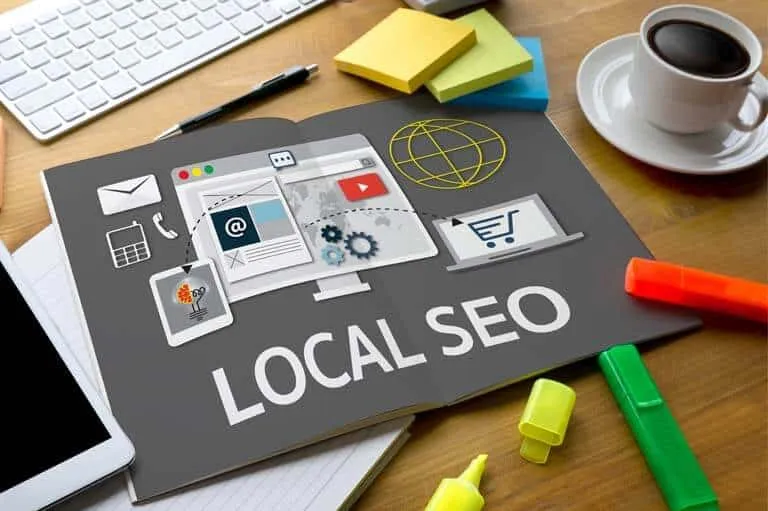
Local SEO Practice Test Questions
Prepare for the Local SEO exam with our free practice test modules. Each quiz covers key topics to help you pass on your first try.
Local SEO Introduction to Local SEO
Local SEO Exam Questions covering Introduction to Local SEO. Master Local SEO Test concepts for certification prep.
Local SEO Blackbelt
Free Local SEO Practice Test featuring Blackbelt. Improve your Local SEO Exam score with mock test prep.
Local SEO Expert
Local SEO Mock Exam on Expert. Local SEO Study Guide questions to pass on your first try.
Local SEO for Beginners
Local SEO Test Prep for for Beginners. Practice Local SEO Quiz questions and boost your score.
Local SEO Fundamentals
Local SEO Questions and Answers on Fundamentals. Free Local SEO practice for exam readiness.
Local SEO Reviews I
Local SEO Mock Test covering Reviews I. Online Local SEO Test practice with instant feedback.
Local SEO Advanced Topics
Free Local SEO Quiz on Advanced Topics. Local SEO Exam prep questions with detailed explanations.
Local SEO Google Business Profile
Local SEO Practice Questions for Google Business Profile. Build confidence for your Local SEO certification exam.
Local SEO Local Content Strategy
Local SEO Test Online for Local Content Strategy. Free practice with instant results and feedback.
Local SEO Local Link Building
Local SEO Study Material on Local Link Building. Prepare effectively with real exam-style questions.
Local SEO Analytics & Reporting
Free Local SEO Test covering Local SEO Analytics & Reporting. Practice and track your Local SEO exam readiness.
Local SEO Citation Building
Local SEO Exam Questions covering Local SEO Citation Building. Master Local SEO Test concepts for certification prep.
- ✓Review the official Local SEO exam content outline
- ✓Take a diagnostic practice test to identify weak areas
- ✓Create a study schedule (4-8 weeks recommended)
- ✓Focus on your weakest domains first
- ✓Complete at least 3 full-length practice exams
- ✓Review all incorrect answers with detailed explanations
- ✓Take a final practice test 1 week before exam day

Local SEO Green Bay
Local SEO in Green Bay is a great way to promote your business online. If you have a local business in Green Bay, you need a local SEO agency to help you get more customers and grow your online presence. It takes 90 to 180 days to see results. The exact length of time depends on a variety of factors including website quality, competition, brand age, and more.
Local SEO in Green Bay involves using various techniques to improve your business's rankings on major search engines. Search engine optimization, or SEO, can improve your business's rankings for specific keywords. An agency specializing in local SEO can target competitive local keywords and optimize on-page SEO for several locations. In addition, they have an in-house team of web developers that can help you fix any SEO problems your website may have.
Local SEO in Green Bay involves using online directories and local citation sites to market your business in Green Bay. These directories will display your business name, address, and phone number, as well as additional information. Local citation directories typically dominate the first page of local search results. In addition, these directories have a high conversion rate, with some of them offering up to 50% conversions. This type of marketing has a huge potential to increase your Green Bay business's visibility and conversion rate.
- +Industry-recognized credential boosts your resume
- +Higher earning potential (10-20% salary increase on average)
- +Demonstrates commitment to professional development
- +Opens doors to advanced career opportunities
- −Exam preparation requires significant time investment (4-8 weeks)
- −Certification fees can be $100-$400+
- −May require continuing education to maintain
- −Some employers may not require certification
About the Author

Certified Professional Development Expert & Niche Certification Advisor
University of Pennsylvania Graduate School of EducationDr. Alexandra Kim holds a PhD in Professional Studies from the University of Pennsylvania and is a Certified Professional in Learning and Performance (CPLP) and Certified Professional in Talent Development (CPTD). With 17 years of corporate training and professional certification advisory experience, she helps professionals navigate specialized, emerging, and cross-industry certification programs.